

Global Gene Delivery Platform Market Size and Forecast – 2026 To 2033
The global gene delivery platform market is expected to grow from USD 8.74 Bn in 2026 to USD 24.52 Bn by 2033, registering a compound annual growth rate (CAGR) of 15.9% from 2026 to 2033. The market for global gene delivery platform is poised for significant expansion, fueled by the rapid expansion of gene therapy development pipelines.
According to the U.S. Food and Drug Administration (FDA), the number of original gene therapy Investigational New Drug (INDs) increased from 44 in 2008 to 208 in 2023, reflecting substantial growth in gene therapy development activity. This expanding pipeline is increasing demand for efficient viral and non-viral gene delivery platforms to support therapeutic development.
Key Takeaways of the Global Gene Delivery Platform Market
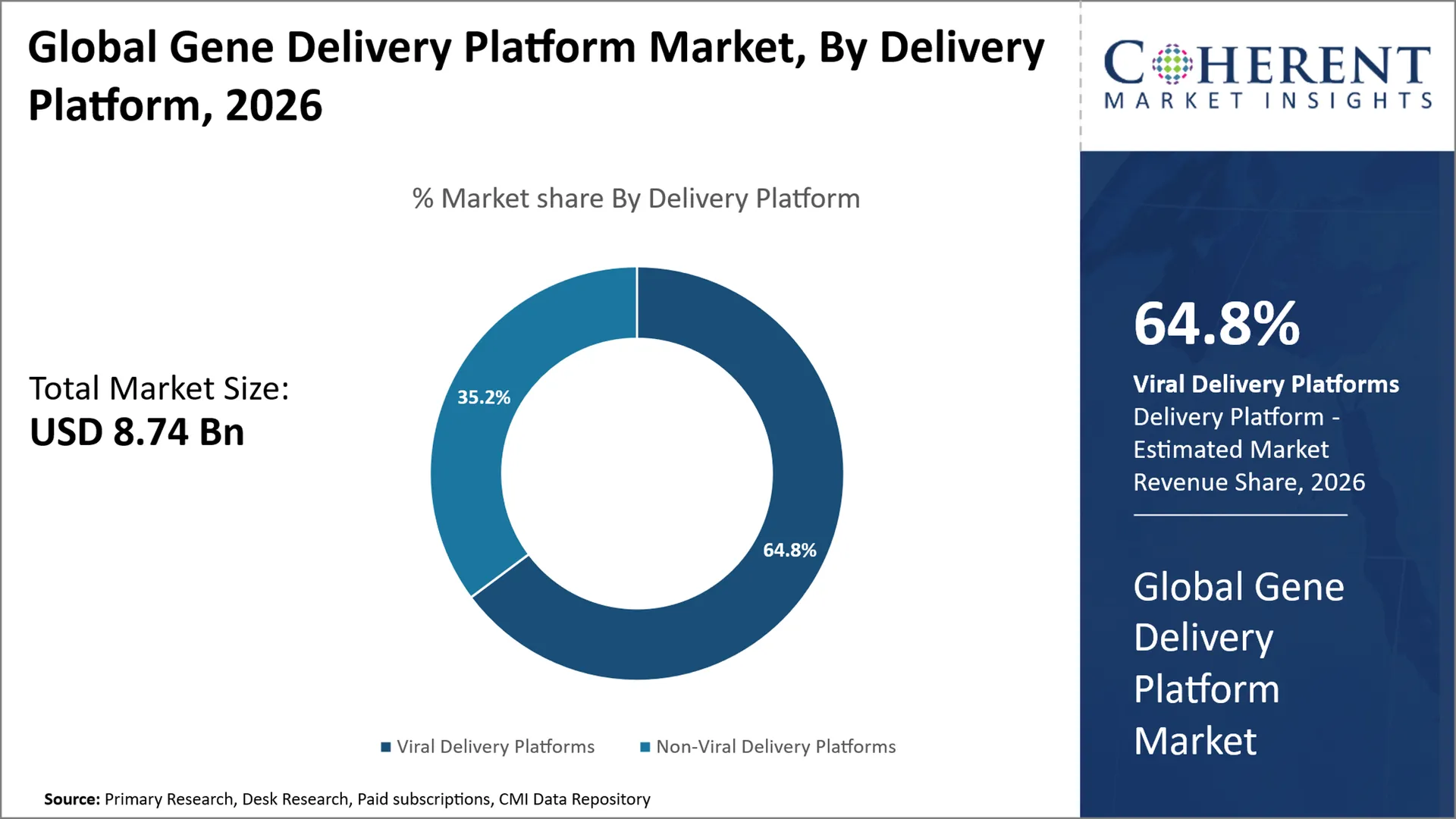
- Viral delivery platforms are projected to hold 64.8% of the global gene delivery platform market share in 2026, making it dominant delivery platform segment across North America due to the region’s established viral-vector development and regulatory infrastructure. For instance, in May 2026, the U.S. FDA issued final guidance on CMC flexibilities for human cellular and gene-therapy products, supporting more flexible development and manufacturing approaches for gene-therapy products.
- Adeno-Associated Virus (AAV) is projected to hold 43.7% of the global gene delivery platform market share in 2026, making it dominant vector type segment with Asia Pacific gaining importance as regulatory frameworks for AAV-based therapies advance. For instance, in February 2026, Japan’s PMDA/MHLW issued specific considerations for evaluating viral/vector shedding from gene-therapy products, including AAV-vector therapies, strengthening regulatory assessment of AAV safety.
- Gene therapy is projected to hold 52.8% of the global gene delivery platform market share in 2026, making it dominant application segment across Asia Pacific due to expanding regulatory frameworks and gene-therapy development. For instance, Japan’s PMDA identifies gene therapy products as regenerative medical products and updated its marketing-approval application requirements in March 2026, supporting a more structured regulatory pathway for gene-therapy commercialization across the region.
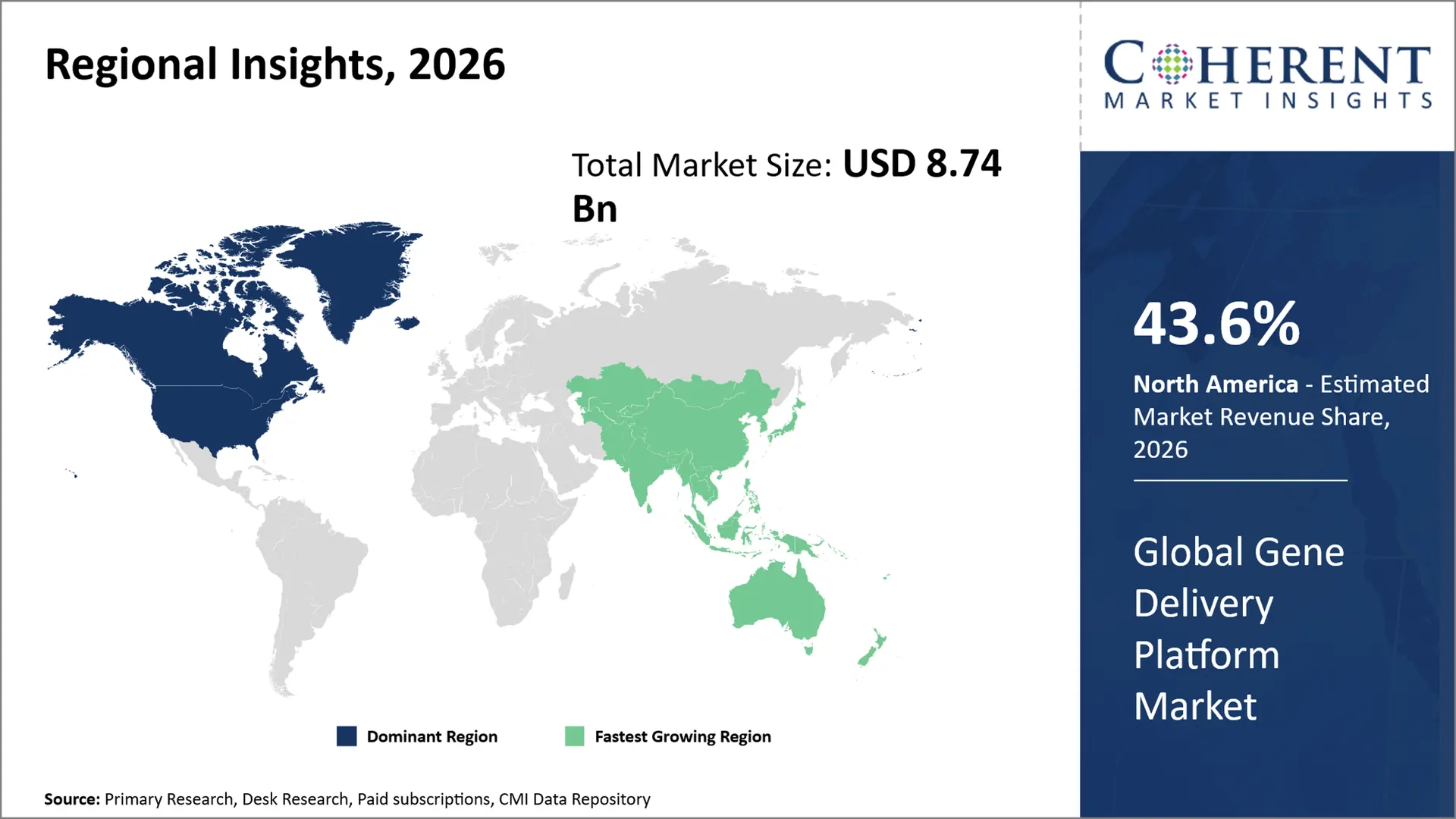
- North America market maintains dominance with an expected share of 43.6% in 2026, bolstered by its mature gene-therapy ecosystem, advanced vector-development capabilities, and strong public-sector translational infrastructure. For instance, in May 2026, the U.S. FDA cleared an IND for an AAV-based gene-therapy candidate developed through an NIH-led program, enabling its first-in-human Phase I/II trial for methylmalonic academia.
- Asia Pacific is expected to exhibit the fastest growth in the global gene delivery platform market, registering an estimated CAGR of 16.8% during 2026–2033, driven by expanding regulatory frameworks and increasing support for advanced biotechnology development. For instance, in April 2026, China’s National Health Commission and National Medical Products Administration introduced new guidance to define and regulate emerging biomedical technologies, establishing pathways for clinical research and translation of innovative cell- and gene-related technologies.
Segmental Insights
Why Do Viral Delivery Platforms Dominate the Global Gene Delivery Platform Market?
Viral delivery platforms are projected to hold the market share of 64.8% in 2026, due to their superior transduction efficiency, proven clinical efficacy and ability to provide targeted delivery of the payload. In addition, the use of viral delivery platforms for cell and gene therapy applications will influence their widespread use and decider over non-viral approaches. For instance, in August 2026, the European Medicines Agency (EMA) revised pre-authorization guidance, and made a special mention of genetically modified cells with retroviral, lentiviral and adeno-associated viral vectors – covering them for residual viral particles and replication-competent viruses in turn, strengthening regulatory pathways for major viral-vector platforms.
- Current Industry Events of 2026
- Market Size Estimation
- Regional Breakdown
- Competitive Landscape
- Customer Intelligence
- Segmental Analysis
- Pricing Analysis
- Key Market Drivers, Challenges & Future Trends
- Customized Insights Section
Why Do Adeno-Associated Virus (AAV) Represent the Largest Vector Type Segment in the Gene Delivery Platform Market?
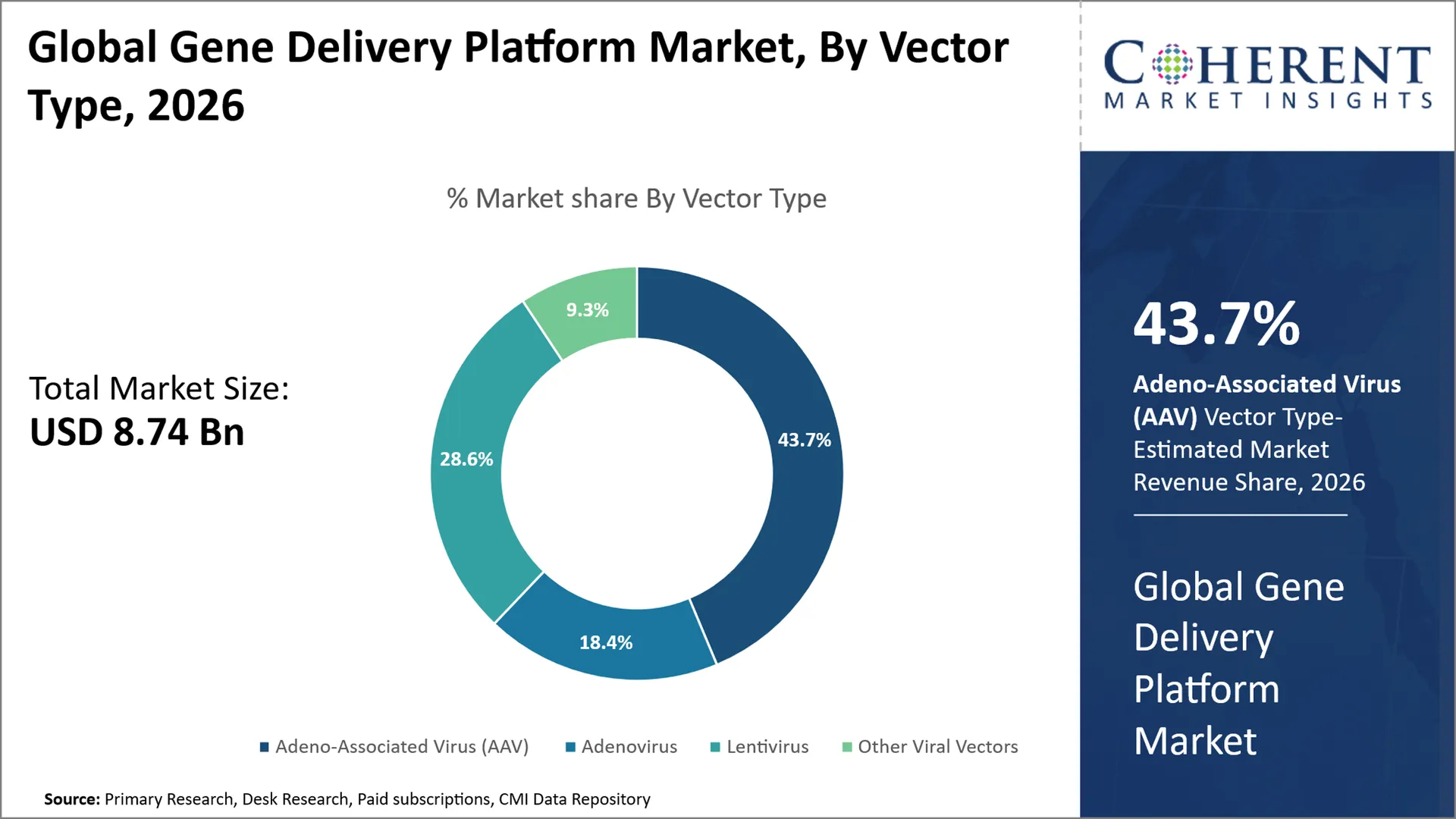
Adeno-associated virus (AAV) is projected to hold a market share of 43.7% in 2026, due to their excellent safety profile, high transduction capacity, and their ability to target dividing and non-dividing cells. Also, the possibilities that can be covered in the liver, muscle, and central nervous system provide with many tools for gene therapy. For instance, in April 2026, the U.S. Food and Drug Administration (FDA) approved Otarmeni (lunsotogene parvec-cwha), the first dual AAV vector gene therapy for hearing loss due to the OTOF gene, highlighting the expanding use of AAV vectors in targeted gene delivery.
Gene Therapy Segment Dominates the Global Gene Delivery Platform Market
The gene therapy segment is projected to hold a market share of 52.8% in 2026, owing to its ability to treat the root cause of rare and inherited diseases as well as a growing commercial acceptance in the clinics. Furthermore, growing regulatory validation of the gene therapy products seems to be impelling the demand for efficient gene delivery platforms. For instance, in June 2026, the European Medicines Agency (EMA) approved the use of Itvisma (onasemnogene abeparvovec) for the treatment of spinal muscular atrophy by gene therapy, adeno-associated virus in the European Union in patients two years of age and older.
Current Events and their Impact
Current Events | Description and its Impact |
U.S. FDA Updates Genome-Editing Safety Guidance (August 2026) |
|
U.S. FDA Issues New Guidance on Genome-Editing Gene Therapies (June 2026) |
|
Australia Adopts Updated Guidance for Genetically Modified Cell Therapies (May 2026) |
|
Gene Delivery Platform Market Dynamics
Market Drivers
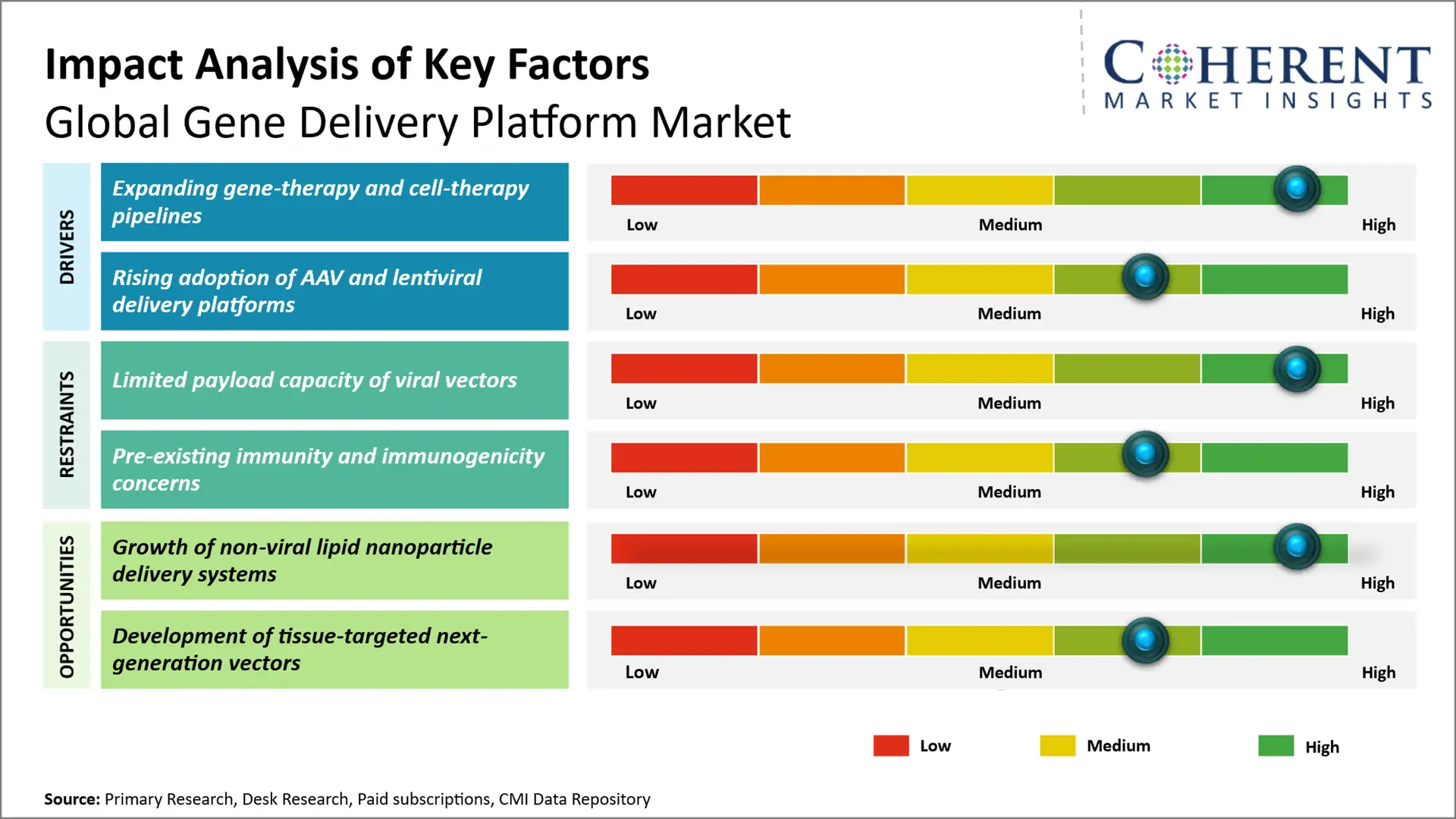
- Expanding gene-therapy and cell-therapy pipelines: The expanding gene-therapy and cell-therapy pipeline is increasing demand for efficient and clinically validated gene-delivery platforms across emerging therapeutic applications. For instance, on September 17, 2026, the U.S. FDA approved Fayuvi, an AAV9-based gene therapy for pediatric Sanfilippo syndrome type A, demonstrating the clinical advancement of AAV-mediated delivery. The approval also highlights the growing application of systemic gene delivery for neurological disorders.
- Rising adoption of AAV and lentiviral delivery platforms: The rising adoption of AAV and lentiviral delivery platforms is increasing demand for scalable vector-production technologies and standardized manufacturing processes. For instance, in February 2026, NIIMBL launched a program to develop a shared-access platform for AAV manufacturing and analytics, focusing on process robustness, characterization, and scalability. This supports broader adoption of AAV-based delivery platforms by addressing manufacturing constraints.
- Increasing focus on standardized gene delivery platforms: The shift toward standardized gene-delivery platforms are improving the efficiency and scalability of gene-therapy development by enabling common vectors, manufacturing processes, and regulatory approaches across multiple indications. For instance, in February 2026, NIH’s NCATS highlighted its PaVe-GT initiative, which uses a common AAV delivery system and manufacturing methods across multiple rare-disease gene therapies. This platform-based approach can reduce development duplication and accelerate translation of gene-delivery technologies.
Emerging Trends
- Shift toward targeted non-viral delivery: LNPs and other non-viral systems are increasingly being engineered for tissue-specific delivery beyond the liver, expanding their potential across gene therapy and genome-editing applications.
- Emergence of hybrid gene delivery platforms: Hybrid systems combining viral and non-viral carriers are gaining attention as a way to integrate complementary advantages such as delivery efficiency, payload flexibility, targeting, and reduced immunogenicity.
- AI-enabled delivery platform design: AI and high-throughput screening are increasingly being applied to optimize lipid chemistry, formulation characteristics, tissue targeting, and intracellular delivery, accelerating development of next-generation gene delivery systems.
Regional Insights
Why is North America a Strong Market for Gene Delivery Platform?
North America leads the global gene delivery platform market, accounting for an estimated 43.6% share in 2026, due to its well-established healthcare market, R&D activities, and strong biotechnology sector. The region enjoys the additional benefit of the U.S Food and Drug Administration's accelerated programs, including Fast Track, Breakthrough Therapy, Accelerated Approval, Priority Review, and Regenerative Medicine Advanced Therapy, which are likely to improve the conversion of gene delivery inventions to practice.
For instance, in FY 2025, the U.S. FDA's Regenerative Medicine Advanced Therapy (RMAT) program received a total of 91 designation requests, and 50 were approved, reflecting a high level of use of the expedited pathway for regenerative medicine products, including all gene therapies that may qualify. Additionally, the program provides ongoing, intensive U.S. FDA guidance for development and review.
Why Does Asia Pacific Gene Delivery Platform Market Exhibit High Growth?
Asia Pacific is expected to exhibit the fastest growth in the global gene delivery platform market, registering an estimated CAGR of 16.8% during 2026–2033. The region is projected to account for 22.4% of the global market in 2026, owing to increased investment in the biotechnology sector, growing healthcare infrastructure, and increasing focus on clinical research. The pro- progressive government policies adopted by countries including China, Japan and South Korea, in the form of financial support through grants and incentives, liberal regulatory environments, along with simpler drug approvals, might spur the growth of biotech innovation in the region.
For instance, in May 2026, China's State Council has issued the Regulation on Clinical Research and Clinical Translation of Biomedical New Technologies. The regulation emphasizes the dedicated channel for innovative biomedical technologies, promotes their clinical translation, and includes safety oversight. Furthermore, the region's growing biopharmaceutical manufacturing infrastructure and increasing uptake of advanced gene delivery techniques will in turn drive market growth.
Global Gene Delivery Platform Market Outlook for Key Countries
Why is the U.S. Leading Innovation and Adoption in the Gene Delivery Platform Market?
The U.S. is probably leading the way in innovation and adoption for gene therapy, given the depth of its research ecosystem and its strong FDA regulatory infrastructure for gene-delivery technologies. The deep integration between translational research and clinical development, as well as a dedicated regulatory pathway, is instrumental in rapidly translating novel delivery platforms into therapies. The country also seems to have a strong pool of deep experience in viral-vector design, genome editing and targeted gene delivery.
Is Japan a Favorable Market for Gene Delivery Platform Market?
Japan is a favorable market for gene delivery platforms with a receptive regulation dedicated to gene therapy and regenerative medicine products. The Pharmaceuticals and Medical Devices Agency (PMDA) provide specific guidance on AAV vectors, genome editing techniques and in vivo gene therapy products. While, country’s conditional and time-limited approval pathway may also speed up the clinical use of qualifying therapies.
Is China Emerging as a Key Growth Hub for the Gene Delivery Platform Market?
China is gradually emerging as the newest growth driver for the gene delivery platform market owing to the rapidly rising biotech investments along with growing investments in better pathways for clinical translation. The reforms by the government seem to improve the coordination of the drug review process for novel drugs while at the same time encourage the growth of new biomedical technology.
Why Does Germany Top the European Gene Delivery Platform Market?
Germany leads the European gene delivery platform market owing to well-established research ecosystem in gene and cell therapies, dedicated regulatory expertise, and strong clinical development infrastructure. The presence of dedicated European division for Gene-therapeutics and ATMPs (advanced therapy medicinal products) at Paul-Ehrlich-Institut (PEI) with focus on gene therapy includes activities such as ATMP clinical trial authorizations, scientific advice and product assessment. Besides, the National Strategy for Gene-and Cell Based Therapies in Germany is working towards aligning and harmonizing regulations and manufacturing processes in these sectors.
Is Gene Delivery Platform Market Developing in South Korea?
South Korea is a promising target country for gene delivery platforms, probably due to its well-developed regulations on advanced regenerative medicine and gene therapies. The Ministry of Food and Drug Safety (MFDS) has issued guidance documents regarding gene therapy products and gene-editing products, respectively. Additionally, its accelerated-review program Global Innovative Fast Track (GIFT) could provide a faster review for qualified advanced biopharmaceutical products.
Gene Delivery Platform Technology Landscape
Delivery Platform | Key Vector/Technology | Typical Genetic Cargo | Primary Delivery Approach | Key Applications | Major Technical Consideration |
AAV | AAV2, AAV8, AAV9, engineered AAVs | DNA | In vivo | Gene therapy, rare diseases, neurological disorders | Limited payload capacity and immunogenicity |
Lentiviral | Lentiviral vectors | DNA/RNA-derived genetic constructs | Ex vivo / In vivo | Cell therapy, gene therapy, hematological disorders | Vector safety and manufacturing complexity |
Adenoviral | Adenovirus vectors | DNA | In vivo | Vaccines, oncology, gene therapy | Pre-existing immunity |
Lipid Nanoparticles | Ionizable lipid-based LNPs | mRNA, siRNA, CRISPR components | In vivo | Gene editing, vaccines, therapeutics | Tissue targeting and endosomal escape |
Polymeric Delivery | Biodegradable polymeric carriers | DNA, RNA, gene-editing components | In vivo/Ex Vivo | Gene therapy and research | Delivery efficiency and biocompatibility |
Electroporation | Electrical membrane permeabilization | DNA, RNA, CRISPR components | Ex vivo | Cell therapy and gene editing | Cell viability and process scalability |
How is the growth of non-viral lipid nanoparticle delivery systems creating new growth opportunities in the gene delivery platform market?
The widespread adoption of lipid nanoparticle (LNP) delivery platforms opens significant opportunities for non-viral gene delivery with mRNA and genome-editing payloads where flexible and repeatable delivery is desired. In addition, improvements in the design of LNP formulation and in targeting tissue delivery will significantly broaden the use of LNPs from vaccines to therapeutics. For instance, in August 2026, the U.S. Food and Drug Administration (FDA) approved ModernaTX, Inc.’s MFLUSIVA, an mRNA influenza vaccine manufactured with LNPs (lipid nanoparticles), further validating LNP-based delivery technology.
Market Players, Key Development, and Competitive Landscape
Key Developments
- On September 15, 2026, Glidepath Health launched from stealth with an AI-enabled platform designed to bring greater operational certainty to cell and gene therapy delivery. The company is backed by AlleyCorp and A-Squared Ventures and holds an exclusive technology license from a global cancer center.
- In May 2026, Eli Lilly acquired Engage Biologics Inc. for up to USD 202 million, gaining its preclinical Tethosome non-viral DNA delivery platform. The platform combines lipid nanoparticle delivery with engineered DNA payloads to improve intracellular trafficking, potency, tolerability, and redosability.
- In September 2025, Vyriad, Inc. and Yeda Research and Development Company, the commercial arm of the Weizmann Institute of Science, entered an exclusive license agreement for a novel in vivo viral vector targeting technology. The technology is designed to improve vector specificity while preserving potency, supporting more targeted gene delivery.
Competitive Landscape
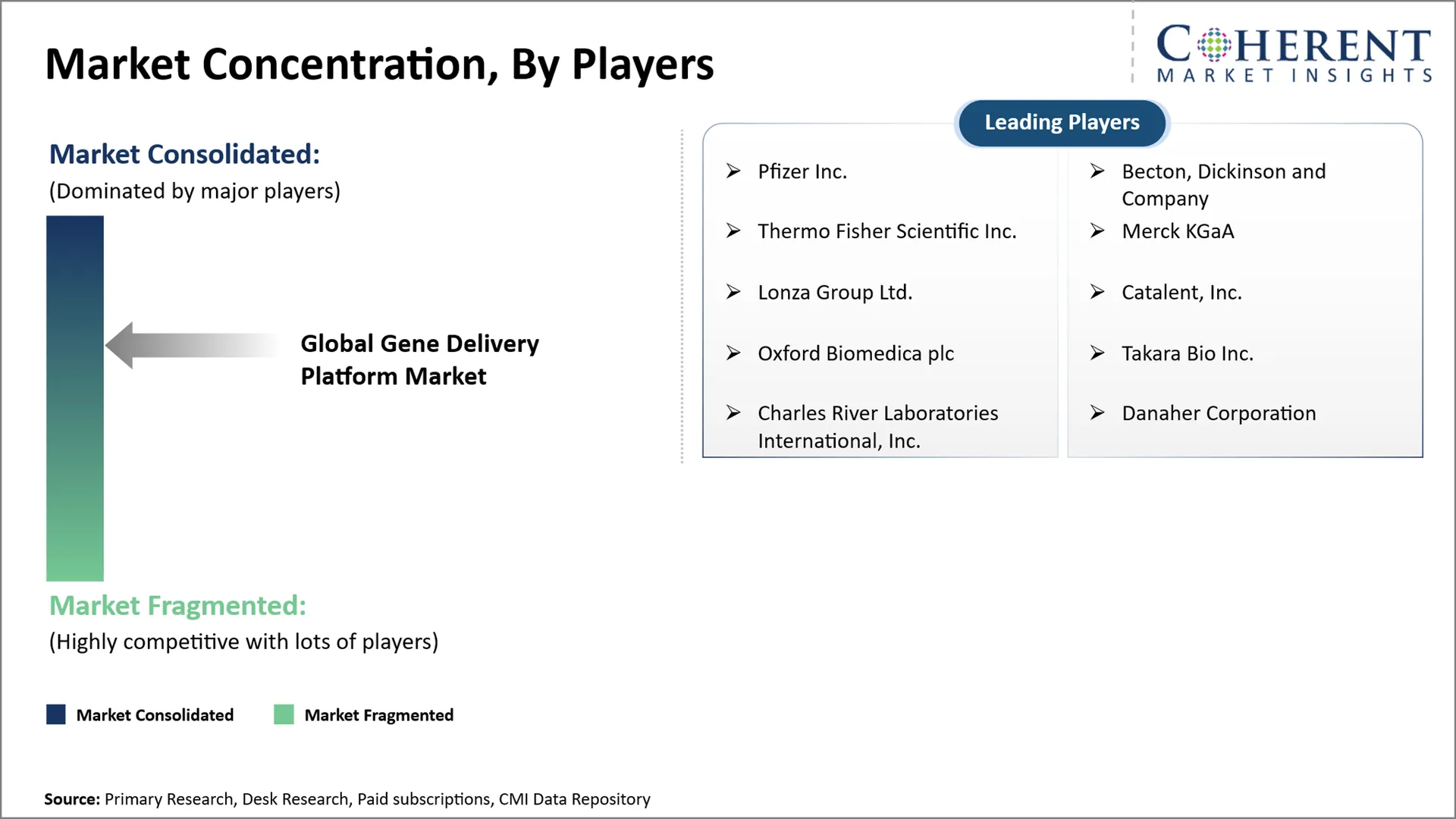
The global gene delivery platform market is moderately competitive, with market dynamics shaped by advances in viral and non-viral vector engineering, targeted delivery, genome editing, and nucleic-acid delivery technologies. Market participants are increasingly focusing on improving delivery specificity, transduction efficiency, payload capacity, safety, and scalability across gene therapy, cell therapy, and research applications. Key focus areas include:
- Development of next-generation AAV, lentiviral, and adenoviral vectors
- Expansion of non-viral delivery platforms, particularly lipid nanoparticles
- Improvement of tissue-specific and targeted gene delivery capabilities
- Integration of gene delivery platforms with CRISPR and other genome-editing technologies
- Enhancement of payload capacity, transduction efficiency, and delivery scalability
Market Report Scope
Gene Delivery Platform Market Report Coverage | |||
Report Coverage | Details | ||
Base Year | 2025 | Market Size in 2026: | USD 8.74 Bn |
Historical Data For: | 2020 To 2024 | Forecast Period: | 2026 To 2033 |
Forecast Period 2026 To 2033 CAGR: | 15.9% | 2033 Value Projection: | USD 24.52 Bn |
Geographies covered: |
| ||
Segments covered: |
| ||
Companies covered: | Pfizer Inc., Becton, Dickinson and Company, Thermo Fisher Scientific Inc., Merck KGaA, Lonza Group Ltd., Catalent, Inc., Oxford Biomedica plc, Takara Bio Inc., Charles River Laboratories International, Inc., Danaher Corporation | ||
Growth Drivers: |
| ||
Restraints & Challenges: |
| ||
Analyst Opinion (Expert Opinion)
- In the coming years, global gene delivery platform market will evolve toward application-specific and precision-engineered delivery systems, with AAV remaining important for established gene therapies while LNPs, extracellular vesicles, and hybrid platforms gain traction for larger or transient genetic payloads. The industry will increasingly prioritize tissue-specific targeting, repeat dosing, and improved intracellular delivery rather than relying on a single dominant platform.
- The maximum opportunities are foreseen within non-viral delivery platforms for gene therapy in China, particularly targeted LNP-based systems for in vivo gene editing and nucleic-acid delivery. This combination offers an attractive opportunity as developers seek larger payload capacity, repeat-dose potential, and more flexible delivery architectures.
- In order to gain a competitive advantage market players should prioritize proprietary targeting technologies, improved endosomal escape, payload flexibility, and scalable manufacturing. Building platform technologies that can support multiple payload types and therapeutic indications, while demonstrating consistent tissue-specific delivery and safety, can provide stronger differentiation.
Speak to the analyst
Want personalized insights?
Take the findings above to one of our principal consultants, or have the report rebuilt around the segments, geographies and competitors you actually track.
Market Segmentation
- Delivery Platform Insights (Revenue, USD Bn, 2021 - 2033)
- Viral Delivery Platforms
- Non-Viral Delivery Platforms
- Vector Type Insights (Revenue, USD Bn, 2021 - 2033)
- Adeno-Associated Virus (AAV)
- Adenovirus
- Lentivirus
- Other Viral Vectors
- Application Insights (Revenue, USD Bn, 2021 - 2033)
- Gene Therapy
- Cell Therapy
- Vaccines
- Research
- Others
- End User Insights (Revenue, USD Bn, 2021 - 2033)
- Pharmaceutical and Biotechnology Companies
- Contract Development and Manufacturing Organizations (CDMOs)
- Academic and Research Institutions
- Hospitals and Specialized Treatment Centers
- Others
- Regional Insights (Revenue, USD Bn, 2021 - 2033)
- North America
- U.S.
- Canada
- Latin America
- Brazil
- Argentina
- Mexico
- Rest of Latin America
- Europe
- Germany
- U.K.
- Spain
- France
- Italy
- Russia
- Rest of Europe
- Asia Pacific
- China
- India
- Japan
- Australia
- South Korea
- ASEAN
- Rest of Asia Pacific
- Middle East
- GCC Countries
- Israel
- Rest of Middle East
- Africa
- South Africa
- North Africa
- Central Africa
- North America
- Key Players Insights
- Pfizer Inc.
- Becton, Dickinson and Company
- Thermo Fisher Scientific Inc.
- Merck KGaA
- Lonza Group Ltd.
- Catalent, Inc.
- Oxford Biomedica plc
- Takara Bio Inc.
- Charles River Laboratories International, Inc.
- Danaher Corporation
Sources
Primary Research Interviews
- Gene therapy developers and gene-delivery platform specialists
- Viral-vector and non-viral delivery technology developers
- AAV, adenoviral, and lentiviral vector manufacturing specialists
- Gene-editing and nucleic-acid delivery researchers
- Biopharmaceutical R&D, CMC, and process-development professionals
Stakeholders
- Pharmaceutical and biotechnology companies developing gene therapies
- Gene-delivery platform and vector manufacturers
- Contract development and manufacturing organizations (CDMOs)
- Academic and research institutions
- Gene-therapy clinical centers and specialized treatment centers
- Bioprocessing, vector-manufacturing, and delivery-technology providers
- End-use Sectors
- Pharmaceutical and Biotechnology Companies
- Contract Development and Manufacturing Organizations (CDMOs)
- Academic and Research Institutions
- Hospitals and Specialized Treatment Centers
- Research and Diagnostic Laboratories
- Regulatory & Health Bodies
- U.S. Food and Drug Administration (FDA) – gene-therapy products, viral and non-viral vectors, clinical development, and regulatory requirements
- European Medicines Agency (EMA) – advanced therapy medicinal products and gene-therapy regulation
- Medicines and Healthcare products Regulatory Agency (MHRA), UK – gene and cell therapy regulation
- Pharmaceuticals and Medical Devices Agency (PMDA), Japan – regenerative medicine and gene-therapy products
- National Medical Products Administration (NMPA), China – gene and cell therapy products
- Central Drugs Standard Control Organisation (CDSCO), India – gene therapy and advanced therapy products
Databases
- ClinicalTrials.gov – gene-therapy clinical trials and delivery-platform development
- WHO International Clinical Trials Registry Platform (ICTRP) – global clinical-trial records
- FDA CBER databases – regulatory information on cellular and gene-therapy products
- NIH/NCATS PaVe-GT – platform-vector gene-therapy development and regulatory information
Journals
- Nature Biotechnology
- Nature Biomedical Engineering
- Molecular Therapy
- Human Gene Therapy
- Gene Therapy
- Journal of Controlled Release
Associations
- American Society of Gene & Cell Therapy (ASGCT)
- International Society for Cell & Gene Therapy (ISCT)
- Alliance for Regenerative Medicine (ARM)
- International Society for Pharmaceutical Engineering (ISPE)
- American Society for Microbiology (ASM)
Public Domain Sources
- U.S. Food and Drug Administration (FDA) – gene-therapy and vector regulatory information
- National Institutes of Health (NIH) – gene-therapy research and translational programs
- National Center for Advancing Translational Sciences (NCATS) – platform-vector gene-therapy initiatives
- National Center for Biotechnology Information (NCBI) – gene-delivery and molecular biology research
- European Medicines Agency (EMA) – gene therapy and advanced therapy regulatory information
- World Health Organization (WHO) – global clinical-trial and health information
Proprietary Elements
- CMI Data Analytics Tool, Proprietary CMI Existing Repository of information for last 10 years.
Get access to 250+ pages report
Every segment, forecast, competitor profile and data table behind the analysis above — available for instant download.
- ESOMAR Member
- ISO 9001:2015 Certified
- D-U-N-S Registered
- GDPR & CCPA Compliant
Frequently Asked Questions
The global gene delivery platform market is estimated to be valued at USD 8.74 Bn in 2026 and is expected to reach USD 24.52 Bn by 2033.
Viral delivery platforms dominate due to their established clinical use, efficient cellular transduction, and proven ability to deliver therapeutic genetic material in gene and cell therapies.
A gene delivery platform is a technology or vector used to transport therapeutic genetic material into target cells to modify gene expression or introduce genetic instructions.
The CAGR of global gene delivery platform market is projected to be 15.9 % from 2026 to 2033.
Expanding gene-therapy and cell-therapy pipelines, and rising adoption of AAV and lentiviral delivery platforms are the major factors driving the growth of the global gene delivery platform market.
Limited payload capacity of viral vectors, and pre-existing immunity and immunogenicity concerns are the major factors hampering the growth of the global gene delivery platform market.
In terms of vector type, adeno-associated virus (AAV) is estimated to dominate the market revenue share in 2026.