

Global Gene Manufacturing Market Size and Forecast – 2026 To 2033
The global gene manufacturing market is expected to grow from USD 9.18 Bn in 2026 to USD 26.25 Bn by 2033, registering a compound annual growth rate (CAGR) of 16.2% from 2026 to 2033. The market for global gene manufacturing is poised for significant expansion, fueled by the growing gene-therapy pipeline, which is increasing demand for viral vectors, plasmid DNA, and scalable GMP manufacturing capabilities.
According to the U.S. Food and Drug Administration (FDA), its Center for Biologics Evaluation and Research (CBER) had approved close to 50 cell and gene therapies over the previous decade as of January 2026, reflecting the expanding commercial pipeline and increasing requirement for specialized manufacturing capacity.
Key Takeaways of the Global Gene Manufacturing Market
- Gene therapy vectors are projected to hold 46.8% of the global gene manufacturing market share in 2026, making it dominant product type segment, with North America representing a major market due to its advanced viral-vector manufacturing ecosystem and large gene-therapy pipeline. On September 17, 2026, the U.S. FDA approved Fayuvi, an AAV9-based gene therapy, adding another AAV-based product to the commercial gene-therapy landscape and reinforcing demand for specialized vector manufacturing capabilities.
- Downstream processing is projected to hold 43.6% of the global gene manufacturing market share in 2026, making it dominant manufacturing process segment, with Europe supported by stringent GMP requirements for advanced therapy manufacturing and increasing emphasis on process consistency and quality control. The EMA is revising EU GMP Part IV specifically for advanced therapy medicinal products, with the updated guideline intended to improve consistency in ATMP manufacturing practices.
- Commercial scale is projected to hold 46.4% of the global Gene Manufacturing market share in 2026, making it dominant manufacturing scale segment, with Asia Pacific, specifically Japan presenting an important commercialization environment as gene-therapy products move through its regenerative-medicine approval framework. For instance, PMDA's 2026 approved-product records separately identify gene-therapy products within Japan's regenerative medical product category, supporting the progression of gene therapies toward regulated commercial manufacturing.
- North America market maintains dominance with an expected share of 44.2% in 2026, bolstered by the region's mature regulatory framework and established CGT manufacturing infrastructure. For instance, in May 2026, the U.S. FDA issued final CMC guidance providing specific flexibilities for human cellular and gene-therapy products, helping manufacturers address CMC requirements during development and BLA preparation.
- Asia Pacific is expected to exhibit the fastest growth in the global gene manufacturing market, registering an estimated CAGR of 21.8% during 2026–2033, driven by expanding regional GMP capabilities and regulatory infrastructure. For instance, in July 2026, China's NMPA conducted its annual management review of the QMS governing drug GMP compliance, emphasizing standardized GMP oversight and strengthening regulatory capabilities for pharmaceutical manufacturing in China.
Segmental Insights
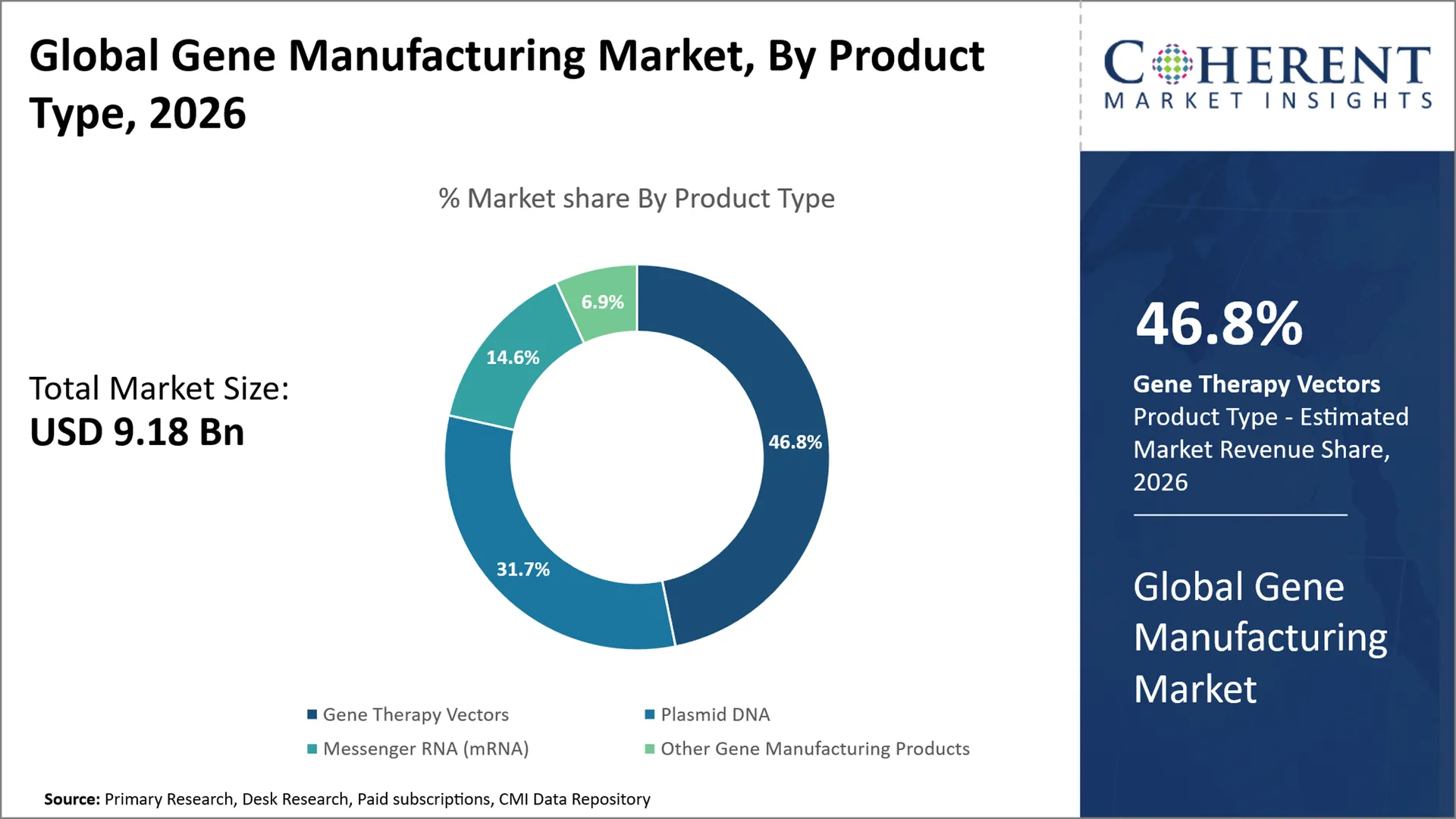
Why Do Gene Therapy Vectors Dominate the Global Gene Manufacturing Market?
Gene therapy vectors are projected to hold the market share of 46.8% in 2026, based on their essential function in transport of therapeutic genes to specific target cells. Furthermore, the growing pipeline of adeno-associated virus (AAV), lentiviral, and other viral-vector therapies seems to be supporting surging requirement for advanced vectors manufacturing and engineering through increased safety, specificity, and production. For instance, in May 2026, Singapore's Health Sciences Authority and China's National Medical Products Administration signed a memorandum of understanding (MoU) to broadened their regulatory cooperation to cover cell, tissue and gene therapy products, and to include plans for facilitative regulatory pathways and capacity building. (Source: Government of Singapore)
- Current Industry Events of 2026
- Market Size Estimation
- Regional Breakdown
- Competitive Landscape
- Customer Intelligence
- Segmental Analysis
- Pricing Analysis
- Key Market Drivers, Challenges & Future Trends
- Customized Insights Section
Why Does Downstream Processing Represent the Largest Manufacturing Process Segment in the Gene Manufacturing Market?
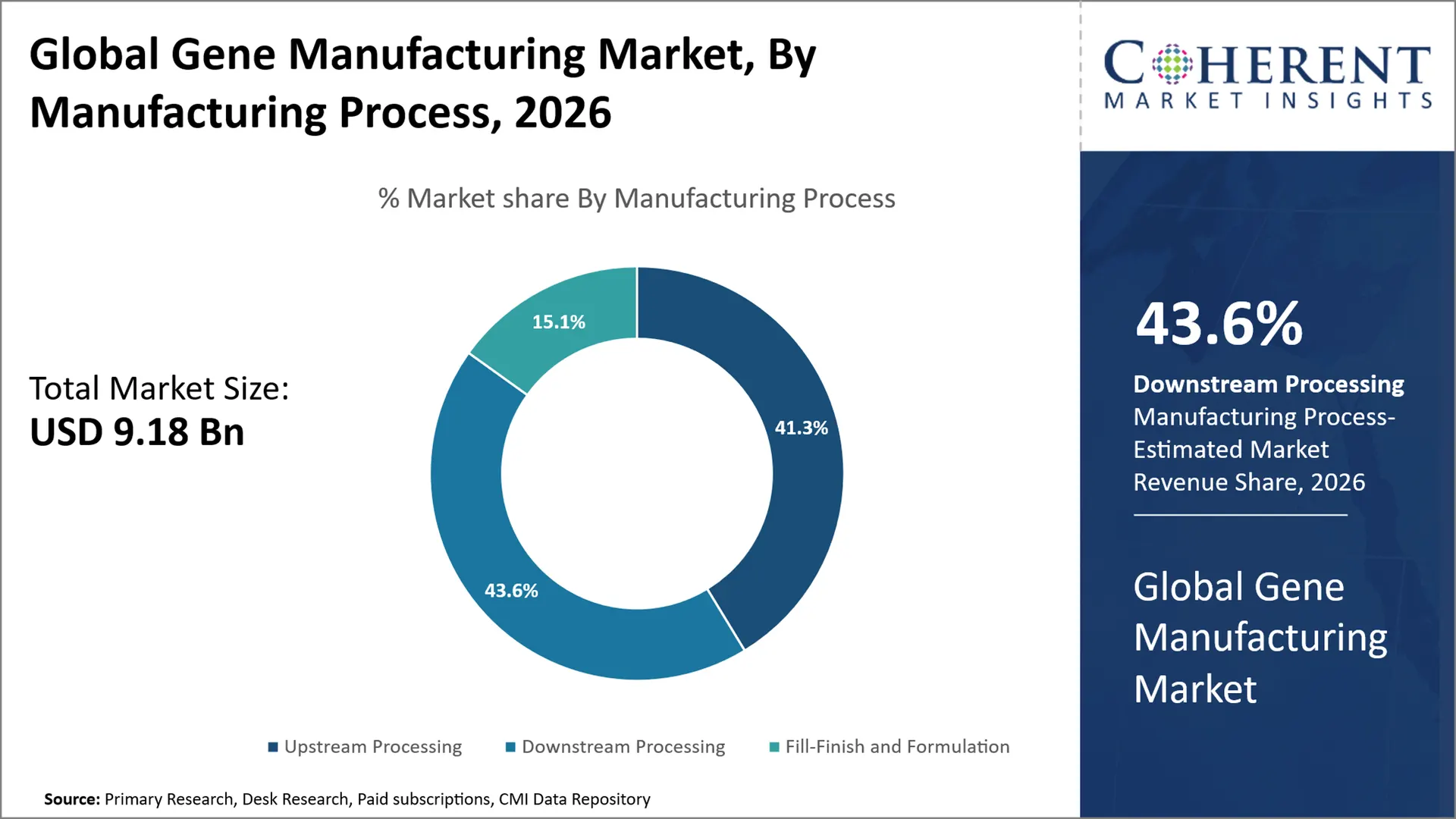
Downstream processing is projected to hold a market share of 43.6% in 2026, owing to the significance of these procedures in the purification, removal of impurities, concentration and stabilization of the product quality of viral vectors and plasmid DNA. The intricate nature of gene-based products presents a likely increasing need for chromatography, filtration, and high purity separation techniques. For instance, according to the European Medicines Agency (EMA) GMP guidance, the vector manufacturing and purification steps are identified as critical process steps under typical GMP control of a viral-vector-based gene therapy. These steps are typically governed by controls covering impurities, endotoxins, residual DNA and process-related contaminants.
Commercial Scale Segment Dominates the Global Gene Manufacturing Market
The commercial scale segment is projected to hold a market share of 46.4% in 2026, due to the exponential transition of approved gene therapies from clinical trial to routine commercial market. Increasing demand for high-volume, high-quality production of viral vectors, plasmid DNA, and mRNA may encourage more investment in validated GMP manufacturing capacity. For instance, in April 2026, the U.S. Food and Drug Administration (FDA) launched the Pre Check Pilot Program to enable the creation of more sophisticated pharmaceutical production facilities within the U.S. This program aims to develop manufacturing centers that are suited for advanced biological drug products to ramp up commercial production at scale.
Current Events and their Impact
Current Events | Description and its Impact |
U.K. and Singapore Begin Pharmaceutical GMP Agreement Negotiations (September 2026) |
|
India Expands Central Regulatory Oversight of Gene-Therapy Products (July 2026) |
|
U.S. FDA Introduces CMC Flexibilities for Cell and Gene Therapies (May 2026) |
|
Gene Manufacturing Market Dynamics
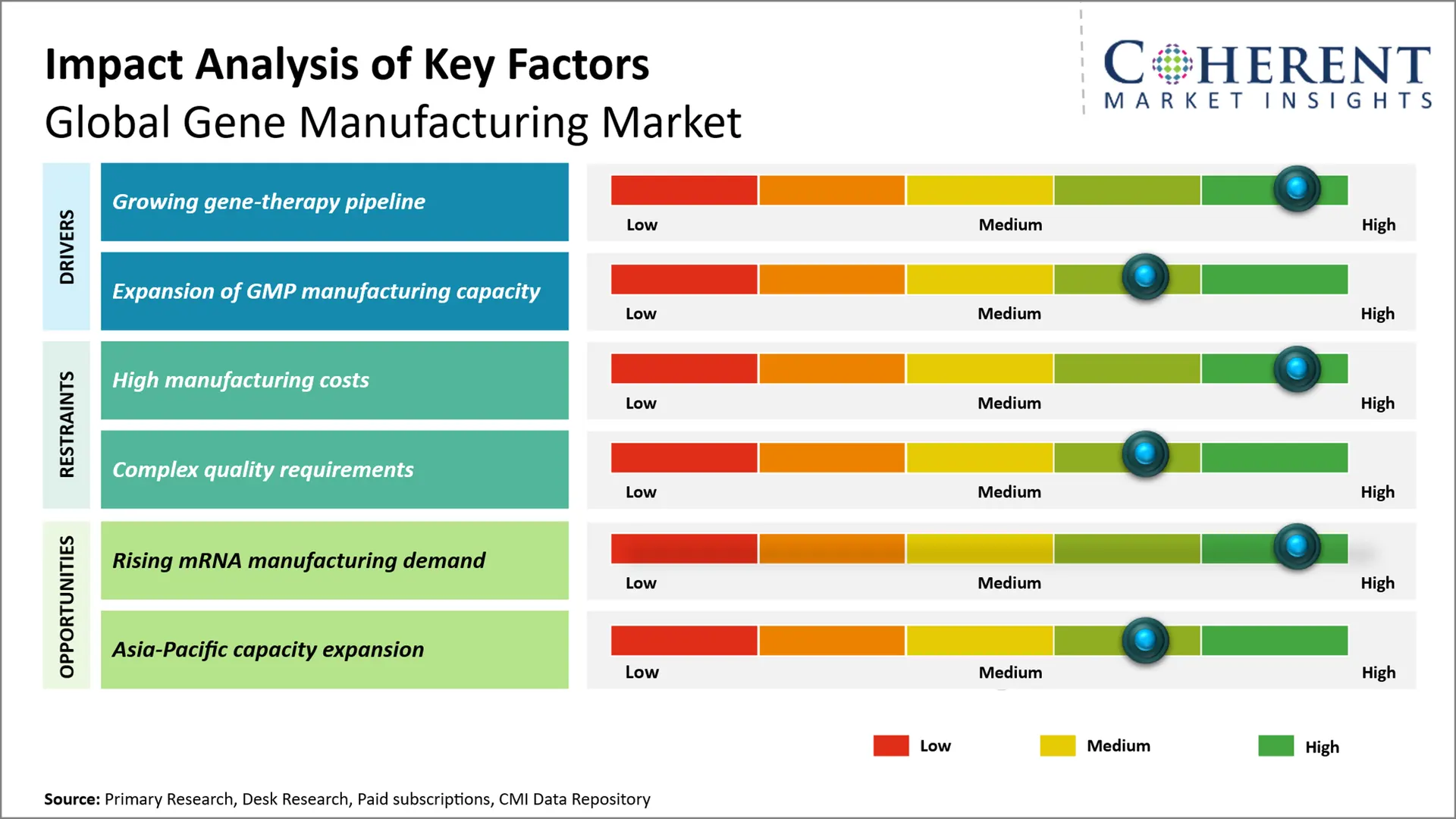
Market Drivers
- Growing gene-therapy pipeline: The expanding pipeline of gene therapies is increasing demand for viral vectors, plasmid DNA, and other specialized manufacturing inputs, from clinical development through commercial production. Rising regulatory approvals are accelerating the transition of gene therapies into larger-scale manufacturing requirements. For instance, in April 2026, the European Medicines Agency (EMA) recommended marketing authorization for Itvisma, a gene-therapy medicine for spinal muscular atrophy, adding another gene-therapy product to the European commercial pipeline.
- Expansion of GMP manufacturing capacity: The expansion of GMP manufacturing capacity is strengthening the gene manufacturing market by increasing availability of specialized facilities for clinical- and commercial-scale gene and cell therapies. Additional capacity is particularly important for AAV-based products, where complex production and quality requirements can constrain scale-up. For instance, in June 2026, the U.S. FDA selected Kriya Therapeutics’ Durham facility for its PreCheck Pilot Program, with the proposed facility focused on manufacturing AAV-based gene-therapy products, supporting expansion of domestic gene-therapy manufacturing capacity.
- Increasing regulatory approvals of gene therapies: The growing number of regulatory approvals for gene therapies is expanding the commercial pipeline and creating sustained demand for viral-vector production, plasmid DNA, and other specialized manufacturing inputs. As more therapies progress from clinical development to commercialization, manufacturers require greater GMP capacity and reliable large-scale production capabilities. For instance, in April 2026, the U.S. FDA approved Otarmeni, the first dual AAV-vector gene therapy for OTOF gene-associated hearing loss, further expanding the approved gene-therapy landscape and supporting downstream manufacturing demand.
Emerging Trends
- Shift towards automated gene manufacturing: Manufacturers are increasingly adopting closed, automated, and digitally controlled production systems to improve batch consistency, reduce manual intervention, and increase manufacturing throughput. This trend is particularly relevant for commercial-scale viral-vector and nucleic-acid production.
- Expansion of mRNA manufacturing platforms: mRNA manufacturing is expanding beyond vaccines into oncology, infectious diseases, and personalized therapies, driving demand for flexible production platforms. Advances in enzymatic synthesis, purification, and lipid nanoparticle formulation are improving scalability and product quality.
- Increasing adoption of modular manufacturing systems: Modular and single-use manufacturing systems are gaining traction because they allow facilities to scale production more flexibly while reducing facility requirements and turnaround times. These systems are particularly valuable for emerging biopharmaceutical companies and CDMOs managing multiple gene-therapy programs.
Regional Insights
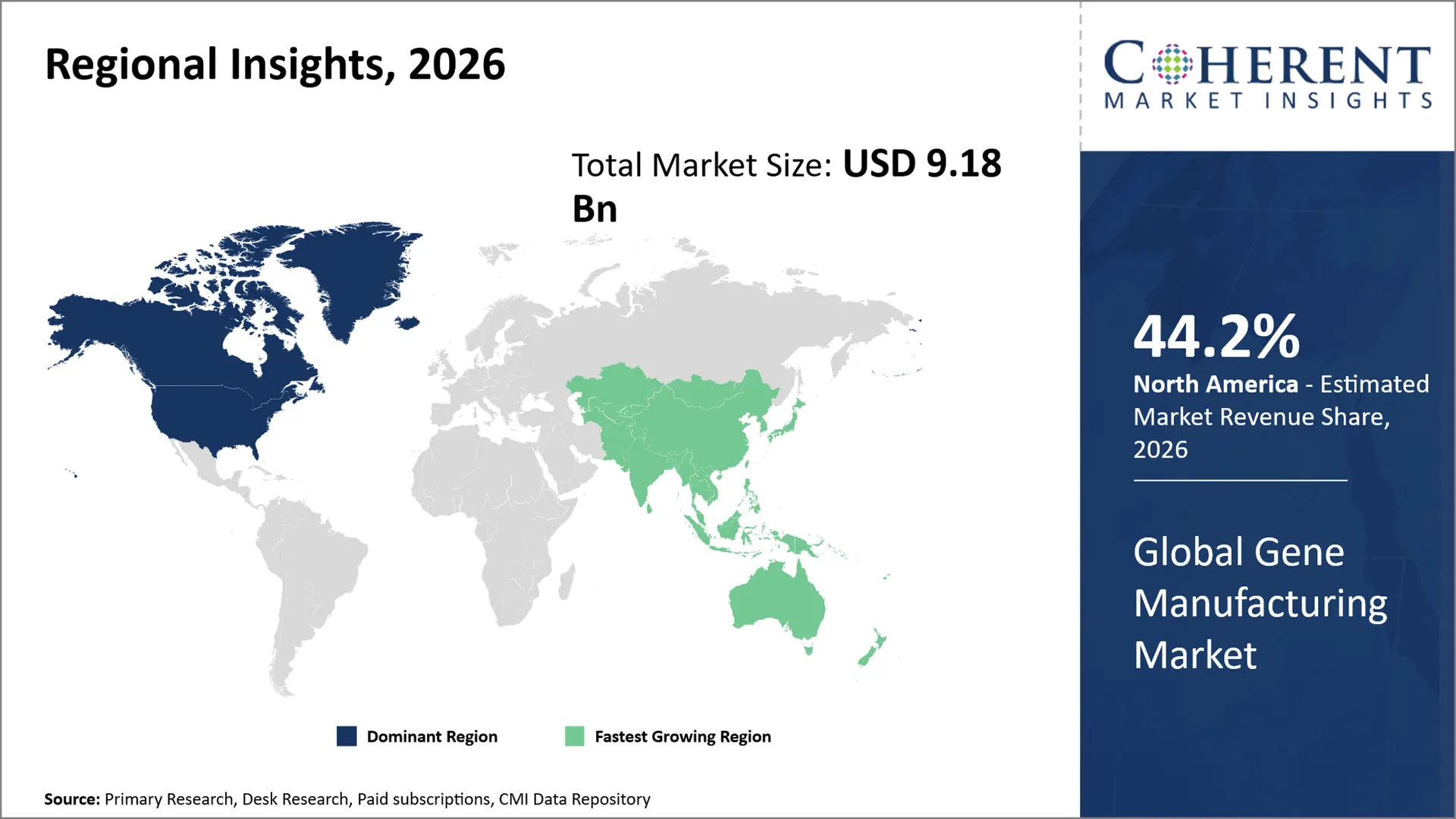
Why is North America a Strong Market for Gene Manufacturing?
North America leads the global gene manufacturing market, accounting for an estimated 44.2% share in 2026, due to its well-developed biotechnology ecosystem, research infrastructure, and large investments in gene and cell therapy development. The region seems to have favorable regulatory conditions such as the preexisting U.S. FDA approved pathways for gene-therapy development, review, and manufacturing, strong GMP capability, manufacturing infrastructure, and well-established biopharmaceutical supply chains for large-scale production and commercialization.
For instance, the U.S. Food and Drug Administration (FDA) has a clear regulatory pathway from Investigational New Drug application (IND) to the Biologics License Application (BLA) for gene therapy products. This allows a developer to move down the path of investigational clinical development to biologics license review and commercialization.
Why Does Asia Pacific Gene Manufacturing Market Exhibit High Growth?
Asia Pacific is expected to exhibit the fastest growth in the global gene manufacturing market, registering an estimated CAGR of 21.8% during 2026–2033. The region is projected to account for 22.4% of the global market in 2026, due to rising investments in biotech research, development of healthcare infrastructure, and growing preference for gene & cell therapies. The emerging government projects and investment, including the national biotechnology development programs, public funding for advanced therapies, and enhancement of GMP manufacturing capacity, is significantly increasing the regional potential.
For instance, BioE3 Policy of India has established biomanufacturing hubs & biofoundries and listed precision biotherapeutics (mRNA therapeutic, cell and gene therapy) among its priority areas, with an aim to provide shared infrastructure and bridge the gap between research and pre-commercial biomanufacturing. (Source: Press Information Bureau) Additionally, the cost benefits, growing skilled workforce, and increased technology transfer is further expected to drive gene-manufacturing activities in the region.
Global Gene Manufacturing Market Outlook for Key Countries
Why is the U.S. Leading Innovation and Adoption in the Gene Manufacturing Market?
The U.S. leads the innovation and adoption in the gene manufacturing market due to its mature manufacturing ecosystem, well-defined FDA pathways and strong links between clinical development and Good Manufacturing Practice production. Additionally, the country's advanced viral-vector manufacturing, process development and commercial production capabilities should help expedite getting gene therapies through clinical development into the market.
Is Japan a Favorable Market for Gene Manufacturing Market?
Japan is a strong market for gene manufacturing with both the GCTP (with PMDA inspection for gene therapy products) and a dedicated regulatory framework for regenerative medicine products and gene therapies. Japan is also expanding its homegrown manufacturing capacity for viral vectors, plasmid DNA, mRNA, and cell therapy products through government-backed efforts on commercialization and CDMO capacity building.
Is China Emerging as a Key Growth Hub for the Gene Manufacturing Market?
China is emerging as a major growth hub for gene manufacturing enabled by the growing scale of biotech, a strengthening of Good Manufacturing Practice (GMP) standards and new regulatory pathways for gene and cell therapies. The National Medical Products Administration (NMPA)’s 2026 framework for segmented biopharmaceutical production permits qualified manufacturers to undertake different stages of production under coordinated quality controls, supporting more flexible and scalable manufacturing models.
Why Does Germany Top the European Gene Manufacturing Market?
Germany leads the European gene manufacturing market due to the strong European regulatory framework for ATMP and state-of-the-art GAMP infrastructure. Additionally, the Paul-Ehrlich-Institut offers specific supervision of gene therapies, and there are specific quality demands for the application and production of ATMP, which most probably allow for regulated production and marketing.
Is Gene Manufacturing Market Developing in India?
India seems to be emerging as a leading gene manufacturing market, aided by the growth of biomanufacturing infrastructure, government backed biotechnology programs, and rising focus on advanced therapy approaches. Additionally, the growth of biofoundries and biomanufacturing hubs is likely to improve the country's ability in the field of gene therapy, cell therapy and mRNA manufacturing.
Gene Manufacturing Capacity by Product Type and Manufacturing Scale
Product Type | Preclinical/Research Scale | Clinical Scale | Commercial Scale | Key Manufacturing Focus |
Gene Therapy Vectors | Vector development and process optimization | GMP vector production for clinical trials | High-volume GMP production | Yield, potency, purity, scalability |
Plasmid DNA | Research-grade plasmid production | GMP-grade plasmid supply | Large-scale plasmid manufacturing | Supercoiled DNA %, purity, batch consistency |
mRNA | Small-batch mRNA synthesis | Clinical-grade mRNA production | Commercial mRNA manufacturing | Yield, integrity, LNP formulation, stability |
Other Gene Manufacturing Products | Early-stage development | Clinical manufacturing | Commercial production | Process flexibility and quality control |
How is the rising mRNA manufacturing demand creating new growth opportunities in the gene manufacturing market?
The mRNA manufacturing market indicates significant opportunity for growth as mRNA technology can evolve from a vaccine-centric approach to include the development of therapeutics, oncology drugs, and personalized medicine. Growing need for scalable production systems that could improve mRNA yield, purity, stability, as well as improve lipid nanoparticle formulation efficiency, are expected. Growing regional manufacturing capacity is also expected to improve supply-chain resiliency and enable broader commercialization. For instance, in August 2026, the Government of Canada announced an investment of over USD 70.0 million (CAD 99 million) for the life sciences. This investment included funding to increase manufacturing capacity for the production of next generation mRNA vaccines and therapies.
Market Players, Key Development, and Competitive Intelligence
Key Developments
- On September 24, 2026, Minaris Advanced Therapies and Asimov, Inc. announced a partnership to integrate Minaris’ OXGENE technology with Asimov’s AAV Edge producer cell lines to develop higher-performing systems for AAV gene-therapy manufacturing. The collaboration targets higher manufacturing titers, improved product quality, and greater scalability, addressing key challenges in AAV production.
- On September 23, 2026, Allotera Therapeutics, Inc. announced the opening of an MRD-positive cohort in the pivotal T-RRex study of Sofi-cel, an off-the-shelf, CD7-targeted CAR-T therapy. Sofi-cel uses CRISPR/Cas9 gene editing and is manufactured from healthy donor-derived T cells, highlighting the growing integration of gene editing and scalable cell-therapy manufacturing.
- On September 23, 2026, Cellares and Seoul National University Hospital (SNUH) launched a proof-of-concept to automate manufacturing of a gene-modified hematopoietic stem and progenitor cell (HSPC) therapy for paroxysmal nocturnal hemoglobinuria (PNH) using the Cell Shuttle platform. The collaboration will evaluate automated two-step transfection and support preclinical and IND-enabling manufacturing, highlighting the growing shift toward scalable, automated gene-modified cell-therapy manufacturing.
- On September 17, 2026, Ultragenyx Pharmaceutical Inc. received U.S. FDA approval for FAYUVI (rebisufligene etisparvovec-hopf), an AAV9-based gene therapy for pediatric patients with Sanfilippo syndrome Type A (MPS IIIA). The approval represents the first FDA-approved treatment for the condition and demonstrates continued commercialization of AAV-based gene therapies. The therapy is manufactured in the U.S., supporting demand for specialized gene-therapy manufacturing capabilities.
Competitive Landscape
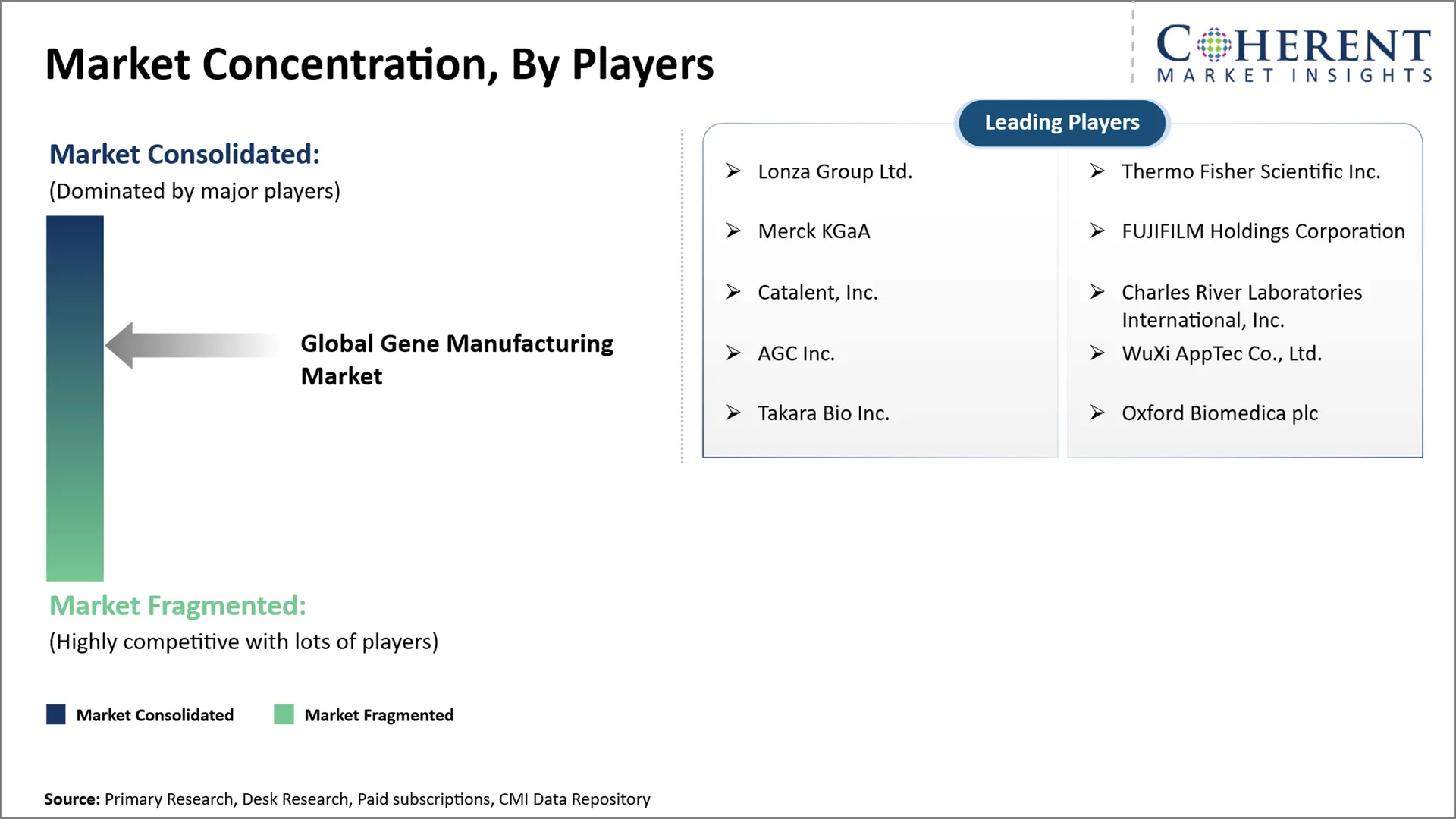
The global gene manufacturing market is moderately competitive, with competition centered on manufacturing capacity, process scalability, vector and nucleic-acid yields, quality control, and regulatory compliance. Market participants are increasingly focusing on expanding GMP manufacturing capabilities, improving production efficiency, and developing flexible platforms for gene therapy, cell therapy, mRNA, and plasmid DNA production. Key focus areas include:
- Expansion of GMP manufacturing capacity
- Improvement of upstream and downstream processing
- Development of scalable and automated manufacturing platforms
- Integration of single-use systems, process automation, and advanced analytics
- Strengthening of quality-control, analytical testing, and regulatory compliance capabilities across gene-manufacturing workflows
Market Report Scope
Global Gene Manufacturing Market Report Coverage | |||
Report Coverage | Details | ||
Base Year | 2025 | Market Size in 2026: | USD 9.18 Bn |
Historical Data For: | 2020 To 2024 | Forecast Period: | 2026 To 2033 |
Forecast Period 2026 To 2033 CAGR: | 16.2% | 2033 Value Projection: | USD 26.25 Bn |
Geographies covered: |
| ||
Segments covered: |
| ||
Companies covered: | Lonza Group Ltd., Thermo Fisher Scientific Inc., Merck KGaA, FUJIFILM Holdings Corporation, Catalent, Inc., Charles River Laboratories International, Inc., AGC Inc., WuXi AppTec Co., Ltd., Takara Bio Inc., Oxford Biomedica plc | ||
Growth Drivers: |
| ||
Restraints & Challenges: |
| ||
Analyst Opinion (Expert Opinion)
- In the coming years, global gene manufacturing market is expected to move toward high-throughput, automated, and commercially scalable manufacturing, with greater integration of modular platforms, closed processing systems, and advanced analytical technologies. Manufacturing is likely to increasingly shift from bespoke clinical-scale production toward standardized platforms capable of supporting multiple gene therapy, mRNA, plasmid DNA, and cell-therapy programs.
- The maximum opportunities are foreseen within viral-vector manufacturing for gene therapy in Asia-Pacific, particularly as manufacturers expand regional GMP capacity and seek scalable production platforms for growing clinical pipelines. Within this opportunity, AAV manufacturing can offer significant potential because of its broad use across in-vivo gene-therapy programs and the need for improved yield, consistency, and commercial-scale production.
- In order to gain a competitive advantage market players should prioritize manufacturing scalability, process yield, automation, and regulatory readiness rather than competing primarily on capacity. Developing proprietary production platforms, improving batch consistency, shortening manufacturing timelines, and offering integrated development-to-commercial manufacturing services can strengthen differentiation and customer retention.
Speak to the analyst
Want personalized insights?
Take the findings above to one of our principal consultants, or have the report rebuilt around the segments, geographies and competitors you actually track.
Market Segmentation
- Product Type Insights (Revenue, USD Bn, 2021 - 2033)
- Gene Therapy Vectors
- Plasmid DNA
- Messenger RNA (mRNA)
- Other Gene Manufacturing Products
- Manufacturing Process Insights (Revenue, USD Bn, 2021 - 2033)
- Upstream Processing
- Downstream Processing
- Fill-Finish and Formulation
- Manufacturing Scale Insights (Revenue, USD Bn, 2021 - 2033)
- Preclinical/Research Scale
- Clinical Scale
- Commercial Scale
- Application Insights (Revenue, USD Bn, 2021 - 2033)
- Gene Therapy
- Cell Therapy
- Vaccines
- Research and Other Applications
- End User Insights (Revenue, USD Bn, 2021 - 2033)
- Pharmaceutical and Biotechnology Companies
- Contract Development and Manufacturing Organizations (CDMOs)
- Academic and Research Institutions
- Others
- Regional Insights (Revenue, USD Bn, 2021 - 2033)
- North America
- U.S.
- Canada
- Latin America
- Brazil
- Argentina
- Mexico
- Rest of Latin America
- Europe
- Germany
- U.K.
- Spain
- France
- Italy
- Russia
- Rest of Europe
- Asia Pacific
- China
- India
- Japan
- Australia
- South Korea
- ASEAN
- Rest of Asia Pacific
- Middle East
- GCC Countries
- Israel
- Rest of Middle East
- Africa
- South Africa
- North Africa
- Central Africa
- North America
Sources
Primary Research Interviews
- Gene therapy manufacturers and process-development specialists involved in viral-vector, plasmid DNA, and mRNA production
- CMC and manufacturing professionals responsible for GMP gene-therapy production and scale-up
- Cell and gene therapy developers evaluating manufacturing platforms and production technologies
- CDMO executives involved in outsourced gene and cell-therapy manufacturing
- Quality-control and analytical-development specialists working on gene-manufacturing processes
- Bioprocess engineers and manufacturing scientists focused on upstream and downstream processing
- Regulatory and quality professionals specializing in CMC requirements for gene and cell therapies
Stakeholders
- Pharmaceutical and biotechnology companies developing gene and cell therapies
- Contract development and manufacturing organizations (CDMOs)
- Viral-vector and plasmid-DNA manufacturing providers
- mRNA and nucleic-acid manufacturing companies
- Academic institutions and gene-therapy research centers
- Cell and gene therapy clinical-development organizations
- Bioprocessing equipment, consumables, and analytical technology providers
- End-use Sectors
- Pharmaceutical and Biotechnology
- Healthcare and Clinical Research
- Academic and Research Institutions
- Contract Development and Manufacturing Organizations (CDMOs)
- Government and Public Research Organizations
- Regulatory & Health Bodies:
- U.S. Food and Drug Administration (FDA) – CMC, manufacturing, quality, and regulatory requirements for cellular and gene therapy products
- European Medicines Agency (EMA) – quality and manufacturing requirements for gene therapy medicinal products and genetically modified cell therapies
- Medicines and Healthcare products Regulatory Agency (MHRA), United Kingdom – regulation of advanced therapy medicinal products and manufacturing requirements
- Pharmaceuticals and Medical Devices Agency (PMDA), Japan – regulatory evaluation of regenerative and gene-therapy products
- National Medical Products Administration (NMPA), China – regulation and review of gene and cell therapy products
- World Health Organization (WHO) – international standards and regulatory considerations for cell, tissue, and gene therapy products
Databases
- ClinicalTrials.gov – clinical trials involving gene and cell therapies
- NCBI GenBank – nucleotide and genetic sequence data
- NCBI Sequence Read Archive (SRA) – high-throughput sequencing data
- NCBI Gene Expression Omnibus (GEO) – gene-expression and functional genomics datasets
- European Nucleotide Archive (ENA) – nucleotide sequence and genomic data
- UniProt – protein sequence and functional information
- FDA Drugs@FDA and CBER resources – regulatory information on approved biological and gene-therapy products
- WHO International Clinical Trials Registry Platform (ICTRP) – global clinical-trial information
Associations
- Alliance for Regenerative Medicine (ARM) – cell and gene therapy industry and development resources
- International Society for Cell & Gene Therapy (ISCT) – cell and gene therapy research, manufacturing, and clinical development
- BioPhorum – biopharmaceutical manufacturing and process-development collaboration
- Biotechnology Innovation Organization (BIO) – biotechnology research, innovation, and industry development
- International Society for Pharmaceutical Engineering (ISPE) – pharmaceutical and biopharmaceutical manufacturing practices
- Parenteral Drug Association (PDA) – pharmaceutical manufacturing, quality, and regulatory practices
Public Domain Sources
- National Institutes of Health (NIH) – gene therapy, cell therapy, biomedical research, and clinical research initiatives
- National Center for Biotechnology Information (NCBI) – genetic, molecular biology, and biotechnology research resources
- U.S. Food and Drug Administration (FDA) – public regulatory guidance and CMC information for gene and cell therapies
- European Medicines Agency (EMA) – public scientific guidelines for gene therapy medicinal products and advanced therapies
- World Health Organization (WHO) – global standards and regulatory information for cell, tissue, and gene therapy products
- U.S. Department of Health and Human Services (HHS) – biotechnology, biologics, and public-health information
- European Commission – biotechnology, advanced therapies, and pharmaceutical regulatory information
- OECD – biotechnology, biomanufacturing, and life-sciences policy information
Proprietary Elements
- CMI Data Analytics Tool
- Proprietary CMI Existing Repository of information for last 10 years.
Get access to 250+ pages report
Every segment, forecast, competitor profile and data table behind the analysis above — available for instant download.
- ESOMAR Member
- ISO 9001:2015 Certified
- D-U-N-S Registered
- GDPR & CCPA Compliant
Frequently Asked Questions
The global gene manufacturing market is estimated to be valued at USD 9.18 Bn in 2026 and is expected to reach USD 26.25 Bn by 2033.
Gene therapy vectors dominate due to their extensive use in gene therapy and cell therapy development, particularly for viral-vector-based treatments.
Gene manufacturing is the production of genetic materials such as viral vectors, plasmid DNA, and mRNA at research, clinical, or commercial scale.
The CAGR of global gene manufacturing market is projected to be 16.2% from 2026 to 2033.
Growing gene-therapy pipeline, and expansion of GMP manufacturing capacity are the major factors driving the growth of the global gene manufacturing market.
High manufacturing costs, and complex quality requirements are the major factors hampering the growth of the global gene manufacturing market.
In terms of manufacturing scale, commercial scale is estimated to dominate the market revenue share in 2026.