

Global Ambulatory EHR Market Analysis & Forecast - 2026 to 2033
The global ambulatory EHR market size is estimated to be valued at USD 7.30 Bn in 2026 and is expected to reach USD 11.65 Bn by 2033, exhibiting a compound annual growth rate (CAGR) of 6.9% from 2026 to 2033.
Key Takeaways
- By Delivery Mode, On-Premise Systems are projected to lead the ambulatory EHR market in 2026, capturing around 59.7%, due to stronger data control and localized IT infrastructure
- By Application, Practice Management Solutions are expected to take the largest share in 2026, with 34.3%, as outpatient centers prioritize scheduling, billing, and workflow optimization.
- By End User, Hospital-Owned Ambulatory centers are set to dominate with approximately 51.1% share in 2026, benefiting from integrated systems and centralized data access.
- By Region, North America is likely to stay in the lead globally in 2026, holding 35.4% of the market, thanks to widespread EHR adoption and mature healthcare IT ecosystems.
Market Overview
Ambulatory EHR solutions are observing high demand due to their benefits like improving healthcare access and quality of care while reducing costs. The trend is likely to continue as EHR solutions help improve outcomes of chronic diseases management as well as preventive care. Features like population health management, patient engagement, telehealth integration, and support for value-based models are witnessing high importance. Various government stimulus programs are further encouraging healthcare providers to adopt digital health technologies for the better management of patient health as well as administrative operations.
Current Events and Its Impact on the Global Ambulatory EHR Market
Event | Description and Impact |
AI Integration and Healthcare Technology Advancement |
|
Post-COVID Healthcare Digitization Push |
|
Regulatory and Compliance Evolution |
|
Ambulatory EHR Market Growth Factors
A software application called an outpatient electronic medical record (EHR) is made to be used in outpatient treatment environments and smaller organizations. A patient's comprehensive medical information is accessible to medical practitioners and is kept in an online format. All information on surgeries or treatments that don't necessitate hospitalization is generally contained in these papers.
The monitoring of a patient's health history and ongoing care is made simpler for healthcare professionals by transportable EHR systems. As a consequence of the collection and analysis of pertinent data about every patient by doctors using this software, extensive databases of the patient's health records are created. This extensive database aids doctors in developing a more thorough grasp of the health of their patients, thereby simplifying subsequent diagnoses.
The growing demand for outpatient treatment over in-patient care among patients increased government assistance for the use of EHR solutions and rising operational costs within the health industry are the main factors propelling the worldwide outpatient EHR market.
A few other aspects that provide substantial potential prospects for market players include the incorporation of machine learning and deep learning technologies, as well as the shifting technology backdrop in emerging economies. However, it is anticipated that limitations in IT infrastructures in low-income nations, information security issues, high installation expenses, and hefty investments in infrastructure will to some degree restrain the growth of this industry.
- Current Industry Events of 2026
- Market Size Estimation
- Regional Breakdown
- Competitive Landscape
- Customer Intelligence
- Segmental Analysis
- Pricing Analysis
- Key Market Drivers, Challenges & Future Trends
- Customized Insights Section
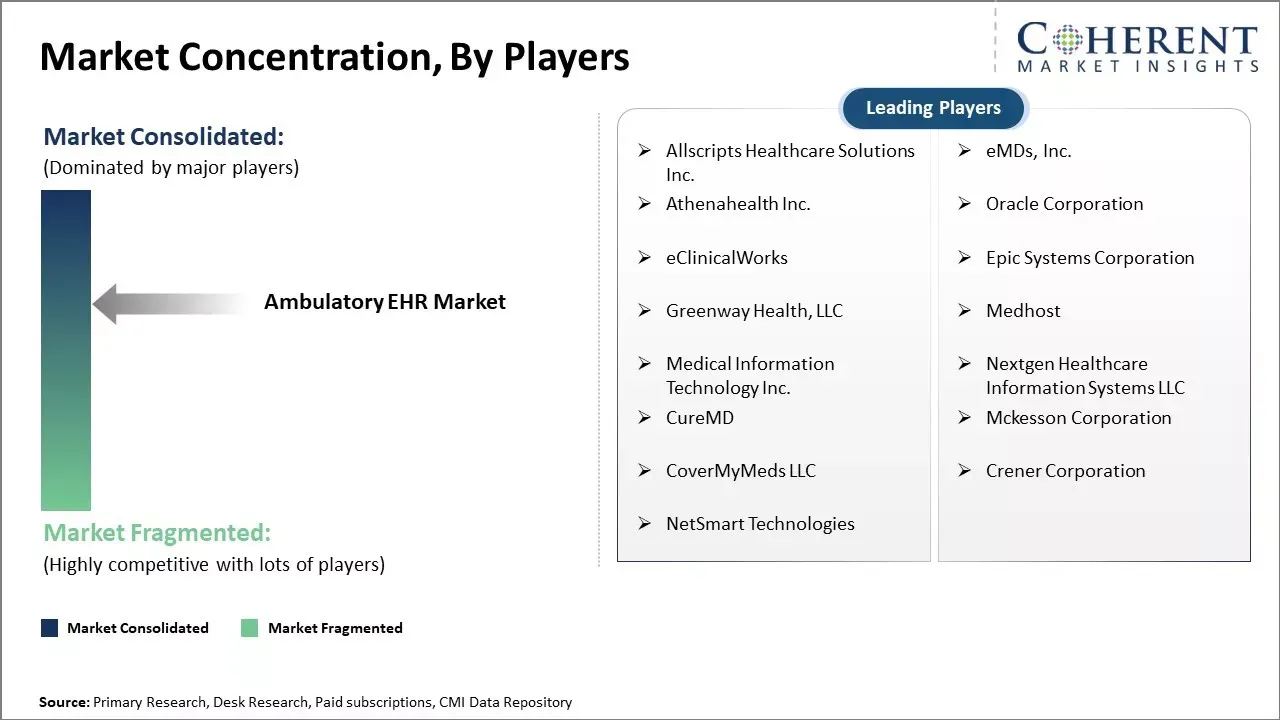
Market Concentration and Competitive Landscape
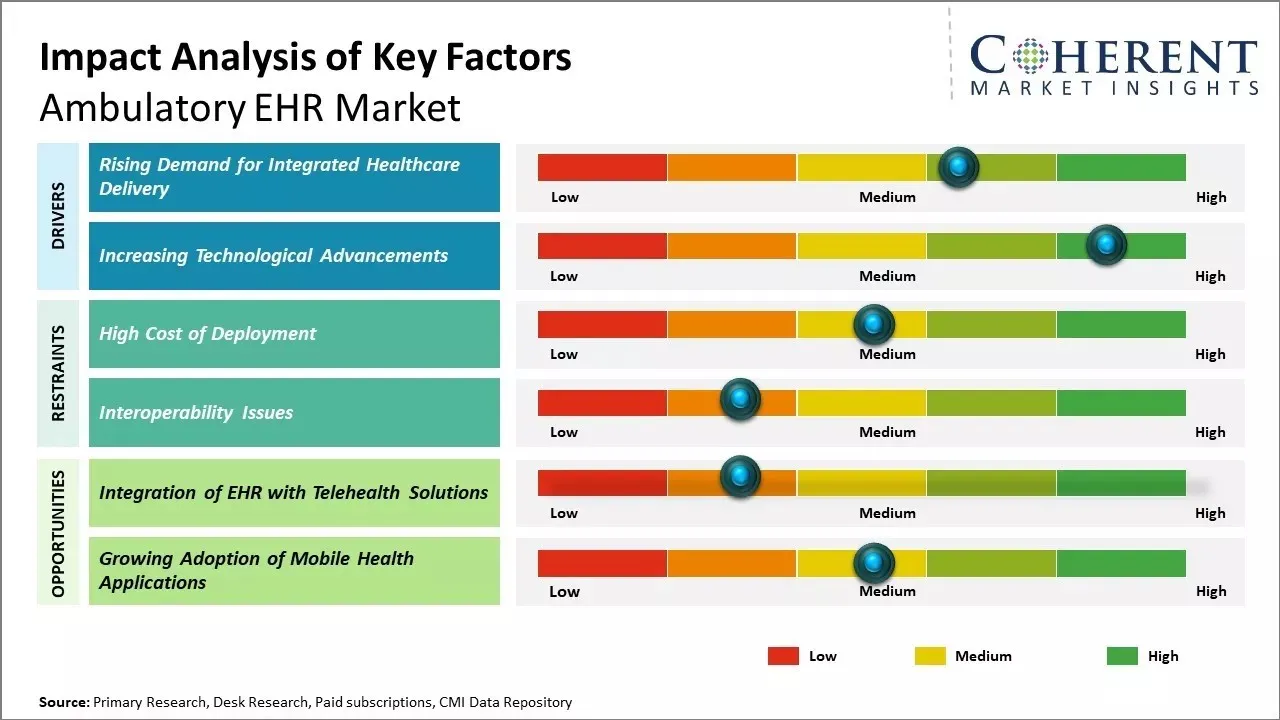
Rising Demand for Integrated Healthcare Delivery
The global healthcare industry is undergoing rapid transformation towards integrated and patient-centric care delivery models. There is a growing recognition that traditional hospital-centric systems are inefficient and fragmented, lacking coordination between different care settings.
As patients transition between primary care, specialist visits, diagnostics, post-acute care, and other services, their medical records and care plans are often not well integrated. This results in lost opportunities for continuous monitoring of health conditions, preventive care, improved outcomes and patient satisfaction.
Ambulatory EHR solutions are enabling the vision of integrated care delivery by serving as the digital backbone that connects various points of care. They allow seamless exchange of clinical data between providers, thus giving physicians a comprehensive view of patient history regardless of care setting. This level of information flow supports early disease detection, care coordination, remote patient monitoring, and lower readmission rates.
For healthcare organizations, EHR facilitates population health management and value-based reimbursement through analytics of longitudinal patient data. Leading providers are implementing robust ambulatory EHR suites combined with patient engagement platforms and care management tools and moving from fee-for-service to truly integrated care models. The drive for seamless healthcare across all points of service is a major factor propelling investments and advancements in ambulatory EHR worldwide.
Increasing Technological Advancements
Increasing adoption of growth strategies, such as technological advancements, is expected to drive the market growth over the forecast period. For instance, in October 2023, Texas Partners Center, a surgical center in Texas, U.S., adopted an eClinicalWorks cloud-based EHR for ambulatory surgery centers (ASC) to enhance. The implementation of the eClinicalWorks EHR is set to advance interoperability with ambulatory surgery centers and other providers to boost care coordination.
Market Opportunities – Integration of EHR with Telehealth Solutions
The integration of Electronic Health Records (EHR) with telehealth solutions provides a massive opportunity to drive innovation and growth in the global ambulatory EHR market. Telehealth has seen a tremendous rise in adoption over the past couple of years due to the pandemic, allowing patients to consult with doctors virtually. However, the lack of interconnectedness between telehealth platforms and existing EHR infrastructure has limited the ability to fully leverage patient health data. Integrating EHR with telehealth brings the potential to streamline clinical workflows, enhance healthcare delivery, and improve patient outcomes.
Segmental Insights
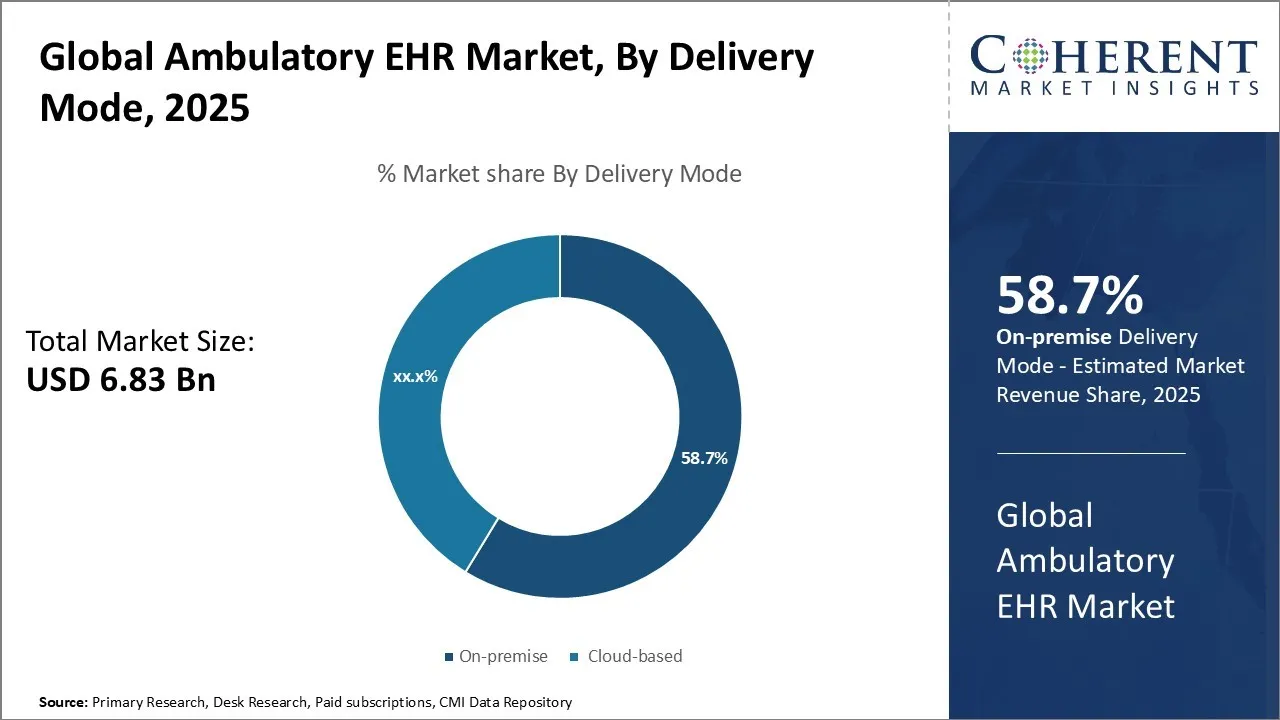
Ambulatory EHR Market Insights, By Delivery Mode
The on-premise sub-segment is estimated to hold 59.7% of the market share in 2026 owing to its dependable and controllable nature. Healthcare providers prefer on-premise ambulatory EHR systems as they provide complete control over software, upgrades, and security. Any downtime or upgrades can be scheduled as per convenience without depending on a third-party vendor. This helps healthcare organizations minimize disruption to clinical workflows. On-premise solutions also address privacy and security concerns effectively as sensitive patient data remains inside the firewall of healthcare providers. Customizations can be made easily to the system as per evolving needs. However, higher upfront capital investments and maintenance costs are some of the challenges of on-premise delivery.
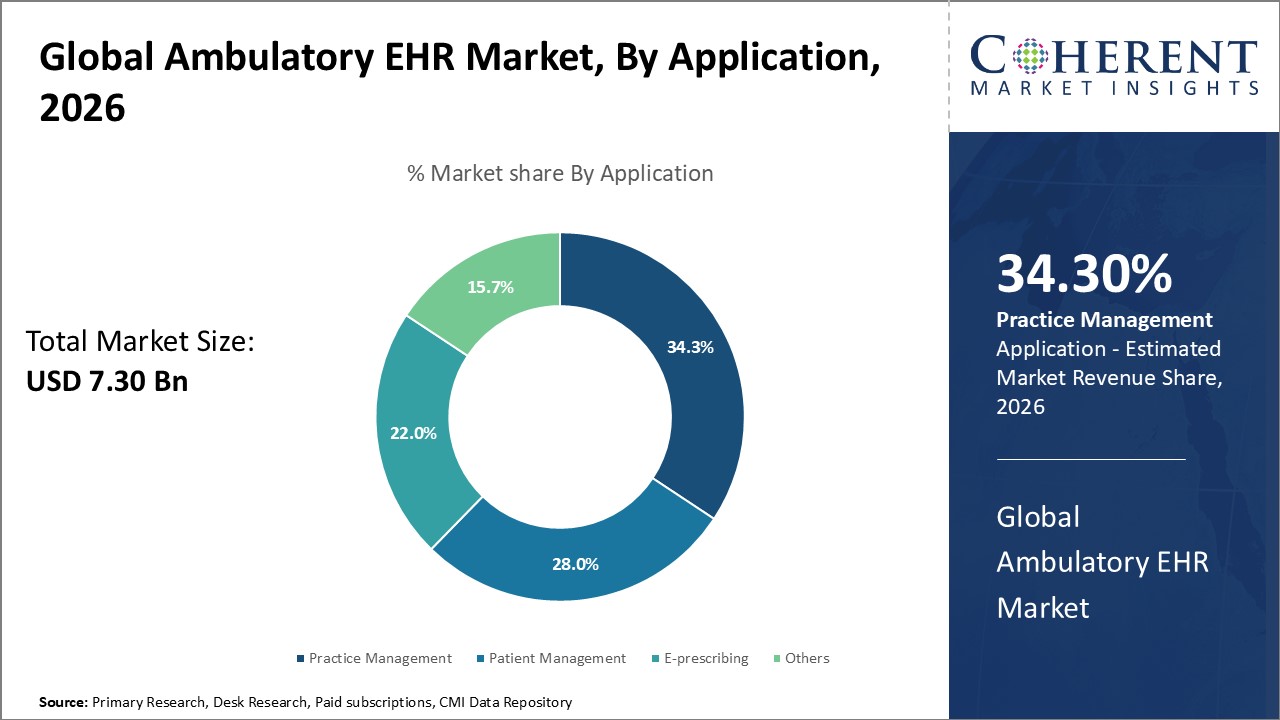
Ambulatory EHR Market Insights, By Application
The application segment includes practice management, patient management, e-prescribing, and others. The practice management sub-segment is estimated to hold 34.3% of the market share in 2026 as it helps in the efficient management of day-to-day ambulatory care operations. Modules like scheduling, billing, and claims management are essential for ambulatory providers to streamline workflows and enhance productivity. Customizable practice management solutions optimize provider schedules, manage patient appointments, track referrals/authorizations, and facilitate insurance claims processing. They also enable the effective management of revenue cycle operations. Moreover, features like integration with billing services, patient portals foster the management of the entire patient journey from the first appointment to payments. This makes practice management a priority among ambulatory EHR adoptions.
Ambulatory EHR Market Insights, By End User
The end user segment includes hospital-owned ambulatory centers and independent ambulatory centers. The hospital-owned ambulatory centers sub-segment is estimated to hold 51.1% of the market share in 2026 owing to advantages of clinical and operational integration with parent hospitals. Being a subsidiary of larger hospital systems, these centers leverage existing resources and benefit from streamlined workflows. Seamless data exchange, common clinical workflows and unified patient records help provide efficient continuum of care. They also gain from centralized support services, purchasing agreements, and shared expertise within the hospital network. This facilitates higher profitability and growth prospects compared to independent centers. Therefore, healthcare providers are increasingly preferring hospital-owned ambulatory care models to expand access and service offerings in a cost-effective manner.
Regional Insights
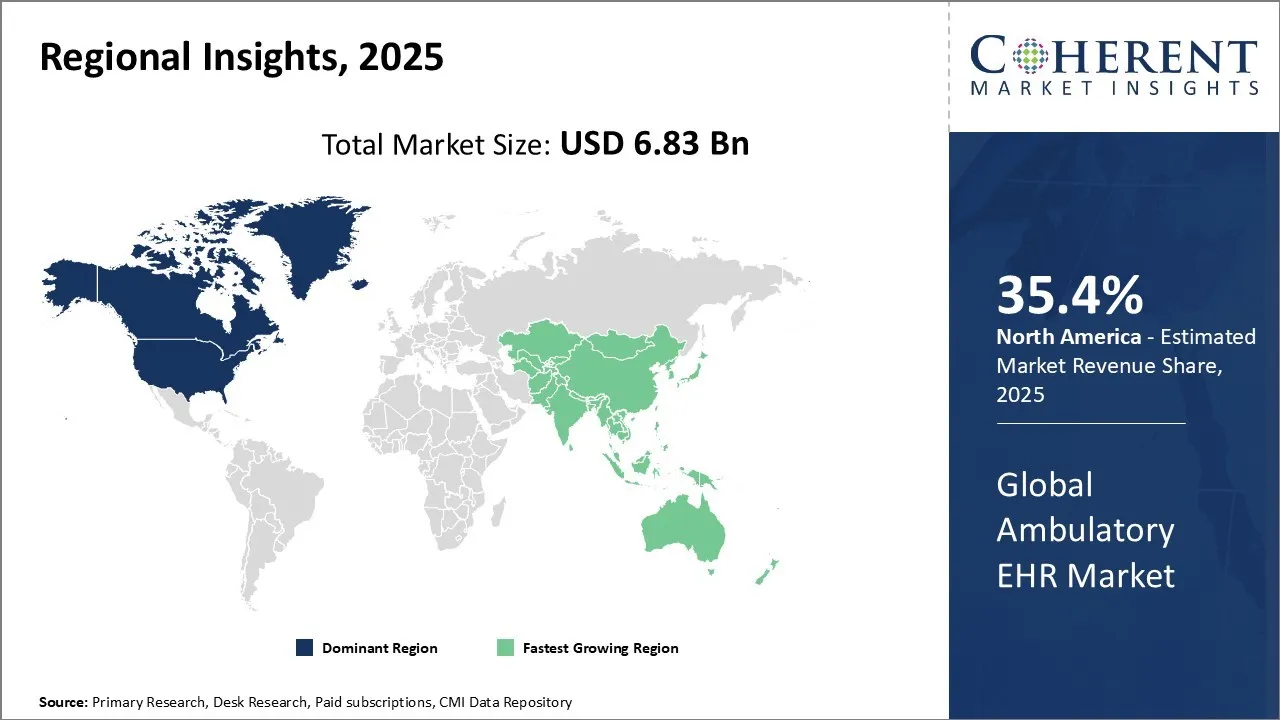
North America Ambulatory EHR Market Analysis and Trends
North America is expected to maintain a dominant position in the global ambulatory EHR market throughout the forecast period, with the region projected to account for 35.4% of the market share in 2026. This leadership is primarily attributed to the region’s highly developed healthcare infrastructure and widespread adoption of electronic health records across hospitals and outpatient care facilities. Most healthcare providers in the U.S. and Canada have integrated EHR solutions to streamline clinical workflows, manage patient data, and support remote care.
Regulatory mandates, such as those issued by the Centers for Medicare and Medicaid Services (CMS), have been instrumental in accelerating EHR adoption by offering financial incentives and penalties. Additionally, government-backed digitization initiatives and a strong culture of innovation in healthcare technology continue to bolster the regional market. The presence of major EHR vendors and established interoperability standards further strengthens North America's leadership in the ambulatory EHR landscape.
Asia Pacific Ambulatory EHR Market Analysis and Trends
Asia Pacific is anticipated to be the fastest-growing regional market for ambulatory EHR solutions, driven by rapid healthcare modernization and increasing investments in digital infrastructure across key economies. Countries such as China, India, South Korea, and Japan are witnessing substantial growth in healthcare digitization, supported by government initiatives aimed at improving the quality and accessibility of medical services.
The rise of medical tourism, particularly in India and Southeast Asia, has further encouraged healthcare providers to adopt digital solutions to enhance patient experience and care coordination. Moreover, the increasing affordability of healthcare services, along with favorable regulatory frameworks for digital transformation, is fueling EHR penetration across both urban and semi-urban regions. As Asia Pacific continues to embrace health tech innovation, the region is set to witness strong momentum in ambulatory EHR deployment across private clinics, diagnostic centers, and specialty care facilities.
Dominating Countries in the Ambulatory EHR Market
United States Ambulatory EHR Market Analysis and Trends
The United States is the leading contributor to the North American ambulatory EHR market, accounting for the majority of the region’s share. The country's well-established regulatory environment, including the HITECH Act and Meaningful Use program, has driven widespread implementation of EHRs across ambulatory settings. A competitive EHR vendor landscape, combined with high physician awareness and institutional support for digital transformation, continues to drive innovation and adoption in the U.S. ambulatory care ecosystem.
China Ambulatory EHR Market Analysis and Trends
China is emerging as a pivotal growth engine for the Asia Pacific ambulatory EHR market. As part of its broader healthcare reform strategy, the Chinese government is investing heavily in health IT infrastructure, particularly in urban hospitals and large outpatient clinics. The push for smart hospital development and increased demand for integrated care solutions are fostering the rapid deployment of EHR systems. As China continues to expand its digital health ecosystem, demand for ambulatory EHR solutions is expected to grow significantly, especially in tier-1 and tier-2 cities.
Market Report Scope
Ambulatory EHR Market Report Coverage
| Report Coverage | Details | ||
|---|---|---|---|
| Base Year: | 2025 | Market Size in 2026: | USD 7.30 Bn |
| Historical Data for: | 2020 To 2024 | Forecast Period: | 2026 To 2033 |
| Forecast Period 2026 to 2033 CAGR: | 6.9% | 2033 Value Projection: | USD 11.65 Bn |
| Geographies covered: |
| ||
| Segments covered: |
| ||
| Companies covered: | Allscripts Healthcare Solutions Inc., eMDs, Inc., Athenahealth Inc., Oracle Corporation, eClinicalWorks, Epic Systems Corporation, Greenway Health, LLC, Medhost, Medical Information Technology Inc., Nextgen Healthcare Information Systems LLC, CureMD, Mckesson Corporation, CoverMyMeds LLC, Crener Corporation, and NetSmart Technologies | ||
| Growth Drivers: |
| ||
| Restraints & Challenges: |
| ||
Analyst Viewpoint
- The global ambulatory EHR market is experiencing strong growth, driven by widespread digital transformation efforts within healthcare systems around the world.
- Healthcare providers are increasingly prioritizing streamlined patient data management, improved clinical workflows, and better care coordination to enhance service delivery.
- Government mandates supporting healthcare digitization, particularly in developed regions, are acting as major enablers for EHR adoption.
- The increasing burden of chronic diseases is creating a demand for continuous patient monitoring and robust data tracking, making ambulatory EHR systems vital components of healthcare infrastructure.
- Cloud-based deployment models are gaining traction due to their scalability and cost-effectiveness, especially among smaller healthcare practices that previously faced budget constraints.
- Despite the growth prospects, several challenges hinder implementation, including high upfront costs, complex system integration, and persistent concerns over data security and privacy compliance.
- Many healthcare organizations encounter workflow disruptions during the transition to EHR systems, leading to resistance from clinical staff and slowing adoption rates.
- The integration of artificial intelligence presents a promising opportunity, enabling predictive analytics and clinical decision support tools that can enhance diagnostic accuracy and efficiency.
- Enhancements in interoperability and patient engagement capabilities are emerging as key growth avenues, particularly as the industry shifts toward value-based care models.
- North America remains the dominant market due to its mature healthcare infrastructure, favorable regulations, and high rate of technology adoption.
- Asia-Pacific is the fastest-growing region, supported by increasing healthcare spending, government-backed digitization initiatives, and rising awareness of EHR benefits among providers, reflecting broader modernization trends in emerging economies.
Global Ambulatory EHR Market Key Developments
- In August 2025, Oracle Health debuted a new, AI-driven EHR that aimed to reduce administrative burden and embed AI more deeply into clinical workflows. The new Oracle EHR enabled clinicians to adopt a “voice-first” approach to the EHR, allowing them to use voice commands to retrieve patient information and reduce the number of clicks required.
- In February 2025, Veradigm® announced that Black Book Research, a leader in healthcare industry insights, had ranked Veradigm EHR first for both Ambulatory EHR Family Practice and Ambulatory EHR Primary Care General Practice in its 2025 Top-Rated EHR Vendors by Specialty report.
Market Segmentation
- Delivery Mode Insights (Revenue, USD Bn, 2021 - 2033)
- On-premise
- Cloud-based
- Application Insights (Revenue, USD Bn, 2021 - 2033)
- Practice Management
- Patient Management
- E-prescribing
- Others
- Practice Size Insights (Revenue, USD Bn, 2021 - 2033)
- Large Practices
- Medium-sized Practices
- Small Practices
- End User Insights (Revenue, USD Bn, 2021 - 2033)
- Hospital-owned Ambulatory Centers
- Independent Ambulatory Centers
- Regional Insights (Revenue, USD Bn, 2021 - 2033)
- North America
- U.S.
- Canada
- Latin America
- Brazil
- Argentina
- Mexico
- Rest of Latin America
- Europe
- Germany
- U.K.
- Spain
- France
- Italy
- Russia
- Rest of Europe
- Asia Pacific
- China
- India
- Japan
- Australia
- South Korea
- ASEAN
- Rest of Asia Pacific
- Middle East
- GCC Countries
- Israel
- Rest of Middle East
- Africa
- South Africa
- North Africa
- Central Africa
- Key Players Insights
- Allscripts Healthcare Solutions Inc.
- eMDs, Inc.
- Athenahealth Inc.
- Oracle Corporation
- eClinicalWorks
- Epic Systems Corporation
- Greenway Health, LLC
- Medhost
- Medical Information Technology Inc.
- Nextgen Healthcare Information Systems LLC
- CureMD
- Mckesson Corporation
- CoverMyMeds LLC
- Crener Corporation
- NetSmart Technologies
- Vision RT Ltd.
- Qfix
Sources
Primary Research Interviews
- Healthcare IT Directors and CIOs
- Ambulatory EHR Software Vendors and Solution Providers
- Healthcare Practice Administrators and Physicians
- Healthcare Technology Consultants
- Others
Databases
- Healthcare Information and Management Systems Society (HIMSS) Database
- IBM Watson Health Database
- Frost & Sullivan Healthcare Database
- Grand View Research Healthcare IT Database
- Others
Magazines
- Healthcare IT News
- Modern Healthcare
- Health Data Management
- Electronic Health Reporter
- Others
Journals
- Journal of Medical Internet Research (JMIR)
- International Journal of Medical Informatics
- Journal of Healthcare Information Management
- Others
Newspapers
- The Wall Street Journal (Healthcare Section)
- Financial Times (Healthcare Technology)
- Reuters Health News
- Bloomberg Healthcare
- Others
Associations
- Healthcare Information and Management Systems Society (HIMSS)
- American Medical Informatics Association (AMIA)
- Healthcare Financial Management Association (HFMA)
- Medical Group Management Association (MGMA)
- Others
Public Domain Sources
- U.S. Department of Health and Human Services (HHS)
- Centers for Medicare & Medicaid Services (CMS)
- Office of the National Coordinator for Health Information Technology (ONC)
- World Health Organization (WHO) Health IT Reports
- Others
Proprietary Elements
- CMI Data Analytics Tool
- Proprietary CMI Existing Repository of information for last 8 years
*Definition: Ambulatory EHR consists of the various electronic health record software solutions and services that are used by ambulatory healthcare providers like private practices, urgent care clinics, and community health centers. These ambulatory EHR systems allow doctors, nurses, and other medical staff to access and manage patient health records digitally during visits in their offices or clinics. They help streamline workflows, improve clinical documentation, support billing, and increase care coordination between ambulatory and acute care settings.
Get access to 250+ pages report
Every segment, forecast, competitor profile and data table behind the analysis above — available for instant download.
- ESOMAR Member
- ISO 9001:2015 Certified
- D-U-N-S Registered
- GDPR & CCPA Compliant
Missing comfort of reading report in your local language? Find your preferred language:
Transform your Strategy with Exclusive Trending Reports
Frequently Asked Questions
The Global Ambulatory EHR Market is estimated to be valued at USD 7.30 Bn in 2026, and is expected to reach USD 11.65 Bn by 2033.
The CAGR of the Global Ambulatory EHR Market is projected to be 6.9% from 2026 to 2033.
Rising demand for integrated healthcare delivery and increasing technological advancements are the major factors driving the growth of the ambulatory EHR market.
High cost of deployment and interoperability issues are the major factors hampering the growth of the ambulatory EHR market.
In terms of delivery mode, on-premise is estimated to dominate the market revenue share in 2026.
Allscripts Healthcare Solutions Inc., eMDs, Inc., Athenahealth Inc., Oracle Corporation, eClinicalWorks, Epic Systems Corporation, Greenway Health, LLC, Medhost, Medical Information Technology Inc., Nextgen Healthcare Information Systems LLC, CureMD, Mckesson Corporation, CoverMyMeds LLC, Crener Corporation, and NetSmart Technologies are the major players.
North America is expected to lead the ambulatory EHR market.