

Global Microcatheter Market Size and Trends
The global microcatheter market is estimated to be valued at USD 2.15 Billion in 2026 and is expected to reach USD 2.93 Billion by 2033, exhibiting a compound annual growth rate (CAGR) of 4.5% from 2026 to 2033.
Key Takeaways of the Global Microcatheter Market
- By product design, the single lumen microcatheter segment is the expected to lead the product design segment in the global microcatheter market in 2026.
- North America remains the dominant player in the global microcatheter market and is estimated to account for 35. 7% of the global market share in 2026.
- Asia Pacific is expected to be the second-largest market for microcatheters, accounting for over 25. 2% of the market share in 2026.
Market Overview
The global microcatheter market is expected to witness consistent growth through 2033, driven by increasing preference for minimally invasive procedures, rising burdens of cardiovascular diseases and cancer, and advancements in endovascular therapies.
However, a lack of proper healthcare infrastructure and access in developing regions may negatively impact market growth. The high cost of microcatheters also remains a key restraint for its widespread adoption.
Current Events and their Impact on the Global Microcatheter Market
Current Events | Description and its impact |
EU Medical Device Regulation (MDR) Reform |
|
Technological Advancements |
|
Market Trends
Increasing Number of Minimally Invasive Surgeries
The global microcatheter market is witnessing significant growth owing to the rising adoption of minimally invasive surgical procedures worldwide. Minimally invasive surgeries, such as laparoscopy and arthroscopy, offer several benefits over traditional open surgeries such as less pain, fewer complications, a shorter hospital stay, and a faster recovery time.
For instance, at Cleveland Clinic, mitral valve repair rates are 93% and higher, with experienced centers reporting success rates approaching 100%. Robotic cardiac surgery has changed the way surgeons perform certain heart operations.
This has increased patient preference for such surgeries in recent years. Microcatheters play a vital role in various minimally invasive procedures, such as neurointerventional surgeries, cardiovascular surgeries, and urological surgeries. They help physicians navigate through blood vessels or other narrow pathways of the body to reach the target location with high precision.
Increasing Prevalence of Cardiovascular Diseases
One of the main factors propelling the expansion of the global microcatheter market is the rising incidence of cardiovascular disorders worldwide. Cardiovascular diseases (CVDs) are becoming one of the biggest health issues facing the world.
According to the World Heart Federation’s World Heart Report 2025 – Obesity and Cardiovascular Disease, high body mass index (BMI) has emerged as the third most significant global risk factor for cardiovascular mortality. Thus, with the rise in the burden of cardiovascular diseases, the demand for cardiovascular diagnostics and treatment devices is also increasing at a rapid pace globally.
- Current Industry Events of 2026
- Market Size Estimation
- Regional Breakdown
- Competitive Landscape
- Customer Intelligence
- Segmental Analysis
- Pricing Analysis
- Key Market Drivers, Challenges & Future Trends
- Customized Insights Section
Segmental Analysis
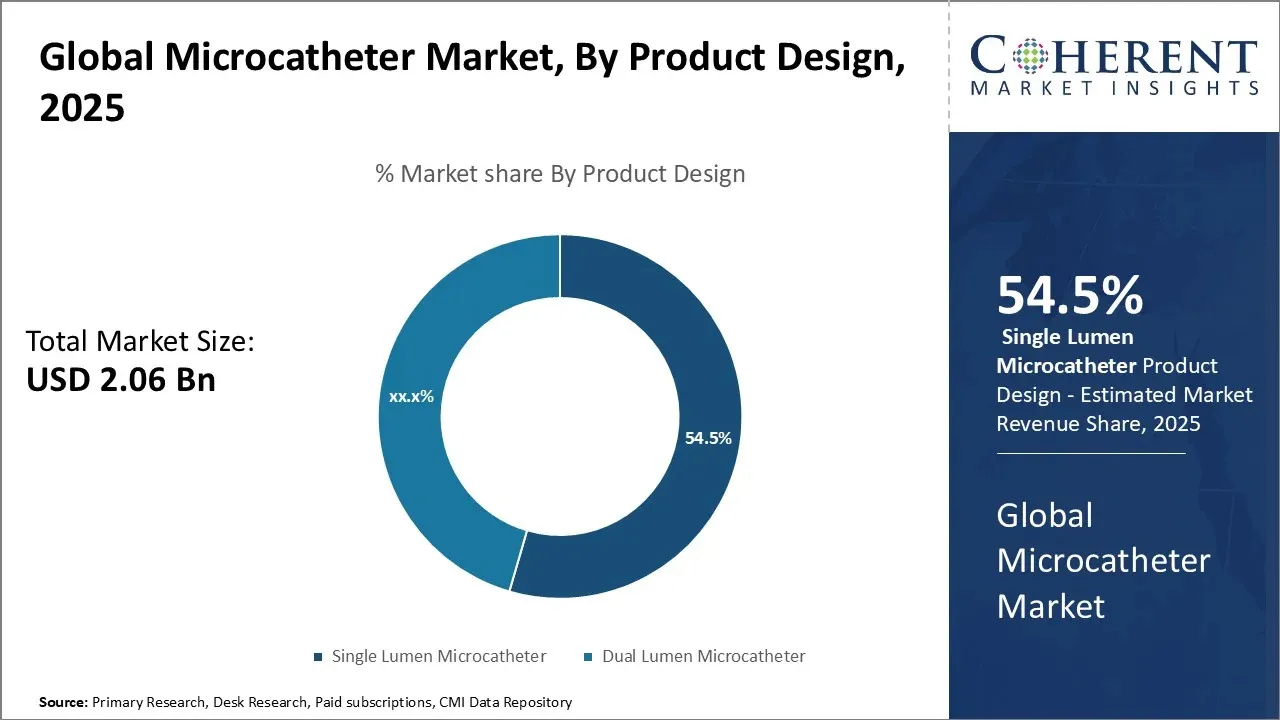
Global Microcatheter Market Insights, by Product Design: The Single Lumen Microcatheter is Dominating the Market
The single lumen microcatheter segment is anticipated to have the highest share i.e. 55.5% of the market in 2026, driven by the growing need in the medical industry for minimally invasive procedures.
Technology breakthroughs and rising healthcare costs worldwide are to blame for the single lumen microcatheters market's recent boom. The need for accurate, less invasive treatment alternatives is further highlighted by the growing older population and the increasing frequency of chronic diseases like cardiovascular disorders.
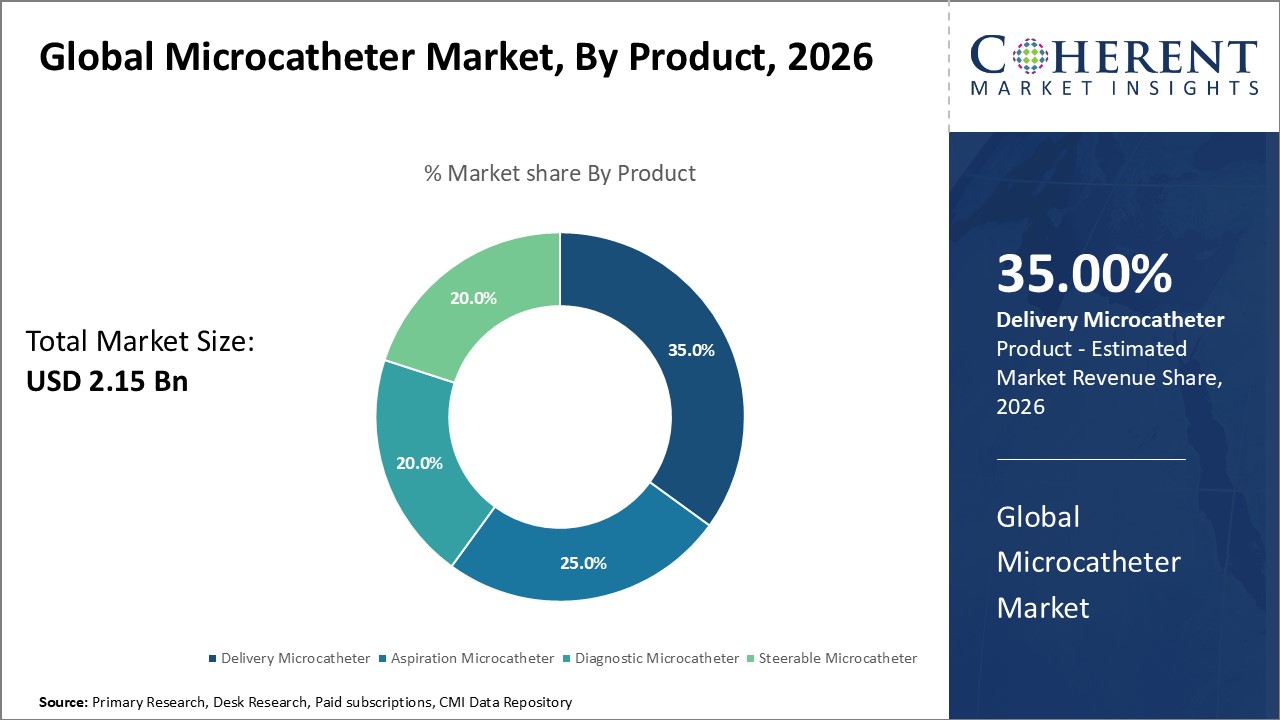
Global Microcatheter Market Insights, by Product: Aspiration Microcatheters Segment Holds Significant Market Share
The aspiration microcatheter segment held a major market share. This is attributable to rising demand for devices that ensure rapid as well as effective recanalization, enhance functional recovery rates, and demonstrate proven clinical safety and efficacy in treating acute ischemic strokes.
These microcatheters reduce procedure risks while providing improved control and flexibility, allowing access to intricate anatomical locations. Their use is also fueled by the growing incidence of chronic illnesses and developments in catheter technology.
Emerging Innovations in the Global Microcatheter Market
- Siege Vascular Plug
Application: The Siege Vascular Plug is designed with conformable, tightly woven, and nitinol braiding that achieves apposition in the artery and minimizes potential for distal migration. Radiopaque marker bands provide enhanced proximal and distal visibility for precise placement. With Siege Vascular Plug, operators can recapture, reposition, and redeploy the plug where needed. Average occlusion time is approximately 1.3 minutes.
Example: In October 2024, the Siege Vascular Plug was introduced as a self-expanding vascular implant designed for peripheral arterial embolization in vessels ranging from 1.5 to 6.0 mm in diameter. Engineered for efficient and reliable occlusion, the device incorporates features that enable smooth navigation through the vasculature and ensure rapid, complete vessel closure at the target site.
- Endexo technology for reduced thrombus formation, bacterial adhesion, and biofouling in medical devices
Application: This is intended to increase medical devices' biocompatibility and safety. Endexo additives provide a better option than conventional medical device coatings by drastically lowering biological adhesion and biofilm formation.
Example: As of 2025, Endexo technology addresses critical device challenges such as thrombosis, bacterial adhesion, biofouling and encrustation, while optimizing surface friction for better device functionality.
AI Impacts in the Global Microcatheter Market
The AI-assisted microcatheter shaping technology offers a fresh way to create the ideal form for the microcatheter and mandrel during endovascular treatments.
- Researchers developed VascularPilot3D, a system integrating AI with robotic platforms and fluoroscopic imaging for guidewire/microcatheter navigation in 3D, ex-vivo. This reduced human‑surgeon control loops by 18.4%, streamlining the procedure.
- Fourier Neural Operator model designed to create catheter shapes that are anti-infection. The AI-designed catheter showed a 10–100× decrease in bacterial colonization at the catheter tip in microfluidic testing with E. coli, which could potentially cut infection rates in comparison to traditional designs.
Reimbursement Scenario in the Global Microcatheter Market
- U.S.
- Microcatheters are reimbursed within bundled payments under Medicare Severity Diagnosis Related Groups (MS-DRGs)—e.g., MS-DRG 252/253 for cardiac cath lab procedures.
- No separate HCPCS code exists for microcatheters; reimbursement is tied to procedure codes such as CPT 93458 (cardiac catheterization) or 61645 (neurointerventional).
- Pass-through status (C-code) not typically granted unless the device has unique FDA breakthrough designation—limiting standalone reimbursement potential.
- China
- Covered selectively under provincial-level reimbursement lists (NRDL extensions).
- Tier-3 public hospitals purchase via centralized bidding (VBP); prices typically cut 30–60% from manufacturer list prices.
- No national reimbursement code for microcatheters; bundled under interventional DRG pilot schemes in cities like Shenzhen, Beijing.
Consumer Behavior in the Global Microcatheter Market
- Brand Loyalty Among Key Opinion Leaders (KOLs)
- High-volume specialists often exhibit strong brand loyalty, driven by past performance consistency, procedural familiarity, and support from clinical education programs.
- For example, Boston Scientific's Direxion and Medtronic's Echelon lines maintain long-standing preference in neurology due to KOL endorsement and multi-center usage validation.
- Price Sensitivity Varies by Geography and Application
- In price-sensitive markets (e.g., Southeast Asia, Latin America), microcatheter selection is often driven by unit cost and value-for-money rather than clinical distinction.
- In contrast, premium hospitals in the U.S., Japan, and EU prioritize devices that demonstrate long-term patient outcomes, even at higher upfront costs.
- Importance of Sales Force and In-Procedure Support
- Consumer behavior in this space is shaped by technical reps present during procedures, who assist with catheter selection, troubleshooting, and alternate routing strategies.
- rusted field support teams significantly influence brand recall and repeat use, especially in complex neuro and oncology interventions.
Regional Insights
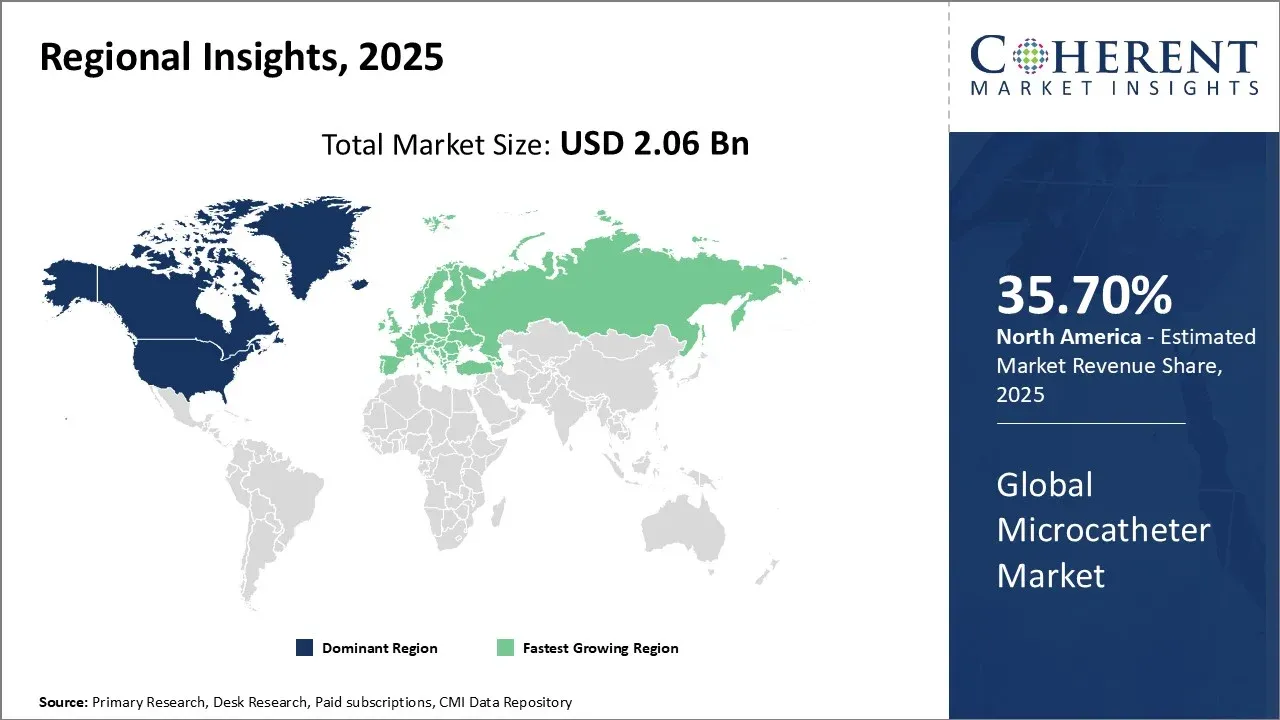
North America Global Microcatheter Market Analysis and Trends
North America is expected to be the largest market for microcatheter during the forecast period, accounting for over 35.7% of the market share in 2026. The North America microcatheter market is driven by the rising geriatric population, the growing prevalence of target diseases, and the increasing adoption of minimally invasive surgeries.
For instance, according to the data of the Population Reference Bureau (PRB), Obesity prevalence among older Americans has increased at an alarming rate. In a single generation—between 1988-1994 and 2015-2018—the share of U.S. adults ages 65 and older with obesity nearly doubled, increasing from 22% to 40%. This sharp rise in obesity among seniors has significant implications for healthcare systems, as it contributes to higher rates of chronic conditions thereby increasing demand for long-term care and health-related services.
Asia Pacific Global Microcatheter Market Analysis and Trends
Asia Pacific region is expected to be the second-largest market for microcatheter market, accounting for over 25.2% of the market share in 2026. The driver for Asia Pacific microcatheter market is the increasing aging population, which is more prone to developing cardiovascular and neurovascular diseases. Also, growing awareness about effective treatment options and rising healthcare spending are supporting market growth.
For instance, as per the data published by the World Health Organization (WHO), in rural Indonesia, only 30% of the population can access adequate healthcare facilities. Strong investment in digital health, AI diagnostics, precision medicine, and biotech is reshaping care delivery.
U.S. Global Microcatheter Market Analysis and Trends
The U.S. microcatheter market remains a key contributor to global growth, driven by increasing adoption of minimally invasive procedures in cardiology and neurovascular interventions.
Key industry players such as Medtronic, Boston Scientific, Terumo, Stryker, Penumbra, Merit Medical, Teleflex, BD, Asahi Intecc, etc., are dominating the landscape, benefiting from strong FDA-approved product pipelines and extensive distribution networks.
Canada Global Microcatheter Market Analysis and Trends
Canada’s universal healthcare system along with their compulsory insurance facilitate wide access to advanced interventional devices, including microcatheters, in both urban as well as rural hospitals.
The country faces a significant and growing incidence of chronic conditions such as ischemic heart disease and strokes. This creates sustained demand for diagnostic and therapeutic procedures (like angioplasty, aneurysm coiling, and thrombectomy) that rely on microcatheters.
China Microcatheter Market Analysis and Trends
China microcatheter market is a growing segment within the country's medical device industry, driven by the increasing demand for minimally invasive procedures in interventional cardiology, neurology, and oncology. Microcatheters are thin, flexible tubes used to navigate small and complex blood vessels, enabling the delivery of diagnostic agents or therapeutic devices with high precision.
In addition to this, government support for domestic innovation and medical device approvals is also playing a significant role in the expansion of this market. As a result, China's microcatheter industry is poised for substantial growth in both domestic use and international exports.
Japan Microcatheter Market Analysis and Trends
A strong government healthcare initiative, with universal coverage prompting widespread equipment upgrades including microcatheters across both urban and rural hospitals which is contributing to the growth of the market.
The high occurrence of vascular and lifestyle-related conditions like cardiovascular disease, stroke, diabetes, hypertension, etc., are also escalating demand for minimally invasive procedures.
Pricing Analysis of the Global Microcatheter Market
- Neurovascular Microcatheters
Advanced microcatheters designed for intricate procedures such as stroke intervention, aneurysm coiling, or distal vessel navigation. Manufactured with hydrophilic coatings, reinforced shafts, and torqueable tips for enhanced precision.
Example: Approximately USD 800 to USD 2,500 per unit depending on the complexity and design. A steerable aspiration catheter like SOFIA Flow Plus by MicroVention, priced at USD 2,100, provides superior trackability and aspiration capacity, ideal for acute ischemic stroke treatment.
- Operational and Maintenance Costs
- Product Packaging and Safety Compliance
Maintaining sterility, traceability, and compliance with global regulatory standards (e.g., Food and Drug Administration, European Conformity (CE), International Organization for Standardization 13485). Adds approximately USD 2 to USD 5 per unit.
Example: A manufacturer producing 200,000 units annually may incur USD 400,000 to USD 1,000,000 in packaging and regulatory compliance costs, including sterile barrier systems, labeling, and validation processes.
- Distribution and Retail Mark-up
Distributors often add 10% to 30% to the manufacturer’s cost price. Hospitals, retailers, or specialty suppliers may add another 20% to 50%, especially for high-end interventional devices.
Example: A microcatheter with a wholesale price of USD 1,000 may retail between USD 1,300 and USD 1,800, depending on logistics, service contracts, and market channel markups.
Market Report Scope
Global Microcatheter Market Report Coverage
| Report Coverage | Details | ||
|---|---|---|---|
| Base Year: | 2025 | Market Size in 2026: | USD 2.15 Bn |
| Historical Data for: | 2020 To 2024 | Forecast Period: | 2026 To 2033 |
| Forecast Period 2026 to 2033 CAGR: | 4.5% | 2033 Value Projection: | USD 2.93 Bn |
| Geographies covered: |
| ||
| Segments covered: |
| ||
| Companies covered: | Medtronic Plc, Terumo Corporation, Merit Medical System, Stryker Corporation, Penumbra Inc., Boston Scientific Corporation, Teleflex Inc., Becton Dickinson and Company, and Asahi Intecc Co. ltd. | ||
| Growth Drivers: |
| ||
| Restraints & Challenges: |
| ||
Global Microcatheter Industry News
- In January 2025, Argon Medical, a prominent provider of medical device solutions for Interventional Radiology, Vascular Surgery, Interventional Cardiology, and Oncology procedures, announced the acquisition of specific assets from Accurate Medical Therapeutics, Ltd.—the developer and distributor of the SeQure and DraKon microcatheters. The assets were acquired from Guerbet SA, a global leader in medical imaging.
- In February 2025, Penumbra an American medical device company which manufactures devices for interventional therapies to treat vascular conditions launched ACCESS25 Delivery Microcatheter Designed for Aneurysm Access and Delivery of Elevated Clinical Benefits.
- In January 2025, Vantis Vascular, Inc. announced first commercial use of its crossFAST integrated microcatheter advanced delivery system. It enhances pushability and smooth passage through complex anatomy.
- In February 2024, BIOTRONIK introduced the Micro Rx catheter, a novel rapid exchange microcatheter developed to easily enhance guidewire support during percutaneous coronary interventions (PCI). This cutting-edge device, exclusively distributed by BIOTRONIK, is manufactured by IMDS (Interventional Medical Device Solutions).
Analyst View
- Clinical specialization is fragmenting the market. Neurovascular catheters—like MicroVention’s SOFIA Flow Plus—are priced upwards of USD 2,000 not because of brand legacy but because they redefine performance expectations in stroke intervention, achieving median recanalization times under 17 minutes.
- In cardiovascular use, dual-lumen catheters such as Access Vascular’s HydroPICC Dual-Lumen are capitalizing on biomaterial innovation to tackle infection control—a growing concern in vascular access. Their reduction of thrombotic complications by over 30%, per independent trials, is shifting purchasing decisions from cost to risk mitigation. This reflects a broader trend: buyers are now quantifying downstream cost savings in catheter selection, and legacy models that don't contribute to improved clinical metrics will struggle to justify premium price tags.
- Emerging concepts like robotic-assist microcatheters and catheters with embedded sensors for intra-procedural feedback will disrupt legacy portfolios within 3–5 years.
- Distributors and group purchasing organizations (GPOs) are increasingly requiring procedural validation data for inclusion—not regulatory approval alone. A microcatheter with CE/FDA but no real-world usage data is now more likely to be excluded from tenders in Germany, France, and the U.S. This elevates the barrier to entry from compliance to clinical credibility.
Market Segmentation
- Product Design Insights (Revenue, USD Bn, 2021 - 2033)
- Single Lumen Microcatheter
- Dual Lumen Microcatheter
- Product Insights (Revenue, USD Bn, 2021 - 2033)
- Delivery Microcatheter
- Aspiration Microcatheter
- Diagnostic Microcatheter
- Steerable Microcatheter
- Application Insights (Revenue, USD Bn, 2021 - 2033)
- Cardiology
- Neurology
- Peripheral Vascular
- Oncology
- Urology
- Otolaryngology
- Others
- End User Insights (Revenue, USD Bn, 2021 - 2033)
- Hospitals & Clinics
- Ambulatory Surgical Centers
- Region Insights (Revenue, USD Bn, 2021 - 2033)
- North America
- U.S.
- Canada
- Latin America
- Brazil
- Argentina
- Mexico
- Rest of Latin America
- Europe
- Germany
- U.K.
- Spain
- France
- Italy
- Russia
- Rest of Europe
- Asia Pacific
- China
- India
- Japan
- Australia
- South Korea
- ASEAN
- Rest of Asia Pacific
- Middle East
- GCC Countries
- Israel
- Rest of Middle East
- Africa
- South Africa
- North Africa
- Central Africa
- North America
- Key Players Insights (Revenue, USD Bn, 2021 - 2033)
- Medtronic Plc
- Terumo Corporation
- Merit Medical System
- Stryker Corporation
- Penumbra Inc.
- Boston Scientific Corporation
- Teleflex Inc.
- Becton Dickinson and Company
- Asahi Intecc Co. ltd.
Sources
Stakeholders:
- Interventional cardiologists and neurovascular surgeons from tertiary care hospitals across the U.S., Germany, China, and India
- Procurement heads at leading catheterization labs and interventional radiology departments
- Hospital supply chain and materials managers involved in device evaluations and tenders
- Product managers and R&D engineers from microcatheter manufacturing companies (including Boston Scientific, Medtronic, MicroPort, and Terumo)
Primary Sources:
- In-depth interviews and surveys conducted with over 45 healthcare professionals and procurement experts globally
- Direct communication with catheter OEMs and component suppliers to obtain technical specifications and pricing benchmarks
- Observational inputs from trade shows and surgical conferences (e.g., LINC Leipzig, PCR London Valves, TCT)
Secondary Sources:
- Regulatory filings and product approval databases from U.S. FDA, China NMPA, and European CE repositories
- Clinical research papers and comparative performance studies published in journals like Journal of NeuroInterventional Surgery, Cardiovascular and Interventional Radiology, and Journal of Endovascular Therapy
- Medical device import/export data from customs and health ministry databases (India’s DGFT, U.S. ITC, China Customs)
- Technical whitepapers, patents, and open-access proceedings from engineering institutes and academic partnerships (e.g., MIT, Tsinghua University)
Proprietary Elements:
- CMI Data Analytics Tool – global microcatheter market
- CMI Existing Repository of Information for the Last 8 Years
*Definition: A microcatheter is a very small, thin, flexible tube that can be guided through the vasculature to reach small and intricate blood vessels within the body. It is used for diagnostic and interventional procedures, such as angiography, embolization, and drug delivery, in areas that are challenging to reach with standard catheters.
Get access to 250+ pages report
Every segment, forecast, competitor profile and data table behind the analysis above — available for instant download.
- ESOMAR Member
- ISO 9001:2015 Certified
- D-U-N-S Registered
- GDPR & CCPA Compliant
Missing comfort of reading report in your local language? Find your preferred language:
Transform your Strategy with Exclusive Trending Reports
Frequently Asked Questions
The global microcatheter market is estimated to be valued at USD 2.15 Bn in 2026, and is expected to reach USD 2.93 Bn by 2033.
The CAGR of the global microcatheter market is projected to be 4.5% from 2026 to 2033.
Increasing number of minimally invasive surgeries, technological advancements in microcatheters, and increasing prevalence of cardiovascular diseases are the major factors driving the global microcatheter market.
Risk of infection associated with microcatheters and vulnerability to product recalls are the key factors hampering growth of the global microcatheter market.
Among product design, the single lumen microcatheter segment is the leading product design segment in the global microcatheter market.
The major players operating in the global microcatheter market are Medtronic Plc, Terumo Corporation, Merit Medical System, Stryker Corporation, Penumbra Inc., Boston Scientific Corporation, Teleflex Inc., Becton Dickinson and Company, and Asahi Intecc Co. ltd.
North America will lead the global microcatheter market in 2026.