

Laser Indirect Ophthalmoscope Market Size and Share Analysis - 2026 To 2033
The Laser Indirect Ophthalmoscope Market is projected to record growth at a CAGR of 4.2%, with market valuation reaching USD 129.6 Mn in 2026 and further forecasted to attain USD 172.9 Mn by 2033. The growth drivers for the market are the rising incidence of diabetic retinopathy, glaucoma, and age-related macular degeneration; growing demands for retinal examination and laser treatments in ophthalmology and growing adoption of high-end ophthalmic devices in hospitals and eye clinics. As per the statistics provided by WHO, at least 2.2 billion individuals across the globe suffer from near or distance vision impairment.
Key Takeaways
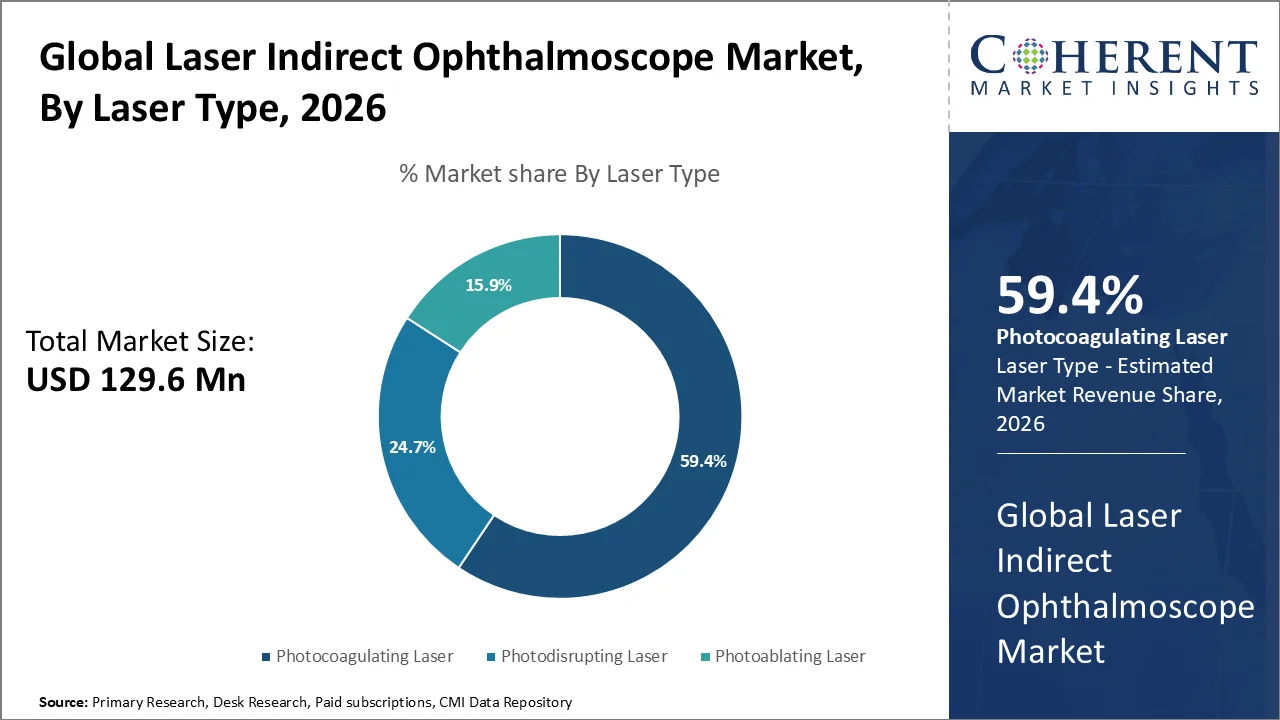
- The photocoagulating laser segment is likely to dominate the market with 59.4% in 2026. The segment’s growth is owing to its extensive use in panretinal photocoagulation, sealing abnormal retinal blood vessels, treating peripheral retinal ischemia, and managing advanced diabetic retinopathy. The U.S. National Eye Institute revealed in December 2024 that scatter laser surgery, which is another name for panretinal photocoagulation, can still be used to shrink abnormal blood vessels in severe cases of diabetic retinopathy.
- The diabetic retinopathy segment is set to lead the therapeutic application category with 42.8% in 2026. The segment’s growth is owing to the rising diabetes burden, increasing incidence of retinal vascular damage, demand for early retinal examinations, and continued use of laser treatment for proliferative disease. The U.S. Centers for Disease Control and Prevention projects that diabetic retinopathy will affect 14.7 Mn Americans with diabetes by 2050.
- The multispecialty hospitals segment is expected to dominate the end-user category with 48.6% in 2026. The segment’s growth is owing to the availability of retinal specialists, advanced laser systems, emergency ophthalmic services, multidisciplinary diabetes care, and greater capacity to perform complex retinal procedures. According to the UK Office for Health Improvement and Disparities, approximately 3.7 Mn people attended 9.8 Mn hospital outpatient appointments for vision in England during 2023–2024.
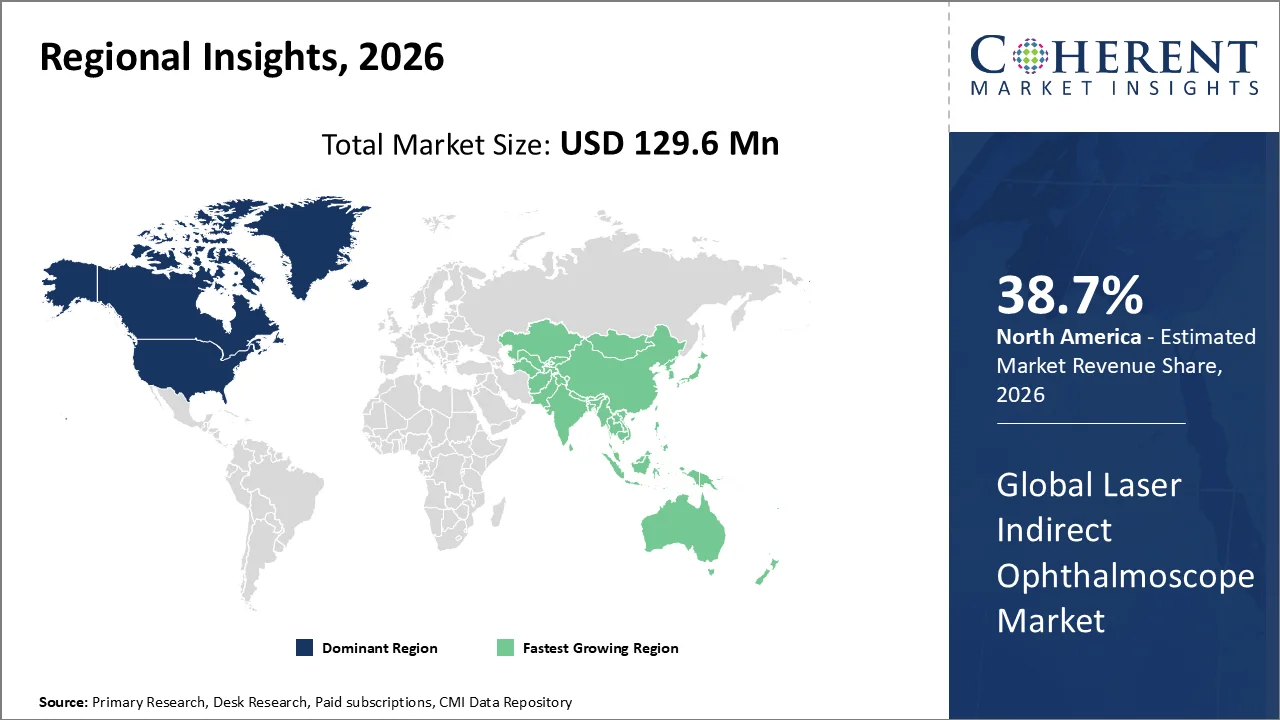
- North America is expected to dominate the global laser indirect ophthalmoscope market with an estimated 38.7% share in 2026. Regional growth is supported by advanced retinal-care infrastructure, high adoption of ophthalmic laser systems, favorable access to specialist eye care, and a substantial population affected by vision disorders. The U.S. Centers for Disease Control and Prevention reports that approximately 7 Mn people in the U.S. have vision impairment, including 1 Mn with blindness.
Market Drivers
Rising Diabetes Burden Is Increasing Demand for Retinal Laser Treatment
The growing prevalence of diabetes is expanding the population at risk of diabetic retinopathy, retinal ischemia, abnormal blood-vessel growth, and vision-threatening complications. Laser indirect ophthalmoscopes enable ophthalmologists to deliver photocoagulation across the peripheral retina, including during panretinal photocoagulation procedures for advanced diabetic eye disease.
According to the International Diabetes Federation’s 2025 Diabetes Atlas, approximately 589 million adults aged 20–79 years were living with diabetes in 2024, and this number is projected to reach 853 million by 2050.
In January 2025, Norlase unveiled LYNX Pattern Scanning Laser Indirect Ophthalmoscope following U.S. FDA 510(k) clearance and CE Mark approval. The battery-powered system integrates the laser and scanning module into a portable headset, supporting more efficient and flexible retinal laser procedures.
Increasing Preterm Birth and NICU Admission Rates Are Supporting ROP Treatment Demand
Retinopathy of Prematurity is a condition of the retina characterized by growth of blood vessels and potential detachment and vision loss of the eye, and babies born prematurely are at higher risks of suffering from it. Portable laser indirect ophthalmoscope enables retina experts to deliver laser peripheral treatment in hospital neonatal units. Based on the latest information issued by the U.S. National Center for Health Statistics in June 2026, the percentage of premature births was 10.41% in 2024.
In February 2025, the European Investment Bank provided €20 million in venture-debt financing to Norlase to support the development, production expansion, and market access of portable ophthalmic laser technologies. The EIB stated that the recently launched LYNX system can reduce treatment time by more than 50%, supporting greater efficiency in retinal laser procedures.
Current Events and Their Impact on the Laser Indirect Ophthalmoscope Market
Current Event | Description and its Impact |
FDA Clears Quantel Medical’s INTEGRE LIO and Lumibird Launches the System in the U.S. (2026) |
|
Lumibird Medical Establishes a Southeast Asian Ophthalmology Hub (2026) |
|
- Current Industry Events of 2026
- Market Size Estimation
- Regional Breakdown
- Competitive Landscape
- Customer Intelligence
- Segmental Analysis
- Pricing Analysis
- Key Market Drivers, Challenges & Future Trends
- Customized Insights Section
Segmental Insights
Why Is the Photocoagulating Laser Segment Acquiring the Largest Share?
On the basis of laser type, the photocoagulating laser segment is projected to account for the largest Laser Indirect Ophthalmoscope Market share of 59.4% in 2026. The segment’s growth is owing to the widespread use of retinal photocoagulation for abnormal blood vessels, retinal ischemia, proliferative diabetic retinopathy, peripheral retinal tears, and other vision-threatening retinal conditions.
According to the National Institute for Health and Care Excellence’s August 2024 report, approximately 95,000 people in England have sight loss caused by diabetic retinopathy that significantly affects their daily live.
In June 2026, Lumibird Medical, through its Quantel Medical business, introduced the Integre LIO, a fully wireless integrated laser indirect ophthalmoscope designed for panretinal photocoagulation and other peripheral retinal treatments.
Why Is Diabetic Retinopathy the Leading Therapeutic Application?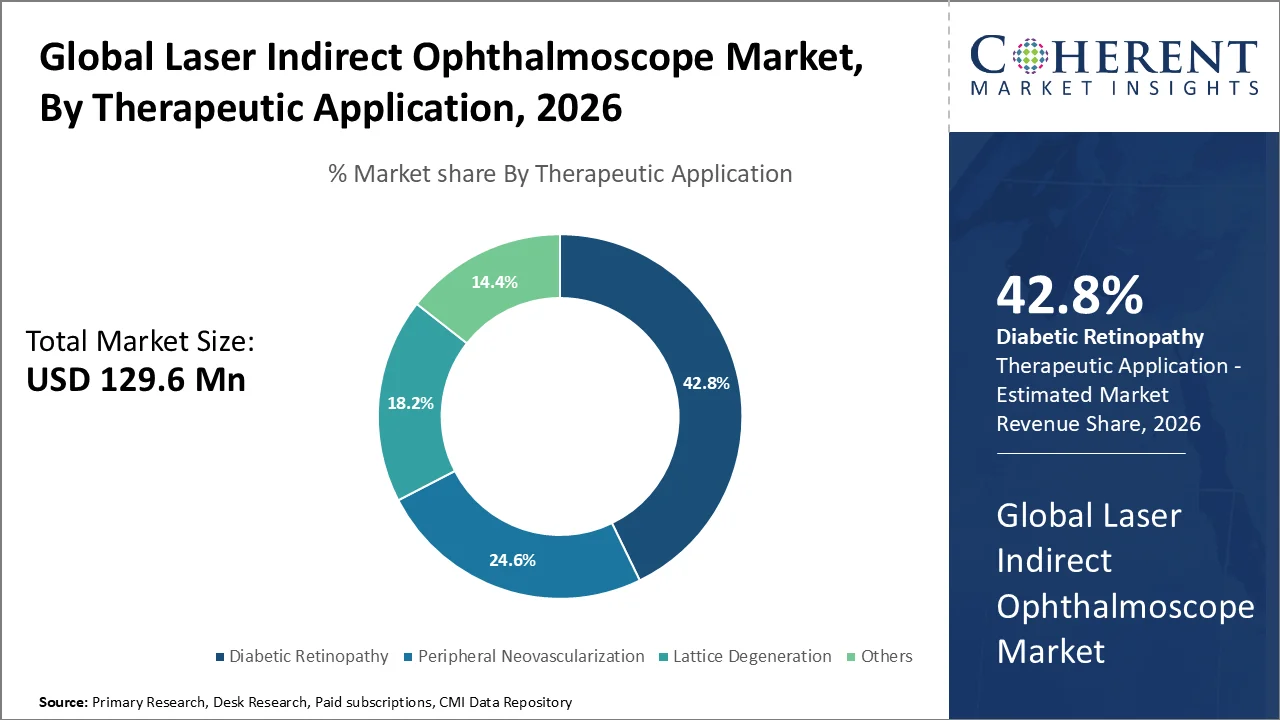
On the basis of therapeutic application, the diabetic retinopathy segment is expected to lead with a 42.8% share in 2026. The segment’s growth is owing to the progressive nature of diabetes-related retinal damage, increasing need for regular retinal examinations, and continued use of laser treatment to shrink leaking or abnormal blood vessels and prevent further vision deterioration.
According to a 2025 update by the National Eye Institute of the United States, more than half of the patients who suffer from diabetes will ultimately suffer from diabetic retinopathy. Furthermore, according to the institute, around one in fifteen patients suffering from diabetes will have a condition known as diabetic macular edema due to fluid leakage from the damaged blood vessels of the retina.
In January 2026, Optomed and Aireen announced a strategic partnership and received European regulatory approval to integrate Aireen’s artificial intelligence-based diabetic retinopathy screening algorithm with the Optomed Lumo handheld fundus camera.
Why Do Multispecialty Hospitals Hold the Largest Market Share?
On the basis of end user, the multispecialty hospitals segment is projected to dominate with a 48.6% share in 2026. The segment’s growth is owing to the availability of retinal specialists, trained laser personnel, advanced diagnostic imaging, operating-room infrastructure, emergency services, and multidisciplinary management of patients with diabetes and other systemic conditions.
Evidence submitted to the UK Parliament by the Royal College of Ophthalmologists in July 2025 showed that more than 586,000 patients were waiting for an ophthalmology appointment in England in March 2025. The proportion of the ophthalmology waiting list in the NHS overall was 8.5%, while the percentage of patients receiving treatment in the set 18 weeks was 68.2%. This means that there is an adequate number of patients for this large workload.
In December 2025, Norlase announced that its LYNX Pattern Laser Indirect Ophthalmoscope had exceeded 100 installations worldwide within its first year of commercialization and had been adopted by several leading ophthalmic hospitals.
Laser Indirect Ophthalmoscope Market Drivers and Trends
- The growing integration of optical coherence tomography into diabetic eye-screening pathways is improving the referral of high-risk patients to hospital eye services. In November 2024, NHS England announced that providing advanced retinal scans closer to patients’ homes could avoid up to 120,000 unnecessary hospital appointments annually. More accurate triage allows hospital retinal specialists to focus on patients who require interventions such as panretinal photocoagulation.
- The rapidly ageing global population is increasing the number of patients requiring retinal examinations and treatment for age-associated vascular and peripheral retinal disorders. According to the World Health Organization’s projection for October 2025 indicates that the number of people in the world aged 60 years and above will rise from 1.1 billion to 1.4 billion from 2023 to 2030. This will result in an increased workload in treating retinal problems at hospitals and specialized ophthalmology centers.
- The growing use of simulation-based ophthalmology education is improving clinicians’ ability to conduct indirect retinal examinations and peripheral laser procedures. In December 2025, Haag-Streit launched the Eyesi Indirect ROP Laser Module, expanding its simulator from diagnostic training to interventional laser-treatment training. The courseware teaches clinicians to focus and aim the laser, treat the peripheral retina, select appropriate power and duration settings, and optimize intervals between laser shots.
Regional Insights
North America Dominates Owing to Advanced Retinal-Care Infrastructure and High Diabetes Burden
The North America region accounts for an estimated 38.7% of the global Laser Indirect Ophthalmoscope Market in 2026. The region’s dominance is supported by the availability of specialist retinal-care services, early adoption of portable ophthalmic laser technologies, strong hospital infrastructure, and a large population requiring diabetic retinal screening and treatment.
According to CDC (Centers for Disease Control and Prevention) in the United States in January 2026, 40.1 million people were suffering from both diagnosed and undiagnosed diabetes in the U.S. in 2023, constituting 12.0% of the total population. Approximately 11.0 million people who were suffering from diabetes were undiagnosed, suggesting a considerable number of people in need of retinal screening.
In January 2026, AEYE Health expanded the integration of its portable autonomous diabetic-eye-screening technology with the Epic electronic health record platform across the U.S. healthcare system.
Asia Pacific Laser Indirect Ophthalmoscope Market Trends
Asia Pacific is expected to be the fastest-growing regional market during 2026–2033. Regional growth is supported by the large diabetes-affected population, expansion of retinal-screening programs, improving ophthalmology infrastructure, and increasing investment in portable diagnostic and laser-treatment technologies across China, India, Japan, Vietnam, and Southeast Asia.
In New Zealand, a Ministry of Health monitoring report published in January 2026 stated that about 30% of people with diabetes have retinopathy, while a further 10% have sight-threatening disease. The country has established a 90% retinal-screening coverage target, indicating considerable demand for retinal assessment and subsequent treatment services.
In October 2025, NIDEK reported that its artificial intelligence-assisted diabetic-retinopathy screening project with Orbis International had screened 14,463 patients across six sites in Vietnam. The program identified 3,582 patients, or 24.8% of those screened, with signs of referable diabetic retinopathy, glaucoma, or macular abnormalities and referred them for ophthalmologist assessment.
Advanced Retinal-Care Infrastructure and New Device Clearances Are Supporting the U.S. Laser Indirect Ophthalmoscope Market
The U.S. Laser Indirect Ophthalmoscope Market is witnessing steady growth owing to the high volume of retinal disease management, broad availability of vitreoretinal specialists, established reimbursement pathways, and early adoption of advanced retinal photocoagulation technologies.
In October 2025, the U.S. FDA granted 510(k) clearance to OD-OS GmbH’s Navilas Laser System 577SL. The system combines a 577 nm photocoagulating laser, digital fundus imaging, treatment planning, and real-time laser delivery through an ophthalmoscope.
Large Retinal Disease Burden and Portable Laser Expansion Are Strengthening the China Market
China is expected to witness strong growth in the Laser Indirect Ophthalmoscope Market owing to expanding diabetes-related retinal care, growing hospital ophthalmology capacity, a large ageing population, and increasing adoption of compact laser systems across specialist and provincial healthcare facilities.
A 2025 prospective cohort study in China included 2,447 participants, comprising 1,380 people with normal glucose tolerance, 762 with prediabetes, and 305 with diabetes. During follow-up, 144 participants, or 5.9%, developed retinopathy. The research also cited estimated diabetic-retinopathy prevalence of approximately 22.4% among people with diabetes in China, demonstrating a sizeable population requiring long-term retinal monitoring and possible laser treatment.
Who are the Major Companies in Laser Indirect Ophthalmoscope Industry
Some of the major key players in Laser Indirect Ophthalmoscope Market are Ellex Medical Lasers Ltd, Iridex Corporation, Alcon, Carl Zeiss Meditec AG, Lumenis Ltd., Topcon Medical Laser System, Nidek Co. Inc., Ziemer Ophthalmic Systems AG, Heine Optotechnik GmbH, and Keeler Ltd.
Key News
- In March 2026, Iridex announced that its full-year 2025 retina product revenue reached USD 30.3 million, compared with USD 27.8 million in 2024, representing 9% growth.
- In September 2025, Alcon announced the European commercial availability of its UNITY Vitreoretinal Cataract System, designed to improve the efficiency of vitreoretinal and cataract surgery through integrated surgical technologies.
Market Report Scope
Laser Indirect Ophthalmoscope Market Report Coverage
| Report Coverage | Details | ||
|---|---|---|---|
| Base Year: | 2025 | Market Size in 2026: | USD 129.6 Mn |
| Historical Data for: | 2020 To 2024 | Forecast Period: | 2026 To 2033 |
| Forecast Period 2026 to 2033 CAGR: | 4.2% | 2033 Value Projection: | USD 172.9 Mn |
| Geographies covered: |
| ||
| Segments covered: |
| ||
| Companies covered: | Ellex Medical Lasers Ltd, Iridex Corporation, Alcon, Carl Zeiss Meditec AG, Lumenis Ltd., Topcon Medical Laser System, Nidek Co. Inc., Ziemer Ophthalmic Systems AG, Heine Optotechnik GmbH, and Keeler Ltd. | ||
| Growth Drivers: |
| ||
| Restraints & Challenges: |
| ||
Analyst Opinion
- The Laser Indirect Ophthalmoscope Market is supported by the continued conversion of retinal screening into active treatment. The Australian Institute of Health and Welfare indicated in its report in February 2026 that 581 individuals from the First Nations population underwent retinopathy treatment in 2023–2024, which was 1.8% of the population screened for diabetes. The percentage of people who underwent treatment for diabetic retinopathy went up from 1.4% to 1.8% between 2014 and 2023–2024.
- The application of artificial intelligence in diabetic eye screening should improve the patient referral pathway for the retinal laser procedure. In May 2026, the National Screening Committee of the UK assessed seven studies that analyzed the performance of newly introduced diagnostic technologies, with two studies being conducted in the UK and five in other similar countries. The majority of artificial intelligence programs were found to have similar diagnostic accuracy to that of human graders when recognizing more serious cases of diabetic eye disease.
- Clinical research is increasingly focused on improving patient comfort and procedural efficiency during retinal photocoagulation. A registered clinical study involving 50 patients is evaluating whether vibration-based anesthesia can reduce pain during retinal laser treatment for diabetic retinopathy. Such research supports the development of faster pattern-scanning, ergonomic, and portable laser indirect ophthalmoscopes that can reduce treatment burden and improve acceptance of high-volume photocoagulation procedures.
Speak to the analyst
Want personalized insights?
Take the findings above to one of our principal consultants, or have the report rebuilt around the segments, geographies and competitors you actually track.
Market Segmentation
- By Laser Type (Revenue, USD Mn, 2021-2033)
- Photocoagulating laser
- Photo disrupting laser
- Photo ablating laser
- By Therapeutic Application (Revenue, USD Mn, 2021-2033)
- Diabetic retinopathy
- Peripheral neovascularization
- Lattice degeneration
- Others
- By End User (Revenue, USD Mn, 2021-2033)
- Multispecialty Hospitals
- Ophthalmic Clinics
- Others
- By Region (Revenue, USD Mn, 2021-2033)
- North America
- U.S.
- Canada
- Latin America
- Brazil
- Mexico
- Argentina
- Rest of Latin America
- Europe
- Germany
- U.K.
- France
- Italy
- Spain
- Russia
- Rest of Europe
- Asia Pacific
- China
- India
- Japan
- Australia
- South Korea
- ASEAN
- Rest of Asia Pacific
- Middle East
- GCC
- Israel
- Rest of Middle East
- Africa
- South Africa
- Central Africa
- North Africa
- North America
Sources
Primary Research Interviews
- Ophthalmologists and vitreoretinal surgeons
- Retina specialists and diabetic-retinopathy experts
- Ophthalmic laser-system manufacturers and product developers
- Hospital ophthalmology department heads
- Multispecialty hospital procurement managers
- Ophthalmic clinic administrators
- Medical-device distributors and service providers
- Neonatal ophthalmologists treating retinopathy of prematurity
- Regulatory affairs professionals in ophthalmic medical devices
- Key opinion leaders in retinal imaging and laser photocoagulation
Databases
- World Health Organization (WHO)
- U.S. Centers for Disease Control and Prevention (CDC)
- U.S. Food and Drug Administration (FDA)
- National Eye Institute (NEI)
- National Institutes of Health (NIH)
- ClinicalTrials.gov
- Organisation for Economic Co-operation and Development (OECD)
- Australian Institute of Health and Welfare (AIHW)
- International Diabetes Federation (IDF) Diabetes Atlas
Magazines
- Ophthalmology Times
- Review of Ophthalmology
- Retinal Physician
- Modern Retina
- EuroTimes
- Cataract & Refractive Surgery Today
- Ophthalmology Management
Journals
- Ophthalmology
- American Journal of Ophthalmology
- Retina
- JAMA Ophthalmology
- British Journal of Ophthalmology
- Graefe’s Archive for Clinical and Experimental Ophthalmology
- Investigative Ophthalmology & Visual Science
- Clinical Ophthalmology
- Diabetes Care
Newspapers
- The New York Times
- The Guardian
- The Wall Street Journal
- Financial Times
- The Economic Times
- Reuters
- Bloomberg
Associations
- American Academy of Ophthalmology (AAO)
- American Society of Retina Specialists (ASRS)
- Association for Research in Vision and Ophthalmology (ARVO)
- Royal College of Ophthalmologists
- European Society of Retina Specialists (EURETINA)
- International Council of Ophthalmology (ICO)
- Asia-Pacific Academy of Ophthalmology (APAO)
- American Diabetes Association (ADA)
- International Agency for the Prevention of Blindness (IAPB)
Public Domain Sources
- Company annual reports and investor presentations
- Company product launches and regulatory announcements
- U.S. FDA 510(k) clearance summaries and device databases
- Government eye-health and diabetes surveillance reports
- Hospital and public-health system publications
- Clinical trial registries such as ClinicalTrials.gov
- National diabetic eye-screening program reports
- University and medical-school ophthalmology research publications
- Patent databases such as WIPO, USPTO, and Google Patents
- Regulatory and reimbursement publications for ophthalmic medical devices
- Publicly available retinal-disease burden and treatment statistics
Proprietary Elements
- CMI Data Analytics Tool
- Proprietary CMI existing repository of information for the last 10 years
Get access to 250+ pages report
Every segment, forecast, competitor profile and data table behind the analysis above — available for instant download.
- ESOMAR Member
- ISO 9001:2015 Certified
- D-U-N-S Registered
- GDPR & CCPA Compliant
Missing comfort of reading report in your local language? Find your preferred language:
Transform your Strategy with Exclusive Trending Reports
Frequently Asked Questions
The global Laser Indirect Ophthalmoscope Market is expected to reach USD 172.9 Mn by 2033, increasing from USD 129.6 Mn in 2026.
Major players operating in the global market include Ellex Medical Lasers Ltd, Iridex Corporation, Alcon, Carl Zeiss Meditec AG, Lumenis Ltd., Topcon Medical Laser System, Nidek Co. Inc., Ziemer Ophthalmic Systems AG, Heine Optotechnik GmbH, and Keeler Ltd.
High equipment and maintenance costs, limited availability of trained retinal specialists, complex device operation, reimbursement limitations, and the risk of retinal damage from incorrect laser settings are the key factors hampering market growth.
The growing adoption of retinal photocoagulation, rising prevalence of diabetic retinopathy, increasing demand for portable and wireless ophthalmic laser systems, expansion of diabetic eye-screening programs, and improving hospital ophthalmology infrastructure are driving market growth.
The Laser Indirect Ophthalmoscope Market is anticipated to grow at a CAGR of 4.2% between 2026 and 2033.
North America is expected to dominate the global Laser Indirect Ophthalmoscope Market with an estimated 38.7% share in 2026, supported by advanced retinal-care infrastructure, high adoption of ophthalmic laser systems, and access to specialist eye-care services.
Asia Pacific is expected to be the fastest-growing region during the forecast period, owing to expanding retinal-screening programs, a large diabetes-affected population, improving ophthalmology infrastructure, and growing adoption of portable retinal laser technologies.