

Elastomeric Infusion Pumps Market Size and Trends Forecast – 2026 - 2033
The elastomeric infusion pumps market is estimated to be valued at USD 2,359.0 Mn in 2026 and is projected to reach USD 2,618.8 Mn in 2033, exhibiting a compound annual growth rate (CAGR) of 9.6% from 2026 to 2033.
Key Takeaways of the Elastomeric Infusion Pumps Market
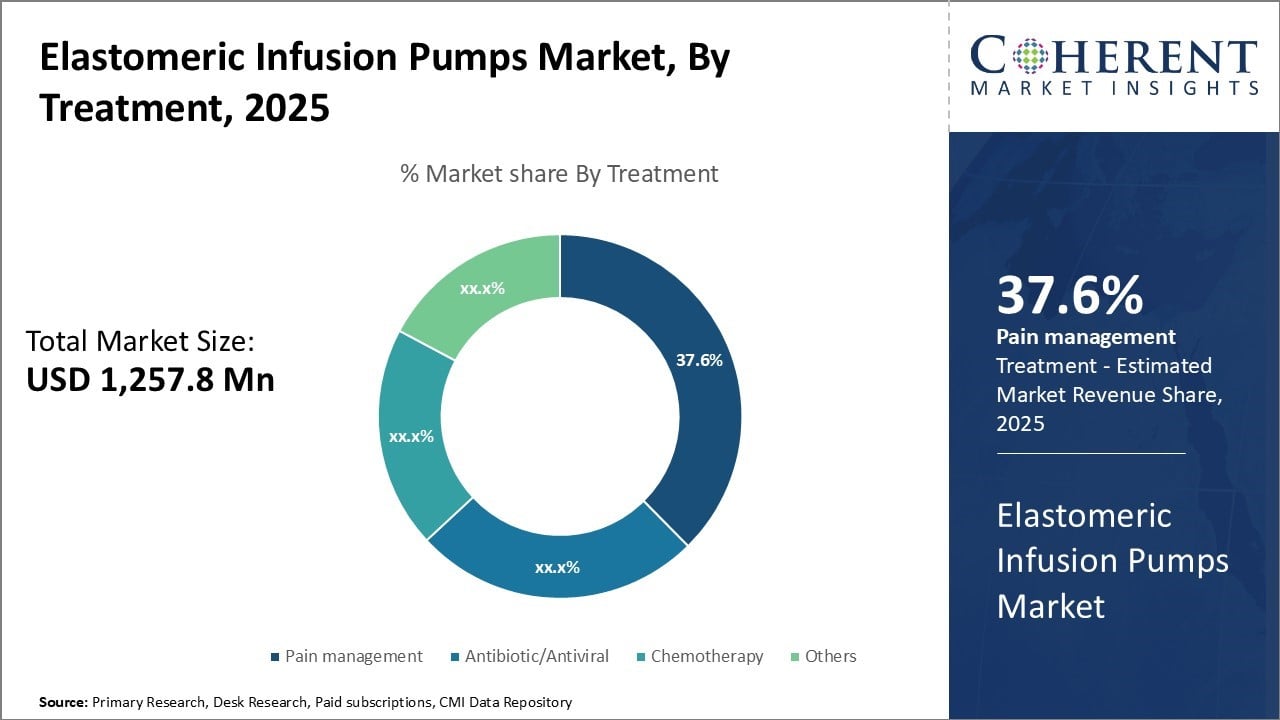
- Based on treatment, the pain management treatment segment is projected to dominate holding a share of 38.6 % in 2026.
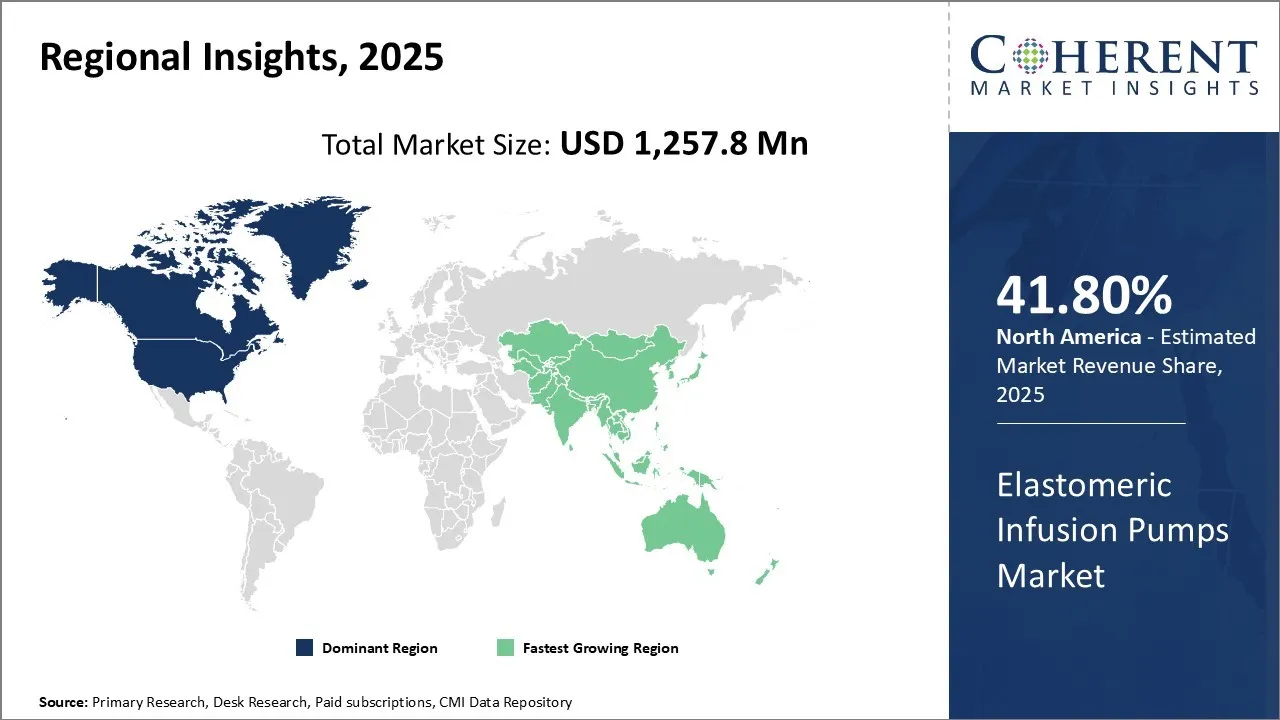
- North America is expected to dominate the elastomeric infusion pumps market with 41.80 % market share in 2026.
Market Overview
Elastomeric infusion pumps, also known as disposable balloon pumps, are used to administer intravenous (IV) drugs such as local anesthetics, antibiotics, and anti-neoplastic. These non-electronic, non-gravity driven devices are used in single infusions. Elastomeric infusion pumps contain a stretchable balloon reservoir that is filled with a drug and pressure from the elastic walls drives fluid delivery with relatively consistent pressure until it reaches near the end of the infusion.
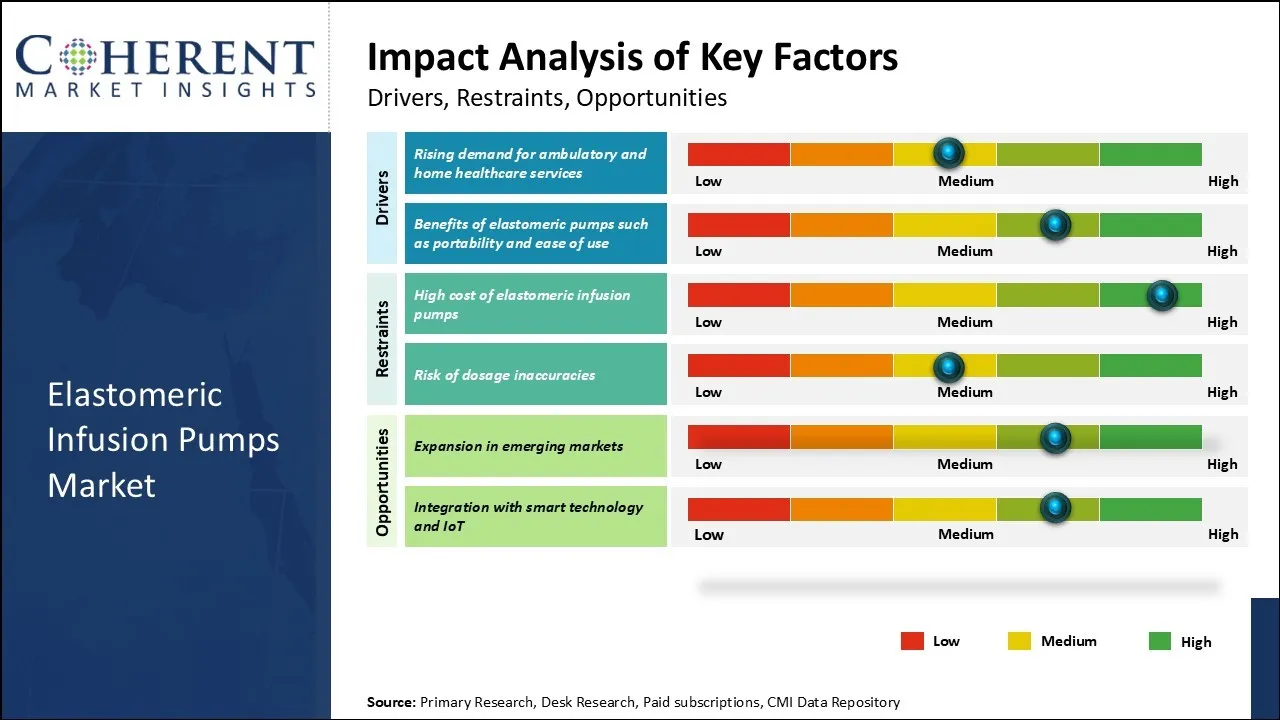
However, the costs of elastomeric infusion pumps keep fluctuating depending on the type of the pumps which is restraining the growth of the market.
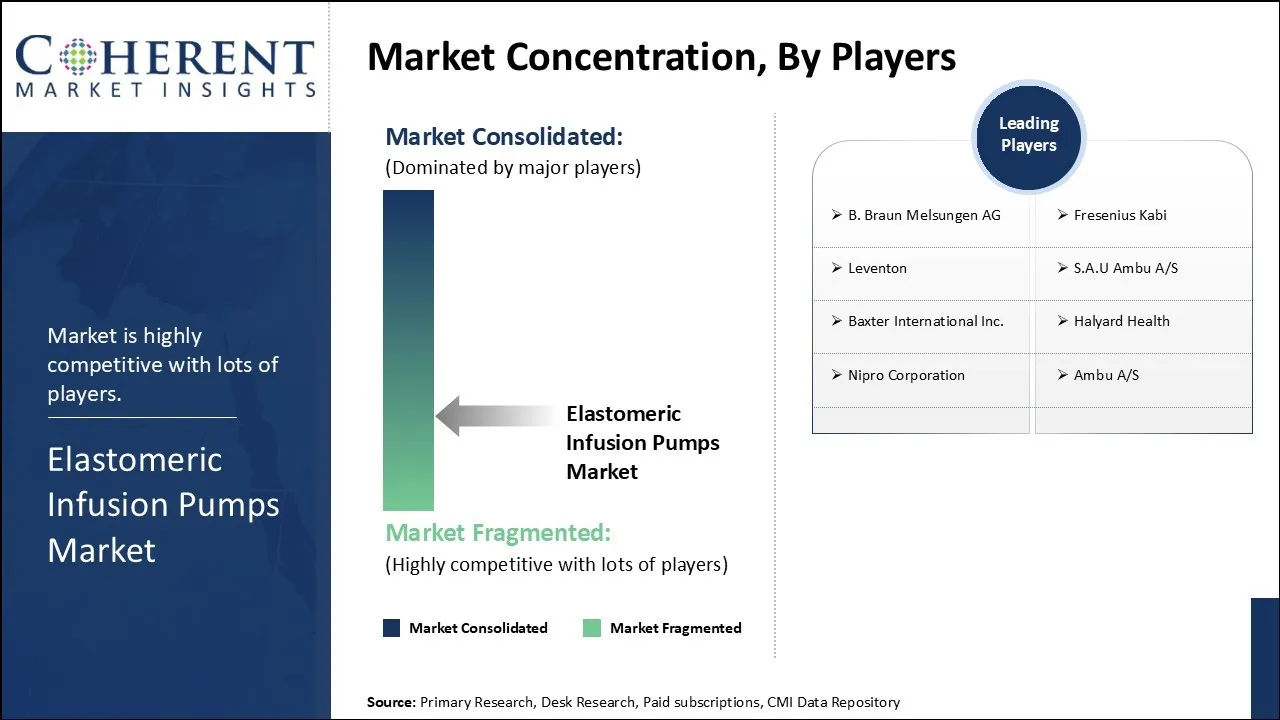
Concentration and Competitive Landscape
Current Events and Its Impact
Current Events | Description and its impact |
Healthcare Infrastructure Expansion in Emerging Markets |
|
Regulatory Landscape and Compliance Requirements |
|
- Current Industry Events of 2026
- Market Size Estimation
- Regional Breakdown
- Competitive Landscape
- Customer Intelligence
- Segmental Analysis
- Pricing Analysis
- Key Market Drivers, Challenges & Future Trends
- Customized Insights Section
Market Trends
Expanding Geriatric Population Driving Need for Convenient Pain Management Solutions
The expanding geriatric population is significantly driving the demand for convenient pain management solutions, which in turn is propelling the growth of the elastomeric infusion pumps market. As people age, they often experience chronic pain stemming from conditions such as arthritis, neuropathy, cancer, and post-surgical recovery requirements. Elastomeric infusion pumps, offering a portable, easy-to-use, and non-electronic method for continuous drug delivery, provide a valuable alternative to traditional pain management techniques that can be invasive or require frequent hospital visits.
For instance, according to the World Health Organization, between 2015 and 2050, the percent of the world's population over and above 60 years will nearly double from 12% to 22%. This demographic shift underscores the critical need for innovative and accessible pain management technologies like elastomeric infusion pumps to improve quality of life for the aging population.
Segmental Insights
Elastomeric Infusion Pumps Market Insights, by Treatment: Pain Management Contributes the Highest Share in the Market, Owing to its Widespread Clinical Application
In terms of treatment, the pain management segment is expected to contribute 38.6% share of the market in 2026, owing to strong patient preference for outpatient pain control, and the growing emphasis on enhanced recovery protocols in surgical procedures across the globe.
The effective use of elastomeric infusion pumps in managing acute and chronic pain has become increasingly embraced in hospitals, ambulatory surgical centers, and home healthcare settings. For example, numerous healthcare institutions globally utilize elastomeric pumps following orthopedic surgeries such as total knee and hip arthroplasties, where continuous delivery of local anesthetics is critical to controlling postoperative pain without resorting to systemic opioid administration.
Emerging Innovations in the Elastomeric Infusion Pumps Market
- Integration with Digital Health Technologies
- Although these pumps themselves are non-electronic, manufacturers are exploring complementary smart accessories such as Bluetooth-enabled monitoring units that track infusion rates, volume infused, and remaining medication. This hybrid approach combines the simplicity and reliability of elastomeric pumps with the data-driven advantages of digital monitoring, enabling clinicians and caregivers to remotely monitor therapy adherence and intervene promptly if issues arise.
- Advanced Flow Restrictor Designs
- Advanced flow restrictor designs have also emerged; wherein microfluidic principles are applied to create highly precise flow resistance paths within the pump. These innovations ensure more consistent and controlled infusion rates across different temperatures and viscosities of medication solutions. Some designs even facilitate multi-rate infusion programs, where the flow rate can be programmed or adjusted without electronic intervention.
Impacts of Artificial Intelligence (AI) in the Elastomeric Infusion Pumps Market
Artificial Intelligence (AI) is revolutionizing healthcare technologies with its potential to enhance precision, efficiency, and patient outcomes. Within the elastomeric infusion pumps market—a sector focused on devices that deliver controlled doses of medication through flexible, portable systems—AI is driving significant innovation.
- Baxter International, a global leader in infusion therapies, has integrated AI-driven predictive analytics and machine learning algorithms into its connected infusion pump systems to better monitor device performance, predict maintenance needs, and optimize drug delivery parameters. This integration allows the company to anticipate potential device failures and tailor therapies based on real-time patient data, showcasing how AI is becoming foundational in strategic and operational frameworks.
- Smith’s Medical has made strides by launching an AI-enhanced elastomeric infusion pump under its “CADD” therapy system. The AI solution embedded within the pumps utilizes machine learning to adjust drug delivery protocols, customized to patient-specific factors such as metabolism and treatment response. This advanced personalization not only improves clinical outcomes but also elevates patient comfort by minimizing side effects often associated with rigid dosing schedules. Early clinical feedback notes a decrease in infusion-related complications and improved adherence to therapy regimens, highlighting the tangible benefits AI integration delivers to end users.
Regional Insights
North America Elastomeric Infusion Pumps Market Analysis and Trends
North America is expected to be the largest market for elastomeric infusion pumps during the forecast period, accounting for over 41.80% of the market share in 2026. The leading segment within North America’s elastomeric infusion pumps market is the small-volume elastomeric pumps, primarily driven by their extensive use in ambulatory infusion therapies such as pain management, antibiotic administration, and chemotherapy. These pumps offer advantages including simplicity, portability, and ease of operation without the need for electronic components, which makes them highly favored across various care settings, especially outpatient care and home healthcare.
For instance, in January 2026, a B. Braun EasyPump elastomeric infusion device was reported to have malfunctioned due to over-infusion, according to a filing in the U.S. FDA’s MAUDE database. The event, which did not result in patient injury, underscores the importance of post-market monitoring for infusion technologies commonly used in home and outpatient care settings. The device continued to operate within performance specifications, according to the report.
Elastomeric Infusion Pumps Market Outlook for Key Countries
U.S. Elastomeric Infusion Pumps Market Analysis and Trends
The U.S. leads the global elastomeric infusion pumps market, driven by its robust home healthcare infrastructure and rising preference for outpatient treatment. Increasing chronic disease incidence, particularly cancer and post-operative pain, has created high demand for portable, non-electronic infusion systems. Additionally, favorable reimbursement frameworks and the U.S. FDA’s streamlined approval process for Class II devices have accelerated adoption across ambulatory care settings.
Canada Elastomeric Infusion Pumps Market Analysis and Trends
Canada’s market growth is fueled by its aging population and increasing healthcare decentralization. The national push toward cost-effective care delivery outside of hospitals has led to greater use of elastomeric pumps in home infusion programs. Provincial health systems have embraced these devices for antibiotic therapy and palliative care, especially in rural and underserved regions, where hospital access may be limited.
Germany Elastomeric Infusion Pumps Market Analysis and Trends
Germany is a key driver within Europe due to its advanced healthcare system and emphasis on quality-of-life treatments. Elastomeric pumps are widely used in post-surgical recovery and oncology, supported by strong physician acceptance and insurance coverage. Ongoing shifts toward outpatient care and the use of infusion devices in pain clinics are creating steady demand for these non-electronic delivery solutions.
Japan Elastomeric Infusion Pumps Market Analysis and Trends
Japan's elastomeric infusion pumps market is propelled by its super-aged society and a strong tradition of home-based care. With one of the highest elderly population ratios globally, there’s increasing reliance on infusion therapy for chronic conditions. The government’s focus on reducing hospital stays and promoting long-term home care has created a supportive environment for portable infusion technologies like elastomeric pumps.
Pricing Analysis of the Elastomeric Infusion Pumps Market
Region | Price Range |
North America |
USD 40 – USD 130 |
Europe |
USD 35 – USD 120 |
Asia-Pacific | USD 25 – USD 90 |
Latin America | USD 30 – USD 85 |
Middle East & Africa | USD 30 – USD 80 |
Macro & Micro- Economic Factors Impacting the Growth of the Elastomeric Infusion Pumps Market
Macro-Economic Factors | Micro-Economic Factors |
Aging Population and Chronic Disease Prevalence: Global demographic shifts, particularly rising geriatric populations and chronic disease rates, drive demand for home healthcare solutions. For example, in the U.S., elastomeric pumps are increasingly adopted for administering pain management drugs and chemotherapy to elderly patients with limited mobility. | Competitive Landscape and Market Structure: The market remains oligopolistic, dominated by players like B. Braun SE and Terumo Corporation. Example: Zydus Cadila’s investment in AI-integrated pumps improves infusion accuracy, reducing dosing errors in chemotherapy. |
Regulatory and Policy Environments: Region-specific regulations influence product availability. For example, the FDA in the U.S. and CE mark in Europe require strict compliance, limiting market entry for new manufacturers. Established players like Baxter and Fresenius Kabi leverage regulatory expertise to maintain dominance. | Pricing Strategies and Consumer Behavior:
|
Market Report Scope
Elastomeric Infusion Pumps Market Report Coverage
| Report Coverage | Details | ||
|---|---|---|---|
| Base Year: | 2025 | Market Size in 2026: | USD 2,359.0 Mn |
| Historical Data for: | 2020 To 2024 | Forecast Period: | 2026 To 2033 |
| Forecast Period 2026 to 2033 CAGR: | 9.6% | 2033 Value Projection: | USD 2,618.8 Mn |
| Geographies covered: |
| ||
| Segments covered: |
| ||
| Companies covered: | B. Braun Melsungen AG, Fresenius Kabi, Leventon, S.A.U, Ambu A/S, Baxter International Inc., Halyard Health, and Nipro Corporation | ||
| Growth Drivers: |
| ||
| Restraints & Challenges: |
| ||
Elastomeric Infusion Pumps Industry News
- In July 2025, Braun expanded heparin sodium injection portfolio to seven heparin premixed sodium injection products. Two heparin sodium injections into the U.S. market, expanding our portfolio to include 25,000 Units Heparin in 0.45% Sodium Chloride Injection (50 units/mL) and 25,000 Units Heparin in 0.45% Sodium Chloride Injection (100 units/mL).
- In April 2025, healthcare authorities have recommended subsidies for Elastomeric Infusion Pumps (EIPs) used by patients undergoing Outpatient Parenteral Antimicrobial Therapy (OPAT). This move aims to improve access to convenient and effective intravenous antimicrobial treatments outside hospital settings. The subsidy recommendation aligns with broader healthcare initiatives to promote outpatient care, reduce hospital stays, and support the growing demand for portable infusion technologies.
- In April 2024, Baxter announced U.S. Food and Drug Administration (FDA) clearance of Novum IQ Large Volume Infusion Pump and Dose IQ safety software, advancing connected and intelligent infusion therapy.
- In January 2025, Progressive Medical, Inc. introduced SMARTeZ disposable elastomeric pumps, intended for intermittent and continuous antibiotic infusion, chemotherapy infusion and general infusion therapies.
Analyst View
- The elastomeric infusion pumps market is witnessing steady growth driven primarily by the increasing demand for effective pain management and ambulatory infusion therapies. These pumps offer significant advantages such as portability, ease of use, and reduced infection risks, making them highly preferred in outpatient settings and home healthcare. In addition to this, rising incidence of chronic diseases, post-operative pain management, and increasing geriatric population are notable growth drivers bolstering the market demand globally.
- However, challenges such as the higher cost of elastomeric pumps compared to traditional methods and limited awareness among end-users could restrain market expansion to some extent. Additionally, the availability of alternative infusion devices, such as electronic pumps with advanced features, may pose competitive pressure. Nonetheless, ongoing innovations aiming to enhance pump accuracy, reduce size, and improve drug delivery efficiency offer promising opportunities for market players.
- In conclusion, the elastomeric infusion pumps market is poised for growth, driven by technological advancements, rising patient preference for outpatient care, and expanding applications in pain management therapies worldwide. Market participants focused on innovation and regional expansion stand to benefit significantly in this evolving landscape.
Speak to the analyst
Want personalized insights?
Take the findings above to one of our principal consultants, or have the report rebuilt around the segments, geographies and competitors you actually track.
Market Segmentation
- Product Type Insights (Revenue, USD Mn, 2021 - 2033)
- Variable Rate Elastomeric Pumps
- Continuous Rate Elastomeric Pumps
- Treatment Insights (Revenue, USD Mn, 2021 - 2033)
- Pain management
- Antibiotic/Antiviral
- Chemotherapy
- Others
- End User Insights (Revenue, USD Mn, 2021 - 2033)
- Ambulatory Surgical Centers
- Clinics
- Home Care Settings
- Hospitals
- Others
- Regional Insights (Revenue, USD Mn, 2021 - 2033)
- North America
- U.S.
- Canada
- Latin America
- Brazil
- Argentina
- Mexico
- Rest of Latin America
- Europe
- Germany
- U.K.
- Spain
- France
- Italy
- Russia
- Rest of Europe
- Asia Pacific
- China
- India
- Japan
- Australia
- South Korea
- ASEAN
- Rest of Asia Pacific
- Middle East
- GCC Countries
- Israel
- Rest of Middle East
- Africa
- South Africa
- North Africa
- Central Africa
- Key Players Insights
- B. Braun Melsungen AG
- Fresenius Kabi
- Leventon
- S.A.U
- Ambu A/S
- Baxter International Inc.
- Halyard Health
- Nipro Corporation
Sources
Primary Research Interviews
- Baxter International Inc. (key player in medical devices)
- Fresenius Kabi AG (infusion pump manufacturer)
- Braun SE (healthcare technology provider)
- Ambu A/S (medical device innovator)
- Others
Magazines
- NovaOne Advisor (market forecasting databases)
- American Joint Replacement Registry (orthopedic surgery data)
- World Health Organization (WHO) Data
- Others
Journals
- Journal of Medical Economics (healthcare cost analysis)
- Applied Clinical Research, Clinical Evaluation & Health Policy (therapeutics delivery)
- Elsevier’s Drug Delivery and Translational Research (technology advancements)
- Others
Newspapers
- MedTech Dive (industry news)
- Healthcare Finance News (market funding trends)
- Pharmabiz (Asia-Pacific healthcare coverage)
- Others
Associations
- American Society of Health-System Pharmacists (ASHP)
- International Society for Pharmacoeconomics and Outcomes Research (ISPOR)
- World Health Organization (WHO)
- Others
Public Domain Sources
- U.S. FDA databases (device approvals)
- CDC Chronic Disease Data (epidemiology statistics)
- WHO Mortality and Global Health Data (disease prevalence figures)
- Others
Proprietary Elements
- CMI Data Analytics Tool – Elastomeric Infusion Pumps Market
- CMI Existing Repository of Information for the Last 8 Years
*Definition: The elastomeric infusion pumps market refers to the global industry involved in the production, distribution, and use of non-electronic, disposable infusion devices that deliver controlled and continuous medication—such as pain relievers, antibiotics, or chemotherapy—using the pressure of an elastic balloon reservoir. These pumps are widely used in ambulatory care, home healthcare, and post-operative settings due to their portability, simplicity, and low risk of mechanical failure.
Get access to 250+ pages report
Every segment, forecast, competitor profile and data table behind the analysis above — available for instant download.
- ESOMAR Member
- ISO 9001:2015 Certified
- D-U-N-S Registered
- GDPR & CCPA Compliant
Missing comfort of reading report in your local language? Find your preferred language:
Transform your Strategy with Exclusive Trending Reports
Frequently Asked Questions
The elastomeric infusion pumps market is estimated to be valued at USD 2,359.0 Million in 2026.
The CAGR of the elastomeric infusion pumps market is projected to be 9.6% from 2026 to 2033.
The major factors hampering growth of the market include high cost of elastomeric infusion pump products.
Among treatment, pain management in the major segment in market, which accounted for the largest share of over 37.6% in 2026.
Elastomeric infusion pumps provide continuous, portable drug delivery, supporting effective and convenient management of chronic conditions like pain, cancer, and infections.
Elastomeric infusion pumps deliver consistent pain relief after surgery, reducing the need for frequent hospital visits or electronic devices.
Major players operating in the market include B. Braun Melsungen AG, Fresenius Kabi, Leventon, S.A.U, Ambu A/S, Baxter International Inc., Halyard Health, and Nipro Corporation.