

Global Endoscope Market Size and Share Analysis: (2026 - 2033)
The Endoscope Market is anticipated to grow at a CAGR of 6.7% with USD 51,824.7 Mn in 2026 and is expected to reach USD 81,103.9 Mn in 2033. The global endoscopes market growth is supported by rising gastrointestinal screening and minimally invasive procedures. For instance, in February 2026, WHO stated that regular screening is the most effective way to detect colorectal cancer early and remove precancerous lesions. CDC guidance, updated in February 2025, recommends colorectal cancer screening from age 45 to 75, supporting colonoscopy demand. FDA also highlights strict reprocessing requirements for reusable endoscopes, reinforcing device safety and replacement demand.
Key Takeaways
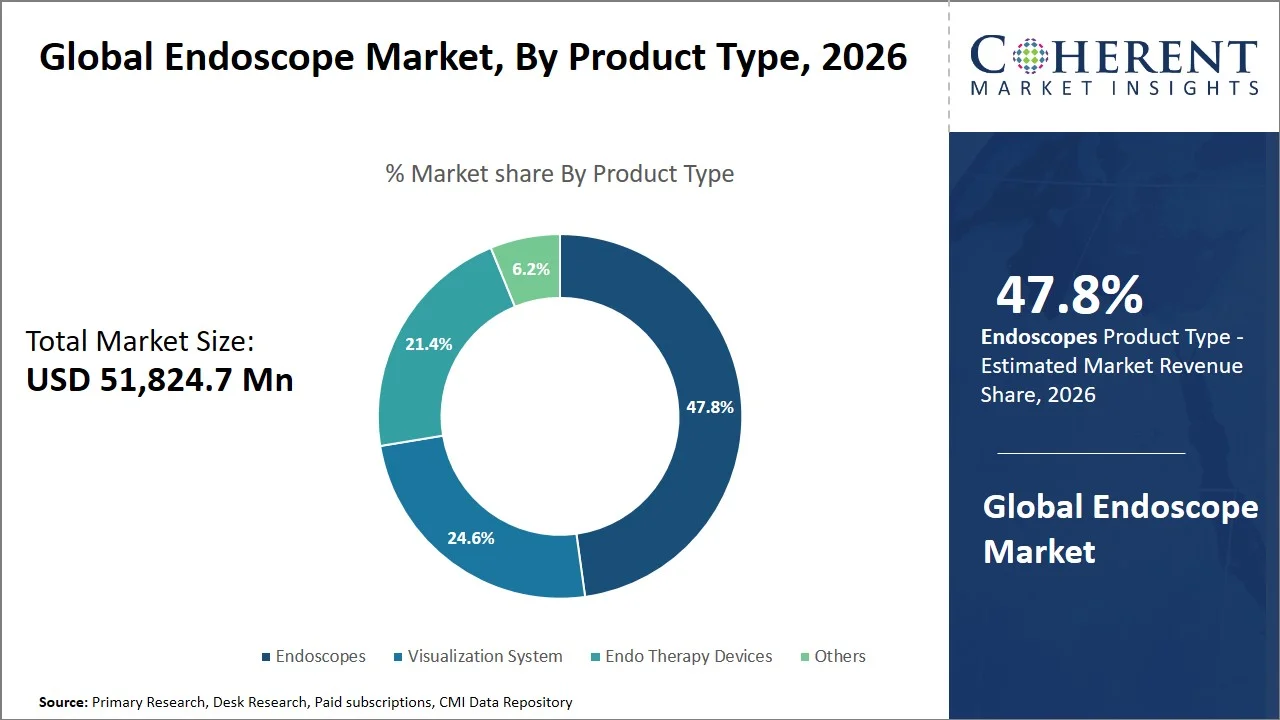
- Endoscopes are expected to account the largest share of 47.8% in 2026, due to wider use in diagnosis, biopsy, screening, and minimally invasive surgeries across gastrointestinal, urology, pulmonary, and gynecology care. In February 2026, WHO stated that regular colorectal screening helps detect cancer early and remove precancerous lesions. CDC guidance updated in February 2025 recommends colorectal cancer screening for adults aged 45–75, supporting higher colonoscope and gastroscope use.
- Flexible endoscope will dominate with 58.2% in 2026, because they support high-volume procedures such as colonoscopy, gastroscopy, bronchoscopy, and duodenoscopy, where devices must navigate curved anatomy with lower invasiveness. For instance, in February 2026, WHO reported 1.9 million new colorectal cancer cases and over 900,000 deaths globally in 2022, increasing colonoscopy-based screening demand.
- Hospitals hold the dominant share of 65.4% in 2026 because they perform complex diagnostic and surgical procedures requiring endoscopy suites, anesthesia support, trained specialists, and sterilization units. In 2026, the American Hospital Association reported 6,100 U.S. hospitals, showing strong institutional care capacity. CDC guidance updated in February 2025 recommends colorectal screening for adults aged 45–75, supporting hospital-based colonoscopy volumes.
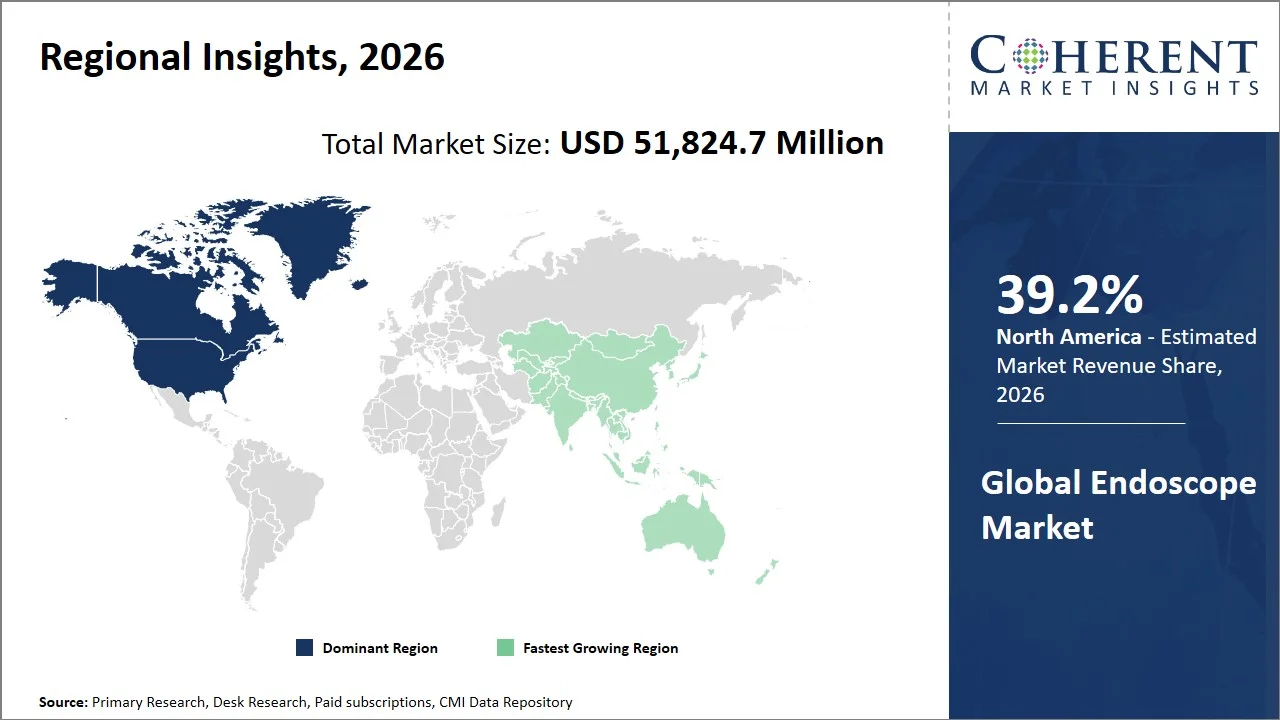
- North America is expected to acquire the dominant share of 39.2% in 2026, due to advanced hospital infrastructure, high screening awareness, and strong procedure access. The American Hospital Association’s 2026 Fast Facts, published in February 2026, reported 6,100 U.S. hospitals. CDC guidance updated on February 26, 2025 recommends colorectal cancer screening for adults aged 45–75, supporting colonoscopy and gastroscopy demand.
Segmental Insights
Why is Endoscopes Acquiring the Largest Market Share?
Endoscopes are projected to account for the largest share of endoscope in 2026, representing approximately 47.8% of the total volume. The endoscope segment is expected to dominate the global endoscopes market due to rising procedure demand for gastrointestinal and cancer diagnosis. For instance, according to the in February 2026, WHO reported that colorectal cancer caused 1.9 million new cases and over 900,000 deaths globally in 2022, making it the second-leading cause of cancer death. In the U.S., ACS projected 158,850 new colorectal cancer cases and 55,230 deaths in 2026, equal to about 440 diagnoses per day. This supports higher use of colonoscopy and other endoscopic procedures for screening, biopsy, and treatment. The segment is also supported by technology upgrades: FDA-cleared AI/endoscopy devices include Medtronic’s GI Genius for colonoscopy AI detection and PillCam Genius SB capsule endoscopy kit, cleared in May 2024 for small-bowel visualization. Ageing also supports demand, as WHO projects people aged 60+ will rise from 1.1 billion in 2023 to 1.4 billion by 2030, increasing chronic disease and diagnostic procedure needs.
- Current Industry Events of 2026
- Market Size Estimation
- Regional Breakdown
- Competitive Landscape
- Customer Intelligence
- Segmental Analysis
- Pricing Analysis
- Key Market Drivers, Challenges & Future Trends
- Customized Insights Section
Flexible Endoscope holds the Largest Market Share
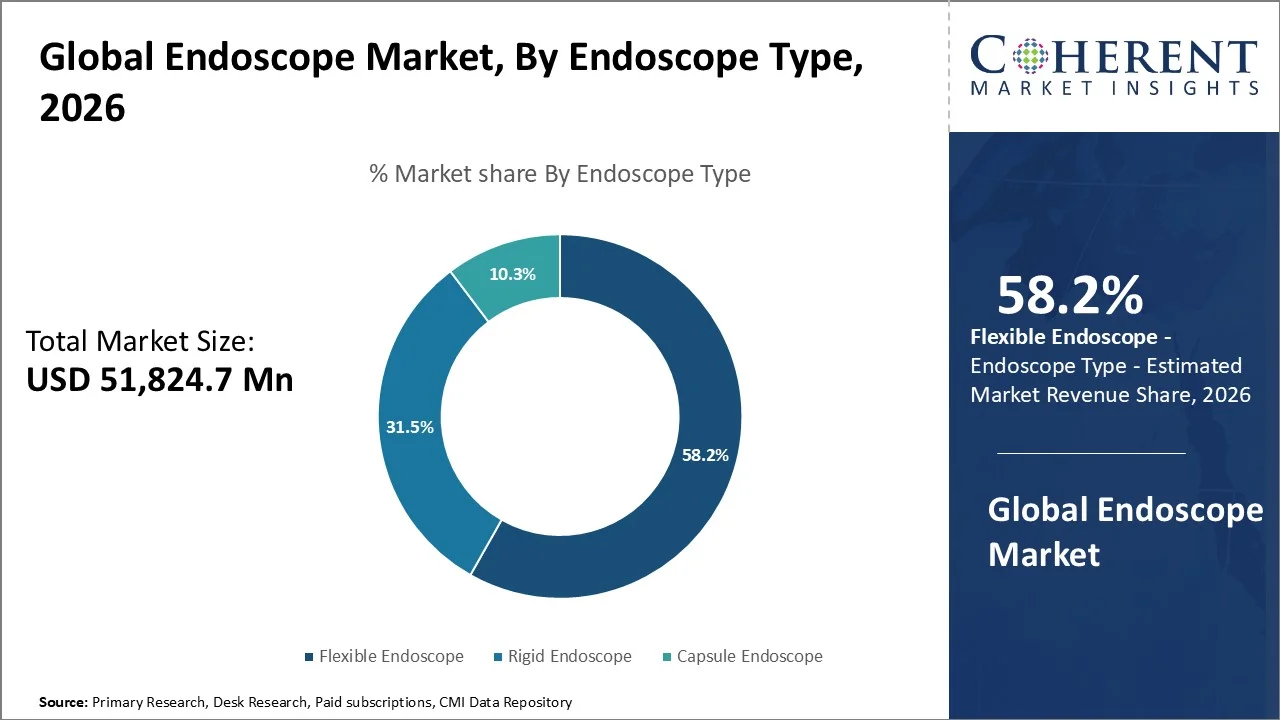
Based on endoscope type, flexible endoscope dominates the market, accounting for a significant 58.2% share in 2026. Flexible endoscopes dominate the endoscopes market because they support high-volume procedures such as colonoscopy, gastroscopy, bronchoscopy, and duodenoscopy, where devices must navigate curved anatomy with lower invasiveness. For instance, in February 2026, WHO reported 1.9 million new colorectal cancer cases and over 900,000 deaths globally in 2022, increasing colonoscopy-based screening demand. Furthermore, in March 2026, ACS projected 158,850 U.S. colorectal cancer cases in 2026, or about 440 diagnoses daily. Regulatory activity also supports adoption: in March 2026, the U.S. FDA cleared FUJIFILM’s flexible duodenoscope models ED-S100TP/ED-S100XP, and in April 2026, FDA documentation showed Olympus broncho-videoscopes used for airways/tracheobronchial procedures with biopsy accessories.
Which End User segment dominates the market?
Hospitals account for the largest share of 65.4% in 2026 because they handle high procedure volumes, complex cases, emergency admissions, advanced imaging systems, anesthesia support, biopsy services, and infection-control reprocessing units in one setting. For instance, in February 2026, the American Hospital Association reported 6,100 U.S. hospitals, 907,216 staffed beds, and 35,658,583 admissions, showing hospitals’ large procedural capacity. In 2026, SEER/NCI estimated 158,850 new colorectal cancer cases and 55,230 deaths in the U.S., supporting hospital-based colonoscopy, biopsy, and therapeutic endoscopy demand. The CDC, updated in February 2025, recommends colorectal cancer screening for adults aged 45–75 years, and states that abnormal stool tests, flexible sigmoidoscopy, or CT colonography often require colonoscopy completion. These factors make hospitals the preferred end-user for diagnostic and interventional endoscopy.
Source: American Hospital Association (AHA); CDC; American Cancer Society; SEER / National Cancer Institute
Market Drivers
Rising minimally invasive surgeries
Rising minimally invasive surgeries drive the endoscopes market growth because endoscopes enable internal visualization, access, illumination, and tissue manipulation through smaller openings rather than large incisions. The U.S. eCFR, current in 2026, defines endoscopes as devices used to observe or manipulate body cavities, hollow organs, and canals, supporting their use in surgical and diagnostic procedures. A peer-reviewed review published in 2023 in Cureus/PMC reported that minimally invasive gastrointestinal surgery is associated with shorter hospital stays, less discomfort, fewer infections, and reduced bleeding than open surgery. These clinical benefits increase hospital preference for laparoscopes, gastroscopes, colonoscopes, bronchoscopes, and related visualization systems across gastrointestinal, pulmonary, urology, and gynecology procedures. Additionally, in 2023/24, NHS England reported around 70,000 robot-assisted surgeries, and in June 2025, it projected this could rise to 500,000 robot-assisted surgeries annually by 2035, supporting wider adoption of minimally invasive/keyhole procedures and increasing demand for advanced endoscopes.
Growing colorectal cancer screening
Growing colorectal cancer screening drives the endoscope market growth because colonoscopy uses colonoscopes and visualization systems to detect cancer early and remove precancerous polyps. For instance, according to the CDC guidance updated on February 26, 2025 recommends screening for adults aged 45–75. A CDC study published in 2025 found only 61.4% of adults aged 45–75 were up to date with screening, while around 28 million were never screened, indicating large unmet procedure demand.
Rising new product launches and AI-enabled imaging innovations are transforming the Global Endoscopes Market
Rising new product launches and AI-enabled imaging innovations are transforming the Global Endoscopes Market by improving lesion detection, procedure confidence, and hospital upgrade demand. For instance, in September 2024, Olympus, global medical technology manufacturer announced FDA clearance for its first cloud-based AI endoscopy system for colonoscopy. In September 2025, the FDA cleared CADDIE, a computer-assisted detection device for patients aged 45 and above undergoing screening and surveillance endoscopic mucosal evaluation. A 2025 peer-reviewed study on GI Genius reported that FDA-cleared AI endoscopy systems flag suspected polyps in real time, supporting improved adenoma and polyp detection. These developments encourage adoption of advanced colonoscopes, visualization platforms, and AI-assisted endoscopy suites.
Current Events and Their Impact on the Endoscopes Market
Current Event | Description and its Impact |
CDC Expansion of Colorectal Cancer Screening Programs |
|
India’s Ayushman Bharat Cancer Screening Push |
|
EU MDR and AI Act Tighten Compliance for AI-Enabled Endoscopy |
|
FDA Clearances Support AI-Assisted Colonoscopy Adoption |
|
NCI Cancer Moonshot and ACCSIS Support Screening Access |
|
Endoscopes Market Trends
- AI-assisted polyp detection becoming a mainstream endoscopy trend – AI-enabled colonoscopy systems are increasingly used to detect polyps in real time during screening and surveillance procedures. The FDA-cleared GI Genius system is designed to aid endoscopists in detecting colonic mucosal lesions such as polyps and adenomas during white-light colonoscopy, improving diagnostic support without replacing clinical judgment.
Source: U.S. FDA
- Cloud-based AI endoscopy ecosystem is emerging – Olympus introduced OLYSENSE CAD/AI in 2025 as a cloud-based AI-powered suite supporting detection, characterization, and lesion analysis across upper and lower GI endoscopy. This reflects a shift from standalone devices toward connected AI applications that can improve workflow, standardize detection quality, and support future software-based upgrades.
- Deep-learning-based CAD systems are improving colonoscopy accuracy – Fujifilm’s CAD EYE uses AI deep-learning technology and clinical images to support real-time detection of colonic polyps and adenomas. In January 2026, Fujifilm highlighted that CAD EYE is being used by physicians to reduce missed lesions and improve adenoma detection performance during colonoscopy.
- High-definition and extended-depth imaging is advancing tissue identification – Olympus’ FY2026 update stated that Phase 2 of EVIS X1 U.S. launch includes Extended Depth of Field (EDOF) scopes, offering high magnification and broad focus for easier tissue identification. This trend supports better visualization, lesion recognition, and premium replacement demand in GI endoscopy systems.
- Regulatory pathway for adaptive AI devices is supporting innovation – In August 2025, FDA issued guidance on predetermined change control plans for AI-enabled medical devices, allowing iterative AI improvements while maintaining safety and effectiveness. This supports endoscope AI vendors by creating clearer pathways for software upgrades, algorithm refinement, and post-market performance improvements.
Source: U.S. FDA
Regional Insights
North America dominates owing to Advanced Hospital Infrastructure
North America account 39.2% market share in 2026, due to high colorectal cancer screening demand, advanced hospital infrastructure, FDA-regulated device safety, and large gastrointestinal disease burden. For instance, in January 2026, the American Cancer Society projected nearly 159,000 new colorectal cancer cases in the U.S., equal to about 440 diagnoses per day, supporting continued demand for colonoscopy and endoscopic diagnosis. Furthermore, CDC data published in 2025 shows only 61.4% of U.S. adults aged 45–75 were up to date with colorectal cancer screening, leaving a large eligible population for future endoscopic procedures. The NIDDK also reports 60–70 million Americans are affected by digestive diseases, increasing the need for diagnostic and therapeutic endoscopy. FDA safety guidance for reusable device reprocessing further supports standardized adoption of advanced endoscopic systems in U.S. healthcare settings.
Asia Pacific Endoscopes Market Trends
Asia-Pacific is the fastest-growing region in the endoscopes market due to rising colorectal cancer burden, expanding screening programs, healthcare infrastructure investment, and rapid adoption of AI-assisted endoscopy. For instance, WHO-IARC’s GLOBOCAN 2022 database, updated in February 2024, shows Asia accounts for a major share of global cancer incidence, creating strong diagnostic demand. A 2026 NIH-indexed study reported that East Asia showed one of the steepest colorectal cancer increases, supporting higher colonoscopy and GI endoscopy use. India’s PM-Ayushman Bharat Health Infrastructure Mission, announced by PIB in October 2021, allocated ₹64,180 crore for healthcare infrastructure, improving diagnostic capacity. In August 2025, Olympus stated its first OLYSENSE CAD AI endoscopy products would launch commercially in FY2026, accelerating advanced endoscope adoption in APAC.
High Endoscopy Procedure Demand and strong reimbursement support is Accelerating the Endoscopes Market Demand in United States
The U.S. is the dominant country in the North America endoscopes market because it has high endoscopy procedure demand, strong reimbursement support, advanced hospital infrastructure, and faster adoption of AI-enabled endoscopy systems. In March 2026, the American Cancer Society estimated 158,850 new colorectal cancer cases in the U.S. in 2026, supporting continuous demand for colonoscopy and GI endoscopy. CDC’s August 2025 report stated that only 61.4% of adults aged 45–75 were up to date with colorectal cancer screening, while around 28.3 million adults had never been screened. NIDDK also reports 60–70 million Americans affected by digestive diseases. In addition, AHA’s 2026 data lists 6,100 U.S. hospitals, and Medicare coverage for screening colonoscopy further supports procedure volumes and device adoption.
China Endoscopes Market Trends
China has become the biggest player in the Asia Pacific endoscopes market in 2026. China dominates the Asia-Pacific endoscope market due to its large hospital base, high digestive disease workload, and rapid local product launches. For instance, in February 2025, China’s National Bureau of Statistics reported 1.092 million medical and health institutions, including 39,000 hospitals, 10.37 million beds, 12.95 million medical technical personnel, and 10.11 billion medical visits in 2024, creating strong demand for endoscopic diagnosis and treatment. Furthermore, in November 2025, the Chinese Medical Journal’s 2024 gastroenterology report showed 43.3 million digestive endoscopy procedures, up 14% from 2019, with 89 million gastroenterology outpatient visits and 11.4 million digestive disease hospitalizations. New launches also support dominance: in June 2025, Aohua’s AQ-400 3D ultra-HD flexible endoscope system received registration, followed by online launch in September 2025 and Q4 installations. In April 2025, IKEDA launched 4K/3CMOS and dual-endoscopy solutions at CMEF Shanghai.
Who are the Major Companies in Endoscopes Market
Some of the major key players in Cognitive Systems Spending Marker are Medtronic plc, Olympus Corporation, Hoya Corporation, Fujifilm Holdings Corporation, CONMED Corporation, Stryker Corporation, DePuy Synthes, Boston Scientific Corporation, Smith and Nephew, and Cook Medical, Inc.
Key News
- In April 2026, FUJIFILM demonstrated its recently launched ELUXEO 8000 Endoscopic Imaging System at DDW 2026. The system uses enhanced LED multi-light technology, expanded scope lineup, and EUS offerings to improve visualization during GI procedures. This supports better lesion detection, advanced therapeutic endoscopy, and improved workflow efficiency for clinicians.
- In May 2026, Olympus Corporation, Japanese medical technology company launched key GI endoscopy products including EVIS X1 EDOF Video Gastroscope, EVIS X1 EDOF Video Colonoscope, and OLYSENSE CAD/AI in the U.S. and Europe. OLYSENSE supports AI-assisted endoscopic applications, while EDOF scopes provide broader focus and high-resolution imaging for improved tissue identification.
- In 2026, PENTAX Medical showcased its latest i20c Video Endoscope Series at DDW 2026, focusing on ergonomics and improved handling for endoscopists. The advancement reflects the industry’s shift toward smarter, user-friendly endoscope designs that reduce physician fatigue while supporting precision during routine and advanced GI procedures.
Market Report Scope
Endoscopes Market Report Coverage
| Report Coverage | Details | ||
|---|---|---|---|
| Base Year: | 2025 | Market Size in 2026: | USD 51,824.7 Mn |
| Historical Data for: | 2020 To 2024 | Forecast Period: | 2026 To 2033 |
| Forecast Period 2026 to 2033 CAGR: | 6.7% | 2033 Value Projection: | USD 81,103.9 Mn |
| Geographies covered: |
| ||
| Segments covered: |
| ||
| Companies covered: | Medtronic plc, Olympus Corporation, Hoya Corporation, Fujifilm Holdings Corporation, CONMED Corporation, Stryker Corporation, DePuy Synthes, Boston Scientific Corporation, Smith and Nephew, and Cook Medical, Inc. | ||
Analyst Opinion
- The global endoscope market continues to expand in 2026 as minimally invasive procedures increase worldwide. Regulatory approvals underpin sustained innovation in endoscopic technologies. In 2026, U.S. FDA 510(k) data show 305 endoscope authorizations from 2022 to April 2026, with single‑use devices representing 56% of registrations reflecting infection‑control and safety demand. Continued regulatory throughput bolsters clinician confidence and manufacturer investment in both reusable and disposable scopes worldwide.
- Clinical adoption is increasingly driven by advanced imaging and AI integration. A March 24, 2026 narrative review documents expanding AI use in gastrointestinal endoscopy to enhance lesion detection and procedural accuracy, signaling that digital tools are becoming standard in 2026 workflows and influencing hospital purchasing decisions.
- Disposable and flexible endoscopes are capturing growing share due to safety and workflow benefits. Market analysis indicates that disposable endoscopes accounted for the largest proportion of FDA registrations from 2022–2026 and rising demand for single‑use systems continues as hospitals prioritize cross‑contamination reduction and operational efficiency.
- The U.S. leads due to extensive Medicare reimbursement and high colorectal screening uptake supported by CDC and FDA‑cleared devices. Europe benefits from strong EU regulatory harmonization and national cancer screening programs. Asia‑Pacific’s growth is driven by rising digestive disease burden and expanding healthcare infrastructure investment, with technologies being adopted faster in countries like Japan and China per WHO and national health ministry data. The U.S. leads due to high colorectal cancer burden, with an estimated 158,850 new U.S. cases anticipated in 2026 per the American Cancer Society (Mar 2026), driving extensive screening and endoscopic procedures. European nations strengthened organized screening efforts in 2026 OECD reports, while Asia‑Pacific shows rising digestive cancer burdens per April 2026 global data, accelerating adoption of advanced endoscopy technologies across the region.
Speak to the analyst
Want personalized insights?
Take the findings above to one of our principal consultants, or have the report rebuilt around the segments, geographies and competitors you actually track.
Market Segmentation
- By Product Type (Revenue, USD Mn, 2021-2033)
- Endoscopes
- Gastroscopes
- Arthroscopes
- Colonoscopes
- Laparoscopes
- Enteroscopes
- Bronchoscopes
- Cystoscopes
- Ultrasound Endoscopes
- Others
- Visualization System
- Endo Therapy Devices
- Others
- Endoscopes
- By Endoscope Type (Revenue, USD Mn, 2021-2033)
- Rigid Endoscope
- Flexible Endoscope
- Capsule Endoscope
- By Application (Revenue, USD Mn, 2021-2033)
- Gastroenterology
- General Surgery
- Arthroscopy
- Urology
- Pulmonology
- Gynecology
- Others
- By End User (Revenue, USD Mn, 2021-2033)
- Hospitals
- Clinics
- Others
- By Region (Revenue, USD Mn, 2021-2033)
- North America
- U.S.
- Canada
- Latin America
- Brazil
- Mexico
- Argentina
- Rest of Latin America
- Europe
- Germany
- U.K.
- France
- Italy
- Spain
- Russia
- Rest of Europe
- Asia Pacific
- China
- India
- Japan
- Australia
- South Korea
- ASEAN
- Rest of Asia Pacific
- Middle East
- GCC
- Israel
- Rest of Middle East
- Africa
- South Africa
- Central Africa
- North Africa
- North America
- Competitive Landscape
- Medtronic plc
- Olympus Corporation
- Hoya Corporation
- Fujifilm Holdings Corporation
- CONMED Corporation
- Stryker Corporation
- DePuy Synthes
- Boston Scientific Corporation
- Smith and Nephew
- Cook Medical, Inc.
Sources
Primary Research Interviews
- Interviews with gastroenterologists, pulmonologists, urologists, and surgeons to understand clinical adoption, procedure volumes, usability requirements, and preference for flexible, rigid, capsule, and disposable endoscopes.
- Insights from endoscope manufacturers, product engineers, and imaging technology providers on advancements in HD/4K visualization, AI-assisted detection, robotic endoscopy, single-use scopes, and miniaturized device design.
- Discussions with hospital procurement heads, biomedical engineers, and infection-control teams to evaluate purchasing criteria, reprocessing challenges, maintenance costs, sterilization protocols, and replacement cycles.
- Conversations with distributors, regulatory consultants, and healthcare market experts to assess regional demand trends, reimbursement factors, competitive landscape, pricing pressure, and adoption barriers in hospitals, ambulatory surgical centers, and diagnostic clinics.
Databases
- U.S. FDA 510(k) Premarket Notification Database
- U.S. FDA MAUDE Database
- WHO Global Health Observatory
- OECD Health Statistics Database
- Eurostat Healthcare Statistics
- Global Health Data Exchange
Magazines
- Medical Device Network
- MedTech Dive
- Healthcare Technology Magazine
- Medical Design & Outsourcing
- Endoscopy Campus Magazine
Journals
- Gastrointestinal Endoscopy
- Endoscopy International Open
- Surgical Endoscopy
- Clinical Endoscopy
- World Journal of Gastrointestinal Endoscopy
Newspapers
- Financial Times – Healthcare Section
- The Wall Street Journal – Health & Medical Devices
- Reuters Health News
- The New York Times – Health Section
- The Guardian – Healthcare Section
Associations
- American Society for Gastrointestinal Endoscopy
- European Society of Gastrointestinal Endoscopy
- World Endoscopy Organization
- Society of American Gastrointestinal and Endoscopic Surgeons
- American Gastroenterological Association
Public Domain Sources
- U.S. FDA Medical Device Databases
- CDC Healthcare-Associated Infections Data
- WHO Health Statistics and Disease Burden Data
- NHS Digital Healthcare Procedure Statistics
- Company Annual Reports and Investor Presentations from Olympus, Fujifilm, Stryker, Boston Scientific, and Medtronic.
Proprietary Elements
- CMI Data Analytics Tool
- Proprietary CMI Existing Repository of information for last 10 years
Get access to 250+ pages report
Every segment, forecast, competitor profile and data table behind the analysis above — available for instant download.
- ESOMAR Member
- ISO 9001:2015 Certified
- D-U-N-S Registered
- GDPR & CCPA Compliant
Missing comfort of reading report in your local language? Find your preferred language:
Transform your Strategy with Exclusive Trending Reports
Frequently Asked Questions
The Endoscope Market is expected to reach USD 81,103.9 Mn in 2033.
Major players operating in the global Endoscope Market include Medtronic plc, Olympus Corporation, Hoya Corporation, Fujifilm Holdings Corporation, CONMED Corporation, Stryker Corporation, DePuy Synthes, Boston Scientific Corporation, Smith and Nephew, and Cook Medical, Inc.
Stringent regulatory requirements and product recalls and safety concerns are the major factors hampering the growth of the endoscope market.
Rising minimally invasive surgeries and growing colorectal cancer screening are the key factors driving the growth of the Endoscope Market.
The Endoscope Market is anticipated to grow at a CAGR of 6.7% between 2026 and 2033.
Among regions, North America is expected to account for a largest market share in the global Endoscope Market over the forecast period.