

Global Healthcare Smell Diagnostics Market Size and Forecast – 2026 To 2033
The global healthcare smell diagnostics market is expected to grow from USD 286.4 Mn in 2026 to USD 654.7 Mn by 2033, registering a compound annual growth rate (CAGR) of 12.5% from 2026 to 2033. The market for global healthcare smell diagnostics is poised for significant expansion, fueled by the increasing clinical validation of exhaled-breath VOC analysis as a non-invasive diagnostic approach.
In November 2025, a systematic review and meta-analysis published by the National Library of Medicine, exhaled-breath VOC analysis using eNose technology demonstrated 83% pooled sensitivity and 78% specificity for COPD detection across 39 studies involving 2,325 COPD patients and 1,574 healthy controls. This highlights the growing clinical validation of eNose-based VOC analysis as a non-invasive approach for disease detection, strengthening its potential for integration into routine respiratory diagnostics and expanding the addressable applications of healthcare smell diagnostics.
Key Takeaways of the Global Healthcare Smell Diagnostics Market
- Electronic Nose (E-Nose) is projected to hold 36.8% of the global healthcare smell diagnostics market share in 2026, making it dominant technology segment across North America due to government-backed development of high-sensitivity VOC sensing technologies. For instance, in May 2025, Canada’s National Research Council (NRC) provided funding of USD 52,979 (CAD 75,000) to develop a high-resolution silicon aroma sensor chip with an integrated biomarker-amplification module for detecting trace concentrations of breath VOCs to support early disease diagnostics.
- Exhaled breath is projected to hold 61.4% of the global healthcare smell diagnostics market share in 2026, making it dominant sample type segment across Europe due to EU-supported development of non-invasive breath-diagnostic technologies. For instance, the European Commission’s Horizon Europe B-Path project is developing and validating exhaled-breath sampling for diagnosis and screening of respiratory infections, with clinical implementation planned across Germany, Italy and Romania.
- Cancer detection is projected to hold 31.8% of the global healthcare smell diagnostics market share in 2026, making it dominant application segment with Asia Pacific showing expanding clinical evaluation of breath-VOC technologies for cancer diagnosis. For instance, in June 2026, Japan’s Ministry of Health, Labour and Welfare (MHLW) registered a multicenter prospective study evaluating exhaled-breath VOC detection for breast-cancer screening, with a planned sample of 1,000 participants and diagnostic sensitivity and specificity as primary outcomes.
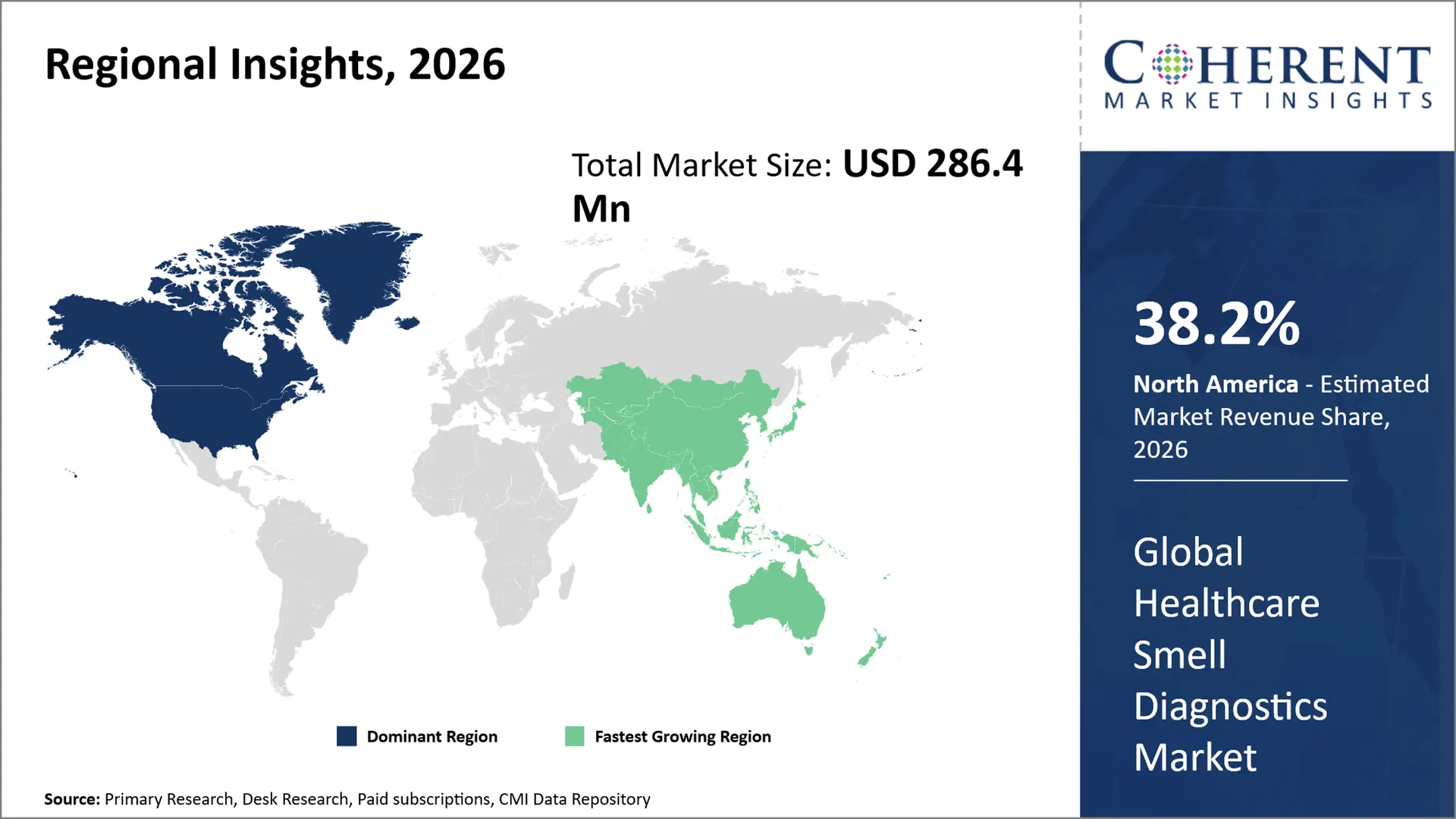
- North America market maintains dominance with an expected share of 38.2% in 2026, bolstered by government-backed research into portable breath-VOC diagnostics and AI-based interpretation. For instance, the U.S. NIH awarded USD 957,641 in FY2022 to the University of Louisville to develop a mobile breath-analysis system combining portable GC-PID technology with AI/ML for detecting disease-associated VOC patterns in exhaled breath.
- Asia Pacific is expected to exhibit the fastest growth in the global healthcare smell diagnostics market, registering an estimated CAGR of 13.8% during 2026–2033, driven by expanding government-backed research in breath-based disease detection and VOC analysis. For instance, China’s 2025 National Key R&D program allocated approximately USD 124 million (RMB 832 million) in central-government funding for research covering cancer, respiratory, cardiovascular and metabolic diseases, creating a broader public research base for advanced non-invasive diagnostic technologies.
Segmental Insights
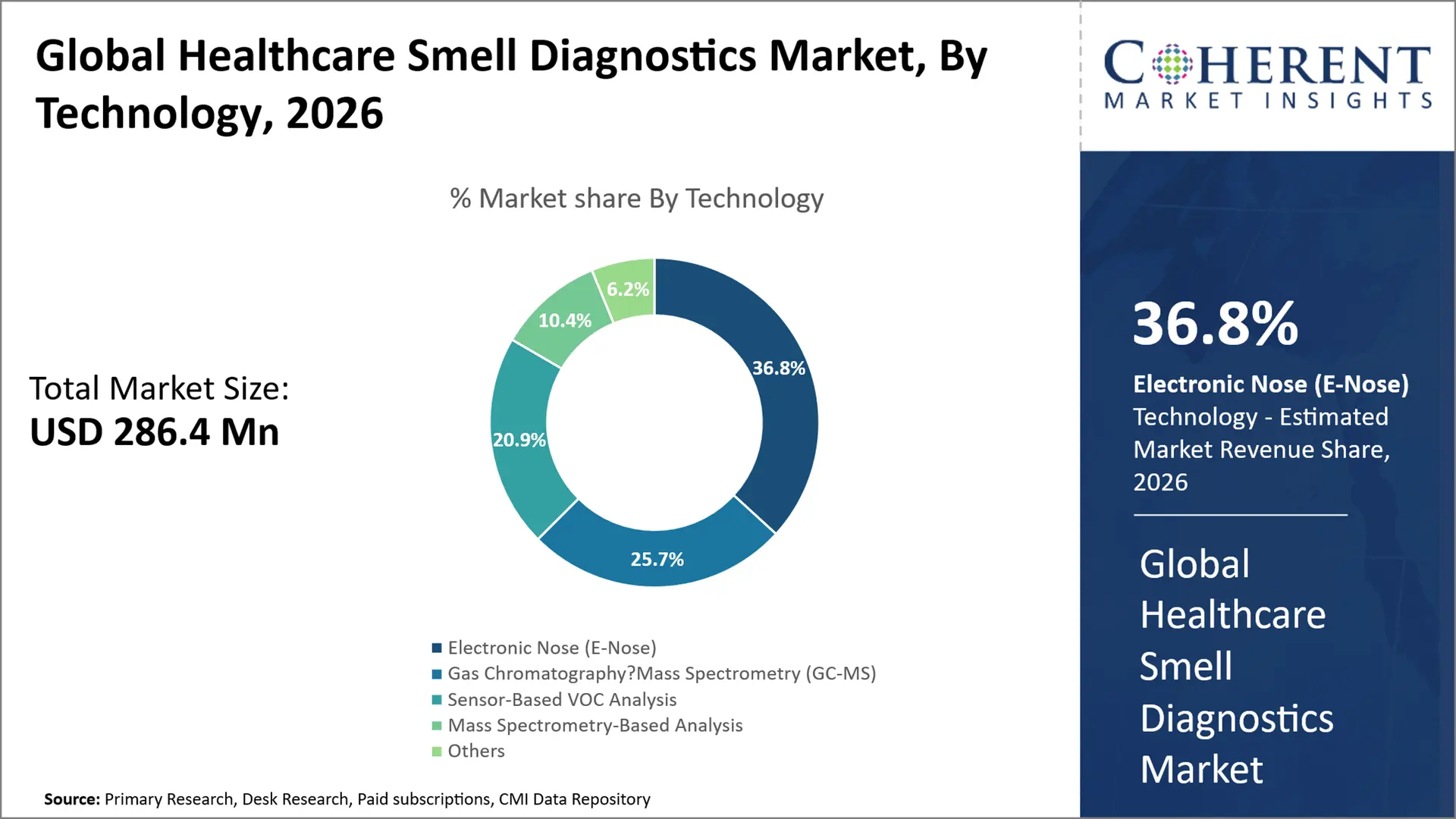
Why Do Electronic Nose (E-Nose) Dominate the Global Healthcare Smell Diagnostics Market?
Electronic Nose (E-Nose) is projected to hold the market share of 36.8% in 2026, as sensor arrays can quickly analyze complex VOC signatures obtained from breath and other biological sources in a rapid, non-invasive manner. The correlation of samples with datasets and advanced algorithms coupled with a growing evidence base may accelerate the pattern recognition capabilities, allowing for faster screening and the potential to screen at the point-of-care. The development of more miniaturized sensing systems can also improve the portability of healthcare smell-diagnostic devices. For instance, in June 2022, the UK Defence Science and Technology Laboratory (Dstl), through DASA, announced a USD 994,200 (£750,000) government funded competition for next generation wearable molecular sensing technologies, whereby expired breath was included as a bio sample and VOCs detection using AI/ML was specified indicating government support for development of next generation chemical-sensing platform.
- Current Industry Events of 2026
- Market Size Estimation
- Regional Breakdown
- Competitive Landscape
- Customer Intelligence
- Segmental Analysis
- Pricing Analysis
- Key Market Drivers, Challenges & Future Trends
- Customized Insights Section
Why Do Exhaled Breath Represent the Largest Sample Type Segment in the Healthcare Smell Diagnostics Market?
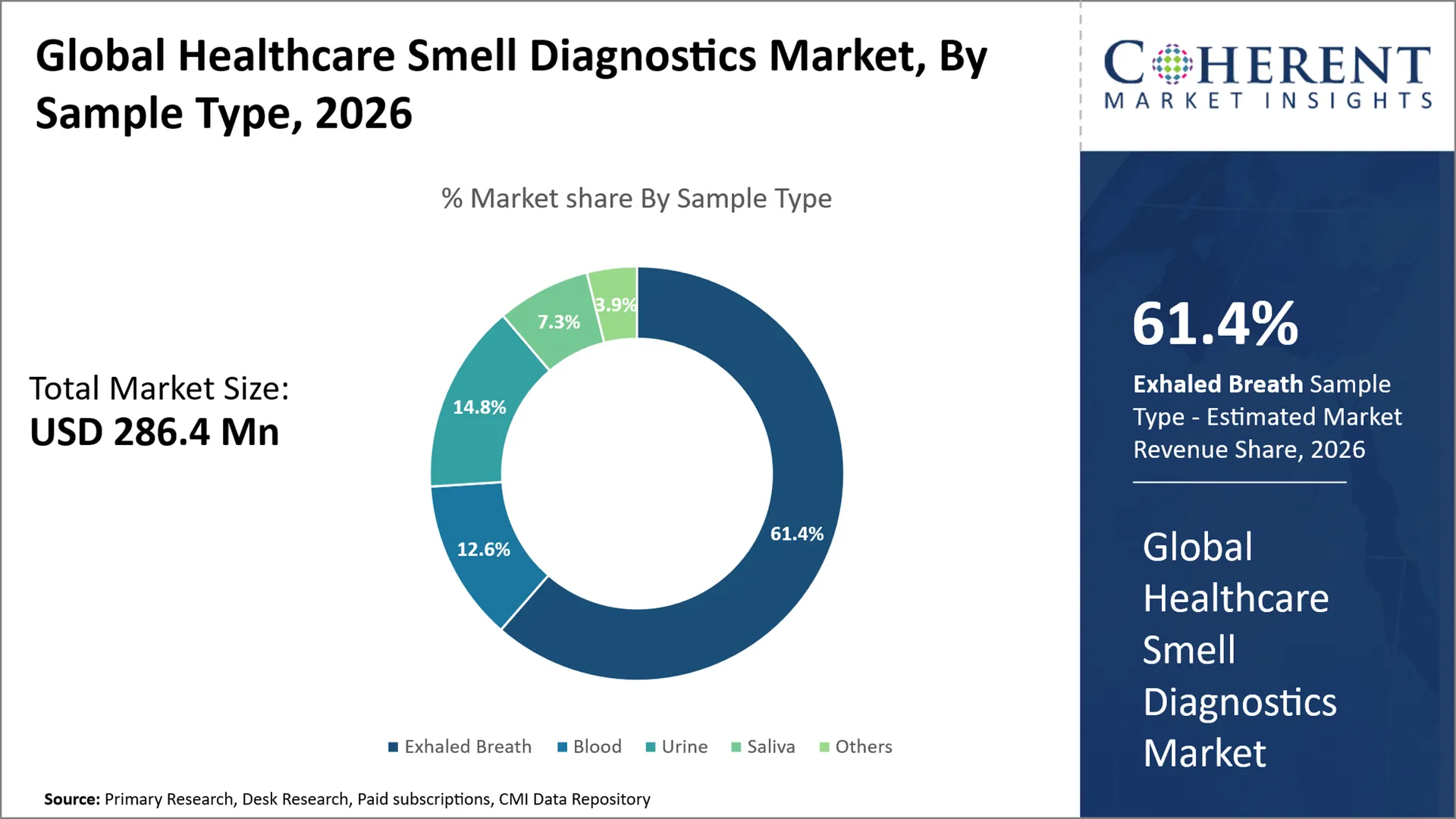
Exhaled breath is projected to hold a market share of 61.4% in 2026, because it allows non-invasive and repeatable collection of VOCs and disease biomarkers. The easiest to achieve and the most promising for screening and point-of-care applications. Large number of biomarkers from a single breath sample allow its application on systemic diseases in addition to respiratory diseases. For instance, in January 2026, the EU-funded BreathForDx project revealed that 88 out of 1,136 total participants had been recruited so far to study exhaled-breath aerosol sampling as a tool for diagnosing and screening respiratory infections. The researchers are also testing self-sampling, diagnostic yield and economic efficiency of breath testing. (Source: European Commission)
Cancer Detection Segment Dominates the Global Healthcare Smell Diagnostics Market
The cancer detection segment is projected to hold a market share of 31.8% in 2026, owing to the ability of cancer-related VOC patterns to be identified in breath and other samples without requiring invasive tissue collection. E-Nose and VOC-analysis can enable quick screening, early diagnosis, and therapy monitoring, thereby opening up market opportunities through conventional diagnostic routes. For instance, in 2025, the ONCOSCREEN project was developed with the aim of improving early diagnosis of cancer and reducing the use of invasive diagnostic techniques. ONCOSCREEN was funded by the European Commission’s Horizon Europe program and is based on the analysis of volatile biomarkers in biological samples for the early diagnosis of colorectal cancer.
Current Events and their Impact
Current Events | Description and its Impact |
China Expands Government Funding for Intelligent Olfactory Diagnostic Technologies (January 2026) |
|
European Commission Advances VOC-Based Breath Testing for Liver Disease (October 2025) |
|
European Commission Supports AI-Based Multi-Biomarker Breath Analysis (April 2025) |
|
Healthcare Smell Diagnostics Market Dynamics
Market Drivers
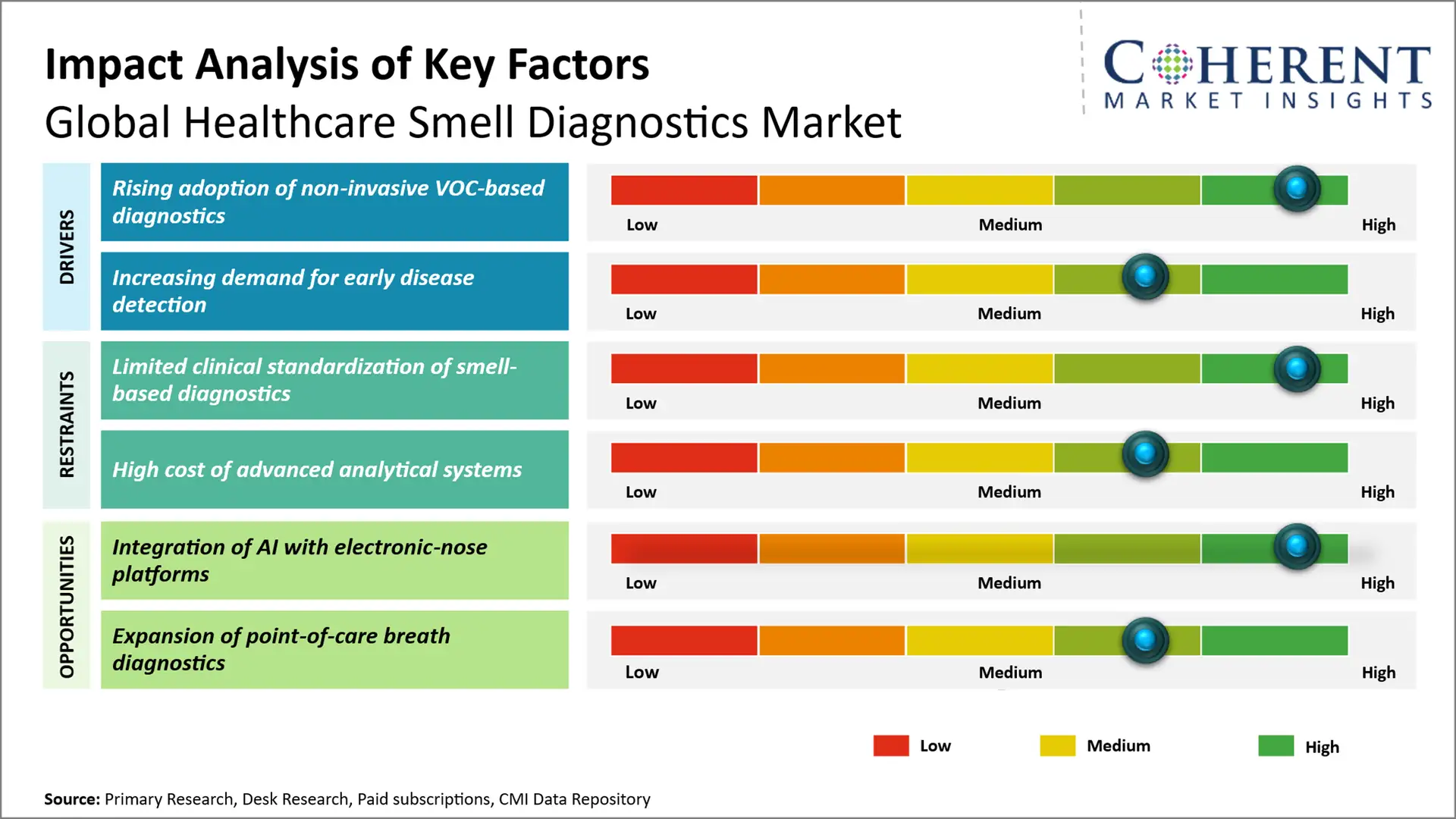
- Rising adoption of non-invasive VOC-based diagnostics: Rising adoption of non-invasive VOC-based diagnostics is creating opportunities for faster disease screening without invasive sample collection. Breath-based VOC analysis can support near-patient testing while reducing dependence on conventional laboratory workflows. The growing regulatory recognition of VOC-based breath diagnostics is further supporting clinical translation. For instance, in April 2022, the U.S. FDA authorized InspectIR Systems’ InspectIR COVID-19 Breathalyzer, a near-patient/point-of-care breath test that uses rapid GC-MS to analyze five VOCs associated with SARS-CoV-2 infection. The authorization demonstrates the clinical use of non-invasive VOC-based breath diagnostics beyond laboratory testing.
- Increasing demand for early disease detection: Increasing demand for early disease detection is driving interest in technologies capable of identifying disease-associated biomarkers before noticeable symptoms emerge. Breath-based VOC analysis offers a non-invasive approach for detecting early-stage disease signatures, particularly in cancer screening, while supporting faster diagnostic assessment. For instance, in June 2026, a clinical study protocol for the VOCORDER device published by the National Library of Medicine, evaluated breath VOC analysis combined with AI to identify early signatures of lung, stomach/colorectal, breast cancers, and kidney insufficiency before symptoms appear.
- Increasing adoption of point-of-care breath diagnostics: The shift toward rapid, decentralized testing is increasing demand for portable breath-analysis technologies that can deliver diagnostic information outside conventional laboratories. Integration of VOC sensing with compact analyzers can support faster clinical decision-making and expand access to non-invasive diagnostics. For instance, in March 2026, researchers from Ashesi University and the University of Ghana developed a low-cost AI-powered breath analyzer for early COPD detection using metal-oxide semiconductor VOC sensors and a lightweight neural network deployed on a Raspberry Pi 5. The system demonstrated the feasibility of real-time, portable breath diagnostics for resource-limited environments.
Emerging Trends
- AI-Enabled VOC Pattern Recognition: Integration of AI and machine learning with e-nose platforms is improving the identification of complex disease-specific VOC patterns. This supports faster, more consistent, and increasingly automated diagnostic interpretation.
- Miniaturization of E-Nose Systems: Advances in sensor technology are driving the development of compact, portable e-nose devices for rapid breath and biological-sample analysis. These systems are supporting the shift toward point-of-care diagnostics and decentralized diagnostics.
- Expansion into Multi-Disease Detection: Healthcare smell diagnostics is expanding beyond cancer detection toward respiratory, infectious, metabolic, and neurological diseases. Multi-disease platforms can analyze VOC signatures to support broader screening from a single non-invasive sample.
Regional Insights
Why is North America a Strong Market for Healthcare Smell Diagnostics?
North America leads the global healthcare smell diagnostics market, accounting for an estimated 38.2% share in 2026, due to higher healthcare infrastructure and R&D capabilities, better adoption of innovative healthcare diagnosis technology, and higher usage of diagnostic solutions. Moreover, the government policies that promote innovations in medical devices and indications of regulatory privileges, could bolster clinical translation of innovative diagnostic systems, thus driving regional market.
For instance, in April 2026, the U.S Food and Drug Administration (FDA) and U.S. Centers for Medicare & Medicaid Services (CMS) announced the Regulatory Alignment for Predictable and Immediate Device (RAPID) Coverage Pathway for improving the pace of Medicare coverage in patients that qualify for a FDA designated Breakthrough Device.
Why Does Asia Pacific Healthcare Smell Diagnostics Market Exhibit High Growth?
Asia Pacific is expected to exhibit the fastest growth in the global healthcare smell diagnostics market, registering an estimated CAGR of 13.8% during 2026–2033. The region is projected to account for 24.6% of the global market in 2026, owing to the potential expansion of the healthcare infrastructure, an increase in diagnostic expenditure and government focus on early detection and prevention of diseases. Government incentivized activities such as early detection and screening and growth in digital health and advanced diagnostic technologies coupled with lack of invasive traditional diagnostic procedures seem to generate promising growth opportunities for non-invasive smell diagnostics market.
For instance, Japan’s Ministry of Health, Labour and Welfare (MHLW) is advancing Healthcare Digital Transformation (HDT) by developing a nation-wide health-information infrastructure and introducing digital municipal cancer screening, a 2025 demonstration program covering cancer screening. The initiative is spearheading the move toward wider use of digital, data-driven and even non-invasive diagnostic technologies.
Global Healthcare Smell Diagnostics Market Outlook for Key Countries
Why is the U.S. Leading Innovation and Adoption in the Healthcare Smell Diagnostics Market?
The U.S. is front-runner in technology development and adoption because of existing diagnostics technology infrastructure, strong, cloud-based AI/ VOC pipeline, and need for non-invasive disease detection. It seems advanced sensors technology and data-centric diagnostics are gaining momentum and are enabling the application of olfactory diagnostics from R&D setting into various clinical settings. The country's strong healthcare system and infrastructure could further make the integration of new olfactory diagnostic techniques easy.
Is Japan a Favorable Market for Healthcare Smell Diagnostics Market?
Japan is a likely attractive market for healthcare smell diagnostics with its existing precision-diagnostics ecosystem, prevalence of sensor technologies and data-driven medical diagnostics based on artificial intelligence. The well-developed olfactory measurement and breath-analyses technology has the potential to fuel VOC diagnostics platform development, and sophisticated healthcare infrastructure facilitates the clinical translation of emerging non-invasive diagnostic technologies.
Is China Emerging as a Key Growth Hub for the Healthcare Smell Diagnostics Market?
China is gaining momentum as a potential growth market, driven by rapidly advancing AI-enabled medical diagnosis and sensor technologies. Studies have shown that improved precision in electronic-nose and VOC analysis may lead to non-invasive diagnoses. Combined with the use of AI in new medical-device developments, it seems that next-gen olfactory diagnostics are emerging as a commercial success.
Why Does Germany Top the European Healthcare Smell Diagnostics Market?
Germany leads the European healthcare smell diagnostics market owing to advanced research foundations in breathing-analysis sensors, high-capability sensors for Volatile Organic Compounds (VOC) and sound medical-technology base. Germany research capacity encourages the building of micro-sensor gadgets in which they sense exhaled VOCs diseases. Germany attention regarding diagnostics along with medicine technologies has possibly allowed this area a lead, thus could be a big market for these non-invasive diagnosing options based upon Smell.
Is Healthcare Smell Diagnostics Market Developing in UK?
The UK appears to be a promising market, probably based on its strong baseline of breathomics research and the use of VOC-based, non-invasive disease diagnostics. National Health Service (NHS)-related research infrastructure and support in developing E-nose and breath-analysis for potential clinical and point-of-care applications, and growing focus on early detection of cancer and respiratory disease are positive indicators.
Healthcare Smell Diagnostics: Disease Application by Biological Sample Type
Disease Application | Exhaled Breath | Urine | Blood | Saliva | Other Biological Samples |
Cancer Detection | ✓ | ✓ | ✓ | ✓ | ✓ |
Respiratory Disease Detection | ✓ | — | — | — | ✓ |
Infectious Disease Detection | ✓ | ✓ | ✓ | ✓ | ✓ |
Metabolic Disease Detection | ✓ | ✓ | ✓ | ✓ | ✓ |
Neurological Disease Detection | ✓ | ✓ | ✓ | ✓ | ✓ |
How is the integration of AI with electronic-nose platforms creating new growth opportunities in the healthcare smell diagnostics market?
The application of artificial intelligence (AI) with e-nose-based diagnostics may enable more reliable automated identification of subtle complex VOC signatures, with increased diagnostic speed and reproducibility. Moreover, it may also help counteract sensor inconsistency and enable the expansion of chemical-based diagnostics towards portable, non-invasive point-of-care tools for disease screening and personalized medicine.
For instance, in September 2025, the National Institutes of Health/National Center for Advancing Translational Sciences launched the SCENT III concept, a system that uses sensor arrays, feature extraction, and pattern recognition aided by artificial intelligence to identify patterns of volatile organic compounds in breath and on the skin. The program plans to create diagnostic devices for approval in cancers, respiratory, infectious, metabolic, and neurological diseases.
Market Players, Key Development, and Competitive Landscape
Key Developments
- In February 2026, Breath Diagnostics, Inc. received U.S.FDA Breakthrough Device Designation for its OneBreath platform, which analyzes volatile organic compounds (VOCs) from a single exhaled-breath sample to assess the risk of postoperative pneumonia. The development directly supports the use of breath-based molecular and VOC diagnostics in healthcare.
- In January 2026, Reliance Global Group signed a non-binding term sheet to acquire a majority stake in Scentech, an Israeli company developing AI-based breath diagnostics. Its VOX platform targets early pancreatic cancer risk assessment, while VocTracer is being developed for healthcare-associated infections and antimicrobial resistance.
- In August 2025, Ainos, Inc. launched its commercial AI Nose module, combining MEMS multi-sensor arrays with AI-based scent analysis to detect and quantify VOCs. The platform is designed for healthcare applications, including breath-based diagnostics, supporting the development of AI-enabled smell diagnostics.
Competitive Landscape
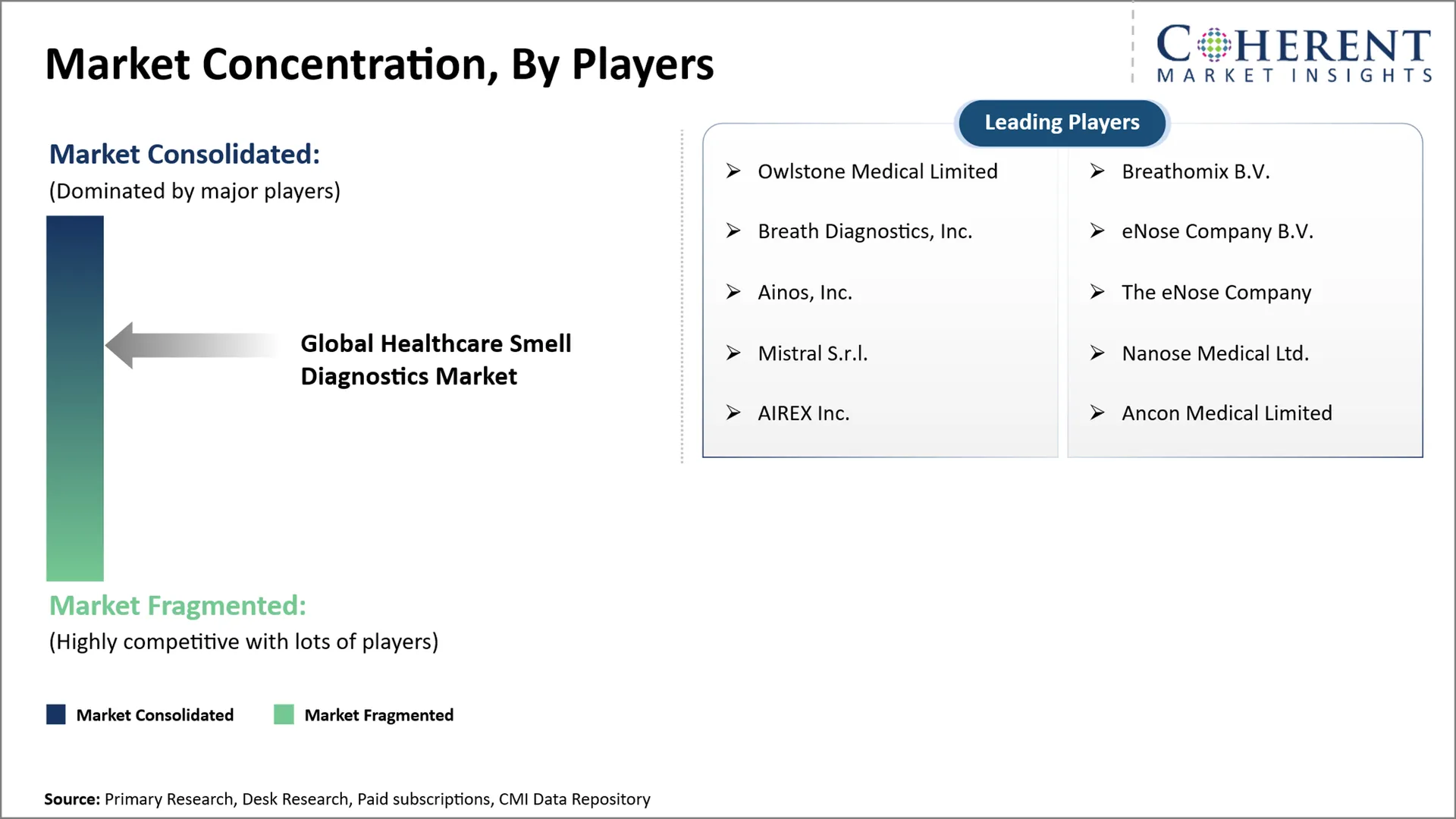
The global healthcare smell diagnostics market is moderately competitive, with market dynamics shaped by advances in electronic-nose systems, VOC sensing, AI-based pattern recognition, and breath-based diagnostic technologies. Market participants are increasingly focusing on improving diagnostic accuracy, reproducibility, and clinical applicability across non-invasive testing. Key focus areas include:
- Development of AI-enabled electronic-nose and VOC detection technologies
- Expansion of breath-based diagnostics across disease indications
- Integration of advanced sensor arrays with AI and machine-learning algorithms
- Enhancement of VOC detection sensitivity, specificity, and measurement consistency
- Development of portable and point-of-care smell diagnostic systems
Market Report Scope
Healthcare Smell Diagnostics Market Report Coverage | |||
Report Coverage | Details | ||
Base Year | 2025 | Market Size in 2026: | USD 286.4 Mn |
Historical Data For: | 2020 To 2024 | Forecast Period: | 2026 To 2033 |
Forecast Period 2026 To 2033 CAGR: | 12.5% | 2033 Value Projection: | USD 654.7 Mn |
Geographies covered: |
| ||
Segments covered: |
| ||
Companies covered: | Owlstone Medical Limited, Breathomix B.V., Breath Diagnostics, Inc., eNose Company B.V., Ainos, Inc., The eNose Company, Mistral S.r.l., Nanose Medical Ltd., AIREX Inc., Ancon Medical Limited | ||
Growth Drivers: |
| ||
Restraints & Challenges: |
| ||
Analyst Opinion (Expert Opinion)
- In the coming years, global healthcare smell diagnostics market is expected to evolve toward AI-enabled, non-invasive and portable diagnostic systems that can identify disease-specific VOC patterns with greater speed and consistency. E-Nose platforms are likely to expand beyond research applications into clinical screening, point-of-care testing, and remote diagnostics. Integration of advanced sensor arrays, machine learning, and multimodal patient data will further improve diagnostic interpretation and enable disease-specific applications.
- The maximum opportunities are foreseen within electronic nose (E-Nose) for cancer detection in the U.S. Cancer detection offers a broad addressable application area, while E-Nose technology enables rapid and non-invasive analysis of VOC signatures. The U.S. provides a strong commercialization environment for advanced diagnostic technologies, making this combination attractive for platform developers targeting clinical adoption.
- In order to gain a competitive advantage market players should focus on developing proprietary sensor arrays, disease-specific VOC signatures, and AI-driven diagnostic algorithms that improve sensitivity, specificity, and reproducibility. Companies should also prioritize compact point-of-care devices, standardized sample-collection protocols, and clinically validated datasets. Building platforms that can support multiple disease indications while integrating with existing laboratory and healthcare workflows can create a stronger competitive position.
Speak to the analyst
Want personalized insights?
Take the findings above to one of our principal consultants, or have the report rebuilt around the segments, geographies and competitors you actually track.
Market Segmentation
- Technology Insights (Revenue, USD Mn, 2021 - 2033)
- Electronic Nose (E-Nose)
- Gas Chromatography–Mass Spectrometry (GC-MS)
- Sensor-Based VOC Analysis
- Mass Spectrometry-Based Analysis
- Others
- Sample Type Insights (Revenue, USD Mn, 2021 - 2033)
- Exhaled Breath
- Blood
- Urine
- Saliva
- Others
- Application Insights (Revenue, USD Mn, 2021 - 2033)
- Cancer Detection
- Respiratory Disease Detection
- Infectious Disease Detection
- Metabolic Disease Detection
- Gastrointestinal and Liver Disease Detection
- Neurological Disease Detection
- Others
- End User Insights (Revenue, USD Mn, 2021 - 2033)
- Hospitals and Clinics
- Diagnostic Laboratories
- Research Institutes
- Pharmaceutical and Biotechnology Companies
- Others
- Regional Insights (Revenue, USD Mn, 2021 - 2033)
- North America
- U.S.
- Canada
- Latin America
- Brazil
- Argentina
- Mexico
- Rest of Latin America
- Europe
- Germany
- U.K.
- Spain
- France
- Italy
- Russia
- Rest of Europe
- Asia Pacific
- China
- India
- Japan
- Australia
- South Korea
- ASEAN
- Rest of Asia Pacific
- Middle East
- GCC Countries
- Israel
- Rest of Middle East
- Africa
- South Africa
- North Africa
- Central Africa
- North America
- Key Players Insights
- Owlstone Medical Limited
- Breathomix B.V.
- Breath Diagnostics, Inc.
- eNose Company B.V.
- Ainos, Inc.
- The eNose Company
- Mistral S.r.l.
- Nanose Medical Ltd.
- AIREX Inc.
- Ancon Medical Limited
Sources
Primary Research Interviews
- Breathomics and VOC diagnostic technology developers
- Electronic-nose and olfactory sensor technology specialists
- VOC analytical and mass-spectrometry specialists
- Clinical researchers specializing in breath-based diagnostics
- Pathologists, pulmonologists, oncologists, and diagnostic laboratory professionals
- AI/ML specialists developing VOC pattern-recognition and diagnostic algorithms
Stakeholders
- Healthcare smell diagnostics and electronic-nose platform developers
- VOC sensor, biosensor, and breath-analysis technology providers
- GC-MS, mass spectrometry, and VOC analytical-system providers
- Hospitals, diagnostic laboratories, and specialized testing centers
- Academic and biomedical research institutions
- Healthcare AI, data-analysis, and clinical-validation service providers
- Pharmaceutical and biotechnology companies developing biomarker-based diagnostics
- End-use Sectors
- Hospitals and Clinics
- Diagnostic Laboratories
- Research and Academic Institutions
- Pharmaceutical and Biotechnology Companies
- Specialized Diagnostic Centers
- Other End-use Sectors
- Regulatory & Health Bodies
- U.S. Food and Drug Administration (FDA) – olfactory test devices, breath-analysis and VOC-based diagnostic devices
- European Medicines Agency (EMA) – diagnostic and medical-device regulatory information
- Medicines and Healthcare products Regulatory Agency (MHRA), UK – medical-device and diagnostic regulation
- Pharmaceuticals and Medical Devices Agency (PMDA), Japan – medical-device and diagnostic evaluation
- National Medical Products Administration (NMPA), China – medical-device and diagnostic regulation
- Central Drugs Standard Control Organisation (CDSCO), India – medical-device and diagnostic regulation
- World Health Organization (WHO) – global diagnostic and point-of-care testing frameworks
Databases
- ClinicalTrials.gov – clinical studies involving breath, VOC, and olfactory diagnostics
- WHO International Clinical Trials Registry Platform (ICTRP) – international clinical-trial records
- FDA Medical Device Databases – device classifications and regulatory records for breath/VOC and olfactory devices
- NIH/NCATS – translational research and electronic-nose diagnostic initiatives, including the SCENT program
Journals
- Journal of Breath Research
- Sensors and Actuators B: Chemical
- Biosensors and Bioelectronics
- Analytical Chemistry
- Talanta
- Nature Biomedical Engineering
- npj Digital Medicine
Associations
- International Association for Breath Research (IABR)
- Association for Diagnostics & Laboratory Medicine (ADLM)
- American Thoracic Society (ATS)
- European Respiratory Society (ERS)
- International Society for Olfaction and Chemical Sensing (ISOCS)
Public Domain Sources
- U.S. Food and Drug Administration (FDA) – olfactory test devices and VOC breath-analysis device classifications
- National Institutes of Health (NIH) – breathomics, VOC biomarkers, and diagnostic research
- National Center for Advancing Translational Sciences (NCATS) – electronic-nose and VOC diagnostic technology development
- National Center for Biotechnology Information (NCBI) – VOC, breath-analysis, E-Nose, and diagnostic literature
- World Health Organization (WHO) – diagnostic and point-of-care testing frameworks
- European Commission – medical-device and diagnostic regulatory information
Proprietary Elements
- CMI Data Analytics Tool, Proprietary CMI Existing Repository of information for last 10 years.
Get access to 250+ pages report
Every segment, forecast, competitor profile and data table behind the analysis above — available for instant download.
- ESOMAR Member
- ISO 9001:2015 Certified
- D-U-N-S Registered
- GDPR & CCPA Compliant
Frequently Asked Questions
The global healthcare smell diagnostics market is estimated to be valued at USD 286.4 Mn in 2026 and is expected to reach USD 654.7 Mn by 2033.
Electronic Nose (E-Nose) dominates due to rapid VOC pattern recognition, non-invasive operation, portability, and compatibility with AI-based diagnostic analysis.
Healthcare smell diagnostics are technologies that analyze disease-associated odors or volatile organic compounds (VOCs) from breath and other biological samples to support disease detection and monitoring.
The CAGR of global healthcare smell diagnostics market is projected to be 12.5% from 2026 to 2033.
Rising adoption of non-invasive VOC-based diagnostics, and increasing demand for early disease detection are the major factors driving the growth of the global healthcare smell diagnostics market.
Limited clinical standardization of smell-based diagnostics, and high cost of advanced analytical systems are the major factors hampering the growth of the global healthcare smell diagnostics market.
In terms of sample type, exhaled breath is estimated to dominate the market revenue share in 2026.