

Global Lighthouse Network Market Size and Forecast – 2026-2033
The global lighthouse network market is estimated to be valued at USD 1.61 Bn in 2026 and is expected to reach USD 2.62 Bn by 2033, reflecting a compound annual growth rate (CAGR) of 7.2% from 2026 to 2033.
Key Takeaways of the Lighthouse Network Market
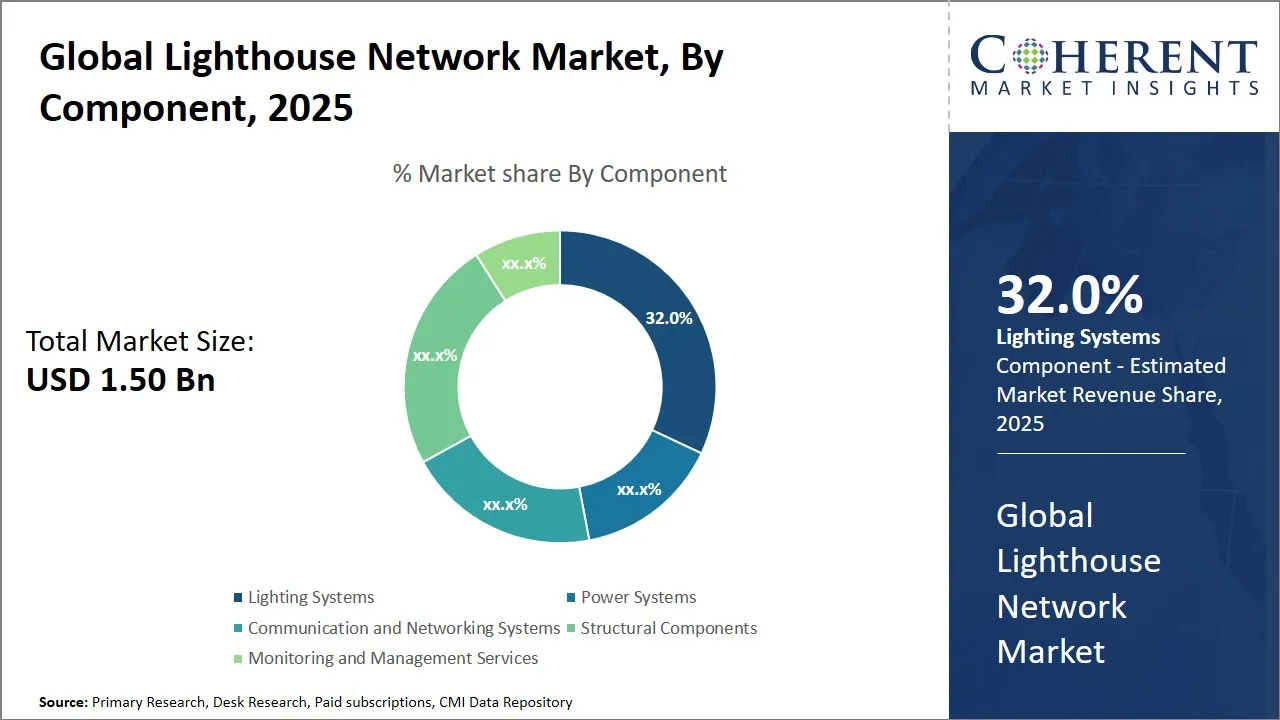
- The lighting systems segment is expected to account for 33% of the lighthouse network market share in 2026.
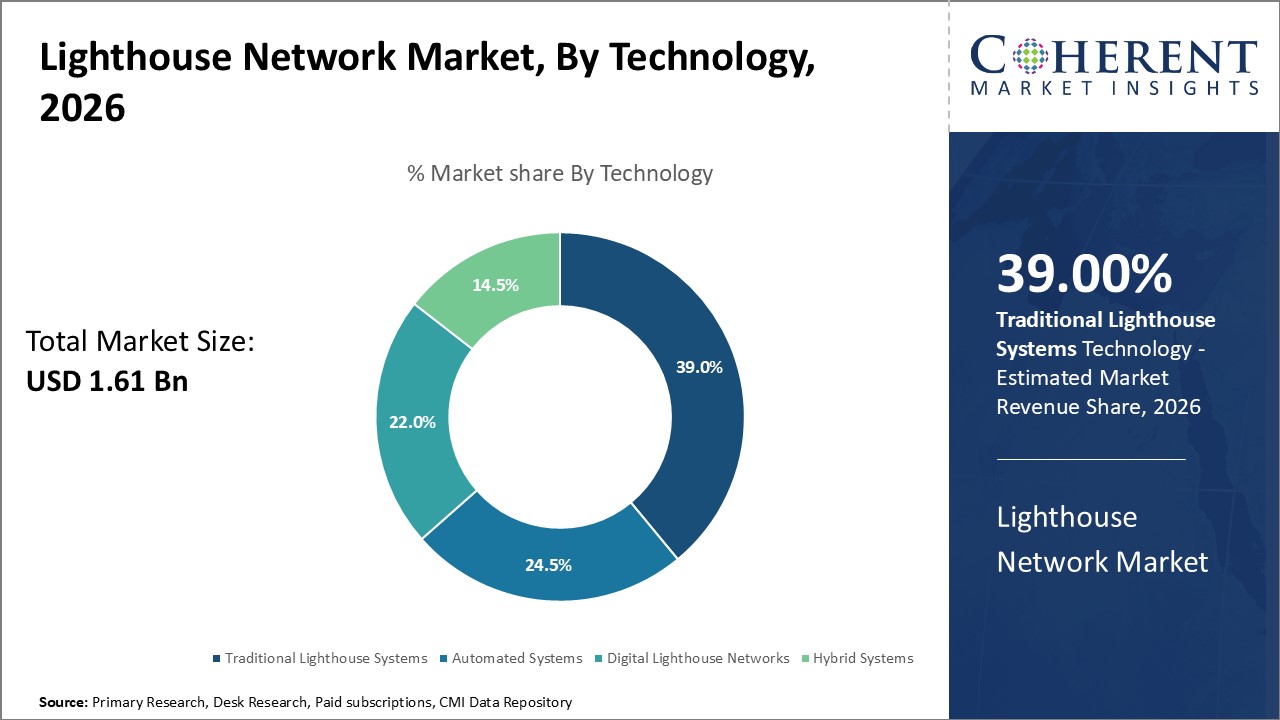
- The traditional lighthouse systems segment is projected to capture 39% of the market share in 2026.
- The coastal navigation segment is expected to command 37% of the global lighthouse network market share in 2026.
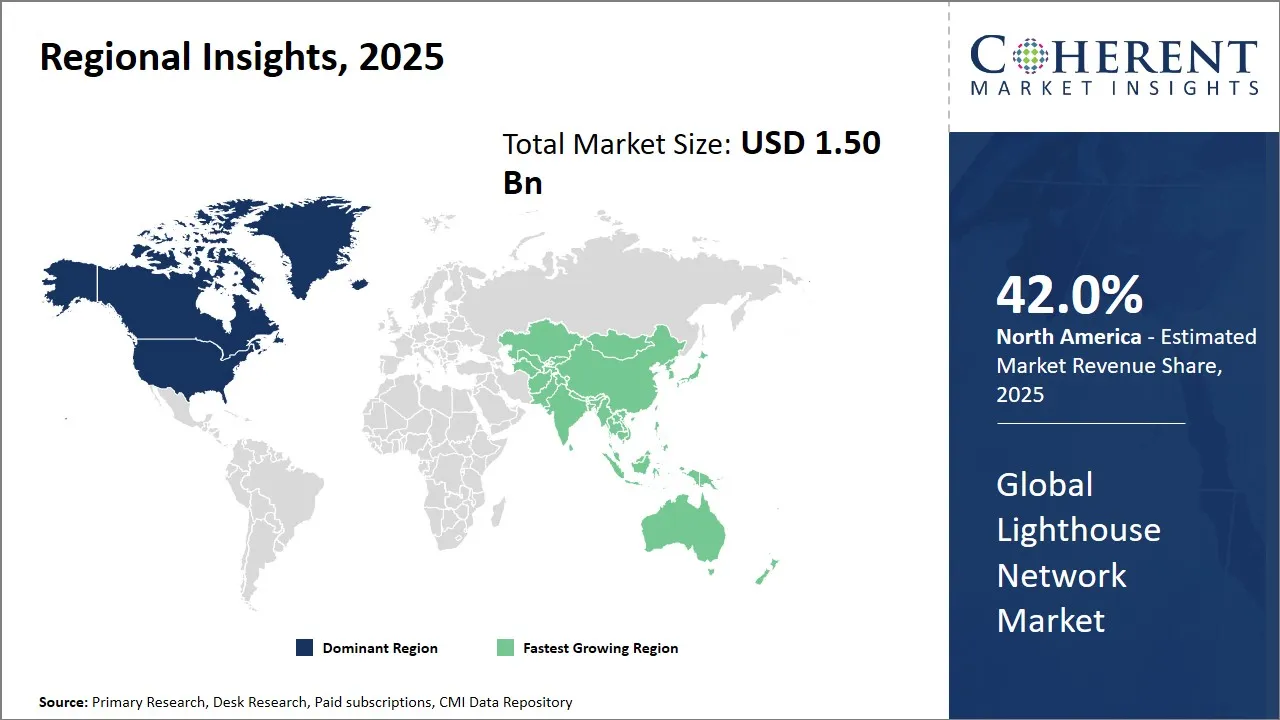
- North America will dominate the lighthouse network market in 2026 with an estimated 42%
- Asia Pacific will hold 27% share in 2026 and record the fastest growth.
Current Events and Its Impact
Current Events | Description and its Impact |
Eaton Factory Global Recognition |
|
Segmental Insights
- Current Industry Events of 2026
- Market Size Estimation
- Regional Breakdown
- Competitive Landscape
- Customer Intelligence
- Segmental Analysis
- Pricing Analysis
- Key Market Drivers, Challenges & Future Trends
- Customized Insights Section
Why Does Lighting Systems Segment Dominate the Global Lighthouse Network Market in 2026?
The lighting systems segment is expected to hold 33.0% of the market share in 2026. The rise connects to their role in keeping ocean visibility clear and avoiding collisions. For years, their purpose centered on light-based signaling, guiding vessels through risky zones or crowded lanes, improved gradually by advanced tools. Upgrades such as bright LED setups enhanced output, increasing beam strength and reliability while lowering energy needs; that reinforces their current importance.
A main reason lighting systems stand out is the ongoing need for clearer sight when weather worsens or darkness falls. Where coastal areas face fog, storms, or long nights, normal vision becomes limited - so strong, dependable lights are crucial. To lower navigation dangers and avoid accidents like crashes or running aground, maritime agencies focus on improving and servicing these light setups. On top of that, today’s lighting can connect smoothly with automatic systems, allowing efficient performance alongside distant supervision, cutting down upkeep demands.
Traditional Lighthouse Systems Segment Dominates the Global Lighthouse Network Market
The traditional lighthouse systems segment is expected to hold 39.0% of the global lighthouse network market share in 2026. The increase comes mainly from their strong track record and proven performance. Although they use standard lights like halogen or metal-halide bulbs combined with classic Fresnel lenses, these setups have remained a top choice for global marine authorities over many years. Due to their extended past, numerous coastal and offshore locations continue using them, older techniques thus remain dominant.
One main factor behind continued reliance on outdated lighthouses is the high cost linked to upgrading them - adding things such as automated tech or data networks often proves tough. In several places, sticking with traditional units makes more financial sense if navigation demands remain unchanged. Besides, conventional designs require less training to operate; this makes them practical in regions lacking skilled technicians or advanced maintenance support.
Why is Costal Navigation the Most Widespread Application in the Lighthouse Network Market?
The coastal navigation segment is expected to holds 37.0% of the lighthouse network market share in 2026. The increase comes from growing demands to handle more sea traffic close to shores while maintaining smooth movement across congested routes. Since coastal zones serve as gateways for cargo ships, fishing boats, and leisure craft, reliable lighthouse systems are essential in preventing accidents, run-ins with land, or other risks at sea. Each vessel type relies on clear guidance, especially where paths overlap frequently.
Another key driver is rising global trade, pushing more activity through main seaports and maritime corridors. As traffic grows, so does the need for reliable tools guiding ships along coasts, tools that help vessels move smoothly while lowering mistake risks. These structures, together with linked systems, act as crucial markers, especially when fog limits sight or tricky water flows occur close to land.
Edge Computing & AI Integration
Performance Metric | Outcomes With Edge Computing + AI Integration | Outcomes Without Edge/AI |
Labor Productivity Increase | Up to 53–69% (average across cohorts) | Baseline manufacturing (~0–10% year‑on‑year) |
Lead Time Reduction | 31–85% reduction (e.g., design, production, delivery cycles) | 0–10% typical improvement |
Defect Rate / Quality Improvement | 31–50% reductions in defects | 5–15% typical |
Energy & Resource Use Efficiency | 25–42% lower energy usage (via ML forecasting + edge analytics) | 5–10% savings |
New Product Introduction Speed | 30–50% faster (value chain metric) | 10–15% typical |
Regional Insights
North America Lighthouse Network Market Analysis and Trends
North America is projected to lead the market with a 42% share in 2026. The growth stems from a well-established market structure with reliable infrastructure, strong industrial activity, or favorable regulations supporting intelligent maritime transport and coastal safety. This area benefits from a wide network of ports and shipping lanes needing advanced lighthouse technology, frequently linking IoT features with self-operating mechanisms to increase efficiency. Across North America, leading companies like Eaton Corporation along with U.S. Lighthouse Agencies dedicate substantial funding to research and development of better illumination systems, reinforcing their leadership position. Moreover, rules focused on safe shipping practices along with ecological care help ensure steady demand and sustained funding.
Asia Pacific Lighthouse Network Market Analysis and Trends
Asia Pacific is expected to exhibit the fastest growth in the market contributing 27% share in 2026. The increase comes from fast-growing cities near coasts, growing sea-based commerce, also higher public spending to upgrade harbor facilities. A booming freight sector - particularly in places like China, India, and parts of Southeast Asia - drives stronger need for updated beacon and guidance tech. National strategies that back digital upgrades plus intelligent port projects help open new market paths. Major local firms including CETC and Samsung Heavy Industries boost presence via targeted partnerships or rolling out high-tech solutions, supporting better waterway security and transport networks along extensive shorelines.
Global Lighthouse Network Market Outlook for Key Countries:
Why is U.S. Emerging as a Major Producer of Lighthouse Networks?
The U.S. market focuses on connecting older lighthouse setups with modern control and sensing tech, crucial due to long coastlines and active harbors. Alongside firms such as Eaton or Raytheon Technologies, progress grows through smarter alert systems and lower-energy models. With the Coast Guard working together with industry partners, updates continue steadily - helping set worldwide benchmarks in navigation aid technology.
Is China the Next Growth Engine for the Lighthouse Network Market?
China is expanding fast at the maritime sector, led by its Belt and Road project, building more advanced lighthouses across coastal areas and islands. Backed heavily by government support, firms such as CETC or Huawei play key roles - installing intelligent systems that connect via 5G networks alongside Internet-of-Things technology. These upgrades allow instant data tracking, better identification of dangers, while improving signal links for ships; boosting Beijing’s goals to strengthen control over major trade routes through improved navigation security.
India Lighthouse Network Market Analysis and Trends
India keeps advancing its ports via state-supported upgrades from the Sagarmala initiative, which focuses on better infrastructure and sea navigation. By working together, government bodies and private companies are launching smart lighthouse networks which include self-triggered alerts along with linked surveillance systems. Companies like Bharat Electronics help by providing locally developed technology suited to different coastal conditions, which aids efforts toward self-reliance in security and improved maritime safety.
Germany Lighthouse Network Market Analysis and Trends
Germany puts strong focus on renewable power within seafront beacon setups, particularly by the North and Baltic coasts. Owing to companies such as Siemens, advances keep coming in smart light systems along with wireless connections linking shore bases to ships. Tough national rules push for top-tier safety and performance, which drives ongoing upgrades across signal station systems, helping fuel major shipping operations plus offshore sectors alike.
Australia Lighthouse Network Market Analysis and Trends
Australia’s market relies on wide, far-flung coastlines - so dependable, self-sufficient lighthouse setups are essential. To tackle tough access issues, public programs now modernize old towers using solar energy combined with satellite-based controls. Domestic teams working alongside global firms such as Thales Australia have helped roll out durable, high-tech lighting systems. These improvements boost sea travel safety, for both trade vessels and military craft, along the country’s lengthy shoreline.
Market Players, Key Development, and Competitive Intelligence
Key Developments
- In April 2025, Lighthouse acquired The Hotels Network, combining data insights with smart marketing tools from the technology company. While operating across more than 20,000 properties worldwide, the platform boosts direct reservations for hotel clients. According to CEO Sean Fitzpatrick, tailored campaigns improve customer satisfaction while also lifting income.
- In October 2024, The World Economic Forum revealed 22 new manufacturers entered the global lighthouse network, bringing the total to 172 sites using digital tools to boost efficiency while cutting environmental impact. Despite ongoing supply chain issues alongside climate challenges, these facilities demonstrate how smart systems can strengthen industrial adaptability, highlighting dedication to innovations tied to the Fourth Industrial Revolution.
Top Strategies Followed by Global Lighthouse Network Market Players
Player Type | Strategic Focus | Example |
Established Market Leaders | Global Recognition | On September 16, 2025, GlobalFoundries (GF) announced that the World Economic Forum (WEF) designated its 300mm fab in Singapore as part of the Global Lighthouse Network (GLN) of advanced manufacturers. |
Mid-Level Players | Africa’s First Lighthouse Factory | In January 2024, CITIC Dicastal's Morocco plant was recognized as Africa's first "Lighthouse Factory" by the World Economic Forum, marking a major milestone in the region's adoption of intelligent manufacturing. |
Small-Scale Players | CEAT Joins GLN | In January 2025, CEAT factory in Tamil Nadu’s Sriperumbudur and Hindustan Unilever Limited in Assam’s Tinsukia have joined the cohort of WEF’s global lighthouse network, a community of industry leaders pioneering the use of cutting-edge Fourth Industrial Revolution technologies in manufacturing. |
Market Report Scope
Lighthouse Network Market Report Coverage
| Report Coverage | Details | ||
|---|---|---|---|
| Base Year: | 2025 | Market Size in 2026: | USD 1.61 Bn |
| Historical Data for: | 2020 To 2024 | Forecast Period: | 2026 To 2033 |
| Forecast Period 2026 to 2033 CAGR: | 7.2% | 2033 Value Projection: | USD 2.62 Bn |
| Geographies covered: |
| ||
| Segments covered: |
| ||
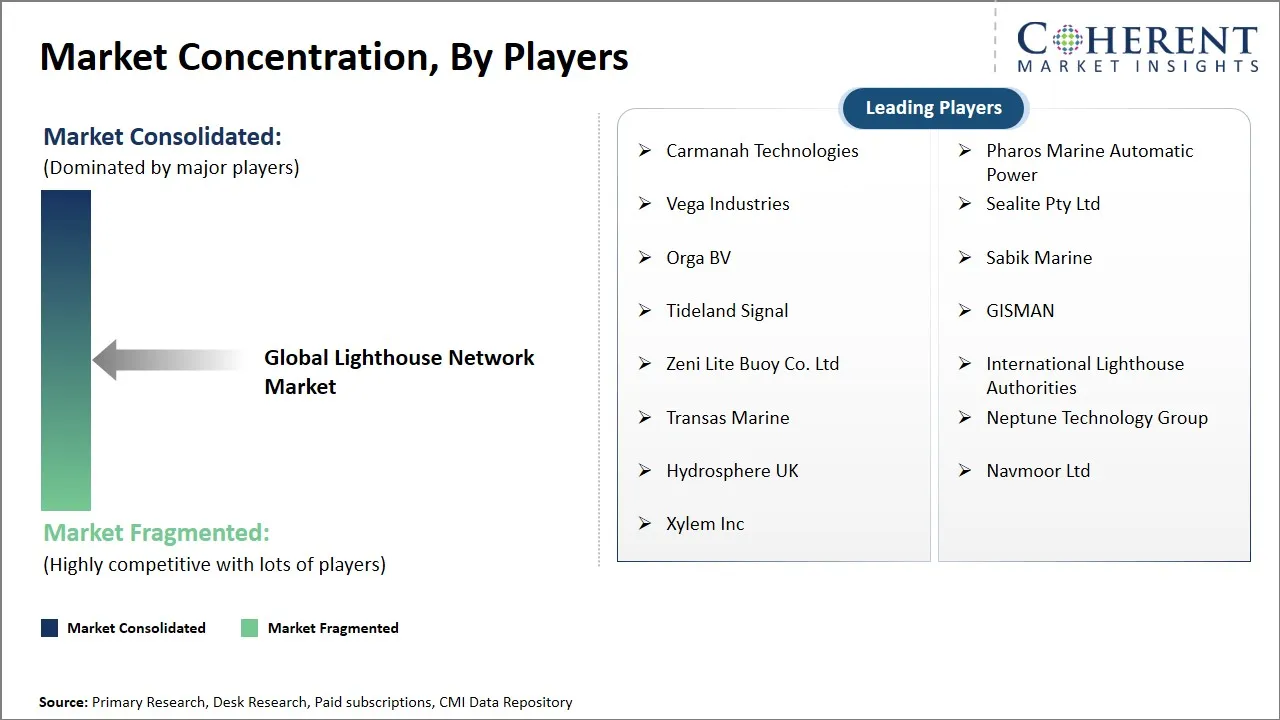
| Companies covered: | Carmanah Technologies, Pharos Marine Automatic Power, Vega Industries, Sealite Pty Ltd, Orga BV, Sabik Marine, Tideland Signal, GISMAN, Zeni Lite Buoy Co. Ltd, International Lighthouse Authorities, Transas Marine, Neptune Technology Group, Hydrosphere UK, Navmoor Ltd, and Xylem Inc | ||
| Growth Drivers: |
| ||
| Restraints & Challenges: |
| ||
Global Lighthouse Network Market Dynamics
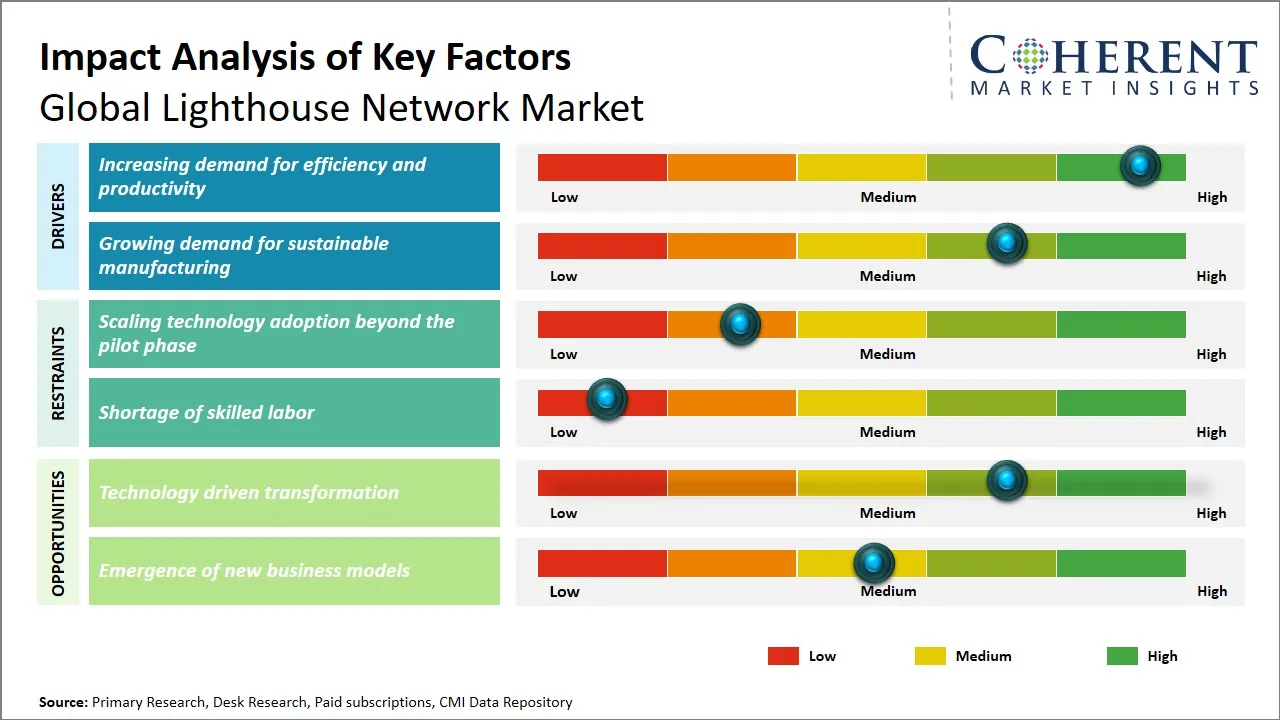
Global Lighthouse Network Market Driver - Increasing Demand for Efficiency and Productivity
The global lighthouse network market grows because more industries want smoother, faster operations. Since businesses aim to stay ahead in tough, ever-changing conditions, they turn to modern digital tools instead of old methods. These lighthouses set examples using technologies like IoT security, AI, or live data and not just showing change but making it work. Firms look to them not only to compare performance but also to cut delays, lower losses, and speed up creating products. With rising interest in steady progress and eco-friendly production via intelligent systems, demand rises for these networks - they share know-how, lead innovation, and help firms boost output and quality.
Global Lighthouse Network Market Opportunity - Technology Driven Transformation
The global lighthouse network sector is set to expand quickly, driven by fast technological progress which creates strong potential for investors. Integration of modern digital tools like IoT, generative AI, and big data shifts how lighthouse systems function and get maintained. With these solutions, operators gain live tracking, foresight into repairs, and better route security, lowering expenses while boosting performance at sea. On top of that, automated setups using smart sensors and remote operation cut down on manual work, leading to fewer mistakes and more consistent results. Coupled with intelligent communication systems, these advances allow smooth data sharing between ships and land stations, improving real-time decision-making during marine incidents.
Instead of waiting for breakdowns, authorities now act before problems escalate. Public institutions and private firms alike are shifting funds toward modernizing old lighthouses into digital hubs, opening profitable entry points for tech vendors and system builders. Rather than relying solely on tradition, many adopt solar or wind setups inside beacon operations, supporting broader ecological goals. While safety remains central, so do performance and reduced emissions; thus, innovation in the global lighthouse network acts as a key driver, revealing fresh paths for equipment upgrades, support services, and regional reach.
Analyst Opinion (Expert Opinion)
- The Global Lighthouse Network (GLN) now serves as a key reference for smart manufacturing, showing how digital tools like AI, IoT, and data analysis can expand through factories and supply networks to boost performance. According to McKinsey and the World Economic Forum, these sites have gone past small tests, instead gaining lasting gains in output, speed, environmental impact, and responsiveness.
- Lighthouses establish internal standards while offering examples others can follow to tackle challenges in digital change. Because the network focuses on combining tech with people-focused actions - like training workers and supporting sustainable goals - it shows future success in manufacturing depends just as much on culture and structure as it does on tools. This role highlights how the GLN acts like a signal for markets and a hands-on guide for adopting Fourth Industrial Revolution practices worldwide.
Speak to the analyst
Want personalized insights?
Take the findings above to one of our principal consultants, or have the report rebuilt around the segments, geographies and competitors you actually track.
Market Segmentation
- Component Insights (Revenue, USD Billion, 2021 - 2033)
- Lighting Systems
- Power Systems
- Communication and Networking Systems
- Structural Components
- Monitoring and Management Services
- Technology Insights (Revenue, USD Billion, 2021 - 2033)
- Traditional Lighthouse Systems
- Automated Systems
- Digital Lighthouse Networks
- Hybrid Systems
- Application Insights (Revenue, USD Billion, 2021 - 2033)
- Coastal Navigation
- Port and Harbor Management
- Offshore Platforms and Wind Farms
- Defense and Naval Operations
- Disaster Management and Search and Rescue
- Others
- Regional Insights (Revenue, USD Billion, 2021 - 2033)
- North America
- U.S.
- Canada
- Latin America
- Brazil
- Argentina
- Mexico
- Rest of Latin America
- Europe
- Germany
- U.K.
- Spain
- France
- Italy
- Russia
- Rest of Europe
- Asia Pacific
- China
- India
- Japan
- Australia
- South Korea
- ASEAN
- Rest of Asia Pacific
- Middle East
- GCC Countries
- Israel
- Rest of Middle East
- Africa
- South Africa
- North Africa
- Central Africa
- North America
- Key Players Insights
- Carmanah Technologies
- Pharos Marine Automatic Power
- Vega Industries
- Sealite Pty Ltd
- Orga BV
- Sabik Marine
- Tideland Signal
- GISMAN
- Zeni Lite Buoy Co. Ltd
- International Lighthouse Authorities
- Transas Marine
- Neptune Technology Group
- Hydrosphere UK
- Navmoor Ltd
- Xylem Inc
Get access to 250+ pages report
Every segment, forecast, competitor profile and data table behind the analysis above — available for instant download.
- ESOMAR Member
- ISO 9001:2015 Certified
- D-U-N-S Registered
- GDPR & CCPA Compliant
Missing comfort of reading report in your local language? Find your preferred language:
Transform your Strategy with Exclusive Trending Reports
Frequently Asked Questions
The global lighthouse network market is estimated to be valued at USD 1.61 Bn in 2026 and is expected to reach USD 2.62 Bn by 2033.
The CAGR of global lighthouse network market is projected to be 7.2% from 2026 to 2033.
Increasing demand for efficiency and productivity and growing demands for sustainable manufacturing are the major factors driving the growth of the global lighthouse network market.
Scaling technology adoption beyond the pilot phase and shortage of skilled labor are the major factors hampering the growth of the global lighthouse network market.
In terms of component, lighting systems are estimated to dominate the market revenue share in 2026.
Sites are selected based on demonstrated scalable 4IR adoption, operational excellence, and measurable performance improvements.
Benefits include improved productivity, supply chain resilience, global benchmarking, knowledge exchange, and enhanced sustainability.