

Global Liquid Biopsy Multi-Cancer Early Detection Market Size and Forecast – 2026 To 2033
The global liquid biopsy multi-cancer early detection market is expected to grow from USD 352.0 Mn in 2026 to USD 2,420.0 Mn by 2033, registering a compound annual growth rate (CAGR) of 31.7% from 2026 to 2033. The global market for liquid biopsy multi-cancer early detection is projected to witness significant growth during the forecast period attributed to the surging global cancer burden and the rising demand for early-stage diagnosis.
As per the World Health Organization (WHO), almost 20.6 million new cancer cases were registered globally in 2024 and this number is expected to escalate to 35 million cases per year by the year 2050. Rising number of such cases across the globe is expected to accelerate the demand for advanced screening modalities capable of identifying multiple cancer types at the early stages.
Key Takeaways of the Global Liquid Biopsy Multi-Cancer Early Detection Market
- Blood is projected to hold 94.6% of the global liquid biopsy multi-cancer early detection market share in 2026, making it dominant sample type segment. In North America, the U.S. clinical research ecosystem has developed with government backed schemes supporting investigation in the field of cancer screening. The U.S. National Cancer Institute (NCI) initiated a large-scale clinical trial to assess the emerging multi cancer detection assays as part of their "Cancer Screening Research Network (CSRN)
- Lung cancer is projected to hold 23.8% of the global liquid biopsy multi-cancer early detection market share in 2026, making it cancer type segment. Asia pacific is developing the lung cancer screening and diagnosis infrastructure through revision of the existing national screening guidelines. The Chinese Expert Group on Early Diagnosis and Treatment of Lung Cancer, in collaboration with the China Lung Oncology Group, for revised the National Lung Cancer Screening Guideline in December 2025, placing greater emphasis on: improved high-risk population identification and standardization of screening practices.
- Methylation-based analysis is projected to hold 43.6% of the global liquid biopsy multi-cancer early detection market share in 2026, making it dominant technology segment. Europe, especially the UK has been taking strides in blood-based multi-cancer detection clinical research. The UK government funded the STRIDE-RCT trial in November 2026 to trial blood-based multi-cancer detection in over 20,000 National Health Service (NHS) patients across at least 200 general practices.
- North America market maintains dominance with an expected share of 41.7% in 2026. The advanced genomic testing infrastructure, the significant research fundings, and the existence of the established multi-cancer early detection (MCED) developers in the region will propel market growth. Besides, North America is strengthening its clinical research ecosystem. The U.S. National Cancer Institute established the Cancer Screening Research Network to assess multi-cancer detection tests in large-scale clinical studies incorporating research in diverse screening populations.
- Asia Pacific is expected to exhibit the fastest growth in the global liquid biopsy multi-cancer early detection market, registering an estimated CAGR of 21.6% during 2026–2033, due to the rising number of cancer cases in the region, rising investments in precision oncology, and the growing popularity of molecular diagnostics. An increasing regional research activity in multi-cancer detection technologies has been furthered by the registration of a clinical trial for early detection of 17 cancers by blood microRNA in Japan’s National Clinical Research Registry.
Segmental Insights
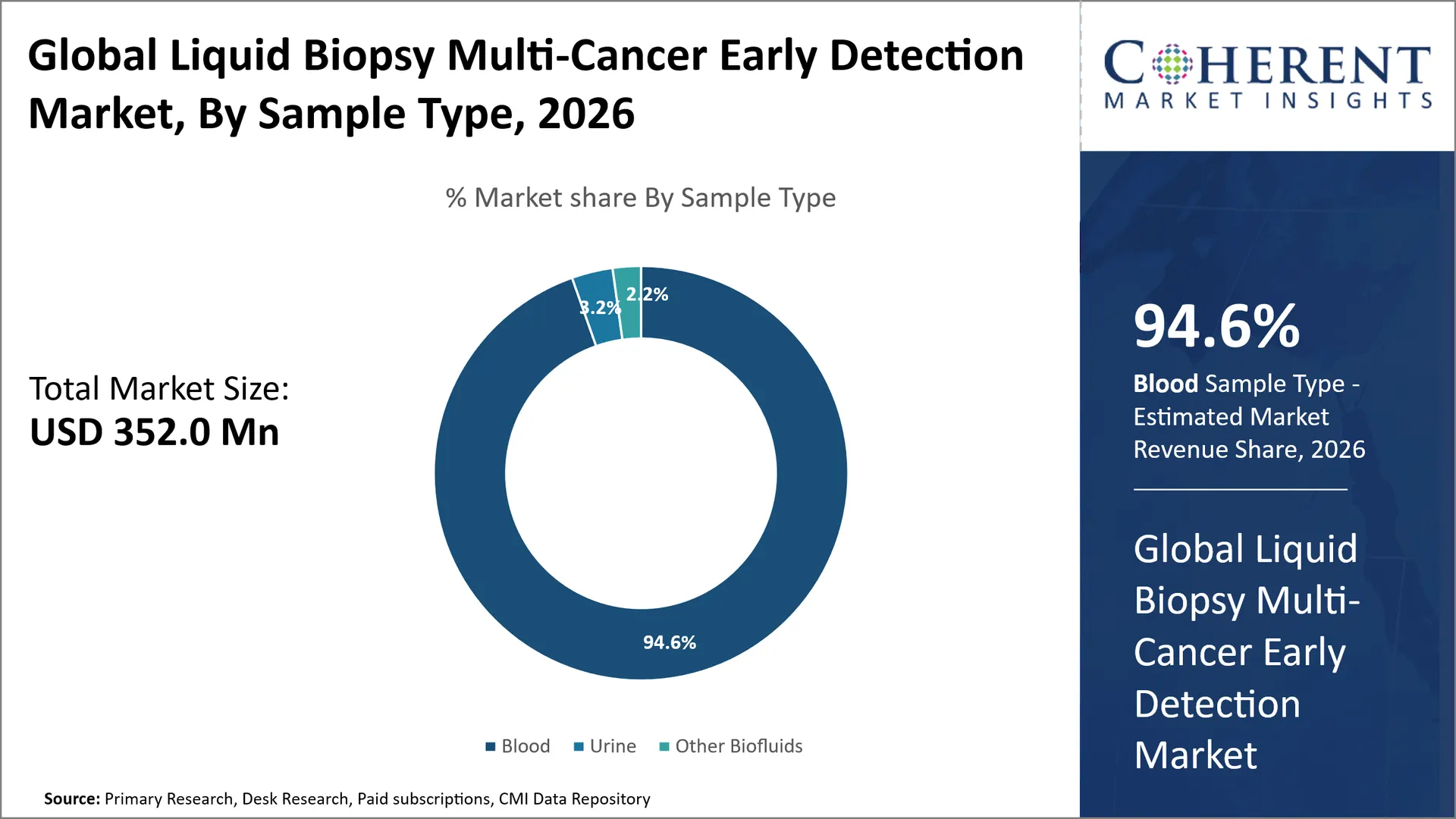
Why Do Blood Dominate the Global Liquid Biopsy Multi-Cancer Early Detection Market?
Blood is projected to hold the market share of 94.6% in 2026, as it can be obtained in a minimally invasive manner, is easily accessible, and holds potential for detecting various biomarker in cancer associated (like circulating tumor DNA (ctDNA) and cell free DNA (cfDNA)), thus, exhibiting potential for simultaneous screening of different cancer types. For instance, in February 2025, a pre-validation study published by the Springer Nature, evaluated the blood-based SPOT-MAS liquid biopsy test in 9,024 asymptomatic individuals and proved its capacity for the early detection of many types of cancers based on a whole genome scan of circulating DNA.
- Current Industry Events of 2026
- Market Size Estimation
- Regional Breakdown
- Competitive Landscape
- Customer Intelligence
- Segmental Analysis
- Pricing Analysis
- Key Market Drivers, Challenges & Future Trends
- Customized Insights Section
Why Do Lung Cancer Represent the Largest Cancer Type Segment in the Liquid Biopsy Multi-Cancer Early Detection Market?
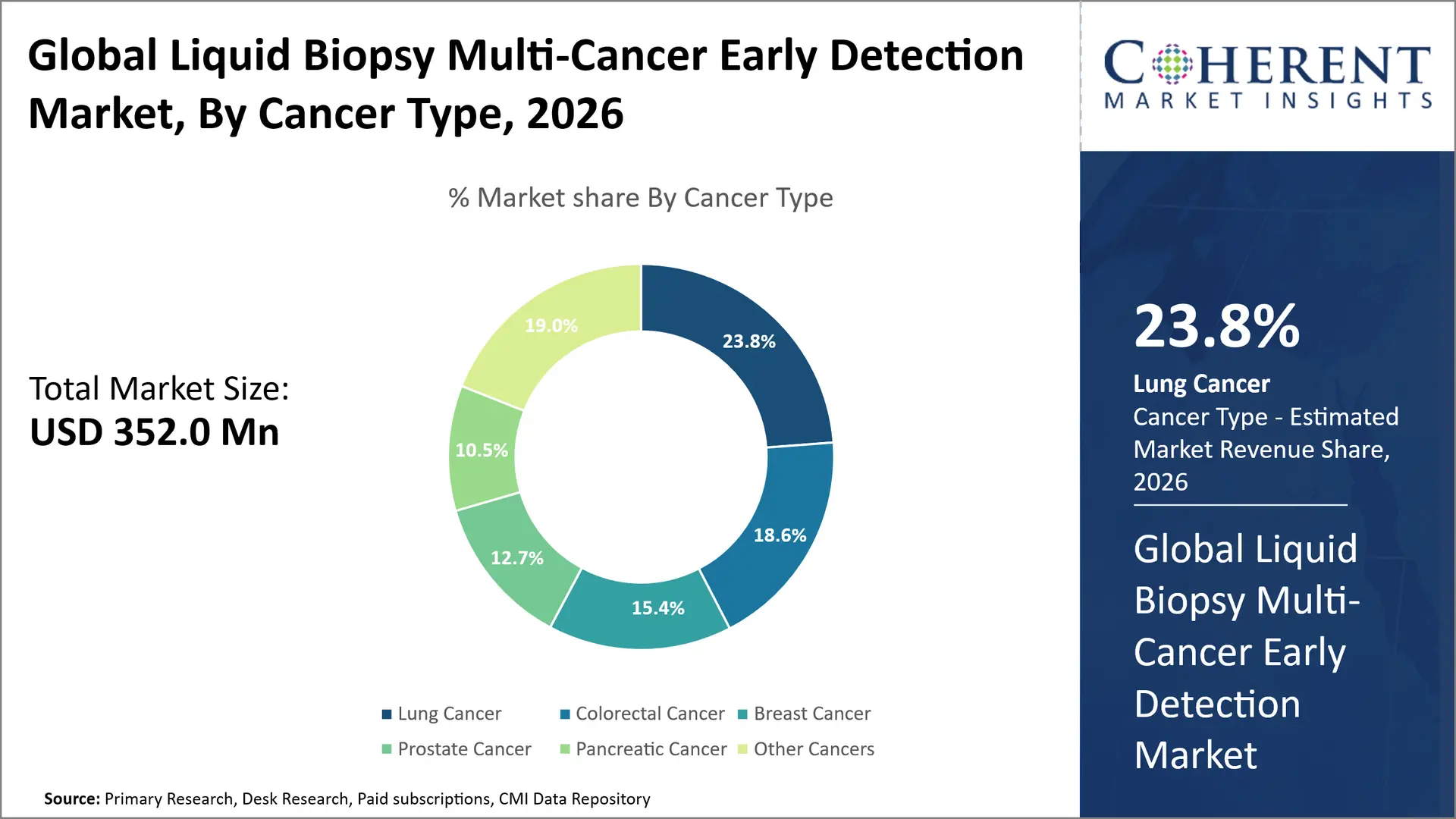
Lung cancer is projected to hold a market share of 23.8% in 2026, as it is characterized by high worldwide onset, substantial death rate (mortality), and continued need for earlier diagnosis specifically among individuals who are not eligible for conventional screening. For instance, the U.S. National Cancer Institute (NCI) sponsors the EQUAL clinical trial evaluating a blood test for early lung cancer detection in Asian and Latinx/Hispanic non tobacco users, addressing an underserved screening population. (Source: Lung Cancer Foundation of America)
Methylation-Based Analysis Segment Dominates the Global Liquid Biopsy Multi-Cancer Early Detection Market
The methylation-based analysis segment is projected to hold a market share of 43.6% in 2026, owing to its ability to detect cancer-specific epigenetic changes in the circulating cell-free DNA (cfDNA) allowing concurrent detection of multiple cancers. For instance, in May 2025, a study published by the John Wiley & Sons, Inc. a team of researchers reported a blood test based on DNA methylation to detect lung, breast, colorectal, and prostate cancers using multiplex droplet digital PCR (ddPCR), illustrating the potential of methylation profiling for scalable multi-cancer screening.
Current Events and their Impact
Current Events | Description and its Impact |
UK Government Includes Multi-Cancer Early Detection in National Cancer Plan (February 2026) |
|
U.S. National Cancer Institute Advances Vanguard Multi-Cancer Detection Study (2026) |
|
Liquid Biopsy Multi-Cancer Early Detection Market Dynamics
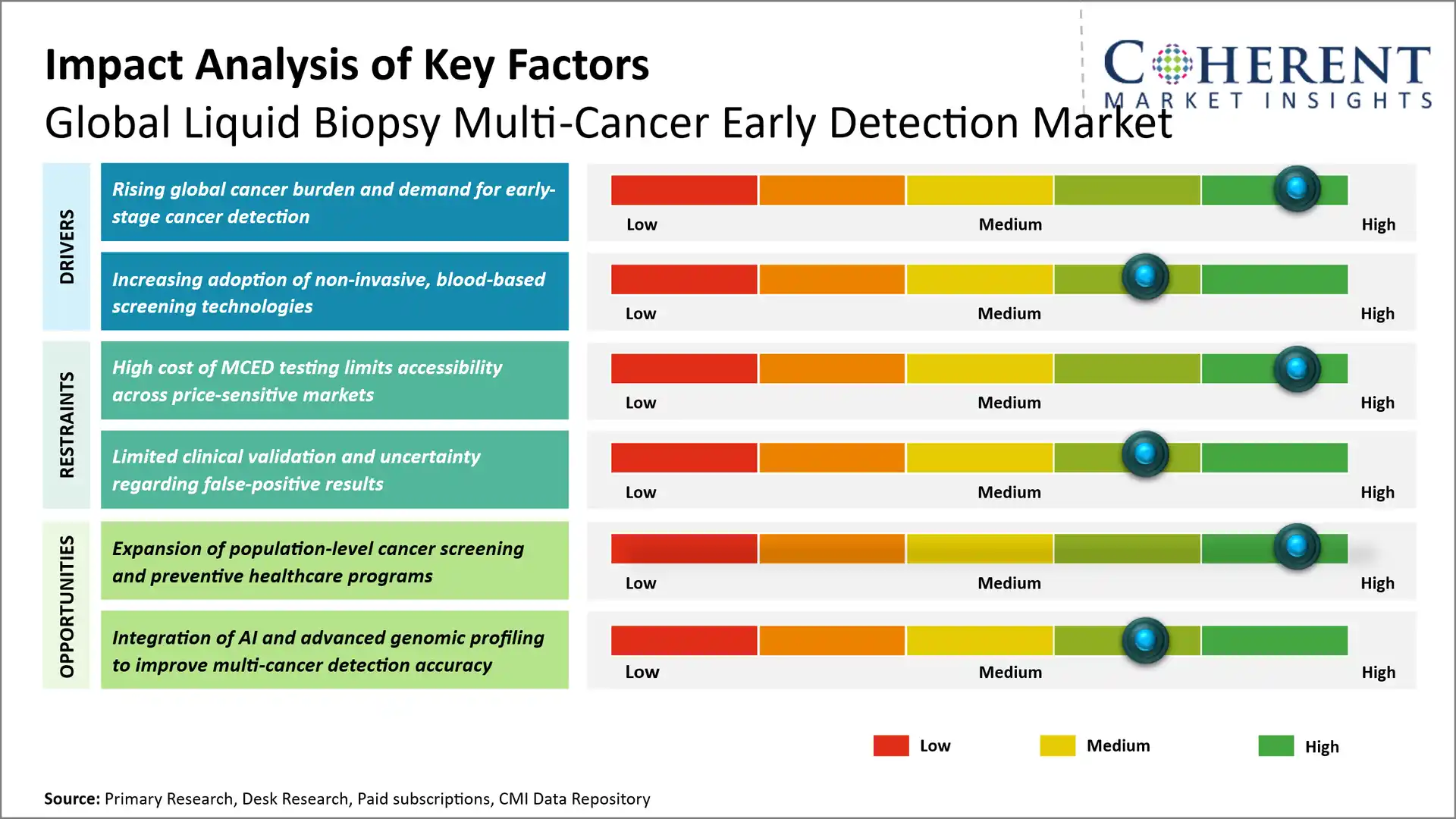
Market Drivers
- Rising global cancer burden and demand for early-stage cancer detection: The increasing number of cancers is a pointer for the crucial need of screening and early detection methods in the affordable detection and screening of multiple types of cancers. The Indian Council of Medical Research's National Cancer Registry Programme estimates an increase in the number of cancer cases from 1.39 million in 2020 to 1.57 million in 2025, reinforcing the surging demand for improved cancer screening and diagnostic capabilities.
- Increasing adoption of non-invasive, blood-based screening technologies: Usage of blood-based multi-cancer early detection (MCED) tests to screen multiple cancer types using a single blood sample is expected to progress with rising demand for less invasive diagnostic procedures. In September 2026, a PATHFINDER 2 study published by the Springer Nature Limited, investigated blood-based MCED testing in 35,335 participants to generate more clinical evidence on testing effectiveness and safety.
- Technological advancements in genomic sequencing and AI-based cancer detection: Advancements in next-generation sequencing (NGS), multi-omics profiling and artificial intelligence are improving the detection of cancer-linked molecular signals in circulating DNA. In March 2026, a team of scientists published their finding in the International Journal of Clinical Oncology about combining whole-genome sequencing, proteomics, metabolomics and AI-based interpretation to build better multi-cancer early detection (MCED) tests from Japanese clinical and population data.
Emerging Trends
- Integration of artificial intelligence in multi-cancer detection: Artificial intelligence, and machine learning algorithms are playing a growing role in bridging genomic sequencing, biomarker analysis, so they can help with cancer signals detection and origin of tissue prediction.
- Impact: Enhances accuracy of tests, improves data interpretation, and provides signals of tumors that can be detected in multiple types of cancer.
- Market Relevance: Increased integration of artificial intelligence is likely to drive the clinical performance and adoption of next-generation multi-cancer early detection testing platforms.
- Development of methylation-based multi-cancer screening assays: In addition to profiling gene-specific copy number variations, DNA methylation profiling is becoming a field standard for detection of cancer-specific epigenetic modifications in circulating cell-free DNA across multiple cancer types.
- Impact: Methylation-based assays improve the ability to distinguish between cancer signals and allow for concurrent screening using one blood sample.
- Market Relevance: Increasing progress and clinical validation of methylation-based assay will likely contribute to the multi-cancer early detection (MCED) market.
Regional Insights
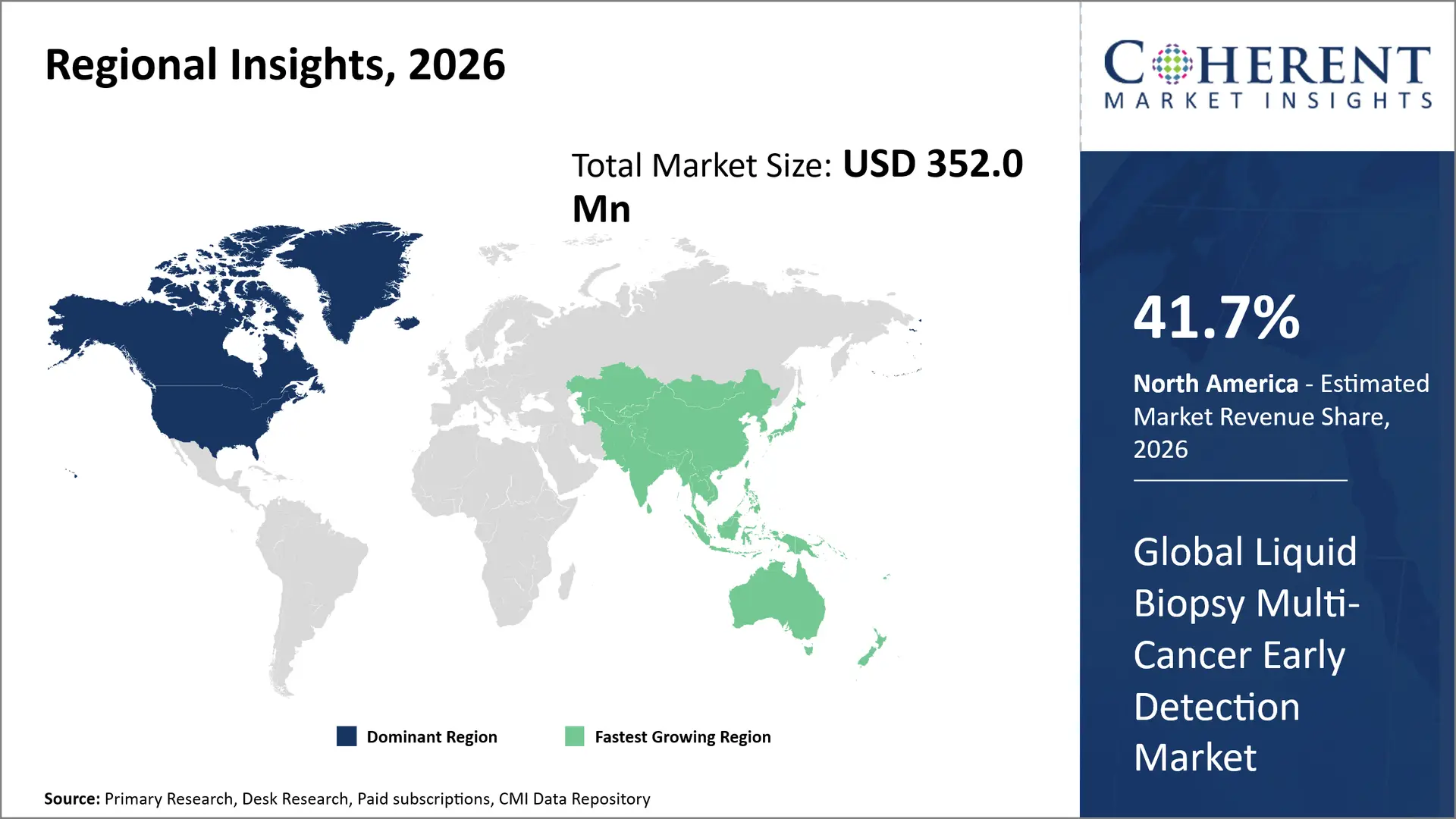
Why is North America a Strong Market for Liquid Biopsy Multi-Cancer Early Detection?
North America leads the global liquid biopsy multi-cancer early detection market, accounting for an estimated 41.7% share in 2026, owing to the presence of a strong research and development ecosystem, well-developed healthcare infrastructure, and high investments in precision medicine. The rising government funding and developments in the region such as government approval for the use of innovative diagnostic procedure by the U.S Food and Drug Administration (US FDA) and strong contribution of the National Cancer Institute (NCI) in cancer research are likely to provide North America with a competitive advantage.
For instance, in 2025, the U.S. National Cancer Institute (NCI) awarded a grant to the University of California, Los Angeles (UCLA) for its Multi-Cancer Early Detection Using Cell-Free DNA Methylome Analysis project. The grant will fund the research and clinical validation of a cfDNA methylation blood test for the detection and localization of colorectal, gastric, liver and lung cancers to advance blood-based multi-cancer screening.
Why Does Asia Pacific Liquid Biopsy Multi-Cancer Early Detection Market Exhibit High Growth?
Asia Pacific is expected to exhibit the fastest growth in the global liquid biopsy multi-cancer early detection market, registering an estimated CAGR of 21.6% during 2026–2033. The region is projected to account for 23.1% of the global market in 2026, owing to the growing rate of cancer, an increase in the healthcare expenditure, and the rising molecular diagnostics infrastructure in India and China. The regional market is set to be augmented by favorable government initiatives to facilitate cancer detection and management, rising corporate spending on precision medicine & early screening programs, improved access to advanced diagnostic tools & technologies, and the rising need for personalized healthcare are likely to be foster development in the liquid biopsy multi-cancer early detection market.
For instance, Government of India in partnership with the National Cancer Grid as a part of the IndiaAI Mission to promote India's competitive advantage in the field of AI solutions for cancer screening, diagnostics and care. This grant is expected to accelerate the development of advanced diagnostic technology and digital cancer-screening capabilities, leading to the creation of a nurturing ecosystem for new precision diagnostics, including liquid biopsy-based multi-cancer early detection solutions. (Source: Press Information Bureau)
Global Liquid Biopsy Multi-Cancer Early Detection Market Outlook for Key Countries
Why is the U.S. Leading Innovation and Adoption in the Liquid Biopsy Multi-Cancer Early Detection Market?
The U.S. is an emerging leader in innovation and adoption in the liquid biopsy multi-cancer early detection market, due to the large number of focused multi-cancer early detection developers, genomic testing expertise and established blood-based screening assay validation ecosystem. Additionally, while there are dedicated regulatory pathways for breakthrough diagnostic innovation in the U.S., the population base, presence of venture capital and the ongoing collaborations between biotech, academic research and healthcare institutions greatly facilitate the clinical validation and commercialization of multi-cancer early detection tests.
Is Japan a Favorable Market for Liquid Biopsy Multi-Cancer Early Detection Market?
Japan presents an attractive market for liquid biopsy multi-cancer early detection, supported by a mature genomic diagnostics landscape, high levels of specialist knowhow in the field of genomic medicine, and strong clinical research infrastructure. Japan has a focus on precision cancer treatment and the development of blood-based screening techniques for cancer detection. This translates into numerous opportunities in the medium- and long-term for multi-cancer early detection products based on DNA methylation, circulating free DNA profiling, and multi-omics.
Is China Emerging as a Key Growth Hub for the Liquid Biopsy Multi-Cancer Early Detection Market?
China is emerging as a major growth center for liquid biopsy multi-cancer early detection market driven by growing molecular diagnostics industry, rising cancer burden and increased investments in precision oncology. The increasing focus on domestic methylation based circulating free DNA (cfDNA), next-generation sequencing and artificial intelligence-based biomarker profiling expertise is accelerating development of in country focused multi-cancer early detection platforms. Additionally, the clinical research infrastructure expansion coupled with the rising demand of scalable early detection solutions is creating opportunities for market growth.
Why Does Germany Top the European Liquid Biopsy Multi-Cancer Early Detection Market?
Germany leads the European liquid biopsy multi-cancer early detection market due to its well-developed molecular diagnostics industry, strong biotech research environment, and state-of-the-art clinical laboratories. The country’s strengths in genome sequencing, epigenetic analysis and precision oncology will allow the development and clinical testing of next generation multi-cancer early detection solutions. Additionally, Germany benefits from large, collaborative networks of academic research institutes, diagnostic laboratories, and medical practitioners.
Is Liquid Biopsy Multi-Cancer Early Detection Market Developing in UK?
The UK market for liquid biopsy multi-cancer early detection is emerging, benefiting from the UK government having a broader interest in blood-based cancer screening, existing genomic research capabilities and an increased clinical assessment of MCED products. UK focused MCED developers can benefit from the nation's focus on improving early diagnosis and reducing late-stage diagnoses, as well as the implementation of research pathways through the National Health Service and potential assessment of the clinical and economic impact of multi-cancer screening. Incorporation of molecular diagnostic testing into NHS research and screening pathways could allow for a gradual emergence of this early detection approach.
Comparative Clinical Performance of Liquid Biopsy-Based Multi-Cancer Early Detection Tests
MCED Test / Study | Biomarker Technology | Cancer Types Covered | Study Population | Sensitivity (%) | Specificity (%) |
CancerSEEK | cfDNA mutations + proteins | 8 | 1,817 | 62.3 | 99.1 |
DETECT-A | cfDNA mutations + proteins | 8 | 9,911 | 27.1 | 98.9 |
PATHFINDER | cfDNA methylation | Multiple (>50) | 6,369 | 20.8 | 99.5 |
K-DETEK | Methylation, fragmentation and copy number | 5 | 10,027 | 70.8 | 99.7 |
How is the expansion of population-level cancer screening and preventive healthcare programs creating new growth opportunities in the liquid biopsy multi-cancer early detection market?
While population-wide screening programs have traditionally been focused on a specific cancer type, the implementation of such programs has helped create a market opportunity for multi-cancer early detection tests. These tests potentially, provide an alternative route to early detection and can help increase overall uptake by leveraging a single blood draw for multiple cancers. For instance, in March 2026, the Government of India reported that the National Programme for Prevention and Control of Non-Communicable Diseases (NP-NCD) in India had carried out 347.1 million total oral cancer screenings, 162.4 million breast cancer screenings, and 87.3 million cervical cancer screenings as of February 2026. The increase in screening programs offers new options for the implementation of sophisticated multi-cancer detection tools to supplement the current pathway of cancer screening programs. (Source: Press Information Bureau)
Market Players, Key Development, and Competitive Intelligence
Key Developments
- On November 10, 2026, Mercy BioAnalytics, Inc. announced it is participating in a government-led trial in England, NHS STRIDE-RCT, which tests blood-based testing for a range of cancers. Led by the University of Birmingham, the trial is aiming to recruit more than 20,000 NHS patients from at least 200 general practices across the UK. Mercy Bio Analytics is providing its liquid biopsy platform to examine the effect of blood-based testing on earlier detection and patient referral decisions.
- In October 2026, U.S. Food and Drug Administration (FDA) granted breakthrough device designation to Natera's multi-cancer early detection (MCED) assay, an investigational blood-based test that detects cell-free DNA for the screening of multiple types of cancer. FDA conducted analysis of data from 12 cancers, considering sensitivity, specificity and signal origin, the FDA determined that MCED assay qualifies for this designation. It may accelerate the development, assessment and review of the Natera assay, and potentially foster the evolution of liquid biopsy based multi-cancer screening.
Competitive Landscape
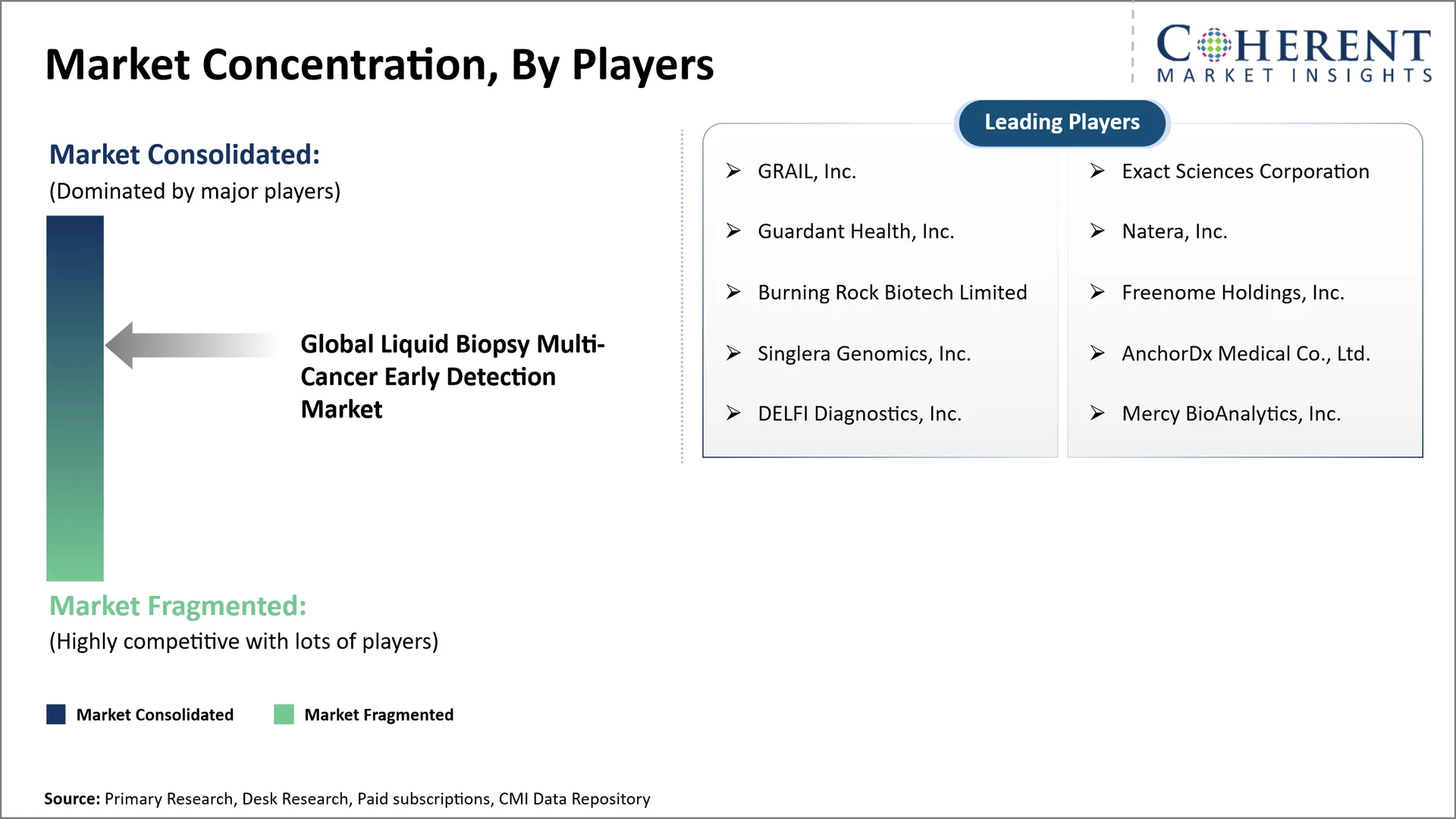
The global liquid biopsy multi-cancer early detection market is moderately consolidated with a few dominant market players competing with small and emerging players. The level of competition is driven by improving biomarker recognition, test sensitivity and specificity, tissue-of-origin prediction, and clinical validation. Companies in the market have been focusing on expanding their technology platforms, expanding their testing capabilities, improving their cost efficiency, and establishing collaborations with the healthcare industry and research community.
Key focus areas include
- Next-generation MCED assays currently in development utilizing DNA methylation, fragmentomics, and multi-omics biomarker platforms.
- Improved cancer signal detection accuracy, tissue-of-origin prediction, and in early-stage cancers.
- Broader implementation of large-scale validation studies in different patient populations for different cancers.
- Collaboration with hospitals, diagnostic laboratories, research institutes and population-based screening programmes.
- Build scalable testing infrastructure for processing samples in high volumes, reduce cost and enable access to a broader market.
- Steps to improve regulatory pathways and reimbursement coverage of MCED testing.
Market Report Scope
Global Liquid Biopsy Multi-Cancer Early Detection Market Report Coverage | |||
Report Coverage | Details | ||
Base Year | 2025 | Market Size in 2026: | USD 352.0 Mn |
Historical Data For: | 2020 To 2024 | Forecast Period: | 2026 To 2033 |
Forecast Period 2026 To 2033 CAGR: | 31.7% | 2033 Value Projection: | USD 2,420.0 Mn |
Geographies covered: |
| ||
Segments covered: |
| ||
Companies covered: | GRAIL, Inc., Exact Sciences Corporation, Guardant Health, Inc., Natera, Inc., Burning Rock Biotech Limited, Freenome Holdings, Inc., Singlera Genomics, Inc., AnchorDx Medical Co., Ltd., DELFI Diagnostics, Inc., Mercy BioAnalytics, Inc. | ||
Growth Drivers: |
| ||
Restraints & Challenges: |
| ||
Analyst Opinion (Expert Opinion)
- In the coming years, the global liquid biopsy multi-cancer early detection market is expected to be driven by the paradigm shift from single-cancer screening to integrated multi-cancer blood-based detection. Advances in DNA methylation, fragmentomics and machine learning-based biomarker detection and analysis should result in stronger detection of early cancer signals, as well as stronger prediction of tissue-of-origin. As clinical validation increases and testing becomes more affordable, MCED technologies may begin to emerge as a growing, if still limited, adjunct in prevention and screening programs.
- The greatest potential opportunities exist for methylation-based testing in lung and colorectal cancer screening in China and India. These two markets are large, scalable markets for blood-based screening, with large patient populations, growing needs for cancer screening, and improved molecular diagnostic capacities. Those companies that focus on creating affordable tests that can be easily incorporated into existing diagnostic and healthcare systems have the potential to capitalize on a large opportunity within these countries.
- In order to gain a competitive advantage market players should focus on improving early cancer sensitivity while still preserving high specificity to prevent more false-positives and unnecessary follow-up procedures. Technology developers need to invest heavily in multi-omics, AI tissue of origin prediction and large-scale clinical validation to evaluate the robustness and value of MCED testing. In addition, players need to prioritize cost structure optimization, establishing local partnerships with clinical adoption as the foundation, and regional commercialization.
Speak to the analyst
Want personalized insights?
Take the findings above to one of our principal consultants, or have the report rebuilt around the segments, geographies and competitors you actually track.
Market Segmentation
- Sample Type Insights (Revenue, USD Mn, 2021 - 2033)
- Blood
- Urine
- Other Biofluids
- Cancer Type Insights (Revenue, USD Mn, 2021 - 2033)
- Lung Cancer
- Colorectal Cancer
- Breast Cancer
- Prostate Cancer
- Pancreatic Cancer
- Other Cancers
- Technology Insights (Revenue, USD Mn, 2021 - 2033)
- Next-Generation Sequencing (NGS)
- Methylation-Based Analysis
- Fragmentomics
- Protein-Based Biomarker Analysis
- End User Insights (Revenue, USD Mn, 2021 - 2033)
- Hospitals and Clinics
- Diagnostic Laboratories
- Research and Academic Institutes
- Others
- Regional Insights (Revenue, USD Mn, 2021 - 2033)
- North America
- U.S.
- Canada
- Latin America
- Brazil
- Argentina
- Mexico
- Rest of Latin America
- Europe
- Germany
- U.K.
- Spain
- France
- Italy
- Russia
- Rest of Europe
- Asia Pacific
- China
- India
- Japan
- Australia
- South Korea
- ASEAN
- Rest of Asia Pacific
- Middle East
- GCC Countries
- Israel
- Rest of Middle East
- Africa
- South Africa
- North Africa
- Central Africa
- North America
- Key Players Insights
- GRAIL, Inc.
- Exact Sciences Corporation
- Guardant Health, Inc.
- Natera, Inc.
- Burning Rock Biotech Limited
- Freenome Holdings, Inc.
- Singlera Genomics, Inc.
- AnchorDx Medical Co., Ltd.
- DELFI Diagnostics, Inc.
- Mercy BioAnalytics, Inc.
Sources
Primary Research Interviews
- Medical oncologists and cancer screening specialists
- Molecular diagnostics and liquid biopsy experts
- Clinical laboratory directors and pathologists
- Genomics and biomarker research specialists
Stakeholders
- Liquid biopsy and MCED test developers
- Molecular diagnostics and genomic testing laboratories
- Hospitals and specialized cancer care centers
- Academic medical centers and cancer research institutions
- Healthcare providers and cancer screening networks
- End-use Sectors
- Hospitals and cancer care centers
- Diagnostic laboratories
- Academic medical centers and research institutions
- Regulatory & Health Bodies
- U.S. Food and Drug Administration (FDA)
- National Cancer Institute (NCI)
- Ministry of Health and Family Welfare, Government of India
- International Agency for Research on Cancer (IARC)
Databases
- IARC Global Cancer Observatory
- NCI Cancer Statistics
- National Cancer Registry Programme (NCRP), India
Public Domain Sources
- Indian Council of Medical Research (ICMR)
- National Centre for Disease Informatics and Research (NCDIR)
- National Cancer Institute (NCI)
- BMC Medicine
Proprietary Elements
- CMI Data Analytics Tool
- Proprietary CMI Existing Repository of information for last 10 years.
Get access to 250+ pages report
Every segment, forecast, competitor profile and data table behind the analysis above — available for instant download.
- ESOMAR Member
- ISO 9001:2015 Certified
- D-U-N-S Registered
- GDPR & CCPA Compliant
Frequently Asked Questions
The global liquid biopsy multi-cancer early detection market is estimated to be valued at USD 352.0 Mn in 2026 and is expected to reach USD 2,420.0 Mn by 2033.
Blood dominates because it is easily accessible, can be collected in a minimally invasive manner, and can yield ctDNA and cfDNA for multi-cancer detection.
A non-invasive blood test that involves the detection of cancer signals from multiple cancer types, through the identification of specific biological markers of cancer.
The CAGR of global liquid biopsy multi-cancer early detection market is projected to be 31.7% from 2026 to 2033.
Rising global cancer burden and demand for early-stage cancer detection, and increasing adoption of non-invasive, blood-based screening technologies are the major factors driving the growth of the global liquid biopsy multi-cancer early detection market.
High cost of MCED testing limits accessibility across price-sensitive markets, and limited clinical validation and uncertainty regarding false-positive results are the major factors hampering the growth of the global liquid biopsy multi-cancer early detection market.
In terms of cancer type, lung cancer is estimated to dominate the market revenue share in 2026.