

MENA Bariatric Surgery Devices Market Size and Forecast – 2026 To 2033
The MENA bariatric surgery devices market is expected to grow from USD 272.5 Mn in 2026 to USD 494.2 Mn by 2033, registering a compound annual growth rate (CAGR) of 8.9% from 2026 to 2033. The MENA bariatric surgery devices market is experiencing significant growth fueled by the soaring burden of obesity and related metabolic disorders across the region.
The increasing prevalence of obesity, along with expanding eligibility for bariatric surgery, is increasing the potential patient population for bariatric surgery and driving the adoption of bariatric surgical devices across healthcare facilities in the region. For instance, according to the World Health Organization (WHO) Eastern Mediterranean Health Journal, the prevalence of obesity among adults in Saudi Arabia is more than 60%, whereas, in adolescents it is 20–60%, suggesting a continuing trend.
(Source: World Health Organization)
Key Takeaways of the MENA Bariatric Surgery Devices Market
- Minimally invasive surgical devices are projected to hold 33.0 % of the MENA bariatric surgery devices market in 2026. The segment’s growth is driven by reduced post-operative complications, shorter hospital stays, and faster recovery compared to open procedures. Their adoption is further supported by the growing emphasis on standardized bariatric care pathways across the region. For instance, the Dubai Health Authority's Standards for Bariatric Surgery Services mandates that licensed facilities that provide bariatric surgery procedures be accredited to an appropriate level and have specific procedure volumes, thus facilitating the implementation of sophisticated minimally invasive surgical technologies and dedicated bariatric programs. (Source: Dubai Health Authority)
- Sleeve gastrectomy is projected to hold 51.7 % of the MENA bariatric surgery devices market in 2026. The segment’s growth is driven due to its effectiveness in achieving sustained weight loss while maintaining a relatively straightforward surgical approach. The procedure is widely adopted across Gulf countries because of its favorable safety profile and lower complexity compared to bypass procedures. For instance, in July 2025, Saudi Arabia-based cost-utility analysis of metabolic and bariatric surgery concluded that laparoscopic sleeve gastrectomy (LSG) was the most frequently performed metabolic-bariatric surgery procedure in Saudi Arabia. Sleeve gastrectomy continued to rise in popularity due to its safety and effective long-term weight loss, spurring the demand for bariatric surgical devices, such as staplers, trocars, and energy devices, from MENA hospitals. (Source: Dove Medical Press Ltd)
- Hospitals segment is projected to hold 93.2 % of the MENA bariatric surgery devices market in 2026 as hospitals offer the availability of multidisciplinary obesity management teams, advanced operating infrastructure, and specialized post-operative care services. Complex bariatric procedures continue to be concentrated within accredited tertiary-care settings. For instance, Mediclinic Airport Road Hospital in Abu Dhabi received accreditation in Metabolic & Bariatric Surgery from the Surgical Review Corporation (SRC), reflecting the increasing investment by regional hospitals in dedicated bariatric surgery centers and internationally recognized obesity treatment programs. (Source: Mediclinic Middle East)
- Growing Adoption of Robotic-Assisted Bariatric Surgery: The rise in the number of leading hospitals adopting robotic-assisted surgical systems in countries like Saudi Arabia, the U.A.E and other gulf countries have boosted the demand for high-end bariatric surgery devices. Robotic systems offer great surgical accuracy, improved visibility and allow complex minimally invasive surgery. The use of advanced surgical tools will prompt further demand for its supporting devices like stapling, energy and access devices.
- Rising Demand for Revisional Bariatric Procedures: With the ever-increasing patient pool with a bariatric procedure history, there will be growth in the field of revisional bariatric surgery within the MENA region. This demand will rise with factors such as insufficient weight loss, weight re-gain and procedure complications contributing to the secondary procedure requirements. This increased demand will eventually increase the market for dedicated bariatric surgery devices and modern minimally invasive surgery technology.
Segmental Insights
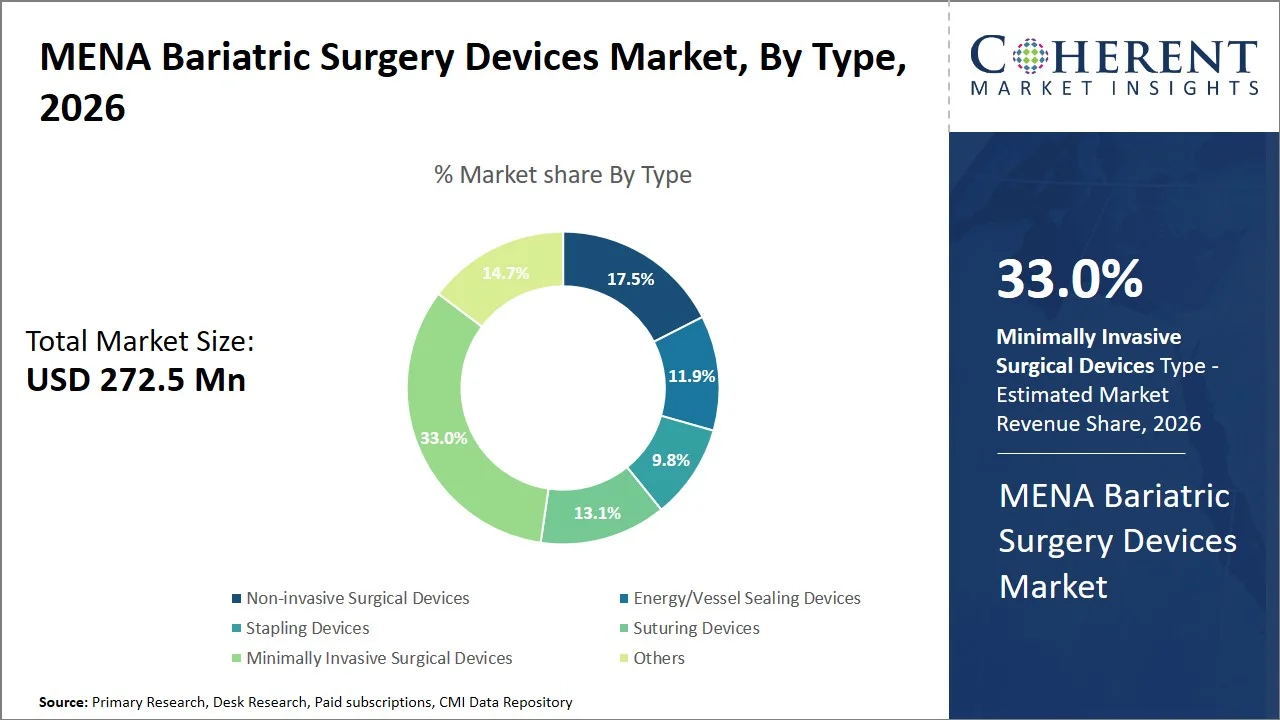
Why Do Minimally Invasive Surgical Devices Dominate the MENA Bariatric Surgery Devices Market?
Minimally invasive surgical devices are projected to hold a market share of 33.0% in 2026 as these devices offer less surgical trauma, shorter hospitalization, minimized post-operative complications, and speedier recovery times for patients. These devices are indispensable in performing laparoscopic bariatric surgery, which is increasingly becoming the treatment of choice for obesity management in the region, owing to the improvements in surgical visualization, precision, and results for the patients. For instance, the da Vinci Xi robot was unveiled by Burjeel Medical City, Abu Dhabi, further adding to the facility's highly developed range of minimally invasive surgeries. (Source: Burjeel Medical City) Such investments in robot-assisted surgical infrastructure emphasizes the importance of precision surgery and is anticipated to continue to drive the demand for sophisticated bariatric surgery devices within the region.
- Current Industry Events of 2026
- Market Size Estimation
- Regional Breakdown
- Competitive Landscape
- Customer Intelligence
- Segmental Analysis
- Pricing Analysis
- Key Market Drivers, Challenges & Future Trends
- Customized Insights Section
Why Does Sleeve Gastrectomy Represent the Largest Procedure Segment in the MENA Bariatric Surgery Devices Market?
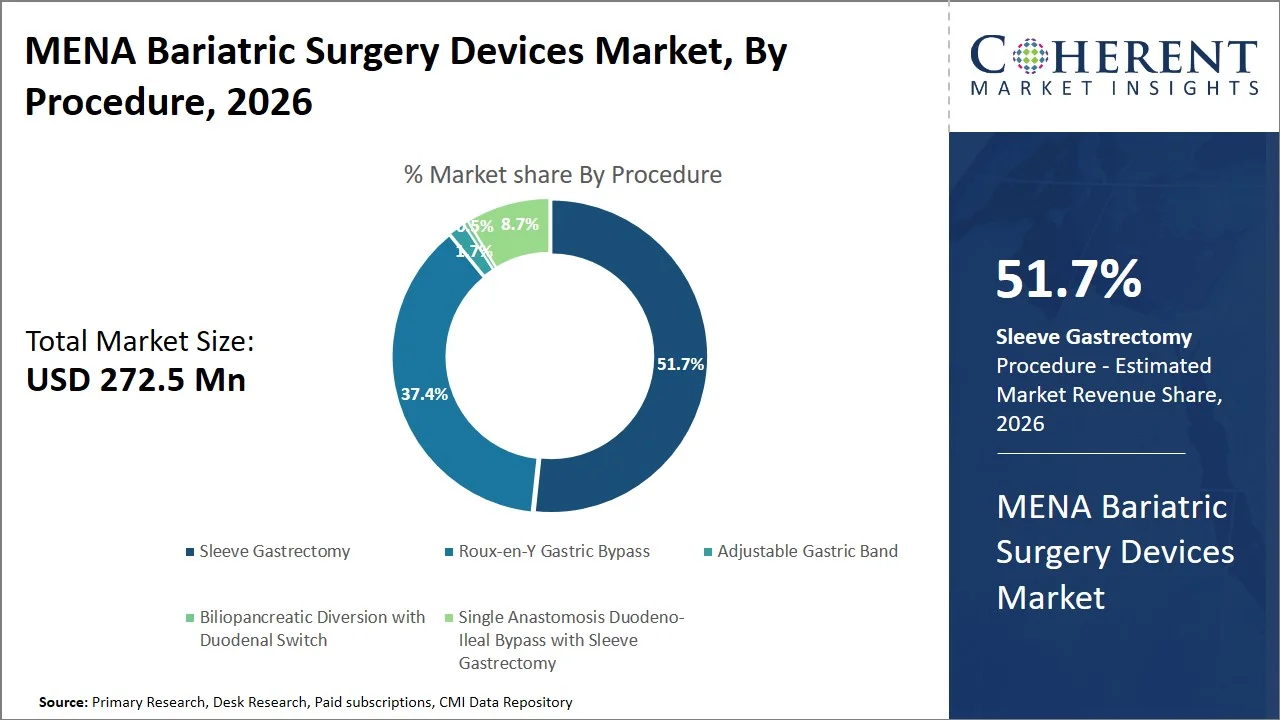
Sleeve gastrectomy is projected to hold a market share of 51.7% in 2026, because of its highest clinical efficiency with lower procedural complexity and shorter procedure duration than that of gastric bypass procedures. Sleeve gastrectomy procedures provide significant and sustained weight loss while preserving gastrointestinal continuity, making them a preferred choice among both surgeons and patients. The feasibility of its integration with minimally invasive laparoscopic procedures further enhances its application throughout the region. For instance, Saudi German Hospital UAE lists Laparoscopic Sleeve Gastrectomy (LSG) among its bariatric surgery specialties and describes it is one of the most frequently performed bariatric surgery procedure, which aims to achieve an excess weight loss of 60-70%. (Source: Saudi German Hospital UAE) Sleeve gastrectomy, as the preferred method among many bariatric facilities, has maintained its appeal, thereby boosting the demand for staplers, trocars, and energy-based instruments required during these procedures.
Hospitals Dominates the MENA Bariatric Surgery Devices Market
The hospitals segment is projected to hold a market share of 93.2% in 2026, owing to advanced surgical infrastructure, integrated multi-disciplinary obesity management teams, intensive care units, and specialist bariatric surgeons. All complex bariatric surgery procedures necessitate thorough pre-operative evaluation, intra-operative assistance, and comprehensive post-operative monitoring that are all adequately available at hospitals. The rising establishment of special bariatric surgery centers within tertiary-care hospitals will strengthen this segment even further. For instance, in Saudi Arabia, the Central Board for Accreditation of Healthcare Institutions (CBAHI) mandated the implementation of standards regarding surgical care, patient safety, infection control, and quality management among its accredited hospitals. (Source: National Library of Medicine) These regulations recommend a highly equipped hospital for more complex bariatric surgeries, hence maintaining demand for bariatric surgical devices in all certified hospitals across the region.
Currents Events and their Impact
Current Events | Description and its Impact |
Abu Dhabi Department of Health Introduces Bariatric Surgery Quality Reporting Framework (January 2025) |
|
U.A.E Issues Updated National Obesity Management Guidelines (December 2025) |
|
(Source: Department of Health, National Library of Medicine)
MENA Bariatric Surgery Devices Market Dynamics
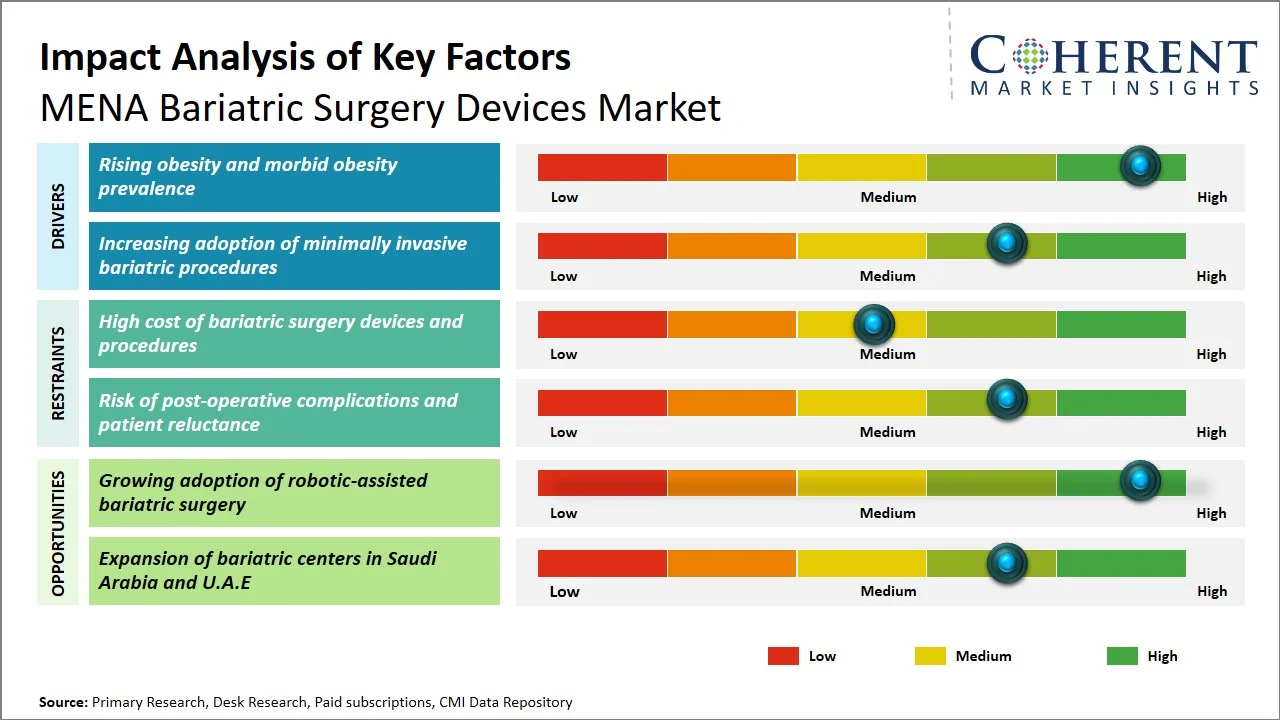
Market Drivers
- Rising obesity and morbid obesity prevalence: Increased instances of obesity are fueling an increasing epidemic of diabetes, cardiovascular diseases, and other metabolic illnesses, leading to rising surgeon recommendations for surgical weight-loss procedures. This increasing rate directly influences the demand for bariatric staplers, trocars, energy devices, and other surgical instruments for weight loss surgeries. For instance, in April 2025, a large-scale population study conducted in the UAE of over 440,000 individuals revealed that the overall proportion of the population suffering from overweight/obesity was 63.4%, while 68.3% of UAE nationals were affected (Source: National Library of Medicine) The high obesity prevalence within a major healthcare market in the region is projected to boost the bariatric procedure volumes and drive continued growth of the MENA bariatric surgery devices market.
- Increasing adoption of minimally invasive bariatric procedures: Compared to traditional open surgery, the use of laparoscopy and robotic-assisted surgery results in smaller incisions, decreased post-operative pain and shorter hospital stays with faster recovery. Given the increasing emphasis from medical professionals on improved patient outcomes and efficient procedures, there is a growing demand for the procurement of state-of-the-art bariatric staplers, trocars, energy devices and visualization systems in the region. For instance, a retrospective study conducted in Saudi Arabia, demonstrated effective long-term weight loss outcomes after bariatric surgery in Saudi patients. The results demonstrated the long-term clinical efficacy of minimally invasive bariatric surgery procedures in achieving long-term results for severe obesity and the management of obese-related comorbidities.
Emerging Trends
- Growing Shift Toward Outpatient and Enhanced Recovery Bariatric Surgery: Healthcare providers are increasingly incorporating enhanced recovery after surgery (ERAS) protocols in bariatric surgery in order to shorten the duration of the hospital stay and achieve better outcomes. This is boosting the demand for next-generation minimally invasive surgical devices that help to speed up patient recovery, minimize potential complications, and streamline perioperative care.
- Increasing Use of Data-Driven Patient Selection and Long-Term Outcome Monitoring: In an effort to enhance candidate selection and monitor outcomes in the long term, hospitals and obesity treatment centers are increasingly utilizing digital health tools and patient registries and tracking systems to improve outcome in bariatric surgery candidates and increasing utilization of evidenced-based bariatric surgery procedures throughout the region.
Key Regulatory and Clinical Frameworks Governing the MENA Bariatric Surgery Devices Market
Regulatory Area | Governing Authority | Key Regulation/Framework | Impact on Market |
Bariatric Surgery Standards | DHA (UAE) | Standards for Bariatric Surgery Services | Standardizes bariatric center operations and quality requirements |
Bariatric Quality Monitoring | DoH Abu Dhabi | Jawda Bariatric Surgery Indicators | Promotes outcome tracking and procedural quality improvement |
Hospital Accreditation | CBAHI (Saudi Arabia) | Healthcare Accreditation Standards | Supports bariatric surgery delivery in accredited hospitals |
Medical Device Registration | SFDA (Saudi Arabia) | Medical Devices Law & Registration Framework | Regulates approval and commercialization of bariatric devices |
Medical Device Regulation | UAE MoHAP | Medical Device Registration System | Facilitates market entry and compliance for surgical devices |
How is the growing adoption of robotic-assisted bariatric surgery creating new growth opportunities in the MENA bariatric surgery devices market?
The rise in the robotic-assisted bariatric surgery opens up a new stream of growth opportunity by augmenting surgical accuracy, dexterity, and visualization, especially in high difficult bariatric procedures. The robotic platform allows surgeons to execute minimally invasive surgeries with greater precision by control and potentially reduce morbidities and complications, thereby leading to improved outcomes. As hospitals begin to invest in robotic surgery programs, the demand for stapling devices, energy systems, trocars and sophisticated surgical instruments will grow with this technology. For instance, in February 2025, surgeons in the UAE emphasized the thriving use of robotic-assisted bariatric surgery to treat a 120-kg patient, underscoring the technology's ability to deliver greater precision and accuracy through robotic arms. (Source: The Gulf News) The rising adoption of robotic platforms during bariatric surgery reflects the expanding adoption of cutting-edge technology in the region.
Market Players, Key Development, and Competitive Intelligence
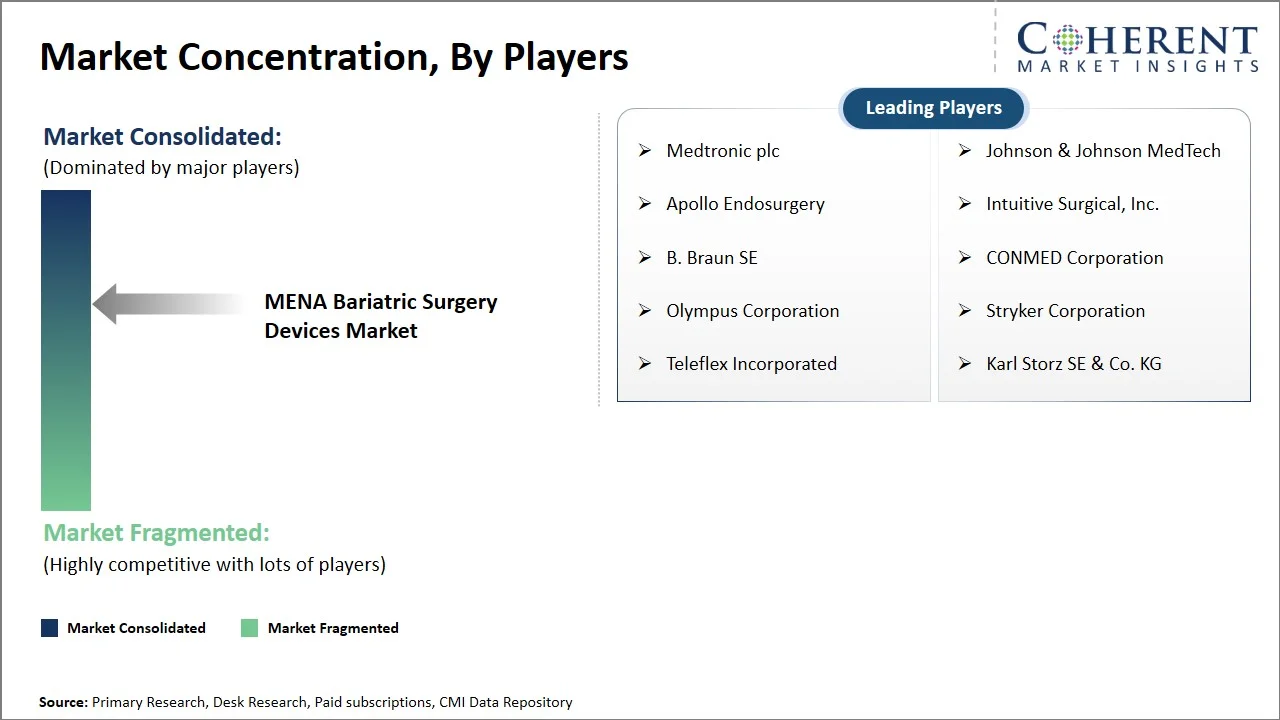
Key Developments
- On June 3, 2026, Novo Nordisk selected the UAE for the first global launch of its oral obesity treatment, Wegovy. The launch highlights the growing focus on obesity management in the Middle East and reflects increasing demand for advanced weight-loss therapies in the region. The availability of innovative anti-obesity treatments is expected to expand patient awareness and engagement in obesity care, influencing treatment pathways that include both pharmacological interventions and bariatric surgery.
- In January 2024, Activ Surgical announced the completion of its first international operation at the Abdali Hospital in Amman, Jordan, using the ActivSight Intelligent Light. This technology offers advanced visualization of the surgical field, enhancing intraoperative imaging and facilitating more challenging minimally invasive surgeries. The increase in sophisticated surgical imaging technology used within MENA healthcare institutions is expected to enhance the precision of the procedures being conducted and thus enable wider adoption of hi-tech bariatric surgical devices.
Competitive Landscape
The MENA bariatric surgery devices market is moderately consolidated, and is dominated by the multinational medical technology giants that produce staplers, trocars, energy devices, and robotic assisted surgical systems. The leading players in this market are investing in developing their portfolio of minimally invasive bariatric surgical equipment, bolstering relationships with the key hospital systems and centers of excellence in obesity management, and improving the training courses for surgeons, while developing and implementing the latest in robotics and laparoscopic technology.
Key focus areas include:
- Expansion of robotic-assisted and minimally invasive bariatric surgery solutions
- Strategic collaborations with hospitals, bariatric centers, and healthcare groups
- Product innovation in stapling, energy-based, and visualization technologies
Market Report Scope
MENA Bariatric Surgery Devices Market Report Coverage
| Report Coverage | Details | ||
|---|---|---|---|
| Base Year: | 2025 | Market Size in 2026: | USD 272.5 Mn |
| Historical Data for: | 2020 To 2024 | Forecast Period: | 2026 To 2033 |
| Forecast Period 2026 to 2033 CAGR: | 8.9% | 2033 Value Projection: | USD 494.2 Mn |
| Segments covered: |
| ||
| Companies covered: | Medtronic plc, Johnson & Johnson MedTech, Apollo Endosurgery, Intuitive Surgical, Inc., B. Braun SE, CONMED Corporation, Olympus Corporation, Stryker Corporation, Teleflex Incorporated, and Karl Storz SE & Co. KG | ||
| Growth Drivers: |
| ||
| Restraints & Challenges: |
| ||
Analyst Opinion (Expert Opinion)
- In the coming years, the future of MENA bariatric surgery devices market will be driven by escalating burden of obesity, increased adoption of bariatric surgery as a viable long-term treatment for obesity, and greater application of minimally invasive and robotic-assisted surgical procedures. Developments in healthcare infrastructure and government initiatives for obesity control across Gulf countries are likely to boost the number of procedures during the forecast period.
- The maximum opportunities will probably exist within minimally invasive bariatric surgery devices to perform sleeve gastrostomies in Saudi Arabia and the UAE. The huge pool of obese patients, good hospital facilities and rise in investments in robotic and laparoscopic surgery capabilities make these markets major revenue markets for device companies.
- In order to obtain a competitive advantage, market participants must invest in growing their sophisticated stapling, energy, and robotic surgery product portfolio, while solidifying relationships with key bariatric centers and hospital systems. Investment in surgeon training, clinical evidence development and the creation of value based technologies for better procedure and patient outcomes will be key to sustainable market growth.
Speak to the analyst
Want personalized insights?
Take the findings above to one of our principal consultants, or have the report rebuilt around the segments, geographies and competitors you actually track.
Market Segmentation
- Product Type Insights (Revenue, USD Mn, 2021 - 2033)
- Non-invasive Surgical Devices
- Energy/Vessel Sealing Devices
- Stapling Devices
- Suturing Devices
- Minimally Invasive Surgical Devices
- Others
- Procedure Insights (Revenue, USD Mn, 2021 - 2033)
- Sleeve Gastrectomy
- Roux-en-Y Gastric Bypass
- Adjustable Gastric Band
- Biliopancreatic Diversion with Duodenal Switch
- Single Anastomosis Duodeno-Ileal Bypass with Sleeve Gastrectomy
- End User Insights (Revenue, USD Mn, 2021 - 2033)
- Hospitals
- Bariatric Surgery Clinics
- Ambulatory Surgical Centers
- others
- Key Players Insights
- Medtronic plc
- Johnson & Johnson MedTech
- Apollo Endosurgery
- Intuitive Surgical, Inc.
- Braun SE
- CONMED Corporation
- Olympus Corporation
- Stryker Corporation
- Teleflex Incorporated
- Karl Storz SE & Co. KG
Sources
Primary Research Interviews
- Bariatric Surgeon (Saudi Arabia/UAE-based tertiary care hospital)
- Director of Minimally Invasive & Robotic Surgery Program (GCC region)
- Hospital Procurement Head (public/private hospitals across Saudi Arabia, UAE, Qatar)
- Regional Sales Director – Bariatric & Advanced Surgical Devices Manufacturer
- Clinical Affairs Manager (Stapling, Energy Devices & Robotic Surgery Systems)
- Obesity Medicine Specialist / Endocrinologist treating severe obesity patients
Stakeholders
- Bariatric Surgery Device Manufacturers (global and regional distributors)
- Robotic Surgery Technology Providers
- Hospitals & Academic Medical Centers
- Ambulatory Surgical Centers (ASCs)
- Medical Device Distributors & Procurement Organizations
- Healthcare Regulatory Authorities (SFDA, MoHAP, DoH Abu Dhabi)
- End-use Sectors
- Hospitals and Academic Medical Centers
- Bariatric Surgery Centers
- Ambulatory Surgical Centers (ASCs)
- Specialty Obesity Treatment Clinics
- Minimally Invasive and Robotic Surgery Centers
- Medical Tourism Healthcare Facilities
- Regulatory & Health Bodies
- Saudi Food and Drug Authority
- Ministry of Health Saudi Arabia
- Department of Health Abu Dhabi
- Dubai Health Authority
- Council of Health Insurance
- Gulf Health Council
- International Federation for the Surgery of Obesity and Metabolic Disorders
- Saudi Scientific Society for Metabolic and Bariatric Surgery
Databases
- World Health Organization (WHO) – Eastern Mediterranean obesity and NCD statistics
- Saudi Food and Drug Authority (SFDA) – Medical Device Registration Database
- Ministry of Health (Saudi Arabia) – Obesity and healthcare infrastructure data
- Department of Health Abu Dhabi (DoH) – Bariatric surgery quality indicators
- Dubai Health Authority (DHA) – Bariatric surgery standards and guidelines
- International Diabetes Federation (IDF) – MENA obesity and diabetes prevalence data
Magazines
- Arab Health Magazine
- Medical Buyer Middle East
- Healthcare Middle East & Africa
- Medical Device Network
- MedTech Dive
- Hospital Management
Journals
- Obesity Surgery
- Surgery for Obesity and Related Diseases (SOARD)
- International Journal of Obesity
- BMC Surgery
- Journal of Clinical Medicine
Newspapers
- Arab News (Saudi healthcare and obesity treatment developments)
- Gulf News (UAE healthcare and bariatric surgery coverage)
- The National (UAE healthcare investments and hospital developments)
- Asharq Al-Awsat (regional healthcare policy developments)
- Gulf Today (GCC healthcare sector updates)
Associations
- International Federation for the Surgery of Obesity and Metabolic Disorders
- Gulf Obesity Surgery Society
- Saudi Scientific Society for Metabolic and Bariatric Surgery
- International Diabetes Federation
- American Society for Metabolic and Bariatric Surgery
Public Domain Sources
- WHO Eastern Mediterranean Regional Office Reports
- SFDA Medical Device Database
- Saudi Ministry of Health Statistical Yearbooks
- Department of Health Abu Dhabi Publications
- Dubai Health Authority Clinical Guidelines
- World Bank MENA Health Indicators
Proprietary Elements
- CMI Data Analytics Tool, Proprietary CMI Existing Repository of information for last 10 years.
Get access to 250+ pages report
Every segment, forecast, competitor profile and data table behind the analysis above — available for instant download.
- ESOMAR Member
- ISO 9001:2015 Certified
- D-U-N-S Registered
- GDPR & CCPA Compliant
Missing comfort of reading report in your local language? Find your preferred language:
Transform your Strategy with Exclusive Trending Reports
Frequently Asked Questions
The MENA bariatric surgery devices market is estimated to be valued at USD 272.5 Mn in 2026 and is expected to reach USD 494.2 Mn by 2033.
Minimally invasive surgical devices dominate due to their ability to reduce surgical trauma, shorten hospital stays, lower complication rates, and support faster patient recovery compared to conventional open surgical approaches.
Bariatric surgery devices are specialized surgical instruments and systems, including staplers, trocars, energy devices, and robotic-assisted tools, used to perform weight-loss procedures for the treatment of obesity.
The CAGR of the MENA bariatric surgery devices market is projected to be 8.9% from 2026 to 2033.
Sleeve gastrectomy typically utilizes the highest volume of surgical staplers due to the need for gastric resection and staple-line creation.
Energy devices enable precise tissue dissection and vessel sealing, helping reduce intraoperative bleeding and procedural time.
High cost of bariatric surgery devices and procedures, and risk of post-operative complications and patient reluctance are the major factors hampering the growth of the MENA bariatric surgery devices market.