

Cardiac Rhythm Management Devices Market Size and Trends - 2026 to 2033
Global cardiac rhythm management devices market is estimated to be valued at USD 19.05 Bn in 2026 and is expected to reach USD 25.76 Bn by 2033, exhibiting a compound annual growth rate (CAGR) of 4.4% from 2026 to 2033. The market growth is driven by rising global prevalence of cardiac arrhythmias and growing geriatric population worldwide who are more prone to developing such conditions.
Key Takeaways
- Based on Product, the Defibrillators segment is expected to hold the largest share of the market in 2026, due to their critical role in preventing sudden cardiac death and managing life-threatening arrhythmias.
- Based on Application, the Arrhythmias segment is expected to account for the highest share of the market in 2026, as the most common condition requiring rhythm management devices like pacemakers and defibrillators.
- Based on End User, the Hospitals segment is projected to capture 36.5% share of the market in 2026, offering advanced infrastructure for implantation, monitoring, and emergency cardiac care.
- Based on Region, North America is set to lead the market with 40.7% share in 2026. While, Asia Pacific is anticipated to be the fastest growing region.
Market Overview
Global cardiac rhythm management devices market growth is driven by factors such as increasing focus on preventive healthcare and growing adoption of technologically advanced devices for treatment. However, risks associated with implantation of cardiac devices and pricing pressures can hamper the market growth.
Current Events and Their Impact on the Global Cardiac Rhythm Management Devices Market
Current Event | Description and its Impact |
Regulatory Environment Changes and Market Access |
|
Healthcare Reimbursement Policy Shifts |
|
Role of Artificial Intelligence (AI) in the Global Cardiac Rhythm Management Devices Market
Artificial intelligence (AI) is transforming the Cardiac Rhythm Management Devices Market by enhancing diagnostic accuracy, personalizing treatment, and enabling real-time monitoring. AI-powered algorithms are now integrated into implantable devices like pacemakers and defibrillators, as well as remote monitoring systems, to detect arrhythmias more precisely and predict adverse cardiac events. This innovation supports earlier intervention, reduces hospital readmissions, and improves patient outcomes. As healthcare systems increasingly adopt AI-driven solutions, the CRM market is witnessing accelerated growth, particularly in regions prioritizing digital health and chronic disease management.
For instance, in September 2025, Ochsner Health in New Orleans introduced AI-powered technology to enhance atrial fibrillation care. The system analyzes heart rhythm data to detect irregularities and support timely intervention. Designed for patients with rapid, erratic heartbeats, this innovation improves diagnosis and treatment planning, advancing cardiac rhythm management in clinical settings across the United States.
- Current Industry Events of 2026
- Market Size Estimation
- Regional Breakdown
- Competitive Landscape
- Customer Intelligence
- Segmental Analysis
- Pricing Analysis
- Key Market Drivers, Challenges & Future Trends
- Customized Insights Section
Segmental Insights
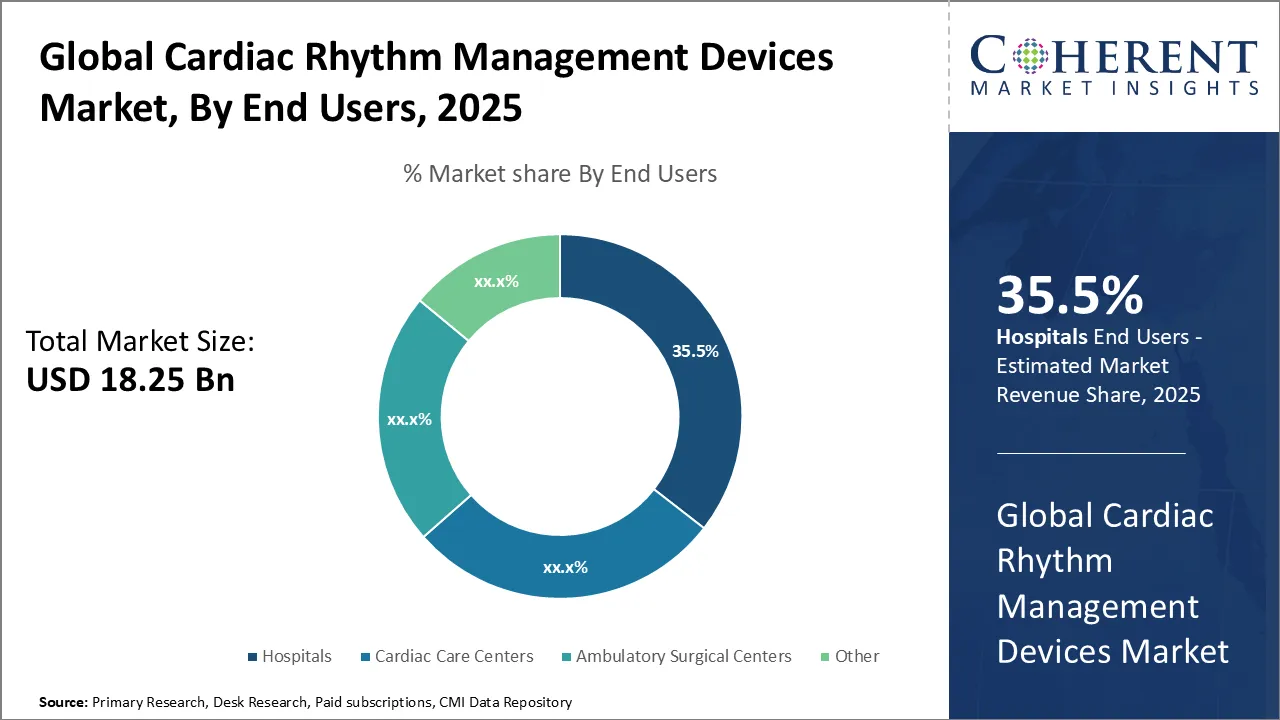
Global Cardiac Rhythm Management Devices Market Insights, By End User: Hospitals Are the Top End Users, Offering Advanced Infrastructure for Implantation, Monitoring, And Emergency Cardiac Care
In terms of end user, hospitals segment is expected to contribute the highest market share of 36.5% in 2026. These institutions are equipped with the infrastructure and expertise required for complex cardiac procedures, including device implantation, monitoring, and follow-up care. Hospitals also serve as primary centers for emergency cardiac interventions, making them the most frequent users of defibrillators and other rhythm management technologies. Their ability to provide comprehensive care, from diagnosis to rehabilitation—positions them as the preferred setting for both patients and device manufacturers. Moreover, hospitals benefit from economies of scale and access to cutting-edge technologies, which further solidifies their leadership in this market.
For instance, in September 2025, Philips introduced a smart telemetry platform for cardiac monitoring, offering continuous enterprise-wide connectivity beyond the bedside. Designed for hospital environments, the system enhances real-time cardiac data access across departments, improving workflow efficiency and patient safety. This innovation supports proactive cardiac care by enabling clinicians to monitor patients remotely and respond swiftly to rhythm abnormalities.
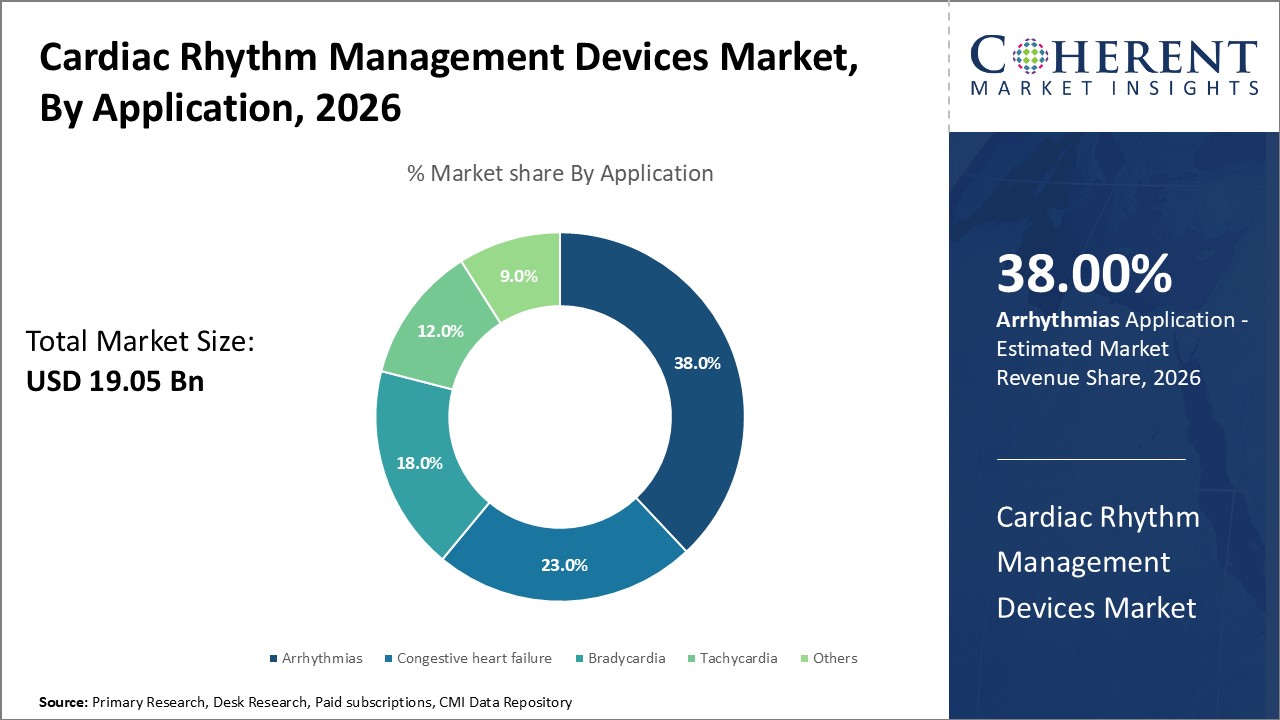
Global Cardiac Rhythm Management Devices Market Insights, By Application: Arrhythmias Dominate as the Most Common Condition Requiring Rhythm Management Devices Like Pacemakers and Defibrillators
In terms of application, the arrhythmias segment is expected to contribute to the largest market share in 2026. These irregular heart rhythms, which include conditions like atrial fibrillation, bradycardia, and tachycardia, affect millions globally and are a major cause of morbidity and mortality. The rising prevalence of arrhythmias, especially among aging populations, has fueled demand for devices such as pacemakers, defibrillators, and cardiac resynchronization therapy (CRT) systems. Innovations in arrhythmia detection, such as wearable ECG monitors and AI-powered diagnostics have improved early diagnosis and treatment, further expanding this segment. As arrhythmias often require long-term management, the need for reliable and responsive rhythm control devices continues to grow.
For instance, in February 2024, Signify Health launched a new heart arrhythmia testing service, expanding its in-home diagnostic and preventive care offerings. This initiative enhances early detection of cardiac rhythm disorders through remote monitoring, aiming to improve patient outcomes and reduce hospital visits. The service reflects Signify Health’s commitment to accessible, tech-enabled healthcare solutions for chronic condition management.
Regional Insights
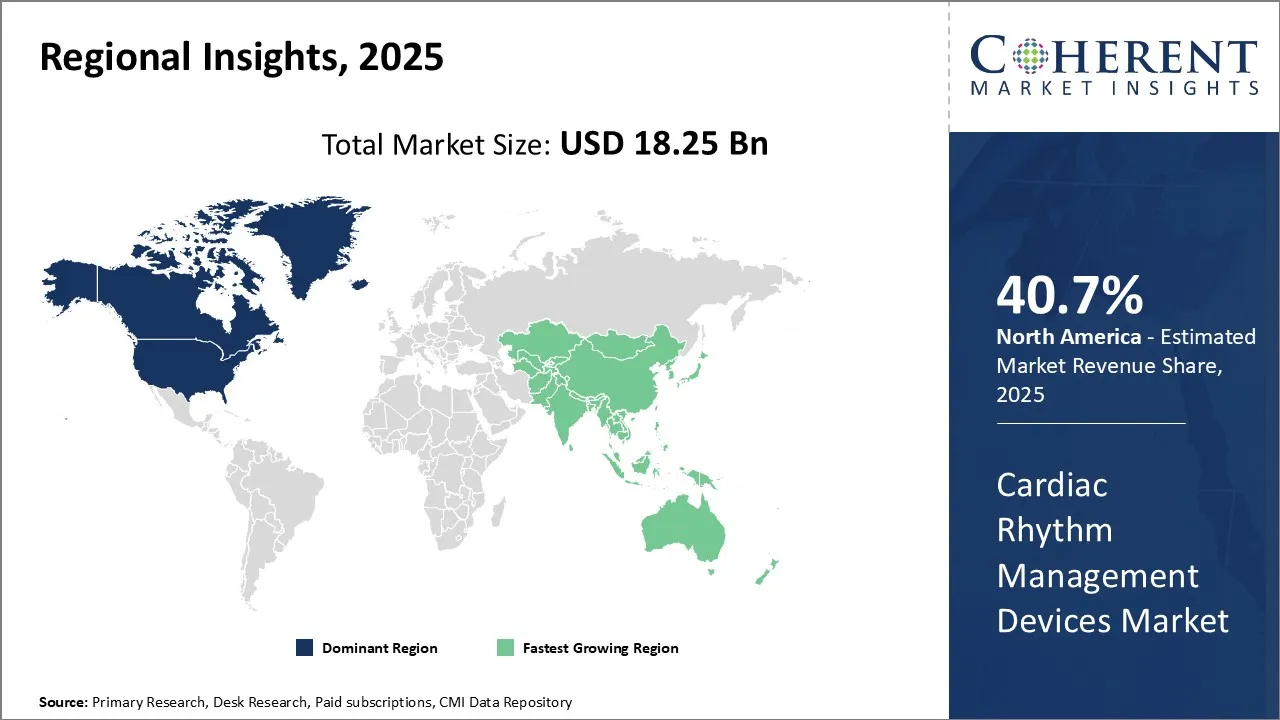
North America Cardiac Rhythm Management Devices Market Analysis & Trends
North America dominates the global cardiac rhythm management devices market with an estimated market share of 40.7% in 2026, due to highly developed healthcare infrastructure, rising prevalence of cardiovascular diseases, and growing per capita healthcare expenditure. Presence of leading global players in the region coupled with high adoption of technologically advanced devices drives the market growth. Furthermore, favorable reimbursement policies for implantable devices and rising awareness about available treatment options also drives the market growth.
For instance, in May 2026, Johnson & Johnson MedTech launched the SoundStar® eco ICE Catheter with Crystal Clear™ imaging in the U.S., enhancing 2D intracardiac echocardiography. Designed for electrophysiology procedures, the catheter delivers superior image clarity and supports real-time cardiac visualization, improving precision and safety during arrhythmia treatments and other cardiac interventions in hospital settings.
Asia Pacific Cardiac Rhythm Management Devices Market Analysis & Trends
Asia Pacific is expected to be the fastest growing market for cardiac rhythm management devices. Rapidly improving healthcare infrastructure, increasing healthcare spending, and expanding private insurance coverage drives the market growth in the Asia Pacific region. Moreover, growing geriatric population suffering from heart conditions and improving economic conditions attracts leading global players to focus on developing markets within Asia Pacific. Countries like China, Japan and India offer immense opportunities due to their huge population bases and growing medical tourism industries. Rising standards of living and increasing disposable incomes have also boosts demand for quality healthcare and premium products in the Asia Pacific region. The region is witnessing growing exports of advanced devices from developed markets like the U.S. and Japan while domestic manufacturers are gaining momentum to cater to domestic needs. Favorable regulations and initiatives by governments aiming to reduce heart disease burden can drive the Asia Pacific market growth during the forecast period.
For instance, in July 2026, Johnson & Johnson MedTech launched the Varipulse™ Platform across the Asia-Pacific region, advancing atrial fibrillation treatment with pulsed field ablation technology. The platform includes a PFA catheter, mapping catheter, and integrated imaging system, offering a minimally invasive solution for arrhythmia management. This expansion supports improved cardiac care in hospitals and electrophysiology centers throughout the region.
Cardiac Rhythm Management Devices Market Outlook Country-Wise
The U.S. Cardiac Rhythm Management Devices Market Trends
In 2026, the U.S. Cardiac Rhythm Management Devices Market is thriving due to rising cardiovascular disease rates, an aging population, and rapid adoption of advanced technologies like implantable defibrillators and remote monitoring systems. Strong hospital infrastructure, favorable reimbursement policies, and growing demand for home-based cardiac care further fuel the nation's leadership in rhythm management innovation.
For instance, in May 2023, Biotronik unveiled the BIOMONITOR IV Implantable Cardiac Monitor at the Heart Rhythm Society Congress 2023 in the U.S. Developed with artificial intelligence, the device enhances arrhythmia detection and long-term cardiac monitoring. Its advanced algorithms and streamlined design support early diagnosis and improved rhythm management, marking a significant step forward in AI-powered cardiac care.
China Cardiac Rhythm Management Devices Market Trends
In 2026, China’s demand for Cardiac Rhythm Management Devices is driven by a rapidly aging population, rising incidence of arrhythmias, and expanding access to advanced cardiac care. Government healthcare reforms, local manufacturing initiatives, and increased adoption of pacemakers and defibrillators are fueling market growth, making China a key player in global rhythm management innovation.
For instance, in March 2026, MicroPort CRM launched its localized TEN Pacemaker family in China, marking a milestone in domestic cardiac care innovation. Introduced in Shanghai in March 2026, the devices are tailored to meet regional clinical needs, offering advanced rhythm management solutions. This move supports China's growing demand for accessible, high-quality cardiac rhythm management technologies.
Market Report Scope
Cardiac Rhythm Management Devices Market Report Coverage
| Report Coverage | Details | ||
|---|---|---|---|
| Base Year: | 2025 | Market Size in 2026: | USD 19.05 Bn |
| Historical Data for: | 2020 To 2024 | Forecast Period: | 2026 To 2033 |
| Forecast Period 2026 to 2033 CAGR: | 4.4% | 2033 Value Projection: | USD 25.76 Bn |
| Geographies covered: |
| ||
| Segments covered: |
| ||
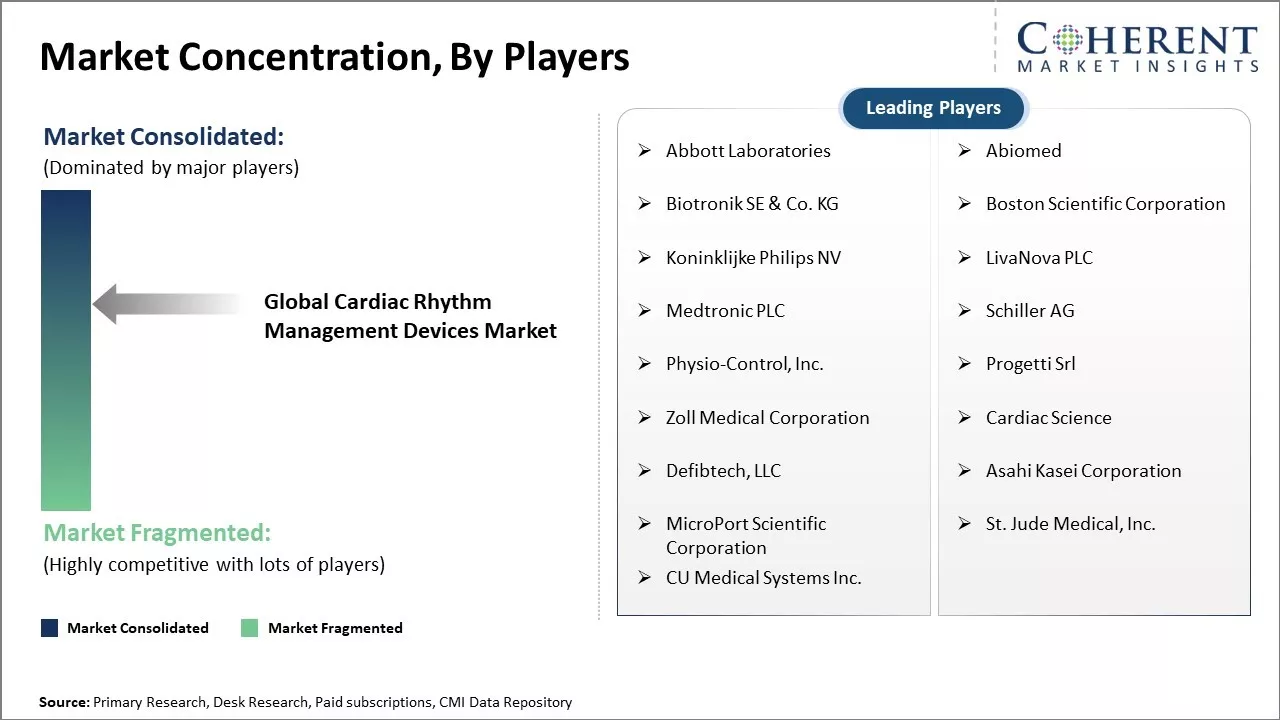
| Companies covered: | Abbott Laboratories, Abiomed, Biotronik SE & Co. KG, Boston Scientific Corporation, Koninklijke Philips NV, LivaNova PLC, Medtronic PLC, Schiller AG, Physio-Control, Inc., Progetti Srl, Zoll Medical Corporation, Cardiac Science, Defibtech, LLC, Asahi Kasei Corporation, MicroPort Scientific Corporation, St. Jude Medical, Inc., and CU Medical Systems Inc. | ||
| Growth Drivers: |
| ||
| Restraints & Challenges: |
| ||
Global Cardiac Rhythm Management Devices Market Driver
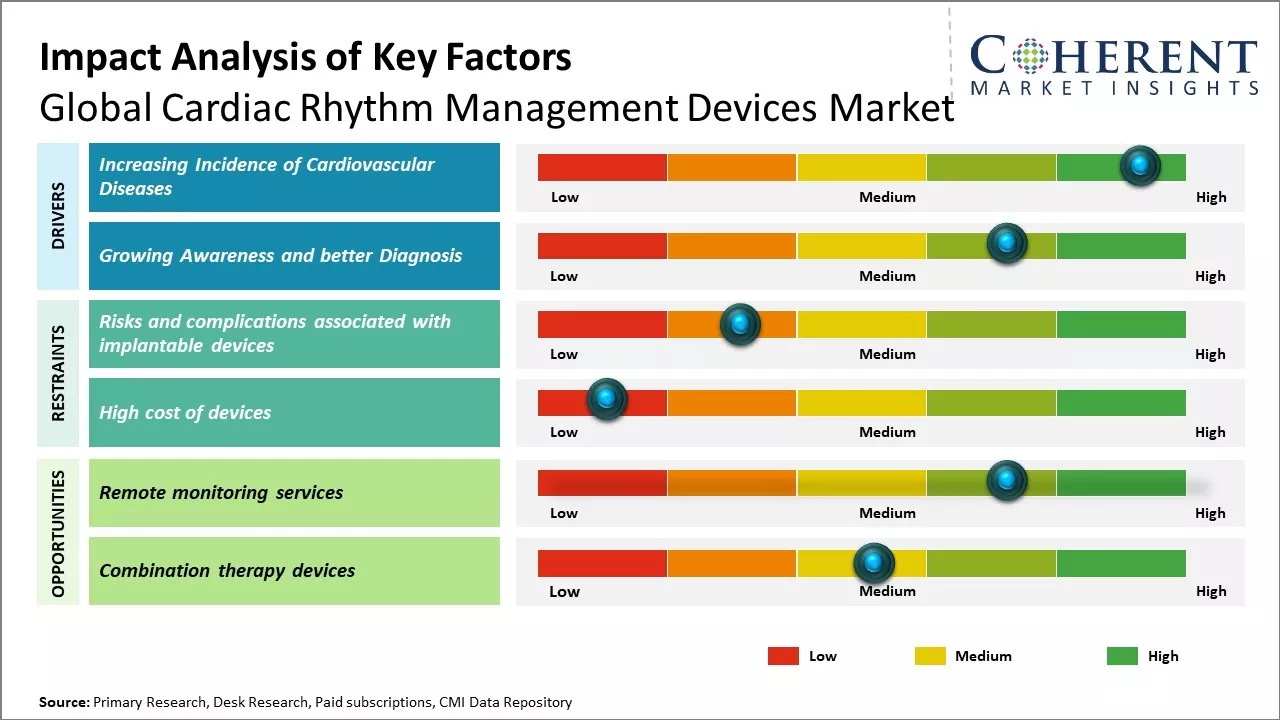
Increasing incidence of cardiovascular diseases
Rising prevalence of cardiovascular diseases can drive the market growth. According to the World Health Organization, cardiovascular diseases currently account for over 17 million deaths annually, with low- and middle-income countries disproportionately impacted. Rising burden of cardiovascular diseases can be attributed to both genetic predisposing factors as well as lifestyle and environmental risk factors prevalent in modern societies. Changes in dietary patterns along with reduced physical activity contribute to increased incidence of obesity, diabetes and unhealthy cholesterol levels, all of which are known risk multipliers for developing cardiovascular conditions. Moreover, growing geriatric population can also drive the market growth as age is a significant risk factor of the disease due to deteriorating functionality of organs with time.
Market Concentration and Competitive Landscape
Growing awareness and better diagnosis
With greater knowledge regarding symptoms and risk factors of heart diseases, more people are becoming aware of underlying conditions in the early stages. Advancement in diagnostic technologies has enabled identification of cardiac arrhythmias and irregular heartbeats. Wearable medical devices and mobile ECG ,Electrocardiogram, recorders makes cardiac screening more convenient and accessible. Physicians can more accurately diagnose previously unknown cases of abnormal heart rhythms, valve defects or heart failures even in asymptomatic individuals. This has resulted in more patients being directed to specialized cardiac rhythm management procedures and therapies. Growing middle-class population in developing nations now has more access to sophisticated healthcare technologies and interventions. Improved medical insurance coverage has also removed financial barriers for many people, allowing for timely management according to recommended clinical guidelines.
Global Cardiac Rhythm Management Devices Market Opportunities
Remote monitoring services
Remote monitoring services can offer growth opportunities for global cardiac rhythm management devices market. With advanced technologies like Bluetooth and wireless connectivity, remote monitoring allows continuous surveillance of patients' heart conditions from outside the hospital setting. This offers huge benefits for patients as well as the healthcare system. Remote monitoring allows early detection of any abnormality or deterioration in patients' heart conditions. This helps intervening promptly and preventing emergency situations. It ensures patients experience less hospital visits and stay comfortable at home while getting periodic reviews of their cardiac issues. This improves their quality of life significantly. For healthcare providers, remote monitoring helps manage large patient loads efficiently with limited resources. It reduces burden on hospitals with less readmissions.
Analyst Opinion (Expert Opinion)
The Cardiac Rhythm Management (CRM) Devices Market is transitioning from hardware-driven competition to ecosystem-based differentiation, where device longevity, data intelligence, and clinical workflow integration determine leadership. Leadless pacemakers have matured rapidly, supported by over 300,000 global implants and long-term complication rates below 5%, making them the preferred choice for patients at risk from transvenous leads. Battery life improvements—now exceeding 15 years in next-generation systems are reshaping procurement priorities toward lifetime cost efficiency and reduced revision surgeries.
Subcutaneous ICDs (S-ICDs), led by Boston Scientific’s EMBLEM with an estimated 38–65% market share, address infection-prone and younger patients, though their lack of pacing limits full substitution of transvenous systems. Meanwhile, transvenous ICDs and CRT devices continue to dominate in complex heart-failure and resynchronization cases, aided by incremental gains in miniaturization and algorithmic intelligence.
The most transformative frontier is remote monitoring (RM): a dataset of 32,000 patients generated over 380,000 transmissions, underscoring the need for triage-level analytics to prevent clinician fatigue. Vendors integrating validated AI-driven filtering and secure connectivity will capture superior value. Overall, competitive success now depends on lifecycle economics, interoperable data ecosystems, and phenotype-driven therapy personalization—factors redefining strategic positioning across the CRM landscape.
Speak to the analyst
Want personalized insights?
Take the findings above to one of our principal consultants, or have the report rebuilt around the segments, geographies and competitors you actually track.
Recent Developments
- In October 2025, Abbott launched the Aveir DR Dual Chamber Leadless Pacemaker in India, offering a groundbreaking solution for advanced heart rhythm therapy. This minimally invasive device synchronizes both heart chambers without traditional leads, enhancing patient safety and comfort. The launch marks a significant step in expanding access to innovative cardiac rhythm management across India.
- In October 2025, Atacor Medical secured $75 million in financing to support a pivotal U.S. study of its Extravascular Implantable Cardioverter Defibrillator (EV-ICD) system. Designed to treat life-threatening arrhythmias without placing leads inside the heart or veins, the EV-ICD represents a next-generation approach to cardiac rhythm management, aiming to improve safety and patient outcomes.
- In July 2025, Boston Scientific’s LATITUDE™ Patient Management System received approval in Europe, enabling remote monitoring of patients with implantable cardiac devices. The system enhances rhythm management by providing clinicians with real-time data on pacemakers and defibrillators, improving care continuity and reducing hospital visits. This marks a key advancement in connected cardiac care across European healthcare systems.
Market Segmentation
- Product Insights (Revenue, USD Bn, 2026 - 2033)
- Pacemakers
- Defibrillators
- Cardiac Resynchronization Therapy Devices
- Application Insights (Revenue, USD Bn, 2026 - 2033)
- Congestive heart failure
- Arrhythmias
- Bradycardia
- Tachycardia
- Others
- End users Insights (Revenue, USD Bn, 2026 - 2033)
- Hospitals
- Cardiac care centers
- Ambulatory surgical centers
- Others
- Regional Insights (Revenue, USD Bn, 2026 - 2033)
- North America
- U.S.
- Canada
- Latin America
- Brazil
- Argentina
- Mexico
- Rest of Latin America
- Europe
- Germany
- U.K.
- Spain
- France
- Italy
- Russia
- Rest of Europe
- Asia Pacific
- China
- India
- Japan
- Australia
- South Korea
- ASEAN
- Rest of Asia Pacific
- Middle East
- GCC Countries
- Israel
- Rest of Middle East
- Africa
- South Africa
- North Africa
- Central Africa
- Key Players Insights (Revenue, USD Bn, 2021 - 2033)
- Abbott Laboratories
- Abiomed
- Biotronik SE & Co. KG
- Boston Scientific Corporation
- Koninklijke Philips NV
- LivaNova PLC
- Medtronic PLC
- Schiller AG
- Physio-Control, Inc.
- Progetti Srl
- Zoll Medical Corporation
- Cardiac Science
- Defibtech, LLC
- Asahi Kasei Corporation
- MicroPort Scientific Corporation
- St. Jude Medical, Inc.
- CU Medical Systems Inc.
Sources
Primary Research Interviews from the following stakeholders
Stakeholders
- Interviews with cardiologists, electrophysiologists, cardiac surgeons, hospital procurement heads, biomedical engineers, and supply chain managers across major healthcare markets.
- Discussions with executives from hospitals, ambulatory surgical centers (ASCs), and specialty cardiac clinics involved in device adoption and maintenance.
- Interactions with distributors, importers, and regulatory compliance officers engaged in cardiac device supply and post-market surveillance.
Specific stakeholders
- Department heads in leading cardiac hospitals (e.g., Cleveland Clinic, Apollo Hospitals, Mayo Clinic, Fortis Healthcare)
- Procurement and biomedical engineering teams at public health systems (e.g., NHS, AIIMS, Mount Sinai Health System)
- Clinical electrophysiologists specializing in pacemaker and ICD implantation (e.g., European Heart Rhythm Association members)
- Cardiology device product managers and R&D heads at OEM component suppliers (battery modules, leads, pulse generators, telemetry units)
- Hospital IT and interoperability managers handling CRM data integration with EMR/EHR systems
- Regulatory affairs and quality assurance specialists overseeing MDR, FDA, and PMDA compliance
- Supply chain managers at regional medical device distributors and import-export agencies
Databases
- World Health Organization (WHO) Global Health Observatory
- World Bank Health Statistics
- UN Comtrade Medical Device Trade Database
- U.S. Food and Drug Administration (FDA) – Medical Device Database
- European Commission – EUDAMED Medical Devices Information System
- Japan Pharmaceuticals and Medical Devices Agency (PMDA)
- Central Drugs Standard Control Organization (CDSCO), India
- Health Canada – Medical Device Active Licence Listing (MDALL)
- Organisation for Economic Co-operation and Development (OECD) Health Data
- Eurostat – Healthcare Equipment Data
Magazines
- Cardiology Today
- Medical Device Network
- MedTech Insight
- Healthcare Business International
- Biomedical Engineering Online (Industry Insights section)
- Medical Design & Outsourcing
- MD+DI (Medical Device and Diagnostic Industry)
- Cardiac Rhythm News
- Electrophysiology Journal News
- Medgadget
Journals
- Journal of the American College of Cardiology (JACC)
- Circulation: Arrhythmia and Electrophysiology
- Heart Rhythm Journal
- European Heart Journal
- Journal of Cardiovascular Electrophysiology
- IEEE Transactions on Biomedical Engineering
- Journal of Medical Devices (ASME)
- Journal of Biomedical Materials Research
- Annals of Biomedical Engineering
- Frontiers in Cardiovascular Medicine
Newspapers
- The Wall Street Journal – Health & MedTech
- The Economic Times – Healthcare and Devices
- The Hindu Business Line – Health & Science
- Financial Times – Medical Innovation Section
- Reuters Health
- Nikkei Asia – Medical Devices and Supply Chain
- The Guardian – Healthcare Technology
- South China Morning Post – Health & Biotech
Associations
- Heart Rhythm Society (HRS)
- European Society of Cardiology (ESC)
- American College of Cardiology (ACC)
- Asia Pacific Heart Rhythm Society (APHRS)
- World Heart Federation (WHF)
- Association of Indian Medical Device Industry (AIMED)
- MedTech Europe
- Advanced Medical Technology Association (AdvaMed)
- Biomedical Engineering Society (BMES)
- Indian Society of Electrocardiology (ISE)
Public Domain Sources
- Ministry of Health and Family Welfare (Government of India)
- U.S. Centers for Medicare & Medicaid Services (CMS)
- National Institutes of Health (NIH) – Biomedical Device Data
- European Medicines Agency (EMA) – Device Directives and Safety Notices
- Ministry of Health, Labour and Welfare (MHLW), Japan
- National Health Service (NHS Digital), UK
- U.S. International Trade Commission (USITC) – Medical Device Trade Reports
- NITI Aayog – Healthcare Innovation Reports
- Reserve Bank of India (RBI) – Healthcare Imports & Exports Data
- World Bank – Global Health Expenditure and Technology Adoption Reports
Proprietary Elements
- CMI Data Analytics Tool
- Proprietary CMI Existing Repository of information for last 8 years
Get access to 250+ pages report
Every segment, forecast, competitor profile and data table behind the analysis above — available for instant download.
- ESOMAR Member
- ISO 9001:2015 Certified
- D-U-N-S Registered
- GDPR & CCPA Compliant
Missing comfort of reading report in your local language? Find your preferred language:
Transform your Strategy with Exclusive Trending Reports
Frequently Asked Questions
The Cardiac Rhythm Management Devices Market is estimated to be valued at USD 19.05 Bn in 2026, and is expected to reach USD 25.76 Bn by 2033.
The CAGR of the Cardiac Rhythm Management Devices Market is projected to be 4.4% from 2026 to 2033.
Increasing Incidence of cardiovascular diseases and growing awareness and better diagnosis are the major factors driving the growth of global cardiac rhythm management devices market .
Risks and complications associated with implantable devices and High cost of devices are the major factors hampering the growth of global cardiac rhythm management devices market.
In terms of product, Defibrillators segment is estimated to dominate the market in 2026.
Abbott Laboratories, Abiomed, Biotronik SE & Co. KG, Boston Scientific Corporation, Koninklijke Philips NV, LivaNova PLC, Medtronic PLC, Schiller AG, Physio-Control, Inc., Progetti Srl, Zoll Medical Corporation, Cardiac Science, Defibtech, LLC, Asahi Kasei Corporation, MicroPort Scientific Corporation, St. Jude Medical, Inc., and CU Medical Systems Inc. are the major players.
North America is expected to lead the global cardiac rhythm management devices market.