

Global Microbiome Skincare Market Size and Forecast – 2026 To 2033
The Global Microbiome Skincare Market is estimated to be valued at USD 512.2 Mn in 2026 and is expected to reach USD 1,297.5 Mn by 2033, growing at a compound annual growth rate (CAGR) of 14.20% from 2026 to 2033. Market expansion is supported by greater consumer focus on maintaining skin-barrier health, deeper scientific understanding of interactions between cosmetic formulations and resident microorganisms, and the development of microbiome-compatible ingredients for sensitive and performance-oriented skincare.
Ingredient innovation is also enabling formulators to design products that protect the skin ecosystem without compromising texture or efficacy. In October 2024, Clariant’s Lucas Meyer Cosmetics launched Pickmulse, a quinoa-starch-based, surfactant-free emulsifier designed to provide high skin tolerance and microbiota-friendly formulation properties, demonstrating how suppliers are incorporating microbiome compatibility directly into cosmetic formulation technology.
Key Takeaways of the Global Microbiome Skincare Market
- Moisturizers and Creams are estimated to expand at a 13.8% CAGR during 2026–2033 and account for 38.2% of the global microbiome skincare market in 2026. Their leadership reflects high-frequency daily use, compatibility with barrier-support positioning, and the ease of combining microbiome actives with hydration systems. In October 2025, AbbVie’s SkinMedica launched HA5 Hydra Collagen Water Burst Moisturizer with a prebiotic- and lactobacillus-ferment-based Microbiome Barrier Complex.
- Probiotics are estimated to grow at a 13.6% CAGR during 2026–2033 and hold 71.7% of the global microbiome skincare market in 2026. The segment benefits from strong consumer recognition of probiotic science and increasing formulation precision around skin-native strains. In September 2026, Beiersdorf introduced Eucerin DERMOPURE CLINICAL PROBIOM8, using viable skin-native probiotics developed from more than two decades of microbiome research for acne-prone skin.
- Sensitive Skin and Barrier Repair is estimated to register a 15.1% CAGR during 2026–2033 and represent 32.8% of the global microbiome skincare market in 2026. The segment is commercially important because microbiome-balancing claims align naturally with redness, irritation, and impaired-barrier care. In August 2025, Shiseido reported microbiome research identifying a specific Cutibacterium acnes strain associated with sensitive skin and a microbial extract designed to selectively suppress it.
- North America is estimated to advance at a 13.7% CAGR during 2026–2033 and capture 39.2% of the global microbiome skincare market in 2026. Its lead reflects mature premium skincare demand, rapid adoption of biotech formulations, and broad e-commerce access. In May 2025, Genome & Company launched microbiome-focused UIQ on Amazon in the United States, extending availability of products built around patented skin-derived microbiome ingredients.
- Europe is estimated to post the fastest regional CAGR of 15.8% during 2026–2033 while accounting for 27.8% of the global microbiome skincare market in 2026. Growth should benefit from deep cosmetic-science capabilities, fermentation expertise, and increasing investment in microbiome-compatible active ingredients. In May 2026, Switzerland-based dsm-firmenich introduced its GLYCARE SK range using HMO biotechnology to strengthen skin resilience, barrier function, and microbiome adhesion in cosmetic formulations.
Segmental Insights
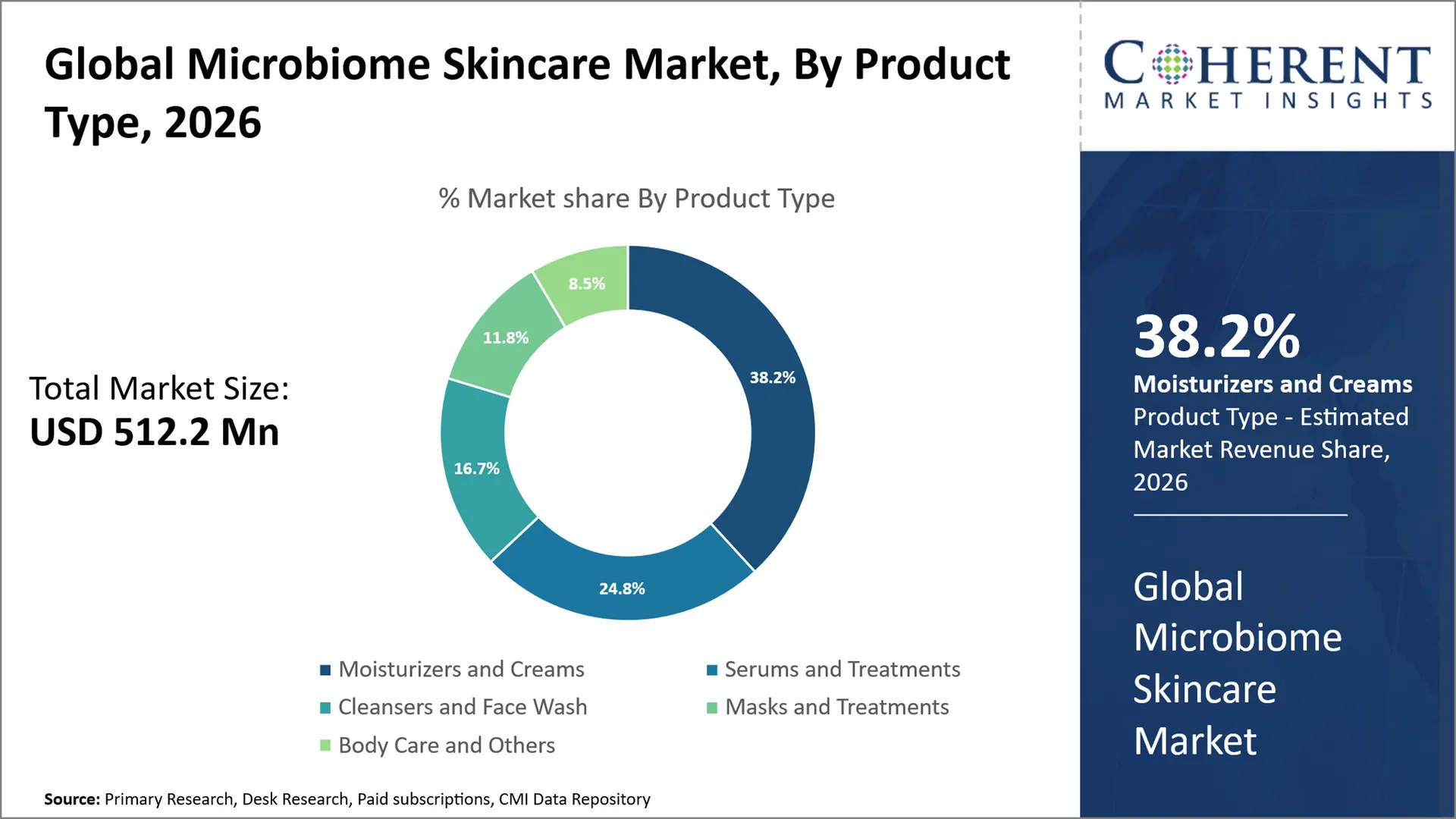
Why Do Moisturizers and Creams Dominate the Global Microbiome Skincare Market?
Moisturizers and Creams are expected to account for 38.2% of the global microbiome skincare market in 2026, with cream emulsions offering a practical architecture for combining oil-soluble lipids, water-phase humectants, and microbiome-directed actives in one leave-on product. Their longer skin-contact time supports sustained delivery, while viscosity and emollient flexibility allow suppliers to tailor products for facial care, body care, xerosis, and eczema-prone skin. This breadth improves manufacturing economics because one platform can support multiple claims and price tiers. It also gives dermatology and pharmacy channels products that fit established treatment-adjacent routines. In March 2024, Kenvue reported six clinical studies showing that oat-containing moisturizers developed by Aveeno and Neutrogena scientists improved microbiome resilience across populations including dry skin, eczema, and eczema-prone infants.
- Current Industry Events of 2026
- Market Size Estimation
- Regional Breakdown
- Competitive Landscape
- Customer Intelligence
- Segmental Analysis
- Pricing Analysis
- Key Market Drivers, Challenges & Future Trends
- Customized Insights Section
Why Do Probiotics Represent the Largest Ingredient Type in the Global Microbiome Skincare Market?
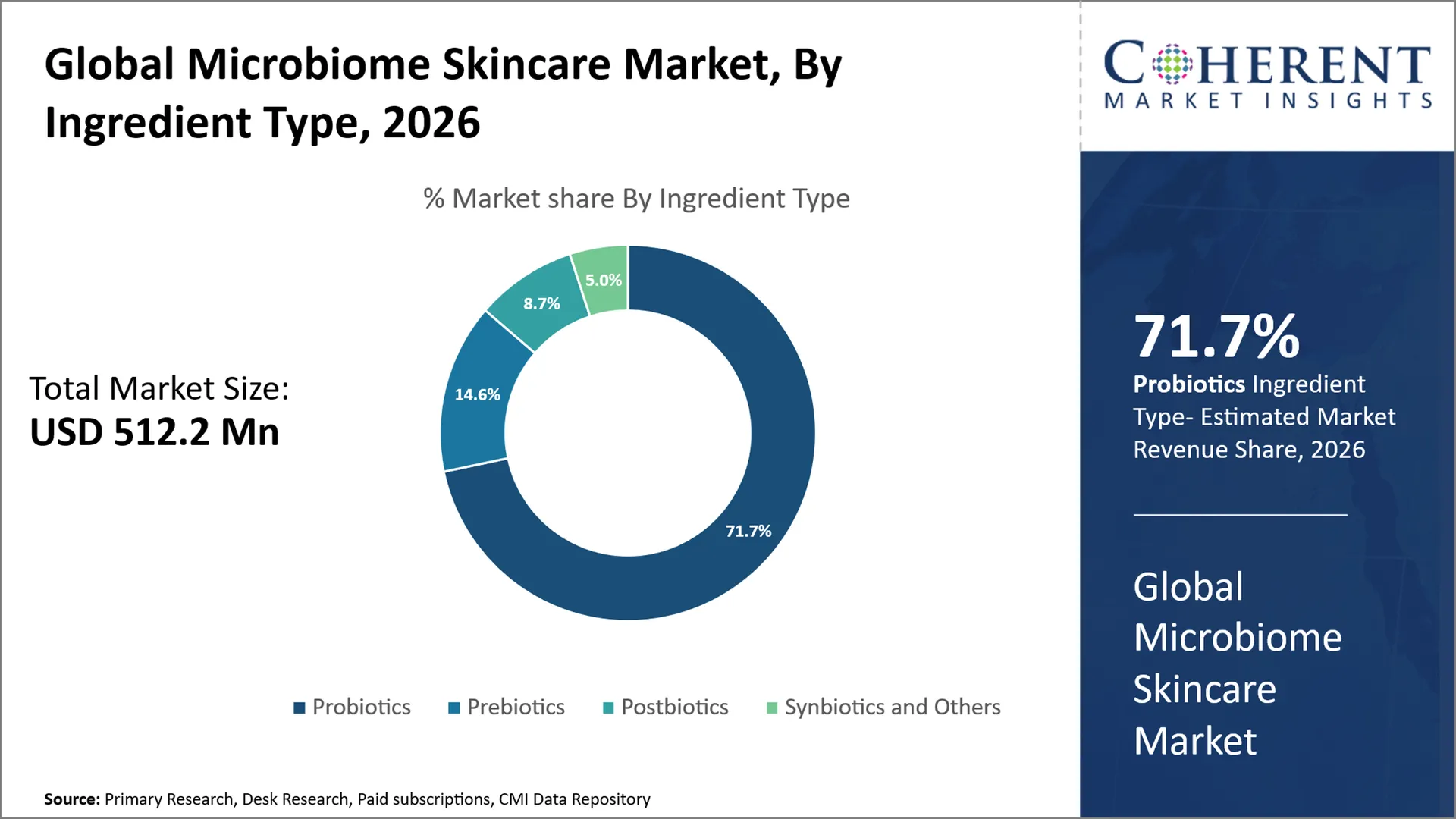
Probiotics are expected to represent 71.7% of the global microbiome skincare market in 2026, as viable-microbe formats create a higher technical barrier to entry and a clearer functional distinction from conventional cosmetic actives. Commercial success depends on keeping organisms stable before use and biologically active at application, which places greater value on encapsulation, two-part activation, moisture control, preservative design, and viability testing. These capabilities favor specialist microbiome brands and suppliers with fermentation expertise while supporting premium products positioned around targeted microbial intervention. Probiotics can also extend from home care into professional treatments and booster formats. In September 2025, Esse showcased its Live Probiotic Mist, a water-based Bacillus coagulans formulation designed to improve hydration, strengthen the skin barrier, and rebalance the microbiome.
Why Do Sensitive Skin and Barrier Repair Dominate the Skin Concern Category of the Global Microbiome Skincare Market?
Sensitive Skin and Barrier Repair is expected to hold 32.8% of the global microbiome skincare market in 2026, because this concern offers manufacturers clearer clinical endpoints for demonstrating whether microbiome-oriented formulations produce meaningful skin benefits. Products can be evaluated through redness, dryness, itching, transepidermal water loss, microbial composition, or recovery of compromised skin, improving claim substantiation for dermatology and pharmacy channels. Supply-side differentiation therefore centers on bioselective actives that control opportunistic organisms without broadly suppressing commensal species, supported by mild bases and low-irritancy preservation. This creates opportunities across facial care, body care, baby care, and atopy-prone formulations. In July 2024, Solabia highlighted Serenibiome, a biofermented active that selectively inhibits Staphylococcus aureus, preserves Staphylococcus epidermidis, and supports barrier regeneration in sensitive, atopy-prone skin.
Current Events and their Impact
Current Event | Description and Its Impact |
U.S. FDA MoCRA Biennial Facility Registration Renewal – February 2026 |
|
Canada Fragrance-Allergen Disclosure Requirements – April and August 2026 |
|
Great Britain Cosmetic Substance Restrictions – July and August 2026 |
|
Global Microbiome Skincare Market Dynamics
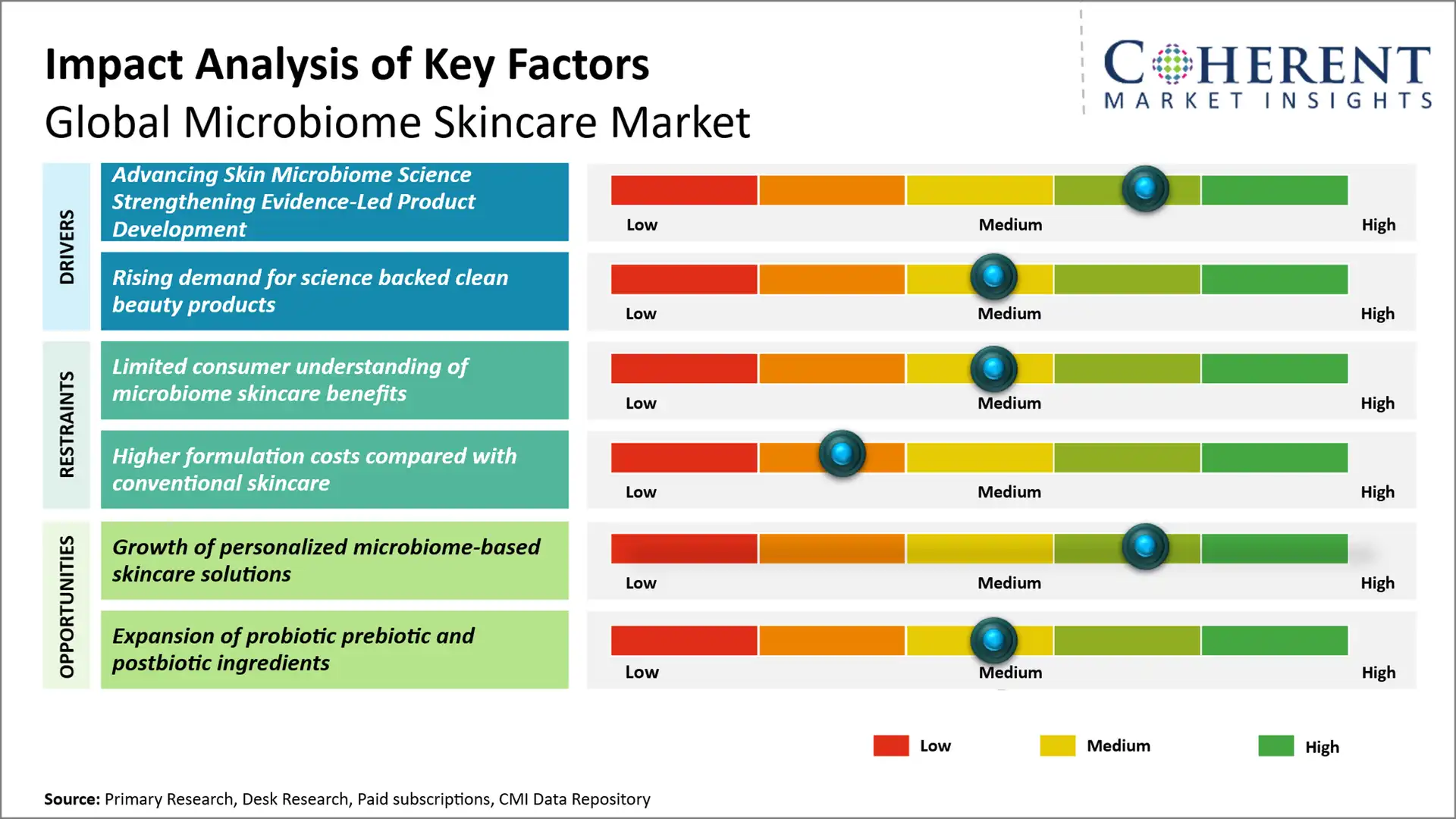
Key Market Drivers
- Advancing Skin Microbiome Science Strengthening Evidence-Led Product Development: Clinical microbiome science is strengthening the commercial credibility of microbiome skincare by giving formulators clearer biological targets, better claim substantiation pathways, and more defensible product differentiation. This supports premium serums, barrier-care products, and microbiome-compatible actives while benefiting ingredient suppliers, dermatology-oriented brands, testing laboratories, and R&D-led beauty companies. In April 2026, L’Oréal and Institut Pasteur announced a research partnership combining expertise in immunology, microbiology, skin biomarkers, and the microbiome to identify new biological targets and next-generation active ingredients for skin-health applications.
- Rising Demand for Science Backed Clean Beauty Products: Rising demand for science-backed clean beauty products is encouraging formulators to combine natural-origin ingredients with measurable skin-compatibility and microbiome-preservation performance rather than relying on broad free-from positioning. This creates opportunities for suppliers of fermentation-derived actives, mild preservation systems, biosurfactants, and natural multifunctionals that can support efficacy and sustainability claims simultaneously. In April 2025, Evonik highlighted dermosoft GPT MB at in-cosmetics Global 2025, describing the natural multifunctional antimicrobial wetting agent as an alternative-preservation option designed to respect the skin microbiome globally.
Emerging Market Trends
- Shift from Live Probiotic Positioning Toward Stable Biotic Formulation Systems: Microbiome skincare is moving toward postbiotics, lysates, ferments, and selectively targeted prebiotics because these formats can be easier to preserve, formulate, transport, and scale than live microorganisms. The commercial effect is a shift from contains-probiotics messaging toward performance-led claims around barrier resilience, recovery, hydration, and visible skin comfort. Ingredient developers with fermentation capability and brands able to document product-level microbiome compatibility are positioned to benefit, while undifferentiated probiotic-label products may face greater scrutiny. Over the forecast period, stability and substantiation are likely to matter more than microbiome terminology alone.
- Personalized Microbiome Routines Moving Beyond Conventional Skin-Type Segmentation: Personalized microbiome care is evolving from broad skin-type segmentation toward routines informed by skin condition, age, environment, treatment history, and microbial-response patterns. This will reshape product development around modular cleansers, serums, moisturizers, and targeted treatments that can be recommended as coordinated systems rather than isolated products. Diagnostic platforms, dermatology channels, digital consultation tools, and brands with strong first-party skin data should gain strategic relevance. The trend may also pressure mass-market portfolios to improve education and evidence, because consumers will increasingly expect microbiome claims to explain who the product is designed for and why.
Regional Insights
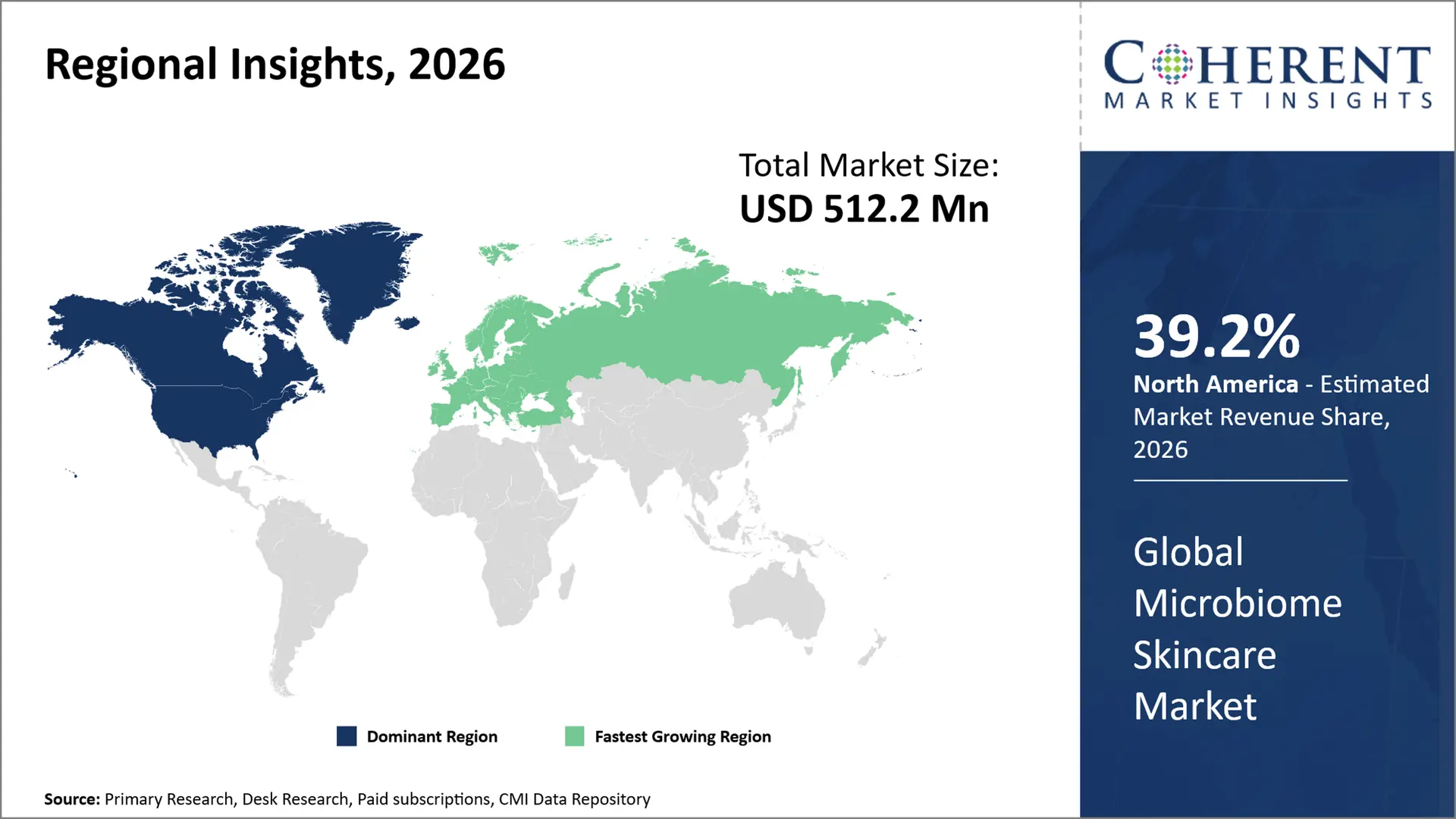
Why Does North America Dominate the Global Microbiome Skincare Market?
North America is expected to account for 39.2% of the global microbiome skincare market in 2026, supported by a strong overlap between premium skincare, dermatology, medical aesthetics, and biotechnology-led ingredient development. Consumers in the region are accustomed to barrier-repair, probiotic, prebiotic, and clinical-efficacy positioning, allowing microbiome concepts to move beyond niche wellness into physician-dispensed and prestige channels. The region also benefits from advanced formulation testing, venture-backed microbiome research, and retailers capable of supporting premium education-led products. Ingredient suppliers can therefore commercialize differentiated actives faster when claims are backed by measurable skin biology. In April 2025, Cleveland-based Lubrizol introduced Lectroglaze, a biotech ingredient designed to enhance electrogenic skin bacteria and strengthen antioxidant defenses, illustrating how North American suppliers are translating microbiota research into scalable cosmetic ingredients.
Why Is Europe Emerging as the Fastest-Growing Region in the Global Microbiome Skincare Market?
Europe is expected to hold 27.8% of the global microbiome skincare market in 2026 and emerge as the fastest-growing region, reflecting its dense derma-cosmetic ecosystem, sophisticated ingredient industry, and strong culture of evidence-based formulation. European manufacturers are increasingly examining not only active ingredients but also emulsifiers, surfactants, preservatives, and other galenic components for their effects on resident skin microorganisms. This widens microbiome innovation from specialist products to complete formulation architecture and creates opportunities for testing laboratories and ingredient houses. Pharmacy-led skincare and sensitive-skin positioning further support adoption of microbiome-compatible claims. In September 2025, BASF presented microbiome research at the IFSCC Congress in Cannes, including work on Corynebacteria in skin ageing and the microbiome compatibility of both rinse-off and leave-on formulations, reinforcing Europe’s role in formulation-led scientific development.
Global Microbiome Skincare Market Outlook for Key Countries
Why Is the U.S. a Key Market for the Global Microbiome Skincare Market?
The U.S. is a key market for microbiome skincare because it combines premium consumer spending with a large dermatologist, plastic-surgeon, and medical-aesthetics channel capable of introducing technically complex products. Physician dispensing is particularly relevant for live-biotic products, where storage, activation, education, and correct use can materially affect the consumer experience. The country also offers a strong route from biotechnology research to branded commercialization through specialist distributors, private-label models, and online medical practices. This creates room for higher-value probiotic ingredients like serums and personalized routines rather than only mass-market microbiome claims. In January 2025, Young Pharmaceuticals announced an exclusive U.S. distribution agreement with LAC2βiome for InfiniteSkin microbiome products, beginning with BiomeAge, a hyaluronic-acid formula containing live Lactobacilli in a mixing ampoule and intended for dispensing through medical offices and their online stores.
Why Does China Support Growth in the Global Microbiome Skincare Market?
China supports growth in the global microbiome skincare market through its combination of large-scale cosmetic manufacturing, fermentation capability, domestic bioactive-ingredient development, and fast commercialization of science-led beauty concepts. The country’s supplier ecosystem is well suited to microbiome skincare because fermentation platforms used for hyaluronic acid and other bioactives can also support microbial filtrates, postbiotics, and next-generation functional ingredients. Chinese beauty companies can integrate these inputs into hydration, oil-control, anti-ageing, and sensitive-skin formats while maintaining rapid product-development cycles. In October 2024, Bloomage presented research at the IFSCC Congress on how Saccharomyces cerevisiae-fermented brown rice filtrate affected microbiota diversity in oily skin and scalp. The work shows how China-based bioactive suppliers are extending established fermentation expertise into microbiome-specific cosmetic applications with potential for scalable ingredient commercialization.
Why Is Japan Important in the Global Microbiome Skincare Market?
Japan is important in the global microbiome skincare market because its cosmetics industry places high value on tolerability, preventive skin maintenance, sensitive-skin science, and long-term physiological research. These characteristics fit microbiome skincare particularly well, as product development increasingly requires understanding relationships among the stratum corneum, resident bacteria, barrier integrity, and irritation rather than adding a fashionable ingredient alone. Japan’s established R&D culture also supports gradual translation of microbiome findings into products for sensitive and ageing consumers. In April 2025, FANCL reported research identifying a new fragile-corneocyte indicator called P2 corneocytes and clarified its relationship with resident skin bacteria and atopic dermatitis severity. The company said the findings could support future approaches to sensitive-skin improvement and prevention, demonstrating how Japanese developers are building microbiome concepts around measurable skin-condition mechanisms.
Why Is India an Important Market for the Global Microbiome Skincare Market?
India is becoming relevant to the global microbiome skincare market as local innovation moves from general probiotic positioning toward personalized analysis designed around Indian skin conditions and lifestyles. Heat, humidity, pollution exposure, varied skin types, and heavy use of active-based skincare create a strong commercial case for routines that evaluate barrier condition and microbial balance before product selection. India also has a growing genomics and bioinformatics capability that can connect microbiome testing with ingredient and regimen recommendations, opening opportunities for diagnostic-linked skincare and specialist consultations. In May 2025, Bengaluru-based BugSpeaks published details of its Skin Microbiome Test, which evaluates facial microbiome characteristics alongside hydration, barrier potential, elasticity, ageing, and sebum-related parameters to generate tailored skincare, dietary, and lifestyle recommendations. This signals a shift toward data-led microbiome personalization rather than one-size-fits-all product positioning.
Why Is South Korea a Strategic Country in the Global Microbiome Skincare Market?
South Korea is a strategic country for the global microbiome skincare market because K-beauty manufacturers combine fast formulation cycles with strong contract manufacturing, fermentation research, functional ingredient discovery, and export-oriented product development. This structure makes the country particularly capable of converting microbiome science into multiple product formats for both domestic brands and international customers. Korean suppliers are also developing microbial libraries, postbiotic materials, and AI-linked personalization platforms, which can shorten the path from strain discovery to commercial formulation. In 2024, COSMAX established COSMAX BF, a bio-material research alliance involving group R&I entities and external researchers, with skin microbiome research identified as a core focus. Its sustainability reporting also describes continued development of microbiome-derived cosmetic materials, highlighting how South Korea is building industrial-scale research infrastructure rather than relying only on branded product launches.
Microbiome Science and Formulation Innovation Landscape
Technology / Innovation | Adoption Direction | Key Application in Microbiome Skincare | Strategic Commercial Impact |
16S rRNA and Shotgun Metagenomic Profiling | Expanding from research laboratories into advanced product-development programs | Characterization of bacterial communities before and after product application | Enables more specific microbiome-support claims and helps brands differentiate products using measurable microbial responses rather than generic microbiome language |
Microbial Metabolomics and Metabolite Mapping | Emerging rapidly in advanced skin research | Identification of microbe-derived metabolites linked with barrier condition aging pigmentation and skin comfort | Creates opportunities for metabolite-targeting actives and postbiotic ingredients with more clearly defined biological mechanisms |
AI Enabled Microbiome and Skin Data Analytics | Early commercial adoption with increasing integration into personalized beauty platforms | Combining microbiome profiles skin imaging environmental factors and user history | Supports personalized recommendations product matching and longitudinal skin-management services while creating proprietary consumer-data advantages |
Controlled Fermentation and Postbiotic Production | Increasingly scalable across ingredient manufacturing | Production of lysates ferments peptides metabolites and other microbial derivatives | Improves ingredient standardization and formulation practicality while supporting scalable microbiome concepts without requiring viable microorganisms in the finished product |
Microencapsulation and Water-Free Live Biotic Delivery | Specialized adoption concentrated in premium and technically demanding products | Protection of probiotic strains from moisture oxygen preservatives and formulation stress | Can extend viable-biotic product possibilities but requires packaging formulation and stability capabilities that may increase development cost and premium positioning |
Microbiome-Compatible Preservation and Claim Testing | Becoming increasingly important for commercial validation | Balancing antimicrobial product protection with assessment of effects on representative skin microorganisms | Allows brands to address product safety and microbiome compatibility simultaneously and strengthens claim substantiation for sensitive-skin baby-care and derma-cosmetic positioning |
How Are Microbiome-Safe Preservation Systems Creating New Growth Opportunities in the Global Microbiome Skincare Market?
A high-potential opportunity lies in preservation systems that maintain product safety and shelf stability without unnecessarily suppressing beneficial skin-associated microorganisms. This is strategically important because microbiome skincare brands must solve two problems at once: protect the formula from contamination and demonstrate that the finished product remains compatible with the skin ecosystem. Suppliers can capture this opportunity through selective antimicrobials, multifunctional humectants, fermentation-derived preservation boosters, and validated challenge-testing protocols designed specifically for microbiome-oriented formulations. The strongest customer groups include sensitive-skin brands, derma-cosmetic lines, baby care developers, premium facial skincare companies, and contract manufacturers serving microbiome-positioned products. Commercial success will depend on strong toxicology documentation, preservative efficacy testing, microbiome compatibility models, formulation support, and regulatory expertise across major markets. This opportunity should favor specialist ingredient suppliers and technically integrated manufacturers that can provide both the ingredient system and the evidence package needed to substantiate finished-product claims.
Market Players, Key Development, and Competitive Intelligence
Key Developments
- In September 2026, Amorepacific reported research showing that an extract from its proprietary Bacillus velezensis AmoreLumina strain may help address post-acne hyperpigmentation. The development is commercially relevant because it points toward microbiome-derived actives designed for specific post-acne concerns rather than broad skin-balancing positioning
- In June 2026, BioGaia New Sciences expanded its BioGaia Skincare portfolio with a Gentle Balm to Milk Wash and Soothing Face & Body Lotion creating a fuller microbiome-oriented routine for babies and children. The move broadens microbiome skincare into early-life sensitive-skin care and multi-step regimen development.
- In March 2025, Givaudan Active Beauty launched Evernityl, an upcycled marine active developed to address Porphyr’ageing a skin-ageing mechanism linked to porphyrins produced by skin microbiota. This matters because it extends microbiome skincare beyond balance claims into targeted anti-ageing active development and premium formulation differentiation.
Competitive Landscape
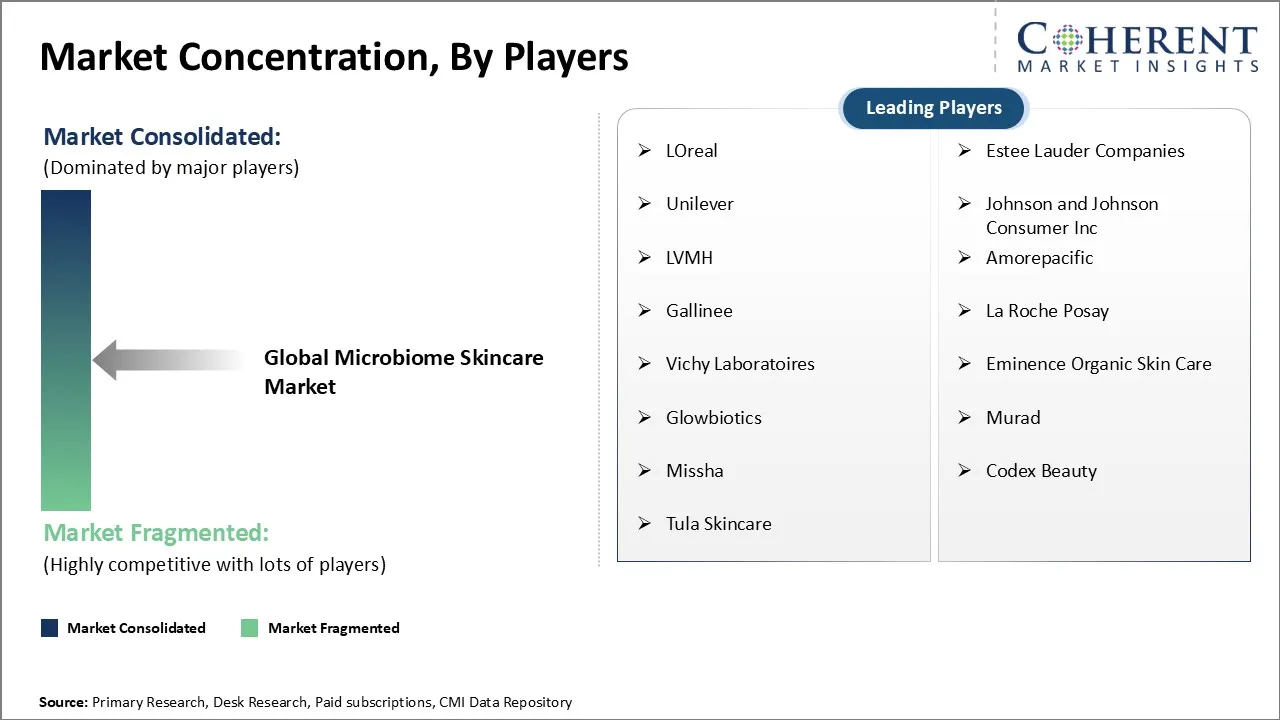
The global microbiome skincare market is fragmented, with multinational beauty groups, derma-cosmetic brands, microbiome specialists, ingredient suppliers, certification bodies, and emerging biotech companies competing across different parts of the value chain. Competition increasingly depends on evidence quality, formulation stability, microbiome compatibility, claim substantiation, channel credibility, and consumer education rather than ingredient naming alone. Specialist firms remain important where proprietary strains, testing platforms, fermentation know-how, or certification capabilities create defensible differentiation.
Key focus areas include
- Scientific validation and claim defensibility: Clinical testing microbiome compatibility studies and well-defined mechanisms increasingly separate premium formulations from marketing-led concepts.
- Proprietary biotic ingredients: Exclusive strains ferments lysates metabolites and selective prebiotics can provide stronger intellectual-property and formulation differentiation.
- Formulation stability: Companies able to preserve microbiome actives across storage transport and routine consumer use are better positioned for wider retail distribution.
- Preservation and product safety: Effective antimicrobial protection must coexist with microbiome-oriented positioning making preservation architecture an important technical competitive factor.
- Dermatology and pharmacy credibility: Professional recommendation and derma-cosmetic positioning can reduce consumer uncertainty around unfamiliar microbiome terminology.
- Manufacturing and quality control: Fermentation expertise contamination management batch consistency and traceability become increasingly important as products incorporate biologically derived ingredients.
- Consumer education: Brands that clearly differentiate probiotics prebiotics postbiotics and microbiome-friendly formulations can build stronger trust than competitors relying on broad wellness claims.
Market Report Scope
Global Microbiome Skincare Market Report Coverage | |||
Report Coverage | Details | ||
Base Year | 2025 | Market Size in 2026: | USD 512.2 Mn |
Historical Data For: | 2020 To 2024 | Forecast Period: | 2026 To 2033 |
Forecast Period 2026 To 2033 CAGR: | 14.20% | 2033 Value Projection: | USD 1,297.5 Mn |
Geographies covered: |
| ||
Segments covered: |
| ||
Companies covered: | LOreal, Estee Lauder Companies, Unilever, Johnson and Johnson Consumer Inc, LVMH, Amorepacific, Gallinee, La Roche Posay, Vichy Laboratoires, Eminence Organic Skin Care, Glowbiotics, Murad, Missha, Codex Beauty, Tula Skincare | ||
Growth Drivers: |
| ||
Restraints & Challenges: |
| ||
Analyst Opinion (Expert Opinion)
- The global microbiome skincare market leadership is likely to depend increasingly on ownership of differentiated microbial science and the ability to convert that science into multiple commercially usable actives rather than relying on individual hero products. This could shift greater value toward companies that control strain libraries fermentation processes microbial metabolites testing methodologies and intellectual property while beauty brands increasingly use licensing co-development and specialist ingredient partnerships to shorten innovation cycles.
- A sharper boundary between cosmetic positioning and therapeutic-style microbiome claims could materially reshape competition. Brands built around loosely defined concepts such as restoring or correcting the microbiome may face pressure to narrow their language or generate stronger evidence. Regulatory and scientific-affairs capabilities may therefore become as important as marketing creativity particularly for products addressing acne eczema-prone skin sensitivity or other concerns closely associated with medical terminology.
- Market participants should prioritize reproducible ingredient quality, robust preservation systems, finished-product microbiome testing, and multi-market claims governance. Pharmacy, derma-cosmetic, sensitive-skin, and early-life care deserve focused channel development because trust and tolerability are central purchasing considerations. Companies should avoid excessive investment in technically complex live-microorganism formats without clear stability manufacturing and consumer-use advantages and should build flexible formulations that can accommodate changing ingredient and labelling requirements across major markets.
Speak to the analyst
Want personalized insights?
Take the findings above to one of our principal consultants, or have the report rebuilt around the segments, geographies and competitors you actually track.
Market Segmentation
- Product Type Insights (Revenue, USD Mn, 2021 - 2033)
- Moisturizers and Creams
- Serums and Treatments
- Cleansers and Face Wash
- Masks and Treatments
- Body Care and Others
- Ingredient Type Insights (Revenue, USD Mn, 2021 - 2033)
- Probiotics
- Prebiotics
- Postbiotics
- Synbiotics and Others
- Skin Concern Insights (Revenue, USD Mn, 2021 - 2033)
- Sensitive Skin and Barrier Repair
- Anti Aging
- Acne and Blemish Care
- Hydration and Moisture Balance
- Other Skin Concerns
- Formulation Type Insights (Revenue, USD Mn, 2021 - 2033)
- Cream Based Products
- Serum Based Products
- Gel Based Products
- Liquid and Other Formats
- End User Insights (Revenue, USD Mn, 2021 - 2033)
- Women
- Men
- Baby and Infant Care
- Distribution Channel Insights (Revenue, USD Mn, 2021 - 2033)
- Pharmacies and Drug Stores
- Online Retail
- Specialty Beauty Stores
- Supermarkets and Hypermarkets
- Other Channels
- Regional Insights (Revenue, USD Mn, 2021 - 2033)
- North America
- U.S.
- Canada
- Latin America
- Brazil
- Argentina
- Mexico
- Rest of Latin America
- Europe
- Germany
- U.K.
- Spain
- France
- Italy
- Russia
- Rest of Europe
- Asia Pacific
- China
- India
- Japan
- Australia
- South Korea
- ASEAN
- Rest of Asia Pacific
- Middle East
- GCC Countries
- Israel
- Rest of Middle East
- Africa
- South Africa
- North Africa
- Central Africa
- North America
Sources
Primary Research Interviews
- Microbiome skincare manufacturers, derma-cosmetic brands, probiotic, prebiotic and postbiotic ingredient suppliers, and contract skincare manufacturers
- Dermatologists, cosmetic scientists, formulation chemists, microbiologists, R&D managers, product development managers, and regulatory affairs professionals
- Skincare distributors, pharmacy buyers, specialty beauty retailers, e-commerce category managers, dermatology clinics, and professional skincare practitioners
Stakeholders
- Microbiome skincare product manufacturers and derma-cosmetic companies
- Probiotic, prebiotic, postbiotic, ferment, lysate and microbiome-compatible active ingredient suppliers
- Cosmetic formulation laboratories, contract manufacturers, testing laboratories and clinical research organizations
- Dermatologists, pharmacies, specialty beauty retailers and professional skincare clinics
- Online beauty platforms, distributors, wholesalers and direct-to-consumer skincare brands
- Consumers purchasing products for sensitive skin, barrier repair, acne care, hydration and anti-aging applications
End-use Sectors
- Sensitive skin and skin-barrier care
- Anti-aging skincare
- Acne and blemish management
- Hydration and moisture-balance skincare
- Dermatology and derma-cosmetic skincare
- Baby and infant skincare
- Premium and personalized skincare
Regulatory and Industry Bodies
- U.S. Food and Drug Administration FDA
- European Commission
- Scientific Committee on Consumer Safety SCCS
- Health Canada
- Personal Care Products Council PCPC
- Cosmetics Europe
- International Federation of Societies of Cosmetic Chemists IFSCC
- International Organization for Standardization ISO
- National cosmetic regulatory authorities across major markets
Databases
- PubMed biomedical and dermatology research database
- ClinicalTrials.gov
- Company annual reports and investor presentations
- Cosmetic ingredient and formulation databases
- Microbiome clinical study and scientific publication databases
- Cosmetic product registration and regulatory databases
- Beauty and personal care import-export trade datasets
- Company product portfolio and ingredient specification databases
Magazines and Journals
- International Journal of Cosmetic Science
- Journal of Cosmetic Dermatology
- Journal of Investigative Dermatology
- Experimental Dermatology
- Cosmetics & Toiletries
- Personal Care Magazine
- CosmeticsDesign
- International Journal of Molecular Sciences
Associations
- Personal Care Products Council PCPC
- Cosmetics Europe
- International Federation of Societies of Cosmetic Chemists IFSCC
- Society of Cosmetic Chemists SCC
- European Society for Dermatological Research ESDR
- International Society for Biophysics and Imaging of the Skin ISBS
- Regional cosmetic and personal care industry associations
Public Domain Sources
- Skin microbiome and dermatology research publications
- Cosmetic ingredient safety assessments
- Clinical studies evaluating probiotics, prebiotics, postbiotics and fermented skincare ingredients
- Cosmetic product registration and labeling requirements
- Microbiome-compatible formulation and preservation developments
- Consumer skincare preference and sensitive-skin studies
- Cosmetic ingredient innovation and formulation technology updates
- Beauty and personal care trade-flow and industry statistics
Key Standards and Regulations
- Cosmetic product safety and ingredient compliance requirements
- Cosmetic labeling and ingredient disclosure regulations
- Microbiological quality and contamination-control requirements for cosmetic products
- Good Manufacturing Practice GMP requirements for cosmetics
- Cosmetic claims substantiation and advertising requirements
- Fragrance allergen and restricted-substance regulations
- Product registration and responsible-person requirements
- ISO 22716 Cosmetic Good Manufacturing Practices
- Microbial limits, preservative efficacy and product safety testing requirements
Proprietary Elements
- CMI Data Analytics Tool
- Proprietary CMI repository containing 10+ years of skincare, cosmetics, dermatology, active ingredients, consumer behavior, formulation innovation, competitive intelligence, trade flows and beauty and personal care market intelligence.
Get access to 250+ pages report
Every segment, forecast, competitor profile and data table behind the analysis above — available for instant download.
- ESOMAR Member
- ISO 9001:2015 Certified
- D-U-N-S Registered
- GDPR & CCPA Compliant
Frequently Asked Questions
The CAGR of global microbiome skincare market is projected to be 14.20% from 2026 to 2033.
The global microbiome skincare market is estimated to be valued at USD 512.2 million in 2026 and is expected to reach USD 1,297.5 million by 2033.
Limited consumer understanding of microbiome skincare benefits and higher formulation costs compared with conventional skincare are the major factors hampering the growth of global microbiome skincare market.
In terms of product type, moisturizers and creams is estimated to dominate the market revenue share in 2026.
LOreal, Estee Lauder Companies, Unilever, Johnson and Johnson Consumer Inc, LVMH, Amorepacific, Gallinee, La Roche Posay, Vichy Laboratoires, Eminence Organic Skin Care, Glowbiotics, Murad, Missha, Codex Beauty, Tula Skincare are the major players.
North America is expected to lead the global microbiome skincare market in 2026.