

Global Molecular Residual Disease Testing Market Size and Forecast – 2026 To 2033
The global molecular residual disease testing market is expected to grow from USD 2.74 Bn in 2026 to USD 6.34 Bn by 2033, registering a compound annual growth rate (CAGR) of 12.7% from 2026 to 2033. The molecular residual disease testing market is expected [1]to grow significantly during the forecast period owing to the rising integration of MRD in oncology clinical trials.
According to U.S. Food and Drug Administration (FDA), about 42% of the multiple myeloma trials that measure MRD response was considered adequate for inclusion in prescribing information. It highlights the importance of validated assays and standardization of test procedures to conduct clinical trials and to gain drug approval.
Key Takeaways of the Global Molecular Residual Disease Testing Market
- Assay kits and reagents are projected to hold 70.8% of the global molecular residual disease testing market share in 2026, making it dominant product & service segment. North America is expected to be leading the market owing to the presence of advanced molecular diagnostic laboratories and the growing demand for testing consumables in the U.S. The U.S. National Cancer Institute has announced a research funding opportunity to include fluid-based tumor monitoring assays into cancer treatment trials.
- Blood is projected to hold 47.8% of the global molecular residual disease testing market share in 2026, making it dominant sample type segment. Europe is working on improving liquid biopsy acceptance in the region via large scale cross border precision medicine projects. The SPARC project of the European Commission, aims to promote standardized molecular diagnostic procedures and next generation sequencing, liquid biopsy in the EU member states.
- Hematological malignancies are projected to hold 64.2% of the global molecular residual disease testing market share in 2026, making it dominant cancer type segment. The Asia-Pacific market is surging its cancer genomics research capacity particularly in Japan. The National Cancer Center Japan's HM-SCREEN-Japan program is conducting nationwide genetic screening research related to hematological malignancies (including acute myeloid leukemia) to develop personalized diagnostic and treatment strategies.
- North America market is expected to dominate with a share of 45.3% in 2026, due to huge investments in precision oncology research, advanced genomic infrastructure and increase in cancer research networks. In September 2026, Health Canada has announced USD 80 million (CAD 108 million) investment over 4 years in the Terry Fox Research Institute to support Canada's Marathon of Hope Cancer Centres Network and access to precision oncology research.
- Asia Pacific is expected to exhibit the fastest growth in the global molecular residual disease testing market, registering an estimated CAGR of 15.0% during 2026–2033. The development of molecular diagnostic infrastructure, government-funded genomics research projects, and increased access to precision cancer diagnostics are expected to contribute to the growth of this regional market. In February 2026, the India’s Department of Health Research highlighted the DIAMOnDS scheme, under which advanced molecular diagnostics is provided free of charge to eligible patients suffering from breast and lung cancers at 25 centers.
Segmental Insights
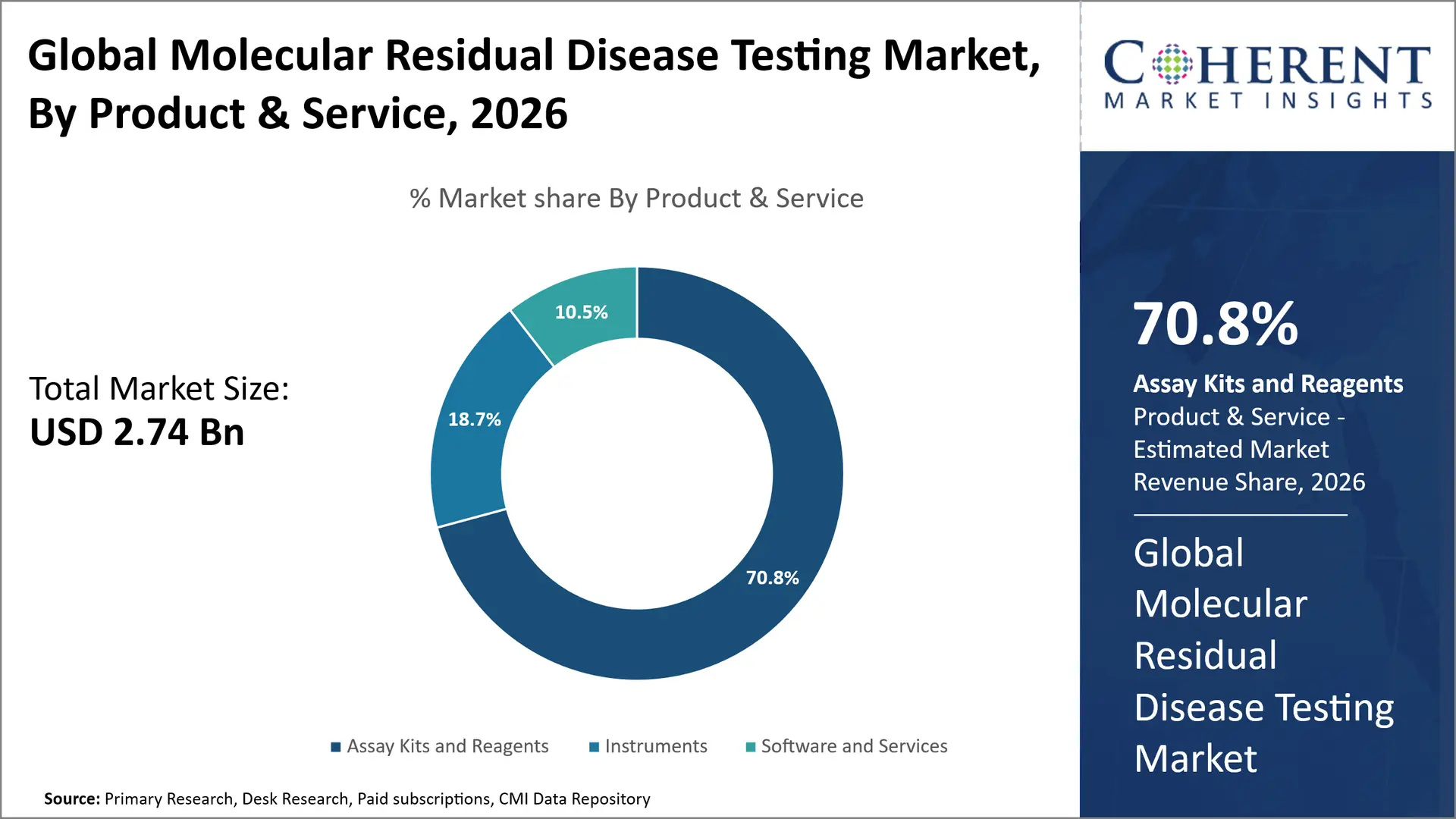
Why Do Assay Kits and Reagents Dominate the Global Molecular Residual Disease Testing Market?
Assay kits and reagents are projected to hold the market share of 70.8% in 2026, owing to the persistent need for high-sensitivity molecular assays, primers and probes, as well as sequencing reagents in cancer monitoring. For instance, in May 2026, the U.S. Food and Drug Administration (FDA) approved Natera’s Signatera CDx, a personalized minimal residual disease assay based on multiplex polymerase chain reaction and next-generation sequencing to accelerate the clinical implementation of complex molecular testing.
- Current Industry Events of 2026
- Market Size Estimation
- Regional Breakdown
- Competitive Landscape
- Customer Intelligence
- Segmental Analysis
- Pricing Analysis
- Key Market Drivers, Challenges & Future Trends
- Customized Insights Section
Why Do Blood Represent the Largest Sample Type Segment in the Molecular Residual Disease Testing Market?
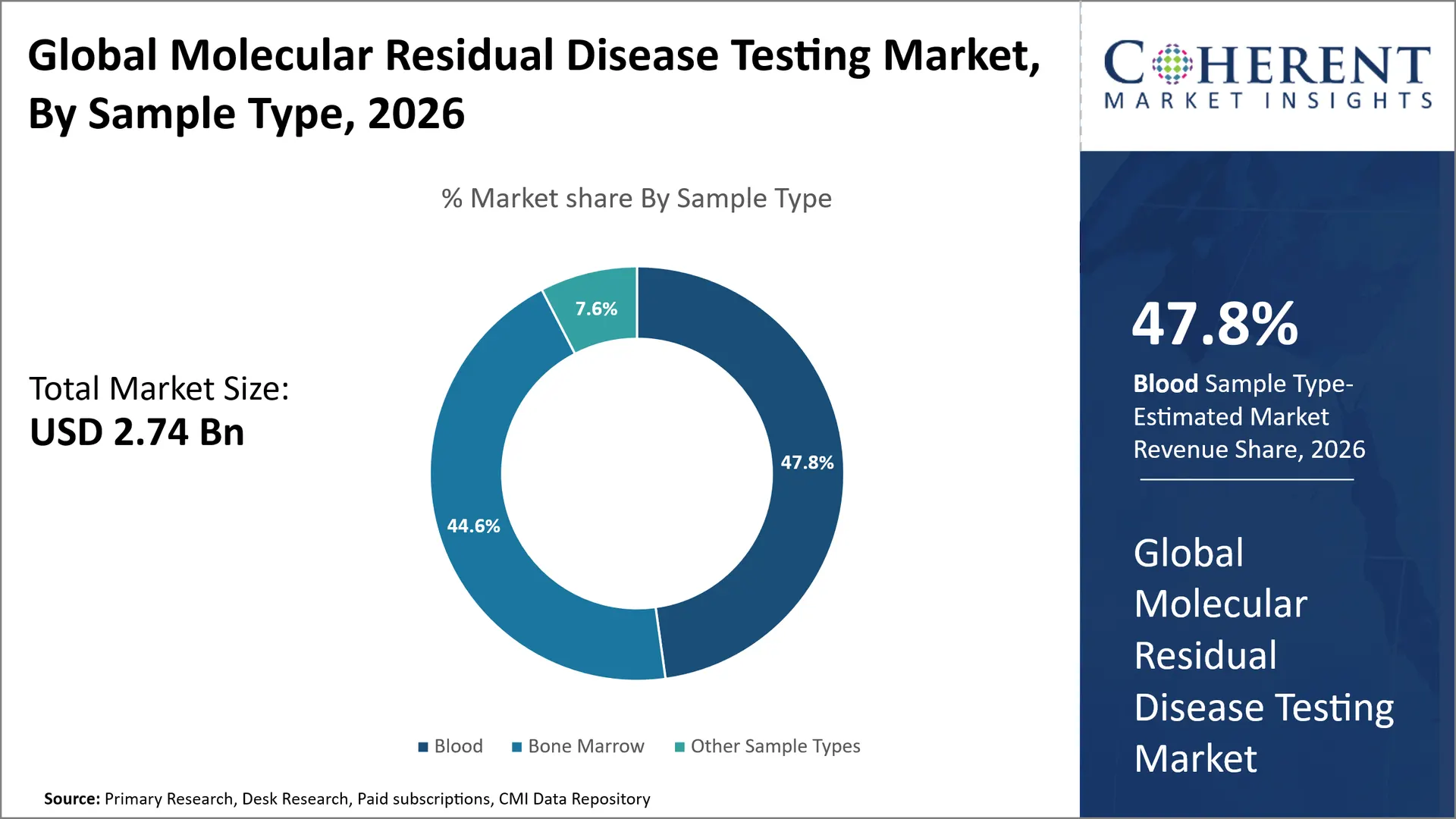
Blood is projected to hold a market share of 47.8% in 2026, because of its non-invasive nature, ease of sample collection and frequency of collection for repeated monitoring of ctDNA. Additionally, improvements in liquid biopsy techniques could result in more sensitive detection of tumour DNA and thus potentially allow early relapse to be picked up and maybe even enable monitoring of treatment outcomes. For instance, in April 2026, the U.S. National Cancer Institute (NCI) registered a trial conducted by the MD Anderson Cancer Center that assessed Myriad Genetics' Precise MRD test in early breast cancer. The protocol included serial blood draws during neoadjuvant treatment, adjuvant therapy, and following completion of treatment in order to monitor changes in ctDNA as well as to look for molecular evidence of residual disease. (Source: ClinicalTrials.gov)
Hematological Malignancies Segment Dominates the Global Molecular Residual Disease Testing Market
The hematological malignancies segment is projected to hold a market share of 64.2% in 2026, because of the presence of well-established monitoring solutions for leukemia, lymphoma, and multiple myeloma. Additionally, the requirement for ultra-sensitive testing to evaluate the response to treatment, predict relapse, and manage post-treatment may drive the segment. For instance, in March 2026, the European Leukemia Net (ELN) updated its recommendations regarding monitoring of minimal residual disease (MRD) in the management of acute myeloid leukemia (AML). The ELN MRD guidelines define standard procedures for flow cytometry, quantitative PCR, digital PCR and ultrahigh sensitivity NGS. It further reinforces the importance of measuring MRD in hematological cancers for predicting relapse risk and monitoring treatment.
Current Events and their Impact
Current Events | Description and its Impact |
U.S. CMS Introduces MRD-Specific HCPCS Codes in Medicare Outpatient Payment Rule (July 2026) |
|
U.S. FDA Issues Draft Guidance on MRD as an Endpoint for Multiple Myeloma Drug Approvals (January 2026) |
|
Molecular Residual Disease Testing Market Dynamics
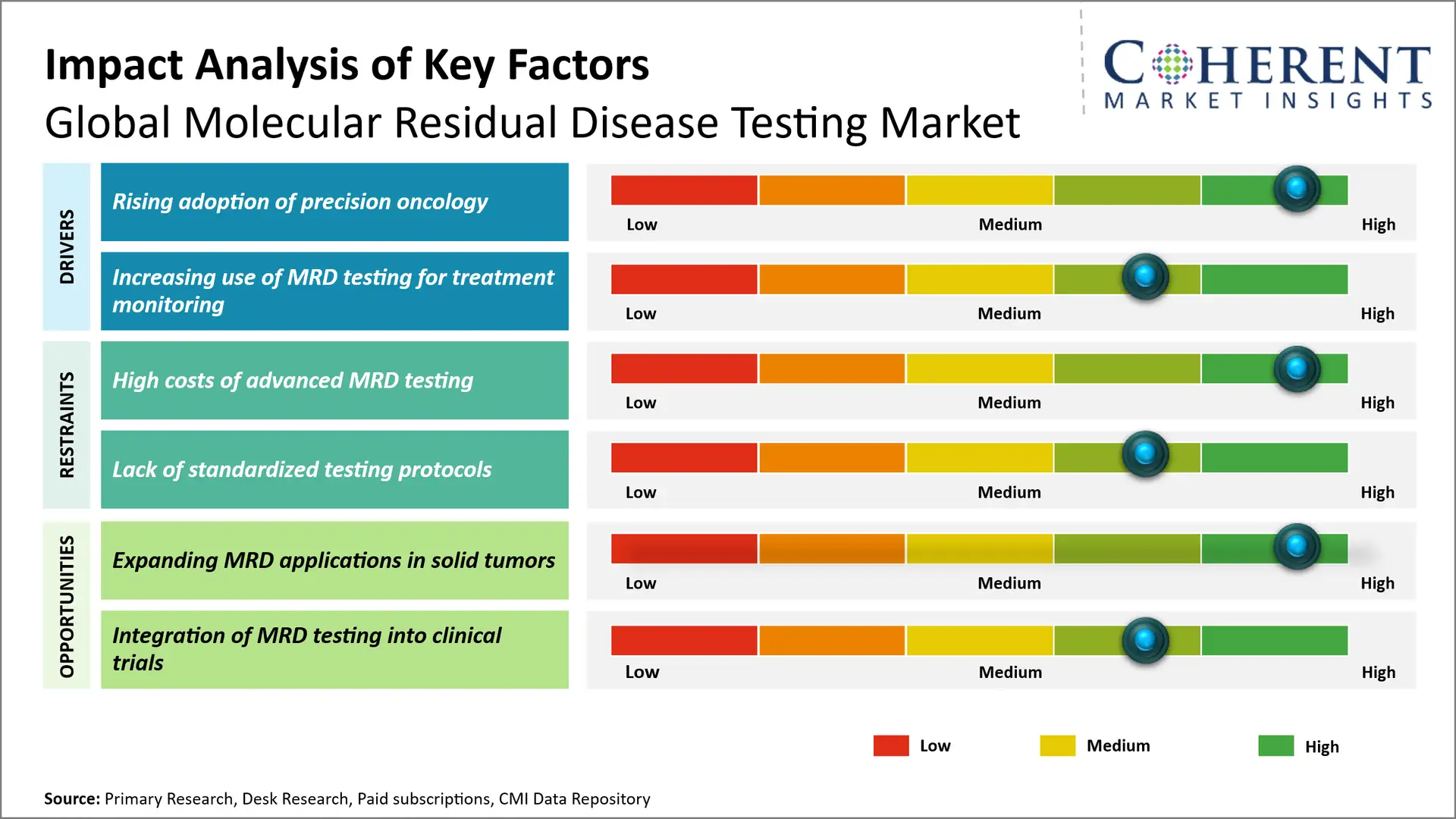
Market Drivers
- Rising adoption of precision oncology: The rising adoption of precision oncology is fueling the demand for molecular diagnostic tests to determine the biomarker signature that causes patient-specific cancers and provides targeted treatment options. The Department of Health Research of India with its Diagnostic Assessment and Mapping of Medicines, Devices, and Diagnostics Services (DIAMOnDS) scheme announced the introduction of high-end molecular diagnostics for patients diagnosed with lung and breast cancer in 25 centers.
- Increasing use of MRD testing for treatment monitoring: The adoption of MRD testing to determine response to treatment and disease progression is growing and is driving its adoption into routine management of multiple myeloma. The European Hematology Association (EHA) and EMN published new evidence-based guidelines in July 2025 supporting the use of next-generation sequencing (NGS) or next-generation flow cytometry in the assessment of MRD in patients who achieve complete response and annual testing in the follow-up of MRD-negative patients.
- Expanding clinical research across solid tumor indications: The growing focus on MRD testing in diverse solid tumors is fueling clinical development programs and broadening its potential diagnostic use in solid tumors. In January 2026, the U.S. National Cancer Institute (NCI) reported the ongoing SCORE study, a phase 2 multicenter trial investigating Natera's MRD assays for circulating tumor DNA (ctDNA) detection and recurrence monitoring in breast, lung, bladder, ovarian, pancreatic and other solid tumors.
Emerging Trends
- Expansion of tumor-informed MRD testing in solid tumors: Tumor-informed MRD tests are applying genomic profiling approaches to focus on a set of patient-specific tumor mutations and to check for their corresponding ctDNA after therapy.
- Impact: This will improve the sensitivity of recurrence monitoring and support in more personalized treatment decisions.
- Market Relevance: The adoption of MRD testing expands beyond other cancers such as colorectal, breast and lung.
- Integration of artificial intelligence in MRD data analysis: Machine learning algorithms and artificial intelligence are being deployed for the interpretation of massive genomic data sets, and for the detection of rare mutations, as well as to improve risk stratification using MRD testing.
- Impact: These technologies can contribute to boost the analytical throughput, to support the interpretation of complex biomarkers, and potentially to increase the detection accuracy.
- Market Relevance: This technology offers significant opportunities for the integration of software-enabled MRD platform and next-generation molecular diagnostic solutions.
Regional Insights
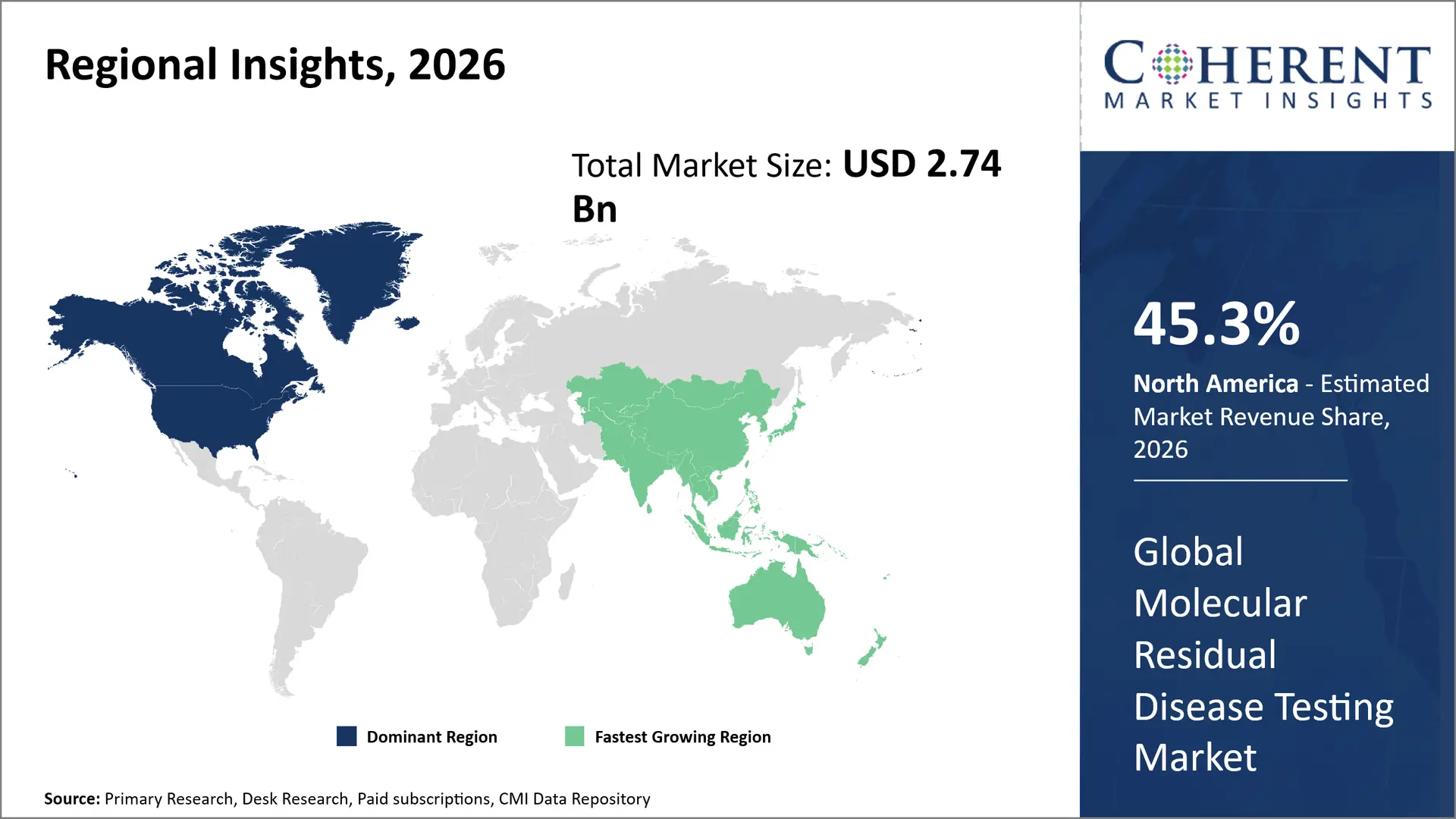
Why is North America a Strong Market for Molecular Residual Disease Testing?
The North America region is expected to dominate the global molecular residual disease testing market with an estimated market share of 45.3% in 2026, owing to advanced healthcare system, sophisticated molecular diagnostic infrastructure, and high oncology research investments. Strict regulations by FDA enables rapid approval of newer MRD assays and its integration into clinical practice. Moreover, increased government funding for research in cancer diagnostics, collaborations between diagnostic laboratories and research or academic institutes for assay development and clinical validation of new-generation MRD tests are the key factors contributing to the growth of this market.
For instance, the U.S. National Cancer Institute (NCI) fund assay validation initiatives to accelerate development of clinically reliable cancer biomarkers and molecular diagnostic assays. These initiatives promote interaction between academic investigators and diagnostic laboratories to enhance analytical and clinical validation of next-generation MRD assays. (Source: National Institutes of Health)
Why Does Asia Pacific Molecular Residual Disease Testing Market Exhibit High Growth?
The Asia Pacific region is projected to grow at the highest CAGR of 15.0% in the global molecular residual disease testing market during the forecast period (2026–2033). The region is projected to contribute 21.8% of the global market in 2026, owing to the increasing burden of cancer and rising healthcare infrastructure in the region. The rising trends of personalized medicine and investments in molecular diagnostics and biotechnology owing to improving access to genomics-based tests are further contributing to the growth of the market in countries such as China, Japan, India, and South Korea.
Additionally, national initiatives on cancer screening and molecular diagnostics are creating a favorable environment for molecular residual disease testing adoption. For instance, ICMR-National Institute of Cancer Prevention and Research (ICMR-NICPR) has established an Advanced Molecular Diagnostic and Research Facility for free molecular diagnostics for hematological malignancies and researches on MRD kinetics and relapse prediction. This is a government initiative to help advanced molecular testing and molecular residual disease research.
Global Molecular Residual Disease Testing Market Outlook for Key Countries
Why is the U.S. Leading Innovation and Adoption in the Molecular Residual Disease Testing Market?
In terms of innovation and adoption, the U.S. is the largest market for molecular residual disease testing, and primarily due to the high number of dedicated molecular diagnostics laboratories using tumor-informed and tumor-naïve MRD testing. Driven by the existing use of digital PCR, next-generation sequencing (NGS), and circulating tumor DNA (ctDNA) testing for hematological and solid tumor cancers in clinical practice, the molecular residual disease testing market is anticipated to continue to flourish. Furthermore, innovation in oncology clinical trials and precision medicine programs will continue to support adoption.
Is Japan a Favorable Market for Molecular Residual Disease Testing Market?
Japan offers an attractive market for molecular residual disease testing owing to the presence of advanced molecular diagnostics and oncology markets, as well as adoption of precision medicine. Source of demand for molecular residual disease testing in Japan is likely to include hematological malignancies and the rising research interest for ctDNA testing in solid tumors. However, limited MRD assay reimbursement coverage and standardization of clinical endpoints remain challenging.
Is China Emerging as a Key Growth Hub for the Molecular Residual Disease Testing Market?
China is becoming a major growth market for the molecular residual disease testing driven by the increasing adoption of NGS-based molecular diagnostics and ctDNA testing for precision oncology in its leading cancer hospitals. The country has a sizable oncology population, burgeoning domestic capabilities in genomics, and a rising volume of clinical research which are driving the molecular residual testing market. However, lack of reimbursement, high out-of-pocket testing expenses, and imbalanced testing access are key barriers.
Why Does Germany Top the European Molecular Residual Disease Testing Market?
Germany has established itself as a prominent country within the European molecular residual disease testing market driven by the increasing number of specialized centres of hematology and molecular diagnostics laboratory and clinical research arena. Moreover, reimbursement for molecular diagnostics such as NGS and other testing methods enable and promote the use of MRD clinically. Furthermore, prevalence and treatment of hematological cancers such as leukaemia and multiple myeloma increase the need for standardized MRD detection and treatment.
Is Molecular Residual Disease Testing Market Developing in UK?
UK is a nascent market for molecular residual disease testing backed by the NHS Genomic Medicine Service and the rapidly growing number of genomic testing laboratories. Increasing acceptance of NGS testing within the field of hematological oncology and increasing adoption of ctDNA testing across solid tumors are paving the way for MRD applications. The NHS expansion of genomic testing pathways and the addition of further indications on the National Genomic Test Directory are supporting market development.
Comparison of Major MRD Testing Technologies and Their Clinical Applications
MRD Testing Technology | Sample Type | Typical Sensitivity | Key Clinical Applications |
Next-Generation Sequencing (NGS) | Blood, Bone Marrow, Plasma | 10⁻⁵–10⁻⁶ | Leukemia, Multiple Myeloma, Solid Tumors |
Digital PCR (dPCR) | Blood, Bone Marrow, Plasma | Assay-dependent | Mutation-specific MRD monitoring |
Quantitative PCR (qPCR) | Blood, Bone Marrow | 10⁻⁵–10⁻⁶ | Leukemia and fusion-gene monitoring |
Flow Cytometry | Blood, Bone Marrow | 10⁻⁴–10⁻⁵ | Leukemia, Lymphoma, Multiple Myeloma |
How is the expanding MRD applications in solid tumors creating new growth opportunities in the molecular residual disease testing market?
The growing use of molecular residual disease testing in solid tumors such as colorectal, breast, lung, and bladder cancer represents tremendous additional opportunities outside traditional and approved hematological indications. CtDNA-based analysis and NGS are providing means to detect residual disease at the molecular level and inform treatment through risk of recurrence. For instance, in September 2026, U.S. National Cancer Institute (NCI) received updated results from its MODERN clinical trial. This is a Phase II/III trial assessing blood-based ctDNA testing to determine patient recurrence risk after surgery for urothelial cancer and to help select post-surgical immunotherapy treatment. (Source: ClinicalTrials.gov)
Market Players, Key Development, and Competitive Landscape
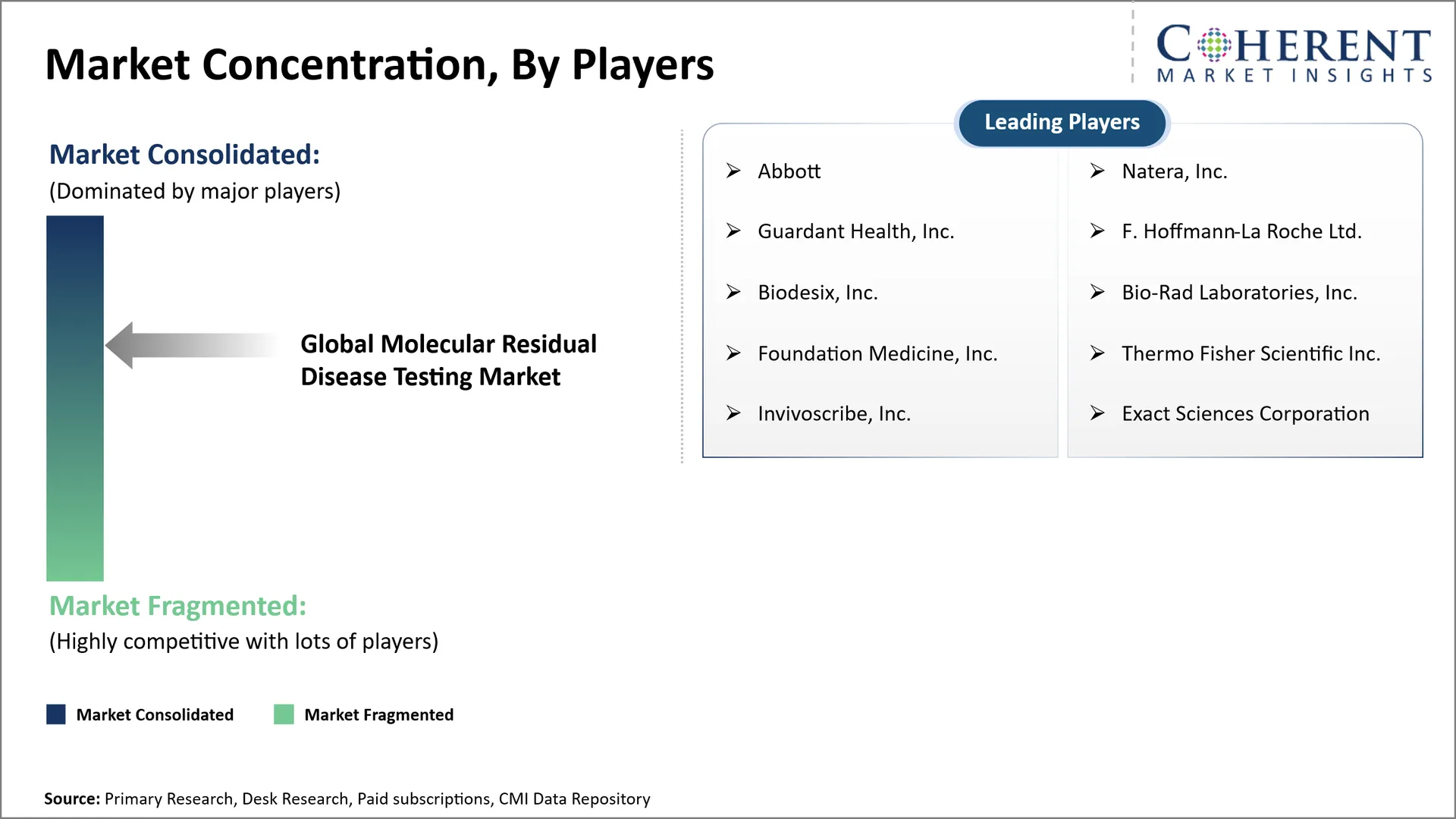
Key Developments
- In October 2026, Abbott unveiled next-generation Oncodetect molecular residual disease (MRD) test powered by whole genome sequencing (WGS) and MAESTRO technology. The assay detects up to 5,000 patient-specific variants in circulating tumor DNA (ctDNA), including very low levels of ctDNA pre- and post-cancer treatment. This new launch is establishing the use of next-generation genomics technology in MRD testing for treatment monitoring in solid tumors.
- In September 2026, Biodesix, Inc. introduced updates to two joint minimal residual disease (MRD) testing programs. The first is a tumor-informed assay being developed with Bio-Rad Laboratories based on its Droplet Digital PCR technology. The other is a tumor-naïve test being developed with Thermo Fisher Scientific on its methylated circulating tumor DNA (ctDNA) detection platform using next-generation sequencing technology. Both assays are focused on detecting residual or recurring cancer and will be validated with Memorial Sloan Kettering Cancer Center.
- In May 2026, Foundation Medicine, Inc. unveiled Foundation One MRD molecular residual disease testing solution, which uses structural variant analysis and digital polymerase chain reaction (dPCR). The test uses whole genome sequencing and a tumor-specific fingerprint to enable highly sensitive detection of minimal residual disease and recurrence monitoring, and makes this tumor-informed liquid biopsy testing more accessible.
Competitive Landscape
The global molecular residual disease testing market is intensely competitive as many diagnostic companies and emerging molecular testing developers are focused on enhancing the sensitivity, specificity and clinical utility of the test. The increasing competition is largely attributable to new advancements in NGS, digital PCR, ctDNA and personalized tumor-informed and tumor-naïve testing. Key focus areas include:
- Creation of highly sensitive tumor-informed and tumor-naïve MRD assays
- Increase in new NGS based and digital PCR testing able to do
- Synergies of multiple omics integration for better ctDNA detection
- Standardization of validation protocols and testing methods for analytics
- Broader use of MRD testing in other solid tumors
- Enhancing bioinformatics capacity for analysis of genomic data
Market Report Scope
Molecular Residual Disease Testing Market | |||
Report Coverage | Details | ||
Base Year | 2025 | Market Size in 2026: | USD 2.74 Bn |
Historical Data For: | 2020 To 2024 | Forecast Period: | 2026 To 2033 |
Forecast Period 2026 To 2033 CAGR: | 12.7% | 2033 Value Projection: | USD 6.34 Bn |
Geographies covered: |
| ||
Segments covered: |
| ||
Companies covered: | Abbott, Natera, Inc., Guardant Health, Inc., F. Hoffmann-La Roche Ltd., Biodesix, Inc., Bio-Rad Laboratories, Inc., Foundation Medicine, Inc., Thermo Fisher Scientific Inc., Invivoscribe, Inc., Exact Sciences Corporation | ||
Growth Drivers: |
| ||
Restraints & Challenges: |
| ||
Analyst Opinion (Expert Opinion)
- The adoption of highly sensitive, personalized molecular monitoring over the traditional posttreatment testing will drive the future of the molecular residual disease testing market. Tumor-informed testing or ctDNA-based testing will grow in popularity, and move beyond hematological cancers towards solid tumors, as testing really takes off beyond the initial therapeutic area, especially with the incorporation of MRD testing into treatment, relapse prediction and general clinical decision-making.
- The most promising opportunities lie in ctDNA-based MRD testing for colorectal and breast cancer in the US and China. These high-value applications could include post-surgical recurrence monitoring, early evaluation of treatment response, and tailored treatment plans. Companies that develop extremely sensitive, tumor-informed tests with frequent serial blood sampling are positioned to capitalize on the growing number of applications in solid tumor oncology.
- In order to gain a competitive advantage market players should focus on launching highly sensitive, low-cost, cost-effective assays with enhanced detection in very low tumour DNA levels. Larger clinical validation across solid tumour indications and adoption of standardized testing methods will further help increase clinician confidence. The focus should be on strengthening bioinformatics capability, creating flexible testing platforms and expanding partnership with oncology centres to drive further clinical adoption.
Speak to the analyst
Want personalized insights?
Take the findings above to one of our principal consultants, or have the report rebuilt around the segments, geographies and competitors you actually track.
Market Segmentation
- Product & Service Insights (Revenue, USD Bn, 2021 - 2033)
- Assay Kits and Reagents
- Instruments
- Software and Services
- Sample Type Insights (Revenue, USD Bn, 2021 - 2033)
- Blood
- Bone Marrow
- Other Sample Types
- Cancer Type Insights (Revenue, USD Bn, 2021 - 2033)
- Hematological Malignancies
- Solid Tumors
- Technology Insights (Revenue, USD Bn, 2021 - 2033)
- Next-Generation Sequencing (NGS)
- Polymerase Chain Reaction (PCR)
- Digital PCR (dPCR)
- Other Technologies
- Application Insights (Revenue, USD Bn, 2021 - 2033)
- Treatment Monitoring
- Recurrence Monitoring
- Therapy Response Assessment
- Clinical Trial and Research Applications
- Others
- End User Insights (Revenue, USD Bn, 2021 - 2033)
- Hospitals and Oncology Centers
- Diagnostic Laboratories
- Academic and Research Institutes
- Pharmaceutical and Biotechnology Companies
- Others
- Regional Insights (Revenue, USD Bn, 2021 - 2033)
- North America
- U.S.
- Canada
- Latin America
- Brazil
- Argentina
- Mexico
- Rest of Latin America
- Europe
- Germany
- U.K.
- Spain
- France
- Italy
- Russia
- Rest of Europe
- Asia Pacific
- China
- India
- Japan
- Australia
- South Korea
- ASEAN
- Rest of Asia Pacific
- Middle East
- GCC Countries
- Israel
- Rest of Middle East
- Africa
- South Africa
- North Africa
- Central Africa
- North America
- Key Players Insights
- Abbott
- Natera, Inc.
- Guardant Health, Inc.
- F. Hoffmann-La Roche Ltd.
- Biodesix, Inc.
- Bio-Rad Laboratories, Inc.
- Foundation Medicine, Inc.
- Thermo Fisher Scientific Inc.
- Invivoscribe, Inc.
- Exact Sciences Corporation
Sources
Primary Research Interviews
- Hematologists and medical oncologists
- Molecular pathologists and genomic laboratory directors
- Clinical research investigators specializing in MRD assessment
- Oncology diagnostic and molecular assay specialists
Stakeholders
- Molecular diagnostic and MRD assay developers
- Clinical diagnostic and reference laboratories
- Hospitals and specialized oncology centres
- Pharmaceutical and biotechnology companies
- End-use Sectors
- Hospitals and Oncology Centres
- Diagnostic and Reference Laboratories
- Pharmaceutical and Biotechnology Companies
- Academic and Research Institutions
- Regulatory & Health Bodies
- U.S. Food and Drug Administration (FDA)
- Centers for Medicare & Medicaid Services (CMS), U.S.
- European Medicines Agency (EMA)
- Indian Council of Medical Research (ICMR), India
Databases
- ClinicalTrials.gov
- National Cancer Institute (NCI) Clinical Trials Search
- CMS Medicare Coverage Database
- FDA Guidance and Regulatory Documents Database
Associations
- European Hematology Association (EHA)
- European LeukemiaNet (ELN)
- European Myeloma Network (EMN)
- American Society of Hematology (ASH)
Public Domain Sources
- U.S. Food and Drug Administration (FDA)
- National Cancer Institute (NCI)
- Centers for Medicare & Medicaid Services (CMS)
- Indian Council of Medical Research (ICMR)
Proprietary Elements
- CMI Data Analytics Tool, Proprietary CMI Existing Repository of information for last 10 years.
Get access to 250+ pages report
Every segment, forecast, competitor profile and data table behind the analysis above — available for instant download.
- ESOMAR Member
- ISO 9001:2015 Certified
- D-U-N-S Registered
- GDPR & CCPA Compliant
Frequently Asked Questions
The global molecular residual disease testing market is estimated to be valued at USD 2.74 Bn in 2026 and is expected to reach USD 6.34 Bn by 2033.
Assay kits and reagents dominate as they are repeatedly used in high-sensitivity molecular assays, NGS-based testing, and PCR-based MRD detection.
Molecular residual disease testing is a highly sensitive test designed to identify small numbers of cancer cells present within the body after treatment.
The CAGR of global molecular residual disease testing market is projected to be 12.7% from 2026 to 2033.
Rising adoption of precision oncology, and increasing use of MRD testing for treatment monitoring are the major factors driving the growth of the global molecular residual disease testing market.
High costs of advanced MRD testing, and lack of standardized testing protocols are the major factors hampering the growth of the global molecular residual disease testing market.
In terms of sample type, blood is estimated to dominate the market revenue share in 2026.