

Global Nano Bubble Generator Market Size and Forecast – 2026-2033
The global nano bubble generator market is estimated to be valued at USD 217.8 Mn in 2026 and is expected to reach USD 649.7 Mn by 2033, exhibiting a compound annual growth rate (CAGR) of 16.9% from 2026 to 2033.
Key Takeaways of the Global Nano Bubble Generator Market
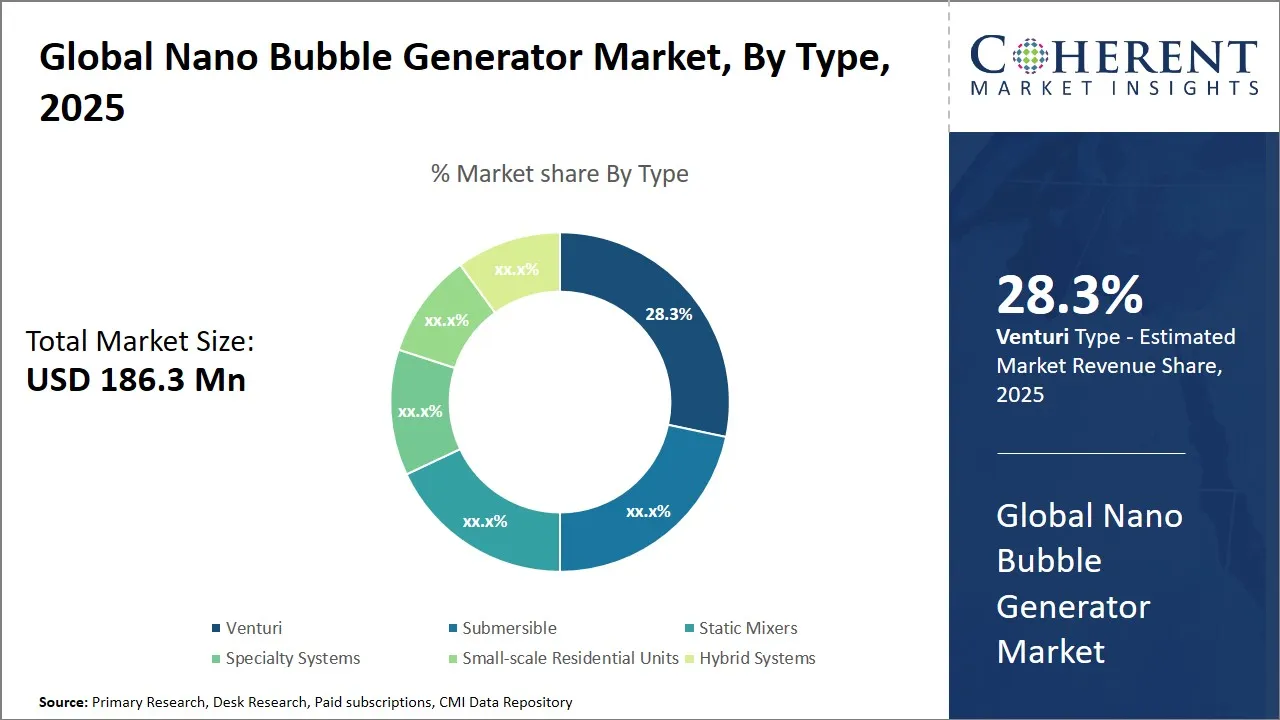
- The venturi segment lead the market holding an estimated share of 29.3 % in 2026.
- The aquaculture segment lead the market holding an estimated share of 31.3 % in 2026.
- Asia Pacific is estimated to lead the market with a share of 47.8 % in 2026.
- Latin America, holding an estimated share of 8.5 % in 2026, and it is projected to be the fastest growing region.
Market Overview
The market is seeing a rising demand for nano bubble generators in environmental applications such as wastewater treatment and aquaculture because of the need for sustainable and energy-efficient solutions. Additionally, advancements in nano bubble technology, including enhanced generation methods and integration with IoT, are creating new growth opportunities. The increasing awareness about the benefits of nano bubbles in improving oxygenation and reducing chemical usage adds to the widespread market adoption, positioning the sector for dynamic growth in the coming years.
Current Events and Its Impact
Current Events | Description and its Impact |
Geopolitical and Trade Developments |
|
Economic and Infrastructure Trends |
|
Recognition & Awards |
|
Segmental Insights
- Current Industry Events of 2026
- Market Size Estimation
- Regional Breakdown
- Competitive Landscape
- Customer Intelligence
- Segmental Analysis
- Pricing Analysis
- Key Market Drivers, Challenges & Future Trends
- Customized Insights Section
Global Nano Bubble Generator Market Insights, by Type – Venturi Segment Owing to its Superior Efficiency and Versatile Design
The venturi segment is projected to account for 29.3% share in 2026. Industries such as wastewater treatment and aquaculture benefit from the Venturi technology because of its capability to produce stable nano bubbles that improve oxygen transfer efficiency.
Another significant driver is the environmental advantage associated with Venturi nano bubble generators. They add to sustainability goals by improving oxygenation and accelerating pollutant breakdown without the need for chemical additives. In 2024, Cermaq Norway partnered with Moleaer to install Venturi-based nanobubble generators across several sea-pen sites to increase dissolved oxygen and suppress harmful bacteria during warm-water periods. Also, the compact design and scalability of Venturi generators make their deployment possible in both large-scale industrial operations as well as smaller setups like residential water treatment equipment.
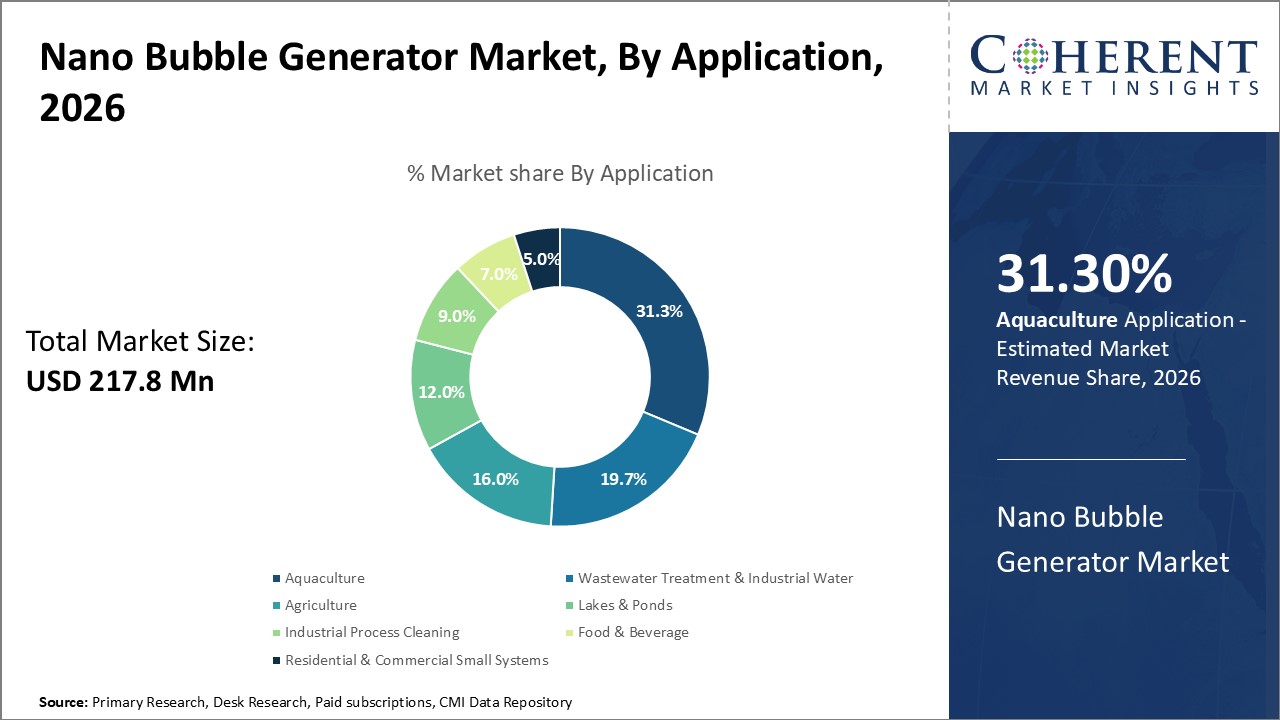
Global Nano Bubble Generator Market Insights, by Application – Aquaculture Segment Lead the Market Driven by Critical Oxygenation Needs and Sustainable Fish Farming Practices
The aquaculture segment is expected to capture 31.3% share in 2026. Aquaculture depends on good water quality conditions, especially dissolved oxygen levels, which are very important to the health, growth, and survival of aquatic organisms. Nanobubbles significantly enhance oxygen transfer rates compared to traditional aeration methods. Nano bubbles can stay suspended in water for long periods without rapid surface escape. Fish farms adopting nano bubble generators see reduced fish stress, lower disease incidence, and improved feed conversion ratios, all of which add to higher yields and profitability.
Impact of AI on the Nano Bubble Generator Market:
Artificial Intelligence (AI) is beginning to reshape the global nano-bubble generator market by enabling predictive control, real-time monitoring, and automated optimization of water treatment and aeration systems. AI-driven sensors can track parameters such as dissolved oxygen, pH, and bubble density, then adjust generator output to maintain suitable conditions. Companies are integrating AI analytics into their platforms to help operators remotely monitor performance, forecast maintenance needs, and prevent equipment downtime.
An example is Moleaer’s collaboration with Xylem to deploy Xylem’s AI-enabled water-management software with Moleaer’s nanobubble systems to optimize oxygen transfer and detect anomalies before failures occur.
Regional Insights
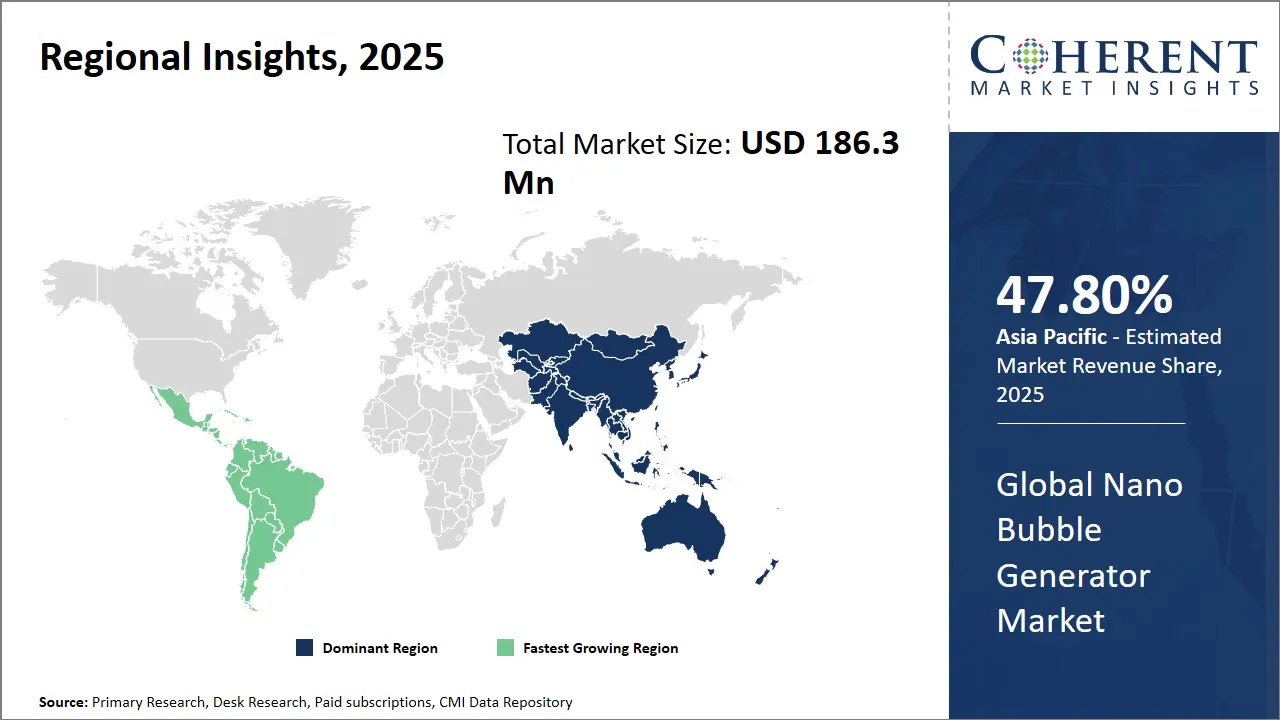
Asia Pacific Nano Bubble Generator Market Analysis and Trends
Asia Pacific region is projected to lead the market with a 47.8% share in 2026 because of fast industrialization, growing environmental concerns, and government initiatives aimed at improving water quality and resource management. Countries in this region are aggressively investing in modern water treatment infrastructure and precision agriculture, where nano bubble technology offers enhanced efficiency and sustainability. Emerging economies like China, India, South Korea, and Japan have witnessed surging demand due to expanding manufacturing ecosystems and urbanization.
Supportive policies, including subsidies for green technologies and environmental protection mandates, add to market adoption. Notable companies such as LG Electronics (South Korea), SPG Nano Bubble (Japan), and contemporary Chinese technology firms like Beijing Boneng Environmental Technology develop innovative solutions, adding to their industry footprint. The dynamic trade environment, with growing exports and technology collaborations, intensifies the market pace.
Latin America Nano Bubble Generator Market Analysis and Trends
Latin America, holding a share of 8.5% in 2026, is projected to be the fastest-growing regional market because of a combination of expanding aquaculture, rising environmental regulations, and focus on sustainable agriculture. Countries such as Chile, Brazil, Mexico, and Peru are leading adoption as governments and private investors upgrade water-treatment and fish-farming infrastructure to meet export-quality standards. Chile’s world-class salmon industry, for example, is deploying nanobubble generators to improve dissolved-oxygen levels and reduce disease outbreaks.
Government-backed clean-water initiatives—such as Brazil’s Programa Nacional de Saneamento Básico and Mexico’s nationwide wastewater-reuse mandates—are driving municipal utilities to retrofit plants with high-efficiency oxygenation systems. At the same time, regional startups and subsidiaries of global players are scaling operations; notable participants include Moleaer Latin America (Chile), AquaInnovar (Brazil), and OxigenaTech (Mexico), which are partnering with local fisheries and industrial parks.
Global Nano Bubble Generator Market Outlook for Key Countries
U.S. Nano Bubble Generator Market Analysis and Trends
The U.S. nano bubble generator market grows because of advanced research institutions and a strong application base in water treatment, healthcare, and agriculture. Leading companies like Eden Innovations and Azbil Corporation focus on innovative product development and pilot projects in different sectors. Government programs supporting water quality improvements, coupled with private sector investments, add to the demand for nano bubble technologies. U.S. manufacturers benefit from the use of IoT and AI for improved system monitoring.
China Nano Bubble Generator Market Analysis and Trends
China nano bubble generator market is expanding rapidly driven by environmental policies targeting water pollution and industrial waste management. Government incentives for clean technology adoption align with the country’s comprehensive plans for sustainable industrial growth. Local companies, including Beijing Boneng Environmental Technology, are actively developing customized solutions catering to large-scale industrial applications and municipal water treatment. Additionally, China’s manufacturing capability allows cost-effective production and scaling, enabling the country to emerge as both major consumer and exporter in the region.
Japan Nano Bubble Generator Market Analysis and Trends
Japan continues to lead in technological innovation, integrating nano bubble technology into advanced industrial and healthcare applications. Firms like SPG Nano Bubble and Mitsubishi Heavy Industries focus on precision-engineered systems with high reliability. The national emphasis on sustainable resource management and aging infrastructure modernization drive demand. Collaborative research efforts between academia and industry facilitate continuous innovation, maintaining Japan’s leadership in product quality and technical sophistication.
India Nano Bubble Generator Market Analysis and Trends
India is gaining momentum through increasing government initiatives targeting water scarcity and agricultural productivity. The deployment of nano bubble generators is encouraged to enhance irrigation efficiency, aquaculture, and wastewater treatment solutions. Growing awareness among private enterprises and public sector adoption characterize the market landscape. Indian startups and technology providers are innovating affordable systems tailored to local conditions, supported by government funding programs aimed at rural development and healthcare improvement.
Germany Nano Bubble Generator Market Analysis and Trends
Germany’s focus on environmental sustainability and industrial efficiency supports its nano bubble generator market. The country’s stringent regulations on emissions and water treatment incentivize companies to adopt cutting-edge technologies. Leading German manufacturers and system integrators collaborate closely with European research centers to develop applications in automotive, pharmaceutical, and food industries. The country benefits from a strong manufacturing base and a culture of engineering excellence, enabling seamless integration of nano bubble technology into existing industrial processes. Key players include Siemens and smaller specialized firms pushing for innovation in green technology integration.
Market Players, Key Development, and Competitive Intelligence
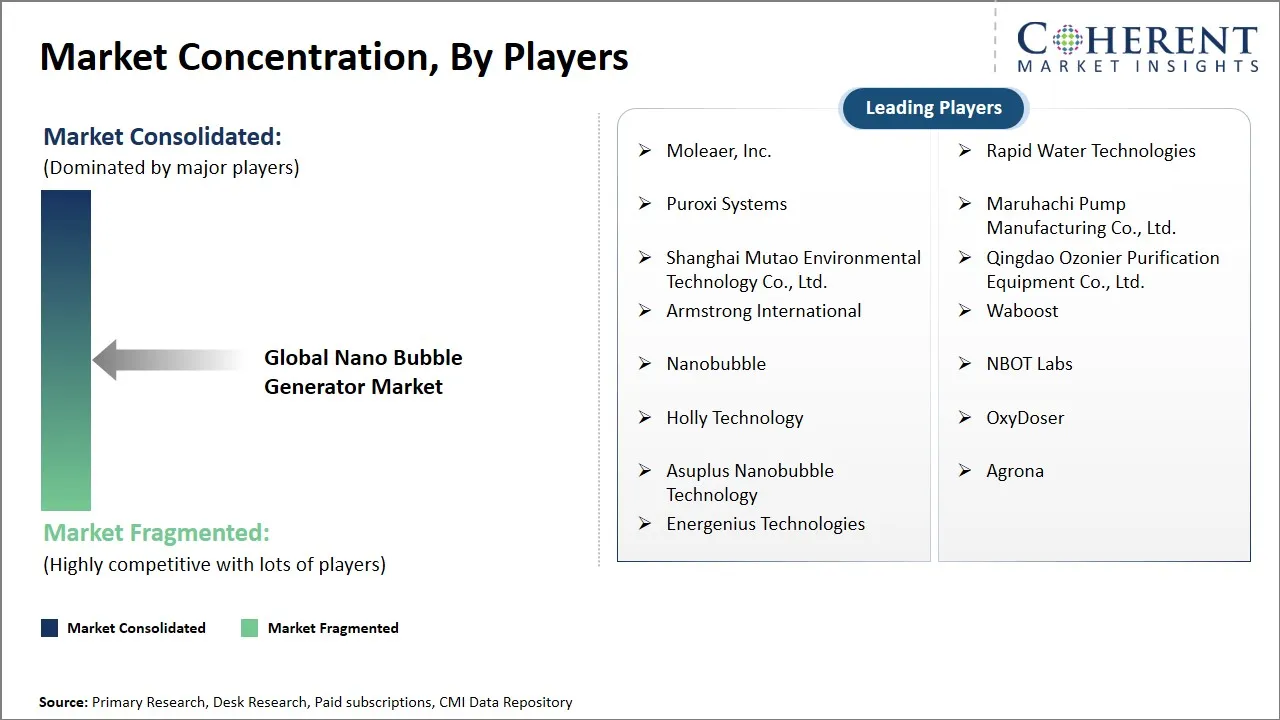
Key Developments
- In August 2025, Moleaer Inc., the global leader in nanobubble technology, today announces the global launch of Freya, its first fully submersible nanobubble system for aquaculture. Freya is designed to dramatically improve oxygen delivery, reduce costs, and enhance fish welfare.
- In January 2025, Moleaer Inc., the global leader in nanobubble technology, launched the Lake Rescue Kickstart Challenge, a competition aimed at revitalizing lakes and ponds in the Pacific Northwest and Northeast U.S. without the negative environmental and economic impacts of chemical treatments. The challenge addresses critical water body issues, including algal blooms and poor water clarity, and showcases the potential of nanobubble technology for sustainable aquatic restoration.
- In October 2024, Rapid Water Technologies introduced a new size to its collection of Nanobubble Generators, which naturally create nanobubbles as water flows through the device – and without the input of gas, electrical or added chemicals. With the addition of the RWT40, Rapid Water Technologies now offers seven models of its Nanobubble Generators, designed to handle water flow rates from 1 to 1150 GPM.
- In January 2024, Armstrong International, a global leader in efficient thermal energy solutions, announced the launch of its Armstrong Nanobubble Generator, a patent-pending technology developed specifically to address mineral deposition on pipework and critical equipment within industrial process and commercial/institutional hot water systems.
Top Strategies Followed by Nano Bubble Generator Market Players
- Established market leaders maintain their dominance primarily through substantial investments in research and development.
- On 4 September 2025, Moleaer partnered with Xylem and expanded its R&D program to integrate AI-driven water-quality analytics into its generators, enhancing oxygen transfer efficiency and predictive maintenance.
- Mid-level companies operating in the nano bubble generator market adopt a different set of strategies tailored towards balancing cost and quality to appeal to more price-sensitive consumers.
- Rapid Water Technologies Introduced a broader capacity range of generators (1–1,150 GPM) in 2024, designed for easy retrofitting and lower operating costs, making the technology affordable for municipal and industrial buyers with tight budgets.
- Small-scale players in the global nano bubble generator market differentiate themselves by focusing on niche applications and highly specialized features that cater to specific customer needs.
- Waboost (Slovenia) focuses on agriculture and aquaculture niches, launching six application-specific models (Fauna, Flora, Gea series) in August 2025 tailored to greenhouse irrigation and fish-farm oxygenation, differentiating itself through sector-specific performance.
Market Report Scope
Nano Bubble Generator Market Report Coverage
| Report Coverage | Details | ||
|---|---|---|---|
| Base Year: | 2025 | Market Size in 2026: | USD 217.8 Mn |
| Historical Data for: | 2020 To 2024 | Forecast Period: | 2026 To 2033 |
| Forecast Period 2026 to 2033 CAGR: | 16.9% | 2033 Value Projection: | USD 649.7 Mn |
| Geographies covered: |
| ||
| Segments covered: |
| ||
| Companies covered: | Moleaer, Inc., Rapid Water Technologies, Puroxi Systems, Maruhachi Pump Manufacturing Co., Ltd., Shanghai Mutao Environmental Technology Co., Ltd., Qingdao Ozonier Purification Equipment Co., Ltd., Armstrong International, Waboost, Nanobubble, NBOT Labs, Holly Technology, OxyDoser, Asuplus Nanobubble Technology, Agrona, and Energenius Technologies | ||
| Growth Drivers: |
| ||
| Restraints & Challenges: |
| ||
Market Dynamics
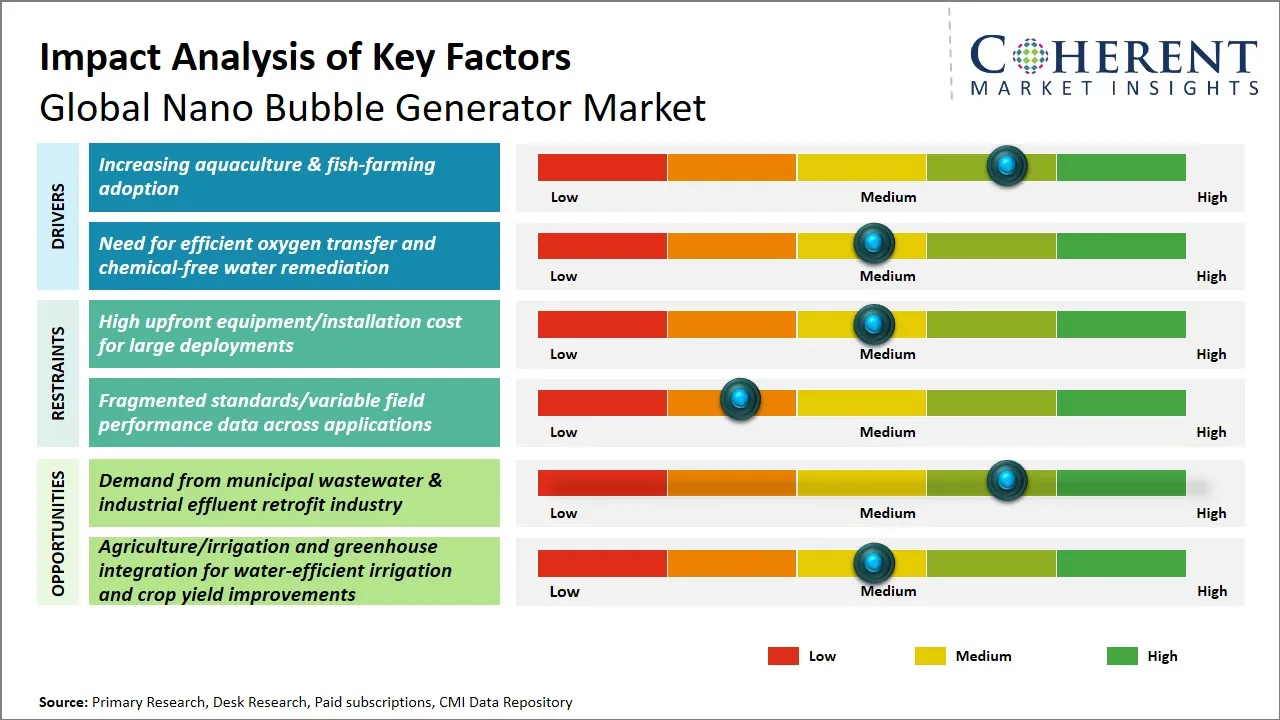
Global Nano Bubble Generator Market Driver - Increasing Aquaculture & Fish-Farming Adoption
The expanding adoption of aquaculture and fish-farming practices is significantly driving the demand for nano bubble generators, as these technologies offer substantial benefits in enhancing water quality and oxygen supply critical for healthy aquatic life. Nano bubble generators produce ultra-fine bubbles that improve dissolved oxygen levels in water more efficiently and sustainably compared to traditional aeration methods.
Furthermore, nano bubbles aid in reducing harmful bacteria and contaminants, promoting healthier environments in densely stocked aquaculture systems. As global seafood demand rises alongside depleting wild fish stocks, aquaculture is becoming increasingly vital, leading to greater investments in innovative water treatment solutions such as nano bubble generators.
Global Nano Bubble Generator Market Opportunity - Demand from the Municipal Wastewater and Industrial Effluent Retrofit Industry
Municipalities across the globe are under mounting pressure to enhance wastewater treatment processes due to stringent environmental regulations and the rising need for sustainable water management solutions. Nano bubble generators, known for their ability to improve oxygen transfer efficiency and promote advanced oxidation processes, offer a highly effective and energy-efficient alternative to conventional aeration technologies. This technological advantage presents an attractive retrofit solution for existing wastewater treatment plants, enabling them to upgrade performance without the need for extensive infrastructure overhaul.
Similarly, various industries, including chemical manufacturing, food processing, and textiles, are facing increased scrutiny over effluent discharge quality. The adoption of nano bubble technology facilitates superior treatment of industrial wastewater by accelerating degradation of contaminants and enabling better sludge reduction. The retrofit market is particularly promising as many older treatment facilities seek cost-effective means to comply with tightening discharge standards while minimizing operational downtime.
Analyst Opinion (Expert Opinion)
- Intensive fish and shrimp farming continues to anchor demand as producers seek higher stocking densities and lower mortality rates. Nanobubble generators deliver precise dissolved-oxygen control and pathogen suppression, making them a must-have for large commercial farms and hatcheries.
- Cities upgrading aging treatment plants are increasingly turning to nanobubble retrofits to meet stricter discharge and odor-control regulations. Utilities value the ability to boost aeration efficiency without large civil works, creating a robust pipeline of municipal projects.
- Greenhouse growers, hydroponic farms, and food-processing facilities are adopting nanobubble systems to enhance root oxygenation, extend shelf life, and reduce chemical sanitizers. Although smaller today, these end-users are expected to post the fastest percentage growth as precision agriculture and clean-label processing gain traction.
Speak to the analyst
Want personalized insights?
Take the findings above to one of our principal consultants, or have the report rebuilt around the segments, geographies and competitors you actually track.
Market Segmentation
- Type Insights (Revenue, USD Mn, 2021 - 2033)
- Venturi
- Submersible
- Static Mixers
- Specialty Systems
- Small-scale Residential Units
- Hybrid Systems
- Application Insights (Revenue, USD Mn, 2021 - 2033)
- Aquaculture
- Wastewater Treatment & Industrial Water
- Agriculture
- Lakes & Ponds
- Industrial Process Cleaning
- Food & Beverage
- Residential & Commercial Small Systems
- Regional Insights (Revenue, USD Mn, 2021 - 2033)
- North America
- U.S.
- Canada
- Latin America
- Brazil
- Argentina
- Mexico
- Rest of Latin America
- Europe
- Germany
- U.K.
- Spain
- France
- Italy
- Russia
- Rest of Europe
- Asia Pacific
- China
- India
- Japan
- Australia
- South Korea
- ASEAN
- Rest of Asia Pacific
- Middle East
- GCC Countries
- Israel
- Rest of Middle East
- Africa
- South Africa
- North Africa
- Central Africa
- North America
- Key Players Insights
- Moleaer, Inc.
- Rapid Water Technologies
- Puroxi Systems
- Maruhachi Pump Manufacturing Co., Ltd.
- Shanghai Mutao Environmental Technology Co., Ltd.
- Qingdao Ozonier Purification Equipment Co., Ltd.
- Armstrong International
- Waboost
- Nanobubble
- NBOT Labs
- Holly Technology
- OxyDoser
- Asuplus Nanobubble Technology
- Agrona
- Energenius Technologies
Sources
Primary Research Interviews
Stakeholders
- Aquaculture Farm Operators and Managers
- Municipal Wastewater Plant Supervisors and Process Engineers
- Industrial Effluent Treatment Contractors and System Integrators
- Agricultural Irrigation & Greenhouse Managers (hydroponic farms, vertical farms)
- Nanobubble Equipment Manufacturers and Suppliers
- Environmental Engineering Consultants specializing in water reuse and ecological restoration
Databases
- World Aquaculture Society Data Portal
- U.S. Environmental Protection Agency (EPA) Water Data
- Asia-Pacific Aquaculture Production Statistics (APAPS)
- Global Water Intelligence (GWI) Database
- OECD Water and Sanitation Statistics
Magazines
- Water & Wastewater International (WWi)
- Aquaculture North America
- Hydroponics & Controlled Environment Agriculture Magazine
- Environmental Science & Technology News
Journals
- Journal of Water Process Engineering
- Aquaculture Engineering Journal
- Environmental Technology & Innovation
- Journal of Agricultural and Food Chemistry
Newspapers
- The Guardian (UK) – Environment Section
- The Economic Times (India) – CleanTech & Water Management
- Nikkei Asia – Green Technology
- The New York Times – Climate & Environment
Associations
- International Water Association (IWA)
- World Aquaculture Society (WAS)
- American Water Works Association (AWWA)
- Asia Pacific Water & Wastewater Association (APWWA)
- European Aquaculture Society (EAS)
Public Domain Sources
- U.S. Geological Survey (USGS) Water Resources
- EUROSTAT – Water Quality and Usage Data
- United Nations Food and Agriculture Organization (FAO) – Fisheries & Aquaculture Statistics
- World Bank – Water and Sanitation Indicators
- ResearchGate – Open-access papers on nanobubble technology
Proprietary Elements
- CMI Data Analytics Tool, Proprietary CMI Existing Repository of information for last 8 years
Get access to 250+ pages report
Every segment, forecast, competitor profile and data table behind the analysis above — available for instant download.
- ESOMAR Member
- ISO 9001:2015 Certified
- D-U-N-S Registered
- GDPR & CCPA Compliant
Missing comfort of reading report in your local language? Find your preferred language:
Transform your Strategy with Exclusive Trending Reports
Frequently Asked Questions
The global nano bubble generator market is estimated to be valued at USD 217.8 million in 2026 and is expected to reach USD 649.7 million by 2033.
The CAGR of the global nano bubble generator market is projected to be 16.9% from 2026 to 2033.
Increasing aquaculture & fish-farming adoption and need for efficient oxygen transfer and chemical-free water remediation are the major factors driving the growth of the global nano bubble generator market.
High upfront equipment/installation cost for large deployments and fragmented standards/variable field performance data across applications are the major factors hampering the growth of the global nano bubble generator market.
In terms of type, the venturi segment is estimated to dominate the market revenue share in 2026.
It is a device that produces ultra-fine gas bubbles (<200 nm) in liquids to enhance oxygen transfer, cleaning, or chemical reactions.
Yes, AI-enabled monitoring and predictive maintenance are increasingly integrated for real-time optimization.