

Global Neurosurgery Market Size and Forecast – 2026 to 2033
According to Coherent Market Insights, the global neurosurgery market is estimated to be valued at USD 4.10 Bn in 2026 and is expected to reach USD 5.69 Bn by 2033, exhibiting a compound annual growth rate (CAGR) of 4.8% from 2026 to 2033. This substantial growth is driven by the increasing prevalence of neurological disorders, advancements in surgical technologies, and rising demand for minimally invasive procedures, which collectively contribute to expanding the market size significantly over the forecast period.
Key Takeaways of the Neurosurgery Market
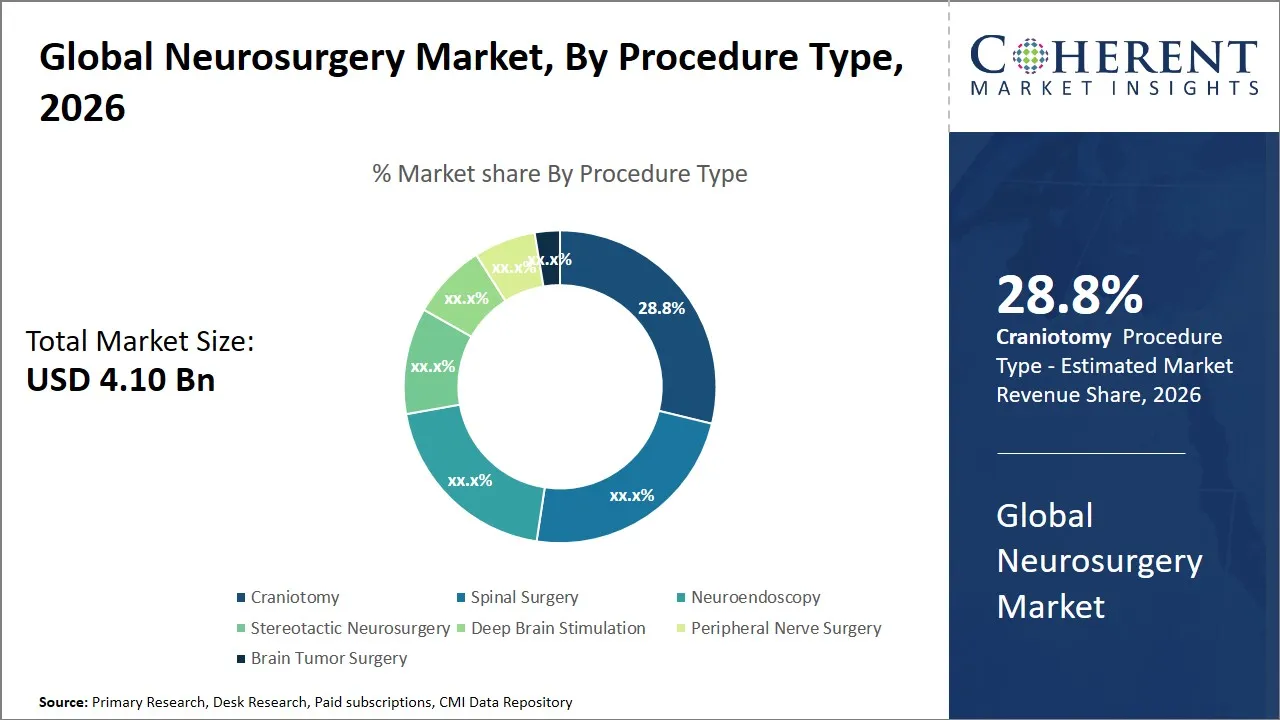
- Craniotomy segment is expected to lead the global neurosurgery market capturing 28.80 % share in 2026.
- Brain tumors segment is estimated to represent 35.6 % of the global neurosurgery market share in 2026.
- Hospitals segment is projected to dominate with 32.5 % of the market share in 2026.
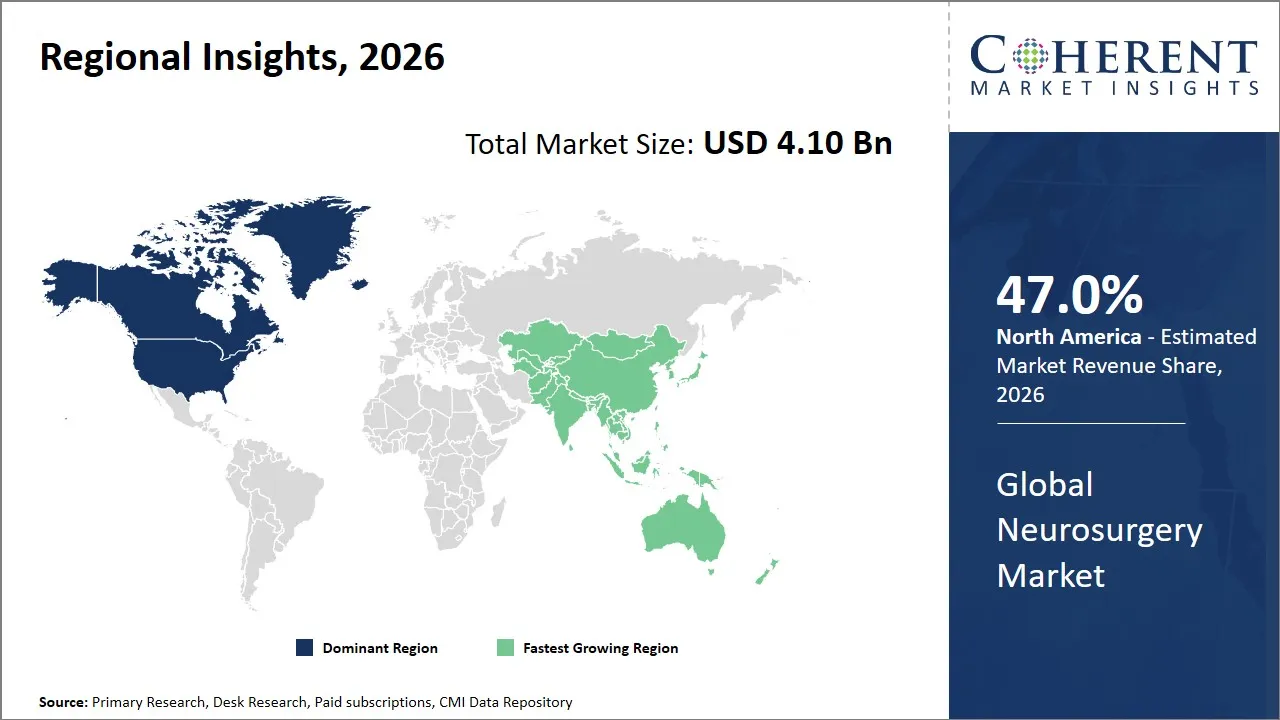
- North America is expected to lead the market, holding a share of 47.00 % in 2026. Asia Pacific is anticipated to be the fastest-growing region, with 28.40% share in 2026.
Market Overview
- The neurosurgery market is expanding due to the growing number of neurological disorders and the increasing demand for procedures related to brain tumors, spinal cord injuries, and stroke.
- Minimally invasive surgery, robotic assistance, and neuronavigation systems are improving surgical precision, reducing recovery times, and enhancing overall patient outcomes, driving the market forward.
- The aging population and the higher occurrence of neurodegenerative diseases like Parkinson’s are contributing to a rise in demand for neurosurgical treatments globally.
- Emerging markets, especially in Asia Pacific and Latin America, offer growth opportunities as these regions enhance their healthcare infrastructure and see increasing demand for advanced neurosurgical solutions.
Current Events and Its Impact
Current Events | Description and its Impact |
FDA Approval of Robotic-Assisted Neurosurgery System |
|
Launch of Minimally Invasive Spinal Surgery Technologies |
|
Segmental Insights
- Current Industry Events of 2026
- Market Size Estimation
- Regional Breakdown
- Competitive Landscape
- Customer Intelligence
- Segmental Analysis
- Pricing Analysis
- Key Market Drivers, Challenges & Future Trends
- Customized Insights Section
Why Does the Craniotomy Segment Dominate the Global Neurosurgery Market in 2026?
The craniotomy segment is expected to hold the largest share of 28.80% in 2026, owing to its versatile application in a wide array of neurological conditions and the intricate nature of surgeries requiring direct access to the brain. Craniotomy, which involves temporarily removing a portion of the skull to access the brain, is fundamental for treating critical disorders such as brain tumors, traumatic brain injuries, hemorrhages, and vascular abnormalities. The procedure’s broad applicability across diverse neurological pathologies drives its dominance in the market.
Advancements in surgical technology, including improved microsurgical instruments, neuronavigation systems, and intraoperative imaging, have enhanced the precision and safety of craniotomy procedures. These technological improvements have expanded the patient population eligible for craniotomies, encouraging neurosurgeons to adopt this procedure more frequently. Additionally, the rise in brain tumor incidence and traumatic brain injuries globally has necessitated more craniotomies, as this procedure allows direct access for tumor resection or hematoma evacuation.
For instance, on January 16, 2026 a multidisciplinary team at PGIMER Chandigarh has successfully performed a minimally invasive endoscopic procedure to remove a 7 cm skull base meningioma in a two-year-old child. The procedure, which avoided the need for an open craniotomy, is part of a growing trend toward less invasive surgical approaches in neurosurgery. This innovative technique not only reduced trauma but also allowed for the complete removal of the tumor, showcasing advancements in neurosurgical care and reflecting the evolving treatment preferences in the field. The successful procedure highlights the shift towards more precise, patient-friendly solutions in neurosurgical interventions.
(Source - https://test.uniindia.com/news/north/)
Why Does the Brain Tumors Segment Dominate the Global Neurosurgery Market in 2026?
The brain tumors segment is expected to hold the largest share of 35.6% in 2026, primarily fueled by the rising incidence of brain neoplasms worldwide and the considerable advancements in neuroimaging and diagnostic techniques facilitating early detection. Brain tumors, whether primary or metastatic, require intricate surgical intervention to improve patient prognosis and quality of life, making this a critical focus area within neurosurgery.
The increasing geriatric population is one of the primary factors leading to higher brain tumor cases, as age is a significant risk factor for various tumors. Moreover, growing exposure to environmental risks, lifestyle changes, and genetic predispositions also play contributory roles. The advances in magnetic resonance imaging (MRI), computed tomography (CT), and functional imaging techniques have enabled clinicians to detect tumors at earlier, more operable stages. Early diagnosis combined with a multidisciplinary approach involving surgery, radiotherapy, and chemotherapy underscores the importance of neurosurgical procedures in brain tumor management.
Surgical techniques for brain tumors have evolved dramatically, particularly with the introduction of sophisticated microsurgical tools, fluorescence-guided surgery, and minimally invasive endoscopic methods that enhance safety while improving resection accuracy. The development of targeted therapies and personalized medicine also emphasizes the role of surgery to obtain biopsy samples and control tumor burden.
Hospital Leads the Neurosurgery Market
The hospital segment is expected to capture the highest share of 32.5% in 2026, driven by the increasing incidences of neurological disorders, advancements in surgical technologies, and the growing need for specialized treatments in hospitals. The neurosurgery market includes a wide range of procedures, including spinal surgeries, brain surgeries, and minimally invasive techniques for treating conditions like brain tumors, spinal cord injuries, and neurovascular diseases. The adoption of technologies like robotic surgery systems (e.g., the Mazor X Stealth Edition) and endoscopic techniques is transforming the way neurosurgical procedures are performed, leading to shorter recovery times and better outcomes.
Hospitals are increasingly adopting advanced imaging systems such as MRI and CT scans, along with intraoperative monitoring, which enhances the precision and safety of neurosurgical procedures. With the increasing focus on healthcare quality and patient outcomes, more funds are being allocated to advanced neurosurgery departments in hospitals, leading to growth in this market.
Outcome Driven Technology Adoption for the Neurosurgery Market
- In the global neurosurgery market, the need for better patient outcomes and lower surgical risks is driving the use of new technologies. Neurosurgeons and healthcare institutions are highly happy with robot-assisted surgery systems and neuronavigation tools that make surgery more accurate and speed up recovery times. For instance, using robots in brain and spinal procedures has made operations much more accurate and efficient, which means patients recover faster and have fewer problems. But there are worries about how expensive these new technologies are and how hard it is to learn how to use them in hospitals that already have them, especially in underdeveloped areas.
- Even while new technologies have worked well, there are still unmet demands. For example, they aren't affordable and patients and healthcare settings need solutions that can be tailored to their specific needs. Because of economic problems, smaller hospitals and clinics sometimes have trouble getting high-end neurosurgical gear. To solve these problems, manufacturers might work on making modular systems that are cheap and can be used in many healthcare settings. Also, making the training process easier and providing support in the area could help boost adoption rates and market penetration, especially in areas that don't get enough of it.
Regional Insights
North America Neurosurgery Market Analysis and Trends
The North America region is projected to lead the market with a 47.00% share in 2026, driven by a well-established healthcare infrastructure, advanced technological adoption, and significant R&D investments. The region boasts a well-established ecosystem comprising of the best hospitals, the best companies in medical equipment and the best neurosurgeons. Government policies in the U.S. and Canada place much emphasis on innovation, ensuring that there is access to money, reduced complexity in regulations, and that there is a reimbursement structure that ensures that individuals can more readily access new neurosurgical technologies.
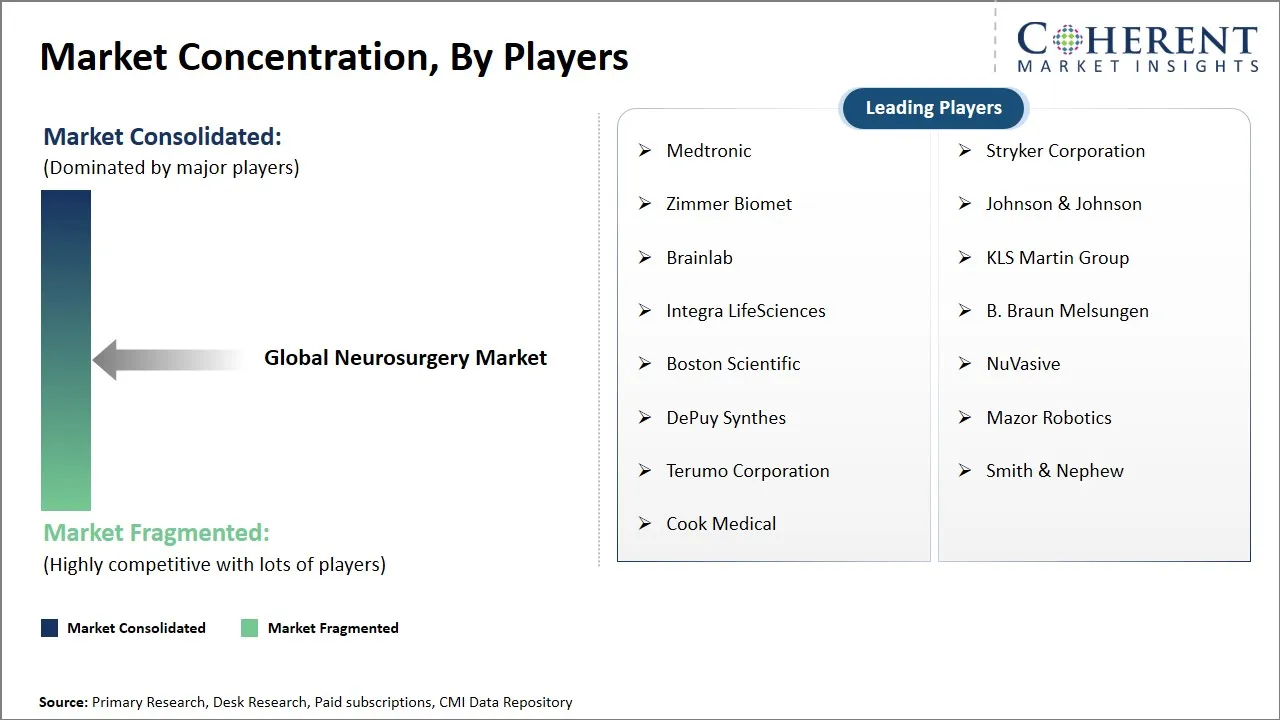
The number of companies operating within the industry is high and such giants as Medtronic, Stryker Corporation, and Johnson & Johnson are leading the pack in building new neurosurgery devices and robot surgery systems. It is also easy to import and export high tech surgical equipment in North America through dynamic trade connections and this keeps the high-tech market environment moving.
Asia Pacific Neurosurgery Market Analysis and Trends
The Asia Pacific region is expected to exhibit the fastest growth in the market contributing 28.40% share in 2026, due to rising healthcare expenditure, improving healthcare infrastructure, and increasing awareness about neurological disorders. Some countries such as China, India, Japan, and South Korea are investing heavily in modernization of health care and neurosurgeon training which increases surgical potential. Positive government policies, including the Healthy China 2030 initiative and national policies of India supporting the growth of neurosurgical services and technology use, enhance the growth of neurosurgical services and technology uptake.
This is further enhanced by a rising middle-income level and more engagement of the private sector which is increasing demand for sophisticated therapies and devices. Such prominent firms as Siemens Healthineers, GE Healthcare, and the Japanese Olympus Corporation are increasing their presence in this region by means of collaboration and regionalized innovations. The trade terms are also conducive and most international actors have their manufacturing and distribution centers in Asia Pacific, which maximizes the cost and responsiveness.
Global Neurosurgery Market Outlook for Key Countries
What are the Current Trends Shaping the U.S. Neurosurgery Market?
The U.S. is still the biggest market in the neurosurgery industry because it has one of the largest healthcare systems, advanced research centers, and high awareness of the diseases among the patients. There is a big investment in R&D by major companies such as Medtronic and Stryker Corporation in this regard and this has led to innovation in minimally invasive surgery and robotic-assisted systems. The FDA has good regulatory backing and payer systems that ensure new neurosurgical technologies can be introduced and adopted very fast, keeping its position at the fore of the country.
How is China Helping in the Growth of the Neurosurgery Market?
China has a significant presence in the neurosurgery market because its healthcare sector is improving and its government is enacting regulations to enhance neurological care. There are more advanced neurosurgical devices that are more accessible now due to the fact that more tertiary care hospitals are currently being constructed and more funds are being invested in the new treatments. Firms such as Siemens Healthineers or Johnson and Johnson collaborate with the local companies to ensure that their products are relevant to the requirements of every region and this facilitates them to develop. The fact that government pays attention to the development of healthcare facilities and training contributes to the expansion of the market.
Key Drivers for the Growth of the Germany Neurosurgery Market
In terms of its focus on medical technology and overall healthcare financing schemes, Germany remains a leader in the European neurosurgery market. Other companies in Germany like Brainlab and Carl Zeiss Meditec are a major force in terms of innovation in imaging-guided neurosurgery and surgical navigation systems. The strict regulatory environment guarantees the quality of the products in the country, whereas the possible extensive use of the neurosurgical innovations is provided by both the public and the private healthcare systems.
India Neurosurgery Market Trends
The neurosurgery market in India enjoys rising access to healthcare, development of medical education, and mortality rates of neurological diseases. The government’s efforts on the improvement of rural health and the development of infrastructures have boosted the services of neurosurgery in the nation. MNCs such as Olympus and Medtronic are growing based on partnership with local healthcare providers and product differentiation to support the needs of various patients. The increased privatization of healthcare is also boosting the penetration of the market in urban and semi-urban regions.
End User Feedback and Unmet Needs in the Global Neurosurgery Market
- In the global neurosurgery market, end users, such as neurosurgeons, hospitals, and healthcare providers, are always satisfied with surgical technologies that enhance patient recovery and surgical precision. As an example, neuronavigation systems and robot-assisted surgery have been lauded as one of the major improvements in the accuracy of operations, resulting in improved outcomes in clinical care and reducing the recovery process. European hospital recorded 25% cases of post-surgical complications after the implementation of robotic system to carry out spine surgeries. Nevertheless, the excessive cost and the sophisticated nature of the integration of these technologies into the current healthcare systems are also mentioned by the users, especially in the developing economies where the resources tend to be insufficient.
- The unmet market needs are mostly affordability, customization, and local support. Smaller healthcare sites cannot afford the expensive neurosurgical equipment, which in many cases does not suit the needs of specific patients, and the effectiveness of the given solutions cannot be maximized. Also, training and continuous technical support are also of high obstacle to complete use of technology. Closing these gaps through developing less expensive, modular systems that are simpler to fit in the current practice may open new opportunities in new markets. The customized solutions and easier training would improve adoption rates, better patient outcomes, and increase loyalty among the healthcare providers.
Market Players, Key Developments, and Competitive Intelligence
Key Developments
- In March 2025, Brain Navi Biotechnology signed a strategic alliance with BenQ Medical Technology Corporation to introduce and commercialize NaoTrac of Brain Navi neurosurgical navigation robot in the Chinese market. The innovative NaoTrac navigation system developed by Brain Navi will make use of artificial intelligence (AI) and will be critical in improving patient outcomes in neurosurgery.
- In March 2025, another novel form of Hubble AV system was presented by Viseon in neurosurgery. The Hubble AV is an innovative device that combines both aspiration and illumination with enhanced 4K digital visualization (4K-ADV) in one sterile, single-use device that is redefining the methods of inspecting the anatomy and operating surgically.
- In August 2024, RebrAIn, a precision neuro-surgery platform company, received a second USFDA 510(k) clearance of its OptimMRI software, which has a new machine learning model to aid in targeting the infero-lateral portion of the VIM in its lesioning procedures of MRgFUS and Radiosurgery. RebrAIn medical device (software) is a future medical device that aims to transform the neurosurgical target planning process by integrating complex AI algorithms, trained under clinical data, and MRI scans to deliver neurosurgeons with the best possible targets to lesion and place electrodes.
Top Strategies Followed by Global Neurosurgery Market Players
Player Type | Strategic Focus | Examples |
Established Market Leaders | Established companies in the neurosurgery market dominate through heavy R&D investments to develop advanced products like neuronavigation systems, neurostimulators, and minimally invasive tools. They form strategic partnerships with OEMs to enhance product offerings and strengthen their competitive edge. | Medtronic is a leader in the neurosurgery market, investing in neuronavigation systems and robotic-assisted surgeries. Their global expansion efforts in Asia Pacific have increased access to advanced neurosurgical technologies, meeting rising demand in emerging markets. |
Mid-Level Players | Mid-level players in the neurosurgery market focus on providing cost-effective, reliable solutions for price-sensitive hospitals in developing regions. By optimizing manufacturing processes and using affordable materials, they offer a balance between premium products and basic solutions. These companies often partner with larger firms to access advanced technologies and expand into new regions. | Stryker, a mid-sized player, has focused on affordable neurostimulators and minimally invasive surgery tools. Through strategic partnerships, they have expanded their reach into emerging markets in Asia Pacific while maintaining high product standards. |
Small-Scale Players | Small-scale players in the neurosurgery market focus on specialized products and innovative features that larger companies may overlook. By leveraging AI, robotics, and miniaturized tools, they rapidly innovate and address specific clinical needs. These companies form local alliances with startups and research institutions to expand market presence and gain trust in targeted regions. | Tendyne Technologies, a small player in the heart valve segment, also focuses on miniaturized implants and wireless neurostimulation. Their collaborations with local manufacturers in Asia Pacific help them meet the growing demand for affordable neurosurgical solutions. |
Market Report Scope
Neurosurgery Market Report Coverage
| Report Coverage | Details | ||
|---|---|---|---|
| Base Year: | 2025 | Market Size in 2026: | USD 4.10 Bn |
| Historical Data for: | 2020 To 2024 | Forecast Period: | 2026 To 2033 |
| Forecast Period 2026 to 2033 CAGR: | 4.8% | 2033 Value Projection: | USD 5.69 Bn |
| Geographies covered: |
| ||
| Segments covered: |
| ||
| Companies covered: | Medtronic, Stryker Corporation, Zimmer Biomet, Johnson & Johnson, Brainlab, KLS Martin Group, Integra LifeSciences, B. Braun Melsungen, Boston Scientific, NuVasive, DePuy Synthes, Mazor Robotics, Terumo Corporation, Smith & Nephew, and Cook Medical | ||
| Growth Drivers: |
| ||
| Restraints & Challenges: |
| ||
Market Dynamics
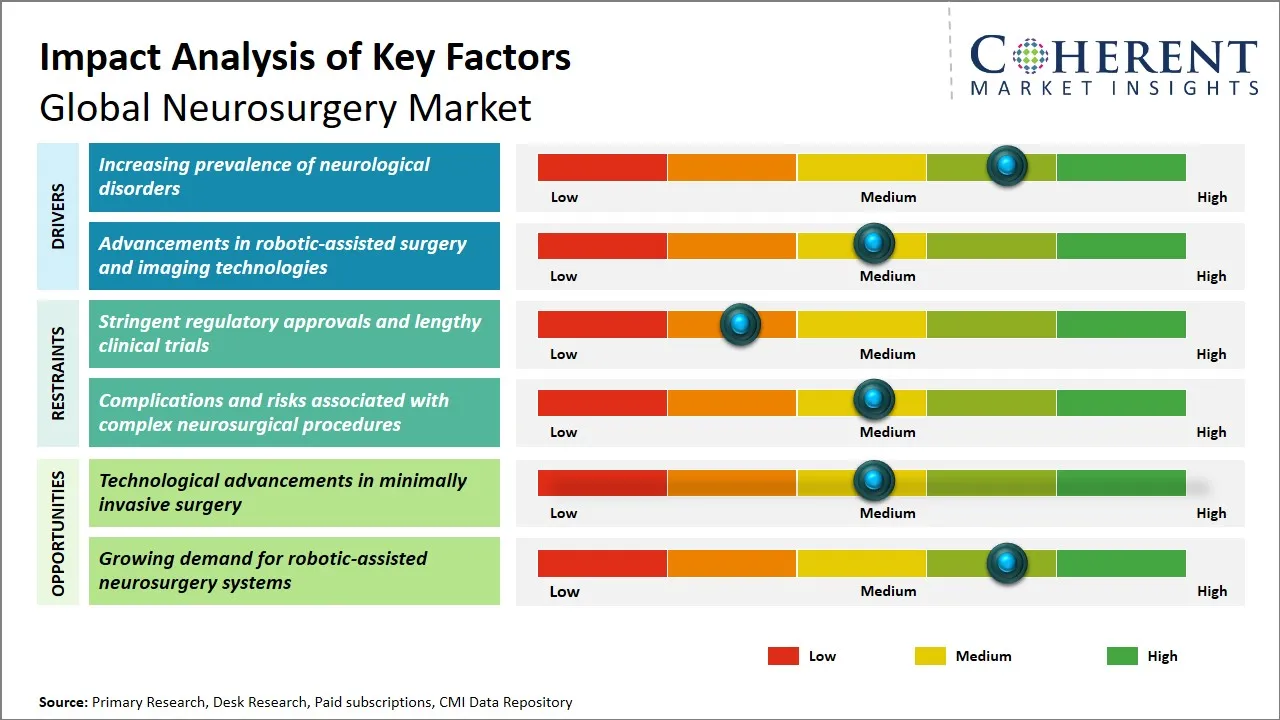
Neurosurgery Market Driver - Increasing Prevalence of Neurological Disorders
An increase in the number of neurological diseases like brain tumors, epilepsy as well as Parkinson disease, Alzheimer and traumatic brain injuries is one of the major causes of the growth in the global neurosurgery market. With the world growing older and the lifestyle habits that have ended up being more sedentary and unhealthier, the occurrence of neurodegenerative diseases is on the rise and requires more complex surgical procedures.
Also, the development of better diagnostic technologies allows detecting complicated neurological conditions earlier and more precisely, which increases the number of patients who can undergo neurosurgical operations. The rising frequency of stroke and spinal conditions is an additional pressure to the need as they entail in many cases complex surgical intervention in order to achieve the best clinical results.
In addition, the increase in patient flow to neurosurgical treatment has been aided by the increased awareness of the issues of neurological health and the improved availability of healthcare services in the developing regions. Such an accrual in cases of neurological disorders is a direct driver of the necessity of new neurosurgical solutions and an increased market space.
For instance, neurological and neurodevelopmental conditions continue to place a significant burden on global health, with approximately 70% of this burden concentrated in low- and middle-income countries. These conditions are now the leading cause of disability-adjusted life years (DALYs), accounting for an alarming 9 million deaths annually. Addressing this issue requires urgent focus on increased healthcare access, early interventions, and global research efforts to alleviate the growing impact of neurological diseases, especially in underserved regions.
(Source: https://www.healthdata.org/news-events/newsroom/news-releases/)
Neurosurgery Market Opportunity - Technological Advancements in Minimally Invasive Neurosurgery
The neurosurgery market in the world is about to improve tremendously due to the technological advancements in the field of minimally invasive surgery. The innovations are transforming the manner in which neurosurgical operations are done, which makes them more precise, shorter in time and cause less trauma to the tissues around the region of operation. The introduction of minimally invasive neurosurgery, enhanced by the latest technology like high-definition endoscopes, neuronavigation tools, and robotic-assisted systems enables the surgeon to be more precise and safer when accessing the deep-seated brain and spinal pathologies.
These technologies can not only enhance patient outcomes but also allow shortening hospitalization and reducing the recovery time, making neurosurgical interventions more efficient and appealing in general. Besides that, the combination of real-time imaging and augmented reality in the process of surgery allows the surgeons to see the complex neural structures in 3D, which minimizes the possibility of the development of complications and increases the accuracy of the surgery. The increasing rates of neurological disorders, along with the increasing patient preference towards a treatment choice that requires minimal impact on the source, have only served to increase the demand of the advanced solutions.
For instance, robotic systems integrated with neuronavigation—such as those in use at Loma Linda University Health—are now important tools in neurosurgery, improving accuracy and expanding the role of minimally invasive procedures in both brain and spine surgery.
(Source- https://news.llu.edu/health-wellness)
Analyst Opinion (Expert Opinion)
- Technological advancements in the market of neurosurgery include robotic-assisted surgery, neuronavigation, and minimally invasive surgery, enhancing the precision of surgery and patient outcomes. Increasing market is further fueled by high demand for these high-level treatments in brain tumors, spinal cord injury and neurodegenerative diseases. There is also regulatory assistance of innovative devices that is assisting with the simplification of approval procedures. Nonetheless, the market is still limited by several challenges such as the high cost of treatment, complicated regulatory conditions, and the inability to access the emerging markets. Firms operating in this niche will have to struggle to break these barriers to continue growing.
- Emerging opportunities are the development of the minimally invasive neurosurgical market and the exploration of the Latin American and Asian Pacific growing healthcare infrastructure. Consistent conferences, including European Association of Neurosurgical Societies (EANS) Annual Meeting and the World Congress of Neurosurgery (WCN), have enabled sharing of knowledge, policy deliberation, and demonstrations of new technologies in surgery. Companies such as Medtronic and Stryker are leading the way towards innovations in the area of neurostimulated devices and surgery of the spine, and their partnerships with the hospitals and academic institutions are framing the future of neurosurgery. The initiatives are contributing to the clinical needs that were not met and innovation in the field.
Speak to the analyst
Want personalized insights?
Take the findings above to one of our principal consultants, or have the report rebuilt around the segments, geographies and competitors you actually track.
Market Segmentation
- Procedure Type Insights (Revenue, USD Bn, 2021 - 2033)
- Craniotomy
- Spinal Surgery
- Neuroendoscopy
- Stereotactic Neurosurgery
- Deep Brain Stimulation
- Peripheral Nerve Surgery
- Brain Tumor Surgery
- Application Insights (Revenue, USD Bn, 2021 - 2033)
- Brain Tumors
- Spinal Disorders
- Neurovascular Disorders
- Traumatic Brain Injuries
- Degenerative Brain Diseases
- Epilepsy
- Parkinson’s Disease
- Hydrocephalus
- Other Neurological Disorder
- End User Insights (Revenue, USD Bn, 2021 - 2033)
- Hospitals
- Ambulatory Surgical Centers
- Neurosurgery Clinics
- Research Institutes
- Rehabilitation Centers
- Technology Insights (Revenue, USD Bn, 2021 - 2033)
- Minimally Invasive Neurosurgery
- Robotic-Assisted Surgery
- Image-Guided Surgery
- Computer-Assisted Surgery
- Electrophysiological Monitoring
- Device Type Insights (Revenue, USD Bn, 2021 - 2033)
- Surgical Robotics
- Navigation Systems
- Electrosurgical Units
- Endoscopes
- Monitoring Equipment
- Patient Demographics Insights (Revenue, USD Bn, 2021 - 2033)
- Adult
- Pediatric
- Geriatric
- Regional Insights (Revenue, USD Bn, 2021 - 2033)
- North America
- U.S.
- Canada
- Latin America
- Brazil
- Argentina
- Mexico
- Rest of Latin America
- Europe
- Germany
- U.K.
- Spain
- France
- Italy
- Russia
- Rest of Europe
- Asia Pacific
- China
- India
- Japan
- Australia
- South Korea
- ASEAN
- Rest of Asia Pacific
- Middle East
- GCC Countries
- Israel
- Rest of Middle East
- Africa
- South Africa
- North Africa
- Central Africa
- North America
- Key Players Insights
- Medtronic
- Stryker Corporation
- Zimmer Biomet
- Johnson & Johnson
- Brainlab
- KLS Martin Group
- Integra LifeSciences
- Braun Melsungen
- Boston Scientific
- NuVasive
- DePuy Synthes
- Mazor Robotics
- Terumo Corporation
- Smith & Nephew
- Cook Medical
Sources
Primary Research Interviews
Industry Stakeholders
- Neurosurgeons
- Neurosurgery equipment manufacturers
- Healthcare providers and hospitals
- Medical device distributors
- Original Equipment Manufacturers (OEMs)
- Health insurance providers
End Users
- Patients undergoing neurosurgical treatments
- Neurosurgeons and surgical teams
- Hospitals and surgical centers
- Research institutions and academic organizations
- Health insurance companies
- Clinical research organizations
Government and International Databases
- U.S. Food and Drug Administration (FDA)
- European Medicines Agency (EMA)
- World Health Organization (WHO)
- National Institutes of Health (NIH)
- Centers for Disease Control and Prevention (CDC)
- National Institute for Health and Care Excellence (NICE)
Trade Publications
- Journal of Neurosurgery
- Spine Journal
- Medical Device Network
- Neurotechnology Journal
- Journal of Medical Devices
- Surgical Neurology International
Academic Journals
- The Lancet Neurology
- Journal of Neurosurgery
- Journal of Clinical Neuroscience
- NeuroImage
- Brain Research
- Journal of Neuroscience
Reputable Newspapers
- The New York Times
- BBC News
- Reuters
- The Guardian
- The Wall Street Journal
- Financial Times
Industry Associations
- World Federation of Neurosurgical Societies (WFNS)
- American Association of Neurological Surgeons (AANS)
- European Association of Neurosurgical Societies (EANS)
- Society of Neurological Surgeons (SNS)
- International Neurosurgical Society (INS)
- American Brain Tumor Association (ABTA)
Public Domain Resources
- ClinicalTrials.gov
- Google Scholar
- Cochrane Library
- National Institutes of Health (NIH) Public Access
- WIPO Patentscope
Proprietary Elements
- CMI Data Analytics Tool: Proprietary analytics tool to analyze real-time market trends, consumer behavior, and technology adoption in market
- Proprietary CMI Existing Repository of Information for Last 8 Years
Get access to 250+ pages report
Every segment, forecast, competitor profile and data table behind the analysis above — available for instant download.
- ESOMAR Member
- ISO 9001:2015 Certified
- D-U-N-S Registered
- GDPR & CCPA Compliant
Missing comfort of reading report in your local language? Find your preferred language:
Transform your Strategy with Exclusive Trending Reports
Frequently Asked Questions
The shift toward minimally invasive approaches is driven by improved patient outcomes, shorter recovery times, and reduced procedural risks, making it a preferred option in both brain and spine surgeries.
High costs of advanced surgical systems and limited access to trained specialists in developing regions are major barriers, slowing adoption despite rising demand for neurological treatments.
The global neurosurgery market is estimated to be valued at USD 4.10 billion in 2026 and is expected to reach USD 5.69 billion by 2033.
The CAGR of global neurosurgery market is projected to be 4.8% from 2026 to 2033.
Increasing prevalence of neurological disorders and advancements in robotic-assisted surgery and imaging technologies are the major factors driving the growth of the global neurosurgery market.
Stringent regulatory approvals and lengthy clinical trials and complications and risks associated with complex neurosurgical procedures are the major factors hampering the growth of the global neurosurgery market.
In terms of procedure type, craniotomy is estimated to dominate the market revenue share in 2026.