

Wavefront Aberrometers Market Size and Forecast — 2026-2033
The Global Wavefront Aberrometers Market size is estimated to be valued at USD 377.8 million in 2026 and is expected to reach USD 652 million by 2033, exhibiting a compound annual growth rate (CAGR) of 9.5% from 2026 to 2033.
Overview
Wavefront aberrometers are optical diagnostic instruments that measure imperfections in the eye’s refractive system to guide customized vision correction. Using principles of Hartmann–Shack wavefront sensing or ray tracing, these devices map aberrations across the corneal and lens surfaces to quantify higher-order distortions that traditional refraction cannot detect. Modern devices incorporate high-resolution sensors, automated alignment, and integrated software for 3D wavefront reconstruction. They are essential in refractive surgery planning, contact lens fitting, and advanced ophthalmic diagnostics. Continuous enhancements aim at faster acquisition speeds, improved repeatability, and integration with corneal topography and anterior segment imaging for comprehensive ocular assessment.
Key Takeaways
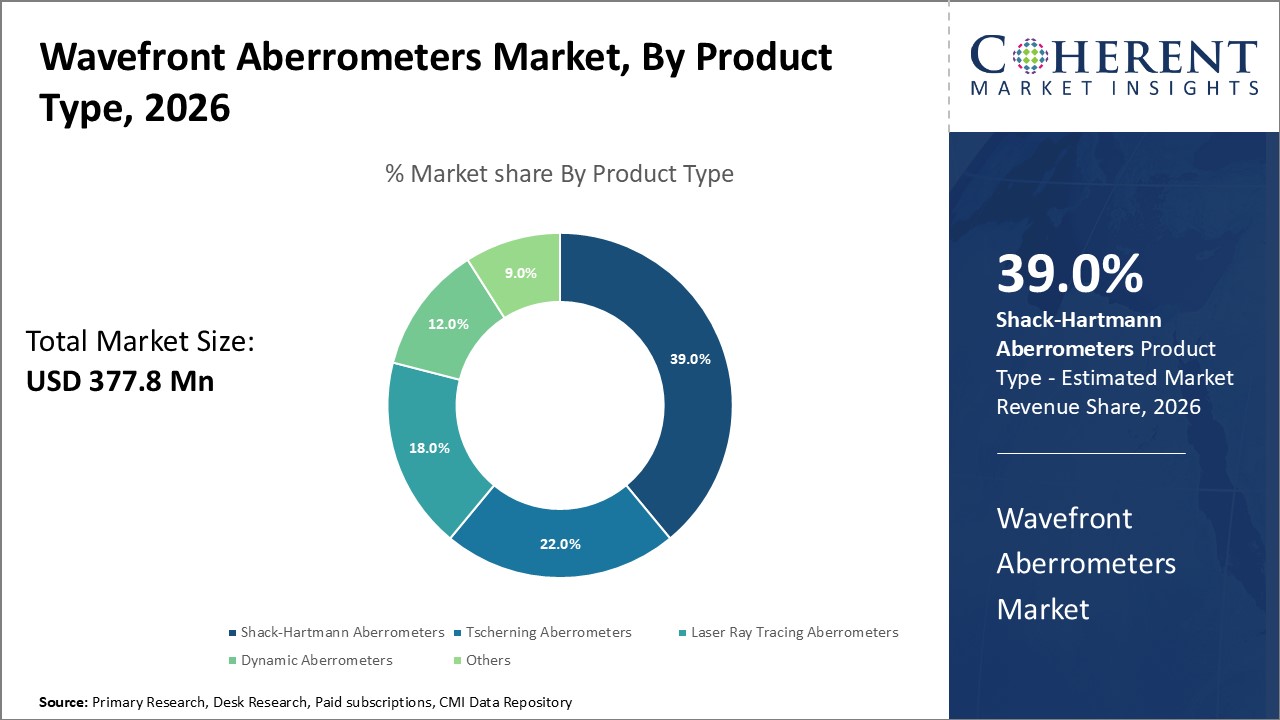
Shack-Hartmann Aberrometers maintain dominance in the product type segment with 39% market share, supported by their precision and ease of integration into clinical workflows.
Refractive Surgery leads application segments given its critical reliance on aberration data for procedural accuracy and patient satisfaction rates.
Hospitals and Clinics are primary end users, reflecting healthcare infrastructure investments and rising patient influx for vision correction.
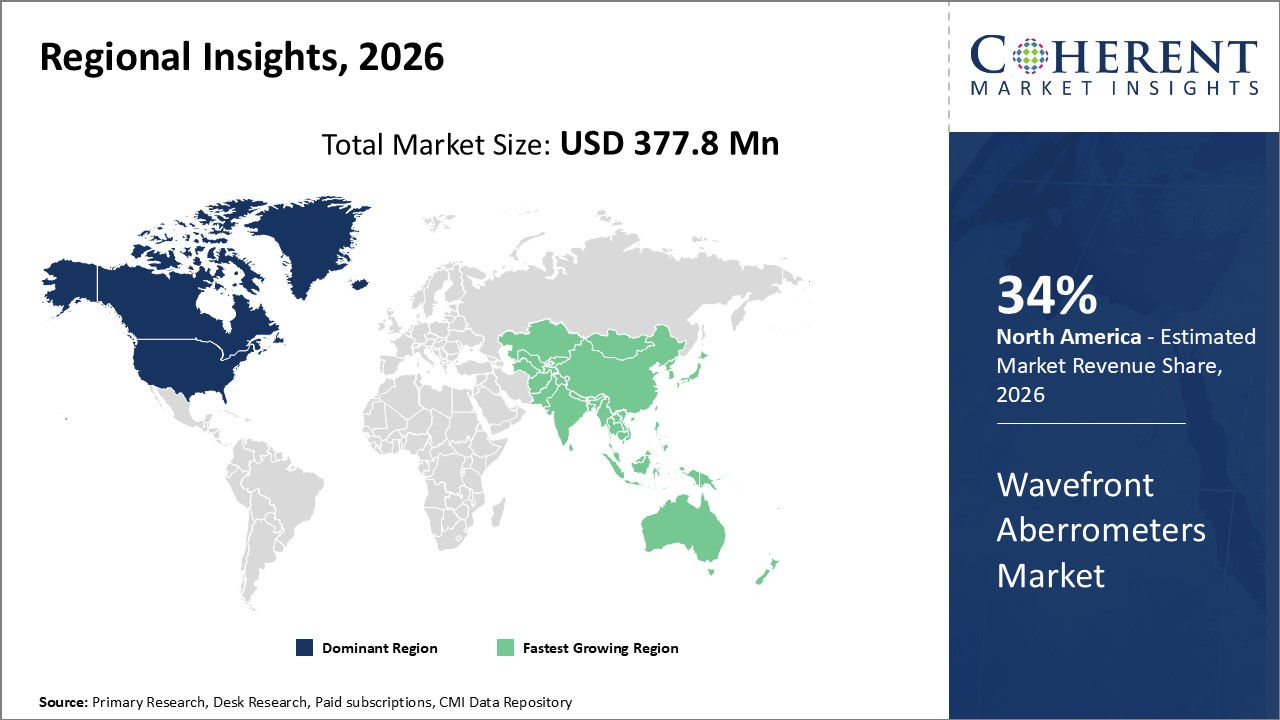
North America commands the largest industry share at approximately 34%, bolstered by advanced healthcare systems and high adoption rates of cutting-edge diagnostic devices.
Asia Pacific exhibits the fastest CAGR driven by growing ophthalmological awareness, healthcare accessibility, and increasing prevalence of ocular disorders.
Wavefront Aberrometers Market Segmentation Analysis
Wavefront Aberrometers Market Insights, By Product Type
Shack-Hartmann Aberrometers dominate the market share. Shack-Hartmann devices continue to lead due to their superior accuracy, ease of deployment, and compatibility with refractive surgery suites, making them a staple in advanced ophthalmic diagnostics. The fastest-growing subsegment is Laser Ray Tracing Aberrometers, propelled by innovations in real-time wavefront detection and integration with femtosecond laser systems for personalized surgical interventions. Tscherning Aberrometers remain relevant for select clinical applications, while Dynamic Aberrometers are gaining traction in research, focusing on measuring aberrations under varying physiological conditions.
Wavefront Aberrometers Market Insights, By Application
Refractive Surgery leads the segment, driven by the critical need for precise aberration measurement to optimize laser vision correction outcomes, contributing substantially to market revenue. The fastest growing application is Customized Contact Lens Fitting, which benefits from the rising popularity of personalized ophthalmic solutions and advancements in aberrometry-based lens design software. Cataract Surgery, though mature, is evolving with the integration of aberrometric data into intraocular lens calculations. Corneal Topography continues to maintain steady demand, particularly in diagnostic centers specializing in corneal diseases.
Wavefront Aberrometers Market Insights, By End-User
Hospitals and Clinics dominate the end-user segment, attributed to their comprehensive range of ophthalmic services and increasing capital expenditure on diagnostic infrastructure. Ophthalmic Research Centers represent the fastest-growing subsegment, fueled by escalating interest in aberration science and its applications in novel vision correction techniques. Diagnostic Laboratories mainly support clinical workflows, and Optical Retail Chains are slowly adopting aberrometers to expand service portfolios. Other end users include educational institutes and specialized surgical centers.
Wavefront Aberrometers Market Trends
The wavefront aberrometers market is increasingly embracing the integration of advanced imaging technologies to enhance diagnostic precision, with AI-enabled software becoming a key differentiator for new products.
This trend is exemplified by several industry players who launched next-generation devices featuring enhanced aberration mapping and automated analysis capabilities in 2025, resulting in a notable 13% increase in adoption across tertiary hospitals.
The move toward portable and user-friendly devices has been particularly impactful in expanding market reach to remote and underserved endocrinology and ophthalmology clinics, as evidenced by a 23% surge in handheld device sales globally.
Wavefront Aberrometers Market Insights, By Geography
North America Wavefront Aberrometers Market Analysis and Trends
In North America, the dominance in the wavefront aberrometers market is underpinned by a robust healthcare infrastructure, supportive government initiatives promoting eye health, and a high concentration of ophthalmic research centers. The presence of leading companies and early adoption of advanced medical devices have contributed to North America holding roughly 34% of the overall market share. The U.S., in particular, has witnessed substantial procurement of wavefront aberrometers in hospital networks and refractive surgery clinics, driven by ongoing clinical trial activities and ophthalmic innovation funds.
Asia Pacific Wavefront Aberrometers Market Analysis and Trends
Meanwhile, the Asia Pacific region exhibits the fastest growth with a CAGR surpassing 11%. This growth is fueled by rising awareness of eye disorders, expanding healthcare access, and increasing government focus on blindness prevention programs. Countries such as China and India are experiencing swift adoption due to burgeoning patient volumes and investments in ophthalmic diagnostic technologies. Local manufacturing hubs and competitive pricing strategies by regional market players also foster accelerated business growth.
Wavefront Aberrometers Market Outlook for Key Countries
USA Wavefront Aberrometers Market Analysis and Trends
The USA plays a pivotal role in the wavefront aberrometers market, powered by an extensive network of ophthalmic institutions and aggressive deployment of diagnostic innovations. Surveys from 2025 highlight over 40% of leading refractive centers in the U.S. adopting advanced wavefront aberrometers integrated with AI-driven analysis tools, substantially improving surgery outcomes. The ongoing FDA approvals for new-generation aberrometer devices and government initiatives toward visual health have catalyzed market revenue growth. Moreover, U.S. manufacturers have partnered with global distributors, enhancing technology dissemination and securing a commanding position in the market.
India Wavefront Aberrometers Market Analysis and Trends
India's wavefront aberrometers market is experiencing rapid expansion due to the rising incidence of refractive disorders and government-funded eye care programs targeting rural populations. Adoption rates increased by 25% in 2025 alone, driven by affordable devices and partnerships between diagnostic equipment manufacturers and leading ophthalmic hospitals. Prominent local players have introduced cost-effective portable aberrometers that cater to primary care providers, boosting market penetration. Additionally, the expansion of private eye care chains focusing on premium diagnostics is enhancing business growth, contributing to India’s emergent role as a crucial regional hub.
Analyst Opinion
Supply-Driven Capacity Expansion: Increasing production capabilities of wavefront aberrometers, especially in North America and the Asia Pacific, have strengthened supply chains. For instance, a significant manufacturing facility expansion announced in 2025 by a leading optical equipment company boosted global production capacity by nearly 18%, positively impacting market share distribution. This growth in production availability is poised to meet rising demand without significant lead time delays.
Diversification in Use Cases: Recent years have seen wavefront aberrometers being adopted beyond traditional ophthalmology, such as integration into refractive surgery and customized contact lens designs. The application expansion resulted in a 16% increase in market revenue for related devices in 2025, driven by demand from specialized clinics and vision research centers.
Pricing Dynamics and Affordability: Enhanced manufacturing efficiencies and component miniaturization have contributed to a gradual reduction in unit prices by approximately 8% between 2023 and 2026. This trend is particularly noteworthy in emerging markets, where cost reductions have catalyzed market penetration and broadened customer base diversity.
Imports and Export Balances: The U.S. saw an 12% rise in wavefront aberrometer imports in 2025, underscoring strong domestic demand sustained by clinical and research institutions. Conversely, export growth from Asian manufacturing hubs reached 15%, indicating strengthening supply-side dynamics facilitating global market revenue uplift.
- Current Industry Events of 2026
- Market Size Estimation
- Regional Breakdown
- Competitive Landscape
- Customer Intelligence
- Segmental Analysis
- Pricing Analysis
- Key Market Drivers, Challenges & Future Trends
- Customized Insights Section
Market Scope
| Report Coverage | Details | ||
|---|---|---|---|
| Base Year: | 2025 | Market Size in 2026: | USD 377.8 million |
| Historical Data for: | 2020 To 2024 | Forecast Period: | 2026 To 2033 |
| Forecast Period 2026 to 2033 CAGR: | 9.5% | 2033 Value Projection: | USD 652 million |
| Geographies covered: |
| ||
| Segments covered: |
| ||
| Companies covered: | Alcon Laboratories Inc., Carl Zeiss Meditec AG, NIDEK Co. Ltd., Haag-Streit AG, Optovue Inc., Topcon Corporation, Imagine Eyes Inc., Luneau Technology, Clarity Medical Systems, Visx Inc., Trioptics GmbH, CSO Group. | ||
| Growth Drivers: |
| ||
Wavefront Aberrometers Market Growth Factors
The rising prevalence of refractive errors and increasing demand for customized vision correction techniques are paramount drivers in market expansion. For instance, the World Health Organization reported a nearly 25% global increase in myopia cases between 2020 and 2025, intensifying demand for precise diagnostic tools like wavefront aberrometers. Technological innovations such as enhanced wavefront sensing methods and AI-assisted image processing are improving diagnostic accuracy and operational efficiency, boosting adoption rates further. Additionally, expanding healthcare infrastructure and rising geriatric populations in Asia Pacific have driven investments in ophthalmic diagnostic devices, contributing to significant market revenue upticks in 2025.
Wavefront Aberrometers Market Development
In March 2023, WaveFront Dynamics Inc. launched the WaveDȳn® Vision Analyzer, a dynamic aberrometry measurement system designed for advanced eye-care diagnostics. This system captures a video of the eye’s optical system over time (rather than a single static measurement) and provides nine ocular measurements—including dynamic wavefront aberrometry, objective refraction, dynamic corneal topography, keratometry, pupil dynamics, and accommodation-range measurement. The high-resolution Shack-Hartmann wavefront sensor enables clinicians to gain deeper insights into visual performance and ocular surface quality.
In February 2023, Tracey Technologies released iTrace Prime (v7.0), an upgraded software version for its iTrace Ray-Tracing Aberrometer and Corneal Topographer. The upgrade introduced a new “Prime Dashboard” that adds two indices—the Corneal Performance Index (CPI™) and Quality of Vision Index (QVI™)—to the existing Dysfunctional Lens Index (DLI™). Additionally, the software added Tear Film Analysis (capturing the ocular surface for 12 seconds post-blink) and a proprietary Tear Film Index (TFI™) scored 0-10 to assess the impact of dry-eye disease on vision.
Key Players
Leading Companies of the Market
Alcon Laboratories Inc.
Carl Zeiss Meditec AG
NIDEK Co. Ltd.
Haag-Streit AG
Optovue Inc.
Topcon Corporation
Imagine Eyes Inc.
Luneau Technology
Clarity Medical Systems
Visx Inc.
Trioptics GmbH
CSO group
Leading players have implemented strategic acquisitions to expand product portfolios and global footprints. For example, a major player finalized the acquisition of a precision optics startup in 2025, resulting in enhanced product offerings that captured a 10% increment in regional market share in Europe. Additionally, collaborations focused on R&D investments for portable aberrometry devices have been central to delivering market growth in emerging economies. Key companies also emphasize tailored solutions and integrated technology systems to differentiate in this competitive landscape.
Wavefront Aberrometers Market Future Outlook
The market is projected to grow as demand for precision ophthalmic diagnostics and personalized refractive procedures increases. Future devices will incorporate AI-based image analysis, improved real-time data processing, and interoperability with electronic medical records. The expansion of eye care infrastructure in developing regions and the rising prevalence of refractive errors will also boost adoption. Continuous advancements in optical sensor technology and user-friendly interface design will enhance accuracy, speed, and accessibility, positioning wavefront aberrometry as a standard in next-generation vision assessment.
Wavefront Aberrometers Market Historical Analysis
Wavefront aberrometry technology emerged from adaptive optics used in astronomy and was introduced into ophthalmology in the late 1990s. Early systems were bulky and limited in resolution, primarily used for research and refractive surgery planning. With advancements in optics imaging sensors, modern aberrometers have evolved into compact, high-precision diagnostic devices capable of measuring minute optical aberrations. The adoption of these instruments expanded rapidly as customized LASIK and cataract surgery techniques gained popularity. Integration with corneal topography and ocular imaging further broadened their diagnostic capabilities, making them essential in comprehensive eye care practices.
Sources
Primary Research Interviews:
Ophthalmologists
Optometrists
Vision Equipment Manufacturers
Biomedical Optical Engineers
Databases:
National Eye Institute (NEI) Vision Data
WHO Vision 2030 Database
ClinicalTrials.gov
PubMed Central
Magazines:
Ophthalmology Times
Optometry Today
Medical Device News Magazine
Vision Monday
Journals:
Investigative Ophthalmology & Visual Science
Journal of Cataract & Refractive Surgery
Optics Express
Biomedical Optics Express
Newspapers:
The Times (Health)
The Hindu (Science)
USA Today (Wellness)
Economic Times (Healthcare)
Associations:
American Academy of Ophthalmology (AAO)
European Society of Cataract and Refractive Surgeons (ESCRS)
World Health Organization (WHO)
International Agency for the Prevention of Blindness (IAPB)
Get access to 250+ pages report
Every segment, forecast, competitor profile and data table behind the analysis above — available for instant download.
- ESOMAR Member
- ISO 9001:2015 Certified
- D-U-N-S Registered
- GDPR & CCPA Compliant
Missing comfort of reading report in your local language? Find your preferred language:
Transform your Strategy with Exclusive Trending Reports
Frequently Asked Questions
Dominant companies include Alcon Laboratories Inc., Carl Zeiss Meditec AG, and NIDEK Co., Ltd., noted for their robust product pipelines and regional expansions.
The market size is projected to grow from USD 377.8 million in 2026 to USD 652 million by 2033, illustrating substantial market growth potential.
Hospitals and clinics represent the largest growth opportunity due to increasing investments in ophthalmic diagnostic technologies.
Trends will likely include a shift towards portable devices, AI integration for aberration analysis, and enhanced teleophthalmology compatibility.
The competitive landscape is marked by innovation-driven growth with challenges revolving around device cost optimization and market penetration in emerging economies.
Strategies such as strategic acquisitions, R&D collaborations, and focus on customizable device offerings are widespread among market players.