

North America ICU Neuromonitoring Market Size and Forecast – 2026 To 2033
The North America ICU neuromonitoring market is expected to grow from USD 4,044.9 Mn in 2026 to USD 7,887.2 Mn by 2033, registering a compound annual growth rate (CAGR) of 10.1% from 2026 to 2033. The North America ICU neuromonitoring market is poised for significant expansion, fueled by the rising incidence of acute neurological disorders such as traumatic brain injury (TBI), stroke, subarachnoid hemorrhage, and status epilepticus, which require continuous neurological monitoring in intensive care settings.
According to the Centers for Disease Control and Prevention (CDC), ischemic stroke, comprising nearly 85% of all strokes, remains a leading cause of death and disability worldwide. Annually, about 795,000 individuals in the U.S. experience a new or recurrent stroke. The high burden of acute neurological emergencies continues to drive the demand for continuous EEG, intracranial pressure (ICP), and multimodal neuromonitoring technologies in ICUs.
(Source: National Library of Medicine)
Key Takeaways of the North America ICU Neuromonitoring Market
- Services are projected to hold 65.2% of the North America ICU neuromonitoring market share in 2026, making it the dominant product and services segment, owing to the increasing demand for continuous EEG interpretation, remote monitoring, and specialized neurocritical care support. The segment is further supported by clinical recommendations promoting continuous neurological surveillance in critically ill patients. For instance, the American Clinical Neurophysiology Society (ACNS) recommends continuous electroencephalography (cEEG) monitoring for critically ill adults and children to detect non-convulsive seizures, cerebral ischemia, and other secondary brain injuries, driving demand for specialized ICU neuromonitoring services.
- Epilepsy and seizures are projected to hold 30.1% of the North America ICU neuromonitoring market share in 2026, making it the dominant condition segment, due to the high prevalence of non-convulsive seizures among critically ill neurological patients requiring continuous brain monitoring. For instance, the American Clinical Neurophysiology Society (ACNS) Critical Care Continuous EEG Task Force recommends continuous EEG for diagnosing non-convulsive seizures and status epilepticus, monitoring treatment response, and detecting secondary neurological injury in ICU patients.
- Hospitals are projected to hold 64.3% of the North America ICU neuromonitoring market share in 2026, making it the dominant end user segment, owing to the availability of dedicated neurocritical care units, advanced ICU infrastructure, and multidisciplinary neurological care teams. For instance, the Brain Trauma Foundation's Guidelines for the Management of Severe Traumatic Brain Injury recommend intracranial pressure (ICP) monitoring and advanced cerebral monitoring to guide treatment decisions in severe TBI, reinforcing the adoption of ICU neuromonitoring technologies across tertiary hospitals.
Segmental Insights
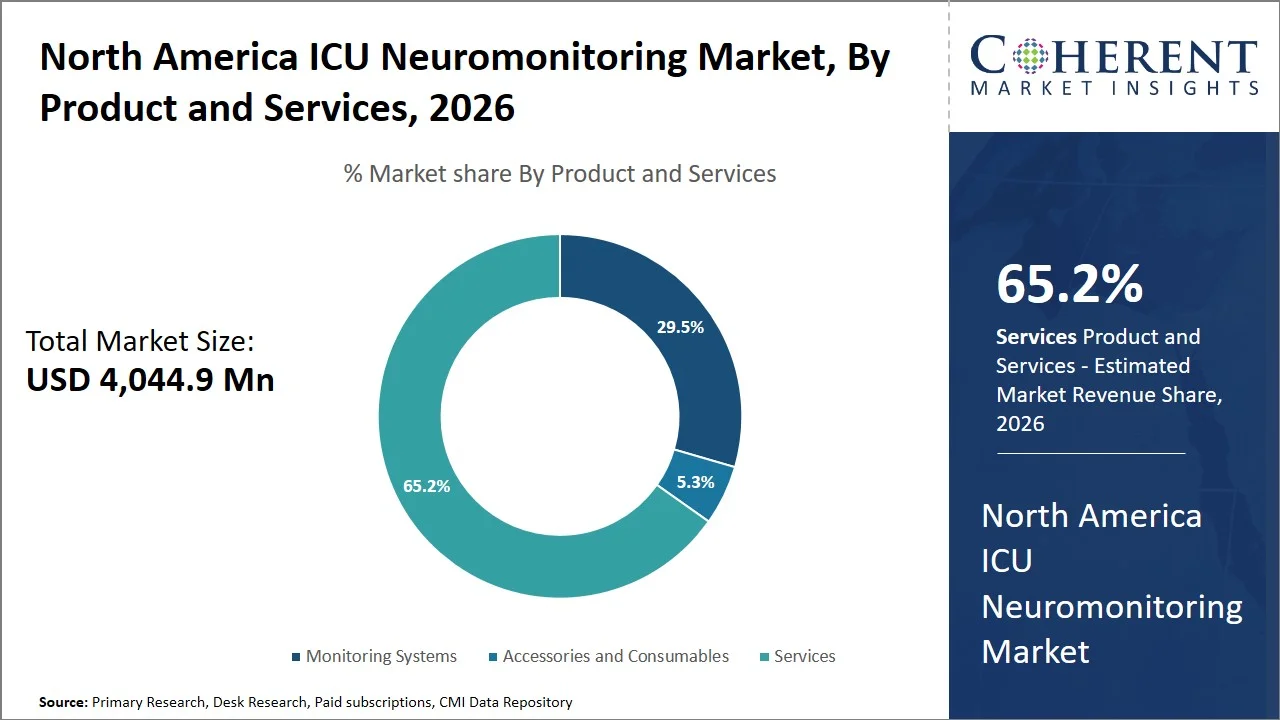
Why Do Services Dominate the North America ICU Neuromonitoring Market?
Services are projected to hold a market share of 65.2% in 2026, due to the surging need for continuous EEG interpretation services, neurophysiology remote monitoring, as well as neurocritical care professional care. This increasing complexity of neurologically unwell critically ill patients confirms the rationale for remote, 24/7 monitoring, data interpretation and clinical decision support. to assist physicians with timely interventions. For instance, Masimo’s hospital automation platform integrates patient monitoring, connectivity, interoperability, clinician alerts and the ability to remotely view data into a central care hub of the ICU, while improving the hospital clinical workflow.
- Current Industry Events of 2026
- Market Size Estimation
- Regional Breakdown
- Competitive Landscape
- Customer Intelligence
- Segmental Analysis
- Pricing Analysis
- Key Market Drivers, Challenges & Future Trends
- Customized Insights Section
Why Does Epilepsy and Seizures Represent the Largest Condition Segment in the North America ICU Neuromonitoring Market?
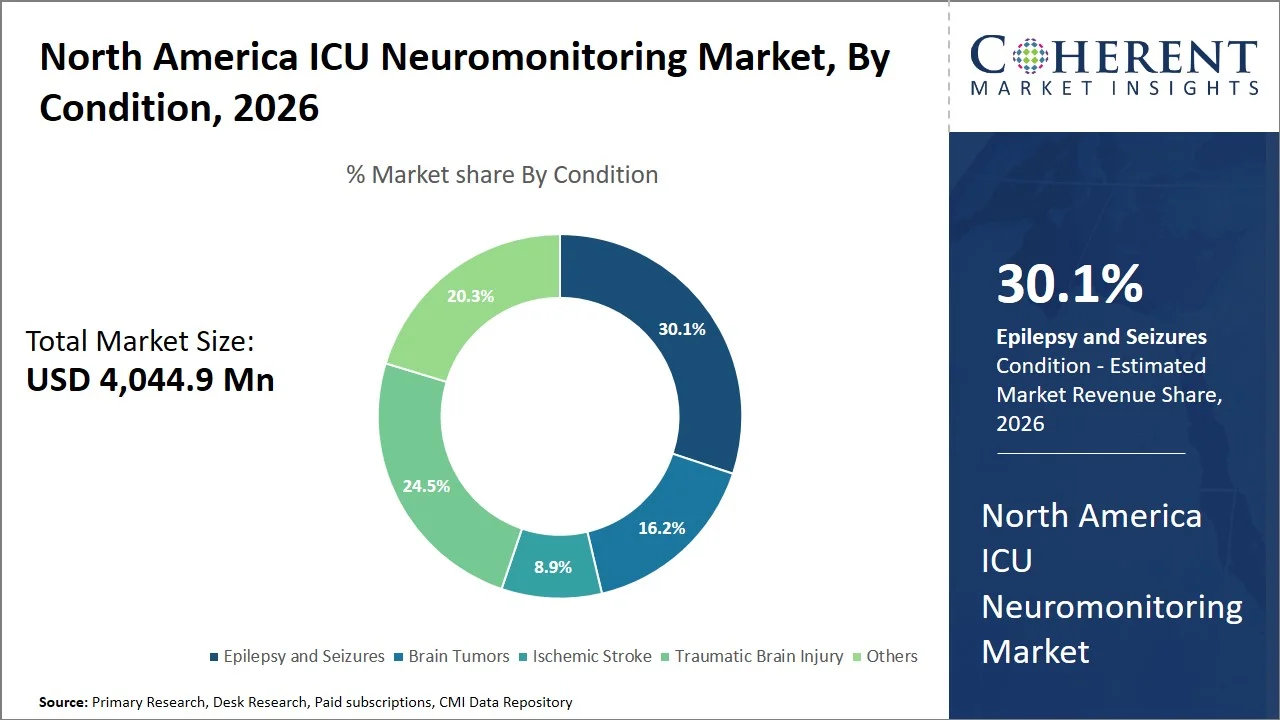
Epilepsy and seizures are projected to hold 30.1% of the market share in 2026, due to the need for constant electroencephalography (cEEG) monitoring for detecting the presence of non-convulsive seizures and for taking immediate therapeutic decisions in critical cases. Adopting AI-based EEG analysis tools along with long-term neurological monitoring significantly improves the neurological outcomes of patients. For instance, Persyst 15 provides sophisticated AI-powered seizure detection, quantitative EEG (QEEG) analysis, and automated trend analysis to facilitate ongoing monitoring with EEG in critically ill patients. Software solutions enable a better detection of non-convulsive seizures and support a neurophysiology process to enable epilepsy monitoring in critical care.
Hospitals Segment Dominates the Global Care Management Solutions Market
The hospitals segment is projected to hold a market share of 64.3% in 2026. This segment has the largest share in the North America ICU neuromonitoring market due to well-established neuromonitoring infrastructure that allows neurologists the use of specialized equipment in neuro-ICU and dedicated neurological intensive units to treat serious neurological emergencies, thus, paving the growth of ICU neuromonitoring systems in healthcare facilities. Hospitals are the primary setting for management of critical neurological emergencies that necessitates continuous EEG and invasive intracranial pressure and multimodal neuromonitoring, which encourages the more widespread use of these technologies. For instance, the American College of Surgeons (ACS) mandates comprehensive critical care resources, including 24/7 neurosurgery and brain monitor technology for critically injured severe traumatic brain injury (TBI) patients in its Level I and Level II Trauma Centers, further positioning hospitals as end users of ICU neuromonitoring systems.
Current Events and their Impact
Current Events | Description and its Impact |
U.S. Centers for Medicare & Medicaid Services (CMS) Final Rule for FY 2026 Hospital Inpatient Prospective Payment System (IPPS) (August 2025) |
|
U.S. FDA Updates Artificial Intelligence-Enabled Medical Device Database (January 2025) |
|
North America ICU Neuromonitoring Market Dynamics
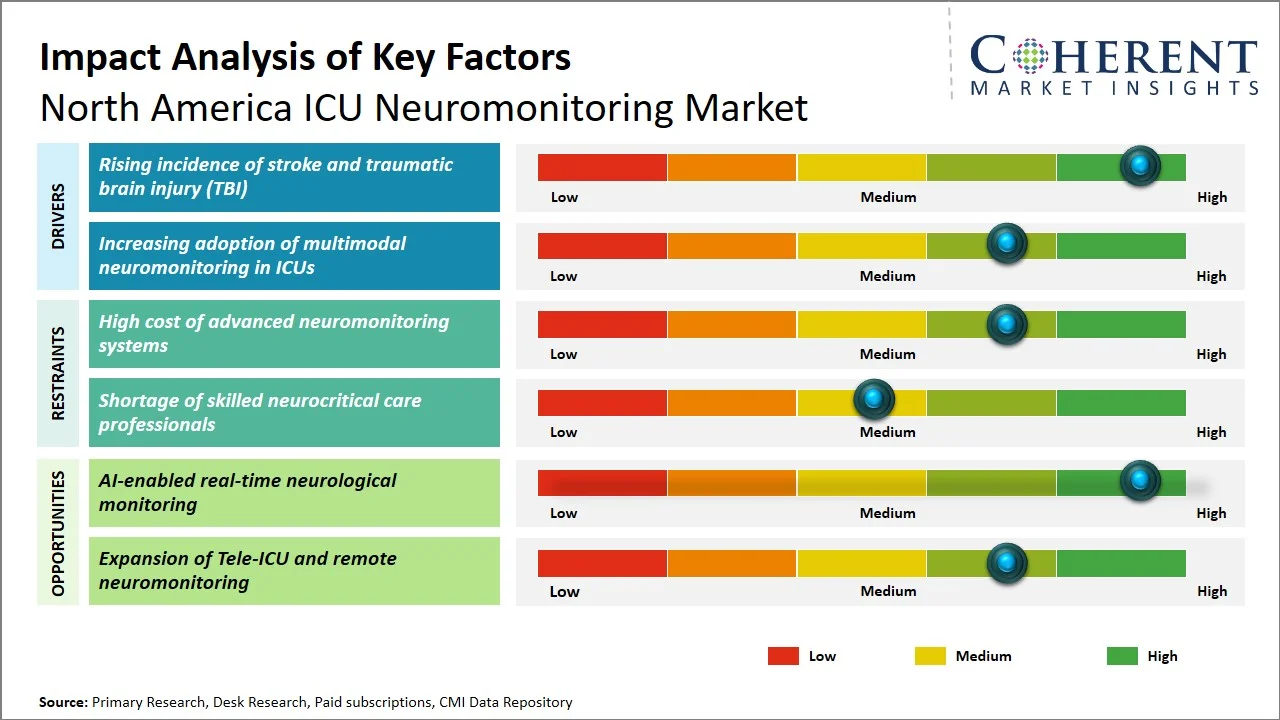
Market Drivers
Rising incidence of stroke and traumatic brain injury (TBI)
The rising incidence of stroke and traumatic brain injury (TBI) is driving the demand for advanced ICU neuromonitoring technologies that enable continuous neurological assessment, early detection of secondary brain injury, and timely clinical intervention. Increasing adoption of continuous electroencephalography (cEEG), intracranial pressure (ICP), and multimodal monitoring is improving neurocritical care outcomes across North America. For instance, according to the U.S. Centers for Disease Control and Prevention (CDC), approximately 686,000 emergency department visits for stroke were recorded in the U.S. in 2022, highlighting the substantial burden of acute neurological emergencies requiring advanced monitoring and critical care.
Increasing adoption of multimodal neuromonitoring in ICUs
The increasing adoption of continuous electroencephalography (cEEG) in intensive care units (ICUs) is driving the North America ICU neuromonitoring market by enabling early detection of non-convulsive seizures, cerebral ischemia, and secondary neurological injury in critically ill patients. Growing integration of cEEG into neurocritical care workflows is improving diagnostic accuracy and supporting timely therapeutic interventions. For instance, the Neurocritical Care Society (NCS) includes continuous EEG monitoring in its evidence-based neurocritical care guidelines for conditions such as status epilepticus, intracerebral hemorrhage, and subarachnoid hemorrhage, reinforcing its role as a standard component of ICU neurological monitoring.
Expansion of Neurocritical Care Units and Comprehensive Stroke Centers
The expansion of dedicated neurocritical care units and comprehensive stroke centers across North America is driving the adoption of advanced ICU neuromonitoring technologies to support continuous neurological assessment and evidence-based critical care. These specialized facilities increasingly rely on continuous EEG, intracranial pressure (ICP), and cerebral oxygenation monitoring to improve outcomes in patients with acute neurological emergencies. For instance, the Joint Commission's Comprehensive Stroke Center (CSC) certification requires hospitals to have advanced neuromonitoring capabilities, specialized neurocritical care expertise, and 24/7 neurological services for managing complex stroke patients.
Emerging Trends
Growing Adoption of Multimodal Neuromonitoring Platforms
Healthcare providers are increasingly deploying multimodal neuromonitoring systems that integrate EEG, intracranial pressure (ICP), brain tissue oxygen (PbtO₂), cerebral oximetry, and hemodynamic parameters into a single platform. This integrated approach provides a comprehensive assessment of cerebral physiology, enabling more precise and individualized neurocritical care.
Shift Toward Portable and Point-of-Care Neuromonitoring Technologies
The market is witnessing increasing adoption of compact, portable neuromonitoring devices that enable rapid neurological assessment at the bedside. These systems reduce setup time, improve workflow efficiency, and facilitate earlier diagnosis and intervention in emergency departments and intensive care units.
Expansion of Cloud-Based Neurocritical Care Data Management
Hospitals are increasingly adopting cloud-enabled neuromonitoring platforms that centralize neurological data, support secure storage, and enable longitudinal patient analysis. These platforms improve multidisciplinary collaboration, facilitate data sharing across hospital networks, and support quality improvement initiatives in neurocritical care.
Clinical Guidelines, Standards & Regulatory Framework Influencing the North America ICU Neuromonitoring Market
Clinical Guideline / Standard | Governing Organization | 2025–2026 Update / Current Status | Impact on ICU Neuromonitoring Market |
Continuous EEG (cEEG) Guidelines | American Clinical Neurophysiology Society (ACNS) | Current clinical recommendations | Drives adoption of continuous EEG systems in ICUs |
Severe Traumatic Brain Injury Guidelines | Brain Trauma Foundation | Latest evidence-based recommendations | Supports ICP and multimodal neuromonitoring utilization |
Comprehensive Stroke Center Certification | The Joint Commission | Current certification requirements | Encourages hospitals to maintain advanced neurocritical care capabilities |
AI-Enabled Medical Device Framework | U.S. FDA | Ongoing AI/ML regulatory framework | Accelerates development of AI-assisted neuromonitoring platforms |
Neurocritical Care Clinical Practice Guidelines | Neurocritical Care Society (NCS) | Updated clinical recommendations | Promotes standardized multimodal neuromonitoring practices |
How is the AI-enabled real-time neurological monitoring creating new growth opportunities in the North America ICU neuromonitoring market?
The augmentation of AI integrated devices which in real-time can continuously interpret a host of Neurological information such as intra cranial pressure (ICP), cerebral oxygenation and electroencephalograph (EEG) which aids in preventing decline of neurological status. An AI enhanced Platform can optimize the clinician’s decision and help lower down the reaction time and hence assists in delivering tailor-made in treatment of patients. Such solutions could help overcome dearth of trained neurologists in the intensive care units. For instance, in April 2025, Natus Medical Incorporated unveiled NeuroWorks 9, a platform designed to optimize and speed neurological data interpretation in critical care using AI-driven review and workflow intelligence, helping expedite AI-driven neuromonitoring implementation hospital-wide and in neurocritical care settings.
Market Players, Key Development, and Competitive Intelligence
Key Developments
- In December 2025, Ceribell, Inc. received the U.S. FDA 510(k) clearance for its first-of-its-kind delirium monitoring solution, expanding the capabilities of its AI-powered point-of-care electroencephalography (EEG) platform for critically ill patients. The clearance enables objective delirium screening and continuous neurological monitoring, supporting earlier clinical intervention and improved neurocritical care workflows in intensive care units. This development reinforces the growing adoption of AI-enabled ICU neuromonitoring technologies across North America.
- In April 2025, Nihon Kohden introduced the second-generation Live View Panel Pro, enhancing remote neurology care through real-time access to continuous electroencephalography (cEEG) data and advanced remote monitoring capabilities. The upgraded platform enables neurocritical care teams to review neurological data from multiple locations, supporting faster clinical decision-making and improving workflow efficiency in intensive care units. The launch highlights the growing adoption of connected and remote ICU neuromonitoring solutions across North America.
Competitive Landscape
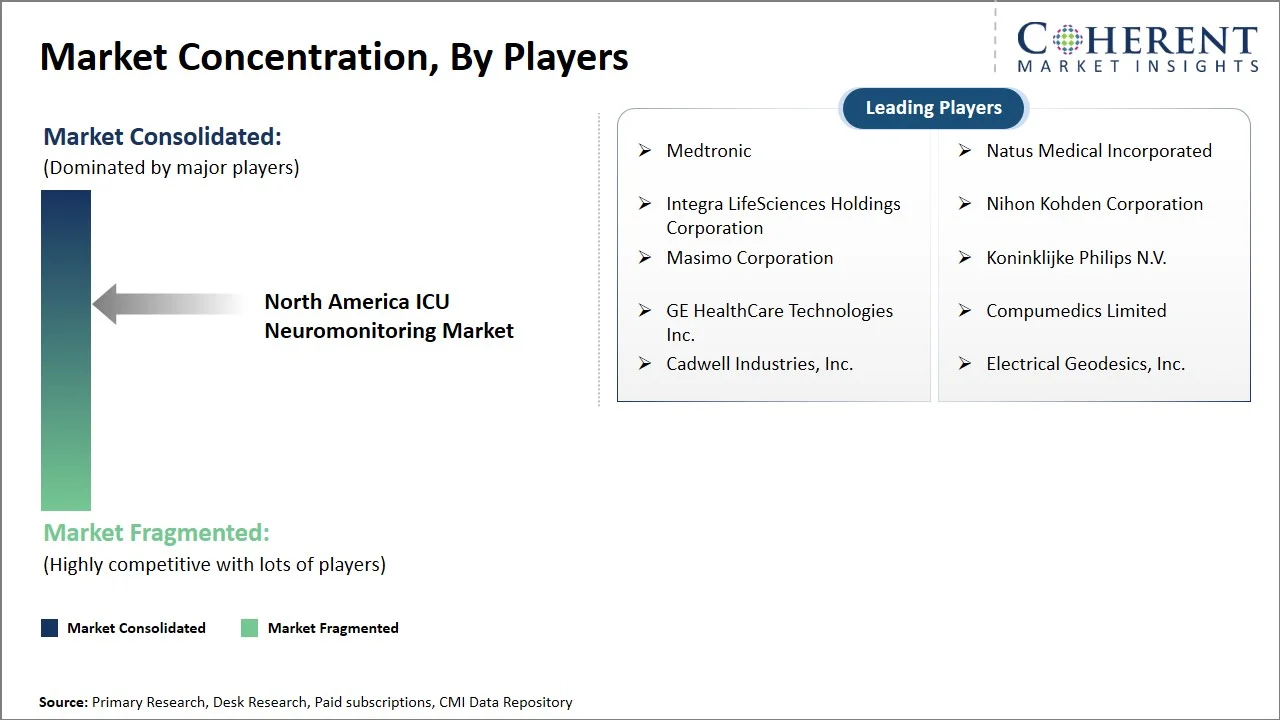
The North America ICU neuromonitoring market is moderately consolidated, with leading players competing through continuous innovation in EEG, intracranial pressure (ICP), cerebral oximetry, and multimodal neuromonitoring technologies. Companies are increasingly focusing on AI-enabled neurological monitoring, cloud-based data integration, and remote neurocritical care solutions to improve diagnostic accuracy and clinical workflow efficiency. Strategic collaborations with hospitals, expansion of service capabilities, and development of interoperable monitoring platforms remain key competitive strategies. Key focus areas include:
- Development of AI-enabled continuous EEG (cEEG) and multimodal neuromonitoring platforms for neurocritical care.
- Expansion of remote neurology and Tele-ICU monitoring solutions with centralized EEG review capabilities.
- Integration of cloud connectivity, interoperability, and advanced clinical analytics into ICU neuromonitoring systems.
- Strategic product launches, partnerships, and portfolio expansion to strengthen presence across hospitals and neurocritical care centers in North America.
Market Report Scope
North America ICU Neuromonitoring Market Report Coverage
| Report Coverage | Details | ||
|---|---|---|---|
| Base Year: | 2025 | Market Size in 2026: | USD 4,044.9 Mn |
| Historical Data for: | 2020 To 2024 | Forecast Period: | 2026 To 2033 |
| Forecast Period 2026 to 2033 CAGR: | 10.1 % | 2033 Value Projection: | USD 7,887.2 Mn |
| Segments covered: |
| ||
| Companies covered: | Medtronic, Natus Medical Incorporated, Integra LifeSciences Holdings Corporation, Nihon Kohden Corporation, Masimo Corporation, Koninklijke Philips N.V., GE HealthCare Technologies Inc., Compumedics Limited, Cadwell Industries, Inc., and Electrical Geodesics, Inc. | ||
| Growth Drivers: |
| ||
| Restraints & Challenges: |
| ||
Analyst Opinion (Expert Opinion)
- In the coming years, the North America ICU neuromonitoring market is expected to witness sustained growth over the forecast period, driven by the increasing adoption of multimodal neuromonitoring, AI-assisted neurological assessment, and digital neurocritical care workflows. As healthcare providers shift toward data-driven and personalized critical care, integrated platforms capable of combining continuous electroencephalography (cEEG), intracranial pressure (ICP), cerebral oxygenation, and predictive analytics will become the standard of care in neurocritical care units.
- The maximum growth opportunity lies within multimodal ICU neuromonitoring systems for the stroke, traumatic brain injury (TBI), and epilepsy & seizure management segments, particularly in the U.S., where advanced neurocritical care infrastructure, comprehensive stroke centers, and favorable adoption of innovative monitoring technologies are driving demand. Expansion of Tele-ICU programs and AI-enabled continuous EEG monitoring will further accelerate market penetration across tertiary and community hospitals.
- In order to create an advantage for themselves, the competitors should focus on developing interoperable, AI-enabled neuromonitoring platforms that seamlessly integrate with hospital Electronic Health Records (EHRs) and patient monitoring systems. Strategic collaborations with neurocritical care centers, investments in remote monitoring capabilities, and generation of robust clinical evidence demonstrating improved patient outcomes and workflow efficiency will be critical differentiators in the evolving market in North America.
Speak to the analyst
Want personalized insights?
Take the findings above to one of our principal consultants, or have the report rebuilt around the segments, geographies and competitors you actually track.
Market Segmentation
- Product and Services Insights (Revenue, USD Mn, 2021 - 2033)
- Monitoring Systems
- Accessories and Consumables
- Services
- Condition Insights (Revenue, USD Mn, 2021 - 2033)
- Epilepsy and Seizures
- Brain Tumors
- Ischemic Stroke
- Traumatic Brain Injury
- Others
- End User Insights (Revenue, USD Mn, 2021 - 2033)
- Hospitals
- Specialty Clinics
- Ambulatory Surgical Centers
- Others
Sources
Primary Research Interviews
- Neurocritical Care Physicians – adoption of continuous EEG (cEEG), ICP, and multimodal neuromonitoring in ICUs
- Neurointensivists and Critical Care Neurologists – ICU neuromonitoring protocols and clinical decision-making
- Clinical Neurophysiologists – continuous EEG interpretation, remote monitoring, and workflow optimization
- ICU Directors and Critical Care Unit Managers – procurement strategies and utilization of neuromonitoring systems
- Biomedical Engineers and Hospital IT Teams – integration of neuromonitoring platforms with EHRs and hospital monitoring infrastructure
- ICU Neuromonitoring Device Manufacturers – product innovation, AI integration, and commercialization strategies
Stakeholders
- ICU Neuromonitoring Device Manufacturers (Medtronic plc, Nihon Kohden Corporation, Natus Medical Incorporated, Cadwell Industries, Inc., Masimo Corporation, Integra LifeSciences)
- ICU Neuromonitoring Service Providers
- End-use Sectors
- Hospitals
- Neurocritical Care Units (NCCUs)
- Comprehensive Stroke Centers
- Academic Medical Centers
- Trauma Centers
- Regulatory & Health Bodies
- U.S. Food and Drug Administration
- Health Canada
- Centers for Medicare & Medicaid Services (CMS)
- The Joint Commission
- American Clinical Neurophysiology Society (ACNS)
- Neurocritical Care Society (NCS)
Databases
- U.S. Food and Drug Administration (FDA) Medical Device Databases (510(k), PMA, De Novo)
- Centers for Medicare & Medicaid Services (CMS) Physician Fee Schedule & HCPCS Database
- ClinicalTrials.gov – ICU neuromonitoring, continuous EEG, ICP monitoring, and neurocritical care studies
- National Institutes of Health (NIH) RePORTER
- Agency for Healthcare Research and Quality (AHRQ) – Healthcare Cost and Utilization Project (HCUP)
- Centers for Disease Control and Prevention (CDC) – Stroke & Traumatic Brain Injury Surveillance Data
Magazines
- NeuroNews International
- Medical Device and Diagnostic Industry (MD+DI)
- MedTech Dive
- Medical Product Outsourcing (MPO)
Journals
- Neurocritical Care
- Journal of Clinical Neurophysiology
- Clinical Neurophysiology
- Critical Care Medicine
- Journal of Neurosurgery
Associations
- Clinical Neurophysiology Society (ACNS)
- Neurocritical Care Society (NCS)
- American Academy of Neurology (AAN)
- American Association of Neurological Surgeons (AANS)
- Congress of Neurological Surgeons (CNS)
- Society of Critical Care Medicine (SCCM)
Public Domain Sources
- Centers for Medicare & Medicaid Services (CMS)
- Centers for Disease Control and Prevention (CDC)
- National Institutes of Health (NIH)
- Agency for Healthcare Research and Quality (AHRQ)
- Health Canada
Proprietary Elements
- CMI Data Analytics Tool
- Proprietary CMI Existing Repository of information for last 10 years.
Get access to 250+ pages report
Every segment, forecast, competitor profile and data table behind the analysis above — available for instant download.
- ESOMAR Member
- ISO 9001:2015 Certified
- D-U-N-S Registered
- GDPR & CCPA Compliant
Missing comfort of reading report in your local language? Find your preferred language:
Transform your Strategy with Exclusive Trending Reports
Frequently Asked Questions
The North America ICU neuromonitoring market is estimated to be valued at USD 4,044.9 Mn in 2026 and is expected to reach USD 7,887.2 by 2033.
Services dominate due to the growing demand for continuous EEG interpretation, remote neurophysiology support, equipment maintenance, and specialized neurocritical care monitoring services in intensive care units.
ICU neuromonitoring is the continuous assessment of brain function and cerebral physiology in critically ill patients using technologies such as EEG, intracranial pressure (ICP), and cerebral oxygenation monitoring.
The CAGR of the North America ICU neuromonitoring market is projected to be 10.1 % from 2026 to 2033.
Rising incidence of stroke and traumatic brain injury (TBI), and increasing adoption of multimodal neuromonitoring in ICUs are the major factors driving the growth of the North America ICU neuromonitoring market.
High cost of advanced neuromonitoring systems, and shortage of skilled neurocritical care professionals are the major factors hampering the growth of the North America ICU neuromonitoring market.
In terms of end user, hospitals are estimated to dominate the market revenue share in 2026.