

Global Optical Fiber for Laser Lithotripsy Market Size and Forecast – 2026 To 2033
The global optical fiber for laser lithotripsy market is expected to grow from USD 582.6 Mn in 2026 to USD 859.8 Mn by 2033, registering a compound annual growth rate (CAGR) of 5.7% from 2026 to 2033. The market for optical fiber for laser lithotripsy is poised for significant expansion, fueled by the soaring burden of kidney stone disease and widespread adoption of minimally invasive stone management procedures.
According to the National Kidney Foundation, each year, more than 500,000 people go to the emergency room because of kidney stones. In addition, about 1 out of every 10 people will get a kidney stone at some point in their life, highlighting the persistent demand for laser lithotripsy procedures and high-performance optical fibers.
(Source: National Kidney Foundation)
Key Takeaways of the Global Optical Fiber for Laser Lithotripsy Market
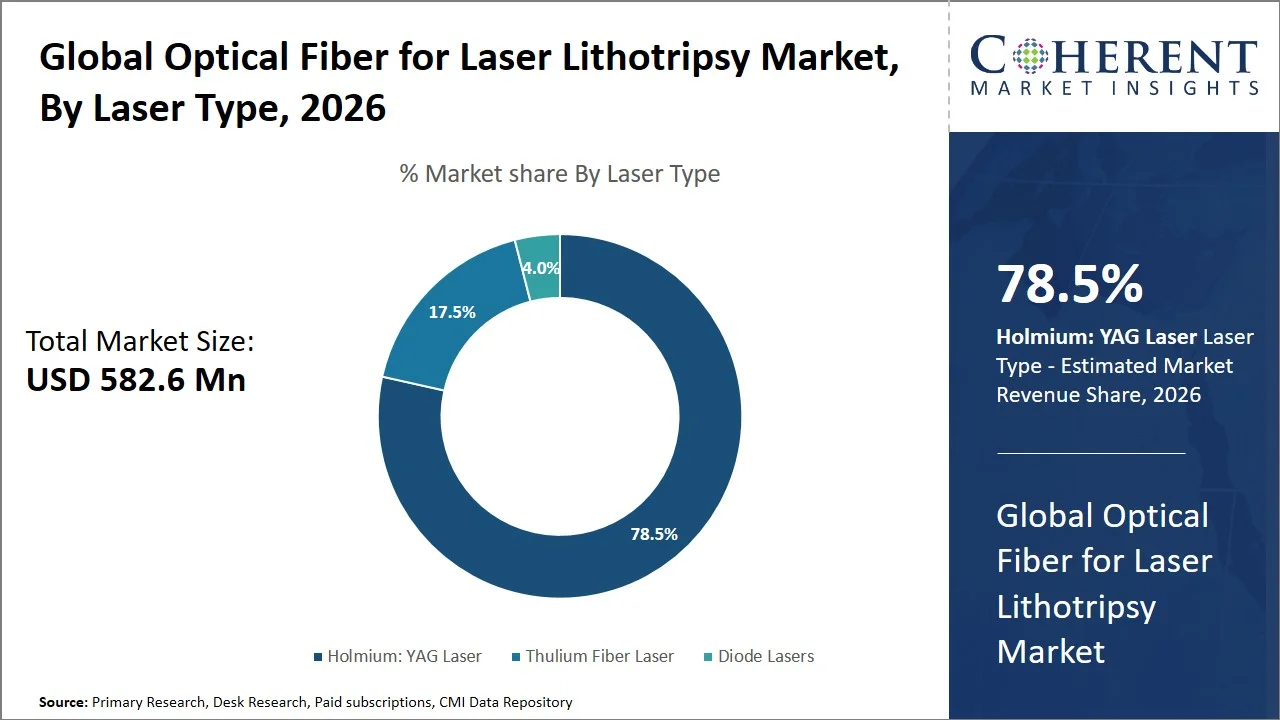
- Holmium: YAG Laser is projected to hold 78.5 % of the global optical fiber for laser lithotripsy market share in 2026, making it the dominant laser type segment across North America due to its established clinical efficacy. For instance, the American Urological Association (AUA) Surgical Management of Stones Guideline recommends laser lithotripsy, particularly Holmium: YAG laser technology, as a standard treatment option for ureteral and renal calculi during ureteroscopy.
- Single use fibers are projected to hold 68.2 % of the global optical fiber for laser lithotripsy market share in 2026, making it the dominant usage segment across Europe due to stringent infection prevention standards. For instance, the European Association of Urology (EAU) 2025 Urolithiasis Guidelines recommend using sterile, high-quality endourological accessories and emphasize infection prevention during ureteroscopic procedures, supporting increased adoption of single-use laser fibers.
- Kidney stone lithotripsy is projected to hold 56.1 % of the global optical fiber for laser lithotripsy market share in 2026, making it the dominant application segment across Asia Pacific due to the increasing burden of urolithiasis and expanding access to endourological care. For instance, China's National Health Commission has included urinary stone disease among key urological conditions targeted for standardized minimally invasive diagnosis and treatment, driving the adoption of ureteroscopic laser lithotripsy across tertiary hospitals.
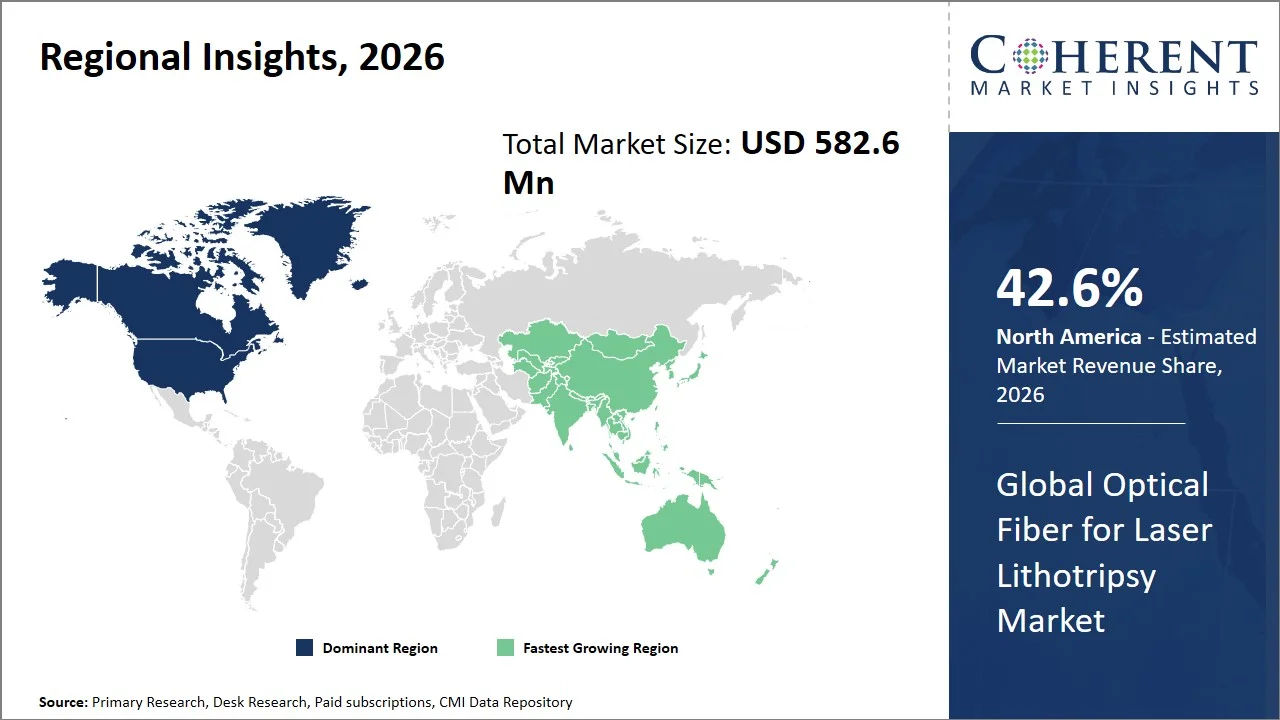
- North America maintains its dominance with an expected share of 42.6 % in 2026, bolstered by the well-established reimbursement frameworks and widespread adoption of minimally invasive urological procedures. For instance, the Centers for Medicare & Medicaid Services (CMS) continues to reimburse ureteroscopic laser lithotripsy (CPT 52353), supporting the routine use of laser-based stone management and associated optical fibers across the U.S. healthcare system.
- Asia Pacific is expected to exhibit the fastest growth with an estimated contribution of 18.8 % share in 2026, propelled by expanding access to specialized urology services. For instance, the government of India continues to expand AIIMS institutions under the Pradhan Mantri Swasthya Suraksha Yojana (PMSSY), increasing the availability of advanced urology departments equipped for minimally invasive stone management.
- Increasing Preference for Single-Use Optical Fibers in Kidney Stone Procedures: Hospitals and ambulatory surgical centers are increasingly adopting single-use optical fibers for kidney stone treatment to reduce cross-contamination risks and eliminate reprocessing requirements. This shift is creating opportunities for manufacturers to develop durable, cost-effective disposable fibers compatible with both Holmium: YAG and Thulium Fiber Laser systems.
- Advancements in Smaller-Diameter High-Performance Optical Fibers: The development of smaller-diameter (150–200 µm) optical fibers is creating new growth opportunities in laser lithotripsy. These fibers offer improved scope deflection, enhanced irrigation flow, and better access to complex intrarenal stones during flexible ureteroscopy. As urologists increasingly adopt minimally invasive techniques for challenging stone cases, the demand for ultra-flexible, high-durability optical fibers is expected to accelerate.
Segmental Insights
Why Does Holmium: YAG Laser Dominate the Global Optical Fiber for Laser Lithotripsy Market?
Holmium: YAG Laser is projected to hold a market share of 78.5% in 2026, attributed to the well-proven clinical success of this laser for the treatment of all stone types and sizes, achieving high fragmentation efficiency and relatively little damage to surrounding tissues. High flexibility in fiber diameters and broad application of this laser in flexible ureteroscopy (fURS) and percutaneous nephrolithotomy (PCNL) make it the laser of choice in the endourological management of kidney and ureteral stones. Furthermore, improvements in pulse modulation, power delivery, and fiber technology have continued to increase surgical precision and reduce retropulsion of stone fragments. For instance, according to the European Association of Urology (EAU) Guidelines, the Holmium: YAG laser is a proven effective modality for intracorporeal laser lithotripsy in practice and remains a guideline recommended tool as a gold standard for treating all main stone types. (Source: European Association of Urology)
- Current Industry Events of 2026
- Market Size Estimation
- Regional Breakdown
- Competitive Landscape
- Customer Intelligence
- Segmental Analysis
- Pricing Analysis
- Key Market Drivers, Challenges & Future Trends
- Customized Insights Section
Why Do Single Use Fibers Represent the Largest Usage Segment in the Optical Fiber for Laser Lithotripsy Market?
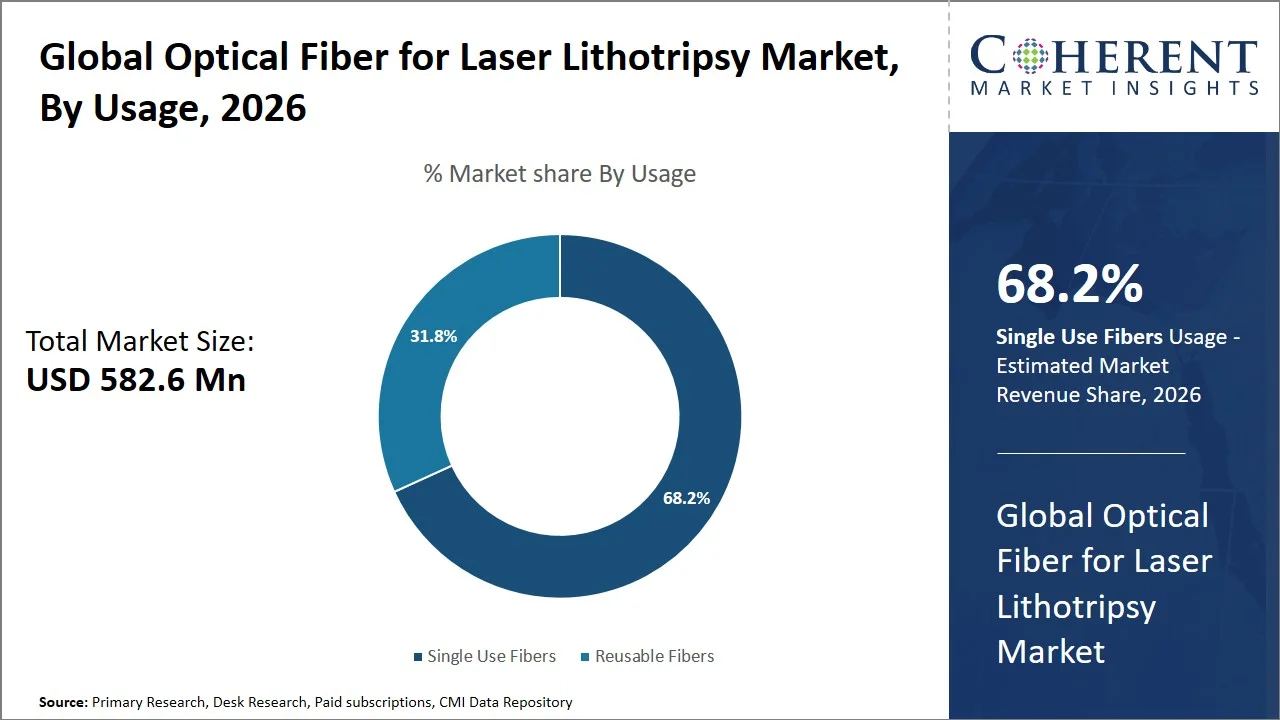
Single use fibers are projected to hold a market share of 68.2% in 2026, due to their distinct advantages in terms of reducing contamination, providing reliable, sustained laser performance, and increasing efficiency by eliminating the need for cleaning and sterilization. They also offer increased stability, minimize fiber degradation and enhance compatibility with the next generation of endourology lasers. For instance, Cook Medical offers Quanta Standard Surgical Laser Fibers come in a range of single-use diameters (200-1,000 m) and they work with both Holmium: YAG and Thulium laser systems. A variety of ball-tip single-use fibers are offered to ease insertion through deflected flexible ureteroscopes and minimize scope damage during laser lithotripsy procedures. (Source: Cook)
Kidney Stone Lithotripsy Segment Dominates the Global Optical Fiber for Laser Lithotripsy Market
The kidney stone lithotripsy segment is projected to hold a market share of 56.1% in 2026, due to the increase of nephrolithiasis and the widespread adoption of minimally invasive endourological techniques. Laser lithotripsy, performed with an operative telescope, requires the use of optical fibers with higher characteristics, that are necessary to perform flexible ureteroscopy and retrograde intrarenal surgery (RIRS). In addition, such developments have led to higher stones shattering efficiency and overall process safety and clinical results. For instance, in April 2025, a study published by Springer Nature demonstrated a 97.9% stone-free rate of Thulium Fiber Laser (TFL) that facilitated retrograde intrarenal surgery (RIRS) for renal and ureteral stones, which underlines the increasing use of laser lithotripsy in kidney stone treatments and the demand for sophisticated optical fibers. (Source: Springer Nature)
Currents Events and their Impact
Current Events | Description and its Impact |
European Commission's Proposal to Simplify Medical Device Regulations (December 2025) |
|
Japan PMDA Expands Registration Support for Foreign Medical Device Companies (January 2026) |
|
(Source: European Commission, Pacific Bridge Medical)
Optical Fiber for Laser Lithotripsy Market Dynamics
Market Drivers
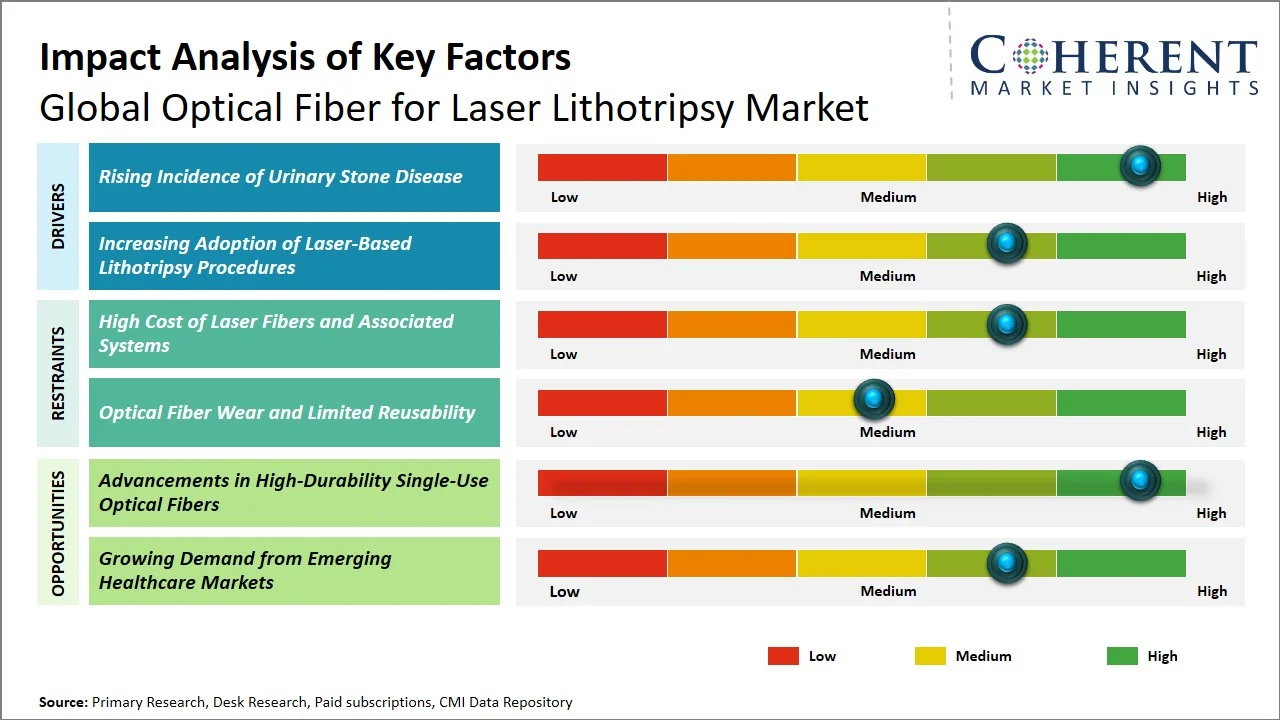
- Rising Incidence of Urinary Stone Disease: The increasing burden of urinary stone disease is driving the demand for laser lithotripsy procedures, accelerating the adoption of high-performance optical fibers for precise and minimally invasive stone fragmentation. As procedure volumes continue to rise, healthcare providers are increasingly utilizing durable optical fibers that offer reliable laser energy transmission and improved procedural efficiency. For instance, according to the Global Burden of Disease (GBD) 2021 study, deaths attributable to urolithiasis increased by 60.3% globally between 2000 and 2021, reflecting the growing clinical burden of urinary stone disease and the sustained need for advanced stone management technologies, including laser lithotripsy.
- Increasing Adoption of Laser-Based Lithotripsy Procedures: The increasing adoption of laser-based lithotripsy procedures is driving the demand for advanced optical fibers that enable efficient laser energy delivery and precise stone fragmentation. Growing preference for minimally invasive endourological interventions is encouraging healthcare providers to adopt next-generation laser systems that require high-performance optical fibers. For instance, Olympus highlighted independent clinical evidence demonstrating that its SOLTIVE SuperPulsed Thulium Fiber Laser System reduced kidney stone procedure times by an average of 20% compared with Holmium: YAG laser systems, reinforcing the growing clinical adoption of laser lithotripsy technologies.
Emerging Trends
- Integration of Advanced Fiber Tip Technologies: Manufacturers are increasingly developing reinforced and low burn-back fiber tip designs to improve laser energy transmission and reduce tip degradation during prolonged lithotripsy procedures. These innovations help maintain consistent fragmentation performance while extending the effective lifespan of optical fibers.
- Development of Multi-Platform Laser-Compatible Optical Fibers: The market is witnessing growing demand for optical fibers compatible with multiple laser platforms, particularly Holmium: YAG and Thulium Fiber Laser (TFL) systems. Multi-platform compatibility enables healthcare providers to optimize equipment utilization, simplify inventory management, and facilitate seamless technology upgrades.
Regional Insights
Why is North America a Strong Market for Optical Fiber for Laser Lithotripsy?
North America leads the global optical fiber for laser lithotripsy market, accounting for an estimated 42.6% share in 2026, due to the presence of a developed endourology industry and increased implementation of laser-assisted lithotripsy in clinical settings. This region also receives supportive government initiatives to promote the use of innovative medical technologies and supportive reimbursement schemes for urological procedures, which drive the growth of the optical fiber for laser lithotripsy market.
For instance, in January 2023, the U.S. Centers for Medicare & Medicaid Services (CMS) implemented an update to the Medicare Hospital Outpatient Prospective Payment System (OPPS) with the establishment of a new Transitional Pass-Through (TPT) payment category for single-use endoscopes. This allows separate Medicare reimbursement for eligible novel devices that support adoption of state-of-the-art endourology for the management of kidney stones. (Source: Boston Scientific Corporation) Furthermore, the growing range of advanced optical fibers used in laser lithotripsy and numerous urology centers specialized in endoscopy stone surgery further propels the market growth.
Why Does the Asia Pacific Optical Fiber for Laser Lithotripsy Market Exhibit High Growth?
The Asia Pacific optical fiber for laser lithotripsy market is expected to exhibit the fastest growth with an estimated contribution of 18.8% share to the global market in 2026, owing to rapid uptake of minimally invasive stones management approaches and a rise in access to novel endourology. Urolithiasis prevalence and accessibility to laser lithotripsy treatments in developed nations are fueling the growth of these premium optical fibers. In addition, increasing government initiatives for upgrading healthcare systems, improving local device production and enhancement of medical facilities and infrastructure further enable the regional sales of leading-edge technologies used for laser lithotripsy.
For instance, under India's Production Linked Incentive (PLI) scheme for Medical Devices, financial incentives are provided to boost the production of high-end medical devices locally and increase import dependency. The initiative is aimed at developing local manufacturing of medical devices, specifically high-end technology-based devices like those used in laser lithotripsy which is performed through minimally invasive surgery. (Source: Department of Pharmaceuticals)
Global Optical Fiber for Laser Lithotripsy Market Outlook for Key Countries
Why is the U.S. Leading Innovation and Adoption in the Optical Fiber for Laser Lithotripsy Market?
The U.S. holds the largest market share for innovation and adoption in optical fiber for laser lithotripsy market driven by the early adoption of cutting-edge laser technology such as Holmium: YAG lasers and Thulium Fiber Lasers (TFLs) into urological practice. The U.S. is the hub of various laser systems and optical fiber suppliers, including leading global players, developing and supplying innovative fiber solutions (such as Boston Scientific Corporation, Cook Medical, Coherent Corp., and Lumenis) which include the fiber with enhanced durability, flexibility, and optical power transmission capability. High procedural volumes for kidney stone treatment (more than 600,000 ureteroscopic procedures are performed annually in the U.S.), as well as quick adoption of new-to-market laser fiber products, will continue to expand the U.S. leadership in innovation and commercialization.
Is the U.K. a Favorable Market for Optical Fiber for Laser Lithotripsy?
The U.K. is a promising market for optical fiber for laser lithotripsy due to an increase in the use of minimally invasive endourological procedures and the increased use of laser stone management over standard lithotripsy procedures. The increased use of flexible ureteroscopy, combined with the use of Thulium Fiber Laser (TFL) technology throughout UK National Health Services (NHS) hospitals, has seen increased interest in high-performance optical fibers. Finally, the drive towards more efficient procedures and better patient outcomes within the UK continue to promote greater adoption of modern laser fiber technologies.
Is China Emerging as a Key Growth Hub for the Optical Fiber for Laser Lithotripsy Market?
China is becoming an important growth area in the optical fiber for laser lithotripsy market as the expansion of tertiary hospitals and increasing use of minimally invasive endourological procedures are propelling the demand. In China, growing investment in ultra-modern urology infra-structure and increasing installation of Holmium: YAG and Thulium Fiber Laser (TFL) system is creating strong demand for optical fiber of higher caliber. The expanding Chinese medical equipment production base and increasing trends to renovate urology with the modern technologies are going to drive the market over the coming years.
Why Does Germany Top the European Optical Fiber for Laser Lithotripsy Market?
Germany is the leading optical fiber for laser lithotripsy market in Europe by virtue of high penetration of novel endourology technologies and widespread adoption of Holmium: YAG and Thulium Fiber Laser (TFL) laser technologies in stone treatment. The presence of an integrated medical device manufacturing environment along with several renowned global laser technology companies (such as Biolitec AG, LEONI Fiber Optics GmbH, CeramOptec GmbH, JenaSurgical GmbH, and Carl Zeiss Meditec AG) further boosts sustained innovation of high-performance optical fibers. Furthermore, a strong focus on specialized urology centers along with early adoption of the next-generation laser lithotripsy practices will drive the growth of the optical fiber industry across Germany.
Is Optical Fiber for Laser Lithotripsy Market Developing in Japan?
The optical fiber for laser lithotripsy market in Japan is gradually expanding due to increased implementation of Holmium: YAG and Thulium Fiber Laser (TFL) technologies in endourology. Japan’s proficiency in optics technology and medical device engineering permits the implementation of laser fiber devices with advanced performance. Meanwhile, the use of flexible ureteroscopy (fURS) in clinical practice of kidney stone management contributes to increased use of optical fibers in hospitals.
Technology Landscape in the Global Optical Fiber for Laser Lithotripsy Market
Technology Trend | Current Status | Market Impact |
Holmium: YAG Laser-Compatible Fibers | Mature | Largest installed base and consistent demand |
Thulium Fiber Laser (TFL)-Compatible Fibers | Rapidly Growing | Higher growth due to increasing TFL adoption |
Single-Use Optical Fibers | Expanding | Improved infection control and workflow efficiency |
Small-Diameter Fibers (150–200 µm) | Increasing Adoption | Better scope deflection and irrigation |
High-Durability Fiber Tips | Emerging | Reduced burn-back and longer procedural life |
How are the advancements in high-durability single-use optical fibers creating new growth opportunities in the optical fiber for laser lithotripsy market?
Single-use optical fibers with increased durability are driving new potential in the laser lithotripsy market by enhancing the reliability of the procedures, and enabling the transmission of laser energy uniformly during a procedure. Innovative new materials and stronger fiber-optic tip designs ensure reduced burn-back, lower incidence of fiber breakage, eliminate reprocessing requirements, and result in an optimized workflow in an operative environment. The growing demand for disposables in the practice of endourology by the hospital segment has encouraged leading manufacturers to offer and develop state-of-the-art single-use fibers. For instance, in October 2025, Boston Scientific’s MOSES 200, 365, and 550 D/F/L Laser Fibers received U.S. FDA 510(k) clearance, increasing access to state-of-the-art laser fiber solutions for urology treatments. (Source: Food and Drug Administration)
Market Players, Key Development, and Competitive Intelligence
Key Developments
- In May 2026, BD (Becton, Dickinson and Company) launched the Elyra Thulium Fiber Laser System to strengthen its kidney stone treatment portfolio. The system combines high-performance thulium fiber laser technology with advanced laser fibers to improve stone fragmentation efficiency and procedural precision. This launch reflects the growing adoption of next-generation laser lithotripsy platforms, driving demand for high-quality optical fibers in urology.
- In June 2025, Coherent Corp. introduced a new portfolio of disposable surgical fiber assemblies designed for laser lithotripsy and other advanced medical procedures. The fibers are engineered to deliver enhanced laser transmission, durability, and procedural consistency while supporting the growing shift toward single-use devices for improved infection control and clinical efficiency. This launch highlights the ongoing innovation in high-performance optical fibers for urology applications.
Competitive Landscape
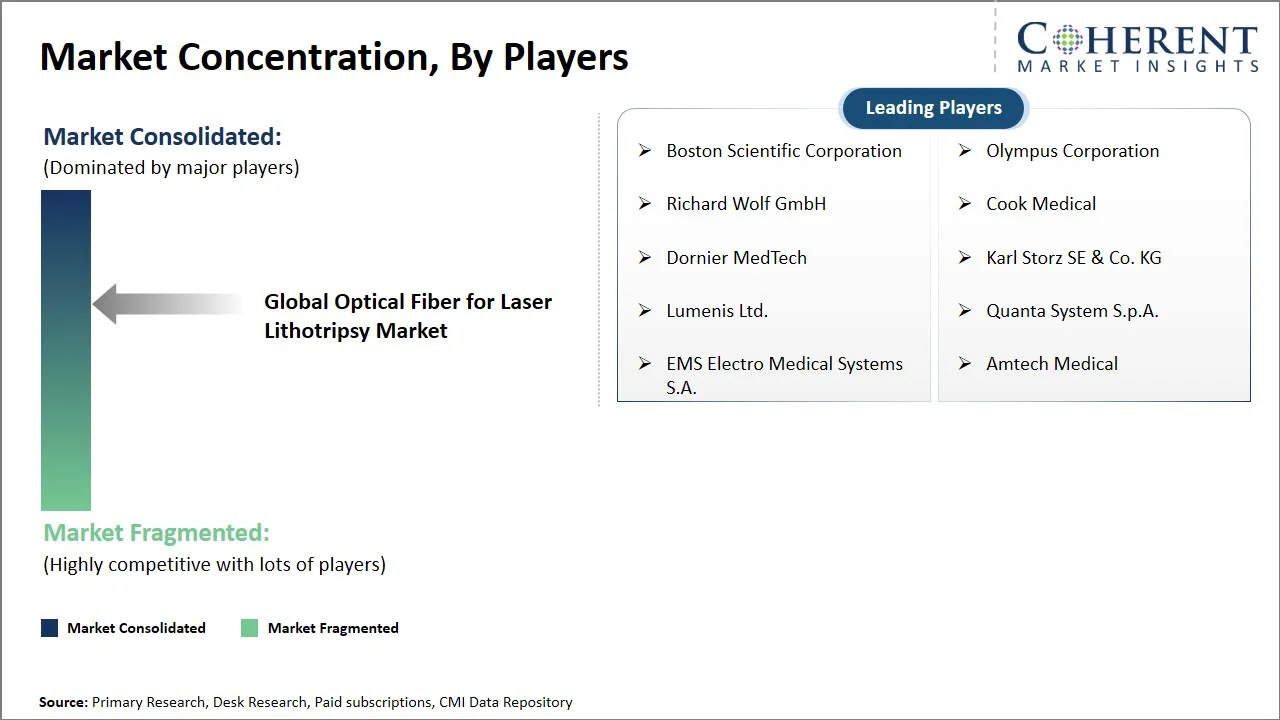
The global optical fiber for laser lithotripsy market is moderately consolidated, with leading players focusing on product innovation to enhance fiber durability, improve compatibility with next-generation laser platforms, and optimize clinical performance. Companies are expanding their portfolios of both disposable and reusable laser fibers while strengthening strategic partnerships with medical laser system manufacturers and healthcare providers to broaden market reach and support the adoption of advanced laser lithotripsy technologies. Key focus areas include:
- Development of high-durability, low-loss optical fibers for Holmium: YAG and Thulium Fiber Laser (TFL) systems
- Expansion of single-use laser fiber portfolios to support infection prevention and workflow efficiency
- Miniaturization of optical fibers to improve flexibility, irrigation flow, and compatibility with flexible ureteroscopes
- Strategic partnerships, product launches, and geographic expansion to strengthen presence in the global endourology market
- Investment in advanced fiber materials and manufacturing technologies to enhance energy transmission, longevity, and procedural performance
Market Report Scope
Optical Fiber for Laser Lithotripsy Market Report Coverage
| Report Coverage | Details | ||
|---|---|---|---|
| Base Year: | 2025 | Market Size in 2026: | USD 582.6 Mn |
| Historical Data for: | 2020 To 2024 | Forecast Period: | 2026 To 2033 |
| Forecast Period 2026 to 2033 CAGR: | 5.7% | 2033 Value Projection: | USD 859.8 Mn |
| Geographies covered: |
| ||
| Segments covered: |
| ||
| Companies covered: | Boston Scientific Corporation, Olympus Corporation, Richard Wolf GmbH, Cook Medical, Dornier MedTech, Karl Storz SE & Co. KG, Lumenis Ltd., Quanta System S.p.A., EMS Electro Medical Systems S.A., and Amtech Medical | ||
| Growth Drivers: |
| ||
| Restraints & Challenges: |
| ||
Analyst Opinion (Expert Opinion)
- The outlook for the optical fiber for laser lithotripsy market driven by the increasing transition from conventional stone treatment methods to high-power laser-based lithotripsy, particularly Thulium Fiber Laser (TFL) systems. As hospitals continue to adopt advanced endourology platforms, demand will shift toward optical fibers that offer higher energy efficiency, improved durability, and better flexibility. In addition, the growing preference for single-use laser fibers to reduce cross-contamination risks and eliminate reprocessing is expected to accelerate product innovation and reshape the competitive landscape.
- The maximum opportunities are foreseen within single-use optical fibers for kidney stone lithotripsy in India and China. Both countries are witnessing a rapid rise in kidney stone prevalence, increasing investments in tertiary healthcare infrastructure, and expanding availability of minimally invasive urological procedures. The growing installation of advanced laser lithotripsy systems in multispecialty hospitals and specialty urology centers is expected to generate significant demand for high-performance disposable optical fibers over the forecast period.
- In order to gain a competitive advantage, market players should focus on next-generation optical fibers by offering greater thermal tolerance, reduced energy loss, and a smaller outer diameter for better compatibility with flexible ureteroscopes and high-power laser devices. They can enhance partnerships with laser system manufacturers and key urology centers to facilitate integration with other systems and enhance product adoption. By enhancing manufacturing capacity, securing regulatory approvals in growth-oriented Asian markets and providing procedure-specific disposable fiber options, market participants can stand out and benefit from upcoming growth opportunities.
Speak to the analyst
Want personalized insights?
Take the findings above to one of our principal consultants, or have the report rebuilt around the segments, geographies and competitors you actually track.
Market Segmentation
- Laser Type Insights (Revenue, USD Mn, 2021 - 2033)
- Holmium: YAG Laser
- Thulium Fiber Laser
- Diode Lasers
- Usage Insights (Revenue, USD Mn, 2021 - 2033)
- Single Use Fibers
- Reusable Fibers
- Application Insights (Revenue, USD Mn, 2021 - 2033)
- Kidney Stone Lithotripsy
- Ureteral Stone Lithotripsy
- Bladder Stone Lithotripsy
- End User Insights (Revenue, USD Mn, 2021 - 2033)
- Hospitals
- Specialty Clinics
- Ambulatory Surgical Centers
- Others
- Regional Insights (Revenue, USD Mn, 2021 - 2033)
- North America
- U.S.
- Canada
- Latin America
- Brazil
- Argentina
- Mexico
- Rest of Latin America
- Europe
- Germany
- U.K.
- Spain
- France
- Italy
- Russia
- Rest of Europe
- Asia Pacific
- China
- India
- Japan
- Australia
- South Korea
- ASEAN
- Rest of Asia Pacific
- Middle East
- GCC Countries
- Israel
- Rest of Middle East
- Africa
- South Africa
- North Africa
- Central Africa
- North America
- Key Players Insights
- Boston Scientific Corporation
- Olympus Corporation
- Richard Wolf GmbH
- Cook Medical
- Dornier MedTech
- Karl Storz SE & Co. KG
- Lumenis Ltd.
- Quanta System S.p.A.
- EMS Electro Medical Systems S.A.
- Amtech Medical
Sources
Primary Research Interviews
- Urologists specializing in endourology and laser lithotripsy procedures
- Hospital procurement managers responsible for endoscopic and laser surgical equipment
- Product managers and R&D executives from optical fiber and laser system manufacturers
- Biomedical engineers developing laser fiber and endourology technologies
- Clinical specialists from ambulatory surgery centers performing stone management procedures
Stakeholders
- Optical fiber manufacturers
- Medical laser system manufacturers
- Endourology device companies
- Hospitals and ambulatory surgery centers (ASCs)
- Medical device distributors
- End-use Sectors
- Hospitals
- Specialty Urology Clinics
- Ambulatory Surgery Centers (ASCs)
- Regulatory & Health Bodies
- U.S. Food and Drug Administration (FDA)
- European Medicines Agency (EMA)
- Medicines and Healthcare products Regulatory Agency (MHRA), UK
- Pharmaceuticals and Medical Devices Agency (PMDA), Japan
- National Medical Products Administration (NMPA), China
- Central Drugs Standard Control Organization (CDSCO), India
- European Association of Urology (EAU)
- American Urological Association (AUA)
Databases
- FDA 510(k) Medical Device Database
- FDA MAUDE Database
- ClinicalTrials.gov
- PubMed
- NIH RePORTER
- National Library of Medicine (NLM)
Magazines
- Urology Times
- European Urology Today
- Medical Device Network
- Medical Design & Outsourcing
- MedTech Dive
Journals
- European Urology
- Journal of Endourology
- BJU International (BJUI)
- World Journal of Urology
- Urolithiasis
- Journal of Urology
Newspapers
- Financial Times – Medical Technology & Healthcare
- The Wall Street Journal – Healthcare
- The Economic Times – Healthcare
- China Daily – Healthcare & Medical Technology
Associations
- American Urological Association (AUA)
- European Association of Urology (EAU)
- Endourological Society
- Urological Association of Asia (UAA)
- American Society for Laser Medicine and Surgery (ASLMS)
- Medical Device Manufacturers Association (MDMA)
Public Domain Sources
- U.S. Food and Drug Administration (FDA)
- National Institutes of Health (NIH)
- National Kidney Foundation (NKF)
- European Association of Urology (EAU)
- World Health Organization (WHO)
- Centers for Disease Control and Prevention (CDC)
- Ministry of Health & Family Welfare, Government of India (MoHFW)
- National Health Commission of the People's Republic of China (NHC)
Proprietary Elements
- CMI Data Analytics Tool, Proprietary CMI Existing Repository of information for last 10 years.
Get access to 250+ pages report
Every segment, forecast, competitor profile and data table behind the analysis above — available for instant download.
- ESOMAR Member
- ISO 9001:2015 Certified
- D-U-N-S Registered
- GDPR & CCPA Compliant
Missing comfort of reading report in your local language? Find your preferred language:
Transform your Strategy with Exclusive Trending Reports
Frequently Asked Questions
The global optical fiber for laser lithotripsy market is estimated to be valued at USD 582.6 Mn in 2026 and is expected to reach USD 859.8 Mn by 2033.
Holmium: YAG Laser dominates due to its proven ability to effectively fragment all types of urinary stones, broad clinical acceptance, and widespread installation across hospitals and ambulatory surgical centers worldwide.
An optical fiber for laser lithotripsy is a specialized medical fiber that transmits laser energy through an endoscope to fragment urinary stones during minimally invasive urological procedures.
The CAGR of the global optical fiber for laser lithotripsy market is projected to be 5.7% from 2026 to 2033.
200–272 µm optical fibers are commonly used as they provide an optimal balance between laser energy delivery, irrigation flow, and ureteroscope deflection.
Optical fibers are primarily designed for Holmium: YAG and Thulium Fiber Laser (TFL) systems, with compatibility depending on fiber specifications and laser power output.
Rising incidence of urinary stone disease, and increasing adoption of laser-based lithotripsy procedures are the major factors driving the growth of the global optical fiber for laser lithotripsy market.