

Organ-on-Chip Technology Market Size and Share Analysis- 2026 To 2033
The Organ-on-Chip Technology Market size is anticipated to grow at a CAGR of 26.4%, with USD 234.8 Mn in 2026, and is expected to reach USD 1,210.0 Mn by 2033. The primary drivers are largely defined by the rising adoption of organ-on-chip platforms in drug discovery and development, increasing demand for alternatives to animal testing, growing investments in advanced microfluidic technologies, and wider application of human-relevant disease modeling in pharmaceutical and biotechnology research. According to the U.S. Food and Drug Administration (FDA), organ-on-chip technologies use microengineered systems containing living human cells to replicate key physiological functions and enable more human-relevant assessments of drug safety and toxicity.
Key Takeaways of the Global Organ-on-Chip Technology Market
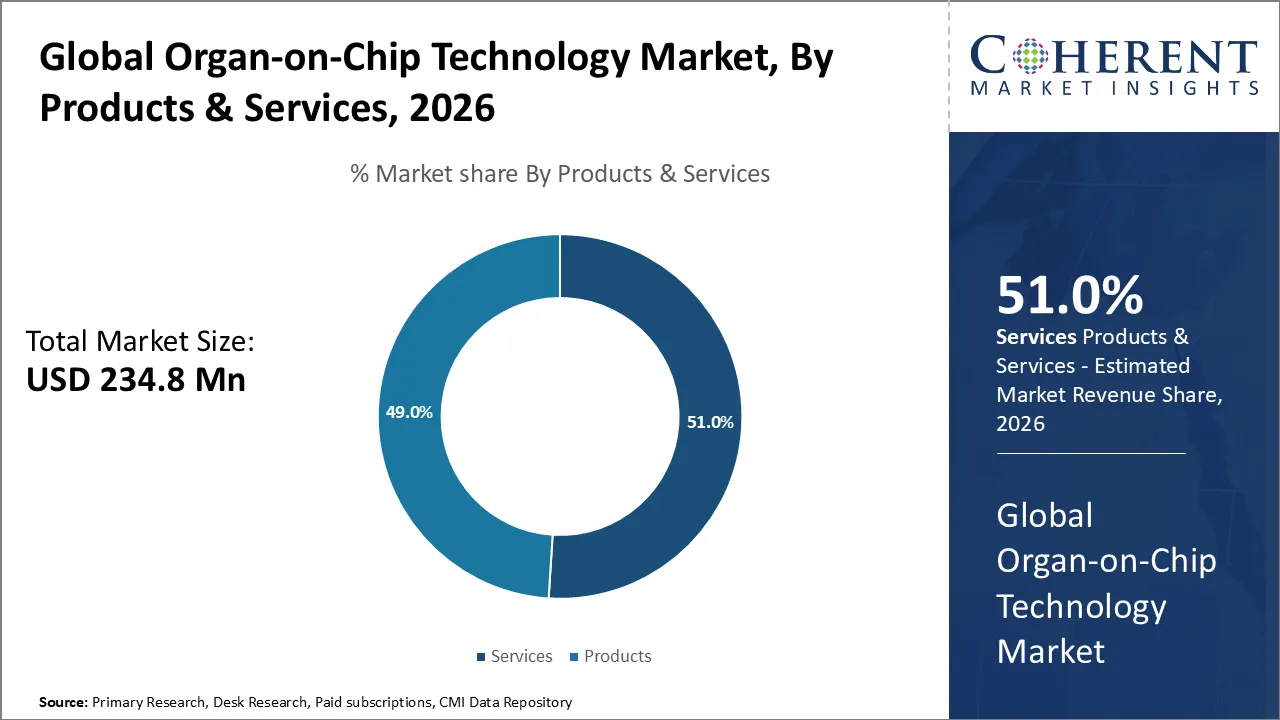
- The Services segment is expected to account for 51.0% of the global organ-on-chip technology market share in 2026. Growing demand for outsourced testing capabilities and validated human-relevant disease models is driving the segment's growth. On September 14, 2026, MIMETAS launched OrganoServices, a standardized contract research service for studies of gastrointestinal toxicity and drug-induced vascular injury, with results typically available within one week of assay completion.
- The Drug Discovery segment is expected to hold 63.0% market share in 2026. Growth in this segment is primarily driven by the increasing demand for predictive preclinical testing and enhanced evaluation of drug candidates. On September 9, 2026, Emulate submitted a full qualification package for its Human Liver-Chip to the FDA’s ISTAND program covering the Zoë Culture Module and AVA Emulation System for the assessment of drug-induced liver injury.
- The Pharmaceutical & Biotechnology Companies Segment is Expected to Account for 72.0% Market Share in 2026. Increasing efforts to decrease reliance on animal models and rising investments in human relevant testing platforms are helping the segment to expand. The U.S. Food and Drug Administration (FDA) said on April 20, 2026 it had met key first-year goals under its roadmap to reduce animal testing in preclinical drug safety studies, reaffirming regulatory backing for innovative testing methods.
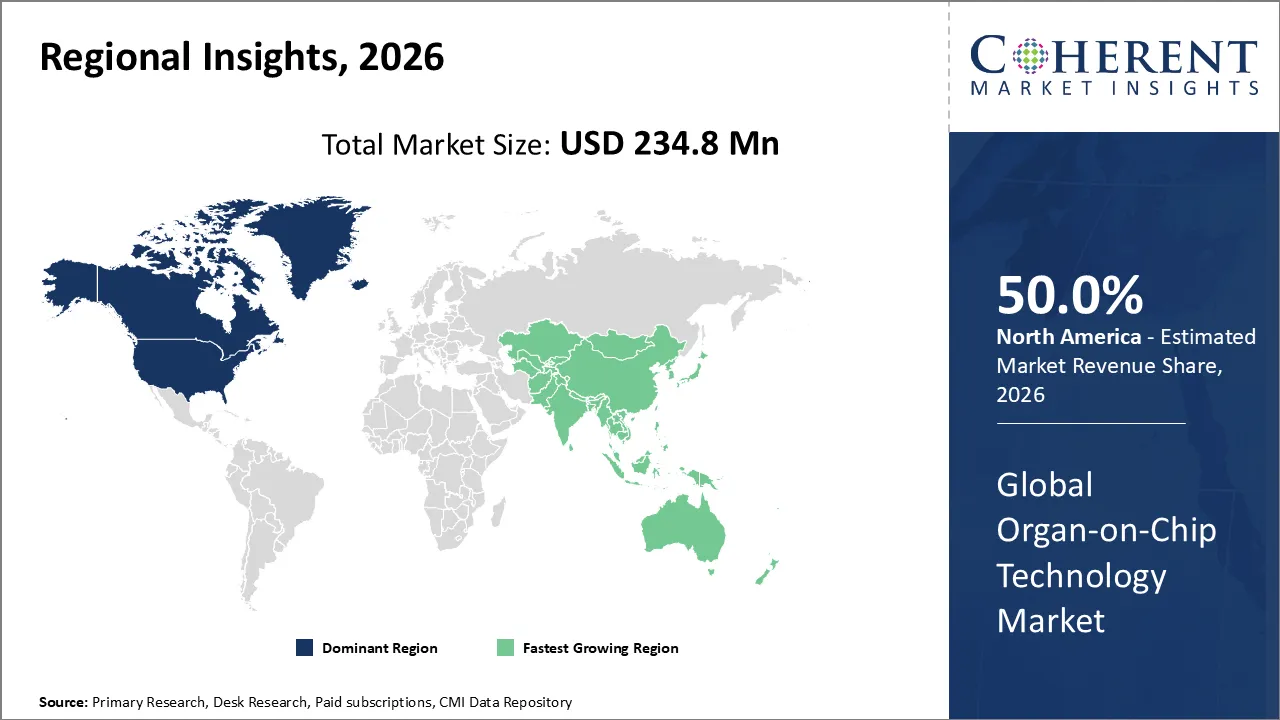
- North America is expected to have the 50.0% market share in the organ-on-chip technology market by 2026. "A robust pharmaceutical research infrastructure, rising commercial investment, and the presence of leading organ-on-chip manufacturers are fueling regional growth. On August 10, 2026, U.S.-based Bruker will make a majority investment in Netherlands-based MIMETAS in a move to bolster its portfolio of human-relevant disease models, microphysiological systems and drug discovery technologies.
- Asia Pacific is projected to lead with a 23.0% share by 2026 and emerge as the fastest growing regional market during the forecast period of 2026-2033. Higher investment in research, utilization of cutting-edge cell-culture technologies and greater pharmaceutical innovation are spurring growth in the region. On April 15, 2026, Japan’s Agency for Medical Research and Development (AMED) released updated program information on efforts to develop microphysiological systems for the evaluation of drug safety, efficacy and pharmacokinetics, including liver, kidney, lung and neurological models.
Segmental Insights
Why Does the Services Segment Dominate the Global Organ-on-Chip Technology Market?
The services segment is expected to capture 51.0% of the global organ-on-chip technology market share in 2026. Growth in this segment is driven by increasing demand for specialized preclinical testing, outsourced drug development services and human-relevant disease modeling. Pharmaceutical and biotechnology companies are increasingly outsourcing organ-on-chip studies to contract research providers to avoid the heavy investment in specialized laboratory equipment and infrastructure that would be needed. These services include drug efficacy evaluation, toxicity screening, pharmacokinetic analysis and disease modeling using advanced microfluidic platforms. Service providers provide customized assay development, technical expertise and validated testing protocols to help pharmaceutical researchers to achieve reliable results with reduced operational complexity and development costs. Increasing demand for predictive testing models and fast drug development is also boosting organ-on-chip services.
On October 23, 2025, Hesperos announced a strategic partnership with Oriental Yeast Co., Ltd. to bring its Human-on-a-Chip services to Asia. The collaboration will focus on providing preclinical drug development services to pharmaceutical, biotechnology and medical technology companies, including drug safety evaluation, efficacy testing and pharmacokinetic and pharmacodynamic testing.
- Current Industry Events of 2026
- Market Size Estimation
- Regional Breakdown
- Competitive Landscape
- Customer Intelligence
- Segmental Analysis
- Pricing Analysis
- Key Market Drivers, Challenges & Future Trends
- Customized Insights Section
Why Does Drug Discovery Dominate the Global Organ-on-Chip Technology Market?
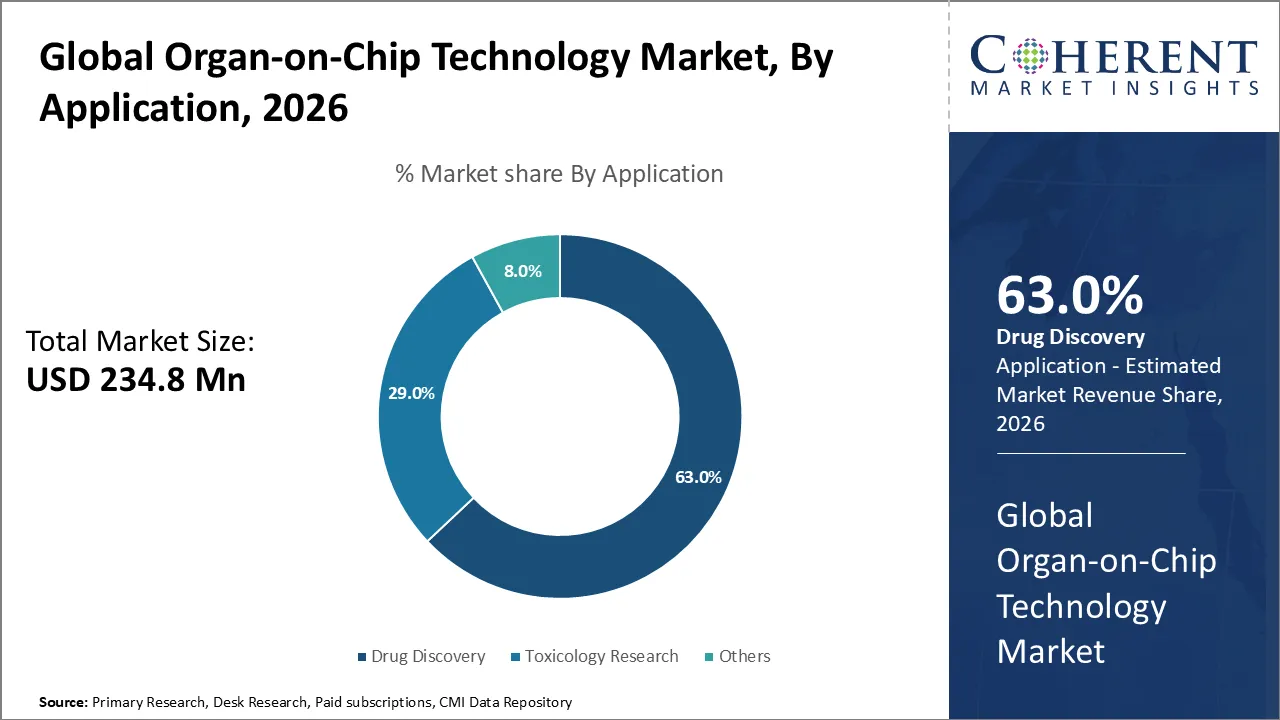
The drug discovery segment is anticipated to hold 63.0% of the global organ-on-chip technology market by 2026. The segment’s growth is mainly driven by the increased demand for accurate drug screening, improved prediction of human drug responses, and reduced dependence on conventional animal testing. Organ-on-chip platforms allow pharmaceutical researchers to mimic the functions of human organs in controlled laboratory environments to detect the efficacy, toxicity, and possible adverse reactions of a drug in its early stages. These technologies support compound screening, target validation, disease modeling and lead optimization in therapeutic areas such as oncology, cardiovascular diseases and neurological disorders. Such technologies enable compound screening, target validation, disease modeling and lead optimization in therapeutic areas including oncology, cardiovascular diseases and neurological disorders. The combination of microfluidics, human derived cells and advanced analytical technologies provides more physiological relevance to preclinical research. The increased investment in innovative drug development and need to reduce late-stage clinical failures drives the market growth.
On July 16, 2026, Axxam and BiomimX announce a collaboration to advance human-relevant drug discovery leveraging next-generation organ-on-chip technologies. The partnership brings together Axxam’s drug discovery capabilities such as high-throughput screening and hit-to-lead optimization, with BiomimX’s uBeat platform, which combines microfluidics, living human cells and mechanical stimulation.
Why Do Pharmaceutical & Biotechnology Companies Dominate the Global Organ-on-Chip Technology Market?
The pharmaceutical and biotechnology companies’ segment is anticipated to hold 72.0% share of the global organ-on-chip technology market by 2026. The segment is expanding due to more investment in advanced drug development technologies, more focus on predictive preclinical testing, and more demand for human-relevant biological models. Organ-on-chip platforms are currently applied by pharmaceutical companies to test the safety of drugs, therapeutic efficacy and organ tropism before clinical trials. These systems allow researchers to study complex biological interactions, including drug metabolism, organ toxicity and disease progression, in a physiologically relevant environment. The technologies also aid in developing targeted therapies, biologics and personalized healthcare. Broader adoption of organ-on-chip systems into pharmaceutical research workflows is being driven by both growing regulatory interest in alternative testing methods and the desire to reduce drug development costs.
October 1, 2026, CN Bio has announced the scientific program for its organ-on-chip symposium, featuring pharmaceutical and research organizations such as Novo Nordisk, Bristol Myers Squibb and Pharmaron. The program addresses organ-on-chip applications for drug metabolism, pharmacokinetics, toxicology and pre-clinical decision making. CN Bio says 16 leading pharmaceutical companies are using its PhysioMimix organ-on-chip technology, showing the industry is embracing human-relevant testing platforms.
Current Events and Their Impact on the Organ-on-Chip Technology Market
Current Event | Description and its Impact |
U.S. FDA Updates Regulations to Recognize Organ-on-Chip and Non-Animal Testing Methods (September 2026) |
|
European Commission Adopts Roadmap to Phase Out Animal Testing for Chemical Safety Assessments (June 2026) |
|
Organ-on-Chip Technology Market Dynamics
Market Drivers
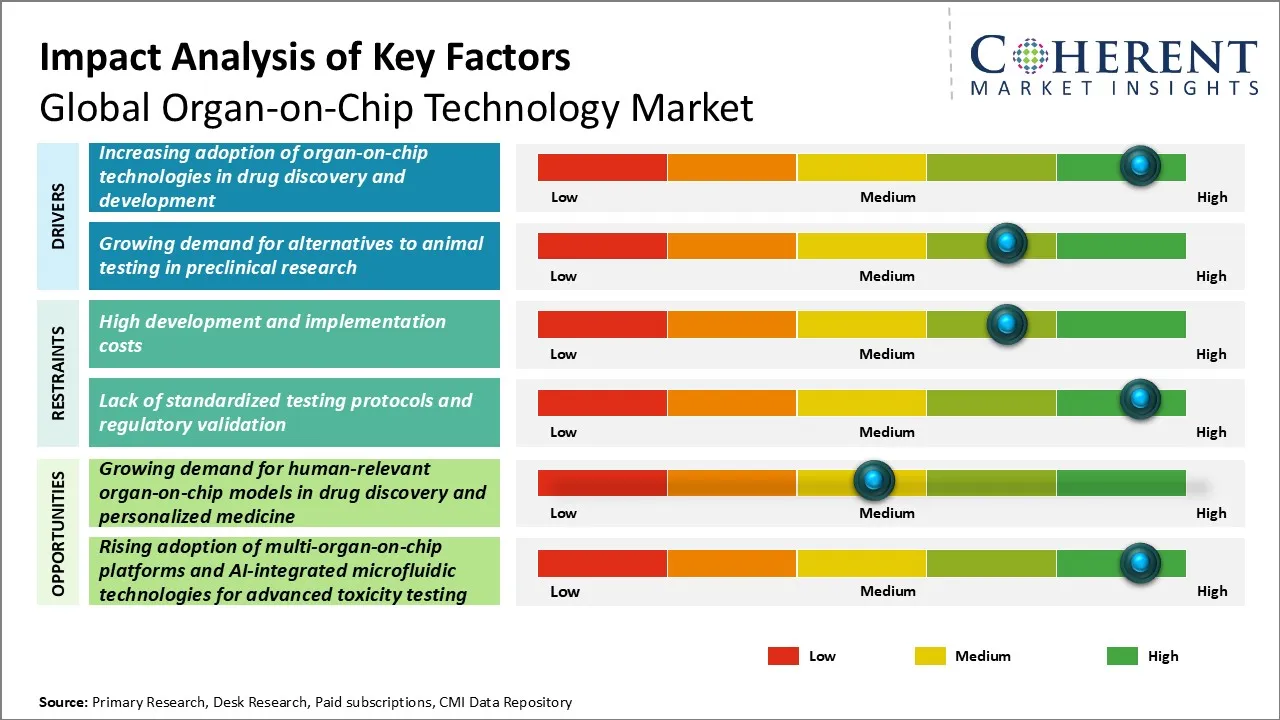
- Growing demand for accurate and predictive drug discovery technologies: The increasing demand for reliable preclinical drug testing is driving the growth of the global organ-on-chip technology market. Pharmaceutical and biotechnology companies are aiming to overcome limitations of classical animal testing and 2-D cell cultures using experimental models relevant to humans. Organ-on-chip systems mimic key physiological features of human organs such as blood flow, mechanical stimulation and cell interactions, providing researchers with a more realistic platform to evaluate drug efficacy, toxicity and metabolism. These platforms allow poor drug candidates to be identified earlier in the development process which may reduce clinical trial failures, research costs and development time lines.
- A peer-reviewed study titled Human organ-on-a-chip technology as a catalyst for drug discovery, published in September 2026 in Advanced Drug Delivery Reviews, found that about 90% of drug candidates fail during clinical development.
- Increasing demand for alternatives to animal testing and better toxicity assessment: The global organ-on-chip technology market is growing due to growing focus on ethical research practice, human-relevant safety evaluation and reliable toxicity screening. Species differences in physiology and metabolism often render traditional animal models poor predictors of human-specific toxicological responses. One solution for tackling these challenges is the use of organ-on-chip platforms, that integrate living human cells within microfluidic devices to mimic organ-level functions and biological responses. These technologies are used to study drug-induced liver injury, kidney toxicity, cardiotoxicity and other adverse reactions in a controlled laboratory environment. As the interest in decreasing animal testing grows and technologies like human cell culture and micro physiological systems continue to improve, pharmaceutical manufacturers, chemical companies and contract research organizations are investing in organ-on-chip platforms.
- In March 2026, a peer-reviewed paper in Toxicology evaluated a scalable human liver-on-a-chip platform for predicting drug-induced liver injury. The researchers evaluated 17 compounds and reported 85.7% sensitivity, 100% specificity and 92.3% accuracy in the evaluation of compounds with known human toxicity liabilities. The results demonstrate the promise of organ-on-chip technologies to facilitate human-relevant toxicology assessment but broader validation is needed before routine regulatory application.
Organ-on-Chip Technology Market Trends
- The increasing integration of artificial intelligence (AI) and multi-omics technologies with the organ-on-chip platforms is enhancing the analysis of cellular responses, biological interactions, and drug efficacy. In September 2026, Small published a study showing the integration of organ-on-chip systems, bioprinting, organoids, and AI for next-generation pharmaceutical development.
- The growing use of multi-organ-on-chip systems is enabling investigators to simulate interactions between different human organs, enhancing evaluation of drug metabolism, systemic toxicity and therapeutic responses. A review in Nature Biomedical Engineering in October 2026 examined advances in interconnected organ-chip platforms for predicting drug absorption, distribution, metabolism, excretion and toxicity.
- The widespread use of patient-specific organ-on-chip models in personalized healthcare is driving targeted treatments for cardiovascular, neurological and other complex diseases. A 2026 review published in Nature Reviews Cardiology highlighted the use of heart-on-chip and vasculature-on-chip platforms for modeling inherited and acquired cardiovascular diseases and evaluating patient-specific drug response
Regional Insights
Why Does North America Dominate the Organ-on-Chip Technology Market?
North America is expected to dominate the global organ-on-chip technology market, accounting for 50.0% of the market share in 2026. The region benefits from a strong pharmaceutical research infrastructure, significant biotechnology investment and increasing adoption of human-relevant drug testing technologies. The U.S. is one of the main engines of regional growth, with established pharmaceutical companies, organ-on-chip developers, and government-funded biomedical research initiatives. Research institutions are increasingly using micro physiological systems to assess drug toxicity, model complex diseases and improve the outcomes of pre-clinical testing. The growing collaboration between Canadian universities, health care providers and biotech companies is spurring the creation of advanced organ-on-chip platforms. The regional market leadership is further strengthened by the increasing investments in automated tissue models, microfluidic technologies, and personalized healthcare.
On July 8, 2026 Texas A&M University Selected as Partner in Newly Formed USD 15.3 Million NIH-Sponsored Research Center to Advance Organ-on-Chip Technologies for Chemical Toxicity Testing and Reduce the Need for Animal Testing. The initiative includes the development of advanced microphysiological platforms to improve the reliability and efficiency of human-relevant safety assessments.
Why Does the Asia Pacific Organ-on-Chip Technology Market Exhibit High Growth?
Asia Pacific is expected to register the fastest growth during 2026–2033, accounting for 23.0% of the global organ-on-chip technology market share in 2026. Rising investments in pharmaceutical research, growth of biotechnology infrastructure and rising adoption of advanced microfluidic technologies are driving the regional market. China, Japan, South Korea and India are increasingly turning to human-relevant drug discovery platforms, stem cell research and innovative disease modeling technologies. China is developing its ecosystem for organ-on-chip research and commercialization through university-industry partnerships and government-sponsored innovation programs. Japan is developing microphysiological systems for pharmaceutical safety and efficacy testing. South Korea is expanding research on human cell-based drug evaluation technologies. Due to the rising presence of biotechnology companies, the increasing academic research capabilities, and the growing demand for alternative methods for preclinical testing, the region offers opportunities for organ-on-chip technology manufacturers and service providers.
On September 22, 2026, Southeast University of China unveiled an Organ-on-Chip Technology Transfer Platform at the Asia-Pacific Summit of the International Micro physiological Systems Society in Nanjing. More than 300 experts from over 100 international institutions attended the conference. The platform combines research labs, industry-academia partnerships, technology commercialization and AI-powered research capabilities to advance organ-on-chip applications in drug development, precision medicine and chemical safety testing.
Global Organ-on-Chip Technology Market Outlook for Key Countries
Why is the U.S. Emerging as a Major Hub in the Organ-on-Chip Technology Market?
The U.S. organ-on-chip technology market is driven by the presence of advanced pharmaceutical research infrastructure, growing acceptance of human relevant drug testing models, and increasing investments in microphysiological systems. Organ-on-chip platforms are being adopted by pharmaceutical and biotechnology companies for preclinical drug discovery, to better predict toxicity, assess therapeutic efficacy, and reduce the use of traditional animal models. Established biotechnology companies, specialized research institutes and government-backed innovation programs are supporting the commercialization of advanced organ-on-chip technologies. Moreover, the market is fueled by growing emphasis on personalized healthcare, automated drug screening, and standardized biological models.
In August 2026, the U.S. National Institutes of Health (NIH) started a research project named Human Stem Cell Based Microphysiological Systems for Aging Research. The performance period is from August 15, 2026 to April 30, 2031. The project seeks to create a human aging-on-a-chip platform including fat and liver tissues to investigate the mechanisms of aging and organ interactions.
Is China the Next Growth Engine for the Organ-on-Chip Technology Market?
The China organ-on-chip technology market is being bolstered by increasing spending on biotech research, expanding pharmaceutical manufacturing capabilities and rising investment in advanced cell culture and microfluidic technologies. Chinese research institutions and pharmaceutical companies are working on the development of human organ models for drug screening, disease modeling and toxicity evaluation. The translation of laboratory research into commercially applicable platforms is being advanced by increased collaboration between universities, biotechnology manufacturers and technology developers. Domestic makers of organ-on-chip also can benefit from government initiatives that encourage scientific innovation, pharmaceutical modernization and commercialization of research results.
Germany Organ-on-Chip Technology Market Analysis and Trends
Germany organ-on-chip technology market is driven by strong pharmaceutical industry, expertise in biomedical engineering, growing emphasis on alternatives to animal testing. Research institutions have been working on the creation of microphysiological systems in recent years to mimic the functioning of human organs and test the safety of drugs in a controlled laboratory environment. The country's expertise in microfluidics, biosensors and precision manufacturing is contributing to the development of automated organ-on-chip systems. Partnerships between research institutions, pharmaceutical companies and engineering organizations are also driving the commercialization of human-relevant testing technologies. There is increasing research in organ fibrosis, oncology and toxicology that is opening up further opportunities for advanced tissue models.
In March 2026, four Fraunhofer institutes, IPMS, IGB, IBMT and IZI-BB – began the PremoCell project, which is scheduled to continue until February 2029. The project will integrate photonic sensor chips with liver and stomach organoid models to track the biological response to drugs in real time. Researchers want to create microphysiological systems that can enhance preclinical toxicity and efficacy assessment.
U.K. Organ-on-Chip Technology Market Analysis and Trends
The U.K. organ-on-chip technology market is driven by strong academic research capabilities, increasing government investments in alternative testing methods and rising demand for human-relevant drug development platforms. Pharmaceutical and biotech companies are looking at microphysiological systems as a way to screen drug toxicity, explore disease mechanisms and speed up preclinical testing. The country’s push to reduce animal testing is prompting research teams to develop sophisticated organ-on-chip models and standard testing protocols. Collaborations between universities, biotech firms and government-funded research centers are making microfluidic technologies, organoid platforms and specialized lab infrastructure more accessible.
In 2026, researchers at the University of Tokyo announced the development of a dynamic human lung organoid platform that integrates lung acinus-like organoids with a pressure-controlled culture device. The system enables investigators to replicate mechanical changes associated with breathing and measure lung compliance in real time.
Japan Organ-on-Chip Technology Market Analysis and Trends
Japan’s organ-on-chip technology market is driven by advanced pharmaceutical research capabilities, increasing investments in regenerative medicine and rising uptake of induced pluripotent stem cell technologies. Pharmaceutical companies and academic institutions are developing human-relevant organ models to assess drug safety, study disease mechanisms and improve the prediction of clinical responses. Japan’s know-how in precision engineering, the manufacture of microfluidic devices, and cell-based technologies is contributing to advancing the next generation of organ-on-chip platforms. Innovation in lung-on-chip, liver-on-chip and other organ-specific research models is also being driven by more collaboration between pharmaceutical companies, universities and biomedical technology developers.
In 2026, researchers at the University of Tokyo reported the development of a dynamic human lung organoid platform combining lung acinus-like organoids with a pressure-controlled culture device. The system enables researchers to reproduce breathing-related mechanical changes and measure lung compliance in real time.
How is the Growing Adoption of Patient-Specific Organ-on-Chip Models Creating New Growth Opportunities in the Organ-on-Chip Technology Market?
The increasing utilization of patient-specific organ-on-chip models is gaining huge growth opportunities for the global organ-on-chip technology market. This enables investigators to recapitulate the tissue characteristics and disease states of each patient, improving the assessment of personalized treatment responses. Pharmaceutical companies and research institutions are increasingly employing patient-derived cells, microfluidic systems and advanced tissue engineering technologies to evaluate drug sensitivity, study disease progression and identify effective treatment options. In oncology, tumor-on-chip platforms can mimic key features of the tumor microenvironment, including vascular interactions and immune cell responses. These capabilities are allowing technology developers to offer customized testing platforms, specialized assay services and advanced precision medicine solutions.
For example, on August 28, 2026, Institut Curie in France and the French National Center for Scientific Research (CNRS) announced research results that showed a patient-derived tumor-on-chip technology that can help to select personalized treatment for metastatic breast cancer. Researchers have created a platform that measures therapeutic responses in samples taken from individual patients’ tumors.
Market Players, Key Development, and Competitive Intelligence
Key Developments
- In August 2026, Bruker Corporation announced a majority investment in MIMETAS, expanding its capabilities in human-relevant drug discovery and microphysiological systems. The transaction brings together MIMETAS' OrganoPlate technology with Bruker's multiomics, spatial biology, and preclinical imaging capabilities.
- In June 2025, Emulate announced the commercial launch of its AVA Emulation System, a high-throughput organ-on-chip platform capable of culturing, incubating, and imaging up to 96 independent organ-chip samples per run. The system incorporates automated imaging and AI-ready data generation.
Competitive Landscape
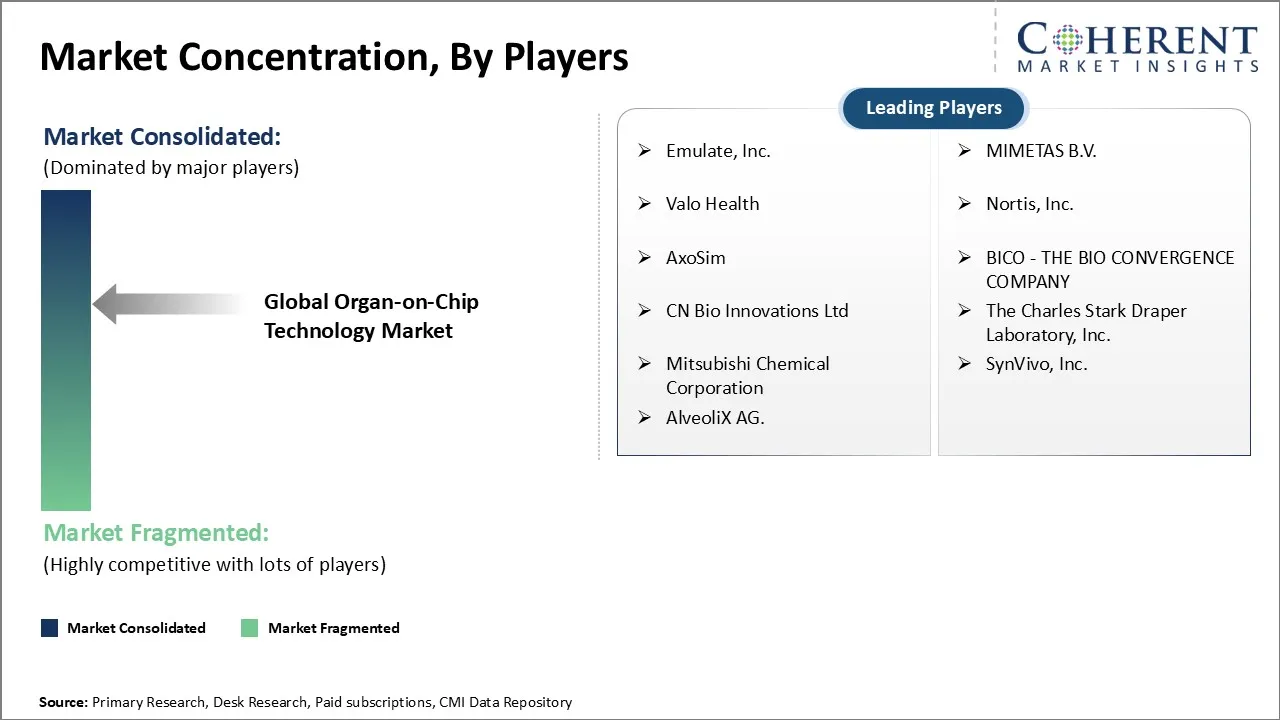
The global organ-on-chip technology market is characterized by increasing competition among biotechnology companies, microfluidic technology developers, and specialized research organizations. Emulate, Inc. is developing high-throughput Organ-Chip platforms for drug screening and toxicity testing, while MIMETAS B.V. is developing its OrganoPlate technology for 3D tissue modeling and drug discovery. CN Bio Innovations Ltd. makes PhysioMimix systems for pharmacokinetic and toxicity studies and Nortis, now part of Quris-AI, focuses on kidney-on-chip technologies. AxoSim (now 28bio) is specialized in neural tissue models, SynVivo develops vascular microfluidic platforms and AlveoliX AG specializes in lung-on-chip systems. “The competitive differentiation increasingly comes from physiological fidelity, automated testing capabilities, scalability and integration with AI-driven analytics technologies.
Top Manufacturers and Notable Products/Solutions in the Organ-on-Chip Technology Market
Company/Manufacturer | Notable Product/Brand | Key Features |
Emulate, Inc. | AVA Emulation System | High-throughput organ-on-chip platform, up to 96 independent chip samples per run, automated imaging, integrated incubation, drug toxicity assessment, AI-ready data generation. |
MIMETAS B.V. | OrganoPlate | 3D tissue culture, membrane-free microfluidic technology, continuous perfusion, 40–96 chips per plate, high-throughput drug screening, advanced disease modeling. |
CN Bio Innovations Ltd. | PhysioMimix Core | Single- and multi-organ modeling, adjustable microfluidic flow, liver and barrier tissue models, drug metabolism studies, pharmacokinetic assessment, toxicity testing |
The Charles Stark Draper Laboratory, Inc. | PREDICT96 | High-throughput microphysiological system, 96 individual organ-on-chip units, independent microfluidic perfusion, integrated sensing, drug efficacy and toxicity screening. |
SynVivo, Inc. | SynTEER Multiplexed Organ-on-Chip | Integrated electrodes, real-time barrier integrity monitoring, blood–brain barrier modeling, drug permeability testing, inflammation and neurotoxicity assessment |
AlveoliX AG | AX12 Barrier-on-Chip | Breathing lung-on-chip modeling, cyclic mechanical stretching, 12 independent tissue units, barrier integrity assessment, respiratory disease modeling, drug screening |
Market Report Scope
Organ-on-Chip Technology Market Report Coverage
Report Coverage | Details | ||
Base Year: | 2025 | Market Size in 2026: | USD 234.8 Mn |
Historical Data for: | 2020 to 2024 | Forecast Period: | 2026 to 2033 |
CAGR: | 26.4% | 2033 Value Projection: | USD 1,210.0 Mn |
Geographies covered: |
| ||
Segments covered: |
| ||
Companies covered: | Emulate, Inc., MIMETAS B.V., Valo Health, Nortis, Inc., AxoSim, BICO - THE BIO CONVERGENCE COMPANY, CN Bio Innovations Ltd, The Charles Stark Draper Laboratory, Inc., SynVivo, Inc., AlveoliX AG. | ||
Growth Drivers: |
| ||
Restraints & Challenges: |
| ||
Analyst Opinion (Expert Opinion)
- The global organ-on-chip technology market is transitioning from traditional laboratory-based tissue models to clinically predictive, scalable and AI-integrated microphysiological systems. Integration of human-derived cells, microfluidics, biosensors and artificial intelligence will improve drug safety assessment, disease modeling and prediction of therapeutic response. A review in Biosensors in March 2026 reported that in representative studies, cardiac organ-on-chip models had an area under the receiver operating characteristic curve (AUROC) of 0.85 or higher in predicting the risk of drug-induced arrhythmia. These results demonstrate the potential of advanced organ-on-chip systems to improve preclinical decision making, but further clinical validation is needed.
- The biggest growth opportunities are in pharmaceutical drug discovery, individualized medicine, advanced toxicology testing and multi-organ disease modeling. North America is anticipated to continue to lead attributed to the current pharmaceutical research capabilities. Asia Pacific is forecasted to capitalize on increasing biotechnology infrastructure and sophisticated biomedical research activities. Pharmaceutical companies are increasingly seeking models capable of reproducing human physiological responses and improving the selection of drug candidates in the early stages. But organ-chip systems are not yet routinely integrated into drug development pipelines, although they are being tested in pharmaceutical labs, says a February 2026 Cell Stem Cell article. This creates opportunities for manufacturers of validated platforms, specialized testing services and solutions tailored for integration into pharmaceutical research workflows.
- Instead of just delivering more complex organ-on-a-chip technologies, market participants should focus on standardization, reproducibility, cost efficiency and regulatory acceptance. Manufacturers need to show reproducible biological performance, reproducible measurements of drug response and compatibility with automated laboratory systems. Development of standardized protocols, integration of real-time monitoring technologies and establishment of collaborations with pharmaceutical companies and regulatory authorities will greatly help commercialization. A January 2026 study published in Lab on a Chip introduced the STARTER modular organ-on-chip platform, incorporating interchangeable pumping, sensing, and organ-chip modules within a standardized ANSI/SLAS microplate footprint.
Speak to the analyst
Want personalized insights?
Take the findings above to one of our principal consultants, or have the report rebuilt around the segments, geographies and competitors you actually track.
Market Segmentation
- By Products & Services (Revenue, USD Mn, 2021-2033)
- Products
- Instruments
- Organ-on-a-Chip Devices
- Liver-on-a-Chip
- Lung-on-a-Chip
- Intestine-on-a-Chip
- Kidney-on-a-Chip
- Heart-on-a-Chip
- Others (Brain-on-a-Chip, Skin-on-a-Chip, etc.)
- Services
- Products
- By Application (Revenue, USD Mn, 2021-2033)
- Drug Discovery
- Toxicology Research
- Others (Disease Modeling, Personalized Medicine, etc.)
- By End Use (Revenue, USD Mn, 2021-2033)
- Pharmaceutical & Biotechnology Companies
- Academic & Research Institutes
- Others (Contract Research Organizations, Government Research Laboratories, etc.)
- By Region (Revenue, USD Mn, 2021-2033)
- North America
- U.S.
- Canada
- Latin America
- Brazil
- Mexico
- Argentina
- Rest of Latin America
- Europe
- Germany
- U.K.
- France
- Italy
- Spain
- Russia
- Rest of Europe
- Asia Pacific
- China
- India
- Japan
- Australia
- South Korea
- ASEAN
- Rest of Asia Pacific
- Middle East
- GCC
- Israel
- Rest of Middle East
- Africa
- South Africa
- Central Africa
- North Africa
- North America
- Key Players
- Emulate, Inc
- MIMETAS B.V
- Valo Health
- Nortis, Inc
- AxoSim
- BICO - THE BIO CONVERGENCE COMPANY
- CN Bio Innovations Ltd
- The Charles Stark Draper Laboratory, Inc.
- SynVivo, Inc
- AlveoliX AG
Sources
Primary Research Interviews
- Organ-on-chip technology researchers and microphysiological systems specialists
- Microfluidic device manufacturers and organ-on-chip technology developers
- Tissue engineering scientists and stem cell researchers
- R&D heads from pharmaceutical and biotechnology companies
- Drug discovery and preclinical toxicology research experts
- Contract research organization (CRO) executives and laboratory directors
- Regulatory affairs specialists and non-animal testing experts
- Key opinion leaders (KOLs) in organ-on-chip technologies, personalized medicine, and biomedical engineering
Databases
- U.S. National Institutes of Health (NIH) – RePORTER and PubMed
- U.S. Food and Drug Administration (FDA) – Research and Regulatory Databases
- National Science Foundation (NSF)
- European Commission – CORDIS Research and Innovation Database
- National Center for Biotechnology Information (NCBI)
- World Health Organization (WHO) – Global Health Observatory
- World Intellectual Property Organization (WIPO) – PATENTSCOPE
- Organisation for Economic Co-operation and Development (OECD)
Magazines
- The Scientist
- GEN – Genetic Engineering & Biotechnology News
- Drug Discovery World
- European Pharmaceutical Review
- Technology Networks
- Laboratory Equipment
- Drug Target Review
Journals
- Lab on a Chip
- Nature Biomedical Engineering
- Microsystems & Nanoengineering
- Biomaterials
- Advanced Healthcare Materials
- Biofabrication
- ALTEX – Alternatives to Animal Experimentation
- Drug Discovery Today
- Advanced Drug Delivery Reviews
- Tissue Engineering
Newspapers
- The New York Times
- The Guardian
- The Wall Street Journal
- Financial Times
- The Economic Times
- Reuters
- The Japan Times
Associations
- International MPS Society (iMPSS)
- European Organ-on-Chip Society (EUROoCS)
- Society of Toxicology (SOT)
- American Society for Cellular and Computational Toxicology (ASCCT)
- European Society of Toxicology In Vitro (ESTIV)
- International Society for Stem Cell Research (ISSCR)
- Society for Biomaterials (SFB)
- Biotechnology Innovation Organization (BIO)
- ASTM International – Biotechnology and In Vitro Testing Standards
- European Federation of Pharmaceutical Industries and Associations (EFPIA)
Public Domain Sources
- Company Annual Reports and Investor Presentations
- U.S. FDA Regulatory Guidance and New Approach Methodologies (NAMs) Publications
- NIH Research Publications and Microphysiological Systems Program Reports
- European Commission and European Medicines Agency (EMA) Publications
- University Research Publications and Technology Transfer Reports
- Patent Databases such as WIPO, USPTO, and Google Patents
- Publicly Available Organ-on-Chip Research Projects and Clinical Research Reports
- Government Funding Announcements and Biomedical Research Grant Databases
- Regulatory and Standards Publications Related to Organ-on-Chip Systems and Non-Animal Testing Methods
- Pharmaceutical and Biotechnology Company Press Releases and Product Launch Announcements
Proprietary Elements
- CMI Data Analytics Tool
- Proprietary CMI Existing Repository of Information for the Last 10 Years
Get access to 250+ pages report
Every segment, forecast, competitor profile and data table behind the analysis above — available for instant download.
- ESOMAR Member
- ISO 9001:2015 Certified
- D-U-N-S Registered
- GDPR & CCPA Compliant
Frequently Asked Questions
The Organ-on-Chip Technology Market is expected to reach USD 1,210.0 Mn by 2033, compared to USD 234.8 Mn in 2026.
Major players operating in the global Organ-on-Chip Technology Market include Emulate, Inc., MIMETAS B.V., Valo Health, Nortis, Inc., AxoSim, BICO - THE BIO CONVERGENCE COMPANY, CN Bio Innovations Ltd, The Charles Stark Draper Laboratory, Inc., SynVivo, Inc., and AlveoliX AG.
High development and implementation costs, lack of standardized testing protocols, technical complexities in replicating human organ functions, and limited regulatory validation are the key factors hampering market growth.
Increasing adoption of organ-on-chip technologies in drug discovery and development, growing demand for alternatives to animal testing, advancements in microfluidic technologies, and rising investment in human-relevant preclinical research are driving market growth.
The Organ-on-Chip Technology Market is anticipated to grow at a CAGR of 26.4% between 2026 and 2033.
North America is expected to dominate the global Organ-on-Chip Technology Market, accounting for approximately 50.0% of the market share in 2026, while Asia Pacific is projected to be the fastest-growing region.
Organ-on-chip technology is an advanced microfluidic system that uses living human cells to replicate key physiological functions of human organs under controlled laboratory conditions. It enables researchers to study drug responses, disease mechanisms, and toxicity without relying exclusively on conventional animal models.