

Global Penile Implants Market Size and Forecast – 2026 To 2033
The global penile implants market is expected to grow from USD 578.4 Mn in 2026 to USD 956.8 Mn by 2033, registering a compound annual growth rate (CAGR) of 7.5% from 2026 to 2033. The market for penile implants is poised for significant expansion, fueled by the increasing prevalence of erectile dysfunction (ED) globally, specifically among aging populations and individuals with chronic conditions such as diabetes and cardiovascular diseases.
According to the National Institute of Diabetes and Digestive and Kidney Diseases (NIDDK), 30 million to 50 million men in the U.S. have erectile dysfunction (ED), highlighting the substantial patient population compelling effective treatment options.
(Source: National Institute of Diabetes and Digestive and Kidney Diseases)
Key Takeaways of the Global Penile Implants Market
- The inflatable penile implants segment is projected to hold 73.8 % of the global penile implants market share in 2026, making it the dominant product type segment across North America due to strong adoption of technologically sophisticated inflatable systems that allow more concealment and more natural erectile response. For instance, the American Urological Association (AUA) recognizes penile prosthesis implantation as a suitable form of treatment in impotence patients unresponsive to medical management and encourages use of advanced inflatable systems in the region. (Source: American Urological Association)
- Silicone is projected to hold 68.9 % of the global penile implants market share in 2026, making it the dominant material segment, across Europe due to widespread adoption of silicone-based implants supported by stringent regulatory standards focused on long-term safety and biocompatibility. For instance, under the European Union Medical Device Regulation (EU MDR 2017/745), medical device manufacturers of implantable urology devices are required to produce and maintain comprehensive clinical data and materials safety, reinforcing the use of medical-grade silicone in penile prostheses. (Source: European Commission)
- The hospitals segment is projected to hold 62.4 % of the global penile implants market share in 2026, making it the dominant end user segment, across North America due to the concentration of specialized urology departments, experienced prosthetic surgeons, and advanced surgical infrastructure. For instance, an analysis of U.S. outpatient inflatable penile prosthesis (IPP) procedures estimated 21,835 procedures were performed in 2021, representing a 128% increase from 2015, highlighting the growing role of hospitals and specialized surgical centers in penile implant care. (Source: American Urological Association Education and Research, Inc.)
- North America maintains its dominance with an expected share of 41.6 % in 2026, bolstered by strong presence of leading manufacturers, advanced urological care infrastructure, and high adoption of penile prosthesis procedures. For instance, according to a study published in the National Library of Medicine, the U.S. accounted for 85.9% of more than 63,000 penile implant procedures analyzed globally, highlighting the region's leadership in penile prosthesis adoption and surgical expertise. (Source: National Library of Medicine)
- Asia Pacific is expected to exhibit the fastest growth with an estimated contribution of 20.7 % share in 2026, driven by improving healthcare infrastructure, rising awareness of men's sexual health, and expanding access to advanced urological treatments. For instance, India's Ministry of Health approved the establishment of 75 new medical colleges linked to existing district and referral hospitals, strengthening tertiary healthcare capacity and access to specialized surgical services, including urological procedures. (Source: Ministry of Health and Family Welfare)
- Growing Adoption of Penile Implants Following Prostate Cancer Treatment: The expanding population of prostate cancer survivors is increasing the demand for penile implants. Erections following prostate cancer radical surgery, or as a consequence of treatment, occur frequently in prostate cancer survivors who require a treatment for their erectile dysfunction, but cannot obtain an erection with oral therapy. Thus, increasing number of cancer survivors will increase the demand for sophisticated penile implants.
- Increasing Adoption of Penile Implants for Peyronie’s Disease Management: Penile implants are widely used in severe Peyronie's disease, specifically in patients suffering with erectile dysfunction. Penile implants are highly effective in restoring the function and shape of the penis and in cases where medical treatments fail, penile implants may provide the right long-term solution. Increased clinical acceptance of surgical approach in complicated cases of Peyronie's disease will widen the application of penile implants and contribute to market growth.
Segmental Insights
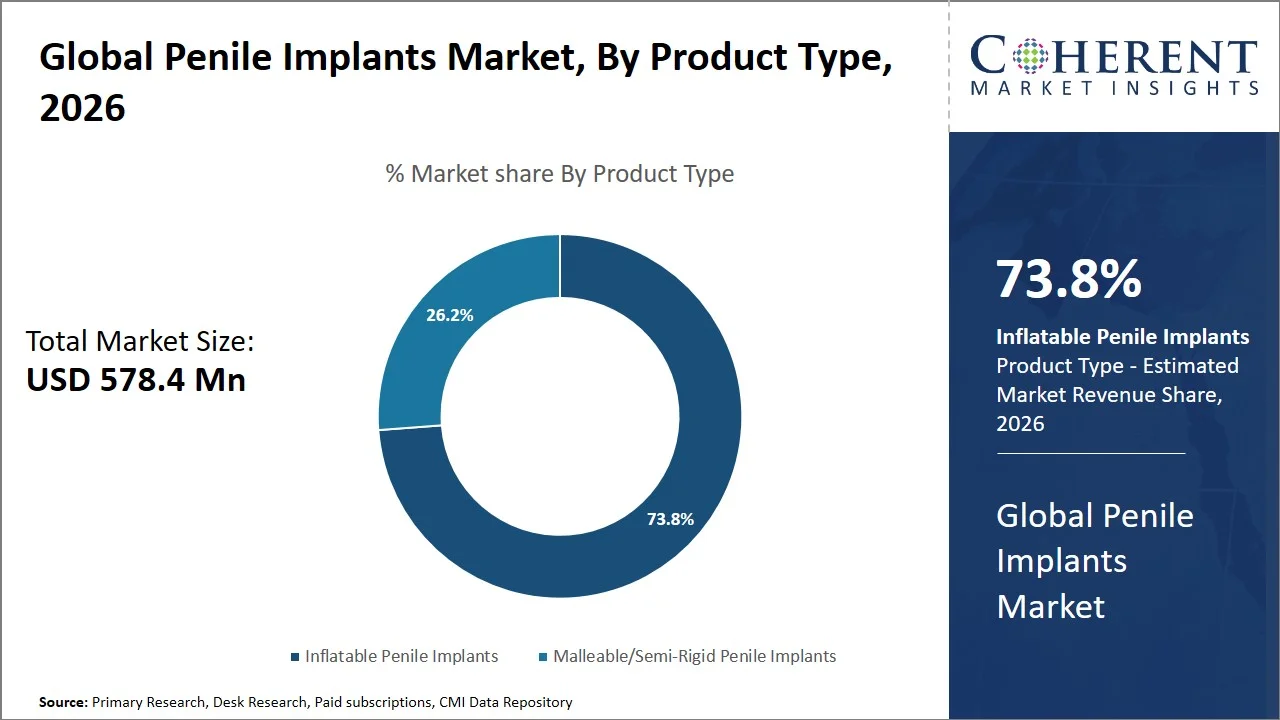
Why Do Inflatable Penile Implants Dominate the Global Penile Implants Market?
Inflatable penile implants are projected to hold a market share of 73.8% in 2026, as they closely replicate the natural penile erection function while being more discrete, comfortable, and user-controlled than malleable implants. Remaining flaccid is highly beneficial in increasing patient’s quality of life and satisfaction, thus making inflatable penile implants the favored surgical solution for erectile dysfunction. Ongoing improvements in device mechanics, longevity, and surgical techniques have significantly supported their adoption. For instance, in real-world, post-market studies of 6,466 patients at the Premier PINC AI Healthcare Database show a 37.9% lower infection rate in patients receiving the AMS 700 IPI prosthesis versus Titan, indicating the continued clinical advantages of newer inflatable implant devices. (Source: Boston Scientific Corporation)
- Current Industry Events of 2026
- Market Size Estimation
- Regional Breakdown
- Competitive Landscape
- Customer Intelligence
- Segmental Analysis
- Pricing Analysis
- Key Market Drivers, Challenges & Future Trends
- Customized Insights Section
Why Does Silicone Represent the Largest Material Segment in the Penile Implants Market?
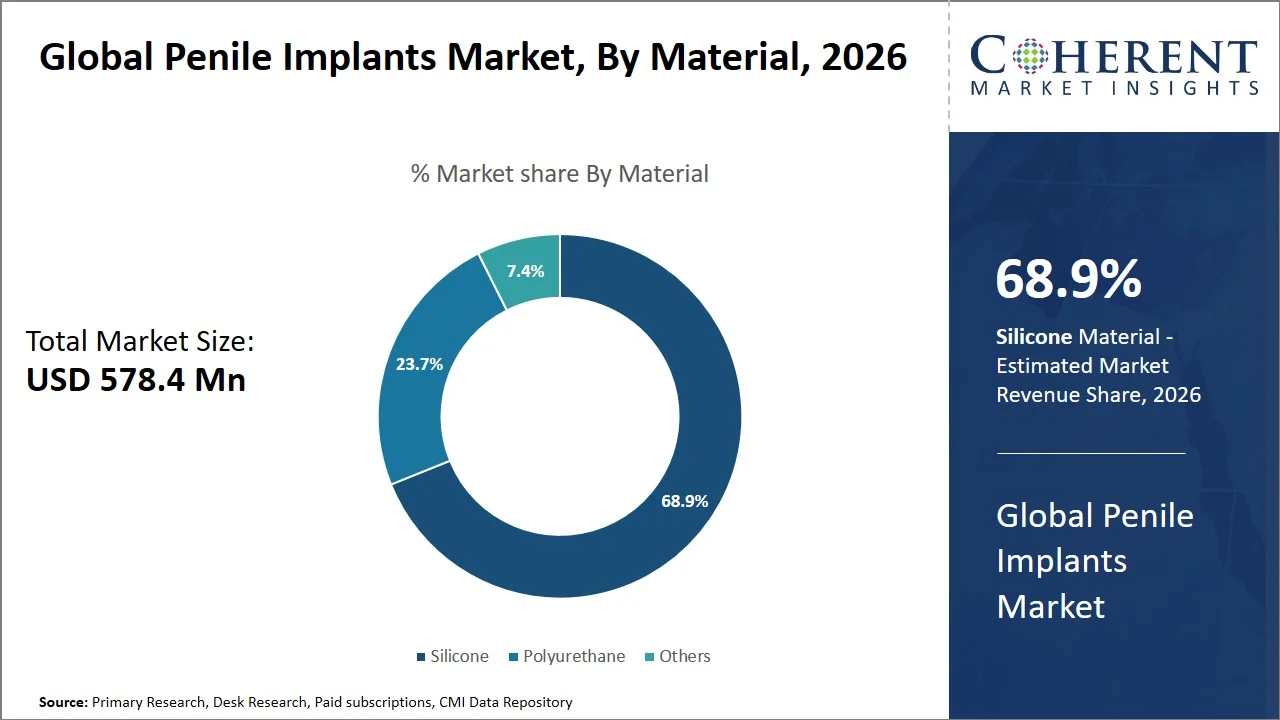
Silicone is projected to hold a market share of 68.9% in 2026, due to the material's high biocompatibility, high longevity and proven track record of long-term clinical results. Due to its high compliance and tolerant response to mechanical loading, this material is a suitable choice for inflatable and conforming implants. Additionally, safety and lack of deleterious side effects have engendered a trust with doctors and patients. For instance, Coloplast Corp’s Titan Inflatable Penile Prosthesis is designed with Bioflex silicone material that offers increased strength, flexibility, and durability to assure the reliability of the implant and the comfort of the patient.
Hospitals Segment Dominates the Global Penile Implants Market
The hospitals segment is projected to hold a market share of 62.4% in 2026, due to a well-developed infrastructure of surgical suites in hospitals, specialized urology departments, and a complete range of preoperative to postoperative care. The presence of trained prosthetic surgeons and multidisciplinary team further establishes the dominance of hospitals as a suitable location for performing penile implants surgery especially in complicated procedures. For instance, the Cleveland Clinic's Center for Genitourinary Reconstruction provides surgical services that include implantation of penile prosthesis for treating erectile dysfunction and Peyronie's disease, demonstrating an increasing importance for tertiary care centers in the application of highly complex penile implantation procedures.
Currents Events and their Impact
Current Events | Description and its Impact |
European Union Strengthens Medical Device Regulation (MDR) Compliance for Implantable Devices (December 2025) |
|
U.S. FDA Advances Evidentiary Requirements for Implantable Medical Devices (February 2026) |
|
(Source: European Commission, Food and Drug Administration)
Penile Implants Market Dynamics
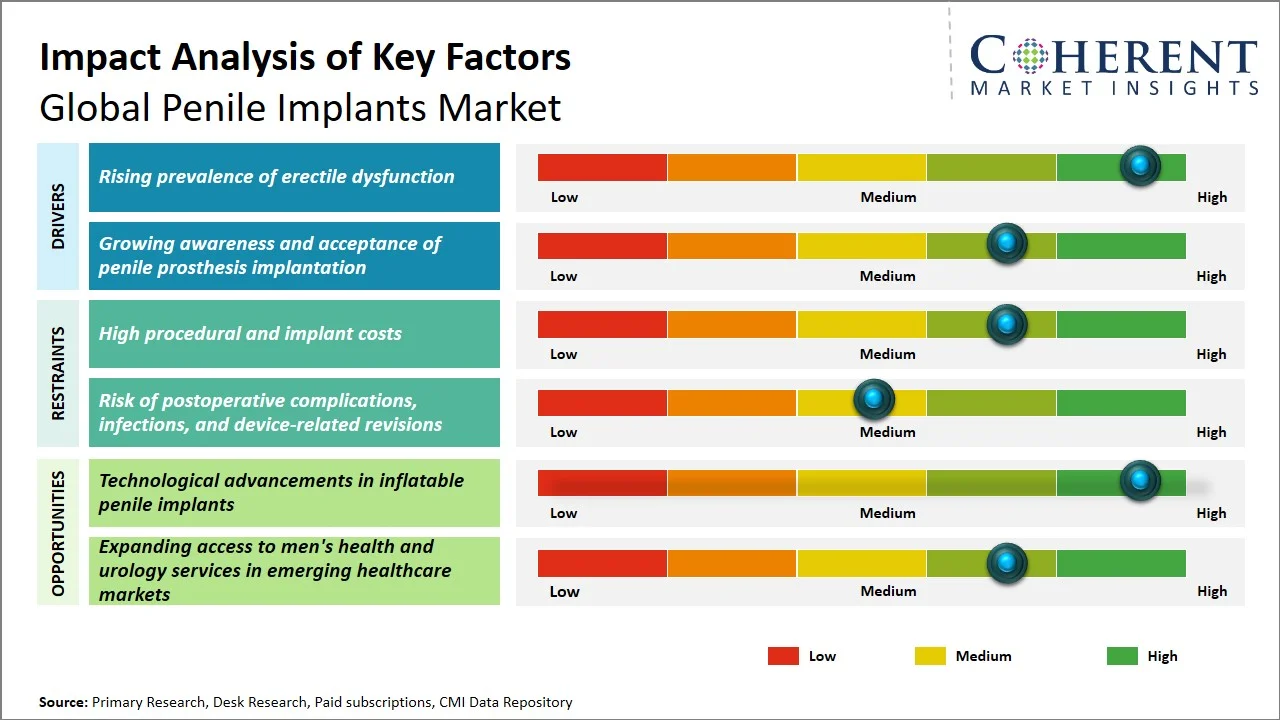
Market Drivers
- Rising prevalence of erectile dysfunction: With a rapidly aging populace and an escalating prevalence of chronic diseases like diabetes, cardiovascular disorders and obesity, the rise in erectile dysfunction prevalence serves as a major driving factor for the penile implant demand. As numerous erectile dysfunction patients with serious or refractory form of erectile dysfunction do not achieve effective treatment results with oral medications and other conservative treatments, penile implants will be an ideal definitive solution for these patients. Further, increased awareness in men's health and advancement in implant technology are anticipated to fuel market growth. For instance, research published by National Library of Medicine, states that up to 150 million men globally suffer from erectile dysfunction and this figure is likely to double by the year 2025, underscoring the considerable patient population requiring effective long-term treatment solutions. (Source: National Library of Medicine)
- Growing awareness and acceptance of penile prosthesis implantation: Increased awareness of men's sexual health and wider adoption of penile prosthesis implantation support market growth. Improved patient education, online health resources and increased physician involvement is prompting more men who suffer from untreatable erectile dysfunction to undergo a conclusive surgical procedure. Furthermore, rising visibility of specialized men's health and prosthetic urology programs helps enhance patient trust in implant procedures. For instance, the Sexual Medicine Society of North America (SMSNA) encourages patient education regarding erectile dysfunction and penile prostheses, through awareness initiatives and clinical resources, supporting broader acceptance of implant-based therapies.
Emerging Trends
- Integration of Infection-Resistant Technologies in Penile Implants: Manufacturers are increasingly adding antimicrobial and infection-prevention coatings to penile prostheses to prevent infection and improve long-term device results. Industry developments of this type will encourage more confidence among patients and the use of implant therapy.
- Expansion of Outpatient and Same-Day Penile Implant Procedures: The development of improved surgical techniques, anesthetic protocols and postoperative care has allowed an increasing proportion of penile implants to be placed as outpatient procedures, thereby reducing length of stay, costs of treatment and patient inconvenience while achieving good clinical results.
Regional Insights
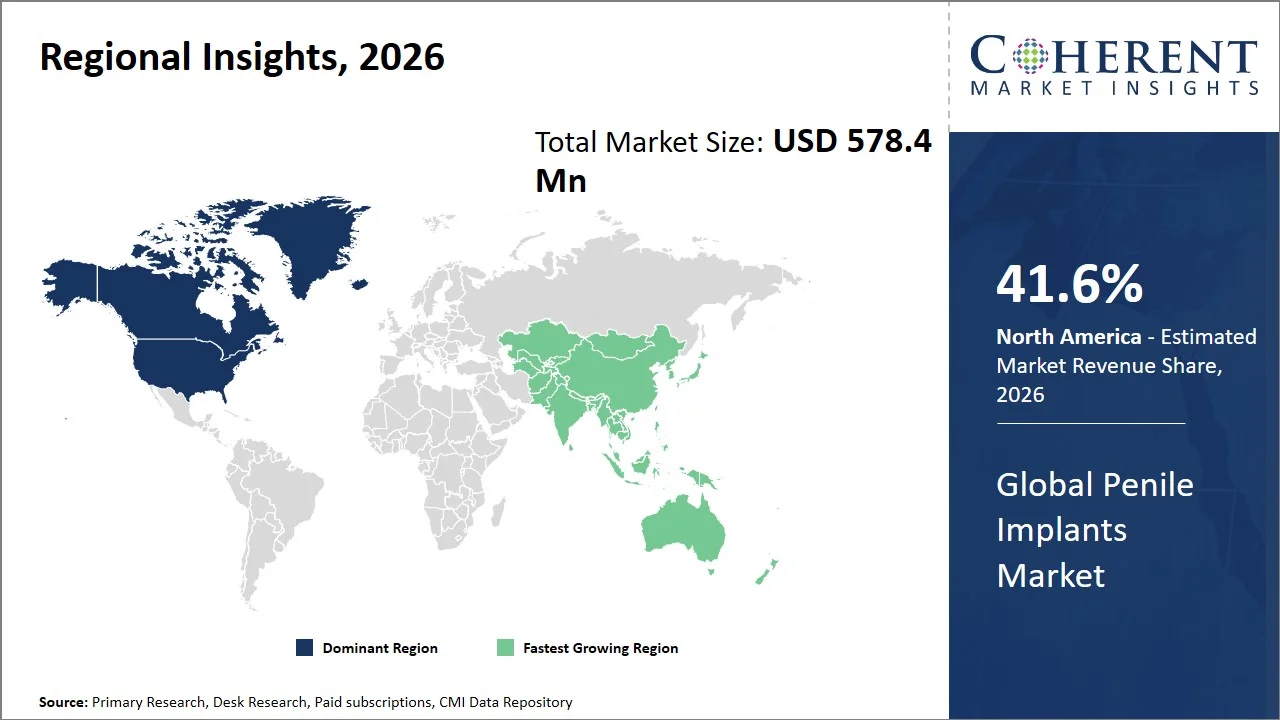
Why is North America a Strong Market for Penile Implants?
North America leads the global penile implants market, accounting for an estimated 41.6% share in 2026, due to its sophisticated healthcare structure, high rate of erectile dysfunction in the aging demographic, and a strong concentration of major medical device manufacturers. The U.S. is supported by advanced regulatory system structures which are ideal for development and faster product approvals. Favorable reimbursement and established health insurance policies also greatly aid adoption. Research & development efforts and strong partnerships between hospitals, urology specialists and manufacturers have led to a robust market ecosystem. For instance, through its physician education and training programs for the AMS 700 Inflatable Penile Prosthesis, Boston Scientific is partnering with top prosthetic urologists and implant centers throughout the U.S. to increase surgeon knowledge and acceptance of modern penile implant technology.
Why Does the Asia Pacific Penile Implants Market Exhibit High Growth?
The Asia Pacific penile implants market is expected to exhibit the fastest growth with an estimated contribution of 20.7% share to the global market in 2026, attributed to increasing awareness regarding men's health, increasing disposable income and improving healthcare infrastructure in the region. Increasing pace of urbanization in China, India and Japan along with the availability of sophisticated medical procedures have made it an advantageous market. Increased government focus on expanding healthcare reachability and support for medical device sectors across numerous countries within APAC are additional factors contributing to increasing adoption rates for penile implants.
For instance, India's Production Linked Incentive (PLI) Scheme for Medical Devices continues to grow, supporting increased investment in high-value medical technology manufacturing in the country and moving away from reliance on imports. It is driving investment in the manufacturing and development of medical devices, further facilitating the availability and usage of state-of-the-art urological products and surgical technologies in India. (Source: Department of Pharmaceuticals)
Global Penile Implants Market Outlook for Key Countries
Why is the U.S. Leading Innovation and Adoption in the Penile Implants Market?
The U.S. dominates the penile implants market owing to a high concentration of prosthetic urology surgeons (such as Dr. Arthur L. Burnett (Johns Hopkins Medicine), Dr. Run Wang (University of Texas Health Science Center), and Dr. Tobias S. Köhler), and high-volume centers which routinely manage extensive penile prosthesis procedures. Existing men's health and sexual medicine networks further streamline referral of patients with refractory erectile dysfunction to implants earlier in therapy, promoting its widespread clinical use.
Is Japan a Favorable Market for Penile Implants?
Japan is one of the most promising markets for the penile implants market driven by well-developed infrastructure in urology, quickly aging male population and physicians' significant clinical experience in the diagnosis and treatment of various urological problems and impotence. Highly developed university medical centers (such as The University of Tokyo Hospital, Keio University Hospital, Kyoto University Hospital, and Osaka University Hospital) and reconstructive urology programs further enhance the utilization of penile prosthesis surgeries in those patients who do not respond to other methods of treatments. Moreover, the increased interest of physicians in men's health and in sexual medicine contributes to the market acceptance of innovative penile implant systems and to long term market development.
Is China Emerging as a Key Growth Hub for the Penile Implants Market?
China is positioned as a key growth hub in the global penile implants market driven by improved access to specialized urology, enhanced public awareness regarding the erectile dysfunction treatment and upgrading healthcare facilities in the nation. The participation of domestic and multinational medical device manufactures is increasing in China and at the same time the premier academic institutes (such as Peking University First Hospital, Peking Union Medical College Hospital, Fudan University Zhongshan Hospital, West China Hospital of Sichuan University) are endeavoring to expand their technical expertise on andrology and reconstructive urology. This all factors will eventually fuel an increased prevalence of penile prosthesis and advanced treatments of men's health among the patients.
Why Does Germany Top the Europe Penile Implants Market?
Germany is the leader in the European market for penile implants, as the country possess a well-established urology care network, extensive knowledge in prosthetic and reconstructive urology, and early introduction of modern erectile dysfunction management therapies. The presence of a significant number of specialized urology clinics and andrology centers (such as Andrology Center Munich, Urologische Klinik München-Planegg, and Urologische Universitätsklinik Heidelberg) that handle routine erectile dysfunction and penile prosthesis implantation is highly beneficial for the market. Also, the existence of modern surgical techniques and skilled implant surgeons drives the penile implants usage in Germany.
Is the Penile Implants Market Developing in India?
India is a high-potential market for penile implants owing to increasing awareness about erectile dysfunction (ED) as a treatable health concern coupled with growing need for improved urological procedures. Rising prevalence of lifestyle related diseases such as diabetes and cardiovascular diseases and other risk factors leading to erectile dysfunction has been creating a large patient base for penile prosthesis surgeries. Availability of enhanced healthcare infrastructure and specialized urology specialists is anticipated to fuel the market growth. For instance, according to data cited by Pace Hospitals, approximately one in ten Indian men is affected by impotence, while nearly 25% of erectile dysfunction patients are younger than 30 years, highlighting increasing demand for advanced diagnosis and treatment options, including penile implants. (Source: Pace Hospitals)
Technology Adoption Landscape in the Global Penile Implants Market
Technology | Key Features | Clinical Advantage | Market Relevance |
Three-Piece Inflatable Penile Implants | Consists of inflatable cylinders, scrotal pump, and fluid reservoir | Provides the most natural erection and flaccidity cycle with high patient satisfaction | Largest and fastest-adopted technology segment, particularly in developed markets |
Two-Piece Inflatable Penile Implants | Eliminates the abdominal reservoir while retaining inflation functionality | Suitable for patients with prior pelvic surgeries or anatomical limitations | Expanding adoption among patients requiring less complex implantation procedures |
Malleable (Semi-Rigid) Penile Implants | Bendable rods that remain firm but can be manually positioned | Simpler surgical procedure and lower mechanical failure risk | Preferred in cost-sensitive markets and patients seeking straightforward implant solutions |
Antibiotic-Coated Penile Implants | Incorporates antimicrobial coatings to reduce bacterial colonization | Lowers post-operative infection risk and improves long-term outcomes | Increasingly adopted as infection prevention becomes a key clinical focus |
Enhanced Pump and Lock-Out Valve Technologies | Advanced pump mechanisms with improved fluid control and auto-deflation resistance | Improves ease of use, device reliability, and patient comfort | Driving product differentiation and supporting premium implant adoption |
Minimally Invasive Implantation Techniques | Refined surgical approaches with smaller incisions and optimized placement | Reduces operative time, recovery period, and post-surgical complications | Supporting broader patient acceptance and increasing procedure volumes globally |
How are technological advancements in inflatable penile implants creating new growth opportunities in the penile implants market?
Technological advancements leading to next generation inflatable penile prostheses with greater rigidity, durability and patient customizability are driving immense growth in the penile implants market. Focus on the improvement of performance, usability and longevity of the devices to ensure better patient outcomes and satisfaction by manufacturers is expected to increase the target patient pool and support the growing penetration of implant-based treatment of erectile dysfunction. For instance, in June 2024, U.S. FDA granted approval to Rigicon's Infla10 Pulse Inflatable Penile Prosthesis. Infla10's expansion design is centered on a 10-year interval expansion that aims to provide increased device rigidity and customization based on patient and clinical needs. (Source: Rigicon, Inc) The approval emphasizes continuous advancements in developing devices that can enhance device functionality and improve patient outcomes for penile prosthesis implantation.
Market Players, Key Development, and Competitive Intelligence
Key Developments
- On June 3, 2026, Coloplast announced that its new generation inflatable penile prosthesis gained U.S. FDA approval. This approval will give another alternative treatment to men suffering from erectile dysfunction. The innovative implant has been re-engineered and has additional features that help improve the functionality of the device, patient satisfaction, and durability. The U.S. FDA approval positions Coloplast as a contender in the growing penile implants market.
- In November 2023, Rigicon presented global safety and performance data for the Rigi10 malleable penile prosthesis, showing a 99.2% device survival at 36 months with few complications, including revisions and infection. This research highlights the safety and efficacy of current penile implants and should inspire wider acceptance of these devices for erectile dysfunction treatment.
Competitive Landscape
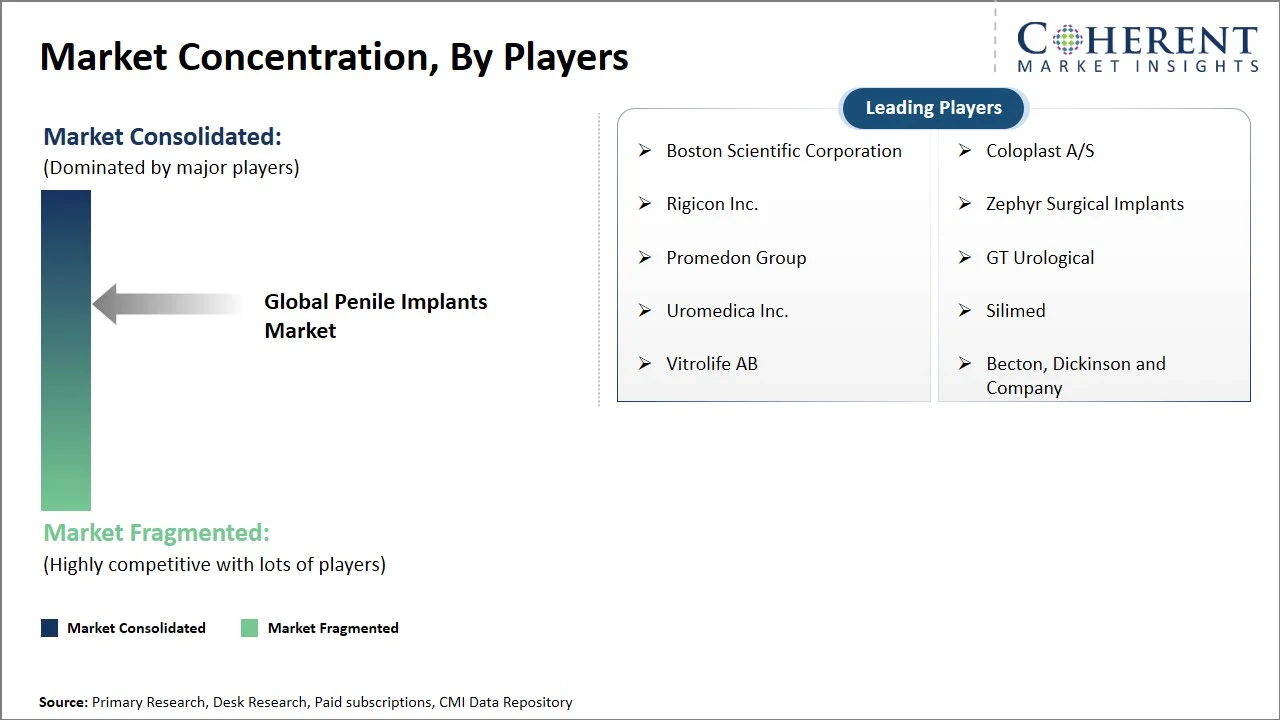
The global penile implants market is moderately consolidated, with a limited number of niche manufacturers engaged in competition based on product innovation, training initiatives, clinical data development and geographical expansion. Key companies are investing in enhancing implant longevity and resistance to infections, as well as increasing patient satisfaction levels and overall surgical outcomes. Investment in future inflatable prostheses and physician training will likely continue to impact the competitive landscape. Key focus areas include:
- Development of advanced inflatable penile prostheses with enhanced durability and patient-controlled functionality
- Integration of antimicrobial and infection-resistant technologies to improve clinical outcomes
- Expansion of surgeon training, men's health centers, and prosthetic urology networks to increase procedure adoption
- Geographic expansion and regulatory approvals to strengthen market presence in emerging healthcare markets
- Clinical research and post-market evidence generation to support product differentiation and physician confidence
Market Report Scope
Penile Implants Market Report Coverage
| Report Coverage | Details | ||
|---|---|---|---|
| Base Year: | 2025 | Market Size in 2026: | USD 578.4 Mn |
| Historical Data for: | 2020 To 2024 | Forecast Period: | 2026 To 2033 |
| Forecast Period 2026 to 2033 CAGR: | 7.5% | 2033 Value Projection: | USD 956.8 Mn |
| Geographies covered: |
| ||
| Segments covered: |
| ||
| Companies covered: | Boston Scientific Corporation, Coloplast A/S, Rigicon Inc., Zephyr Surgical Implants, Promedon Group, GT Urological, Uromedica Inc., Silimed, Vitrolife AB, and Becton, Dickinson and Company | ||
| Growth Drivers: |
| ||
| Restraints & Challenges: |
| ||
Analyst Opinion (Expert Opinion)
- The penile implants market is expected to see consistent growth in the long term due to increasing acceptance of the penile implant procedure as a long-term solution for severe erectile dysfunction, innovation in inflatable implants, and increased availability of men's healthcare expertise. In parallel to a rising awareness for sexual health issues, the need for robust and user-friendly implant devices is projected to rise at a steady pace.
- The maximum opportunities will probably exist within treatment of erectile dysfunction with inflatable penile implants in the U.S. where high procedural volumes, established payment streams and well-developed physician experience favor proliferation. New opportunities will emerge in China and India as urology specialization and patient awareness grows.
- In order to obtain a competitive advantage, market participants should invest in the development of second-generation implants that are more durable, infection-resistant and user-friendly, alongside growing surgeon education and clinical evidence bases. Strong relationships with major urology centers, coupled with substantial investment in patient education will speed up adoption and increase the manufacturer's competitive position.
Speak to the analyst
Want personalized insights?
Take the findings above to one of our principal consultants, or have the report rebuilt around the segments, geographies and competitors you actually track.
Market Segmentation
- Product Type Insights (Revenue, USD Mn, 2021 - 2033)
- Inflatable Penile Implants
- Malleable/Semi-Rigid Penile Implants
- Material Insights (Revenue, USD Mn, 2021 - 2033)
- Silicone
- Polyurethane
- Others
- End User Insights (Revenue, USD Mn, 2021 - 2033)
- Hospitals
- Ambulatory Surgical Centers (ASCs)
- Specialty Urology Clinics
- Others
- Regional Insights (Revenue, USD Mn, 2021 - 2033)
- North America
- U.S.
- Canada
- Latin America
- Brazil
- Argentina
- Mexico
- Rest of Latin America
- Europe
- Germany
- U.K.
- Spain
- France
- Italy
- Russia
- Rest of Europe
- Asia Pacific
- China
- India
- Japan
- Australia
- South Korea
- ASEAN
- Rest of Asia Pacific
- Middle East
- GCC Countries
- Israel
- Rest of Middle East
- Africa
- South Africa
- North Africa
- Central Africa
- North America
- Key Players Insights
- Boston Scientific Corporation
- Coloplast A/S
- Rigicon Inc.
- Zephyr Surgical Implants
- Promedon Group
- GT Urological
- Uromedica Inc.
- Silimed
- Vitrolife AB
- Becton, Dickinson and Company
Sources
Primary Research Interviews
- Reconstructive urologists and prosthetic urology specialists performing penile implant procedures
- Men's health physicians and sexual medicine experts treating erectile dysfunction and Peyronie’s disease
- Hospital urology department heads and surgical program directors involved in penile prosthesis implantation
- Medical device regulatory and quality assurance professionals from penile implant manufacturers
- Executives and product managers from penile prosthesis and urology device companies
Stakeholders
- Penile implant manufacturers and urological medical device companies
- Contract manufacturers and component suppliers serving implantable medical devices
- End-use Sectors
- Hospitals and multispecialty healthcare facilities
- Specialized urology and andrology clinics
- Men's health and sexual medicine centers
- Ambulatory surgery centers (ASCs)
- Academic medical centers and teaching hospitals
- Reconstructive urology and prosthetic surgery centers
- Regulatory & Health Bodies
- U.S. Food and Drug Administration (FDA)
- European Commission Medical Device Regulation (EU MDR)
- Pharmaceuticals and Medical Devices Agency (PMDA), Japan
- National Medical Products Administration (NMPA), China
- Central Drugs Standard Control Organization (CDSCO), India
- Medicines and Healthcare products Regulatory Agency (MHRA), U.K.
Databases
- FDA Premarket Approval (PMA) Database
- FDA Medical Device Registration and Listing Database
- OECD Health Statistics
- World Bank Health Indicators Database
- National Cancer Institute (NCI) Cancer Statistics
- Global Health Observatory (WHO)
Magazines
- Urology Times
- European Urology Today
- Medical Device Network
- MedTech Dive
- Medical Design & Outsourcing
- MD+DI (Medical Device and Diagnostic Industry)
Journals
- Journal of Sexual Medicine
- International Journal of Impotence Research
Associations
- Sexual Medicine Society of North America (SMSNA)
- American Urological Association (AUA)
- European Association of Urology (EAU)
- International Society for Sexual Medicine (ISSM)
- Urological Society of India (USI)
- Société Internationale d'Urologie (SIU)
Public Domain Sources
- World Health Organization (WHO) – Men's Health and Noncommunicable Disease Statistics
- Centers for Disease Control and Prevention (CDC) – Erectile Dysfunction Risk Factors and Chronic Disease Data
- National Institutes of Health (NIH) / NIDDK – Erectile Dysfunction Research and Treatment Information
- National Cancer Institute (NCI) – Prostate Cancer Incidence and Survivorship Data
- European Commission (EU MDR) – Medical Device Regulatory Framework
- World Bank – Healthcare Infrastructure and Health Expenditure Statistics
Proprietary Elements
- CMI Data Analytics Tool, Proprietary CMI Existing Repository of information for last 10 years.
Get access to 250+ pages report
Every segment, forecast, competitor profile and data table behind the analysis above — available for instant download.
- ESOMAR Member
- ISO 9001:2015 Certified
- D-U-N-S Registered
- GDPR & CCPA Compliant
Missing comfort of reading report in your local language? Find your preferred language:
Transform your Strategy with Exclusive Trending Reports
Frequently Asked Questions
The global penile implants market is estimated to be valued at USD 578.4 Mn in 2026 and is expected to reach USD 956.8 Mn by 2033.
Inflatable penile implants dominate due to their ability to provide a more natural erectile experience, greater patient satisfaction, improved concealability, and enhanced control over rigidity compared to malleable implants.
Penile implants are surgically implanted medical devices designed to restore erectile function in men with severe erectile dysfunction when other treatments are ineffective.
The CAGR of the global penile implants market is projected to be 7.5% from 2026 to 2033.
Rising prevalence of erectile dysfunction, and growing awareness and acceptance of penile prosthesis implantation are the major factors driving the growth of the global penile implants market.
Men with treatment-resistant erectile dysfunction who have not achieved satisfactory results from medications, injections, or other conservative therapies are considered ideal candidates.
Inflatable penile implants use fluid-filled cylinders, a pump, and a reservoir to create an erection on demand through manual activation.