

Global Portable Blue Light Therapy Devices Market Size and Forecast – 2026 To 2033
The global portable blue light therapy devices market is expected to grow from USD 285.0 Mn in 2026 to USD 481.6 Mn by 2033, registering a compound annual growth rate (CAGR) of 7.8% from 2026 to 2033. The market for global portable blue light therapy devices is poised for significant expansion, fueled by the high and growing burden of acne and related dermatological conditions.
According to the American Academy of Dermatology (AAD), acne affects nearly 50 million Americans annually and 85% of adolescents, highlighting the substantial addressable population for acne-focused blue-light therapy devices.
Key Takeaways of the Global Portable Blue Light Therapy Devices Market
- Light box is projected to hold 38.0 % of the global portable blue light therapy devices market share in 2026, making it dominant product type segment, across North America, supported by an established regulatory pathway for blue-light acne devices. For instance, the U.S. Food and Drug Administration (FDA) classifies OTC powered light-based acne devices emitting red and blue-spectrum energy under 21 CFR 878.4810, supporting the commercialization of blue-light therapy products in the region.
- Table-top is projected to hold 50.4 % of the global portable blue light therapy devices market share in 2026, making it dominant modality segment, across Europe due to the region's established medical-device regulatory framework and clinical use of light-based treatment systems. For instance, the European Union Medical Device Regulation (EU MDR) 2017/745 provides the regulatory framework for medical devices, supporting commercialization and clinical adoption of compliant light-therapy technologies in European markets.
- Skin conditions are projected to hold 32.1 % of the global portable blue light therapy devices market share in 2026, making it dominant indication segment, across North America due to a well-defined regulatory framework for blue-light treatment of acne. For instance, the U.S. Food and Drug Administration (FDA) specifically classifies over-the-counter powered light-based devices emitting energy in the blue and red spectrum for mild-to-moderate acne vulgaris under its Class II medical-device framework, providing a clear regulatory pathway for this indication.
- North America market maintains dominance with an expected share of 42.5 % in 2026, bolstered by established medical-device oversight and requirements for performance and safety of light-emitting therapeutic devices. For instance, Health Canada’s Radiation Emitting Devices Act applies to the sale, importation, and distribution of devices emitting visible light and requires manufacturers and distributors to meet applicable safety and performance requirements, reinforcing regulatory oversight of light-based devices in Canada.
- Asia Pacific is expected to exhibit the fastest growth in the global portable blue light therapy devices market, registering an estimated CAGR of 9.1 % during 2026–2033, propelled by expanding medical-device commercialization and regulatory pathways across major markets such as Japan, China, and India. For instance, Japan’s Pharmaceuticals and Medical Devices Agency (PMDA) requires medical devices to undergo approval, certification, or notification according to their risk classification before marketing, supporting the structured introduction of new light-based therapeutic devices.
Segmental Insights
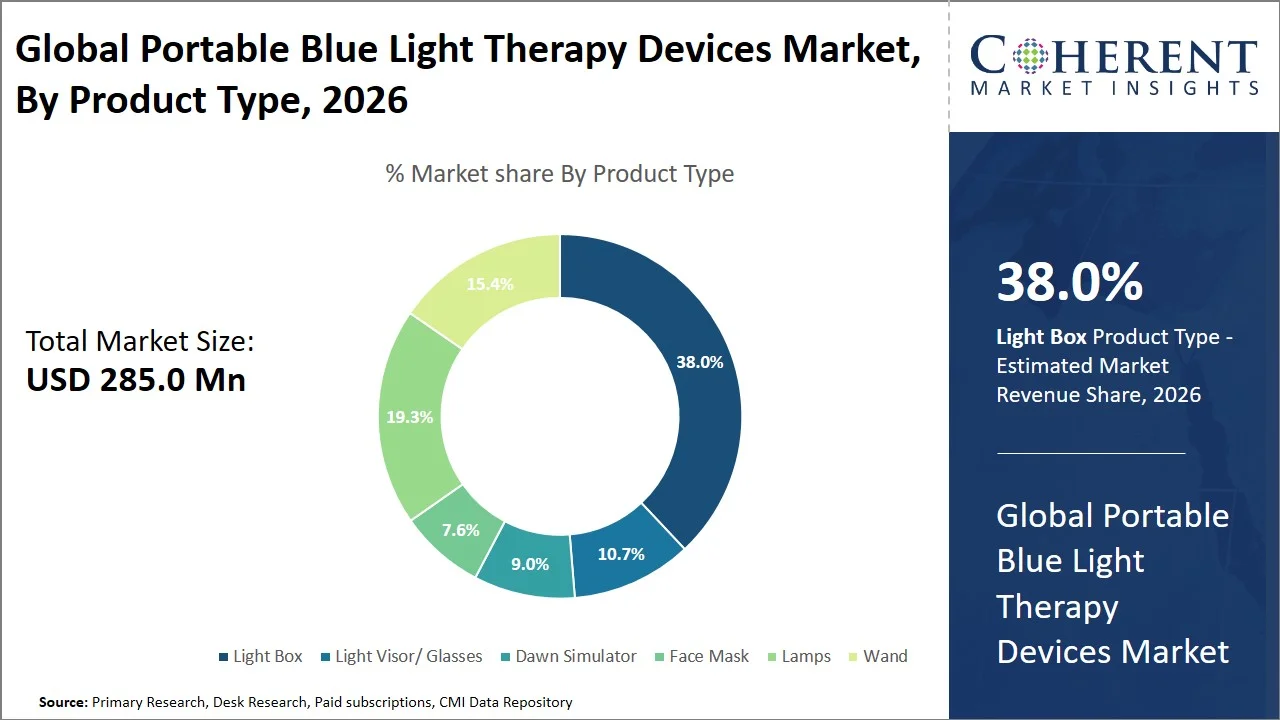
Why Do Light Box Dominate the Global Portable Blue Light Therapy Devices Market?
Light box is projected to hold the market share of 38.0% in 2026, because of the broad treatment range, controlled intensity, daily utilized phototherapy and well history for seasonal affective disorder and circadian rhythm regulations. Furthermore, its fixed time of treatment and constant light source are compatible with frequent and domestic applications. For instance, according to the U.S. National Institute of Mental Health (NIMH) light box therapy with a bright light box (usually 10,000 lux) is frequently recommended for seasonal affective disorder. (Source: Mayo Clinic)
- Current Industry Events of 2026
- Market Size Estimation
- Regional Breakdown
- Competitive Landscape
- Customer Intelligence
- Segmental Analysis
- Pricing Analysis
- Key Market Drivers, Challenges & Future Trends
- Customized Insights Section
Why Does Table-top Represent the Largest Modality Segment in the Portable Blue Light Therapy Devices Market?
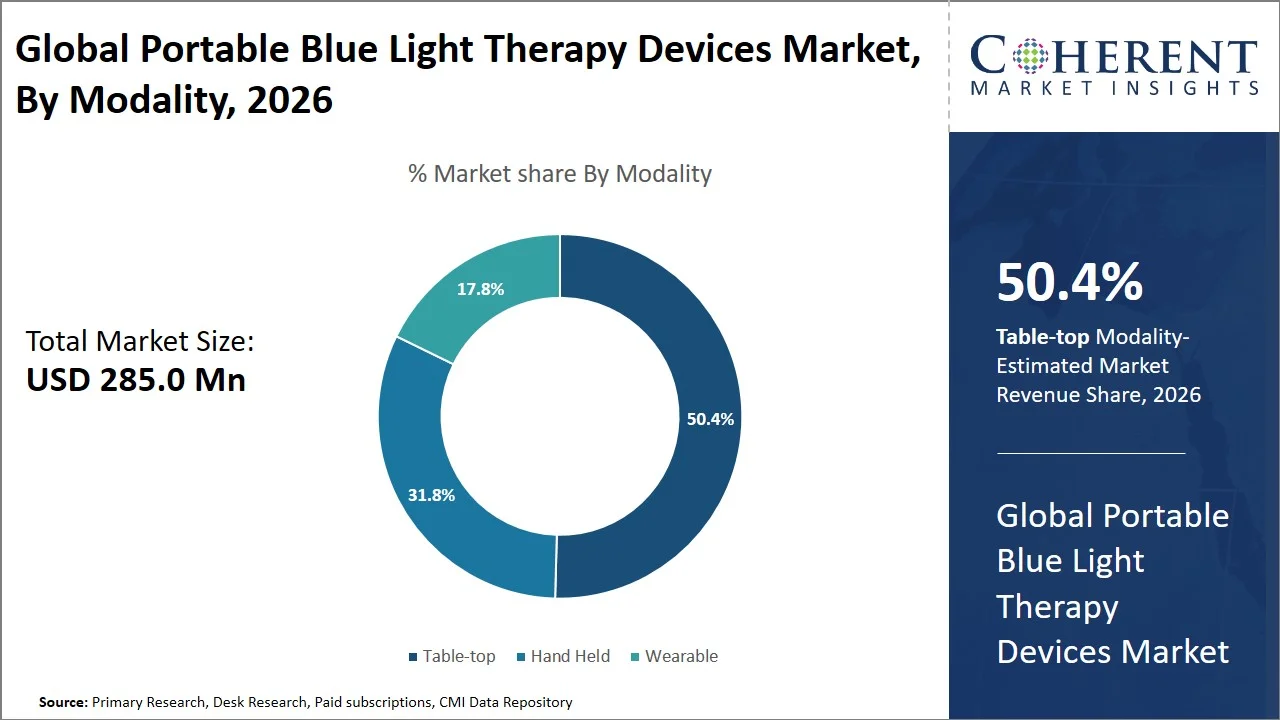
Table-top is projected to hold a market share of 50.4% in 2026, due to the optimal combination of sturdiness, therapy exposure, varied setting availability, and free hand operation which in return enables one to be free from constantly holding and repositioning the therapy device to cover the target areas. The larger light-emitting area facilitates relatively even coverage over treatment zones, making it a user-friendly design for the multiple treatments required in home use. For instance, the LightStim ProPanel involves 4 hand-free panel treatment to face, neck, hands, back, or decollete and incorporates programmable timer. Also, the device is U.S. FDA-cleared for acne and additional indications demonstrating the table-top modality combination of wide coverage, hands-free application, and flexible treatment.
Skin Conditions Segment Dominates the Global Portable Blue Light Therapy Devices Market
The skin conditions segment is projected to hold a market share of 32.1% in 2026, due to the increased applicability of blue light treatment for acne and several other dermatological conditions. Its non-invasiveness makes it well-suited to frequent administration. The portability of masks and hand-held devices aids its application and convenience as at-home treatment, allowing its uptake in both medical and aesthetic use. For instance, the American Academy of Dermatology (AAD) approves the visible blue light as part of an acne treatment to address bacteria that causes acne, thus demonstrating the practical application and clinical use of blue-light devices in the field of dermatology.
Current Events and their Impact
Current Events | Description and its Impact |
U.S. FDA Clearance Expands Wearable Blue-Light Acne Therapy (June 2025) |
|
UK Issues Updated Safety Guidance for Consumer Blue-Light Devices (March 2025) |
|
UK Recognizes LED Light Therapy in Non-Surgical Cosmetic Treatment Framework (September 2023) |
|
Portable Blue Light Therapy Devices Market Dynamics
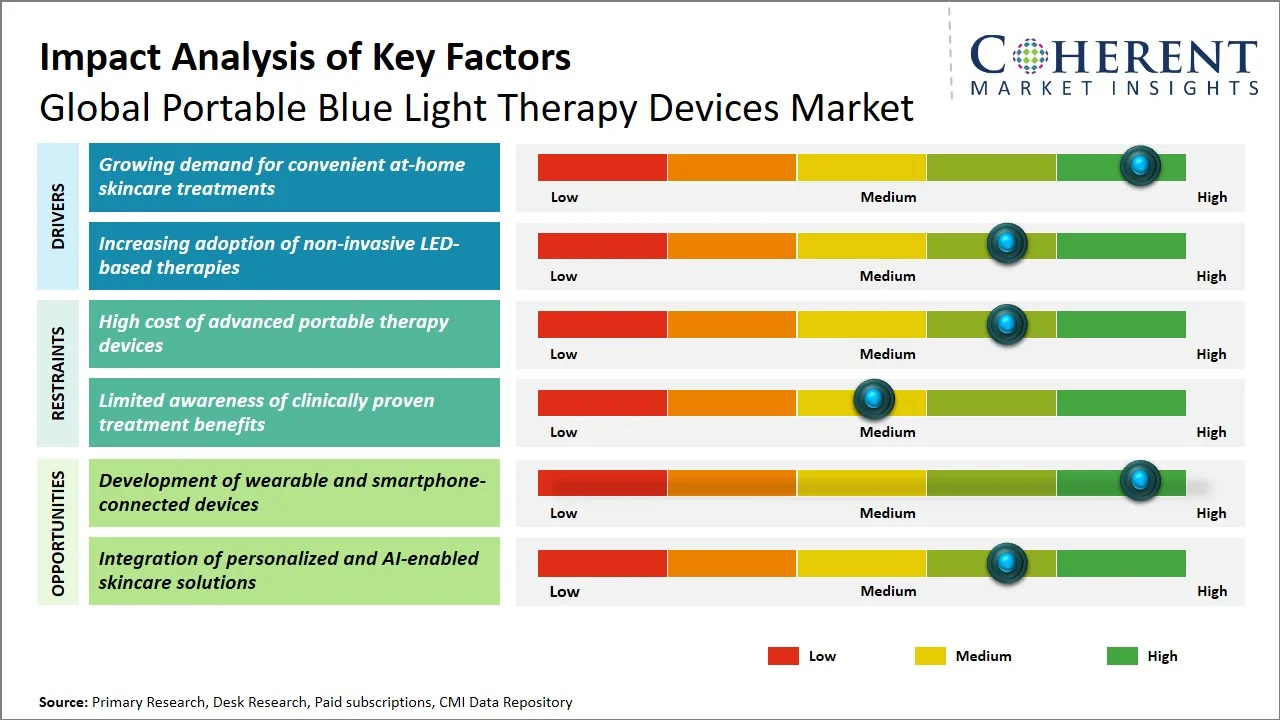
Market Drivers
- Growing demand for convenient at-home skincare treatments: The growing preference for convenient, home-centered acne management is supporting demand for portable blue-light therapy devices, as consumers increasingly seek treatment options that reduce dependence on frequent in-clinic visits. For instance, January-February 2025 review of 21 studies found teledermatology to be well suited to acne management, with outcomes comparable to in-person care and a large proportion of patients preferring virtual care, reflecting the broader shift toward accessible, remote and home-based dermatological management.
- Increasing adoption of non-invasive LED-based therapies: The growing acceptance of non-invasive LED therapy as a drug-free option for acne management is supporting demand for portable blue-light devices, particularly as consumers seek treatments with minimal downtime and fewer systemic effects. For instance, a March 2025 JAMA Dermatology systematic review and meta-analysis of six clinical studies involving 216 participants found that at-home red and/or blue LED devices produced significant reductions in inflammatory and non-inflammatory acne lesions, supporting their use as a viable non-pharmacological treatment option.
- Growing Demand for Wearable and Hands-Free Therapy Formats: Manufacturers are increasingly shifting from conventional handheld systems toward wearable masks and hands-free LED platforms, improving treatment convenience and enabling users to incorporate therapy into regular skincare routines. For instance, in October 2025, a clinical study published by National Library of Medicine, evaluated a wearable home-use LED mask delivering 415-nm blue and 633-nm red light, with 86% of participants achieving at least a one-grade improvement in acne severity after seven weeks.
Emerging Trends
- Shift Toward Multi-Wavelength Therapy: Portable devices are increasingly combining blue light with red and near-infrared wavelengths in a single platform, allowing manufacturers to address acne alongside inflammation and other skin concerns. This is shifting product development from single-purpose blue-light devices toward multifunctional therapy systems.
- Increasing Clinical Validation of At-Home LED Therapy: Growing clinical evidence is strengthening confidence in portable and home-use blue-light therapy, particularly for mild-to-moderate acne. This trend is supporting the positioning of LED devices as a non-pharmacological option that can complement conventional acne-management routines.
- Convergence of Beauty Technology and Portable LED Devices: The market is moving toward more portable, wearable, and technology-integrated formats, including flexible masks and multifunctional handheld devices. The broader beauty-tech industry is increasingly combining LED therapy with other technologies, creating more differentiated and consumer-oriented portable treatment platforms.
Regional Insights
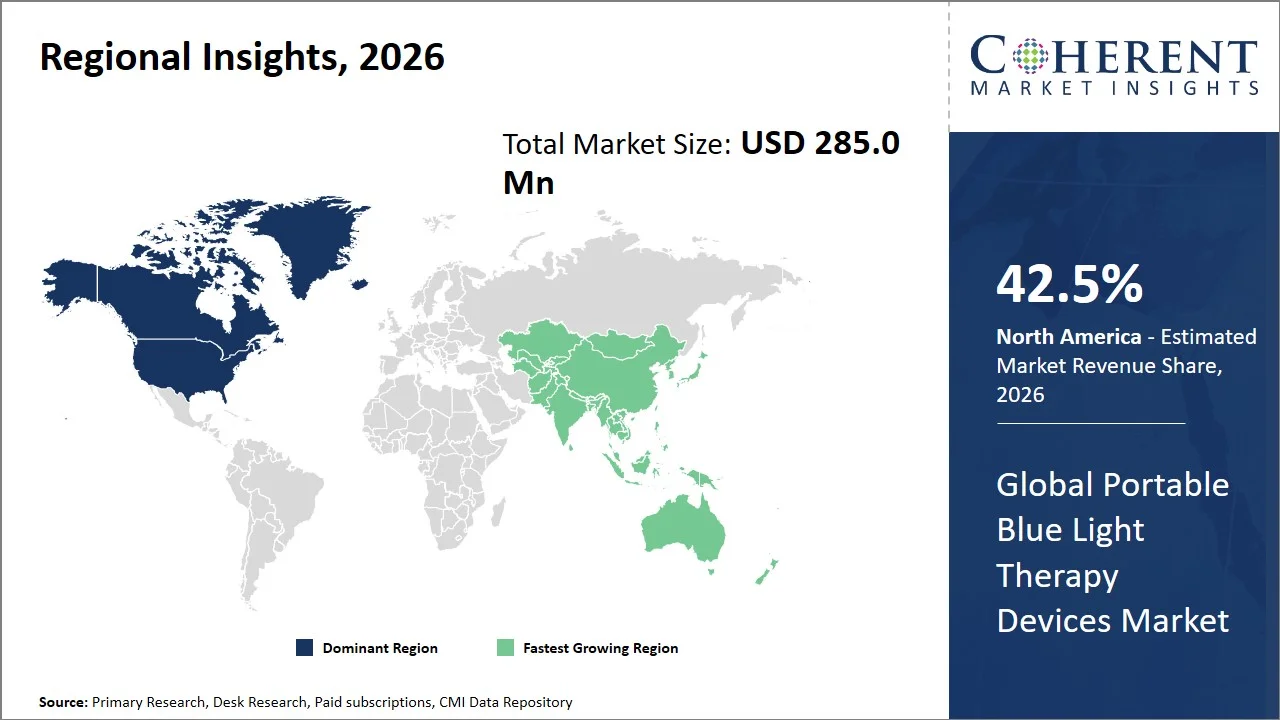
Why is North America a Strong Market for Portable Blue Light Therapy Devices?
North America leads the global portable blue light therapy devices market, accounting for an estimated 42.5% share in 2026, primarily attributed to the higher penetration of specialized healthcare infrastructure within the region, increased prevalence of dermatology and wellness applications, and the rise of adoption rates for home-use therapeutic equipment. Government policies in the form of approvals for safe and approved devices in addition to reimbursement incentives in countries like the U.S and Canada are key drivers that boost adoption in North America.
For instance, in June 2026, Health Canada established amendments to adapt the medical device establishment licensing requirements to a more modern regulatory approach that decreases compliance costs for industry, aligns with international standards, yet remains in place to ensure safety. Furthermore, high growth in the R&D capabilities in the presence of established retail players along with e-commerce market presence are also expected to drive the market growth in the years to come.
Why Does Asia Pacific Portable Blue Light Therapy Devices Market Exhibit High Growth?
Asia Pacific is expected to exhibit the fastest growth in the global portable blue light therapy devices market, registering an estimated CAGR of 9.1% during 2026–2033. The region is projected to account for approximately 21.5% of the global market in 2026, owing to the growing trend of health awareness, increasing disposable income, and growing availability of healthcare technologies. Various government interventions focusing on healthcare infrastructure augmentation, along with rising adoption of smart health devices, driven from nations such as China, India, Japan, and South Korea, propels the market growth in this region.
For instance, in January 2025, China’s State Council promulgated a guide to speed up the building of the Digital China, extending the reach of digital technologies to more aspects of the healthcare services and upgrading the digital healthcare services. This helps the region transition to technology-driven medical care and smart therapy devices. Furthermore, increased domestic production, increased focus towards healthcare sector investment and widespread availability of affordable and better-designed portable gadgets are additional drivers aiding the region's segment growth.
Global Portable Blue Light Therapy Devices Market Outlook for Key Countries
Why is the U.S. Leading Innovation and Adoption in the Portable Blue Light Therapy Devices Market?
The U.S. holds the largest market share for innovation and adoption in portable blue light therapy devices market due to its strong existing OTC blue- and red-light acne device category allowing for innovation in portable LED technologies. The market is likely to shift to the use of devices in portable, high-multi-function formats, typically involving blue light used along with red and amber and possibly infrared light to address a variety of skin care issues. Portable devices marketed under 21 CFR 878.4810 (Light-based Acne Devices; Prescription or Over-the-Counter) are routinely added by the FDA to the 510(k) database.
Is the U.K a Favorable Market for Portable Blue Light Therapy Devices Market?
The U.K. is a promising market for portable blue light therapy devices especially for portable LED devices intended for use in acne therapy and other dermatological uses. Medicines and Healthcare products Regulatory Agency (MHRA) has mandates for medical devices making therapeutic claims that must adhere to relevant conformity requirements and registered before being placed on the market in Great Britain. The prioritization of clinical evidence for LED acne claim also works in favor of manufacturers offering portable and clinically evidenced and defined clinical indications.
Is China Emerging as a Key Growth Hub for the Portable Blue Light Therapy Devices Market?
China is becoming an important growth area in the portable blue light therapy devices market due to dedicated safety standards for the home use light therapy equipment. The new Chinese standard GB 9706.283-2022 for home-use non-laser light therapy devices came into effect in January 2026, laying down rules for safe installation/maintenance of the equipment, the need to display warnings on the product and limits on exposure. The country also looks to innovate new medical device development by strengthening the medical device innovation framework, with the State Council aiming to make review and approval of medical devices an efficient process by 2027 for innovative devices. This would therefore create suitable opportunity to nurture portable blue light therapy devices for home use.
Why Does Germany Top the European Portable Blue Light Therapy Devices Market?
Germany leads the European portable blue light therapy devices market due to country’s comprehensive safety and regulatory system in place for light-based therapies, and specific standards for devices used at home. Germany's DIN EN IEC 60601-2-83 covers safety and fundamental performance requirements for devices used for light-based home therapies, such as those based on a skin's interaction with light. Germany's NiSV complements this in the commercial sector by specifically managing intensive light sources used for cosmetic applications and ensuring the competent use of these devices.
Is Portable Blue Light Therapy Devices Market Developing in Japan?
The portable blue light therapy devices market in Japan is gradually expanding fostered by the increasing acceptance of LED technologies for the management of acne. The 415-nm blue light therapies are recommended for patients with mild-to-moderate inflammatory acne by Japanese Dermatological association in their latest acne guideline (published in 2023). However, limited domestic clinical evidence and device availability indicate further scope for market development.
Competitive Benchmark of Selected Portable Blue Light Therapy Devices
Company | Representative Device | Device Format | Blue-Light Wavelength | Primary Application | Key Differentiating Feature |
Celluma | Celluma NOVA | Portable panel | 465 nm | Acne / skin conditions | Battery-powered, multi-wavelength and multi-mode platform |
Omnilux | Omnilux CLEAR | Wearable mask | 412.5 nm | Mild-to-moderate acne | Hands-free blue + red LED treatment |
LightStim | LightStim for Acne | Handheld | Blue + red | Acne | Targeted handheld treatment |
Project E Beauty | LumaGlow Blue | Handheld wand | 415 nm | Acne | Compact, targeted blue-light treatment |
BioPhotas | Celluma POD | Handheld | 465 nm | Acne / targeted skin treatment | Compact, portable, targeted treatment |
How is the development of wearable and smartphone-connected devices creating new growth opportunities in the portable blue light therapy devices market?
Emerging applications of wearable technology and smart phones can improve user accessibility and allow for a more controlled and predictable application of blue-light therapy, especially in the home. A set of integrated tools allows users to plan treatments, receive reminders, log sessions and track progress, increasing user engagement and compliance. For instance, the Qure Skincare app pairs with the Q-Rejuvalight Pro LED mask from Qure Skincare to personalize treatments based on the five zones of face to set treatment plans and reminders and to log completed treatments.
Market Players, Key Development, and Competitive Landscape
Key Developments
- In May 2025, the U.S. Food and Drug Administration (FDA) approved Sun Pharma’s next-generation BLU-U Model 4170E blue-light photodynamic therapy illuminator for actinic keratosis. The LED-based five-panel design provides a more compact and lightweight configuration, highlighting technological advancement in blue-light therapy devices.
- In April 2023, BioPhotas, the manufacturer of Celluma light therapy devices, received European Union Medical Device Regulation (EU-MDR) 2017/745 certification for its low-level light therapy devices. The certification enabled expanded availability of Celluma products across the UK, EU, and Switzerland, supporting wider adoption of regulated portable LED light therapy devices
Competitive Landscape
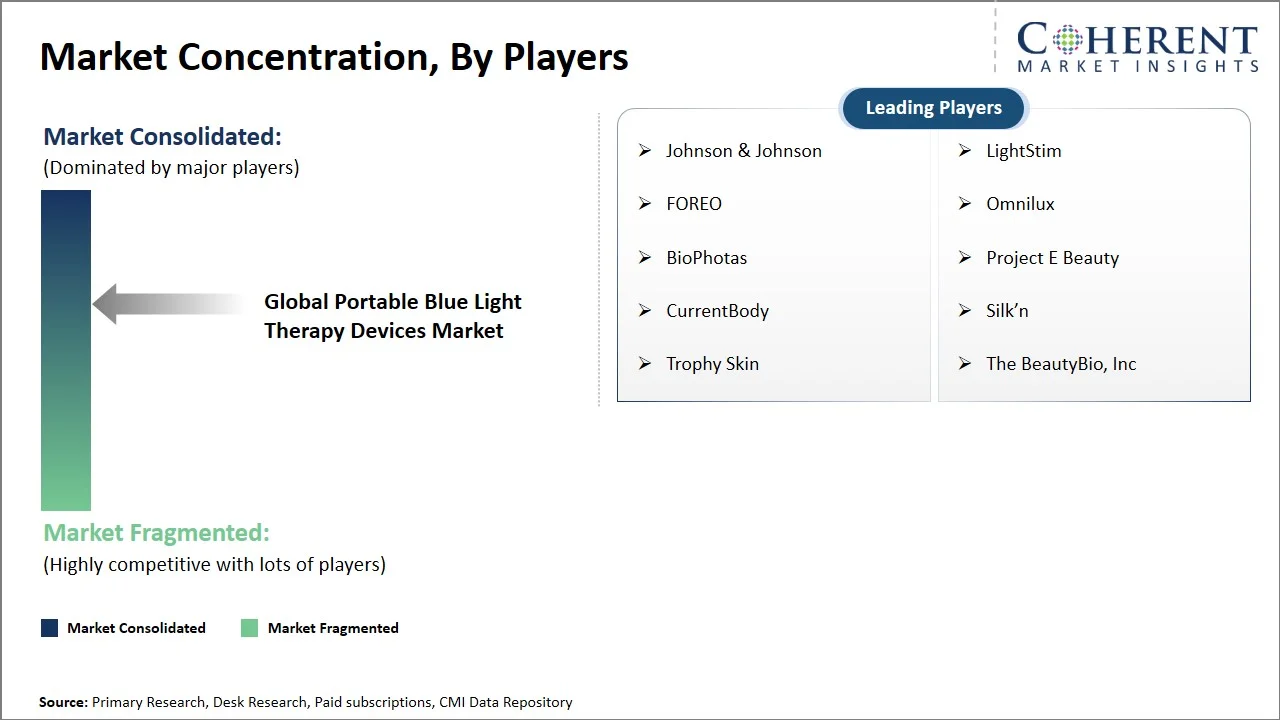
The global portable blue light therapy devices market is moderately competitive, with competition increasingly centered on device portability, treatment convenience, wavelength precision, clinical validation, and multifunctional capabilities. Market participants are differentiating their products through wearable masks, handheld wands, compact light panels, and multi-wavelength systems that combine blue light with red or near-infrared light. The competitive environment is also shaped by regulatory clearances, treatment safety, battery performance, ergonomic design, and the ability to deliver consistent light intensity during home-based use. Key focus areas include:
- Development of compact, lightweight, and travel-friendly blue-light therapy devices
- Integration of blue, red, and near-infrared wavelengths within multifunctional devices
- Expansion of wearable masks and hands-free formats for convenient home treatment
- Improvement of wavelength precision, irradiance consistency, and treatment-time control
- Integration of rechargeable batteries, automatic shut-off, and user-safety features
- Strengthening of clinical validation and regulatory clearances for home-use applications
- Development of user-friendly devices targeting acne and other dermatological conditions
- Integration of digital controls and connected features to personalize treatment routines
Market Report Scope
Portable Blue Light Therapy Devices Market Report Coverage
| Report Coverage | Details | ||
|---|---|---|---|
| Base Year: | 2025 | Market Size in 2026: | USD 285.0 Mn |
| Historical Data for: | 2020 To 2024 | Forecast Period: | 2026 To 2033 |
| Forecast Period 2026 to 2033 CAGR: | 7.8% | 2033 Value Projection: | USD 481.6 Mn |
| Geographies covered: |
| ||
| Segments covered: |
| ||
| Companies covered: | Johnson & Johnson, LightStim, FOREO, Omnilux, BioPhotas, Project E Beauty, CurrentBody, Silk’n, Trophy Skin, The BeautyBio, Inc | ||
| Growth Drivers: |
| ||
| Restraints & Challenges: |
| ||
Analyst Opinion (Expert Opinion)
- The future of the portable blue light therapy devices industry is expected to move toward clinically validated, multifunctional, and increasingly wearable platforms rather than basic single-wavelength devices. We expect manufacturers to differentiate through more precise light delivery, combined blue/red wavelengths, improved treatment protocols, and greater integration of convenience features for consistent home use.
- The maximum opportunities are foreseen within wearable devices for acne/skin conditions in the U.S. Wearable formats can address the growing preference for hands-free home treatment, while acne remains the clearest application for blue-light technology; the U.S. offers an attractive combination of established regulatory pathways, consumer acceptance of home-use dermatology devices, and strong purchasing power.
- In order to gain a competitive advantage market players should compete beyond portability by demonstrating measurable treatment performance and clinical credibility. Companies that combine optimized blue-light delivery with multi-wavelength functionality, ergonomic wearable designs, clear treatment protocols, safety features, and clinically supported claims are likely to build stronger consumer trust and achieve better differentiation.
Speak to the analyst
Want personalized insights?
Take the findings above to one of our principal consultants, or have the report rebuilt around the segments, geographies and competitors you actually track.
Market Segmentation
- Product Type Insights (Revenue, USD Mn, 2021 - 2033)
- Light Box
- Light Visor/ Glasses
- Dawn Simulator
- Face Mask
- Lamps
- Wand
- Modality Insights (Revenue, USD Mn, 2021 - 2033)
- Table-top
- Hand Held
- Wearable
- Indication Insights (Revenue, USD Mn, 2021 - 2033)
- Dementia
- Circadian Rhythm Sleep Disorders
- Seasonal Affective Disorders (SAD)
- Skin Conditions
- Cancer/PDT-related Applications
- Shift Work
- Others
- End User Insights (Revenue, USD Mn, 2021 - 2033)
- Sleep Clinics
- Dermatology Clinics
- Hospitals and Medical Centers
- Homecare Settings
- Others
- Regional Insights (Revenue, USD Mn, 2021 - 2033)
- North America
- U.S.
- Canada
- Latin America
- Brazil
- Argentina
- Mexico
- Rest of Latin America
- Europe
- Germany
- U.K.
- Spain
- France
- Italy
- Russia
- Rest of Europe
- Asia Pacific
- China
- India
- Japan
- Australia
- South Korea
- ASEAN
- Rest of Asia Pacific
- Middle East
- GCC Countries
- Israel
- Rest of Middle East
- Africa
- South Africa
- North Africa
- Central Africa
- North America
- Key Players Insights
- Johnson & Johnson
- LightStim
- FOREO
- Omnilux
- BioPhotas
- Project E Beauty
- CurrentBody
- Silk’n
- Trophy Skin
- The BeautyBio, Inc
Sources
Primary Research Interviews
- Dermatologists and aesthetic physicians – assessment of blue-light therapy adoption, clinical applications, treatment protocols, and patient demand for portable devices.
- Medical-device R&D specialists – evaluation of LED wavelength, irradiance, treatment-area coverage, battery performance, and device miniaturization.
- Photobiomodulation specialists – insights into light-tissue interaction, clinical efficacy, safety requirements, and emerging applications of LED therapy.
- Medical-device regulatory and quality experts – assessment of regulatory classification, clinical evidence requirements, safety testing, and market-entry requirements for portable light-based devices.
- Distributors and aesthetic-device specialists – analysis of purchasing patterns, distribution channels, pricing, and adoption of home-use and professional LED therapy devices.
Stakeholders
- Medical-device and LED therapy manufacturers – development and commercialization of portable blue-light therapy devices.
- Dermatology clinics and aesthetic centers – professional use of LED/light-based therapies for acne and other skin conditions.
- Homecare and consumer wellness users – adoption of portable devices for convenient, at-home skin treatment.
- Retailers, distributors, and e-commerce platforms – product distribution and consumer access to portable blue-light therapy devices.
- Regulatory and quality teams – device classification, clinical validation, photobiological safety, labeling, and compliance.
- End-use Sectors
- Dermatology and aesthetic care – treatment of acne and selected skin conditions using blue-light and combination LED therapies.
- Homecare and consumer wellness – self-administered LED treatments using portable, wearable, handheld, and table-top devices.
- Specialty clinics and medical spas – professional application of light-based treatments for dermatological and aesthetic purposes.
- Research and clinical settings – evaluation of LED wavelengths, treatment protocols, efficacy, and emerging therapeutic applications.
- Regulatory & Health Bodies
- U.S. Food and Drug Administration (FDA) – regulation and 510(k) clearance of over-the-counter powered light-based devices for acne; FDA classifies these devices under 21 CFR 878.4810, Class II.
- European Commission – regulatory framework and conformity requirements for medical devices marketed under the European Union Medical Device Regulation (EU MDR).
- Medicines and Healthcare products Regulatory Agency (MHRA), U.K. – oversight of medical devices and safety guidance for light-based equipment, including LEDs.
- Health Canada – regulatory oversight of medical devices and licensing requirements applicable to light-based therapeutic devices.
- Therapeutic Goods Administration (TGA), Australia – regulation and inclusion requirements for therapeutic medical devices marketed in Australia.
- Pharmaceuticals and Medical Devices Agency (PMDA), Japan – regulatory review and oversight of medical devices and light-based therapeutic technologies.
Databases
- ClinicalTrials.gov – clinical studies evaluating LED and light-based therapies for acne, dermatological conditions, and other therapeutic applications.
- MEDLINE – scientific literature covering blue-light therapy, LED phototherapy, acne treatment, photobiomodulation, and clinical efficacy; studies of home-use blue-light LED therapy are indexed here.
- FDA 510(k) Database – regulatory clearances and device information for portable and over-the-counter blue/red LED acne-treatment devices.
Associations
- American Academy of Dermatology (AAD) – clinical information and guidance on laser and light-based treatments for acne and dermatological conditions.
- World Association for Photobiomodulation Therapy (WALT) – research, education, clinical application, and evidence-based guidance related to photobiomodulation and light-based therapies.
- American Society for Dermatologic Surgery (ASDS) – professional resources and education related to dermatologic procedures and energy-based technologies.
Public Domain Sources
- U.S. Food and Drug Administration (FDA) – device classifications, 510(k) clearances, regulatory guidance, and safety information for light-based medical devices.
- National Institutes of Health (NIH) – biomedical research and publicly available information on LED therapy, photobiomodulation, and dermatological applications.
- American Academy of Dermatology (AAD) – publicly available clinical information on light-based acne treatment and at-home LED devices.
- U.K. Medicines and Healthcare products Regulatory Agency (MHRA) – public guidance on medical-device safety and light/LED equipment.
Proprietary Elements
- CMI Data Analytics Tool, Proprietary CMI Existing Repository of information for last 10 years.
Get access to 250+ pages report
Every segment, forecast, competitor profile and data table behind the analysis above — available for instant download.
- ESOMAR Member
- ISO 9001:2015 Certified
- D-U-N-S Registered
- GDPR & CCPA Compliant
Missing comfort of reading report in your local language? Find your preferred language:
Transform your Strategy with Exclusive Trending Reports
Frequently Asked Questions
The global portable blue light therapy devices market is estimated to be valued at USD 285.0 Mn in 2026 and is expected to reach USD 481.6 Mn by 2033.
Light box dominates due to their larger treatment area, established use in phototherapy, and ability to deliver consistent blue-light exposure, making them suitable for both home-based and professional applications.
Portable blue light therapy devices are compact LED-based devices that deliver specific blue-light wavelengths to the skin for non-invasive treatment of conditions such as acne and other dermatological concerns.
Portable blue light therapy devices emit specific blue-light wavelengths that act on targeted skin areas, particularly for acne-related bacterial and inflammatory processes.
Portable blue light therapy devices commonly use wavelengths within the blue-light spectrum of approximately 400–495 nm, with specific devices using narrower therapeutic bands.
They are primarily used for acne and other skin conditions, with emerging applications across additional therapeutic and wellness areas.
Yes, blue-light therapy can help manage mild-to-moderate acne, particularly by targeting Cutibacterium acnes and reducing inflammatory lesions.