

Orthopedic Splints and Casts Market Size and Share Analysis - 2026 To 2033
The Orthopedic Splints and Casts market is anticipated to grow at a CAGR of 6.4% with USD 3.68 Bn in 2026 and is expected to reach USD 5.65 Bn in 2033. High prevalence of musculoskeletal diseases such as arthritis and osteoporosis (Osteoporosis affects over 500 million people worldwide), which are associated with growing geriatric population, is expected to drive growth of the orthopedic splints and casts market.
Key Takeaways
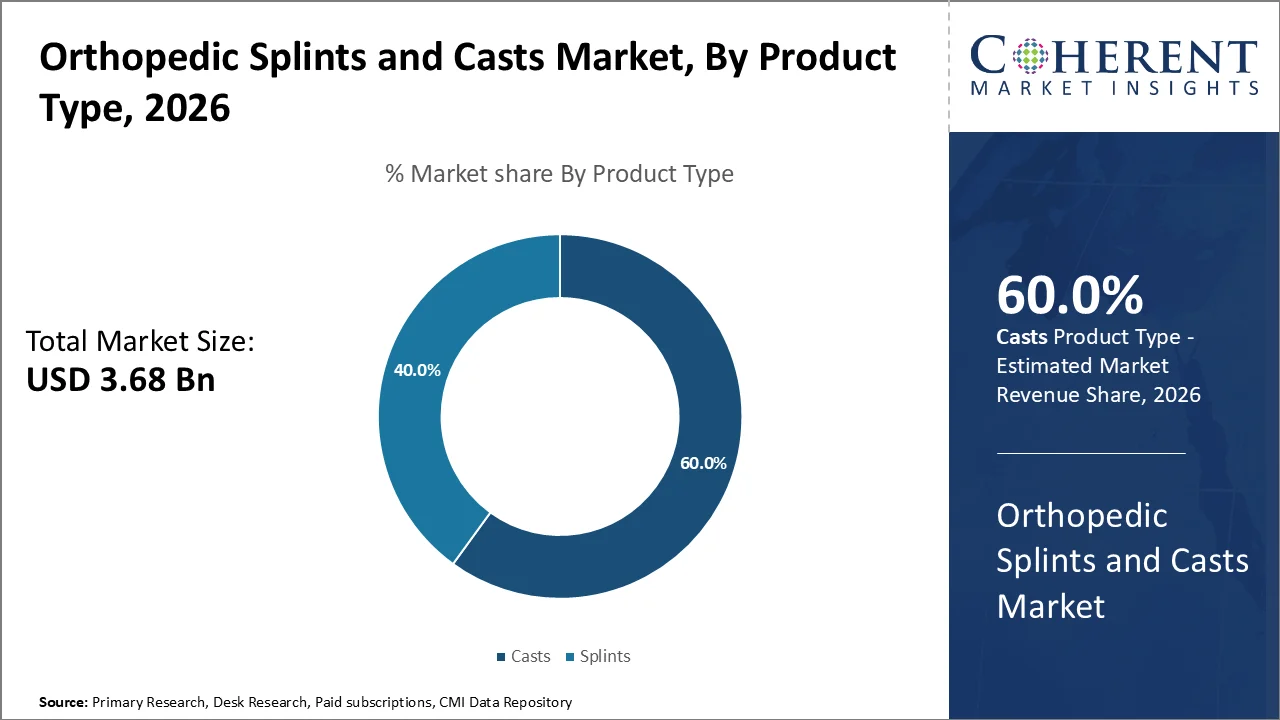
- Casts is expected to account the largest share of 60% in 2026, high usage in fracture and trauma cases. Fractures caused 25.18 million (95%UI 17.28-34.62) YLDs among all ages in 2021, displaying an increasing trend with an EAPC of 1.1.
- The hospitals segment will dominate with 55% in 2026, hospital perform surgeries and post-surgical immobilization. The number of hospitals worldwide is projected to reach 215,977 by 2026.
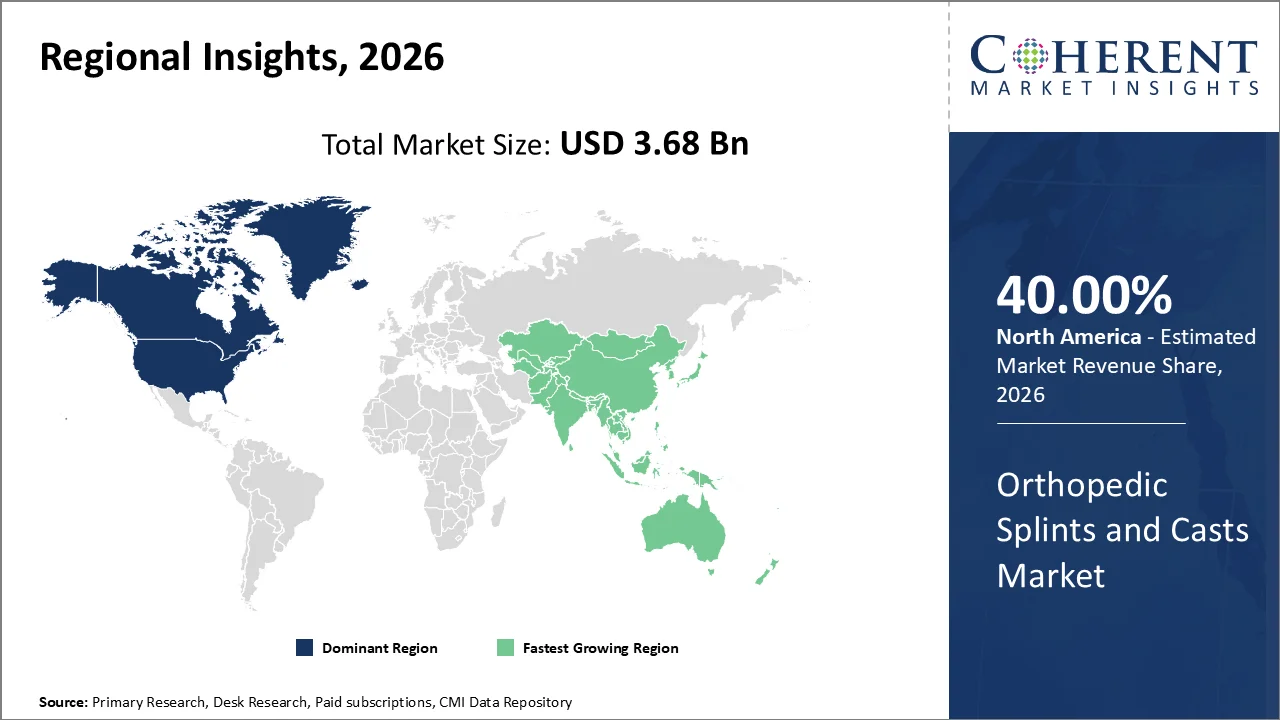
- North America is expected to acquire the dominant share of 40% in 2026, the regio is propelling due to advanced healthcare infrastructure. The United States spends USD 14 885 per capita on health, more than the OECD average of USD 5 967 (USD PPP). This is equal to 17.2% of GDP.
Fiberglass Casting Materials is transforming the Orthopedic Splints and Casts Industry
Fiberglass casting material is a modern synthetic material made from fiberglass mesh coated with resin. It is widely used for making medical casts because it is strong but very lightweight compared to traditional plaster. This material helps support broken bones while allowing better comfort and easier movement for patients during recovery.
It is mainly used as a replacement for plaster casts because it is more durable and faster to set. Fiberglass casts reduce weight by about 50%, improve patient comfort, and allow better blood circulation, which can help healing. They also make X-ray monitoring easier because they are more transparent to radiation.
Thermoplastic Materials: A major breakthrough in Orthopedic Splints and Casts
Thermoplastic materials are special plastics that become soft when heated and can be molded easily. They are used to make medical supports as they can be molded to fit the patient and adjusted again if needed during treatment.
These materials save a lot of time and material in treatment. They reduce application time by about 70%, allow unlimited adjustments, as well as lower waste by up to 90%. Patients also prefer them more, with satisfaction scores of 8.5/10 compared to 6.2/10 for traditional casts.
- Current Industry Events of 2026
- Market Size Estimation
- Regional Breakdown
- Competitive Landscape
- Customer Intelligence
- Segmental Analysis
- Pricing Analysis
- Key Market Drivers, Challenges & Future Trends
- Customized Insights Section
Current Events and Their Impact on the Orthopedic Splints and Casts Market
Current Event | Description and its Impact |
Rising government focus on trauma care and orthopedic rehabilitation programs |
|
Expansion of reimbursement policies for orthopedic devices in developed regions |
|
Segmental Insights
Why is Casts Segment Acquiring the Largest Market Share?
Casts segment is projected to account for the largest share of product type in 2026, representing approximately 60% of the total volume. Their widespread application in treating severe fractures, post-surgical immobilization, as well as complex orthopedic conditions is augmenting the market growth. According to the National Institute of Health (NIH), age-related fractures are projected to increase nationally from 2.1 million in 2005 to over 3 million fractures in 2025
Their superior structural integrity as well as ability to provide comprehensive support during the critical healing phases of bone injuries is another growth inducing factor.
According to data from the World Health Organization, fractures represent one of the most common orthopedic injuries globally, with an estimated 178 million new fractures occurring annually worldwide, and the majority of these cases require casting for proper healing and bone alignment.
Hospitals holds the Largest Market Share
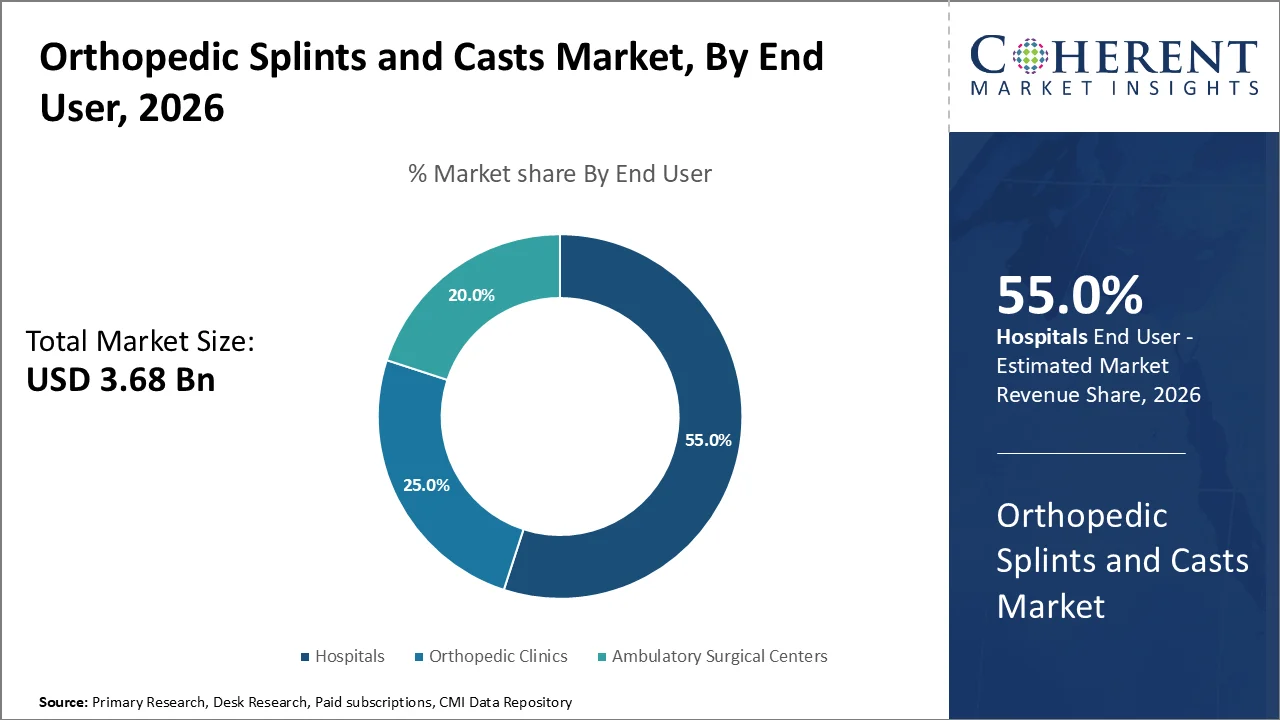
Based on end user, hospitals dominate the market, accounting for a significant 55% share in 2026, the comprehensive infrastructure, extensive patient volume, and integrated healthcare delivery systems that position them as the primary treatment centers for orthopedic injuries and conditions requiring splinting and casting interventions. The most common injuries were fractures (27%) and sprains (27%). Injuries were predominantly concentrated in the upper trunk, lower trunk, and wrist. The majority (91%) of injuries occurred in players aged 50 and older, with an 88% surge in injury rates since 2020.
The ability to handle complex trauma cases, emergency situations, as well as multi-disciplinary treatment approaches that usually require immediate application of orthopedic splints and casts is stimulating the growth.
According to the American Hospital Association, hospitals serve as the backbone of emergency medical care, with emergency departments treating millions of patients annually for fractures, sprains, other orthopedic injuries, etc., that mandate immobilization through splints and casts.
Orthopedic Splints and Casts Market Trends
- The market is witnessing a significant shift toward advanced materials including fiberglass composites, thermoplastic polymers, and 3D-printed custom orthopedic devices. In December 2025, Amritsar-based Amandeep Hospitals, in partnership with Ujala Cygnus, has launched North India’s first hospital-based 3D Printing facility.
- Smart casts embedded with sensors for monitoring healing progress are coming as game-changers.
- High demand for lightweight, waterproof, as well as breathable casting materials that improve patient comfort and compliance while reducing healing time. OptimaCast fiberglass and OptimaCast Poly is an excellent rigid support intended for use in the construction of most common orthopaedic casts.
- Integration of digital scanning and 3D modeling technologies for precise, personalized orthopedic solutions is gaining momentum across developed markets.
Regional Insights
North America dominates owing to its sophisticated healthcare infrastructure
North America account 40% market share in 2026, its sophisticated healthcare infrastructure, extensive network of trauma centers, and established medical device regulatory framework that facilitates rapid adoption of advanced orthopedic splinting and casting solutions. A cross-sectional study of 464 trauma centers across all 50 U.S. states and Washington, D.C. found that states with lower alignment to American College of Surgeons Committee on Trauma (ACS-COT) standards showed a significantly higher expansion of for-profit trauma centers.
The presence of major medical device manufacturers including 3M, DJO Global, Össur, etc., which maintain their headquarters and primary research facilities within the United States and Canada are the factors propelling the market.
The North American healthcare system's emphasis on evidence-based treatment protocols has led to widespread standardization of orthopedic splinting procedures across hospitals, outpatient clinics, and sports medicine facilities.
Asia Pacific Orthopedic Splints and Casts Market Trends
The Asia Pacific region is poised to be the fastest-growing region through 2026-2033, expanding at a CAGR of approximately 6.2%. Rapid healthcare infrastructure development, increasing healthcare accessibility, as well as escalating awareness of advanced orthopedic care solutions are propelling the regional growth. A study showed that Health service coverage is projected to increase from 53.5% in 2000 to 81.5% by 2030, with Bhutan and Sri Lanka expected to achieve higher levels.
Additionally, initiatives like China's Healthy China 2030 program, which has allocated substantial resources toward upgrading medical facilities and expanding access to quality healthcare services in both urban and rural areas is further stimulating the market.
India's National Health Mission has similarly catalyzed market expansion by establishing new primary healthcare centers as well as upgrading existing facilities with modern medical equipment and supplies. A recent report by the World Health Organization indicate that countries like Vietnam, Thailand, Indonesia, etc., have significantly increased their healthcare spending per capita, with orthopedic care being identified as a priority area due to rising sports-related injuries and an aging population.
Robust healthcare infrastructure is Accelerating the Orthopedic Splints and Casts Market Demand in U.S.
The U.S. contributes the highest share in the orthopedic splints and casts market in North America due to its robust healthcare infrastructure, extensive network of specialized orthopedic facilities, as well as high investment in advanced medical technologies.
The emphasis by the U.S. healthcare system on immediate intervention for sports-related injuries and workplace accidents has created substantial demand for orthopedic splints and casts.
In February 2026, Orlando Health has launched a pilot study of a new splint, invented by one of its own physicians, to improve patient care following a hand or wrist injury.
China Orthopedic Splints and Casts Market Trends
China contributes the highest share in the orthopedic splints and casts market in Asia Pacific owing to its massive healthcare infrastructure development, substantial elderly population, and comprehensive government healthcare reforms.
The rapid urbanization of the country has led to increased workplace as well as traffic accidents, majorly driving the need for fracture management solutions. According to the National Health Commission of China, traffic-related injuries requiring orthopedic intervention have increased substantially over the past decade, with over 200,000 serious traffic accidents annually resulting in bone fractures and requiring splinting or casting procedures.
Who are the Major Companies in Orthopedic Splints and Casts Industry
Some of the major key players in Orthopedic Splints and Casts market include, Essity Aktiebolag - BSN Medical, DJO Global, Inc., Zimmer Biomet Holdings, Inc., Ossur Americas, Inc., Prime Medical, Inc., DeRoyal Industries, Inc., Alimed, Inc., 3M, Orfit Industries N.V., and Corflex, Inc.
Key News
- In January 2025, Aspen Medical Products (Aspen), the industry leader in spine innovation for pain and mobility management, has acquired Advanced Orthopaedics, a leading manufacturer and supplier of bracing solutions and orthopedic soft goods. This strategic purchase extends Aspen’s strength beyond spine, enhancing its global reach with a comprehensive portfolio and customer-centric solutions.
- In June 2025, Dimension Ortho, the global leader in 3D printed orthotics, has announced a strategic partnership with Rothman Orthopaedics, one of the largest and most respected orthopedic practices in the U.S., internationally recognized for excellence in musculoskeletal care. Through this collaboration, Rothman will implement Dimension Ortho’s breakthrough platform for personalized bracing and fracture care across its clinical sites, setting a new standard for patient care.
Market Report Scope
Orthopedic Splints and Casts Market Report Coverage
| Report Coverage | Details | ||
|---|---|---|---|
| Base Year: | 2025 | Market Size in 2026: | USD 3.68 Bn |
| Historical Data for: | 2020 To 2024 | Forecast Period: | 2026 To 2033 |
| Forecast Period 2026 to 2033 CAGR: | 6.4% | 2033 Value Projection: | USD 5.65 Bn |
| Geographies covered: |
| ||
| Segments covered: |
| ||
| Companies covered: | Essity Aktiebolag - BSN Medical, DJO Global, Inc., Zimmer Biomet Holdings, Inc., Ossur Americas, Inc., Prime Medical, Inc., DeRoyal Industries, Inc., Alimed, Inc., 3M, Orfit Industries N.V., and Corflex, Inc. | ||
| Growth Drivers: |
| ||
| Restraints & Challenges: |
| ||
Analyst Opinion
- The orthopedic splints and casts market demonstrates robust momentum driven by an aging global population and rising incidence of sports-related injuries across all age demographics. Total annual sports injuries: Approximately 8.6 million sports-related injuries reported yearly in the US.
- The high prevalence of osteoporosis and bone fractures among elderly patients serves as a primary growth catalyst; while growing participation in recreational as well as professional sports activities continues to generate steady demand for immobilization devices. 1 in every three women and 1 in every five men aged 50 and above will have an osteoporosis fracture once in their lifetime.
- Technological advancements hold a significant opportunity, with manufacturers highly developing lightweight, breathable, as well as waterproof materials that enhance patient comfort and compliance.
- The high inclination toward fiberglass as well as synthetic casting materials over traditional plaster solutions shows advancing healthcare provider preferences for improved durability.
- Strategic partnerships between manufacturers and healthcare providers will likely accelerate market penetration and drive sustainable growth across diverse geographic regions.
Speak to the analyst
Want personalized insights?
Take the findings above to one of our principal consultants, or have the report rebuilt around the segments, geographies and competitors you actually track.
Market Segmentation
- By Product Type (Revenue, USD Bn, 2021-2033)
- Casts
- Splints
- By End User (Revenue, USD Bn, 2021-2033)
- Hospitals
- Orthopedic Clinics
- Ambulatory Surgical Centers
- By Region (Revenue, USD Bn, 2021-2033)
- North America
- U.S.
- Canada
- Latin America
- Brazil
- Mexico
- Argentina
- Rest of Latin America
- Europe
- Germany
- U.K.
- France
- Italy
- Spain
- Russia
- Rest of Europe
- Asia Pacific
- China
- India
- Japan
- Australia
- South Korea
- ASEAN
- Rest of Asia Pacific
- Middle East
- GCC
- Israel
- Rest of Middle East
- Africa
- South Africa
- Central Africa
- North Africa
- North America
Sources
Primary Research Interviews
- Orthopedic Device Manufacturers and Suppliers
- Healthcare Professionals and Orthopedic Surgeons
- Medical Equipment Distributors and Retailers
- Hospital Procurement Managers
- Others
Databases
- Medical Device Database (MDD)
- Global Health Observatory (GHO) Database
- FDA Medical Device Database
- Healthcare Cost and Utilization Project (HCUP)
- Others
Magazines
- Orthopedic Design & Technology Magazine
- Medical Device & Diagnostic Industry (MD+DI)
- Healthcare Purchasing News
- Orthopedics This Week
- Others
Journals
- Journal of Orthopedic Research
- Clinical Orthopedics and Related Research
- International Journal of Medical Devices
- Others
Newspapers
- Healthcare Finance News
- Modern Healthcare
- Medical Device Network News
- Healthcare IT News
- Others
Associations
- American Academy of Orthopedic Surgeons (AAOS)
- Medical Device Manufacturers Association (MDMA)
- International Association of Healthcare Central Service Material Management (IAHCSMM)
- Orthopedic Research Society (ORS)
- Others
Public Domain Sources
- U.S. Food and Drug Administration (FDA) Publications
- World Health Organization (WHO) Reports
- Centers for Medicare & Medicaid Services (CMS) Data
- National Center for Health Statistics (NCHS)
- Others
Proprietary Elements
- CMI Data Analytics Tool
- Proprietary CMI Existing Repository of information for last 10 years
Get access to 250+ pages report
Every segment, forecast, competitor profile and data table behind the analysis above — available for instant download.
- ESOMAR Member
- ISO 9001:2015 Certified
- D-U-N-S Registered
- GDPR & CCPA Compliant
Missing comfort of reading report in your local language? Find your preferred language:
Transform your Strategy with Exclusive Trending Reports
Frequently Asked Questions
The orthopedic splints and casts market is expected to reach USD 5.65 Bn in 2033.
Major players operating in the global orthopedic splints and casts market include Essity Aktiebolag - BSN Medical, DJO Global, Inc., Zimmer Biomet Holdings, Inc., Ossur Americas, Inc., Prime Medical, Inc., DeRoyal Industries, Inc., Alimed, Inc., 3M, Orfit Industries N.V., and Corflex, Inc.
Formation of pressure sores, compartment syndrome, and thermal injuries during casting or splinting process is oneof the major factors that is expected to hamper growth of the market over the forecast period.
Growing prevalence of musculoskeletal diseases such as arthritis and osteoporosis is one of the major factors that is expected to propel growth of the market over the forecast period.
The Orthopedic Splints and Casts market is anticipated to grow at a CAGR of 6.4% between 2026 and 2033.
Among regions, North America is expected to account for a largest market share in the global Orthopedic Splints and Casts market over the forecast period.
A splint is a hard slab of plaster or fiberglass that supports your limb on one side and wrapped with a soft dressing.