

Indwelling Catheters Market Size and Forecast — 2026 - 2033
The Global Indwelling Catheters Market size is estimated to be valued at USD 3.8 billion in 2026 and is expected to reach USD 6.2 billion by 2033, exhibiting a compound annual growth rate (CAGR) of 7.2% from 2026 to 2033.
Overview
Indwelling catheters are medical devices designed for long-term placement within the body to enable continuous drainage or fluid delivery. Common types include urinary catheters, central venous catheters, and peripherally inserted central catheters. These products are manufactured from biocompatible materials to reduce irritation and infection risk. Indwelling catheters are widely used in hospitals, long-term care facilities, and home healthcare settings.
Key Takeaways
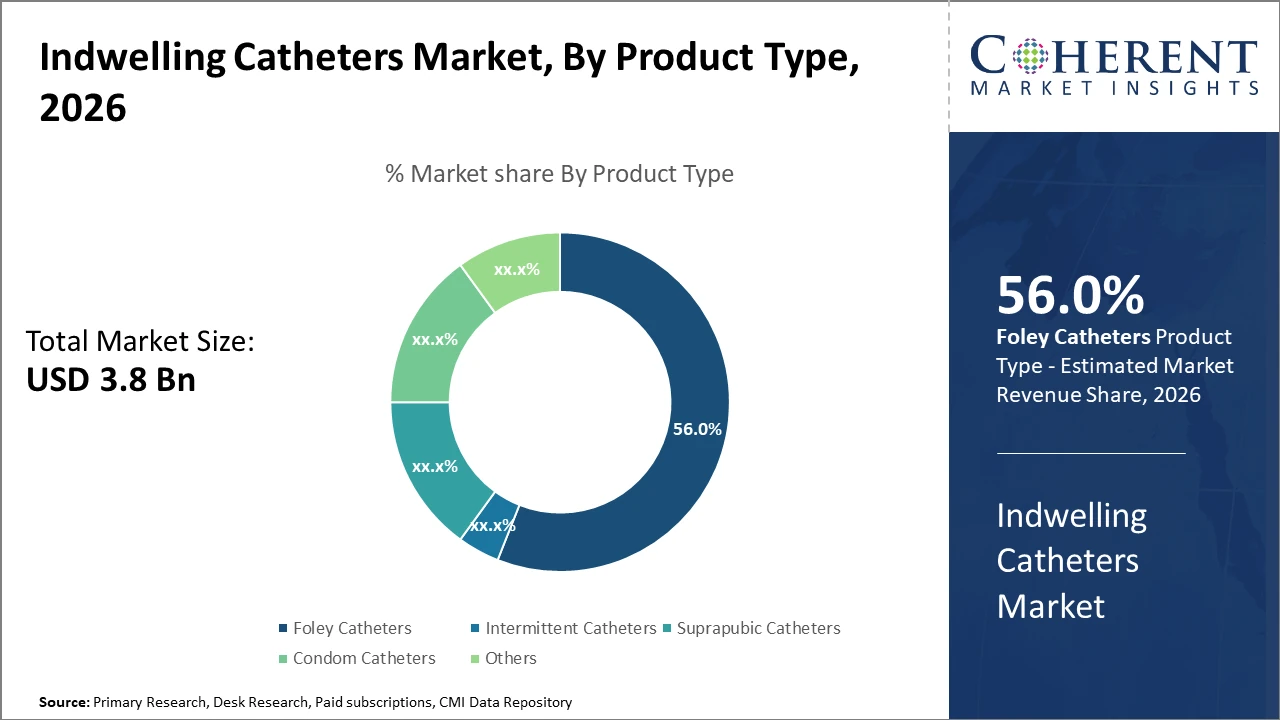
The Foley Catheters segment leads the market share due to widespread clinical adoption and ease of use, representing over half of the Indwelling Catheters market size.
Hospitals dominate end-user segments, partly due to their extensive requirements for surgical and inpatient urinary management solutions supported by institutional procurement strategies.
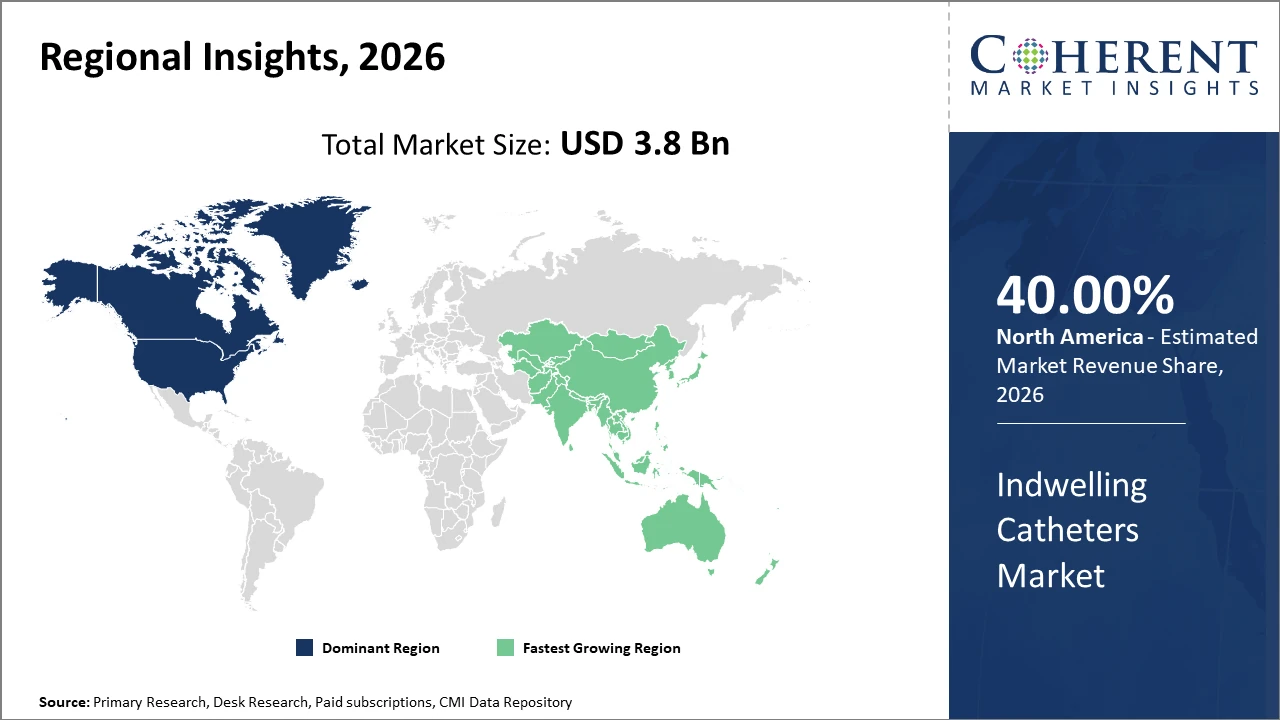
North America retains a market leadership position driven by advanced healthcare infrastructure and progressive reimbursement policies, constituting nearly 40% of market revenue.
Asia Pacific is the fastest-growing market region, with a CAGR exceeding 8%, fueled by expanding healthcare accessibility, rising chronic disease cases, and increased government focus on eldercare infrastructure.
Indwelling Catheters Market Segmentation Analysis
Indwelling Catheters Market Insights, By Product Type
Foley Catheters dominate the market share. Foley catheters remain the primary choice in clinical settings due to their reliability for continuous drainage and easier insertion techniques favored in inpatient care. This segment benefits from technological enhancements such as antimicrobial coatings that reduce infection risks, strengthening its market leadership. Intermittent catheters represent the fastest-growing subsegment given the rise in homecare catheterization and intermittent use preference to lower infection rates. Suprapubic catheters provide an alternative route for urinary drainage in patients with urethral complications but hold smaller market share due to procedural complexity. Condom catheters serve specific patient groups with limited applications and form a minor yet stable segment.
Indwelling Catheters Market Insights, By Material
Latex is dominating the market share. Latex remains preferred due to its flexibility and low production cost, making it widely accessible, especially in emerging regions. However, the fastest-growing subsegment is Hydrogel-Coated catheters, benefiting from favorable clinical outcomes related to reduced friction and infection rates. Silicone catheters are noted for their hypoallergenic and biocompatible properties and are steadily gaining traction, particularly in premium healthcare settings. Polyurethane catheters are utilized where structural strength is crucial but represent a smaller share.
Indwelling Catheters Market Insights, By End-User
Hospitals command the dominant market share. Hospitals lead due to high procedural volumes requiring indwelling catheterization, supported by institutional procurement and infection control protocols. The fastest-growing subsegment is Homecare Settings, fueled by increasing chronic disease patient populations opting for home-based catheter management and supportive insurance frameworks. Ambulatory Surgery Centers are expanding as outpatient care gains preference, fostering market growth in this segment. Long-term care facilities serve aging populations needing sustained catheter use, contributing to steady segment growth
Indwelling Catheters Market Trends
The Indwelling Catheters market is witnessing a pronounced shift towards the incorporation of advanced biomaterials that substantially improve patient tolerance and reduce infection risk.
For instance, the adoption of hydrogel and silicone-coated catheters increased by approximately 18% globally in 2025, reflecting a significant demand for comfort-enhancing solutions.
Furthermore, the rise of intelligent catheters equipped with biosensors for early detection of urinary tract infections aligns with the digitization wave in healthcare, with pilot deployments recorded in the U.S. and Europe during 2023.
Sustainability is another strong trend, with companies focusing on developing biodegradable catheters to curtail biohazardous waste, notably seen in product launches by European market leaders in 2025.
Indwelling Catheters Market Insights, By Geography
North America Indwelling Catheters Market Analysis and Trends
In North America, dominance in the Indwelling Catheters market is driven by well-established healthcare infrastructure, higher healthcare expenditure, and regulatory support facilitating innovation adoption. The region commands approximately 40% of the market share, attributable to leading players headquartered in the U.S. and Canada. Additionally, reimbursement frameworks and rising elderly populations bolster demand in hospital and homecare settings.
Asia Pacific Indwelling Catheters Market Analysis and Trends
Meanwhile, the Asia Pacific region exhibits the fastest growth trajectory with a CAGR exceeding 8%, propelled by increasing healthcare investments, expanding disease prevalence, and rising government support for eldercare. Countries like India and China are receiving significant attention due to large patient populations and growing awareness about urological health management.
Indwelling Catheters Market Outlook for Key Countries
USA Indwelling Catheters Market Analysis and Trends
The USA’s market benefits from a robust healthcare system, advanced medical technologies, and extensive insurance coverage for catheter-related treatments. Data from 2025 indicates increasing outpatient procedures driving indwelling catheter adoption, supported by innovations such as smart catheters integrated with infection monitoring capabilities. Leading companies including Bard Medical and Cook Medical have focused on U.S. market penetration through collaborations and diversifying product offerings, resulting in sustained market revenue growth.
India Indwelling Catheters Market Analysis and Trends
India’s market is characterized by rapidly expanding healthcare access driven by government programs aimed at rural and urban healthcare enhancement. Rising awareness about chronic urological conditions and increased availability of healthcare infrastructure in tier-2 and tier-3 cities have significantly influenced market growth. Local and multinational market players are investing in affordable product lines tailored to regional needs. For example, recent catheter distribution initiatives in 2023 across government hospitals facilitated increased adoption, contributing to double-digit market growth.
Analyst Opinion
The expanding hospital infrastructure globally is a significant demand-side indicator propelling the indwelling catheter market growth. For instance, new healthcare facilities increased by over 5% in North America in 2025, correlating with a spike in catheter usage for inpatient care. This infrastructure expansion has resulted in a 9% surge in hospital catheter acquisition contracts in the U.S. alone in early 2026.
Material innovation, such as silicone-coated latex and hydrogel coatings, substantially enhance catheter tolerance and reduce infection rates, which is a critical supply-side indicator. Clinical data from a 2025 study shows infection risk reduction by 25% in patients using hydrophilic catheters, influencing procurement decisions globally and thus driving market share expansion in the premium product segment.
Increasing adoption of intermittent and long-term catheterization solutions in geriatrics and chronic care homes indicates diversification in end-use applications. The demand for indwelling catheters in elder care is growing at 8.5% annually, supported by rising elderly populations in Europe and Asia Pacific, where aging demographics represent 20-25% of population segments.
Price dynamics and reimbursement policies are pivotal micro-indicators. For example, the introduction of government-subsidized catheter programs in countries like Germany and Japan in 2023 increased the affordability quotient, driving market revenue upward by around 6% year-over-year. Price stabilization in key countries minimizes market restraints linked to cost sensitivity.
- Current Industry Events of 2026
- Market Size Estimation
- Regional Breakdown
- Competitive Landscape
- Customer Intelligence
- Segmental Analysis
- Pricing Analysis
- Key Market Drivers, Challenges & Future Trends
- Customized Insights Section
Market Scope
| Report Coverage | Details | ||
|---|---|---|---|
| Base Year: | 2025 | Market Size in 2026: | USD 3.8 billion |
| Historical Data for: | 2020 To 2024 | Forecast Period: | 2026 To 2033 |
| Forecast Period 2026 to 2033 CAGR: | 7.2% | 2033 Value Projection: | USD 6.2 billion |
| Geographies covered: |
| ||
| Segments covered: |
| ||
| Companies covered: | Hollister Incorporated, Grifols S.A., C.R. Bard, Nipro Corporation, Dentsply Sirona, Halyard Health, Rusch International, ConvaTec Group, Teleflex Incorporated, ALCARE Co., Ltd. | ||
| Growth Drivers: |
| ||
Indwelling Catheters Market Growth Factors
Rising chronic disease prevalence, especially neurological and urological disorders, is a prime growth driver, with diabetes and spinal cord injuries pushing long-term catheter demand. For example, diabetic patients requiring catheterization rose by 6.7% globally in 2025. Technological advancements in catheter materials leading to reduced catheter-associated infections provide a considerable impetus, as research from 2023 indicates a 30% drop in CAUTI (catheter-associated urinary tract infections) following adoption of coated catheters. Aging population demographics worldwide comprise another critical growth factor; notably, Japan exhibited a 28% increase in elderly catheter patients in 2025, paralleling trends in other APAC nations. Government initiatives promoting home care catheter adoption and reimbursement frameworks stimulate market revenue and adoption rates in developed economies, highlighted by Germany’s 2026 policy revisions enabling wider catheter accessibility in decentralized care.
Indwelling Catheters Market Development
In early 2023, B. Braun launched its UroPro Guard catheter, designed with a strong focus on infection prevention in urinary catheterization. The product incorporates protective features aimed at reducing catheter-associated urinary tract infections (CAUTIs), supporting improved patient safety and better clinical outcomes in hospital and long-term care settings.
In March 2023, Baxter International received FDA approval for its SureSite SmartBall Foley Catheter, introducing an advanced design intended to enhance placement accuracy and reduce urethral trauma. The SmartBall technology helps clinicians achieve proper catheter positioning, improving comfort, minimizing complications, and increasing reliability during urinary drainage procedures.
Key Players
Leading Companies of the Market
Hollister Incorporated
Grifols S.A.
C.R. Bard
Nipro Corporation
Dentsply Sirona
Halyard Health
Rusch International
ConvaTec Group
Teleflex Incorporated
ALCARE Co., Ltd.
Leading market companies are evidently focusing on strategic mergers, portfolio expansion, and technological advancement to bolster their industry share. For instance, Coloplast’s 2025 acquisition of a hydrophilic catheter technology company resulted in a 15% increase in their premium segment sales. Similarly, B. Braun’s launch of eco-friendly catheter products in 2026 has opened new revenue streams while aligning with sustainability norms, indicating strong market growth strategies shaping the competitive landscape.
Indwelling Catheters Market Future Outlook
The future of the market will be shaped by ongoing innovation in biomaterials, infection control technologies, and smart monitoring systems. Next-generation catheters will incorporate antimicrobial surfaces, sensors, and real-time telemetry to detect early signs of blockage or infection. Growing home healthcare and outpatient chronic care delivery will require easier-to-use, patient-friendly catheter systems. Minimally invasive insertion techniques and integrated drainage solutions will enhance patient comfort and reduce healthcare burdens. Continued emphasis on reducing catheter-associated complications will drive research into coatings, drug elution systems, and biodegradable components, positioning indwelling catheters as safer long-term clinical tools.
Indwelling Catheters Market Historical Analysis
The indwelling catheters market evolved from early open drainage systems to sophisticated long-term devices used across hospitals, home care, and chronic care settings. Initially, catheters were simple rubber or metal tubes prone to infection and discomfort. Over time, improvements in biomaterials, such as silicone and polyurethane, enhanced biocompatibility and reduced irritation. The introduction of closed-system designs, antimicrobial coatings, and advanced valve technologies significantly lowered infection rates and improved ease of use. Expanded indications—including urinary retention management, central venous access, drug delivery, and dialysis—drove widespread adoption in intensive care, surgery, and chronic disease management. Regulatory guidelines on sterility, insertion protocols, and catheter care further shaped product design and clinical practice.
Sources
Primary Research Interviews:
Urologists
ICU Nurses
Infection Control Specialists
Medical Device Designers
Procurement Officers
Databases:
CDC Infection Control Data
WHO Medical Devices
OECD Healthcare Data
Magazines:
Urology Times
Nursing Times
Medical Device Network
Hospital Products Today
Clinical Care Journal
Journals:
Journal of Urology
Infection Control Journal
BMC Urology
Clinical Nursing Journal
Medical Engineering Journal
Newspapers:
Reuters Health
Financial Times (Healthcare)
Bloomberg Health
The Hindu
The Guardian
Associations:
American Urological Association
Association for Professionals in Infection Control
European Association of Urology
World Health Organization
Medical Device Manufacturers Association
Get access to 250+ pages report
Every segment, forecast, competitor profile and data table behind the analysis above — available for instant download.
- ESOMAR Member
- ISO 9001:2015 Certified
- D-U-N-S Registered
- GDPR & CCPA Compliant
Missing comfort of reading report in your local language? Find your preferred language:
Transform your Strategy with Exclusive Trending Reports
Frequently Asked Questions
Dominance is held by companies such as Bard Medical, Coloplast, Cook Medical, and B. Braun, which collectively command a significant portion of the industry share due to their innovative product portfolios and global presence.
The market size is expected to reach USD 6.2 billion by 2033, growing at a CAGR of 7.2% from 2026 to 2033, supported by rising disease prevalence and aging demographics.
Hospitals hold the largest growth opportunity, but homecare settings and ambulatory surgery centers are witnessing rapid growth due to increased patient preference for outpatient and home-based catheter management.
Expect growth in eco-friendly and digitally integrated catheter solutions, along with expanded market penetration in emerging economies driven by government healthcare initiatives.
The competitive landscape is marked by product innovation and strategic acquisitions, while challenges include market restraints like infection control concerns and regulatory compliance complexities.
Strategies include partnerships with healthcare providers, new product launches focusing on safety and sustainability, as well as expansion into emerging markets via local collaborations.