

Hospital Beds Market Size and Forecast — 2026-2033
The global hospital beds market is estimated to be valued at USD 5,596.1 Mn in 2026 and is expected to reach USD 8,986.1 Mn by 2033, exhibiting a compound annual growth rate (CAGR) of 7.0% from 2026 to 2033.
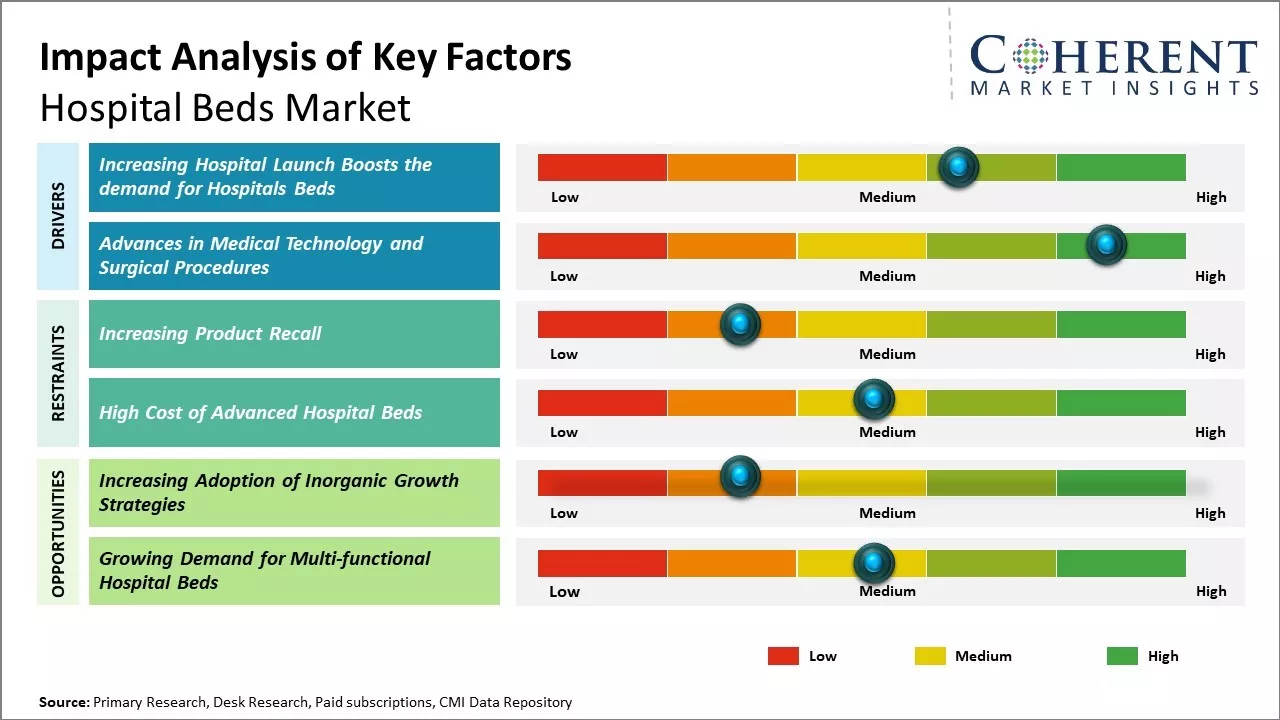 Rising geriatric population and increasing number of hospitals and ambulatory surgery centers across the world are expected to boost the demand for hospital beds. Furthermore, the growing prevalence of chronic diseases due to changes in lifestyle is also supporting the market growth. Adoption of advanced features like bedsores prevention function, articulated bed position, wireless remote control, and safety rails by key market players is further expected to provide opportunities for market expansion. However, high cost of technologically advanced beds may hamper the market growth to some extent during the forecast period.
Increasing Hospital Launches Boosts the Demand for Hospitals Beds
Increasing hospital launch boosts the demand for hospital beds which is expected to drive the growth of the global hospital beds market over the forecast period. For instance, on January 24, 2026, Rainbow Children's Medicare Limited (RCML), Rainbow Children's Hospital, India's leading pediatric multi-specialty hospital chain, announced the launch of its new state-of-the-art 100-bed spoke hospital in Bengaluru, India.
Insights, By Type
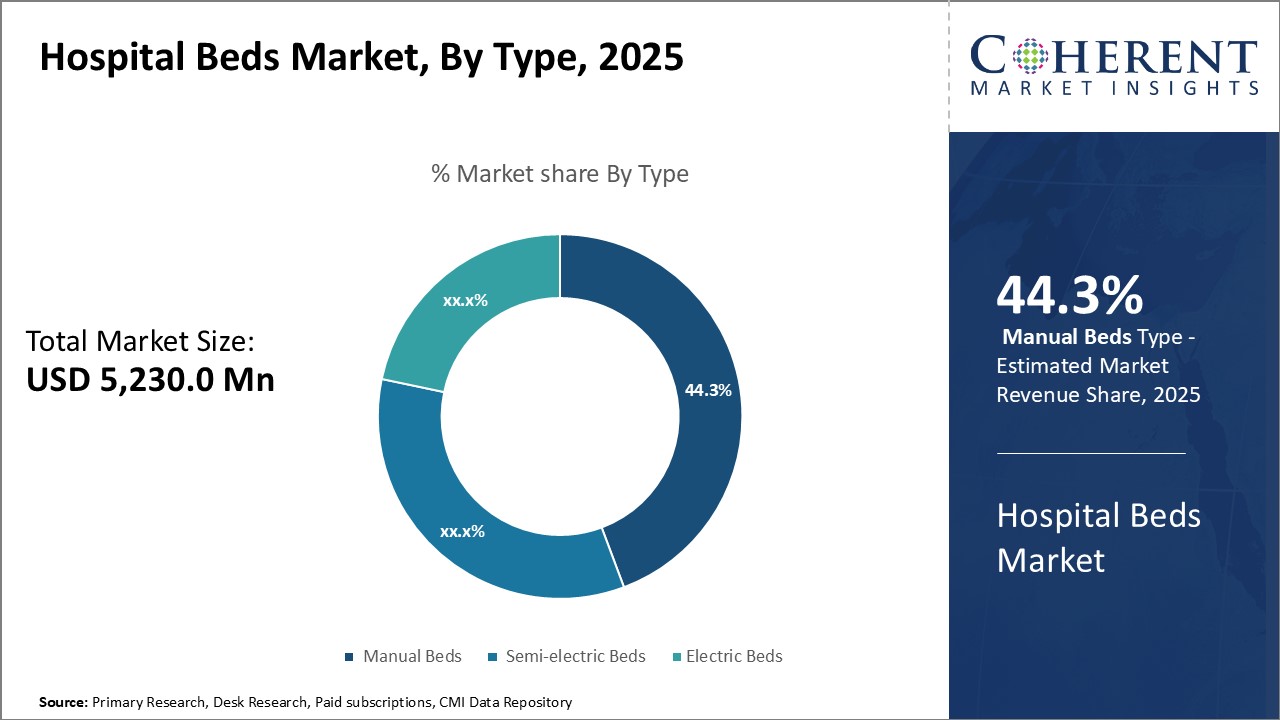 Insights, By Type: Convenience and affordability drive demand for manual beds
The type segment includes electric beds, semi-electric beds, and manual beds. The manual beds sub-segment is estimated to hold 45.3% of the market share in 2026 owing to their convenience and affordability compared to electric and semi-electric beds. Manual beds do not require electricity to operate and can be easily adjusted using basic mechanical mechanisms like springs, levers and cranks. This makes them a hassle-free option for hospitals particularly in developing regions with unreliable power infrastructure. Their simple design also means that manual beds have a lower upfront cost compared to beds with built-in motors or electronics. This price advantage widens their access across all economical segments, especially in budget-constrained public healthcare facilities. As manual adjustment avoids dependence on external power sources, these beds ensure continuous operation during power outages which is a crucial requirement in medical emergencies. Their maintained functionality without electricity contributes significantly to their popularity in regions prone to natural disasters that can disrupt power supply.
Insights, By Application
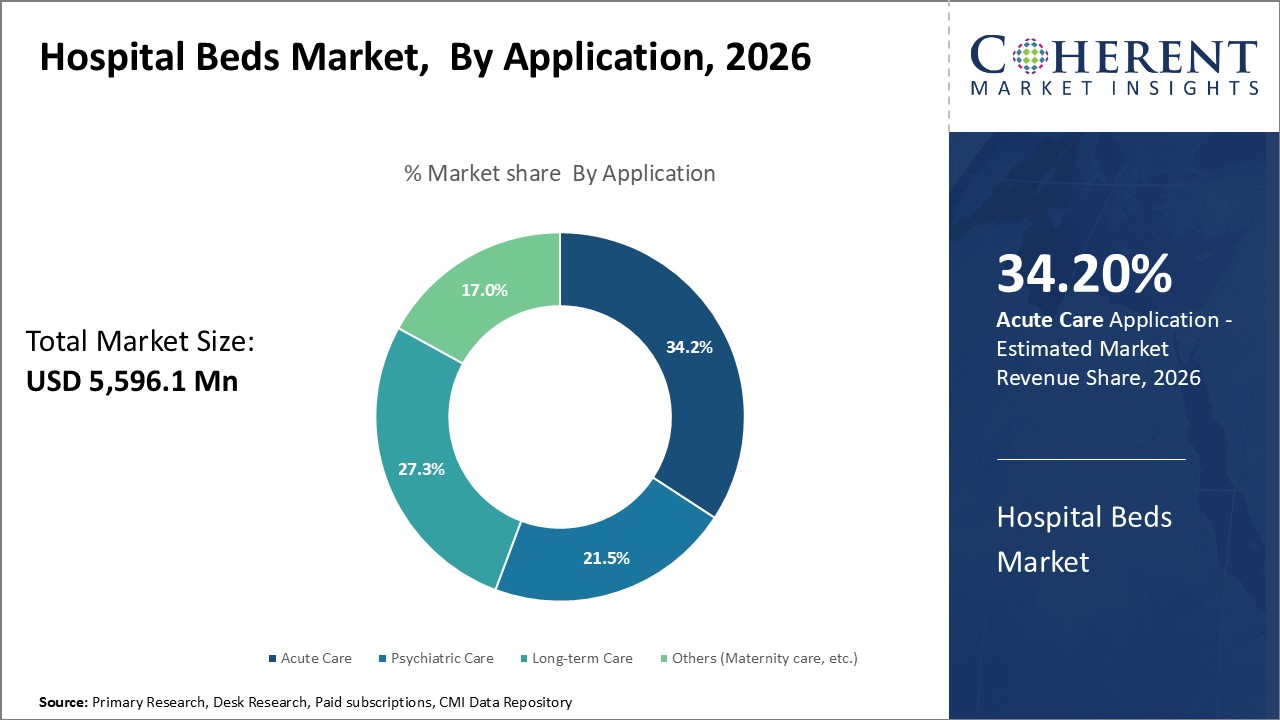
Insights, By Application: Post-surgical care tops acute needs for hospital beds
The application segment includes acute care, psychiatric care, long-term care, and others (maternity care, etc.). The acute care sub-segment is estimated to hold 34.2% of the market share in 2026 as hospital beds are required to support patients undergoing medical procedures or recovering from surgeries and traumas. A large portion of acute cases stem from emergency admissions, follow-up treatments, and post-operative care needs. Beds tailored for acute care allow adjusting positions to offer comfort and promote healing for patients in vulnerable post-surgical stages. Features like adjustable heights and inclined sections aid nursing and facilitate monitoring of vitals for those undergoing medical observation. Given the transient nature of most acute conditions, the demand heavily flows from short-term hospital admissions compared to facilities catering to long-term or psychiatric care.
Insights, End User
Insights, End User: In-hospital services consolidate the bulk of bed requirements
The end user segment includes hospitals, home care settings, elderly care facilities, ambulatory surgical centers, and others (nursing homes, etc.). The hospitals sub-segment is estimated to hold 52.9% of the market share in 2026 as they represent the major frontline for delivering curative and rehabilitative care. Their round-the-clock services entail maintaining adequate bed capacity to admit short-term as well as long-term patients. While home care and elderly facilities also utilize beds, their decentralized nature means such settings have a relatively smaller pool. Moreover, the complexity of procedures performed in hospital settings translates to higher average bed consumption per admission. Tertiary and multi-specialty hospitals generating bigger patient inflows on a daily basis consolidate the bulk of market demand.
Regional Insights
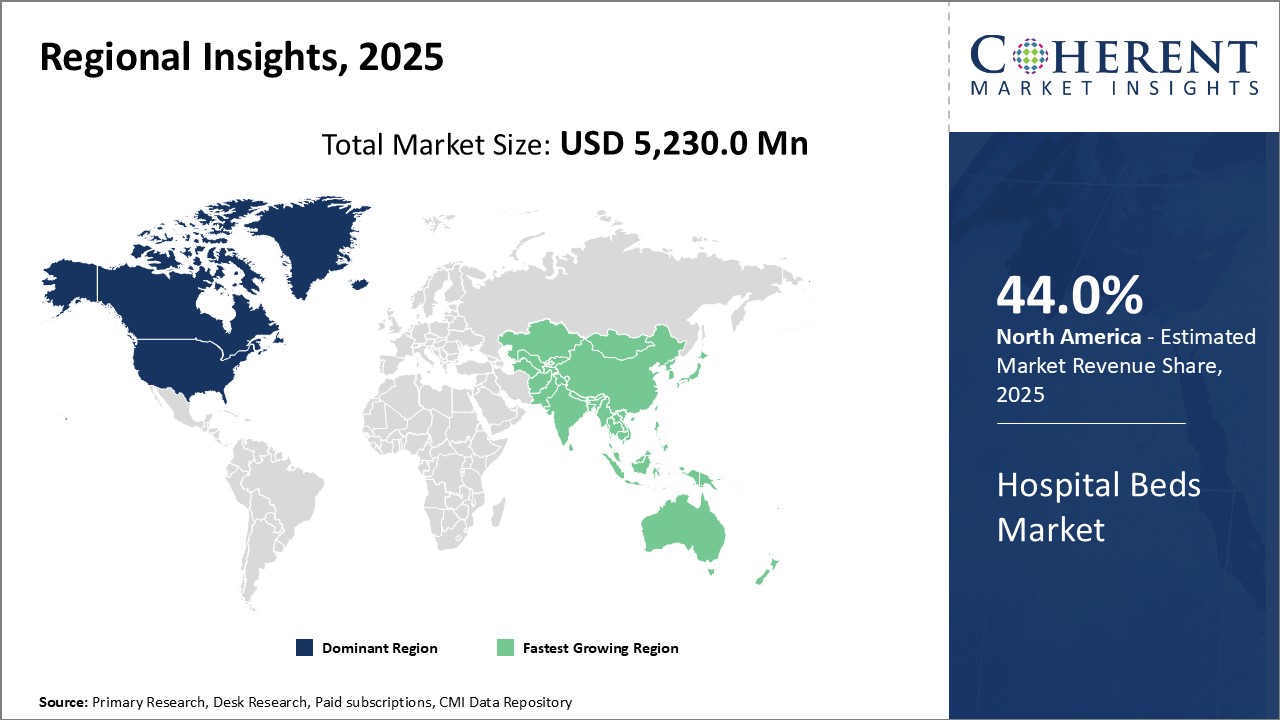 North America remains the dominant region in the global hospital beds market and is estimated to hold 44.0% of the market share in 2026 owing to the vast number of hospitals and healthcare facilities in countries like the U.S. With the highest healthcare expenditure globally, the U.S. healthcare system relies heavily on advanced medical equipment and technologies. This translates to a huge demand for hospital beds to equip the large number of patient beds required across various healthcare setups. The presence of leading global manufacturers of hospital beds also contributes to North America's prominence in this market.
Asia Pacific is emerging as the fastest growing regional market for hospital beds. Rapid growth in healthcare infrastructure to meet the demands of rising populations, increasing income levels, and growing medical tourism are the key factors propelling the market in Asia Pacific region. Countries like China, India, and Japan are witnessing massive investments in building new hospitals and upgrading existing facilities. This has boosted the procurement of hospital beds over the last few years. Additionally, lower production costs are enabling Asian manufacturers to increase exports and gain a global footprint.
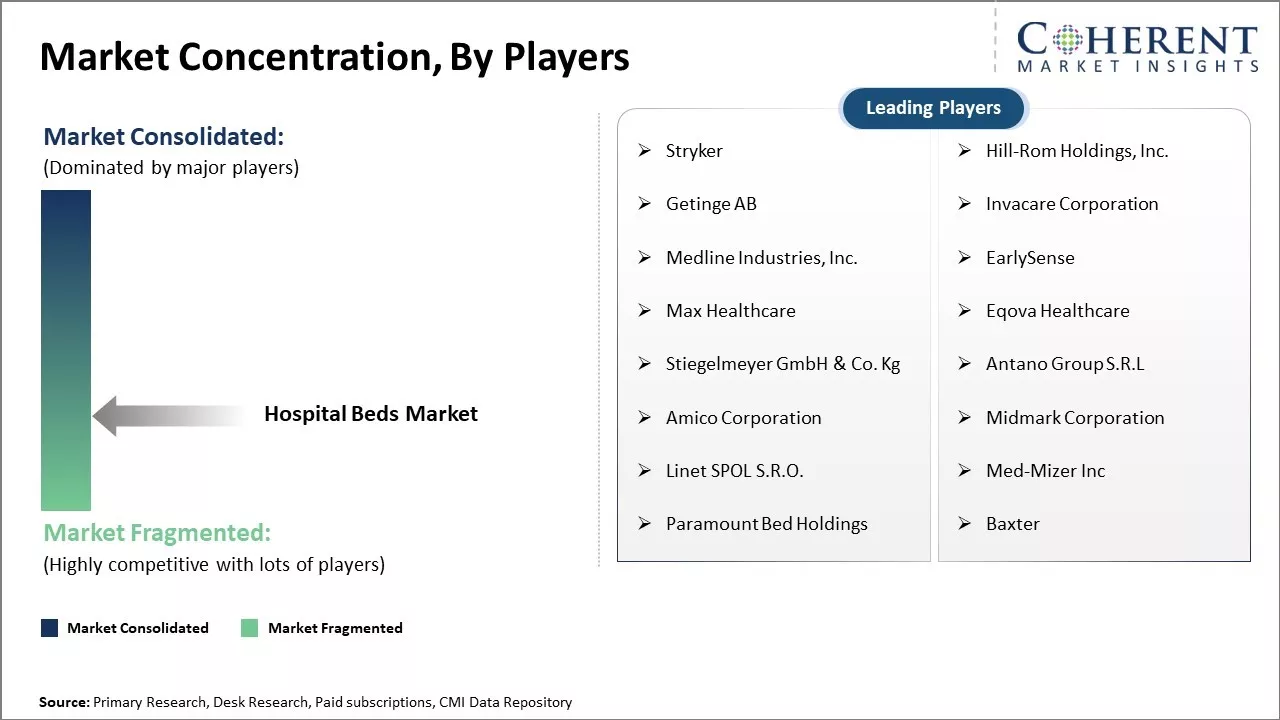
Market Players, Key Development, and Competitive Intelligence
 Advancements in Medical Technology and Surgical Procedures
Advanced treatments like robotic surgeries, minimally invasive procedures, organ transplants, and cancer therapies have reduced recovery times. At the same time, continuously evolving technology is allowing hospitals to perform surgeries which were not possible earlier. Moreover, new disease diagnostic techniques help in detecting health issues in early stages when treatment outcomes are better. All these aspects have increased the volume of patients requiring hospitalization worldwide. In order to cope with these changing demands and offer quality post-operative care, hospitals need high-end beds incorporated with the latest amenities and fixtures. Technology-enabled beds with features like adjustable positions, bedside monitoring and electronic health records also improve patient safety and treatment outcomes.
- Current Industry Events of 2026
- Market Size Estimation
- Regional Breakdown
- Competitive Landscape
- Customer Intelligence
- Segmental Analysis
- Pricing Analysis
- Key Market Drivers, Challenges & Future Trends
- Customized Insights Section
Market Report Scope
Hospital Beds Market Report Coverage
| Report Coverage | Details | ||
|---|---|---|---|
| Base Year: | 2025 | Market Size in 2026: | USD 5,596.1 Mn |
| Historical Data for: | 2020 To 2024 | Forecast Period: | 2026 To 2033 |
| Forecast Period 2026 to 2033 CAGR: | 7.0% | 2033 Value Projection: | USD 8,986.1 Mn |
| Geographies covered: |
| ||
| Segments covered: |
| ||
| Companies covered: | Stryker, Hill-Rom Holdings, Inc., Getinge AB, Invacare Corporation, Medline Industries, Inc., EarlySense, Max Healthcare, Eqova Healthcare, Stiegelmeyer GmbH & Co. Kg, Antano Group S.R.L, Amico Corporation, Midmark Corporation, Linet SPOL S.R.O., Med-Mizer Inc, Paramount Bed Holdings, and Baxter | ||
| Growth Drivers: |
| ||
| Restraints & Challenges: |
| ||
Analyst Opinion (Expert Opinion)
 Market Challenges – Increasing Product Recalls
Increasing number of product recalls by government agencies, such as the U.S. Consumer Product Safety Commission (CPSC), is expected to hinder the market growth. For instance, in December 2021, U.S. Consumer Product Safety Commission (CPSC) voluntarily recalled 105,000 bed rails, which were manufactured by Compass Health Brands, a medical device company, after receiving three death reports associated with the product. The bed rails was recalled as it was not properly attached to the bed and the user became entrapped between the bed and the mattress.
Market Opportunities – Increasing Adoption of Inorganic Growth Strategies
Increasing collaborations among key market players is expected to offers lucrative opportunities in the market over the forecast period. For instance, in June 2023, Brigade Foundation, a non-profit organization, collaborated with St John’s Medical College Hospital to set up two hospitals of 100 beds each. The hospitals are expected to be operational in calendar years 2024 and 2025, respectively.
Speak to the analyst
Want personalized insights?
Take the findings above to one of our principal consultants, or have the report rebuilt around the segments, geographies and competitors you actually track.
Market Segmentation
- Type Insights (Revenue, USD Mn, 2021 - 2033)
- Electric Beds
- Semi-electric Beds
- Manual Beds
- Application Insights (Revenue, USD Mn, 2021 - 2033)
- Acute Care
- Psychiatric Care
- Long-term Care
- Others (Maternity care, etc.)
- End User Insights (Revenue, USD Mn, 2021 - 2033)
- Hospitals
- Home Care Settings
- Elderly Care Facilities
- Ambulatory Surgical Centers
- Others (Nursing Homes, etc.)
- Regional Insights (Revenue, USD Mn, 2021 - 2033)
- North America
- U.S.
- Canada
- Latin America
- Brazil
- Argentina
- Mexico
- Rest of Latin America
- Europe
- Germany
- U.K.
- Spain
- France
- Italy
- Russia
- Rest of Europe
- Asia Pacific
- China
- India
- Japan
- Australia
- South Korea
- ASEAN
- Rest of Asia Pacific
- Middle East
- GCC Countries
- Israel
- Rest of Middle East
- Africa
- South Africa
- North Africa
- Central Africa
- North America
- Key Players Insights
- Stryker
- Hill-Rom Holdings, Inc.
- Getinge AB
- Invacare Corporation
- Medline Industries, Inc.
- EarlySense
- Max Healthcare
- Eqova Healthcare
- Stiegelmeyer GmbH & Co. Kg
- Antano Group S.R.L
- Amico Corporation
- Midmark Corporation
- Linet SPOL S.R.O.
- Med-Mizer Inc
- Paramount Bed Holdings
- Baxter
Get access to 250+ pages report
Every segment, forecast, competitor profile and data table behind the analysis above — available for instant download.
- ESOMAR Member
- ISO 9001:2015 Certified
- D-U-N-S Registered
- GDPR & CCPA Compliant
Missing comfort of reading report in your local language? Find your preferred language:
Transform your Strategy with Exclusive Trending Reports
Frequently Asked Questions
The Hospital Beds Market is estimated to be valued at USD 5,596.1 Mn in 2026, and is expected to reach USD 8,986.1 Mn by 2033.
The CAGR of the Hospital Beds Market is projected to be 7.0% from 2026 to 2033.
Increasing hospital launches boosts the demand for hospitals beds and advancements in medical technology and surgical procedures are the major factors driving the growth of the hospital beds market.
Increasing product recalls and high cost of advanced hospital beds are the major factors hampering the growth of the hospital beds market.
In terms of type, manual beds is estimated to dominate the market revenue share in 2026.
Stryker, Hill-Rom Holdings, Inc., Getinge AB, Invacare Corporation, Medline Industries, Inc., EarlySense, Max Healthcare, Eqova Healthcare, Stiegelmeyer GmbH & Co. Kg, Antano Group S.R.L, Amico Corporation, Midmark Corporation, Linet SPOL S.R.O., Med-Mizer Inc, Paramount Bed Holdings, and Baxter are the major players.
North America is expected to lead the hospital beds market.