

Peripheral Intravenous Catheters Market Analysis & Forecast: 2026-2033
Peripheral intravenous catheters market is estimated to be valued at USD 9.41 Bn in 2026 and is expected to reach USD 16.65 Bn in 2033, exhibiting a compound annual growth rate (CAGR) of 8.5% from 2026 to 2033.
Key Takeaways
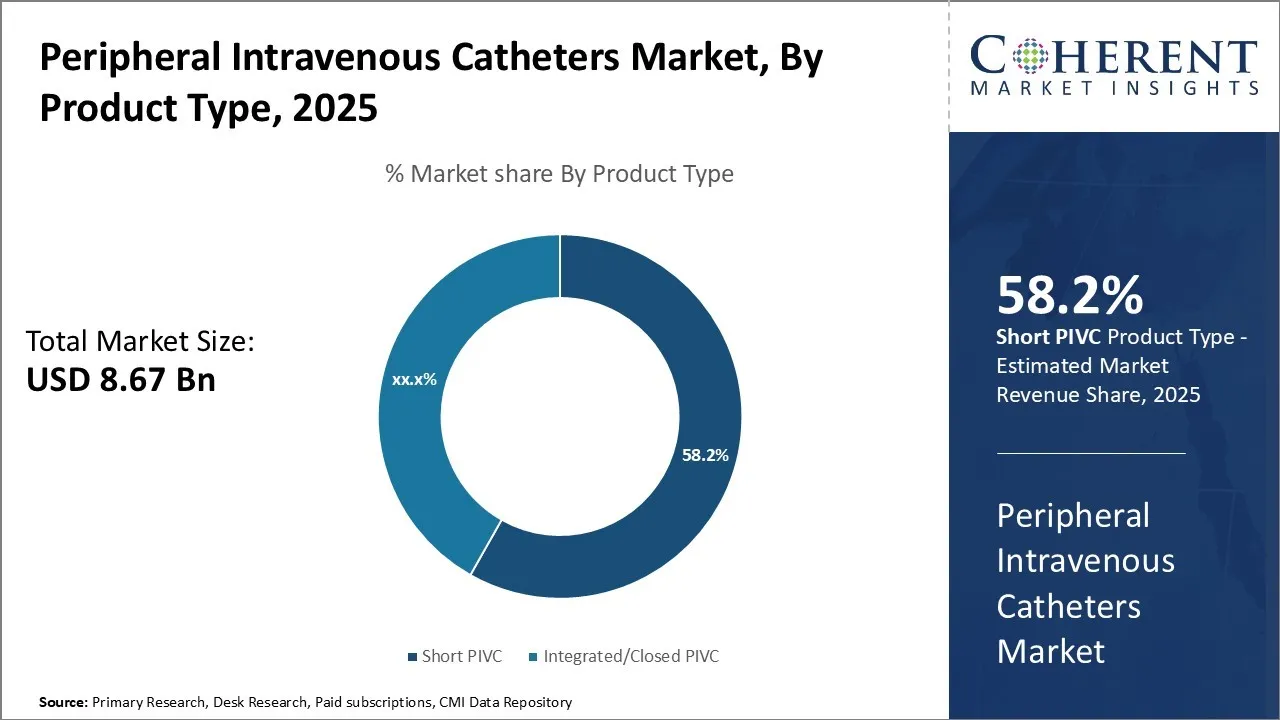
- By Product Type, Short Peripheral Intravenous Catheters (Short PIVC) segment is expected to hold 59.2% of the total market share in 2026. This leading position is attributed to the widespread clinical adoption of short PIVCs due to their ease of insertion, lower risk of infection, and cost-effectiveness.
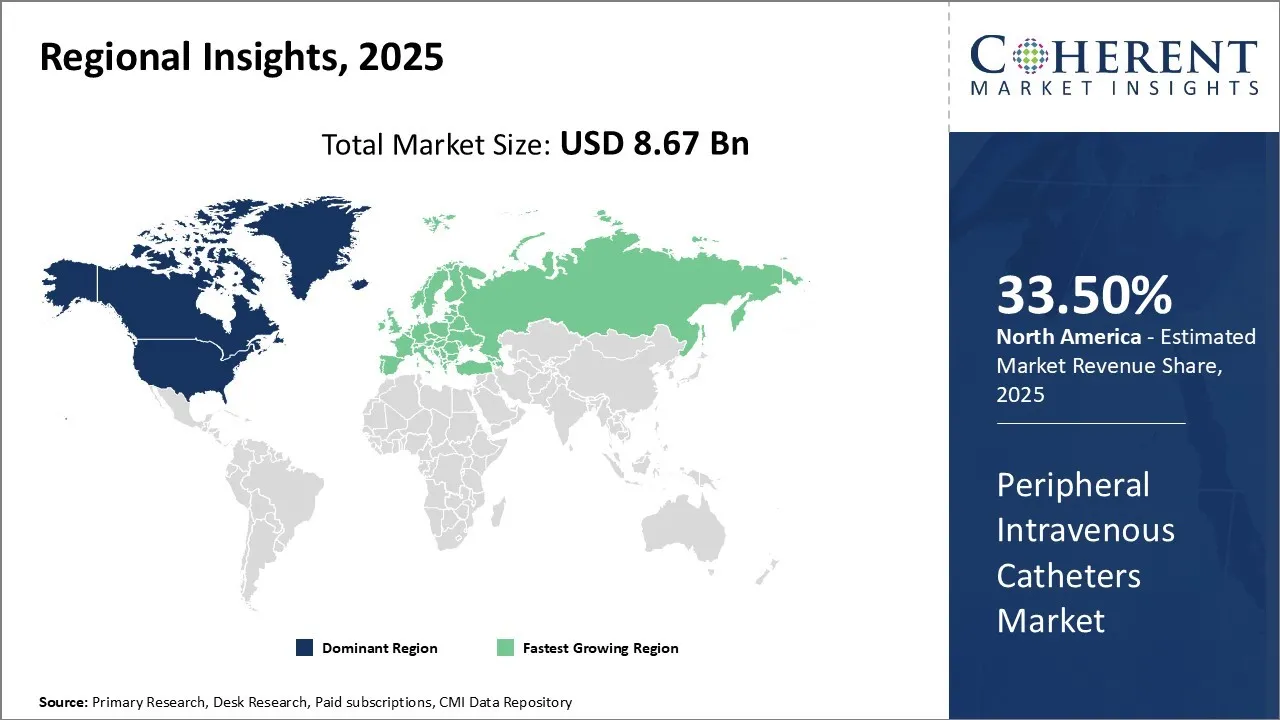
- North America is projected to hold 33.5% share in 2026. The region’s dominance is underpinned by the high volume of hospital admissions, advanced healthcare infrastructure, and growing emphasis on patient safety. PIVC market.
Market Overview
The global peripheral intravenous catheters (PIVC) market is witnessing steady growth, fuelled by rising hospital admissions, increasing surgical procedures, and the growing need for efficient vascular access devices. Short PIVCs dominate due to ease of use, lower complication rates, and widespread application in fluid and medication administration. Ongoing innovations in catheter safety, material design, and insertion techniques continue to drive market demand across various healthcare settings.
Current Events and its Impact on the Peripheral Intravenous Catheters Market
Current Event | Description and its impact |
Product Innovation and Clinical Safety Enhancements |
|
Strategic Expansions and Industry Collaborations |
|
Regulatory Shifts and Healthcare Policy Updates |
|
Catheter Market Growth Factors
- Changing lifestyle: Changing lifestyle patterns leads to cardiovascular diseases, which upsurges hospitalization and thereby creates demand for catheters.
- Demand for catheters due to various diseases: Further, mortality and the number of people affected by diseases increased owing to neurology, urology, and cardiovascular diseases supporting the catheter demand.
- Better treatment options & insurance policies: Improved medical treatments and insurance policies and the availability of regional manufacturers will fuel the market growth substantially.
- Government & key market player’s support: Increased funding by the government sector and manufacturers of medical devices for research & development will drive the market demand.
- Current Industry Events of 2026
- Market Size Estimation
- Regional Breakdown
- Competitive Landscape
- Customer Intelligence
- Segmental Analysis
- Pricing Analysis
- Key Market Drivers, Challenges & Future Trends
- Customized Insights Section
Peripheral Intravenous Catheters Market Trends
- Increasing prevalence of major diseases
Increasing incidence of major diseases such as cancer, cardiac disorders, orthopaedic disorders, etc. is expected to propel growth of the global peripheral intravenous catheter market over the forecast period.
Segmental Insights
Global Peripheral Intravenous Catheters Market Insights, By Product Type
The short peripheral intravenous catheters (Short PIVC) segment is projected to dominate the global PIVC market, capturing approximately 59.2% of the total market share in 2026. This segment’s leadership is driven by its widespread use in both emergency and routine medical settings due to ease of insertion, cost efficiency, and reduced complication rates.
Short PIVCs are primarily utilized for the administration of medications, fluids, and blood products, making them an essential component in hospital wards, outpatient departments, and ambulatory surgical centres. Their popularity is further supported by advancements in catheter design, such as the integration of blood control features, antimicrobial coatings, and improved biocompatible materials that enhance safety and comfort.
Additionally, the growing emphasis on infection prevention and the availability of user-friendly insertion tools are expected to drive continued adoption. These factors position short PIVCs as the most preferred choice among healthcare providers worldwide through and beyond 2025.
Regional Insights
North America Peripheral Intravenous Catheters Market Trends and Analysis
North America is projected to hold the largest regional share in the global peripheral intravenous catheters (PIVC) market, accounting for an estimated 33.50% of the total market in 2026. This regional dominance is supported by a combination of high hospitalization rates, advanced clinical practices, and a strong emphasis on patient safety and infection control.
The region boasts a well-developed healthcare infrastructure, with a widespread adoption of vascular access devices in both inpatient and outpatient settings. Technological advancements in catheter design such as safety-engineered tips, antimicrobial coatings, and improved insertion techniques further enhance clinical outcomes and reduce complications, contributing to the high demand for PIVCs.
Favourable reimbursement frameworks, coupled with continuous training programs for healthcare professionals, promote the use of advanced peripheral IV catheters across hospitals and ambulatory care centres. Additionally, the presence of leading medical device manufacturers and consistent R&D investments ensure that North America remains at the forefront of innovation and adoption in the PIVC market throughout the forecast period.
Peripheral Intravenous Catheter Market Dominating Countries
United States
The United States dominates the global peripheral intravenous catheters (PIVC) market, significantly contributing to North America's projected 38.5% market share in 2026. This leadership is supported by a high volume of hospital admissions, an advanced healthcare system, and a strong regulatory focus on patient safety and infection control.
Germany
Germany is a key player in the European PIVC market, benefiting from its strong healthcare infrastructure, stringent quality standards, and high demand for advanced medical technologies. The country’s emphasis on clinical excellence and infection prevention drives adoption of safety-engineered PIVCs, particularly in surgical and intensive care settings.
Market Report Scope
Peripheral Intravenous Catheter Market Report Coverage
| Report Coverage | Details | ||
|---|---|---|---|
| Base Year: | 2025 | Market Size in 2026: | USD 9.41 Bn |
| Historical Data for: | 2020 To 2024 | Forecast Period: | 2026 To 2033 |
| Forecast Period 2026 to 2033 CAGR: | 8.5% | 2033 Value Projection: | USD 16.65 Bn |
| Geographies covered: |
| ||
| Segments covered: |
| ||
| Companies covered: | BD, ICU Medical, Inc., Surmodics, Inc., B. Braun SE, Greiner Bio-One International GmbH, Terumo Corporation, Vygon, Healthline Medical Products, Retractable Technologies, Inc., Nipro Medical Corporation, Medsource Labs., Argon Medical Devices., Integral Lifesciences Holdings Corporation, Intra Special Catheters GmbH, Medical Components, Inc., Merit Medical Systems., Heka s.r.l., RAUMEDIC AG, Cook, Teleflex Incorporated | ||
| Growth Drivers: |
| ||
| Restraints & Challenges: |
| ||
Analyst Viewpoint – Peripheral Intravenous Catheter Market
- The global Peripheral Intravenous Catheters (PIVC) market is witnessing steady growth, driven by rising hospital admission rates, increased surgical procedures, and heightened awareness of infection control. Analysts highlight North America as the dominant region, underpinned by advanced healthcare infrastructure, favourable reimbursement frameworks, and high adoption of safety-engineered catheter systems.
- Technological innovations such as antimicrobial coatings, safety needles, and vein visualization technologies are transforming the PIVC landscape. Experts note that manufacturers focusing on patient-centric designs, improved insertion success, and infection reduction are gaining a competitive advantage. Short PIVCs remain the preferred product type due to their clinical versatility and ease of use, especially in emergency and outpatient settings.
- Despite challenges like catheter-related complications and variability in healthcare provider training, the market outlook remains positive. Continued investment in R&D, growing preference for minimally invasive procedures, and increasing demand in emerging markets are expected to propel the PIVC market forward through the forecast period.
Peripheral Intravenous Catheter Market: Key Development
- In April 2024, BD launched "UltraTouch" for the blood collection process, which reduces patient pain and discomfort with a single prick success, which is likely to lessen needle phobia related to first-time blood collection, with accurate test results and no treatment delays which patient expects.
- November 2023, Medtronic announced the FDA-approved ‘Symplicity Spyral’ ‘renal denervation (RDN) system, also called the "Symplicity," a minimally invasive device to treat hypertension. This device targets the renal nerves, essential for controlling blood pressure. This system seeks to interfere with the hyperactive sympathetic nervous system linked to resistant hypertension by sending radiofrequency energy to these nerves.
- In September 2022, Bentley, a global leader in minimally invasive medical devices for vascular treatments based in the Germany, announced that the company had acquired rights of the GoBack catheter from Upstream Peripheral Technologies, a privately held company that produces the GoBack Catheter.
Market Segmentation
- Global Peripheral Intravenous Catheter Market, By Product Type (Revenue, USD Bn, 2021 - 2033)
- Short PIVC
- Ported PIVC
- Non-ported PIVC
- Integrated/Closed PIVC
- Global Peripheral Intravenous Catheter Market, By Technology (Revenue, USD Bn, 2021 - 2033)
- Conventional
- Safety
- Global Peripheral Intravenous Catheter Market, By End User (Revenue, USD Bn, 2021 - 2033)
- Hospitals
- Clinics
- Ambulatory Surgical Centers
- Homecare Settings
- Others
- Global Peripheral Intravenous Catheter Market, By Region (Revenue, USD Bn, 2021 - 2033)
- North America
- U.S.
- Canada
- Latin America
- Brazil
- Argentina
- Mexico
- Rest of Latin America
- Europe
- Germany
- U.K.
- Spain
- France
- Italy
- Russia
- Rest of Europe
- Asia Pacific
- China
- India
- Japan
- Australia
- South Korea
- ASEAN
- Rest of Asia Pacific
- Middle East
- GCC Countries
- Israel
- Rest of Middle East
- Africa
- South Africa
- North Africa
- Central Africa
- Company Profiles
- Becton, Dickinson and Company
- Braun SE
- Smith Medical
- Terumo Corporation
- Vygon S.A.
- ICU Medical, Inc.
- VOGT Medical
- RenovoRx, Inc.
- Retractable Technologies Inc.
- Nipro Corporation
- MedSource Labs
- Argon Medical Devices, Inc.
- Intra Special Catheters GmbH
- Greiner Bio-One International GmbH
- Medical Components, Inc.
- Ares Medikal
- Ace Medical Co., Ltd.
- Merit Medical Systems, Inc.
- Heka s.r.l.
- RAUMEDIC Inc.
- Qingdao Sinoland International Trade Co., Ltd.
- Cook Group
- Teleflex Incorporated
Sources
The Stakeholders Consulted
- Hospital administrators and procurement managers
- Physicians, anesthesiologists, and critical care specialists
- Nurses and vascular access specialists
- Manufacturers and suppliers of peripheral intravenous catheters and accessories
- Distributors and third-party logistics providers
- Regulatory compliance officers and clinical quality assurance experts
- Healthcare policymakers and reimbursement consultants
- Research institutions and medical universities
- Infection control committees and patient safety organizations
Databases Opened
- U.S. Food & Drug Administration (FDA) – 510(k) Clearance Database
- Centers for Medicare & Medicaid Services (CMS) – Reimbursement Data
- European Medicines Agency (EMA) – Medical Device Approvals
- WHO Global Health Observatory – Hospital and Infection Data
- OECD Health Statistics – Medical Technology Usage
Magazines & Trade Publications
- Medical Device & Diagnostic Industry (MD+DI)
- MedTech Dive – Devices & Regulatory Updates
- Infection Control Today
- HealthCare Business News (DOTmed)
- Biomedical Instrumentation & Technology (AAMI)
Scientific and Industry Journals
- Journal of Vascular Access
- The Lancet – Infectious Diseases
- Journal of Clinical Nursing
- International Journal of Medical Devices
- American Journal of Infection Control (AJIC)
- Journal of Patient Safety
Newspapers & Media Outlets
- The Wall Street Journal – Health & Healthcare
- Bloomberg – Global Medical Device Industry News
- Reuters – Healthcare and MedTech Developments
- The Economic Times – Healthcare & Life Sciences
- Business Standard – Medical Devices and Health Tech
Associations and Regulatory Bodies
- U.S. Food and Drug Administration (FDA)
- Centers for Disease Control and Prevention (CDC)
- European Centre for Disease Prevention and Control (ECDC)
- World Health Organization (WHO)
- Association for Vascular Access (AVA)
- International Medical Device Regulators Forum (IMDRF)
Public Domain Sources
- World Bank – Healthcare Infrastructure Indicators
- WHO – Infection Prevention and Control Guidance
- OECD – Health Expenditure and Hospitalization Data
- European Commission – Medical Device Regulations
- India Health Ministry – Health Management Information System (HMIS)
Proprietary Research Elements
- CMI Data Analytics Tool
- Proprietary CMI Repository of Market Data (covering past 8 years)
- CMI Expert Interviews and Transcripts (focused on vascular access, PIVC usage trends, and clinical preferences)
Get access to 250+ pages report
Every segment, forecast, competitor profile and data table behind the analysis above — available for instant download.
- ESOMAR Member
- ISO 9001:2015 Certified
- D-U-N-S Registered
- GDPR & CCPA Compliant
Missing comfort of reading report in your local language? Find your preferred language:
Transform your Strategy with Exclusive Trending Reports
Frequently Asked Questions
The Peripheral Intravenous Catheters Market size is estimated to be valued at USD 9.41 Bn in 2026, and is expected to reach USD 16.65 Bn by 2033.
The CAGR of the global Market is projected to be 8.5% from 2026 to 2033.
Increasing prevalence of major diseases is expected to drive the market growth.
Short PIVC is the leading product type segment in the market.
Complications associated with peripheral intravenous catheter is expected to hinder the market growth over the forecast period.
Major players operating in the market are BD, ICU Medical, Inc., Surmodics, Inc., B. Braun SE, Greiner Bio-One International GmbH, Terumo Corporation, Vygon, Healthline Medical Products, Retractable Technologies, Inc., Nipro Medical Corporation, Medsource Labs., Argon Medical Devices., Integral Lifesciences Holdings Corporation, Intra Special Catheters GmbH, Medical Components, Inc., Merit Medical Systems., Heka s.r.l., RAUMEDIC AG, Cook, Teleflex Incorporated.