

Portable Ultrasound Devices Market Size and Share Analysis – 2026 To 2033
The global Portable Ultrasound Devices Market size is anticipated to grow at a CAGR of 4.4%, with a market value of USD 5.45 Bn in 2026, and is expected to reach USD 7.37 Bn by 2033. The primary growth drivers are largely defined by the increasing adoption of point-of-care ultrasound (POCUS), rising prevalence of chronic diseases, growing demand for portable and cost-effective diagnostic imaging solutions, and technological advancements in handheld and wireless ultrasound systems. The convergence of AI, wireless connectivity and cloud-based imaging platforms is boosting diagnostic efficiencies and allowing healthcare professionals to perform imaging in real-time in emergency departments, intensive care units, outpatient settings and remote healthcare environments. According to the World Health Organization (WHO), portable point-of-care ultrasound technology has the potential to improve access to diagnostic imaging in resource-poor healthcare settings.
Key Takeaways of the Global Portable Ultrasound Devices Market (2026–2033)
- The Cart/Trolley segment is projected to account for the highest share of 65.5% in the global portable ultrasound devices market in 2026. The segment is witnessing growth due to increasing use of mobile ultrasound systems in emergency departments, intensive care units, and specialty clinics. On October 15, 2025, GE HealthCare announced AI-enabled advancements to its Venue family of point-of-care ultrasound systems to enhance imaging workflows and clinical efficiency.
- The Obstetrics/Gynecology segment dominated the global market with a share of 47.0% in 2026. This is helping the segment growth due to increasing demand for prenatal screening, fetal monitoring and early detection of pregnancy related complications. The World Health Organization (WHO) estimates that around 287,000 women die every year from complications of pregnancy and childbirth, and that there are nearly 2 million stillbirths worldwide each year. WHO recommends at least one ultrasound examination before 24 weeks gestation.
- The Doppler Ultrasound segment is expected to dominate the global market share of 46.5% by 2026. The increasing demand for cardiovascular evaluations, blood-flow monitoring and vascular diagnostics is driving the growth of the segment. WHO said cardiovascular diseases accounted for about 19.8 million deaths globally, or nearly 32% of all deaths.
- The Hospitals & Specialty Clinics segment is expected to hold 54.5% of the global market share in 2026. Growing use of bedside ultrasound for emergency diagnosis, critical care monitoring and image-guided interventions is supporting segment growth. On June 17, 2025, Philips launched the Flash 5100 POC ultrasound system for anesthesia, critical care, emergency medicine and musculoskeletal applications, reflecting growing clinical applications across healthcare facilities.
- North America is estimated to account for a 37.5% share of the global portable ultrasound devices market in 2026. Presence of advanced diagnostic infrastructure, increasing adoption of point of care imaging and continuous regulatory clearances for portable ultrasound systems are factors driving the regional growth. On February 20, 2025, NUSONO handheld ultrasound scanners were cleared by the U.S. FDA, which marked the entry of compact imaging technologies in the U.S. healthcare market for commercial use.
- Asia Pacific region is expected to be the fastest growing regional market from 2026 to 2033. The region is estimated to hold a 24.5% share in the global market in 2026. The growth in the region is attributed to increasing expansion of healthcare access, increasing demands for maternal healthcare and increasing need for low-cost diagnostic imaging in developing countries. On 10 September 2026, WHO announced a regional commitment to improve equal access to quality-assured, affordable medical devices and diagnostic technologies across its Southeast Asia Region.
Segmental Insights
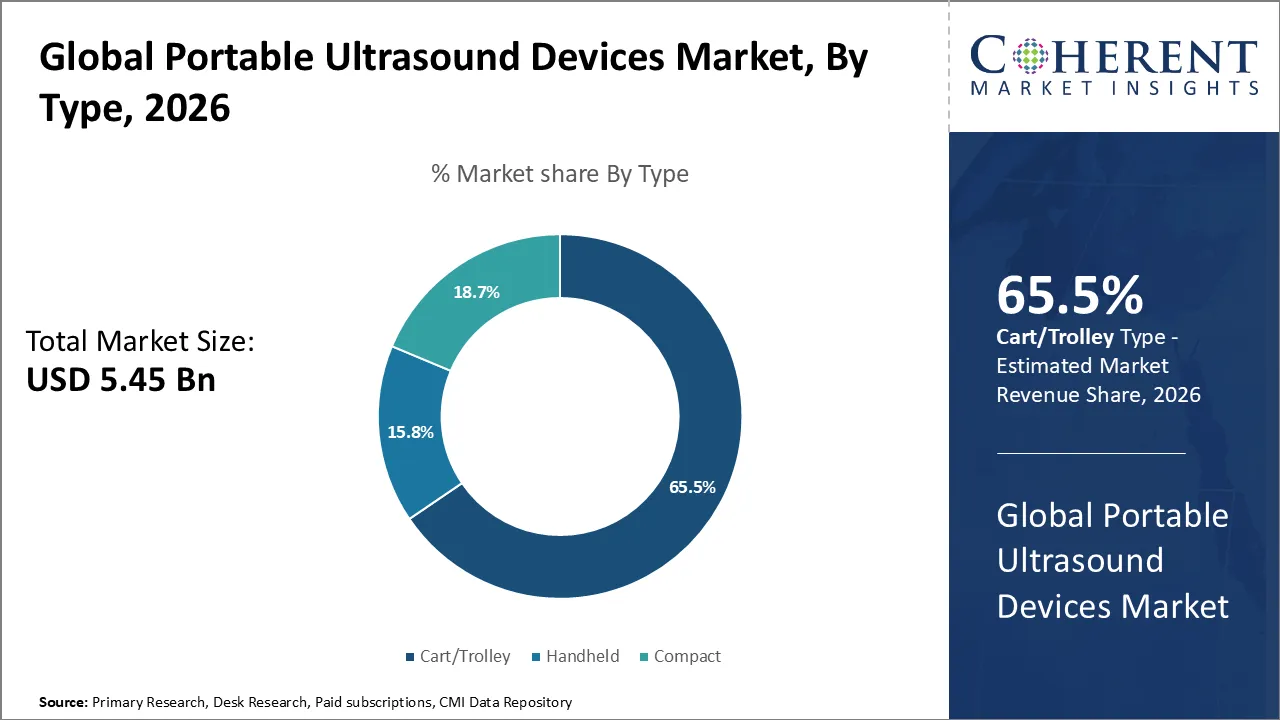
Why Does the Cart/Trolley Segment Dominate the Global Portable Ultrasound Devices Market?
The Cart/Trolley segment is likely to hold 65.5% of the global portable ultrasound devices market share by 2026. This segment is gaining traction due to the increasing demand for high-performance diagnostic imaging in emergency rooms, intensive care units, and specialized treatment centers. Cart/trolley ultrasound systems provide improved imaging and larger displays, support multiple transducers and enhance visualization for challenging clinical exams. The mobility allows healthcare professionals to do bedside assessments of critically ill patients as opposed to moving them. Increasing incorporation of artificial intelligence, automated anatomical recognition and sophisticated image-processing technologies is further increasing clinical efficiency and enabling broader use in emergency medicine, anesthesiology and critical care.
On October 15, 2025, GE HealthCare introduced enhanced AI-enabled capabilities across its Venue family of point-of-care ultrasound systems. Its Nerveblox feature demonstrated 97% anatomical structure identification accuracy and supports ultrasound guidance for 12 common regional anesthesia procedures.
- Current Industry Events of 2026
- Market Size Estimation
- Regional Breakdown
- Competitive Landscape
- Customer Intelligence
- Segmental Analysis
- Pricing Analysis
- Key Market Drivers, Challenges & Future Trends
- Customized Insights Section
Why Does Obstetrics/Gynecology Lead the Portable Ultrasound Devices Market by Application?
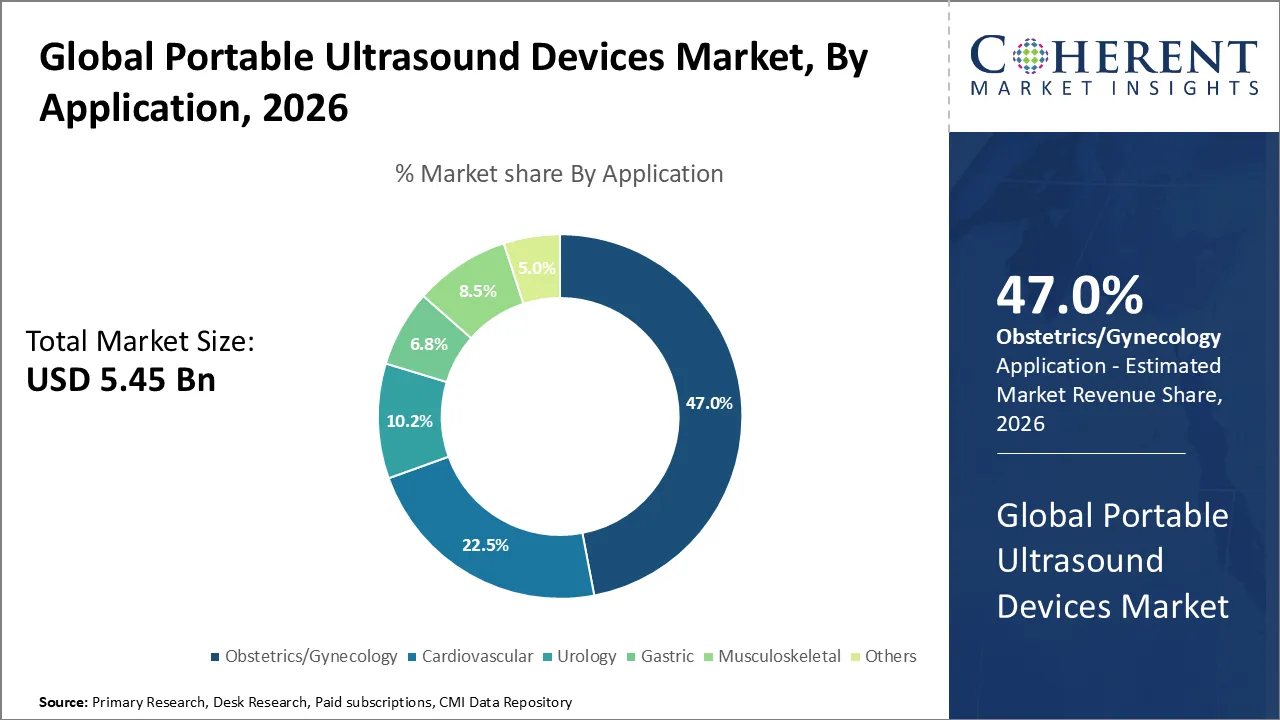
The Obstetrics/Gynecology segment is projected to dominate 47.0% of the global portable ultrasound devices market share by 2026. Rising demand for prenatal screening, fetal growth, early pregnancy and gynecological diagnostic examinations are fueling the segment growth. Portable ultrasound machines in hospitals, maternity clinics and community healthcare facilities allow clinicians to assess gestational age, fetal position, placental development and potential pregnancy complications. The rising emphasis on early maternal screening and improved access to diagnostic services in rural areas are fueling the demand for low-cost imaging technologies. Continued growth of maternal healthcare programs coupled with the integration of portable ultrasound into antenatal care pathways further supports the adoption of the segment.
According to World Health Organization key messages for World Health Day 2025 say up to 15% of women who are pregnant may develop a pregnancy or childbirth complication that could threaten their life. WHO emphasizes that quality antenatal care including early ultrasound and at least eight antenatal visits are vital to detect risks in pregnancy and improve maternal and newborn health outcomes.
Why Does Doppler Ultrasound Dominate the Portable Ultrasound Devices Market by Technology?
The Doppler Ultrasound segment is projected to account for the largest share of 46.5% in the global portable ultrasound devices market by 2026. Increasing demand for noninvasive cardiovascular diagnostics, peripheral vascular examinations, hemodynamic monitoring, and fetal circulation assessments are driving segment growth. The doppler technology allows the instantaneous measurement of the velocity and direction of blood-flow and thus enables clinical assessment of vascular abnormalities, cardiac function and circulatory disorders. Its incorporation into handheld ultrasound devices enables healthcare providers to conduct rapid bedside assessments within cardiology, emergency medicine, and vascular care settings. Progress in color Doppler technology, spectral analysis and automated cardiac measurements help improve diagnostic capabilities and clinical applications.
According to the 2026 Heart Disease and Stroke Statistics Update from the American Heart Association, cardiovascular diseases caused about 915,973 deaths in the U.S. in 2023. The report also found a heavy burden of cardiovascular risk factors, including nearly 29.5 million U.S. adults diagnosed with diabetes. The results show the underlying clinical need for cardiovascular assessment technologies like Doppler-enabled diagnostic ultrasound systems.
Why Are Hospitals & Specialty Clinics the Leading End Users of Portable Ultrasound Devices?
The Hospitals & Specialty Clinics segment is projected to account for 54.5% of the global portable ultrasound devices market by 2026. Growing use of point-of-care diagnostic imaging in emergency departments, intensive care units, cardiology centers and outpatient specialty facilities is fueling growth of the segment. Portable ultrasound devices allow for rapid clinical screening, vascular access guidance, process monitoring and bedside diagnostic imaging, thereby increasing access to real-time imaging. Healthcare providers are spending more on small ultrasound machines with automated measurement tools, intuitive user interfaces, and digital connections to improve their operations. Increasing focus on minimizing delays in diagnosis, optimizing clinical workflows and expanding decentralized imaging services further boosts the institutional demand.
According to Philips’ usability assessment, 91% of clinicians said the built-in next-step guidance in Philips’ 2025 Flash Ultrasound System 5100 Point of Care was helpful for users of all experience levels. This finding suggests the potential of workflow-support features to enhance usability and facilitate ultrasound adoption across a variety of clinical departments and specialty care settings.
Current Events and Their Impact on the Portable Ultrasound Devices Market (regulatory shifts, government policies)
Current Event | Description and its Impact |
U.S. FDA Implements Revised Quality Management System Regulation for Medical Devices (February 2026) |
|
European Commission Mandates EUDAMED Registration for Medical Devices (May 2026) |
|
Portable Ultrasound Devices Market Dynamics
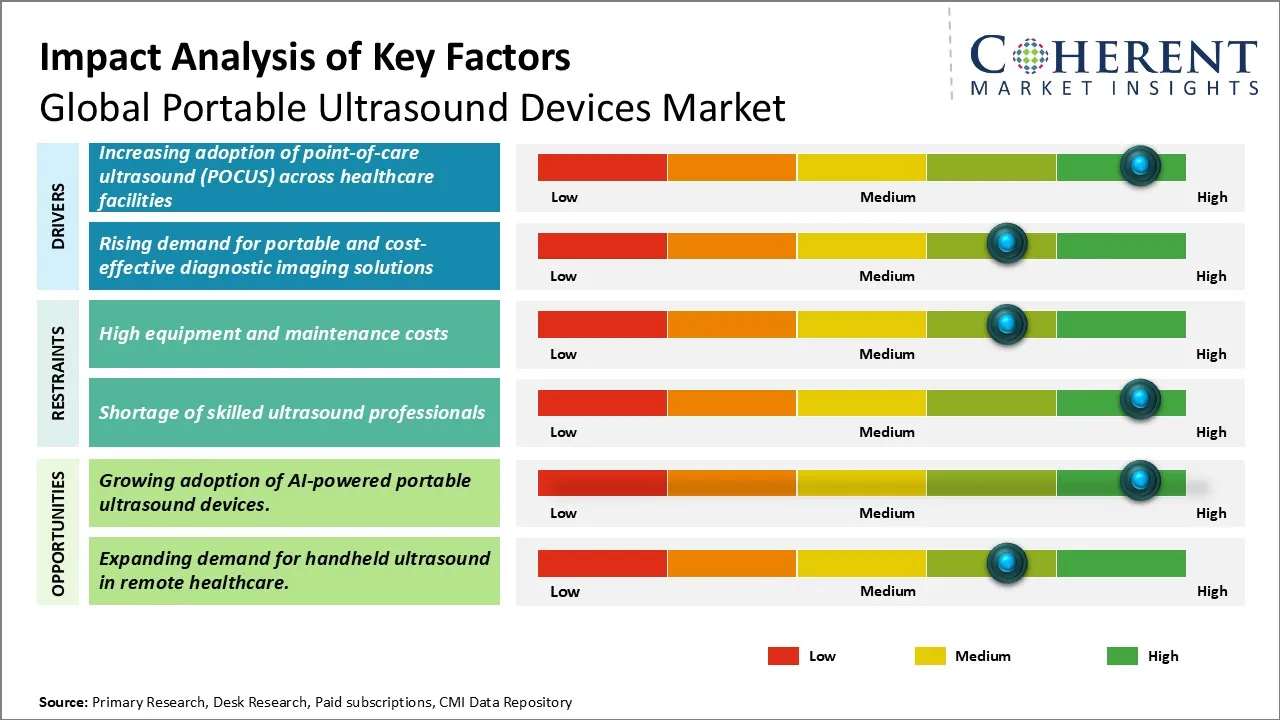
Market Drivers
- Increasing demand for accessible diagnostic imaging in underserved healthcare settings: Increasing demand for affordable and accessible diagnostic imaging is driving the global portable ultrasound devices market. Healthcare facilities in developing economies frequently contend with limited imaging infrastructure, equipment costs and a shortage of trained specialists. Developing economies often face challenges in healthcare with insufficient imaging infrastructure, the cost of equipment, and a scarcity of trained specialists. Portable ultrasound systems are a cost-effective alternative to traditional imaging equipment, enabling primary healthcare centers, rural clinics and community hospitals to perform real-time examinations. Their small size, relatively lower infrastructure requirements and multiple clinical applications are driving their adoption. Moreover, the rising penetration of decentralized healthcare delivery and early disease detection is also fueling the increasing demand of handheld and compact ultrasound technologies.
- According to the World Health Organization Global Diagnostics Coalition reported that, excluding HIV and malaria tests, around 81% of basic primary healthcare services surveyed in 14 low- and middle-income countries had no access to essential diagnostic tests. This disparity in diagnostic access suggests portable ultrasound systems can help to broaden point-of-care imaging services in underserved healthcare environments
- Advances in handheld ultrasound and AI-assisted imaging technology: Accelerating the growth of the global portable ultrasound devices market are rapid technological advances in miniaturized ultrasound transducers, artificial intelligence, wireless connectivity and automated image interpretation. The makers are working on small systems that can deliver high quality imaging through smart phones, tablets and dedicated handheld platforms. AI-powered scanning guidance, automated measurements and real-time image optimization enable healthcare professionals to perform examinations more efficiently. These innovations are pushing ultrasound use beyond traditional radiology departments into emergency medicine, primary care and outpatient settings. What is more, ongoing improvements in device portability, battery capabilities, and digital integration are also stimulating product innovations and market growth.
- On January 12, 2026, ASUS announced that its LU800 handheld ultrasound system received U.S. FDA 510(k) clearance as a Class II medical device. The system combines wireless connectivity and portable imaging, and ASUS is also working on AI-guided scanning applications. The clearance paves the way for the company’s U.S. medical device market debut and growth of its handheld ultrasound portfolio.
Portable Ultrasound Devices Market Trends
- The growing acceptance of AI-based ultrasound imaging is changing portable diagnostic devices by providing automated image interpretation, anatomical measurements and simplified scanning. On Mar 30, 2026 · Butterfly Network, the maker of an AI-powered Gestational Age Tool that estimates the gestational age of a fetus by using a blind-sweep ultrasound technique, was cleared by the U.S. FDA on Mar. 30, 2026, to help make prenatal imaging more accessible.
- Growing demand of handheld ultrasound systems based on semiconductors is leading to the development of light weight devices with multiple imaging capabilities. According to Butterfly Network’s 2025 annual filing with the U.S. The handheld ultrasound systems can support more than 20 anatomical presets and six imaging modes, highlighting the growing versatility of the compact diagnostic platforms, said the Securities and Exchange Commission (SEC).
- Increasing adoption of tele-ultrasound and remote clinical collaboration is allowing healthcare professionals to carry out diagnostic examinations with real-time support from specialists remotely. Philips’ Lumify with Reacts platform enables remote ultrasound collaboration, point-to-point and conference communication with up to six participants, improving possibilities for clinical supervision, training and ultrasound services in geographically underserved areas.
Regional Insights
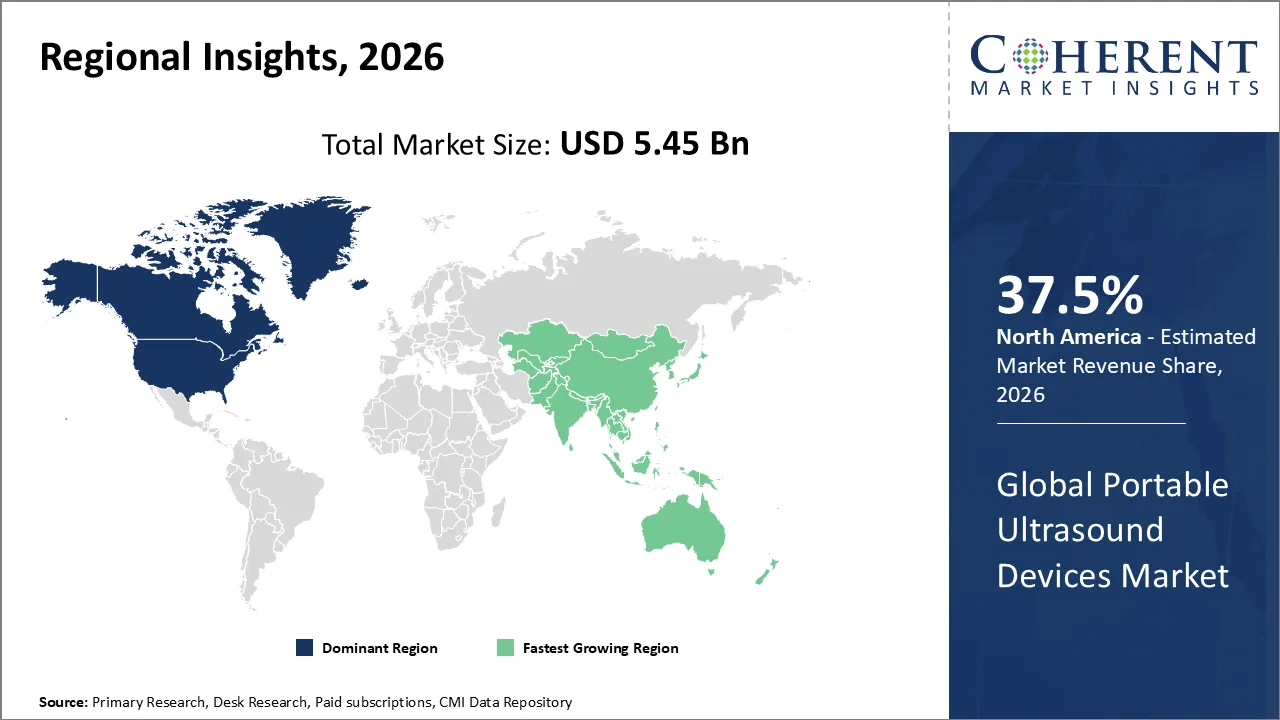
Why Does North America Dominate the Global Portable Ultrasound Devices Market?
North America is anticipated to dominate the global portable ultrasound devices market with a market share of 37.5% in 2026. The region has a sophisticated healthcare infrastructure, widespread use of point-of-care ultrasound (POCUS) and strong demand for bedside diagnostic imaging in hospitals, emergency departments and specialty clinics. Healthcare providers in the U.S. and Canada are turning to portable ultrasound systems to be used in clinical workflows to improve access to diagnostics, reduce the need to transport patients and to improve real-time clinical decision making. Increasing investments in handheld imaging technologies, established medical device manufacturers, and growing applications of ultrasound in emergency medicine and critical care are further boosting the regional market growth.
On April 17, 2026, Clarius Mobile Health awarded CAD 41,912.85 contract by Canada’s Department of Indigenous Services for handheld point-of-care ultrasound devices. Canada’s official procurement records also include a contract for a portable ultrasound system worth CAD 292,789.78 with Fujifilm Sonosite Canada amended on March 4, 2025. Government procurement activity indicates ongoing institutional investment in portable diagnostic imaging technologies across Canada.
Why Does Asia Pacific Exhibit the Fastest Growth in the Portable Ultrasound Devices Market?
Asia Pacific is forecasted to be the fastest growing region in the global portable ultrasound devices market during 2026-2033, accounting for an estimated 24.5% of the global market share in 2026. The expansion in the region is driven by the increasing healthcare infrastructure, rising government expenditure on diagnostic equipment, and increasing demand for cost-effective medical imaging solutions. Portable ultrasound technologies are being increasingly adopted in specialty clinics, hospitals and primary healthcare centers in countries such as China, India, Japan and South Korea. The growing need for maternal healthcare, cardiovascular diagnostics and rural healthcare access is also driving further investment in compact imaging systems.
The Government of Assam, India has invited international competitive bidding on 21st June, 2025 under the Assam Health System Strengthening Project supported by Japan International Cooperation Agency (JICA). The procurement was for portable ultrasound equipment for seven government medical colleges and hospitals in three categories - obstetrics and gynecology ultrasound, general portable ultrasound systems and high-end portable color Doppler systems.
Global Portable Ultrasound Devices Market Outlook for Key Countries (2026–2033)
Why is the U.S. Emerging as a Major Hub in the Portable Ultrasound Devices Market?
The U.S. portable ultrasound devices market is driven by increasing demand for point of care diagnostics, technological advancements in AI-assisted imaging technology, and a growing number of clinical applications in emergency departments, primary care settings, and specialty clinics. Healthcare providers are increasingly using handheld ultrasound devices to enable rapid bedside assessments, improve access to diagnostics and reduce reliance on centralized imaging departments. Established medical device manufacturers and an active regulatory framework drive ongoing innovation in compact imaging technologies. Automated scanning guidance, fetal assessment tools and wireless image-sharing capabilities are also driving demand for portable ultrasound systems nationally.
On March 27, 2026 Butterfly Network’s Gestational Age Tool was granted 510(k) clearance from the U.S. Food and Drug Administration (FDA) under submission K252148, a Class II medical device. This regulatory milestone underscores the continued commercialization of AI-enabled ultrasound technologies for pregnancy assessment and supports the growth of advanced handheld imaging applications in the U.S.
Is China the Next Growth Engine for the Portable Ultrasound Devices Market?
The China portable ultrasound devices market is expanding due to enhanced public healthcare infrastructure, increased procurement of diagnostic equipment, and government initiatives focused on improving county-level medical services. The rising demand for cardiovascular screening, obstetric exams, and general diagnostic imaging is driving healthcare organizations to implement advanced ultrasound technologies. Local manufacturers are expanding their range of ultrasound equipment for hospitals and primary healthcare facilities, with products that compete on price. Moreover, the upgradation of the equipment in provincial and county medical networks is creating opportunities for portable and mobile ultrasound systems, particularly in the regions where the focus is on improving diagnostic accessibility and reducing the reliance on tertiary hospitals.
On May 9, 2026, the official Chinese government procurement platform released the bid-winning results for the county-level medical consortium color ultrasound equipment renewal project in Hunan Province. Shantou Institute of Ultrasonic Instruments - CNY 5.664 million among published results.
Germany Portable Ultrasound Devices Market Analysis and Trends
The Germany portable ultrasound devices market is propelled by hospital modernization programs, robust diagnostic imaging infrastructure and growing integration of bedside examination into clinical workflow. The use of compact ultrasound equipment in healthcare institutions is contributing to faster decision-making in diagnostics in emergency medicine, intensive care, cardiology and outpatient examinations. The country’s emphasis on hospital efficiency, integrated care delivery and innovation in medical technology is driving investment in flexible imaging systems. Portable ultrasound systems can help achieve these goals by providing the ability to perform ultrasound examinations throughout the hospital departments without the necessity of dedicated imaging rooms. Advances in automated imaging and digital connectivity are enhancing the clinical usability.
On April 17, 2026, Germany's Federal Ministry of Health confirmed initial funding approvals under the Hospital Transformation Fund. The program provides for investments of up to EUR 50 billion between 2026 and 2035 to support structural modernization of the German hospital system.
U.K. Portable Ultrasound Devices Market Analysis and Trends
The U.K. portable ultrasound devices market is driven by the National Health Service’s greater emphasis on community-based diagnostics, enhanced clinical productivity, and reduced diagnostic waiting times. Hospitals and outpatient facilities are adding point-of-care ultrasound systems to their emergency care, vascular exams and other clinical services to speed up assessments. Also being trialed are handheld devices with AI-assisted scanning guidance as a way to take ultrasound examinations beyond specialist imaging departments. Hospitals are looking into portable imaging technologies to enable remote collaboration with specialists and immediate clinical decisions, driven by the increasing demand for effective healthcare delivery and fewer repeat appointments.
On August 26, 2026, Chelsea and Westminster Hospital NHS Foundation Trust published findings from a three-month pilot of AI-assisted handheld ultrasound for suspected deep vein thrombosis. Clinicians undertook 120 scans, excluding DVT in 97 of them. Eighty per cent of patients went home after their first scan.
Japan Portable Ultrasound Devices Market Analysis and Trends
The Japan’s portable ultrasound devices market is driven by the aging population, increasing demand for home-based medical services and rising focus on decentralized diagnostic care. Healthcare providers are using small, battery-powered ultrasound machines to help them do bedside exams, check heart health and monitor patients with ongoing health problems. The country's established medical technology ecosystem is also driving the development of advanced portable imaging equipment with better visualization and automated measurement capabilities. Home healthcare programs and government support for diagnostic equipment purchases are opening up opportunities for portable ultrasound manufacturers supplying hospitals, outpatient clinics and home-visit medical providers.
In 2026, the Japanese Kanagawa Prefectural Government started a subsidy program for purchasing medical equipment for home healthcare services, including battery-powered ultrasound diagnostic devices. The program provides subsidies of up to 75% for eligible expenditures, up to a maximum of JPY 2.25 million, for new qualifying home healthcare providers. This directly supports the acquisition of portable imaging equipment and enhances the chances of ultrasound use in community and home-based care settings.
How is the Integration of AI-Powered Point-of-Care Imaging Creating New Growth Opportunities in the Portable Ultrasound Devices Market?
The global Portable Ultrasound Devices Market is witnessing major growth prospects due to the growing adoption of artificial intelligence powered point-of-care imaging. Healthcare professionals are performing diagnostic examinations with AI-enabled ultrasound systems that feature automated image acquisition guidance, anatomical structure recognition and real-time clinical measurements. These capabilities are broadening the use of portable ultrasound from traditional radiology departments to primary care settings, emergency departments, and remote clinical settings. Manufacturers are increasingly developing handheld and compact ultrasound devices with the ability to perform AI-assisted cardiac assessments, lung imaging and obstetric screening. The innovations provide opportunities for software-enabled diagnostic platforms, subscription-based clinical applications, remote ultrasound training, and broader adoption across healthcare professionals with varying levels of ultrasound experience.
For instance, on November 3, 2026, GE HealthCare announced two AI-enabled capabilities for its Vscan Air handheld ultrasound device: Lung Guidance and AutoAS. Lung Guidance helps with ultrasound image acquisition. AutoAS analyzes compatible echocardiographic views to assess findings suggestive of moderate-to-severe aortic stenosis
Market Players, Key Development, and Competitive Intelligence
Key Developments
- On October 12, 2026 Siemens Healthineers said it would stop selling its general imaging ultrasound systems, including ACUSON Sequoia, Redwood, Juniper and Maple, to focus on procedural imaging, intracardiac echocardiography, software and AI. This is a big change in its positioning in the competition.
- On January 29, 2025, Samsung Medison launched the Z20 ultrasound system in the U.S. for advanced obstetric and gynecological imaging. The system integrates AI-assisted imaging and workflow capabilities. Samsung also offers compact and mobile ultrasound products, although the Z20 itself is a premium cart-based system.
Competitive Landscape
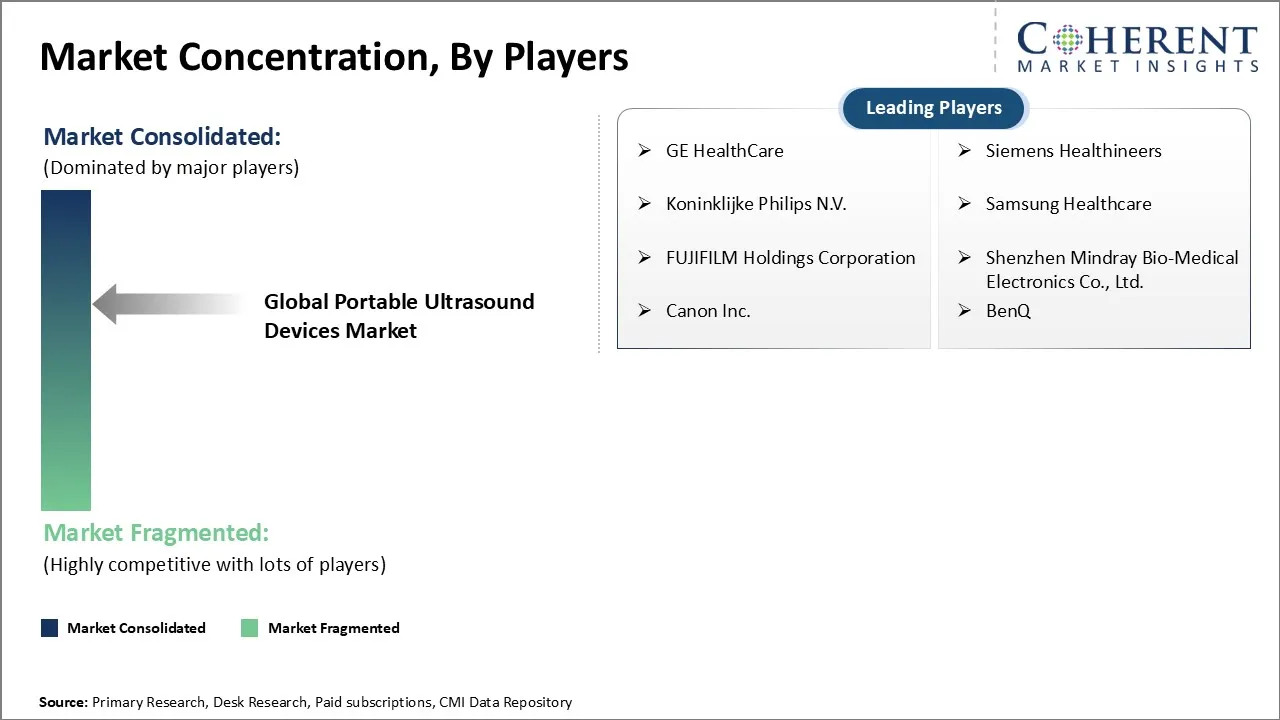
The global portable ultrasound devices market is highly competitive, with key manufacturers focusing on AI incorporation, product miniaturization, image accuracy, and point-of-care diagnostics. GE HealthCare’s Vscan Air and Venue systems and Philips’ focus on Lumify and compact point-of-care ultrasound solutions. FUJIFILM Sonosite is dedicated to portable imaging for emergency and critical care applications. Mindray expands product offering with TE Air handheld ultrasound systems. Samsung Healthcare and Canon Medical Systems are the pioneers of advanced imaging and automated workflows. BenQ Medical Technology provides compact diagnostic solutions. Siemens Healthineers is reshaping its ultrasound strategy to focus on specialty and procedural imaging applications.
Top Manufacturers and Notable Products/Solutions in the Portable Ultrasound Devices Market
Company/Manufacturer | Notable Product/Brand | Key Features |
GE HealthCare | Vscan Air SL | Wireless handheld ultrasound, dual-probe technology, sector-phased and linear array transducers, smartphone connectivity, cardiac and vascular imaging capabilities. |
Siemens Healthineers | ACUSON Maple | Mobile ultrasound platform, 16 compatible transducers, advanced imaging capabilities, multiple clinical applications, customizable workflows. |
Koninklijke Philips N.V. | Lumify | Handheld ultrasound, smartphone/tablet connectivity, optimized imaging presets, image-sharing capabilities, mobile diagnostic applications, tele-ultrasound support. |
Samsung Healthcare | HM70 EVO | Hand-carried ultrasound system, high-resolution 2D and 3D imaging, color Doppler, ClearVision imaging, extended battery operation, optional mobile cart. |
FUJIFILM Holdings Corporation | Sonosite PX | Portable point-of-care ultrasound, high-resolution real-time imaging, clinical workflow optimization, mobile stand configuration, emergency and critical care applications. |
Canon Inc. | Aplio me | Compact ultrasound platform, advanced image processing, configurable user interface, streamlined examination workflows, multipurpose clinical imaging applications. |
BenQ Medical Technology | T3300 | Lightweight portable ultrasound, point-of-care imaging, rapid system startup, bedside examinations, image-guided procedural applications, home healthcare portability. |
Market Report Scope
Portable Ultrasound Devices Market Report Coverage
Report Coverage | Details | ||
Base Year: | 2025 | Market Size in 2026: | USD 5.45 Bn |
Historical Data for: | 2020 to 2024 | Forecast Period: | 2026 to 2033 |
CAGR: | 4.4% | 2033 Value Projection: | USD 7.37 Bn |
Geographies covered: |
| ||
Segments covered: |
| ||
Companies covered: | GE HealthCare, Siemens Healthineers, Koninklijke Philips N.V., Samsung Healthcare, FUJIFILM Holdings Corporation, Shenzhen Mindray Bio-Medical Electronics Co., Ltd., Canon Inc., and BenQ. | ||
Growth Drivers: |
| ||
Restraints & Challenges: |
| ||
Analyst Opinion (Expert Opinion)
- The future of the global portable ultrasound devices market will increasingly focus on AI-assisted point-of-care diagnostics, handheld imaging, and automated clinical assessment rather than conventional standalone ultrasound equipment. Advanced imaging algorithms, automated anatomical measurements, and intelligent scanning guidance are expected to expand ultrasound utilization across emergency medicine, cardiology, obstetrics, and primary healthcare. Manufacturers offering clinically validated AI capabilities, reliable imaging performance, and intuitive workflows will be better positioned to capture demand. According to the U.S. FDA, more than 1,600 AI-enabled medical devices had been authorized for marketing as of September 2026, demonstrating the broader regulatory and commercial momentum behind AI integration in medical technologies.
- Significant growth opportunities are expected from decentralized diagnostic imaging, expansion of rural healthcare, and the increasing use of portable ultrasound in underserved areas. The Asia Pacific region is expected to offer opportunities as a consequence of the growth of primary healthcare infrastructure and the rising need for affordable bedside imaging. North America remains a key market for advanced handheld and AI-enabled ultrasound platforms. Manufacturers should focus on cost-effective systems as well as remote imaging support and partnerships for clinical training to increase adoption. The World Health Organization estimates that roughly 47% of the world’s population don’t have access to a reliable diagnosis. This indicates the larger need to build out diagnostic infrastructure and increase access to medical imaging technologies.
- Instead of competing only on device miniaturization, market participants should focus on clinical accuracy, product affordability, software integration and measurable improvements in diagnostic efficiency. To improve adoption by healthcare professionals, manufacturers need to invest in multipurpose transducers, automated measurements, cloud-based image management and structured training programs. Recurring revenue opportunities also exist for subscription-based software and enterprise procurement agreements. Butterfly Network said in its 2025 annual filing with the Securities and Exchange Commission that its handheld ultrasound technology has been sold in about 100 countries and that it has sales to or agreements with most of the 100 largest U.S. healthcare systems.
Speak to the analyst
Want personalized insights?
Take the findings above to one of our principal consultants, or have the report rebuilt around the segments, geographies and competitors you actually track.
Market Segmentation
- By Type (Revenue, USD Bn, 2021-2033)
- Handheld
- Compact
- Cart/Trolley
- By Application (Revenue, USD Bn, 2021-2033)
- Obstetrics/Gynecology
- Cardiovascular
- Urology
- Gastric
- Musculoskeletal
- Others
- By Technology (Revenue, USD Bn, 2021-2033)
- 2D Ultrasound
- 3D & 4D Ultrasound
- Doppler Ultrasound
- High-intensity Focused Ultrasound
- By End Use (Revenue, USD Bn, 2021-2033)
- Hospitals & Specialty Clinics
- Ambulatory Surgical Centers
- Others
- By Region (Revenue, USD Bn, 2021-2033)
- North America
- U.S.
- Canada
- Latin America
- Brazil
- Mexico
- Argentina
- Rest of Latin America
- Europe
- Germany
- U.K.
- France
- Italy
- Spain
- Russia
- Rest of Europe
- Asia Pacific
- China
- India
- Japan
- Australia
- South Korea
- ASEAN
- Rest of Asia Pacific
- Middle East
- GCC
- Israel
- Rest of Middle East
- Africa
- South Africa
- Central Africa
- North Africa
- North America
- Key Players
- GE HealthCare
- Siemens Healthineers
- Koninklijke Philips N.V.
- Samsung Healthcare
- FUJIFILM Holdings Corporation
- Shenzhen Mindray Bio-Medical Electronics Co., Ltd.
- Canon Inc.
- BenQ
Sources
Primary Research Interviews
- Portable ultrasound device manufacturers and product development managers
- Point-of-care ultrasound (POCUS) technology developers
- Radiologists, sonographers, and diagnostic imaging specialists
- Emergency medicine, cardiology, and obstetrics/gynecology specialists
- Biomedical engineers and medical imaging technology experts
- Hospital procurement managers and medical equipment purchasing heads
- Portable ultrasound distributors and medical device suppliers
- Key opinion leaders (KOLs) in diagnostic imaging and point-of-care ultrasound
Databases
- World Health Organization (WHO) – Global Health Observatory
- World Bank – Health, Nutrition and Population Statistics
- Organisation for Economic Co-operation and Development (OECD) – Health Statistics
- U.S. Food and Drug Administration (FDA) – 510(k) Premarket Notification Database
- U.S. Centers for Disease Control and Prevention (CDC)
- National Institutes of Health (NIH) – PubMed
- Eurostat – Healthcare Statistics
- ClinicalTrials.gov – Clinical Research Database
Magazines
- Diagnostic Imaging
- Radiology Business
- Medical Device and Diagnostic Industry (MD+DI)
- MedTech Dive
- Imaging Technology News
- Healthcare IT News
Journals
- Radiology
- Journal of Ultrasound in Medicine
- Ultrasound in Medicine & Biology
- European Radiology
- Journal of Clinical Ultrasound
- Ultrasound in Obstetrics & Gynecology
- Journal of Medical Ultrasonics
- POCUS Journal
Newspapers
- The New York Times
- The Guardian
- The Wall Street Journal
- Financial Times
- The Economic Times
- Reuters
Associations
- American Institute of Ultrasound in Medicine (AIUM)
- World Federation for Ultrasound in Medicine and Biology (WFUMB)
- European Federation of Societies for Ultrasound in Medicine and Biology (EFSUMB)
- Society of Point of Care Ultrasound (SPOCUS)
- Society of Diagnostic Medical Sonography (SDMS)
- American College of Radiology (ACR)
- American College of Emergency Physicians (ACEP)
- International Society of Ultrasound in Obstetrics and Gynecology (ISUOG)
Public Domain Sources
- Company Annual Reports and Investor Presentations
- U.S. FDA Medical Device Clearances and 510(k) Regulatory Records
- World Health Organization (WHO) Diagnostic Imaging and Healthcare Publications
- Government Healthcare Infrastructure and Medical Equipment Procurement Reports
- National Health Service (NHS) Diagnostic Imaging and Point-of-Care Ultrasound Publications
- Clinical Practice Guidelines and Ultrasound Imaging Standards
- Medical Device Patent Databases, including WIPO, USPTO, and Google Patents
- Publicly Available Clinical Studies and Portable Ultrasound Technology Assessments
- Medical Device Regulatory Publications from FDA, European Commission, and National Regulatory Authorities
- Manufacturer Product Catalogs, Technical Specifications, and Regulatory Disclosures
Proprietary Elements
- CMI Data Analytics Tool
- Proprietary CMI Existing Repository of Information for the Last 10 Years
Get access to 250+ pages report
Every segment, forecast, competitor profile and data table behind the analysis above — available for instant download.
- ESOMAR Member
- ISO 9001:2015 Certified
- D-U-N-S Registered
- GDPR & CCPA Compliant
Frequently Asked Questions
The global Portable Ultrasound Devices Market is expected to reach USD 7.37 Bn by 2033, increasing from USD 5.45 Bn in 2026.
Major players operating in the global Portable Ultrasound Devices Market include GE HealthCare, Siemens Healthineers, Koninklijke Philips N.V., Samsung Healthcare, FUJIFILM Holdings Corporation, Shenzhen Mindray Bio-Medical Electronics Co., Ltd., Canon Inc., and BenQ.
High equipment and maintenance costs, limited availability of skilled ultrasound professionals, and challenges associated with image interpretation are the key factors hampering market growth.
Increasing adoption of point-of-care ultrasound (POCUS), rising demand for affordable diagnostic imaging solutions, growing prevalence of chronic diseases, and technological advancements in AI-enabled handheld ultrasound systems are driving market growth.
The global Portable Ultrasound Devices Market is anticipated to grow at a CAGR of 4.4% between 2026 and 2033.
North America is expected to dominate the global Portable Ultrasound Devices Market, accounting for an estimated 37.5% market share in 2026, supported by advanced healthcare infrastructure and increasing adoption of point-of-care diagnostic technologies.
Portable ultrasound devices are compact medical imaging systems that use high-frequency sound waves to generate real-time images of internal organs, tissues, and blood flow. These devices include handheld, compact, and cart/trolley-based systems designed for bedside and point-of-care examinations.