

Global Point-of-care Ultrasound System Market Size and Forecast – 2026 to 2033
The Global Point-of-care Ultrasound system Market is estimated to be valued at USD 6.00 billion in 2026 and is expected to reach USD 8.25 billion by 2033, exhibiting a compound annual growth rate (CAGR) of 4.7% from 2026 to 2033. This significant growth can be attributed to the increasing demand for portable and efficient diagnostic tools in various healthcare settings, including emergency departments, primary care clinics, and remote locations.
Key Takeaways of the Global Point-of-care Ultrasound System Market:
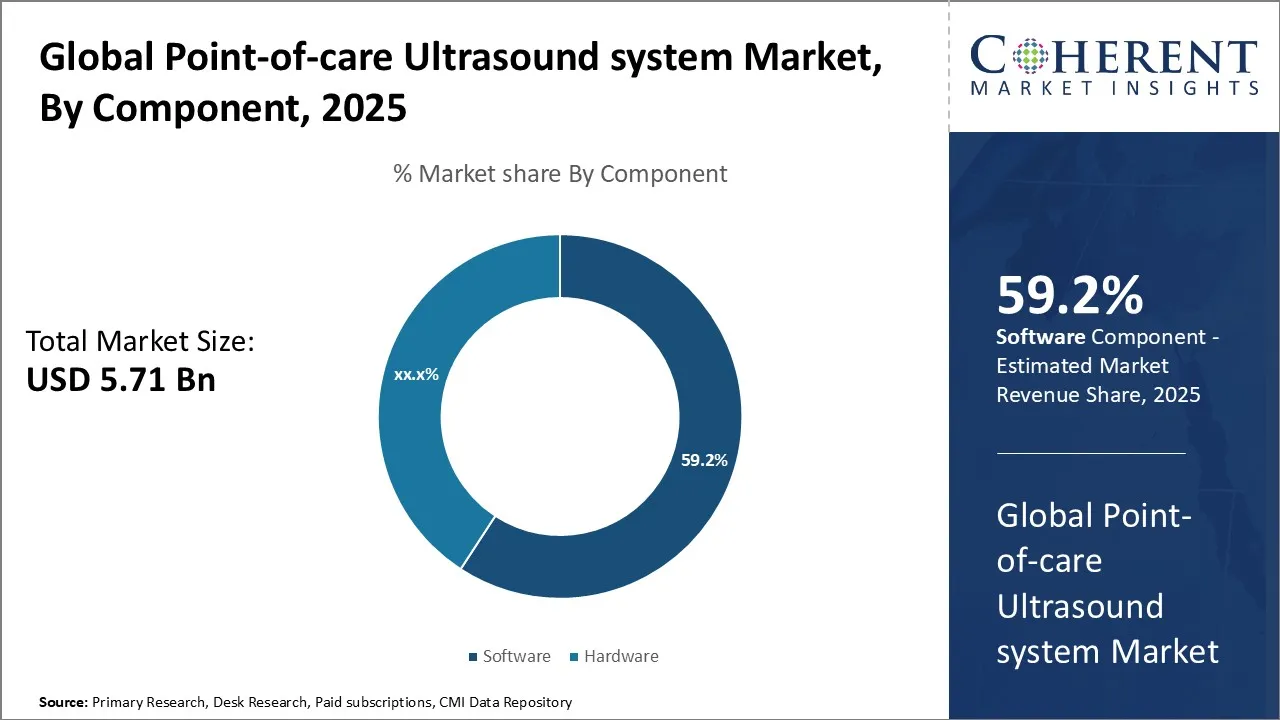
- By Component, the Software segment is projected to hold the largest market share of 60.25% in 2026.
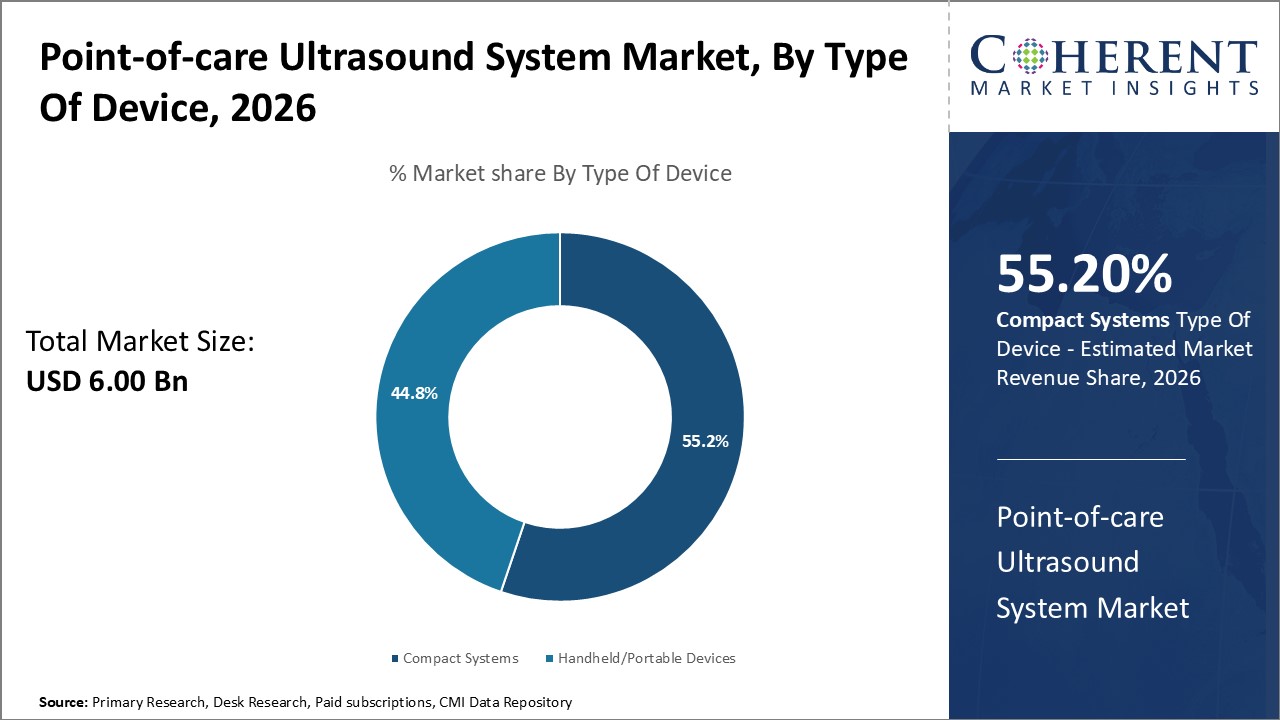
- By Type of Device, Compact Systems are expected to dominate the global point-of-care ultrasound system market with a market share of 43.2% in 2026.
- By Technology, 2D Ultrasound technology is anticipated to lead the market, capturing a share of 43.1% in 2026.
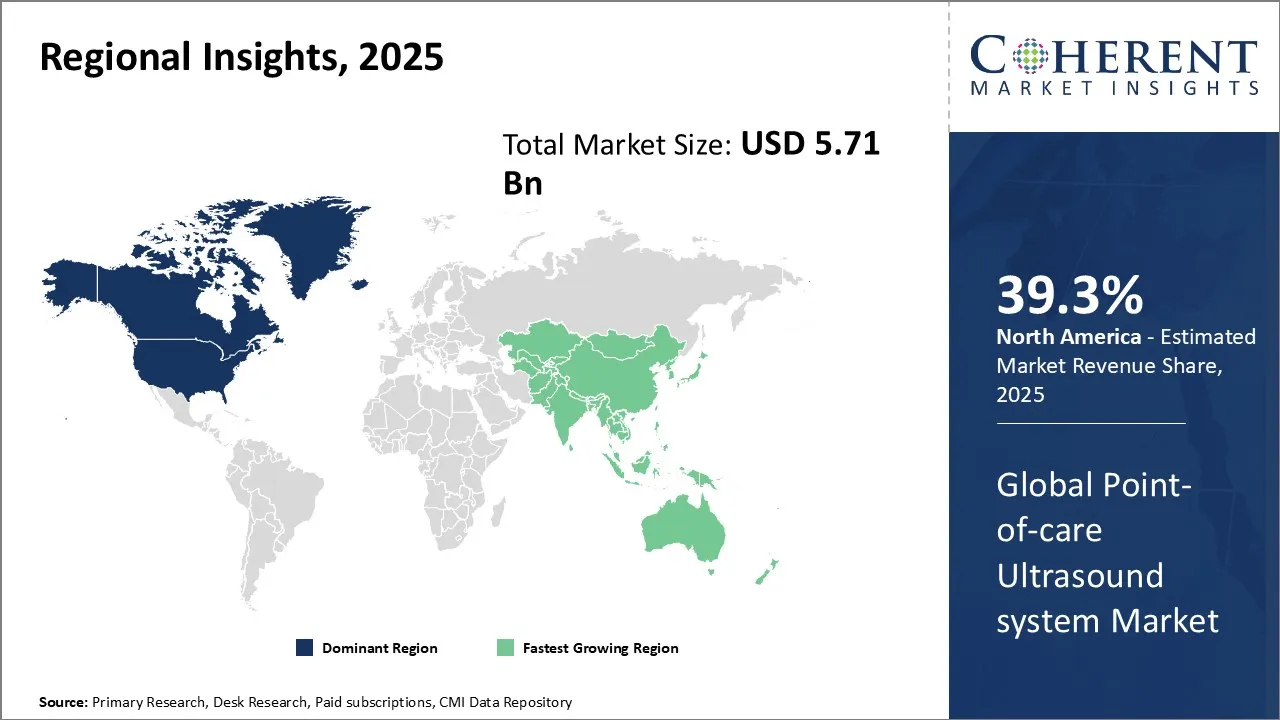
- North America is expected to lead the market, holding a share of 39.3 % in. Asia Pacific is anticipated to be the fastest-growing region, with a market share of 28.3% in 2026.
Market Overview:
The market trend for point-of-care ultrasound systems is driven by the rising prevalence of chronic diseases, growing elderly population, and need for rapid and accurate diagnostic solutions. Additionally, technological advancements, such as improved image quality, miniaturization of devices, and integration with artificial intelligence, are expected to further fuel the adoption of these systems. As healthcare providers seek to enhance patient outcomes and streamline clinical workflows, the demand for point-of-care ultrasound systems is likely to remain strong throughout the forecast period.
Currents Events and Its Impact
Current Events | Description and its impact |
Technological Advancements in Device Miniaturization |
|
Surge in Adoption of portable and Wireless POCUS Devices |
|
Segmental Analysis
- Current Industry Events of 2026
- Market Size Estimation
- Regional Breakdown
- Competitive Landscape
- Customer Intelligence
- Segmental Analysis
- Pricing Analysis
- Key Market Drivers, Challenges & Future Trends
- Customized Insights Section
Point-of-care Ultrasound System Market Insights, By Component – Software Leads Due to AI-Driven Diagnostic Capabilities
In terms of Component, Software segment is expected to hold the highest market share of 60.2% in 2026 owing to the increasing demand for advanced and user-friendly software solutions in point-of-care ultrasound systems. The software component plays a crucial role in enhancing the functionality, efficiency, and accuracy of these systems. The integration of artificial intelligence (AI) and machine learning (ML) algorithms into the software has revolutionized the way healthcare professionals interpret and analyze ultrasound images. These advanced software solutions enable real-time image processing, automatic measurements, and improved diagnostic capabilities, thereby reducing the time and effort required for accurate diagnosis and treatment planning.
Moreover, the software component of point-of-care ultrasound systems offers various features such as image optimization, 3D/4D imaging, and easy-to-use interfaces, which further drive its adoption among healthcare providers. The software also facilitates seamless integration with electronic health records (EHRs) and picture archiving and communication systems (PACS), enabling efficient data management and collaboration among healthcare teams. Additionally, strong focus on telemedicine and remote patient monitoring has fueled the demand for software solutions that enable secure and reliable data transmission, allowing healthcare professionals to provide timely and accurate diagnoses even in remote settings.
Point-of-care Ultrasound System Market Insights, By Type of Device –Compact Systems Dominate Owing to Portability and Bedside Applicability
In terms of Type of Device, Compact Systems segment is expected contribute the highest market share of 55.2% in 2026. The popularity of compact systems can be attributed to their portability, versatility, and ease of use, making them ideal for various clinical settings, including emergency departments, intensive care units, and outpatient clinics. These systems are designed to be compact and lightweight, allowing healthcare professionals to easily transport them between different locations and perform ultrasound examinations at the patient's bedside.
Compact point-of-care ultrasound systems offer a wide range of diagnostic capabilities, including abdominal, cardiac, and musculoskeletal imaging, among others. The ability to perform quick and accurate diagnoses using these systems has significantly improved patient outcomes and reduced the need for more invasive and time-consuming diagnostic procedures. Moreover, the advancements in transducer technology have enabled compact systems to deliver high-quality images comparable to those obtained from larger, stationary ultrasound machines.
Point-of-care Ultrasound System Market Insights, By Technology – 2D Ultrasound Maintains Dominance for its Cost-Effectiveness and Broad Clinical Acceptance
In terms of Technology, 2D Ultrasound segment is expected to contribute the highest market share of 43.1% in 2026. 2D ultrasound technology holds the highest share in the global point-of-care ultrasound system market, driven by its widespread acceptance and clinical utility across a broad spectrum of medical applications. As a trusted diagnostic tool, 2D ultrasound enables healthcare professionals to obtain real-time, cross-sectional images of internal structures, assisting in the visualisation of organs, tissues, and vascular systems. Its versatility is reflected in its use across diverse specialties such as emergency medicine, critical care, cardiology, and obstetrics. The ability to quickly assess conditions such as internal bleeding, organ abnormalities, and foetal development has cemented 2D ultrasound as an essential technology in the clinical workflow.
For instance, in August 2023, Siemens Healthineers, a global leader in medical technology, launched a dedicated cardiovascular ultrasound system equipped with advanced 2D HeartAI and 4D HeartAI features powered by robust artificial intelligence (AI). The market dominance of 2D ultrasound is further supported by its ease of use, cost-effectiveness, and non-invasive nature, which make it an attractive option for healthcare providers globally. Compared to more advanced modalities like 3D or Doppler ultrasound, 2D systems are more affordable and accessible, particularly in low-resource settings.
Regional Insights:
North America Point-of-care Ultrasound System Market Analysis and Trends
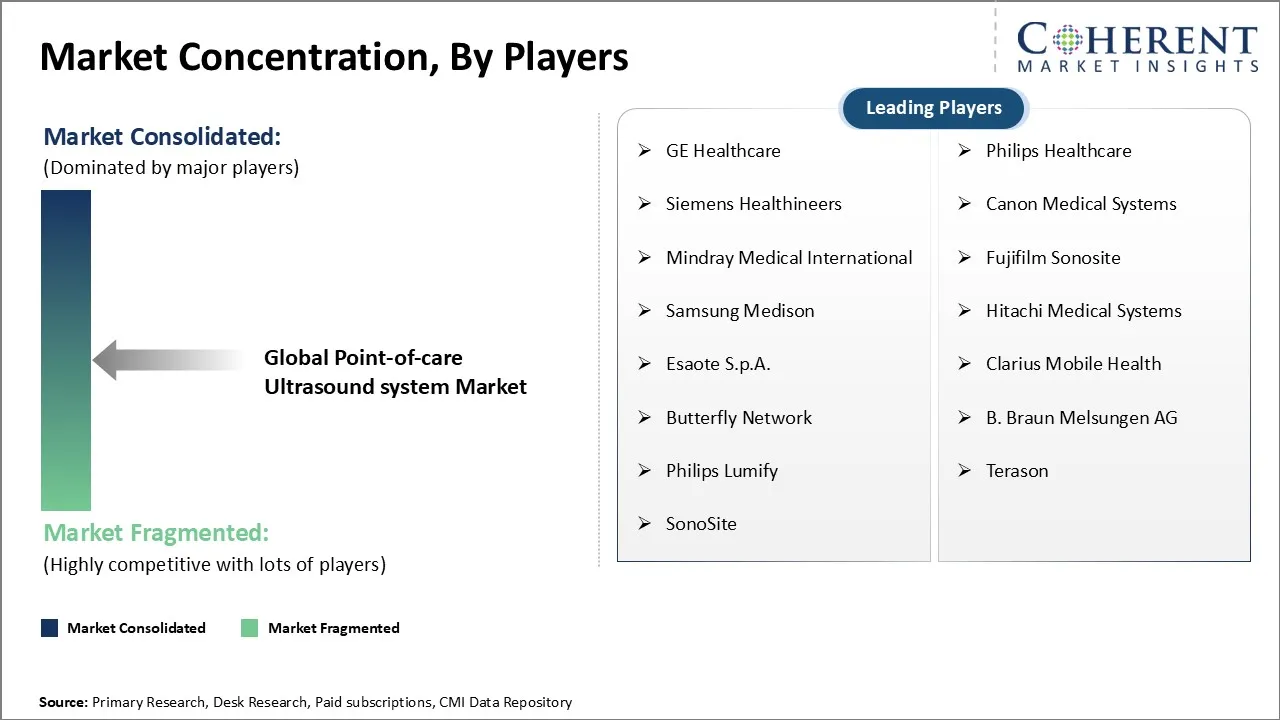
North America’s dominance in the global point-of-care ultrasound system market with share of 39.3% in 2026 can be attributed to several factors. The region boasts a well-established healthcare infrastructure, coupled with high adoption rates of advanced medical technologies. The presence of major market players, such as GE Healthcare, Philips Healthcare, and Fujifilm SonoSite, further strengthens the market position. These companies have been instrumental in driving innovation, product development, and expanding their distribution networks across the region. Additionally, favorable reimbursement policies and government initiatives to improve healthcare accessibility have contributed to the growth of the point-of-care ultrasound market in North America. For example, in September 2022, Philips Foundation and U.S.-based nonprofit RAD-AID International launched a multi-year, cross-continental partnership to expand access to ultrasound services for 50 million people across low- and middle-income countries.
Asia Pacific Point-of-care Ultrasound System Market Analysis and Trends
The Asia Pacific region exhibits the fastest growth in the global point-of-care ultrasound system market with 28.3% in 2026. The rapid economic development, increasing healthcare expenditure, and growing awareness about early disease detection have fueled the demand for point-of-care ultrasound systems in the region. Countries like China, Japan, and India have witnessed significant investments in healthcare infrastructure, including the adoption of advanced imaging technologies. Moreover, the rising prevalence of chronic diseases and expanding geriatric population have further propelled the market growth. Local companies, such as Mindray Medical and Sonoscape, have emerged as key players, are offering cost-effective solutions and expanding their presence in the Asia Pacific market.
Global Point-of-care Ultrasound System Market Outlook for Key Countries:
U.S. Point-of-care Ultrasound Market Trends
The U.S. market for point-of-care ultrasound systems is driven by the increasing demand for bedside imaging, particularly in emergency care and critical care settings. The country's advanced healthcare system, coupled with the presence of leading market players, has fueled the adoption of these systems. Key companies, such as GE Healthcare and Philips Healthcare, have been at the forefront of technological advancements, offering portable and user-friendly devices. The growing emphasis on patient-centric care and the need for rapid diagnostic tools have further propelled the market growth in the U.S.
For instance, in April 2024, Butterfly Network, Inc., a pioneer in ultrasound-on-chip technology and digital health solutions, launched Butterfly iQ3 in the U.S. The new device features their proprietary P4.3 Ultrasound-On-Chip technology, enabling faster image transfers, improved frame rates, and enhanced 3D imaging in a compact, ergonomic design.
France Point-of-care Ultrasound Market Trends
France point-of-care ultrasound market is evolving rapidly, driven by advancements in portable and AI-integrated ultrasound systems, expanding clinical applications across specialties and the need for efficient diagnostic tools to manage chronic conditions and support an aging population. The increasing adoption of POCUS in primary care, outpatient settings, and emergency departments reflects a shift towards decentralized healthcare delivery.
For instance, in May 2024, Samsung Medison, a global medical equipment company and an affiliate of Samsung Electronics, acquired Sonio SAS, a France-based company renowned for its fetal ultrasound AI solutions. This acquisition is intended to bolster Samsung Medison’s position in women’s and children’s health diagnostics worldwide.
China Point-of-care Ultrasound Market Trends
China's market for point-of-care ultrasound systems has experienced significant growth in recent years. The country's large population, increasing healthcare expenditure, and government initiatives to improve healthcare access in rural areas have driven the demand for these systems. Local companies, such as Mindray Medical and Sonoscape, have gained a strong foothold in the market, offering affordable and feature-rich devices. The rising prevalence of chronic diseases and the expanding geriatric population have further contributed to the market growth. Additionally, the Chinese government's focus on promoting domestic manufacturing and innovation has supported the development of the point-of-care ultrasound industry in the country.
For instance, in October 2021, China-based Mindray, a leading provider of medical devices and solutions, launched the TE9 Point-of-Care (POC) ultrasound system, designed to enhance clinical efficiency. The TE9 features a large 21.5-inch high-definition touchscreen, superior imaging and transducer technology, and advanced smart tools like Auto GA (Gastric Antrum), which automatically calculates gastric area for quick surgical decision-making.
Japan Point-of-care Ultrasound System Market Trends
Japan's market for point-of-care ultrasound systems is characterized by its focus on technological advancements and the integration of artificial intelligence (AI) and machine learning algorithms. The country's aging population and the increasing prevalence of chronic diseases have driven the demand for efficient and accurate diagnostic tools. Japanese companies, such as Canon Medical Systems and Hitachi Healthcare, have been at the forefront of developing innovative point-of-care ultrasound solutions.
For instance, in February 2024, FUJIFILM Sonosite, a subsidiary of FUJIFILM Corporation and a leader in point-of-care ultrasound systems, introduced Sonosite Voice Assist. This innovation allows clinicians to operate ultrasound functions via hands-free voice commands, improving procedural workflow and maintaining sterile conditions during examinations.
End User Feedback and Unmet Needs: Global Point-of-care Ultrasound System Market
- End users across key sectors such as emergency medicine, rural clinics, and critical care units have expressed a mix of satisfaction and concerns regarding Point-of-care Ultrasound (POCUS) systems. Many clinicians praise the portability, rapid diagnostic capabilities, and versatility of POCUS, especially in time-sensitive scenarios like trauma and cardiac assessments. For instance, an emergency department in a major North American hospital reported a 30% reduction in diagnostic turnaround time for internal bleeding cases, highlighting the value of immediate bedside imaging. However, challenges remain, particularly in resource-constrained settings, where limited access to training, inconsistent image quality, and a steep learning curve for non-specialists hinder optimal usage. Additionally, issues with probe compatibility, data integration into hospital IT systems, and a lack of affordable maintenance plans often result in equipment downtime and limited utilisation.
- These recurring concerns point to several unmet needs in the market, including the demand for AI-assisted diagnostic tools that simplify image acquisition and interpretation for users with varying expertise. There is also a pressing need for region-specific training programmes, cost-effective service plans, and enhanced interoperability with electronic health records (EHRs) and picture archiving systems (PACS). Addressing these gaps can unlock significant growth opportunities for manufacturers by improving customer satisfaction, driving adoption in underserved regions, and inspiring further product innovation. Policymakers also have a role to play by incentivising the integration of POCUS in primary care settings and supporting training initiatives to ensure equitable access to advanced diagnostic solutions globally.
Market Players, Key Developments, and Competitive Intelligence:
Key Developments:
- In February 2025, Philips, a global health tech leader, launched the Elevate software for its EPIQ Elite and Affiniti ultrasound systems. The AI-powered update enhances imaging precision, speeds up workflows, and supports remote diagnostics through Collaboration Live, addressing rising patient loads and staff shortages.
- In July 2024, GE HealthCare, a global leader in medical technology and diagnostics, announced the acquisition of the clinical AI software business of Intelligent Ultrasound. This strategic move enhances GE HealthCare’s precision care strategy by incorporating advanced image recognition technology and AI expertise into its ultrasound portfolio.
- In November 2024, Supersonic Imagine, a France-based medical imaging company known for its ultrasound innovations, introduced the HEPAVu system. Designed for liver specialists, HEPAVu features real-time shear wave elastography, viscosity and Q-Live PL.U.S biomarkers, along with tools for assessing microvascularisation and perfusion.
- In May 2024, Clarius Mobile Health, a Canada manufacturer specializing in high-definition wireless ultrasound scanners, integrated its platform with point-of-care ultrasound system Pro, a web-based tool designed for quality assessment and improvement in ultrasound scanning. This collaboration aims to elevate diagnostic proficiency by offering users expert feedback and performance reviews.
Top Strategies Followed by Global Point-of-care Ultrasound System Market Players
- Established Players in the global point-of-care ultrasound system market are focusing on extensive research and development to innovate high-performance products. These companies are investing heavily in R&D to develop advanced technologies, such as artificial intelligence and machine learning, to enhance the accuracy and efficiency of their ultrasound systems.
- For instance, in January 2023, FUJIFILM Sonosite, Inc., a leader in point-of-care ultrasound technology, launched its latest ultrasound system in India. Known for developing advanced and portable imaging solutions, the company aims to enhance diagnostic capabilities across various clinical settings with this new system, strengthening its presence in the Indian medical device market.
- Mid-level players in the market are focusing on delivering cost-effective solutions to target price-sensitive consumers. These companies are developing quality, budget-friendly products that offer similar features and functionalities as their high-end counterparts. They are also forming collaborations with other companies to boost their technology and production capabilities, as well as their market presence.
- For instance, in July 2023, Konica Minolta Healthcare Americas, Inc., a leading provider of primary imaging solutions, launched PocketPro H2—a wireless handheld ultrasound device designed for point-of-care use. Developed in partnership with Healcerion, PocketPro H2 is optimized for pain management, vascular access, and needle guidance.
- Small-scale players, on the other hand, are targeting niche markets with unique features and innovative products. These companies are specializing in specific areas of point-of-care ultrasound, such as veterinary or emergency medicine, to differentiate themselves from their competitors. They are also adopting cutting-edge technologies, to remain competitive in the market.
- For instance, in May 2024, Exo, a developer of point-of-care ultrasound (POCUS) technology, launched Exo Works Connect, a POCUS application package designed to streamline ultrasound adoption in healthcare settings.
Market Report Scope
Point-of-care Ultrasound System Market Report Coverage
| Report Coverage | Details | ||
|---|---|---|---|
| Base Year: | 2025 | Market Size in 2026: | USD 6.00 Bn |
| Historical Data for: | 2020 To 2024 | Forecast Period: | 2026 To 2033 |
| Forecast Period 2026 to 2033 CAGR: | 4.7% | 2033 Value Projection: | USD 8.25 Bn |
| Geographies covered: |
| ||
| Segments covered: |
| ||
| Companies covered: | GE Healthcare, Siemens Healthineers, Canon Medical Systems, Mindray Medical International, Fujifilm Sonosite, Samsung Medison, Hitachi Medical Systems, Esaote S.p.A., Clarius Mobile Health, Butterfly Network, B. Braun Melsungen AG, Koninklijke Philips N.V., Terason | ||
| Growth Drivers: |
| ||
| Restraints & Challenges: |
| ||
Point-of-care Ultrasound System Market Dynamics
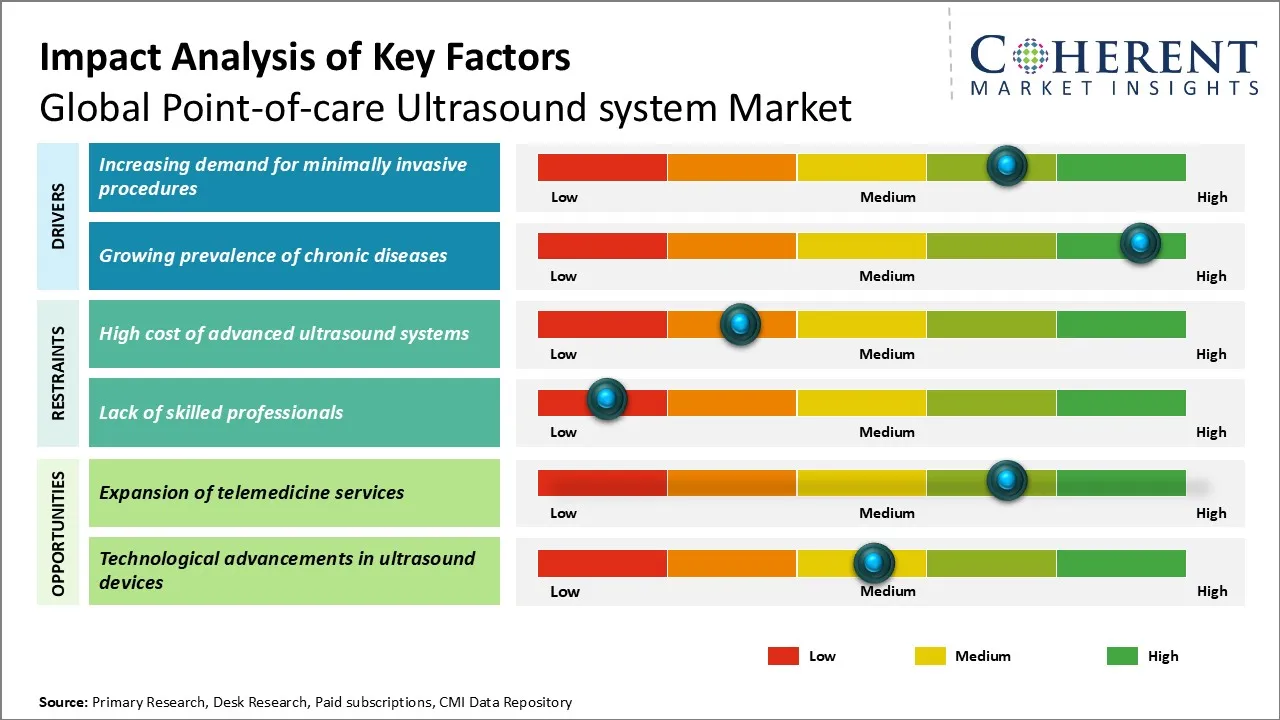
Point-of-care Ultrasound System Market Driver - Increasing Demand for Minimally Invasive Procedures
The growing preference for minimally invasive procedures is a significant driver propelling the growth of the global point-of-care ultrasound system market. Patients and healthcare providers alike are increasingly opting for less invasive diagnostic and therapeutic methods, as they offer numerous advantages over traditional surgical approaches. Point-of-care ultrasound systems play a crucial role in enabling these minimally invasive procedures by providing real-time imaging guidance, allowing for more precise and targeted interventions. The compact and portable nature of these systems further enhances their utility in various clinical settings, from emergency rooms to intensive care units. As the demand for minimally invasive surgeries continues to rise, driven by factors such as shorter recovery times, reduced post-operative complications, and improved patient outcomes, the adoption of point-of-care ultrasound systems is expected to witness a corresponding increase, contributing to the overall growth of the market.
For instance, in July 2024, InMode Ltd. a global leader in advanced medical technologies, unveiled IgniteRF, a cutting-edge minimally invasive platform featuring nine technologies for soft tissue contraction across various depths. IgniteRF complements InMode's BodyTite, FaceTite, Morpheus8, and the newly introduced QuantumRF, which uses fractionated radiofrequency to deliver precise, deep tissue treatments without invasive surgery.
Point-of-care Ultrasound System Market Opportunity: Expansion of Telemedicine Services
The expanding field of telemedicine presents a promising opportunity for the global point-of-care ultrasound system market. With the rapid advancements in telecommunications technology and increasing demand for remote healthcare services, telemedicine has emerged as a transformative force in the medical landscape. The integration of point-of-care ultrasound systems with telemedicine platforms enables healthcare professionals to provide real-time, remote diagnostic services to patients in various settings, including rural areas, underserved communities, and even offshore locations. By leveraging telemedicine, skilled sonographers and radiologists can remotely guide and interpret ultrasound examinations, thereby extending the reach of expert care to patients who may otherwise face barriers to accessing specialized medical services.
Moreover, the expansion of telemedicine services aligns with the growing trend of patient-centric care delivery models, which prioritize convenience, accessibility, and efficiency. As telemedicine continues to gain traction globally, driven by factors such as the COVID-19 pandemic, changing patient preferences, and the need for cost-effective healthcare solutions, the demand for point-of-care ultrasound systems that seamlessly integrate with telemedicine platforms is expected to surge. This presents a significant opportunity for market players to develop and deploy innovative, telemedicine-compatible ultrasound solutions that cater to the evolving needs of the healthcare industry.
Analyst Opinion (Expert Opinion)
- The global point-of-care ultrasound system market is experiencing robust growth, primarily driven by technological advancements such as AI-integrated imaging, miniaturisation of devices, and enhanced wireless connectivity. The rising demand for bedside diagnostics, particularly in emergency medicine, critical care, and rural healthcare settings, is accelerating the market growth. Regulatory bodies across regions, including the U.S. FDA and the European Medicines Agency (EMA), have fostered innovation by streamlining approvals for novel point-of-care ultrasound system devices, thus facilitating faster market entry. However, the market faces challenges such as high costs for advanced systems, limited operator training in low-resource settings, and reimbursement gaps in certain geographies. Emerging opportunities include expanding applications in sports medicine, veterinary care, and chronic disease management, where point-of-care ultrasound system can provide rapid, non-invasive diagnostic capabilities.
- Conferences such as the World Congress of Ultrasound in Medical Education, Radiological Society of North America (RSNA) Annual Meeting, and American Institute of Ultrasound in Medicine (AIUM) Annual Convention have been instrumental in driving knowledge-sharing, showcasing technological innovations, and shaping global ultrasound policies. Real-world instances include Butterfly Network’s portable, AI-powered ultrasound device gaining traction in primary care and rural clinics, and the NHS’s (U.K.) "point-of-care ultrasound system in the Community" pilot programme to expand diagnostic access in underserved areas. These initiatives underscore the market’s evolving landscape and the growing role of point-of-care ultrasound system in improving diagnostic accuracy and healthcare accessibility.
Speak to the analyst
Want personalized insights?
Take the findings above to one of our principal consultants, or have the report rebuilt around the segments, geographies and competitors you actually track.
Market Segmentation
- Component Insights (Revenue, USD Bn, 2021 - 2033)
- Software
- Hardware
- Type Of Device Insights (Revenue, USD Bn, 2021 - 2033)
- Compact Systems
- Handheld/Portable Devices
- Technology Insights (Revenue, USD Bn, 2021 - 2033)
- 2D Ultrasound
- 3D/4D Ultrasound
- Doppler Ultrasound
- Application Insights (Revenue, USD Bn, 2021 - 2033)
- Cardiology
- Obstetrics and Gynecology
- Musculoskeletal
- Emergency Medicine
- Critical Care
- Urology
- Anesthesiology
- Internal Medicine
- Neonatology
- Others (Vascular Surgery etc.)
- End User Insights (Revenue, USD Bn, 2021 - 2033)
- Hospitals
- Clinics
- Ambulatory Surgical Centers (ASCs)
- Diagnostic Imaging Centers
- Emergency Medical Services
- Home Care Settings
- Regional Insights (Revenue, USD Bn, 2021 - 2033)
- North America
- U.S.
- Canada
- Latin America
- Brazil
- Argentina
- Mexico
- Rest of Latin America
- Europe
- Germany
- U.K.
- Spain
- France
- Italy
- Russia
- Rest of Europe
- Asia Pacific
- China
- India
- Japan
- Australia
- South Korea
- ASEAN
- Rest of Asia Pacific
- Middle East
- GCC Countries
- Israel
- Rest of Middle East
- Africa
- South Africa
- North Africa
- Central Africa
- North America
- Key Players Insights
- GE Healthcare
- Siemens Healthineers
- Canon Medical Systems
- Mindray Medical International
- Fujifilm Sonosite
- Samsung Medison
- Hitachi Medical Systems
- Esaote S.p.A.
- Clarius Mobile Health
- Butterfly Network
- B. Braun Melsungen AG
- Koninklijke Philips N.V.
- Terason
Sources
Primary Research Interviews:
- Practicing clinicians (radiologists, cardiologists, emergency physicians, and anesthesiologists)
- Biomedical engineers and ultrasound technologists
- Hospital procurement managers and administrators
- Medical device regulatory experts (FDA consultants, ISO auditors)
- Academic researchers and professors in biomedical imaging
Databases:
- U.S. Food and Drug Administration (FDA)
- Centers for Medicare & Medicaid Services (CMS)
- European Medicines Agency (EMA)
- Medicines and Healthcare products Regulatory Agency (MHRA)
- National Medical Products Administration (NMPA)
- Ministry of Health, Labour and Welfare (MHLW)
Magazines:
- Diagnostic Imaging
- com
- Radiology Today
- Imaging Technology News (ITN)
- MedTech Dive
- Medical Device Network
- Healthcare IT News
Journals:
- Ultrasound in Medicine and Biology
- Journal of Ultrasound in Medicine
- European Journal of Ultrasound
- Critical Ultrasound Journal
- BMJ Innovations
- Academic Radiology
- Radiology (RSNA Journal)
- American Journal of Roentgenology (AJR)
Newspapers:
- The New York Times – Health Section
- The Guardian – Global Health
- The Financial Times – Healthcare and Life Sciences
- The Washington Post – Health & Science
- The Telegraph – Science & Health
Associations:
- American Institute of Ultrasound in Medicine (AIUM)
- Radiological Society of North America (RSNA)
- Society of Point-of-Care Ultrasound (SPOCUS)
- World Federation for Ultrasound in Medicine and Biology (WFUMB)
- European Society of Radiology (ESR)
Public Domain Sources:
- PubMed Central (PMC)
- arXiv.org
- Zenodo – Research Data Repository
- medRxiv – Preprint Server for Health Sciences
- WHO Open Access Publications
Proprietary Elements:
- CMI Data Analytics Tool: Proprietary analytics tool to analyze real-time market trends, consumer behavior, and technology adoption in market
- Proprietary CMI existing repository of information for last 8 years
Get access to 250+ pages report
Every segment, forecast, competitor profile and data table behind the analysis above — available for instant download.
- ESOMAR Member
- ISO 9001:2015 Certified
- D-U-N-S Registered
- GDPR & CCPA Compliant
Missing comfort of reading report in your local language? Find your preferred language:
Transform your Strategy with Exclusive Trending Reports
Frequently Asked Questions
The global point-of-care ultrasound system market is estimated to be valued at USD 5.71 Bn in 2025 and is expected to reach USD 7.77 Bn by 2032.
The CAGR of global point-of-care ultrasound system market is projected to be 4.50% from 2025 to 2032.
Increasing demand for minimally invasive procedures and growing prevalence of chronic diseases are the major factors driving the growth of the global point-of-care ultrasound system market.
High cost of advanced ultrasound systems and lack of skilled professionals are the major factors hampering the growth of the global point-of-care ultrasound system market.
In terms of Component, Software segment is estimated to dominate the market revenue share in 2025.
GE Healthcare, Siemens Healthineers, Canon Medical Systems, Mindray Medical International, Fujifilm Sonosite, Samsung Medison, Hitachi Medical Systems, Esaote S.p.A., Clarius Mobile Health, Butterfly Network, B. Braun Melsungen AG, Koninklijke Philips N.V., Terason are the major players.
North America is expected to lead the global point-of-care ultrasound system market in 2025.