

Global Handheld Ultrasound Market Size and Forecast – 2026 to 2033
The Global Handheld Ultrasound Market is estimated to be valued at USD 357.0 Mn in 2026 and is expected to reach USD 540.4 Mn by 2033, exhibiting a compound annual growth rate (CAGR) of 6.1% from 2026 to 2033. This growth is driven by the increasing adoption of portable diagnostic tools, rising prevalence of chronic diseases, and advancements in ultrasound technology that enhance image quality and ease of use, making handheld devices more accessible across various healthcare settings worldwide.
Key Takeaways of the Global Handheld Ultrasound Market
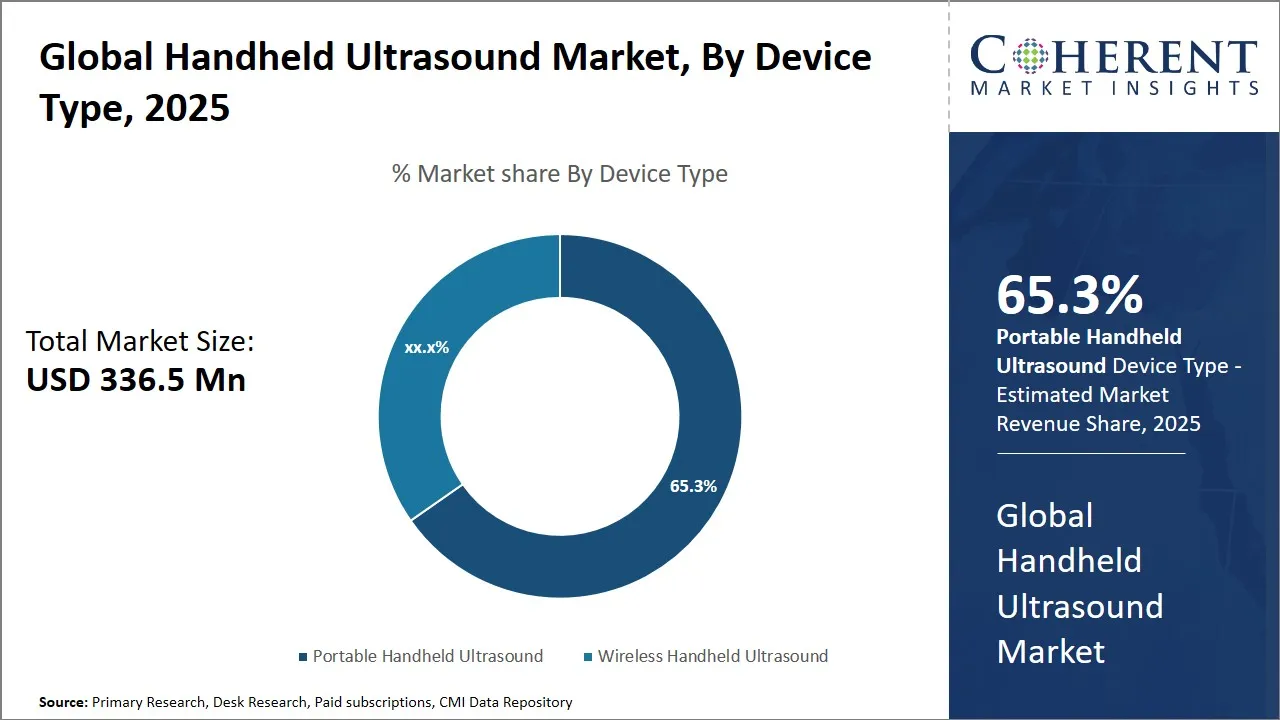
- The portable handheld ultrasound segment is expected to hold the largest share of the handheld ultrasound market, accounting for 66.3 % in 2026, based on device type.
- In terms of imaging technology, 2D ultrasound is projected to dominate the handheld ultrasound market, representing 43.3% of the market share in 2026.
- Cardiology segment is projected to lead the handheld ultrasound market with a share of 25.5 % in 2026, driven by the growing need for rapid and point-of-care cardiac assessments.
- North America is expected to lead the market, holding a share of 40.3 % in 2026. Asia Pacific is anticipated to be the fastest-growing region, with an estimated market share of 24.3% in 2026.
Market Overview
A key market trend is the integration of artificial intelligence (AI) and cloud-based applications into handheld ultrasound devices, enabling real-time diagnostics and remote consultations. Additionally, the ongoing miniaturization of ultrasound hardware and improvements in battery life are expanding their utility in emergency and point-of-care environments. Furthermore, growing investments in research and development aimed at enhancing device accuracy and affordability continue to bolster market expansion, especially in emerging economies with limited access to traditional imaging infrastructure.
Current Events and Its Impact
Current Events | Description and its Impact |
AI Integration in Handheld Ultrasound Devices |
|
Rise of Telemedicine and Remote Patient Monitoring |
|
Segmental Insights
- Current Industry Events of 2026
- Market Size Estimation
- Regional Breakdown
- Competitive Landscape
- Customer Intelligence
- Segmental Analysis
- Pricing Analysis
- Key Market Drivers, Challenges & Future Trends
- Customized Insights Section
Handheld Ultrasound Market Insights, By Device Type - Portable Handheld Ultrasound Segment’s Dominance is Driven by Versatility and Accessibility
The portable handheld ultrasound segment has the largest share of the handheld ultrasound market with an estimated share of 66.3% in 2026 in terms of device type. The main factor that has led to this leadership role is its high level of versatility and accessibility. Handheld ultrasound devices are portable and convenient devices, which is why they possess a wide appeal to the entire range of healthcare providers, including large hospitals, as well as point-of-care environments (clinics and emergency departments).
For example, Butterfly Network, Inc., which manufactures handheld ultrasound devices, announced in January 2024 that Butterfly iQ3 had received clearance from the U.S. FDA. The newest version is ergonomically redesigned, is deeper in data processing speed, and offers a higher resolution, sensitivity, and penetration. It also presents 3D at a faster rate with enhanced automated image capture features such as iQ Slice and iQ Fan.
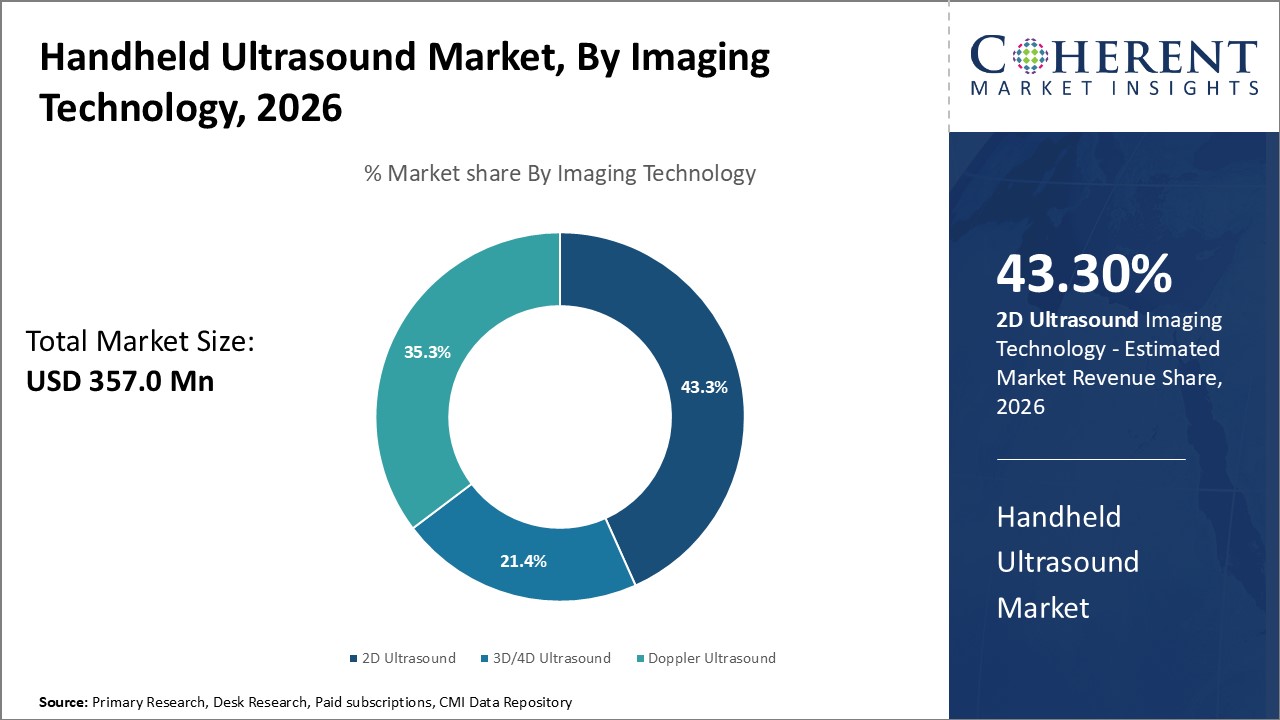
Handheld Ultrasound Market Insights, By Imaging Technology - 2D Ultrasound Technology Leads due to its Established Clinical Utility and Cost-Effectiveness
In the imaging technology segment of the handheld ultrasound market, 2D ultrasound takes up the largest portion with an estimated share of 43.3% in 2026 mostly because it has an established clinical use and is cost effective. Being the original imaging mode offered in the field of ultrasound, 2D ultrasound is a real-time, grayscale imaging system that has continued to be the foundation of diagnostic ultrasonography in an almost every medical specialty.
The ease of use and versatility of 2D ultrasound is one of the factors that drove the prominence of the technique. Interpretation of 2D images been taught to clinicians makes the technology a good option both in routine as well as critical diagnostic process. The relatively cheap prices of the 2D ultrasound equipment in comparison with the sophisticated 3D/4D systems are also one of the main causes of their popularity.
Handheld Ultrasound Market Insights, By Probe Type - Cardiology Segment’s Expansion is Fueled by the Need for Rapid, Point-of-Care Cardiac Assessments
In the handheld ultrasound market, cardiology is the biggest market segment with an estimated share of 25.5% in 2026 due to the urgent demand for quick and point-of-care cardiac evaluation. The use of handheld ultrasound has transformed the world of cardiac care by enabling clinicians to conduct focused cardiac ultrasounds (FOCUS) at the bedside of the patient and thus making effective and informed clinical decisions.
Another major force in the cardiology industry is the increasing rate of cardiovascular diseases among people across the globe, thus creating need of effective and easily available diagnostic instruments. Handheld ultrasound is non-invasive, radiation-free and can be used to assess the structure and function of the heart, allowing early diagnosis of heart defects, like valvular defects, pericardial effusion, and myocardial infarction.
Role of Artificial Intelligence (AI) in the Global Handheld Ultrasound Market
- Artificial Intelligence (AI) is making a tremendous change in the global handheld ultrasound market because it can improve the operations of the sources, reduce the costs, and have a better diagnostic outcome. The application of AI in predictive analytics can be used to make accurate diagnoses and to make more timely decisions by analyzing ultrasound images in real-time and detecting patterns that would otherwise be overlooked by the human eye. AI-driven automation minimizes the amount of human effort to process the data and analyze the image, and it minimizes the instances of human error and guarantees consistency among various clinicians.
- AI algorithms are also able to tailor patient care to their needs, making the changes to parameters according to individual needs and enhancing the overall results. Exo Imaging with its ultrasound device that functions with the help of AI is an example of how AI is increasing the portability, precision, and accessibility of ultrasound devices, which plays an essential role in the further expansion of the field of using handheld ultrasound devices in remote and underserved locations.
- Moreover, AI is creating new business opportunities in the market of handheld ultrasound by influencing innovation and developing competitive advantages. AI-based ultrasound machines are not only confined to the view of better diagnostics, but also allow business models like remote diagnostics and telemedicine where healthcare professionals can extend their service. The scalability provided by AI in handheld devices allows the reduction of the operational cost and the inclusion of the value-added benefits, including automated measurements and intelligent reporting systems.
- Nevertheless, despite these positive aspects, AI has some possible downsides, including a high risk of excessive dependence on technology and the necessity of constant algorithm renewal in order to be accurate. The key to successful AI adoption in this market means that companies operating in the industry must invest in research and development, maintain regulatory compliance, and provide training to healthcare professionals to help harness the potential of AI and to address the issues related to the privacy and the security of the data.
Regional Insights
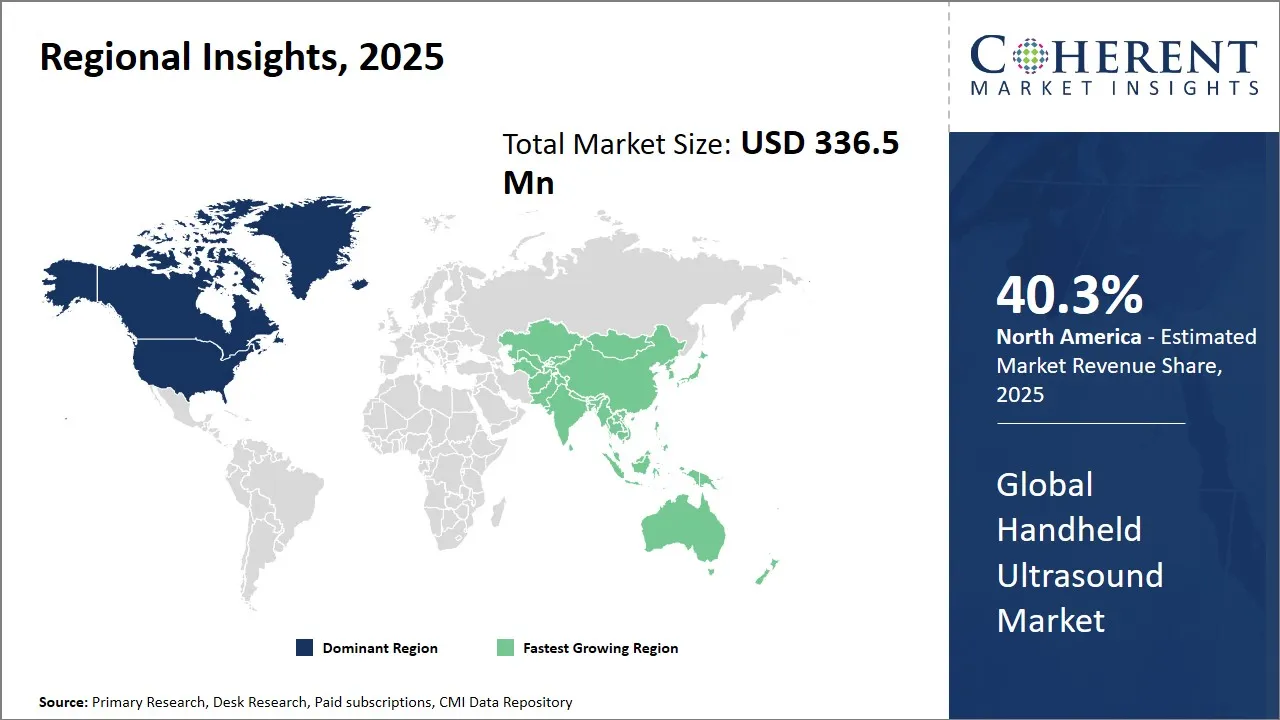
North America Handheld Ultrasound Market Analysis and Trends
The healthcare infrastructure in North America is highly developed, with an estimated market share of 40.3% in 2026. This growth is driven by the widespread adoption of the latest medical technologies and active government support for innovation in medical equipment, which contributes to its dominance in the global handheld ultrasound market. Dominating influences of a major competitor in the industry, including GE Healthcare, Philips Healthcare, and Siemens Healthineers play an important role in technological progress in handheld ultrasound machines.
For example, in July 2023, Konica Minolta Healthcare Americas introduced the PocketPro H2, an ultrasound handheld device that is wireless and can be used in point-of-care imaging. This is a small system that is musculoskeletal (MSK), pain management, vascular access and needle guidance, offering high quality imaging of soft tissue such as joint, muscle, and tendon problems.
Asia Pacific Handheld Ultrasound Market Analysis and Trends
Asia Pacific is expected to experience the highest growth rate, driven by rising healthcare spending and an expanding healthcare infrastructure. The region is projected to capture an estimated market share of 24.3% in 2026, alongside growing awareness about point-of-care diagnostics. Other countries such as China, India, and Japan have had major government efforts to improve primary health care accessibility which strengthens the application of portable and affordable ultrasound equipment.
Demand is further prompted by the fast urbanization, increasing geriatric population, and increasing amount of private healthcare industry. Also, domestic companies like Mindray and SonoScape are playing their part in the market expansion by producing low priced handheld ultrasound systems that are locally oriented.
Global Handheld Ultrasound Market Outlook for Key Countries
U.S. Handheld Ultrasound Market Trends
The handheld ultrasound market in the U.S. is advantaged with the good technological infrastructure and massive pool of healthcare providers that actively use the handheld ultrasound equipment. The main participants such as GE Healthcare and Philips Healthcare invest so much in innovation, and training of clinics to encourage the use of the devices in various health care facilities, such as emergency medicine and outpatient care. Developed intellectual property protection and governmental support of medical devices research helps highlight long-term product development and domination on the market.
In June 2024, portable ultrasound device maker, Clarius Mobile Health was U.S. FDA approved to use its Clarius OB AI fetal biometric measurement device. This innovation will benefit the obstetrical prenatal care, particularly in underserviced areas, by automating the measurement of fetal biometry and giving an estimate of fetal age, weight, and growth ranges.
China Handheld Ultrasound Market Trends
The China handheld ultrasound market is experiencing a booming growth with government programs that have come in to enhance the accessibility of healthcare devices in the rural area using portable ultrasounds. Domestic firms like Mindray have been relevant as they provided competently priced and technologically viable handheld ultrasound systems, and thus the technology was made available in the lower-end cities and rural regions. An even higher involvement of the private sector and the use of better healthcare reimbursement policies should further speed up adoption.
In August 2022, MGI, a pioneer in emergency medical technology, exhibited its novel robotic ultrasound system MGIUS-R3 and the H1 series wireless handheld ultrasound in the 2022 ISEE & CEFE powered by INTERSCHUTZ in Hangzhou, China The MGIUS-R3 provides a new step in remote diagnosis enabling it to provide real-time ultrasounds without direct contact with the patient and eliminating risks of exposure and enhancing the efficiency of the fever clinics.
Germany Handheld Ultrasound Market Trends
The advanced healthcare system and tight regulatory environment in Germany make it stay the best country in Europe in terms of the high-quality standards of handheld ultrasound devices. This is highly represented by major multinational businesses, such as Siemens Healthineers, which is concentrating on incorporating the AI and IoT aspect into the portable ultrasound systems to improve the quality of diagnosis and efficiency of the workflow. Also, the financial support of adoption is provided by the public healthcare funds in hospitals and outpatient clinics.
In March 2026, FUJIFILM Healthcare Europe announced the release of the EG-740UT, a high-end interventional ultrasonic endoscope in Europe, intended to be used therapeutically. The achievement of this milestone reaffirms the commitment of FUJIFILM towards delivering innovative offers in endoscopic solutions that lead to high levels of clinical precision and patient care improvement in Europe.
India Handheld Ultrasound Market Trends
The market of handheld ultrasound in India is rapidly expanding due to the increasing level of awareness about preventive health care and the necessity to possess affordable diagnostic tools. Companies, such as Philips and SonoScape (local and international), are taking advantage of this demand and roaring with low priced handheld ultrasound equipment that can be used in a variety of clinical situations, such as maternal health and emergency care. Government programs such as Ayushman Bharat encourage the adoption of portable diagnostics in primary care facilities and increases the market presence.
In August 2023, Wipro GE Healthcare introduced the Vscan Air in Nepal, a wireless, handheld ultrasound system intended to improve point-of-care ultrasound. This is the first device of Wipro GE to be launched in South Asia, as it allows scanning the entire body and allows healthcare specialists to make faster and more competent decisions.
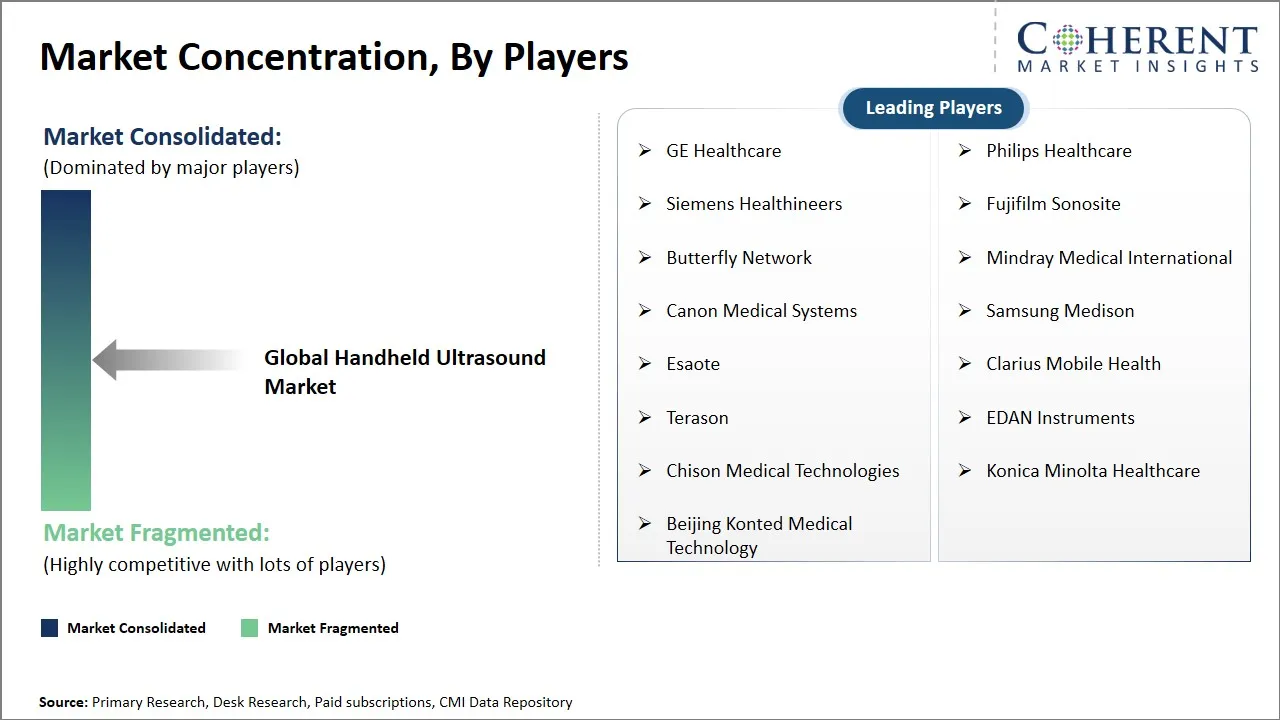
Market Players, Key Developments, and Competitive Intelligence
Key Developments
- On September 05, 2025, Exo Imaging, a U.S.-based company specializing in medical technology, announced plans to launch its AI-powered portable ultrasound device in Bangladesh. This marks the company's first deployment in Asia. The U.S. FDA-approved device aims to revolutionize healthcare access, particularly in rural areas, by enabling early detection of various conditions.
- In June 2025, Koninklijke Philips N.V., a global leader in health technology, launched the Flash Ultrasound System 5100 POC, a next-generation point-of-care ultrasound designed for anesthesia, critical care, emergency medicine, and musculoskeletal imaging. Built on Philips' established ultrasound technology, the Flash 5100 combines exceptional image clarity, smart automation, and an intuitive touchscreen interface, enabling clinicians to make fast, confident decisions in high-pressure environments like ERs and ICUs.
- In December 2024, French-based SuperSonic Imagine launched PocketVu, a new fleet of handheld ultrasound devices designed for diagnostic medical imaging. PocketVu offers multiple scanning modes, AI-powered auto image quality adjustment, and compatibility with DICOM 3.0 systems. With its lightweight design and long battery life, it supports a wide range of applications, including abdominal, cardiac, musculoskeletal, vascular, and obstetric imaging.
- In September 2024, GE HealthCare, a global leader in medical technology, launched the Venue Sprint, a portable point-of-care ultrasound system designed to enhance accessibility in critical care and emergency medicine. The Venue Sprint combines advanced Venue software, AI tools, and wireless Vscan Air probes, offering high-quality imaging and streamlined workflows. This tablet-based system, which includes tools like Bladder Volume and Auto Volume Flow for real-time measurements, aims to support clinicians in urgent, time-sensitive situations.
Top Strategies Followed by Global Handheld Ultrasound Market Players
- Leading companies in this space invest heavily in research and development (R&D) to continuously innovate and enhance the performance of their handheld ultrasound devices. This relentless focus on technological advancement enables them to introduce products with superior imaging quality, user-friendly interfaces, and advanced diagnostic capabilities, thereby meeting the evolving needs of healthcare professionals worldwide.
- In February 2023, GE HealthCare, a global innovator in healthcare solutions, announced its agreement to acquire Caption Health, Inc. The integration of Caption AI applications into GE's Point of Care and Handheld ultrasound portfolio will streamline ultrasound exams, enabling more healthcare professionals to perform basic echocardiograms.
- Mid-level market players, on the other hand, distinguish themselves by focusing on cost-effective handheld ultrasound solutions that strike a balance between quality and affordability. These companies primarily target price-sensitive consumers, including smaller clinics and healthcare providers in developing regions, where budget constraints are significant factors influencing purchasing decisions.
- For mid-level market players, companies like Mindray and Fujifilm focus on offering cost-effective handheld ultrasound solutions that strike a balance between quality and affordability. In September 2023, Mindray, a global leader in healthcare technologies, launched the TE Air Wireless Handheld Ultrasound, revolutionizing point-of-care ultrasound (POCUS). This compact, wireless device offers healthcare professionals the ability to carry comprehensive scanning capabilities in their pockets, ideal for various clinical scenarios.
- Small-scale players in the handheld ultrasound market carve out competitive advantages by focusing on specialized products and innovative technological solutions tailored to specific user needs. These companies frequently pioneer the adoption of cutting-edge technologies such as artificial intelligence, cloud connectivity, and miniaturized sensors to deliver unique device functionalities that can differentiate them from larger competitors.
- Small-scale players in the handheld ultrasound market, such as Clarius and Vave Health, stand out by offering specialized products with cutting-edge technological advancements. For example, Clarius integrates cloud connectivity and artificial intelligence into its handheld ultrasound devices, allowing for seamless data sharing and enhanced imaging analysis.
Market Report Scope
Handheld Ultrasound Market Report Coverage
| Report Coverage | Details | ||
|---|---|---|---|
| Base Year: | 2025 | Market Size in 2026: | USD 357.0 Mn |
| Historical Data for: | 2020 To 2024 | Forecast Period: | 2026 To 2033 |
| Forecast Period 2026 to 2033 CAGR: | 6.1% | 2033 Value Projection: | USD 540.4 Mn |
| Geographies covered: |
| ||
| Segments covered: |
| ||
| Companies covered: | GE Healthcare, Philips Healthcare, Siemens Healthineers, Fujifilm Sonosite, Butterfly Network, Mindray Medical International, Canon Medical Systems, Samsung Medison, Esaote, Clarius Mobile Health, Terason, EDAN Instruments, Chison Medical Technologies, Konica Minolta Healthcare, and Beijing Konted Medical Technology | ||
| Growth Drivers: |
| ||
| Restraints & Challenges: |
| ||
Handheld Ultrasound Market Dynamics
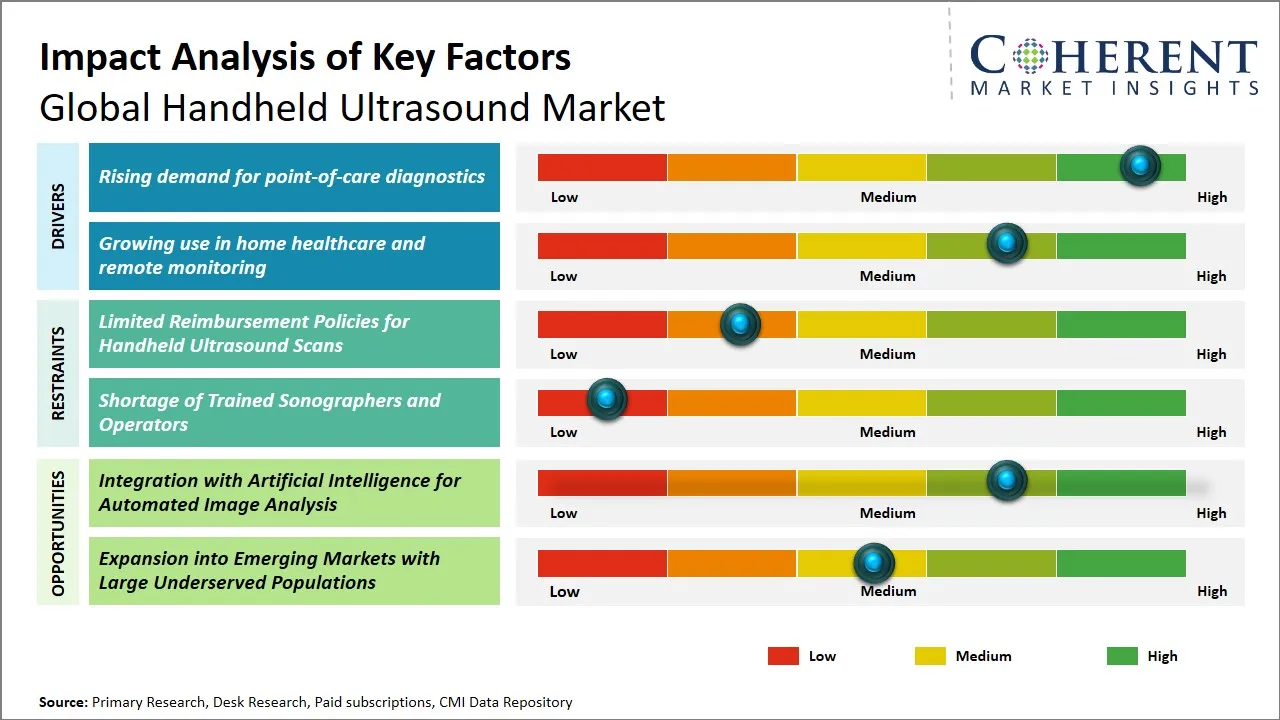
Handheld Ultrasound Market Driver - Rising Demand for Point-of-care Diagnostics
The growing trend of prompt and correct diagnosis solutions is playing a major role in driving the demand of handheld ultrasound devices in healthcare facilities. As the trend moves toward decentralized and patient-centered care, caregivers are focusing on the technologies that will allow them to receive the immediate imaging result at the bedside, emergency rooms, and remote sites without the necessity to carry the previous large machines with the ultrasound capabilities. The increasing rates of chronic illnesses and emergencies with acute conditions requiring fast evaluation drive this drive even more as patient outcomes can be dramatically improved even in such simplified cases. Moreover, improvements in handheld ultrasound technology have also improved the quality of the image and portability of the device hence more available to clinicians in different fields of specialty like cardiology, obstetrics, and emergency medicine.
For example, Siemens Healthineers is revolutionizing Point-of-Care Ultrasound (POCUS) with systems designed to bring high-quality imaging directly to patients wherever it's needed. Their POCUS solutions integrate advanced technologies such as wireless transducers and intuitive touch-and-tactile controls, enabling clinicians to deliver fast, accurate assessments in various clinical settings.
Handheld Ultrasound Market Opportunity - Integration with Artificial Intelligence for Automated Image Analysis
Incorporation of Artificial Intelligence (AI) in the handheld ultrasound devices is a massive expansion potential in the world handheld ultrasound industry. The use of AI-powered automated analysis of images will increase the accuracy, speed, and reliability of ultrasound diagnosis by supporting healthcare professionals with real-time image analysis and anomaly detection. This feature especially comes in handy in the point of care environment where quick decision making is essential, including emergency rooms, remote clinics, and primary care clinics. AI algorithms may decrease the dependency on and variability of the operators and enhance the inter-user and inter-clinical setting consistency in the diagnosis.
For example, in June 2024, Koninklijke Philips N.V, a global leader in health technology, unveiled its AI-enabled cardiovascular ultrasound platform. Integrated into the EPIQ Cardiovascular X and Affiniti Cardiovascular X ultrasound systems, the new U.S. FDA-cleared applications feature the first automated tool for segmental wall motion scoring to identify coronary artery disease and cardio-oncology issues. It also offers fully automated 3D quantification of mitral regurgitation volumes, improving analysis for heart valve disease.
Analyst Opinion (Expert Opinion)
- The handheld ultrasound is a sector that is recording healthy growth due to the technological changes, support by the regulating bodies, and the rising need of portable diagnostic devices. The combination of AI and new imaging technologies into portable gadgets is boosting the accuracy of diagnostics greatly, and it is becoming an essential part of the emergency department and point-of-care services. Moreover, the increasing interest in cost-effective healthcare provision, especially in rural and underserved areas, is driving the demand of portable ultrasound equipment. The regulatory organizations are also taking a central role as they are certifying enhanced handheld systems that are enhancing confidence in the market. Nevertheless, such issues as the price of the device and the necessity to train the medical personnel to effectively work with such systems are still the burning obstacles.
- New market opportunities consist of the growing use of handheld ultrasound equipment in the different specialties of clinics, such as obstetrics, to cardiology. Famous in-the-industry events, which include RSNA annual conference by the Radiological Society of North America and the conference of the International Society of Ultrasound in obstetrics and gynecology (ISUOG) have played a significant role in knowledge-sharing and demonstration of new technology in the field. Practical projects such as the introduction of the Compact Ultrasound System by Philips and the collaboration of governments and technology firms to deliver portable tests in isolated regions are assisting the future of this market, which makes medical services easier to access and efficient all over the globe.
Speak to the analyst
Want personalized insights?
Take the findings above to one of our principal consultants, or have the report rebuilt around the segments, geographies and competitors you actually track.
Market Segmentation
- Device Type Insights (Revenue, USD Mn, 2021 - 2033)
- Portable Handheld Ultrasound
- Wireless Handheld Ultrasound
- Imaging Technology Insights (Revenue, USD Mn, 2021 - 2033)
- 2D Ultrasound
- 3D/4D Ultrasound
- Doppler Ultrasound
- Application Area Insights (Revenue, USD Mn, 2021 - 2033)
- Cardiology
- Obstetrics/Gynecology
- Musculoskeletal
- Emergency Medicine
- Pulmonary
- Urology
- Vascular
- Neurology
- Aesthetics
- Veterinary
- Other Applications
- Software Type Insights (Revenue, USD Mn, 2021 - 2033)
- Smartphone Application-Based
- Customized Software-Based
- Connectivity Insights (Revenue, USD Mn, 2021 - 2033)
- USB-Based
- Bluetooth/Wi-Fi Enabled
- End User Insights (Revenue, USD Mn, 2021 - 2033)
- Hospitals
- Diagnostic Imaging Centers
- Ambulatory Surgical Centers
- Maternity Clinics
- Specialty Clinics
- Home Care Settings
- Others (e.g., Academic Institutions, Physician Clinics)
- Regional Insights (Revenue, USD Mn, 2021 - 2033)
- North America
- U.S.
- Canada
- Latin America
- Brazil
- Argentina
- Mexico
- Rest of Latin America
- Europe
- Germany
- U.K.
- Spain
- France
- Italy
- Russia
- Rest of Europe
- Asia Pacific
- China
- India
- Japan
- Australia
- South Korea
- ASEAN
- Rest of Asia Pacific
- Middle East
- GCC Countries
- Israel
- Rest of Middle East
- Africa
- South Africa
- North Africa
- Central Africa
- North America
- Key Players Insights
- GE Healthcare
- Philips Healthcare
- Siemens Healthineers
- Fujifilm Sonosite
- Butterfly Network
- Mindray Medical International
- Canon Medical Systems
- Samsung Medison
- Esaote
- Clarius Mobile Health
- Terason
- EDAN Instruments
- Chison Medical Technologies
- Konica Minolta Healthcare
- Beijing Konted Medical Technology
Sources
Primary Research Interviews
Industry Stakeholders List
- Senior Management at OEMs
- Regulatory Experts
- Supply Chain Managers
- Product Development Teams
- Sales and Marketing Executives
- Distributors and Resellers
End Users List
- Emergency Medical Technicians (EMTs)
- General Practitioners (GPs)
- Obstetricians/Gynecologists
- Orthopedic Surgeons
- Cardiologists
- Radiologists
Government and International Databases
- World Health Organization (WHO)
- U.S. Food and Drug Administration (FDA)
- European Medicines Agency (EMA)
- Indian Council of Medical Research (ICMR)
- Centers for Disease Control and Prevention (CDC)
- National Institutes of Health (NIH)
Trade Publications
- Diagnostic Imaging
- Health Imaging
- Medical Design & Outsourcing
- MedTech Dive
- Medical Device Network
- Imaging Technology News
Academic Journals
- Journal of Ultrasound in Medicine
- Ultrasound in Medicine & Biology
- European Journal of Ultrasound
- Journal of Clinical Ultrasound
- Ultrasound Quarterly
- Journal of Diagnostic Medical Sonography
Reputable Newspapers
- The New York Times
- The Guardian
- The Wall Street Journal
- The Times of India
- The Economic Times
- Financial Times
Industry Associations
- Radiological Society of North America (RSNA)
- American Institute of Ultrasound in Medicine (AIUM)
- European Federation of Societies for Ultrasound in Medicine and Biology (EFSUMB)
- Indian Radiological and Imaging Association (IRIA)
- American Society of Echocardiography (ASE)
- Society of Diagnostic Medical Sonography (SDMS)
Public Domain Resources
- National Center for Biotechnology Information (NCBI)
- U.S. National Library of Medicine
- OpenFDA
- World Bank Health Data
Proprietary Elements
- CMI Data Analytics Tool: Proprietary analytics tool to analyze real-time market trends, consumer behavior, and technology adoption in market
- Proprietary CMI Existing Repository of Information for Last 8 Years
Get access to 250+ pages report
Every segment, forecast, competitor profile and data table behind the analysis above — available for instant download.
- ESOMAR Member
- ISO 9001:2015 Certified
- D-U-N-S Registered
- GDPR & CCPA Compliant
Missing comfort of reading report in your local language? Find your preferred language:
Transform your Strategy with Exclusive Trending Reports
Frequently Asked Questions
The global handheld ultrasound market is estimated to be valued at USD 357.0 Mn in 2026 and is expected to reach USD 540.4 Mn by 2033.
The CAGR of the global handheld ultrasound market is projected to be 6.1% from 2026 to 2033.
Rising demand for point-of-care diagnostics and growing use in home healthcare and remote monitoring are the major factors driving the growth of the global handheld ultrasound market.
Limited reimbursement policies for handheld ultrasound scans and shortage of trained sonographers and operators are the major factors hampering the growth of the global handheld ultrasound market.
In terms of device type, portable handheld ultrasound is estimated to dominate the market revenue share in 2026.
GE Healthcare, Philips Healthcare, Siemens Healthineers, Fujifilm Sonosite, Butterfly Network, Mindray Medical International, Canon Medical Systems, Samsung Medison, Esaote, Clarius Mobile Health, Terason, EDAN Instruments, Chison Medical Technologies, Konica Minolta Healthcare, and Beijing Konted Medical Technology are the major players.
North America is expected to lead the global handheld ultrasound market in 2026.