

Global Respiratory Disease Treatment Market Size and Forecast – 2026 To 2033
The global respiratory disease treatment market is expected to grow from USD 100,904.5 Mn in 2026 to USD 193,768.8 Mn by 2033, registering a compound annual growth rate (CAGR) of 9.8% from 2026 to 2033. The market for global respiratory disease treatment is poised for significant expansion, fueled by the growing impact of environmental and household air pollution on respiratory health.
According to the World Health Organization (WHO), almost 99% of the global population is exposed to air pollution levels exceeding its guideline limits, increasing the risk of respiratory conditions and strengthening the need for diagnosis and treatment.
Key Takeaways of the Global Respiratory Disease Treatment Market
- Corticosteroids are projected to hold 31.0 of the global respiratory disease treatment market share in 2026, making it dominant drug class segment, across Europe, where corticosteroid-based therapies remain an established component of respiratory disease management. For instance, the UK Medicines and Healthcare products Regulatory Agency (MHRA) states that single-constituent inhaled corticosteroids are licensed for asthma treatment, supporting their continued clinical use in respiratory care.
- Chronic obstructive pulmonary disease (COPD) is projected to hold 43.0 % of the global respiratory disease treatment market share in 2026, making it dominant application segment, across Europe offering a substantial treatment opportunity due to its high disease burden and growing need for long-term respiratory care. For instance, the WHO European Region reported in May 2025 that 81.7 million people were living with chronic respiratory diseases, with COPD accounting for nearly 80% of related deaths, highlighting the sustained need for COPD treatment.
- Oral is projected to hold 44.5 % of the global respiratory disease treatment market share in 2026, making it dominant route of administration segment, across Asia Pacific presenting a significant opportunity as respiratory-care systems expand access to pharmacological treatment. For instance, in May 2026, WHO strengthened asthma and COPD services through primary healthcare in Nepal and Sri Lanka, emphasizing improved access to timely diagnosis, treatment, follow-up, and patient education.
- North America market maintains dominance with an expected share of 38.8 % in 2026, bolstered by strong respiratory-care infrastructure, established treatment pathways, and continued emphasis on improving access to evidence-based therapies. For instance, the U.S. Food and Drug Administration (FDA) maintain regulatory pathways for respiratory drug development, including inhaled therapies used for asthma and COPD, supporting a mature treatment environment in the region.
- Asia Pacific is expected to exhibit the fastest growth in the global respiratory disease treatment market, registering an estimated CAGR of 10.5 % during 2026–2033, propelled by substantial unmet treatment needs and expansion of respiratory-care services. For instance, a WHO South-East Asia report published in September 2025 identified chronic respiratory diseases as responsible for nearly 12% of deaths in the region and highlighted gaps in access to essential diagnostics and medicines, creating significant scope for treatment-market expansion.
Segmental Insights
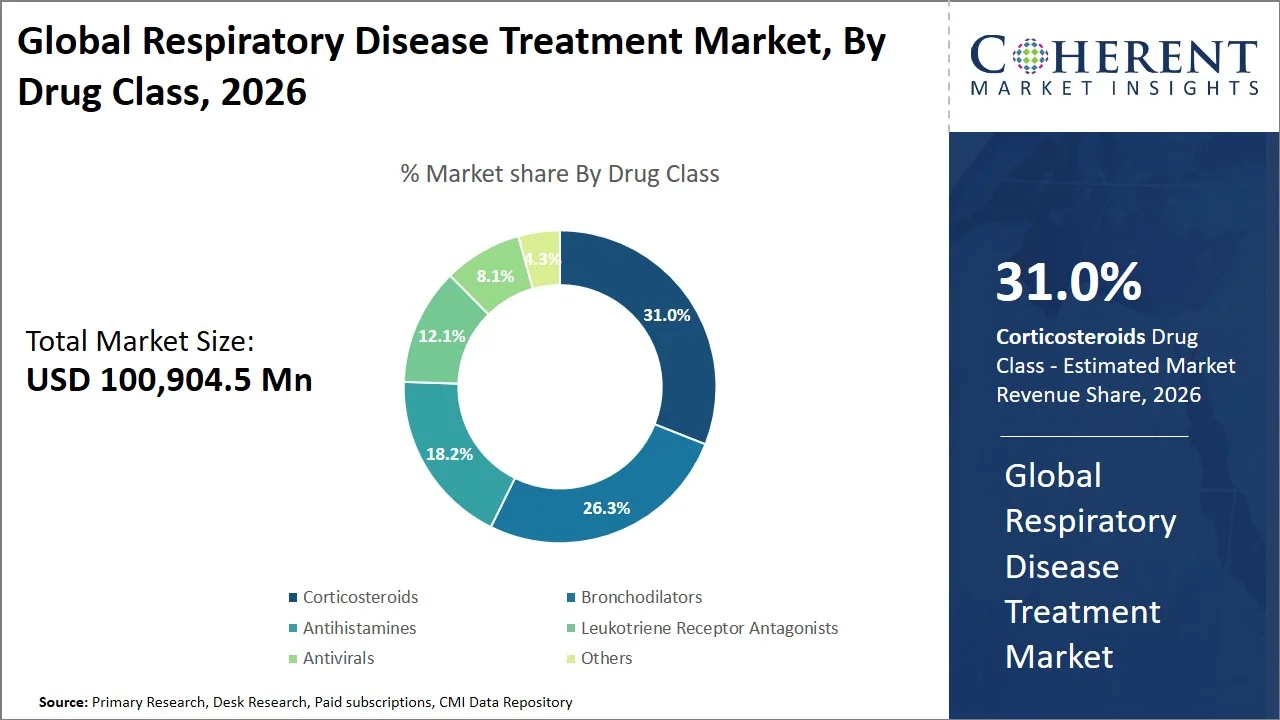
Why Do Corticosteroids Dominate the Global Respiratory Disease Treatment Market?
Corticosteroids are projected to hold the market share of 31.0% in 2026, due to its renowned anti-inflammatory effect and its substantial and established application in the treatment of asthma and COPD. Furthermore, its availability as an inhaled agent and an inhaled combination strengthens the rationale to widespread usage and as long-term maintenance treatment. For instance, in March 2026, the first generic version of fluticasone propionate inhalation aerosol was approved by the U.S. Food and Drug Administration (FDA), increasing the availability of a well-established inhaled corticosteroid for maintenance asthma therapy.
- Current Industry Events of 2026
- Market Size Estimation
- Regional Breakdown
- Competitive Landscape
- Customer Intelligence
- Segmental Analysis
- Pricing Analysis
- Key Market Drivers, Challenges & Future Trends
- Customized Insights Section
Why Does Chronic Obstructive Pulmonary Disease (COPD) Represent the Largest Application Segment in the Respiratory Disease Treatment Market?
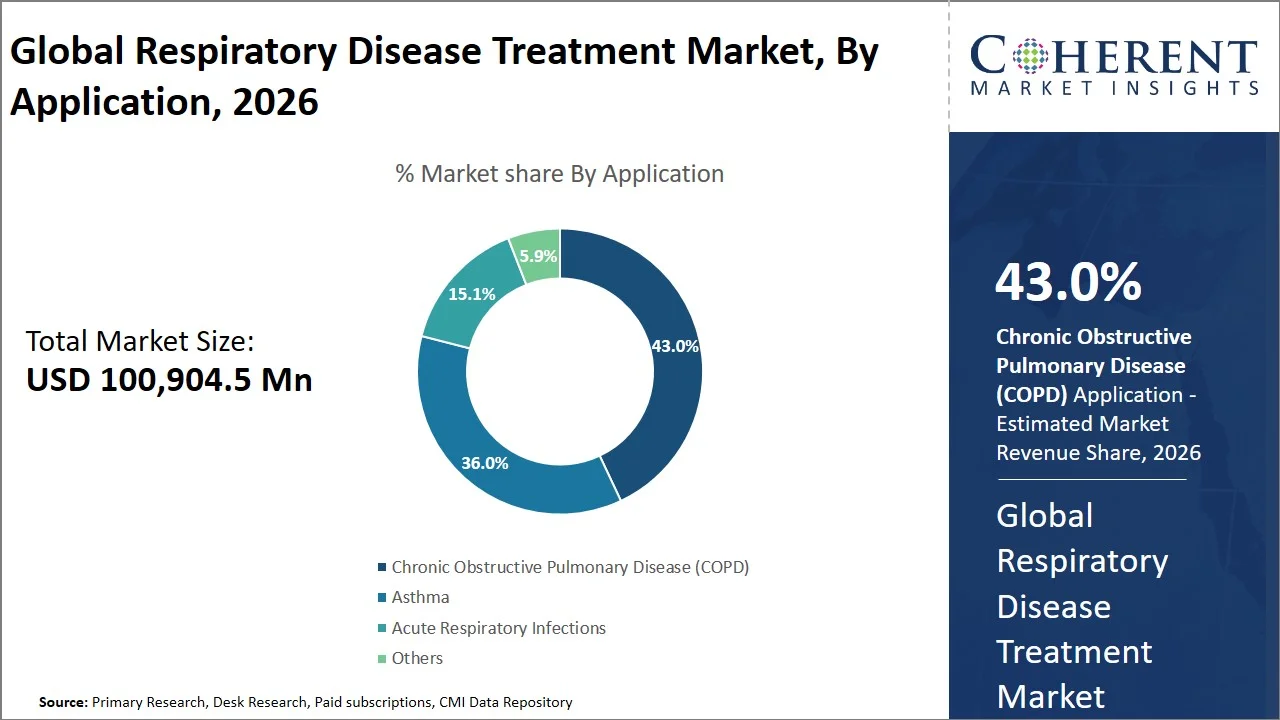
Chronic obstructive pulmonary disease (COPD) is projected to hold a market share of 43.0% in 2026, because the chronic, progressive nature of COPD requires ongoing demands for treatment maintenance therapy, prevention of exacerbation and treatment for symptom management. Increasing use of targeted therapies further broaden the perspective of therapies for patients still symptomatic while using regular inhaled therapies. For instance, in March 2025, the Dupixent (dupilumab) from Sanofi received its first biologic approval in the Japan, for adults with poorly controlled COPD and high levels of eosinophils in the blood.
Oral Segment Dominates the Global Respiratory Disease Treatment Market
The oral segment is projected to hold a market share of 44.5% in 2026, because it is convenient, simple for patient's self-administration and is available in different dosage forms like tablets, capsules and liquids for the purpose of patient treatment at home or in outpatient clinics. Furthermore, their easy administration to a variety of patient populations and in the management of long-term respiratory conditions provides an element of simplicity for each group. For instance, in December 2025, U.S. Food and Drug Administration (FDA) approved the first beclomethasone dipropionate aerosol, metered, inhalation product intended for the maintenance treatment of asthma, indicating ongoing regulators work to improve access to home based self-administered respiratory care.
Current Events and their Impact
Current Events | Description and its Impact |
AstraZeneca Secured Global Rights to an Investigational COPD Therapy from Sino Biopharmaceutical (July 2026) |
|
Zymeworks Agreed to Acquire Theravance Biopharma to Enter the Respiratory Market (June 2026) |
|
AstraZeneca’s Tozorakimab Demonstrated Positive Phase III Results in COPD (April 2026) |
|
Respiratory Disease Treatment Market Dynamics
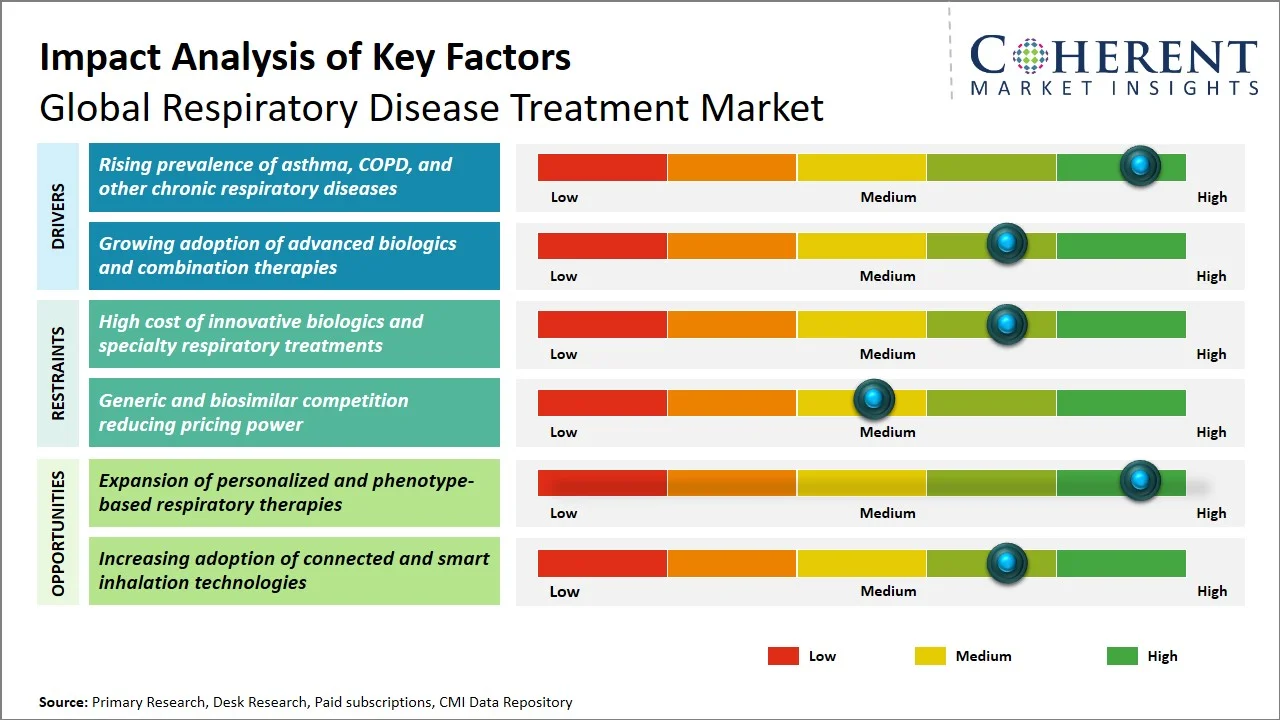
Market Drivers
- Rising prevalence of asthma, COPD, and other chronic respiratory diseases: The global respiratory disease treatment market is driven by the growing burden of chronic respiratory conditions, including asthma, COPD, bronchiectasis, and pulmonary fibrosis, alongside continued exposure to air pollution and other respiratory risk factors. This increasing disease burden is strengthening demand for long-term pharmacological management and advanced therapies that can reduce exacerbations and improve quality of life. For instance, in 2025, the European Commission launched the EU Respiratory Health Roadmap, emphasizing stronger prevention, earlier diagnosis, and improved management of chronic respiratory diseases across the European Union
- Growing adoption of advanced biologics and combination therapies: The global respiratory disease treatment market is being supported by the growing adoption of advanced biologics and combination therapies, which enable more targeted disease control and improved management of moderate-to-severe respiratory conditions. Long-acting biologics and multi-drug inhaled formulations are increasingly being developed to reduce exacerbations and simplify treatment regimens. For instance, in July 2026, the European Medicines Agency (EMA) issued a positive opinion for a new strength of Trixeo Aerosphere, a triple-combination inhaled therapy containing budesonide, formoterol, and glycopyrronium, with an expanded indication for asthma
- Increasing integration of digital technologies in respiratory treatment: Digital health technologies are increasingly being incorporated into respiratory care to enable remote monitoring, continuous assessment, and more data-driven disease management. Connected devices and digital tools can help track treatment response and disease progression while supporting more proactive management of chronic respiratory conditions. For instance, in July 2026, the U.S. Food and Drug Administration (FDA) launched its TEMPO pilot for digital health devices, supporting technologies designed to improve outcomes in chronic disease management and enable more continuous patient monitoring.
Emerging Trends
- Rise of inhaled biologics and lung-targeted therapies: Respiratory drug development is increasingly exploring inhaled delivery of biologics, peptides, and other advanced therapeutics to achieve higher pulmonary exposure while potentially limiting systemic effects. This approach is expanding beyond conventional small-molecule inhalers toward more sophisticated lung-targeted treatments.
- Growing adoption of smart inhalers and digital respiratory care: Connected inhalers, mobile applications, remote monitoring, and digital therapeutics are increasingly being integrated into respiratory management to track medication use, improve inhaler technique, and support adherence. These technologies are shifting treatment from episodic clinical intervention toward continuous, data-supported disease management.
- Increasing preference for simplified combination inhalers: Respiratory treatment is moving toward single-inhaler combination regimens that consolidate multiple active ingredients into one device, reducing dosing complexity for patients with chronic diseases. The trend is particularly relevant to COPD and asthma management, where treatment simplification can support adherence and sustained disease control.
Regional Insights
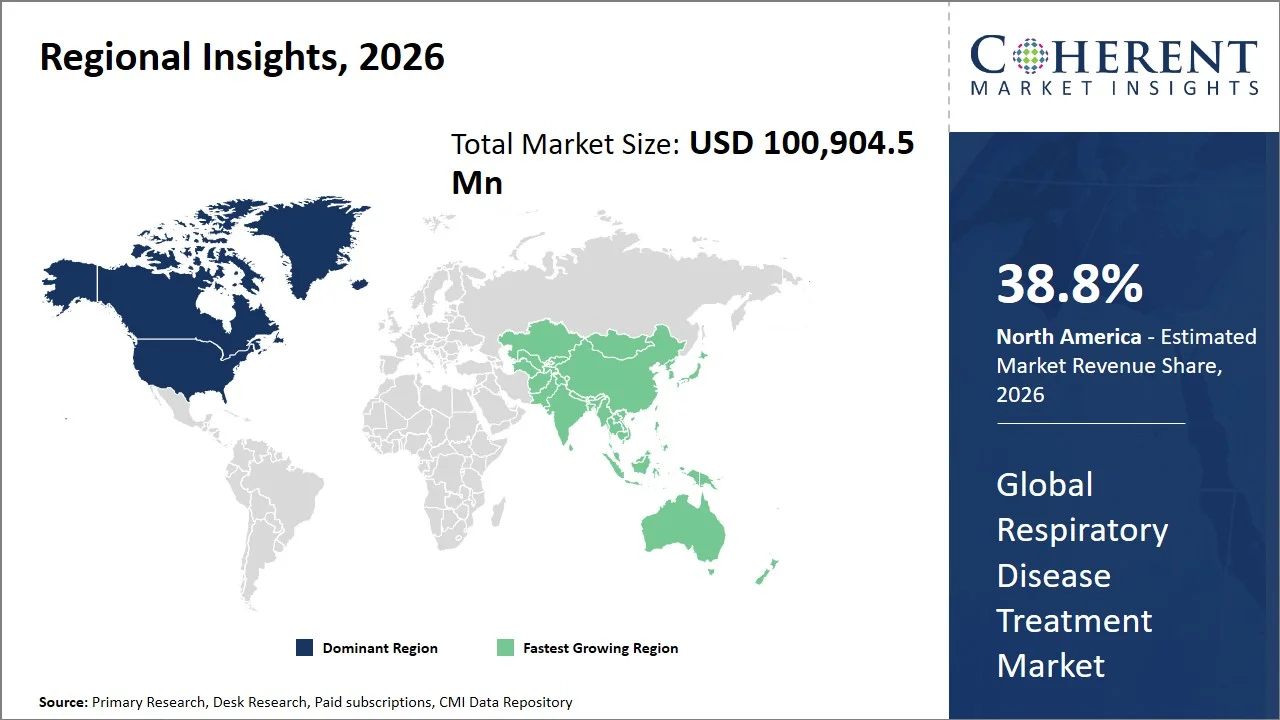
Why is North America a Strong Market for Respiratory Disease Treatment?
North America leads the global respiratory disease treatment market, accounting for an estimated 38.8% share in 2026, due to its well-established healthcare structure, robust research and development and an integrated respiratory-care industry. Widespread health insurance policies assist patients to access both existing and emerging treatments readily, while effective regulatory routes encourage quick product approvals and adoption of innovative treatments. For instance, Medicare Part D supplies prescription medicine coverage to beneficiaries, contributing to access to breathing medicaments using the country's medication insurance structure. (Source: Center for Medicare Advocacy)
Why Does Asia Pacific Respiratory Disease Treatment Market Exhibit High Growth?
Asia Pacific is expected to exhibit the fastest growth in the global respiratory disease treatment market, registering an estimated CAGR of 10.5% during 2026–2033. The region is projected to account for approximately 21.2% of the global market in 2026, fuelled by rapid urbanization, environmental pollution and increased cigarette smoking. Higher disposable income, increasing healthcare expenditure and medical infrastructure, is gaining access to novel treatments for respiratory diseases.
Furthermore, government policies aimed at improving healthcare access and investments in manufacturing capacities have helped in the local production of generic respiratory drugs and cost reduction for patients' adherence. For instance, India's Pharmaceutical Production Linked Incentive (PLI) scheme extends to complex drugs (generic) and endeavor to develop pharmaceutical industry in India and to enhance affordable medicine accessibility across the country. (Source: Department of Pharmaceuticals)
Global Respiratory Disease Treatment Market Outlook for Key Countries
Why is the U.S. Leading Innovation and Adoption in the Respiratory Disease Treatment Market?
The U.S. holds the largest market share for innovation and adoption in respiratory disease treatment market due to advancement of inhaled drug therapies and biologic medicines along with innovative technologies in pulmonary drug-delivery methods. The growing importance of lung targeted delivery, long duration therapies and disease symptom management is leading the market penetration of targeted therapies. Furthermore, robust expertise in complex drug formulation and drug-device integration are key to designing more patient-centric and accurate therapies for respiratory indications.
Is the UK a Favorable Market for Respiratory Disease Treatment Market?
The U.K. is a promising market for respiratory disease treatment driven by a robust respiratory ecosystem in UK and United NHS approach towards the earlier diagnosis, personalized treatments, and the implementation of community health programs. The market demonstrates consistent growing medical demand of respiratory therapies. For instance, 873,461emergency respiratory disease Admissions were reported in England in the financial year ending 2025. Furthermore, there is a growing focus on specific treatments, biologic therapies and digitally supported respiratory care which increases the UK’s capabilities to provide highly specialized treatments.
Is China Emerging as a Key Growth Hub for the Respiratory Disease Treatment Market?
China is becoming an important growth area in the respiratory disease treatment market due to its expedited drug-review mechanisms and innovation-driven drug development and accessibility to the medicines required by clinically unmet needs. The regulatory environment in China is becoming more favorably regulated to the development of innovative and clinically needed drugs, while China's enormous number of patients providing a huge opportunity for respiratory medicine.
Why Does Germany Top the European Respiratory Disease Treatment Market?
Germany leads the European respiratory disease treatment market driven by its significant respiratory patient population, a well-established system for specialized treatment and good integration of drug therapies into chronic disease management. An on-going demand for therapy of COPD, asthma and other chronic respiratory diseases contributes to the German market size. Moreover, the strong infrastructure and ability of adapting to new therapy solutions contribute the leading position in the European market.
Is Respiratory Disease Treatment Market Developing in Japan?
The respiratory disease treatment market in Japan is gradually expanding with higher level of focus on complex treatments for COPD, asthma and progressive pulmonary disease. Japan has witnessed a growing access to newer treatment modality and developing the clinical structure for effective use of specialized respiratory drugs. Additionally, the Japanese regulatory review has increasingly focused on treatments for patients not adequately controlled on current therapies, opening up the path for differentiated respiratory treatment.
Global Respiratory Disease Burden by Major Infectious Conditions, 2025
Indicator | 2025 Global Data |
Annual seasonal influenza cases | ~1 billion |
Severe influenza cases annually | 3–5 million |
Annual respiratory deaths from seasonal influenza | 290,000–650,000 |
Annual respiratory syncytial virus (RSV) hospitalizations in children <5 years | >3.6 million |
Annual respiratory syncytial virus (RSV) deaths in children <5 years | ~100,000 |
How is the expansion of personalized and phenotype-based respiratory therapies creating new growth opportunities in the respiratory disease treatment market?
The development of personalized and phenotype-driven therapies, especially in severe asthma and other heterogeneous respiratory conditions, offers an opportunity for the global respiratory disease treatment market. The advances in the discovery of biomarkers and patient stratification will allow the clinicians to match the therapeutics to specific diseases states and enhance treatment response and minimizing use of one size fits all therapeutic approach. For instance, in February 2026, Exdensur (depemokimab) received authorization from the European Medicines Agency (EMA) to be used in the management of type 2 inflammation–driven severe asthma in patients with high eosinophil blood counts, highlighting the expanding use of phenotype-specific treatments.
Market Players, Key Development, and Competitive Landscape
Key Developments
- On August 14, 2026, Shanghai Ark Biopharmaceutical Co., Ltd. (ArkBio) announced that the U.S. Food and Drug Administration (FDA) approved a Phase II clinical trial of its RSV antiviral drug, ziresovir (AK0529), in severely ill RSV-infected infants, including those requiring pediatric intensive care. The development expands clinical evaluation of a targeted antiviral treatment for severe respiratory syncytial virus infection.
- On August 10, 2026, Zydus Lifesciences launched REVAHALE (revefenacin), described as India’s first once-daily nebulized long-acting muscarinic antagonist (LAMA) for the maintenance treatment of chronic obstructive pulmonary disease (COPD). The product provides sustained 24-hour bronchodilation through a single daily dose and offers an alternative for patients who have difficulty using handheld inhalers.
- In April 2026, Amneal Pharmaceuticals, Inc. launched albuterol sulfate inhalation aerosol and beclomethasone dipropionate HFA inhalation aerosol in the U.S., marking the company’s first two metered-dose inhalation (MDI) products and expansion into the respiratory treatment category. Both products had received U.S. Food and Drug Administration (FDA) approval in 2025, broadening access to established inhaled therapies for respiratory conditions.
Competitive Landscape
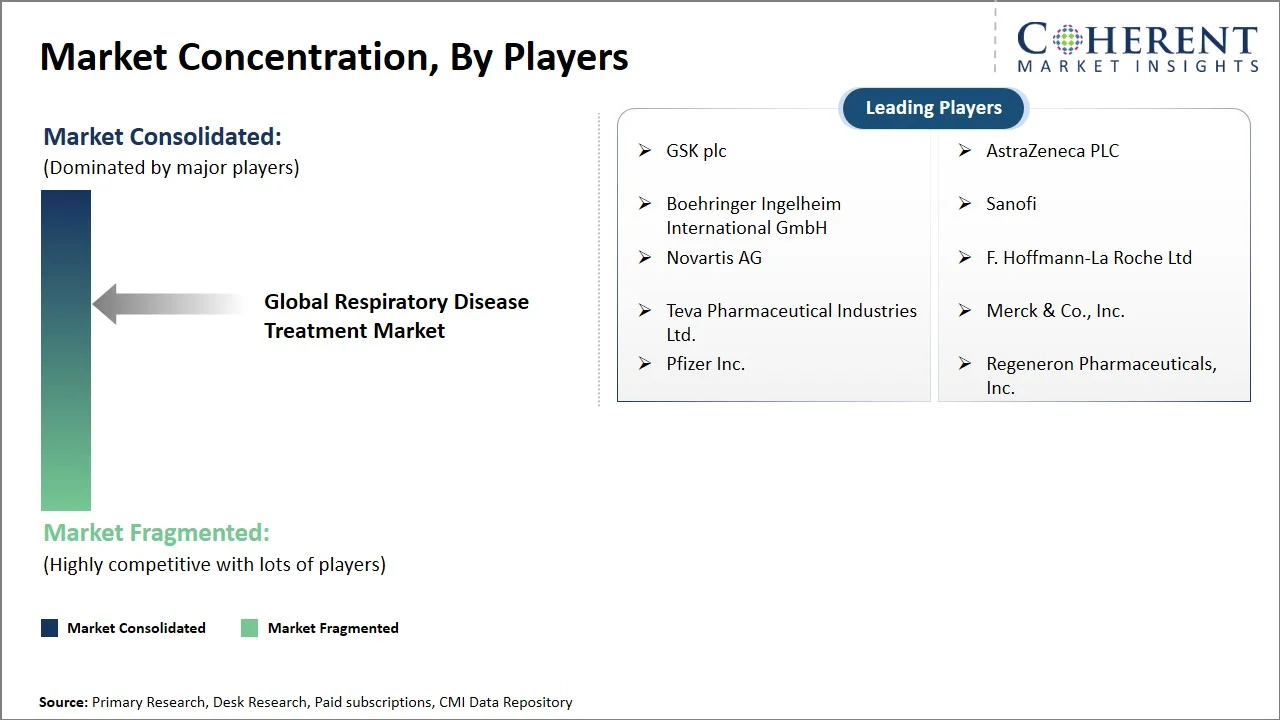
The global respiratory disease treatment market is moderately competitive, with industry activity increasingly centered on improving therapeutic efficacy, expanding treatment options, and enhancing patient-friendly drug delivery. Market development is focused on addressing diverse disease phenotypes across asthma, COPD, and other chronic respiratory conditions while improving long-term disease control. Increasing attention is also being placed on targeted therapies, combination treatments, and advanced inhalation technologies that can improve treatment outcomes and patient adherence. Regulatory development and clinical evaluation remain important areas as new respiratory therapies and drug-device combinations require demonstration of safety, efficacy, and consistent pulmonary delivery. Key focus areas include:
- Development of long-acting, combination, and targeted respiratory therapies
- Advancement of inhalation and nebulization technologies
- Expansion of biologic and precision-treatment approaches for severe asthma, COPD, and other complex respiratory conditions.
- Strengthening of clinical development, regulatory submissions, and indication expansion
Market Report Scope
Respiratory Disease Treatment Market Report Coverage
| Report Coverage | Details | ||
|---|---|---|---|
| Base Year: | 2025 | Market Size in 2026: | USD 100,904.5 Mn |
| Historical Data for: | 2020 To 2024 | Forecast Period: | 2026 To 2033 |
| Forecast Period 2026 to 2033 CAGR: | 9.8% | 2033 Value Projection: | USD 193,768.8 Mn |
| Geographies covered: |
| ||
| Segments covered: |
| ||
| Companies covered: | GSK plc, AstraZeneca PLC, Boehringer Ingelheim International GmbH, Sanofi, Novartis AG, F. Hoffmann-La Roche Ltd, Teva Pharmaceutical Industries Ltd., Merck & Co., Inc., Pfizer Inc., Regeneron Pharmaceuticals, Inc. | ||
| Growth Drivers: |
| ||
| Restraints & Challenges: |
| ||
Analyst Opinion (Expert Opinion)
- The global respiratory disease treatment industry is expected to move toward more targeted, personalized, and locally delivered therapies, with biologics, precision medicine, and advanced inhalation technologies gaining greater importance alongside established therapies. The increasing ability to identify disease phenotypes and match treatments to specific patient subgroups is likely to shift the market from broad symptom management toward more individualized disease control.
- The maximum opportunities are foreseen within biologic and targeted therapies for COPD and severe asthma in Asia-Pacific, particularly in countries such as China and India, where expanding respiratory-care capacity and large patient populations can support wider adoption of advanced treatments. Within product development, inhaled biologics and other lung-targeted delivery approaches offer an attractive area for addressing efficacy, systemic exposure, and treatment-adherence challenges.
- In order to gain a competitive advantage market players should prioritize integrated drug–device development, combining differentiated formulations with easy-to-use inhalation or nebulization systems rather than treating the drug and delivery platform separately. Building capabilities in patient phenotyping, biomarker-guided treatment selection, real-world evidence, and localized clinical development can further strengthen differentiation and support faster adoption across diverse respiratory-care settings.
Speak to the analyst
Want personalized insights?
Take the findings above to one of our principal consultants, or have the report rebuilt around the segments, geographies and competitors you actually track.
Market Segmentation
- Drug Class Insights (Revenue, USD Mn, 2021 - 2033)
- Corticosteroids
- Bronchodilators
- Antihistamines
- Leukotriene Receptor Antagonists
- Antivirals
- Others
- Application Insights (Revenue, USD Mn, 2021 - 2033)
- Chronic Obstructive Pulmonary Disease (COPD)
- Asthma
- Acute Respiratory Infections
- Others
- Route of Administration Insights (Revenue, USD Mn, 2021 - 2033)
- Oral
- Nasal
- Parenteral
- Distribution Channel Insights (Revenue, USD Mn, 2021 - 2033)
- Hospital Pharmacies
- Retail Pharmacies
- Online Pharmacies
- Regional Insights (Revenue, USD Mn, 2021 - 2033)
- North America
- U.S.
- Canada
- Latin America
- Brazil
- Argentina
- Mexico
- Rest of Latin America
- Europe
- Germany
- U.K.
- Spain
- France
- Italy
- Russia
- Rest of Europe
- Asia Pacific
- China
- India
- Japan
- Australia
- South Korea
- ASEAN
- Rest of Asia Pacific
- Middle East
- GCC Countries
- Israel
- Rest of Middle East
- Africa
- South Africa
- North Africa
- Central Africa
- North America
- Key Players Insights
- GSK plc
- AstraZeneca PLC
- Boehringer Ingelheim International GmbH
- Sanofi
- Novartis AG
- F. Hoffmann-La Roche Ltd
- Teva Pharmaceutical Industries Ltd.
- Merck & Co., Inc.
- Pfizer Inc.
- Regeneron Pharmaceuticals, Inc.
Sources
Primary Research Interviews
- Pulmonologists – treatment patterns for asthma, COPD, pulmonary hypertension, and other chronic respiratory diseases
- Respiratory physicians – prescribing trends for bronchodilators, corticosteroids, biologics, and combination therapies
- Respiratory therapists – adoption of inhalation therapies, nebulizers, and respiratory-support technologies
- Clinical researchers – clinical trials and development of novel respiratory disease treatments
- Hospital pharmacists – procurement and formulary preferences for respiratory medicines
- Medical affairs and clinical development executives – pipeline development, regulatory approvals, and adoption of innovative respiratory therapies
Stakeholders
- Pharmaceutical companies developing respiratory medicines and biologics
- Inhalation drug and respiratory-device manufacturers
- Hospitals and specialized respiratory care centers
- Pulmonary clinics and outpatient respiratory-care providers
- Clinical research organizations and respiratory research institutions
- Patient advocacy and respiratory disease organizations
- End-use Sectors
- Specialized Respiratory Disease Treatment centers
- Hospitals and academic medical centers
- Organ procurement organizations
- Cardiac and transplant research institutions
- Regulatory & Health Bodies
- U.S. Food and Drug Administration (FDA)
- European Medicines Agency (EMA)
- Medicines and Healthcare products Regulatory Agency (MHRA), UK
- National Medical Products Administration (NMPA), China
- Pharmaceuticals and Medical Devices Agency (PMDA), Japan
- Health Canada
- Therapeutic Goods Administration (TGA), Australia
- World Health Organization (WHO)
Databases
- ClinicalTrials.gov – respiratory disease clinical trials and investigational treatments
- FDA Drugs@FDA – approved respiratory medicines, labels, and regulatory information
- FDA Orange Book – approved drug products and therapeutic-equivalence information
- WHO Global Health Observatory (GHO) – respiratory disease burden, mortality, and health indicators
- WHO Global Health Estimates – respiratory disease mortality and disease-burden estimates
- CDC National Center for Health Statistics (NCHS) – U.S. respiratory disease morbidity and mortality statistics
- Eurostat – European health, mortality, and healthcare-utilization statistics
Associations
- American Thoracic Society (ATS)
- European Respiratory Society (ERS)
- American College of Chest Physicians (CHEST)
- Global Initiative for Asthma (GINA)
- Global Initiative for Chronic Obstructive Lung Disease (GOLD)
- American Lung Association
- International Union Against Tuberculosis and Lung Disease (The Union)
Public Domain Sources
- World Health Organization (WHO) – global respiratory disease burden, treatment guidance, risk factors, and health-system priorities.
- U.S. Centers for Disease Control and Prevention (CDC) – asthma, COPD, respiratory mortality, prevalence, and healthcare statistics.
- U.S. Food and Drug Administration (FDA) – respiratory drug approvals, safety communications, labeling, and regulatory updates.
- European Medicines Agency (EMA) – European authorization and regulatory information for respiratory medicines.
- WHO European Region – regional respiratory disease prevalence, mortality, treatment access, and healthcare priorities.
- National Center for Health Statistics (NCHS) – U.S. mortality and health statistics for respiratory diseases.
- Eurostat – European population, health, mortality, and healthcare statistics.
- U.S. Environmental Protection Agency (EPA) – air-quality and pollution data relevant to respiratory disease risk.
- Institute for Health Metrics and Evaluation (IHME) – Global Burden of Disease estimates for respiratory disease prevalence, mortality, and disability.
Proprietary Elements
- CMI Data Analytics Tool, Proprietary CMI Existing Repository of information for last 10 years.
Get access to 250+ pages report
Every segment, forecast, competitor profile and data table behind the analysis above — available for instant download.
- ESOMAR Member
- ISO 9001:2015 Certified
- D-U-N-S Registered
- GDPR & CCPA Compliant
Missing comfort of reading report in your local language? Find your preferred language:
Transform your Strategy with Exclusive Trending Reports
Frequently Asked Questions
Advances in inhalation devices, targeted drug delivery, biologics, and digital monitoring technologies are improving treatment precision, convenience, and disease management.
Personalized respiratory care uses patient characteristics, biomarkers, and disease phenotypes to guide treatment selection and improve therapeutic outcomes.
COPD requires long-term pharmacological management to control symptoms, reduce exacerbations, and maintain lung function and quality of life.
Inhalers deliver measured doses through handheld devices, whereas nebulizers convert liquid medication into an inhalable aerosol over a longer administration period.
The market is evolving toward targeted therapies, long-acting formulations, combination treatments, advanced drug-delivery systems, and personalized respiratory care.
Population aging increases the need for long-term management of chronic respiratory conditions and supports demand for maintenance therapies and advanced treatment options.
Inhalers and nebulizers are essential for delivering respiratory medicines effectively, with device design influencing dose delivery, usability, and treatment adherence.