

Global Retinal Drugs Market Size and Forecast – 2026 To 2033
The global retinal drugs market is expected to grow from USD 24.18 Bn in 2026 to USD 41.17 Bn by 2033, registering a compound annual growth rate (CAGR) of 7.9% from 2026 to 2033. The market for global retinal drugs is poised for significant expansion, fueled by the soaring global burden of diabetes and associated retinal complications.
According to the International Diabetes Federation (IDF), 589 million adults were living with diabetes in 2024, with the number projected to reach 853 million by 2050, expanding the population at risk of diabetic retinopathy and diabetic macular edema.
Key Takeaways of the Global Retinal Drugs Market
- Anti-VEGF agents are projected to hold 74.3 % of the global retinal drugs market share in 2026, making it dominant drug class segment, across Europe due to established reimbursement and procurement pathways for medical-retinal therapies. For instance, NHS England’s 2026 commissioning framework covers anti-VEGF medicines for wet AMD, diabetic macular edema, and retinal vein occlusion, with the framework implemented nationally from December 2025.
- Age-related macular degeneration (AMD) is projected to hold 53.7 % of the global retinal drugs market share in 2026, making it dominant indication segment, across North America where AMD represents a major focus of retinal treatment and clinical care. For instance, the U.S. FDA maintains a dedicated regulatory pathway for therapies targeting neovascular AMD, while the growing pipeline of longer-duration treatments is expanding options for reducing treatment burden.
- Intravitreal is projected to hold 81.4 % of the global retinal drugs market share in 2026, making it dominant route of administration segment, with Asia Pacific representing an important expansion region as countries strengthen organized eye-care services. For instance, the WHO South-East Asia Regional Office's 2022–2030 eye-care action plan targets regular diabetic-retinopathy screening for at least 80% of people with diabetes and treatment for 80% of those with sight-threatening disease, supporting expansion of retinal-care pathways across the region.
- North America market maintains dominance with an expected share of 42.6 % in 2026, bolstered by advanced retinal-care infrastructure, established reimbursement pathways, and continued public investment in retinal research. For instance, the U.S. National Eye Institute’s FY2027 budget request includes USD 330.1 million for retinal disease research, supporting continued development of new therapeutic approaches for retinal disorders.
- Asia Pacific is expected to exhibit the fastest growth in the global retinal drugs market, registering an estimated CAGR of 9.5 % during 2026–2033, propelled by expanding retinal-care infrastructure and government-led eye-health programs. For instance, China’s National Health Commission formulated the 14th Five-Year National Eye Health Plan (2021–2025), which included strengthening prevention and management of diabetic eye disease and expanding eye-health services across the country. This policy-level focus supports the development of broader pathways for retinal disease detection and treatment in the region.
Segmental Insights
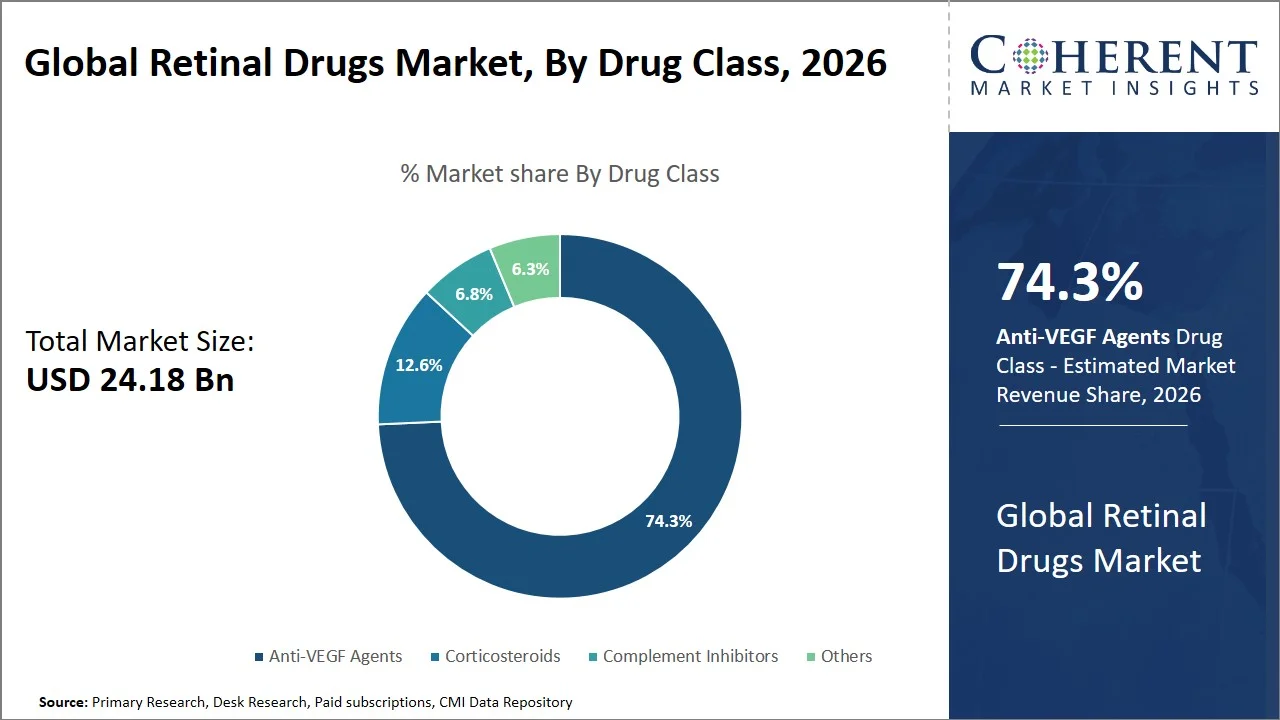
Why Do Anti-VEGF Agents Dominate the Global Retinal Drugs Market?
Anti-VEGF agents are projected to hold the market share of 74.3% in 2026, based on their long-standing use in regulating excessive vascular proliferation and leakage of the retina in primary conditions like age-related macular degeneration (AMD), diabetic macular edema, and retinal vein occlusion. Increased application is being observed of VEGF inhibitors owing to broad use in the clinic and proven treatment approaches for long-term drug treatment where recurrences necessitate ongoing treatment. For instance, in October 2025 U.S. Food and Drug Administration (FDA) approved EYDENZELT (aflibercept-boav), a VEGF inhibitor, to treat wet AMD, macular edema secondary to retinal vein occlusion, diabetic macular edema (DME), and diabetic retinopathy, demonstrating the continued expansion of anti-VEGF therapy across diverse retinal indications.
- Current Industry Events of 2026
- Market Size Estimation
- Regional Breakdown
- Competitive Landscape
- Customer Intelligence
- Segmental Analysis
- Pricing Analysis
- Key Market Drivers, Challenges & Future Trends
- Customized Insights Section
Why Does Age-Related Macular Degeneration (AMD) Represent the Largest Indication Segment in the Retinal Drugs Market?
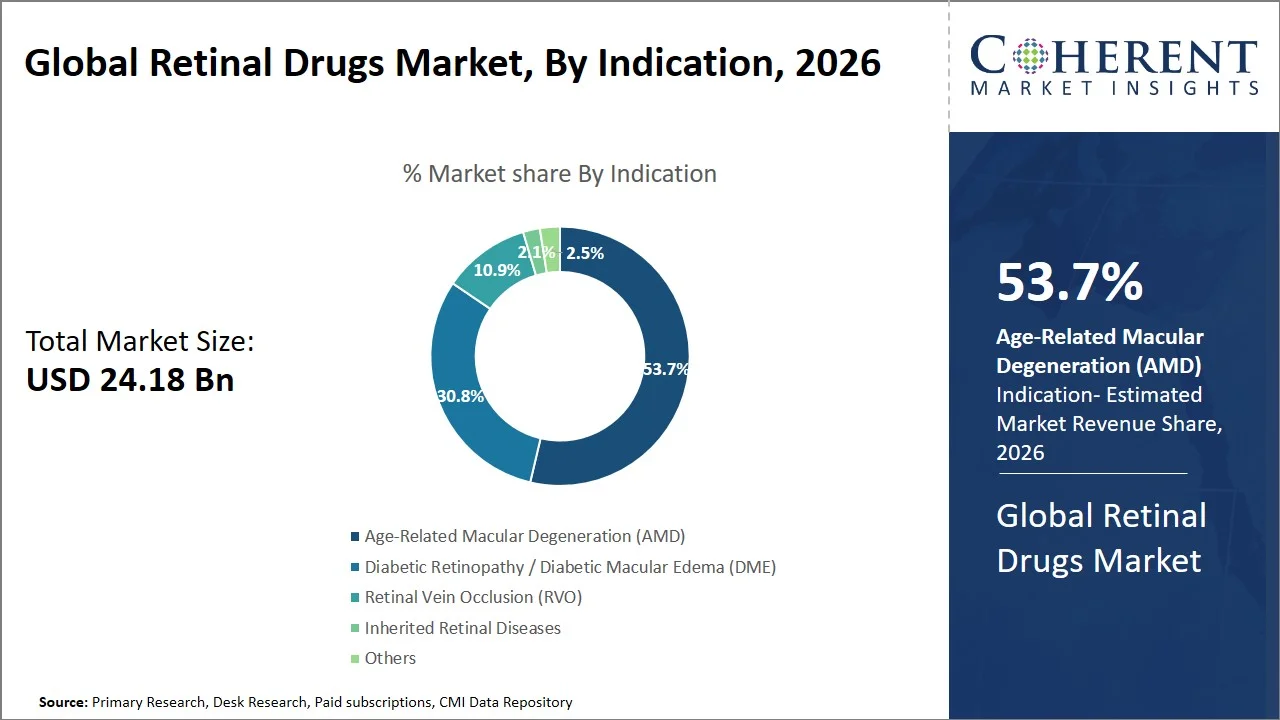
Age-related macular degeneration (AMD) is projected to hold a market share of 53.7% in 2026, owing to enormous disease burden in geriatric population and the presence of significant market opportunity. Several pharmacological agents are used to manage the vision threatening disease and the market is gaining momentum from high income healthcare systems. For instance, in June 2025, NHS England released a national procurement framework for medical retinal vascular medicines for neovascular (wet) AMD and other conditions of the retina. It applies for the period of December 2025 to May 2027. This sets up a firm procurement route for the medical medicines for retinal disease in treatment of AMD and maintains institutional demand over time.
Intravitreal Segment Dominates the Global Retinal Drugs Market
The intravitreal segment is projected to hold a market share of 81.4% in 2026, owing to the delivery of higher concentrations into the posterior segment, with minimum systemic exposure. Existing use within multiple indications like age-related macular degeneration (AMD), diabetic macular edema, diabetic retinopathy, and retinal vein occlusion ensures wide clinical application and repeated treatments needed among the patients. For instance, to ensure patient safety, the U.S. Food and Drug Administration (FDA) has stringent standards in the form of current good manufacturing practice (CGMP) for sterile ophthalmic drug products according to 21 CFR Parts 210 and 211. Products that are intended to be sterile must include validated processes that prevent microbial contamination, along with established sterility testing methods.
Current Events and their Impact
Current Events | Description and its Impact |
India Strengthened Regulatory Monitoring of Diabetes Therapies for Retinal Risk (January 2026) |
|
NHS Expanded Diabetic Eye Screening Grading Framework (December 2025) |
|
India Revised National Guidelines for Diabetic Retinopathy Management (November 2025) |
|
Retinal Drugs Market Dynamics
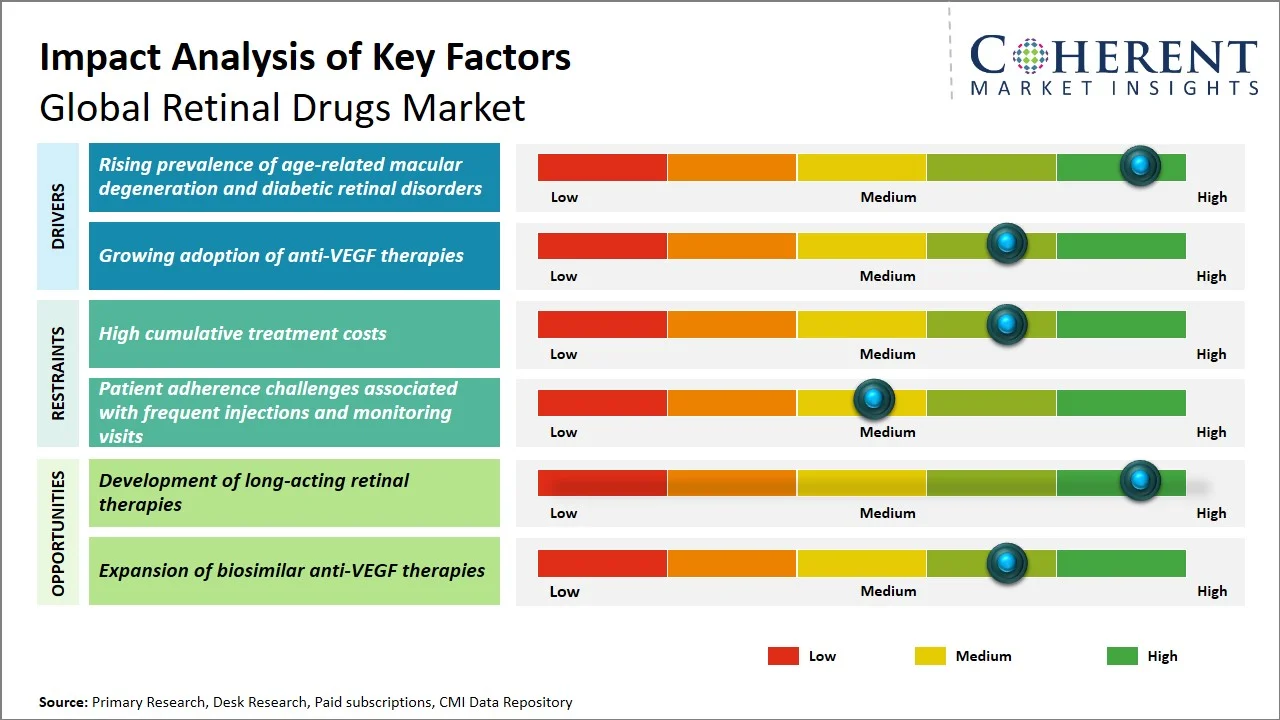
Market Drivers
- Rising prevalence of age-related macular degeneration and diabetic retinal disorders: The growing burden of age-related macular degeneration and diabetic retinal disorders is expanding the global patient pool requiring pharmacological intervention and long-term disease management. Aging populations and the increasing prevalence of diabetes are expected to sustain demand for retinal therapies, particularly anti-VEGF and other disease-modifying treatments. For instance, the World Health Organization (WHO) reports that AMD accounts for 8 million cases of distance vision impairment or blindness globally, while diabetic retinopathy accounts for 3.9 million cases, highlighting the substantial disease burden requiring retinal-care interventions.
- Growing adoption of anti-VEGF therapies: Increasing clinical acceptance of anti-VEGF therapy is strengthening demand for retinal drugs, particularly as these agents have become a key treatment option for diabetic macular edema and proliferative diabetic retinopathy. Wider use across chronic retinal conditions is also supporting recurring treatment demand and expanding the addressable patient population. For instance, the American Diabetes Association’s 2026 Standards of Care identify intravitreal anti-VEGF injections as first-line treatment for most eyes with center-involved diabetic macular edema and as an effective option for proliferative diabetic retinopathy.
- Growing demand for longer-acting retinal therapies: The need to reduce the frequency of intravitreal injections is increasing demand for retinal therapies that provide longer-lasting disease control. This is particularly important for chronic conditions such as AMD and diabetic macular edema, where repeated treatment can create substantial adherence and healthcare-visit burdens. For instance, the American Academy of Ophthalmology identifies reduced treatment burden and long-acting/sustained delivery as major unmet needs among retina specialists, with up to 75.2% of surveyed physicians citing reduced treatment burden as a priority.
Emerging Trends
- Shift toward long-acting retinal therapies: Drug developers are increasingly focusing on sustained-release implants and extended-duration formulations to reduce the frequency of intravitreal injections and improve treatment adherence, particularly in chronic AMD and diabetic retinal diseases.
- Rapid expansion of anti-VEGF biosimilars: Patent expiries for established anti-VEGF therapies are accelerating biosimilar development, increasing price competition and creating more affordable treatment options across retinal-care markets.
- Expansion of gene therapy beyond inherited retinal diseases: Retinal gene-therapy development is increasingly extending toward acquired conditions such as AMD and diabetic retinopathy, with newer viral and non-viral delivery approaches being explored to provide longer-lasting therapeutic effects.
Regional Insights
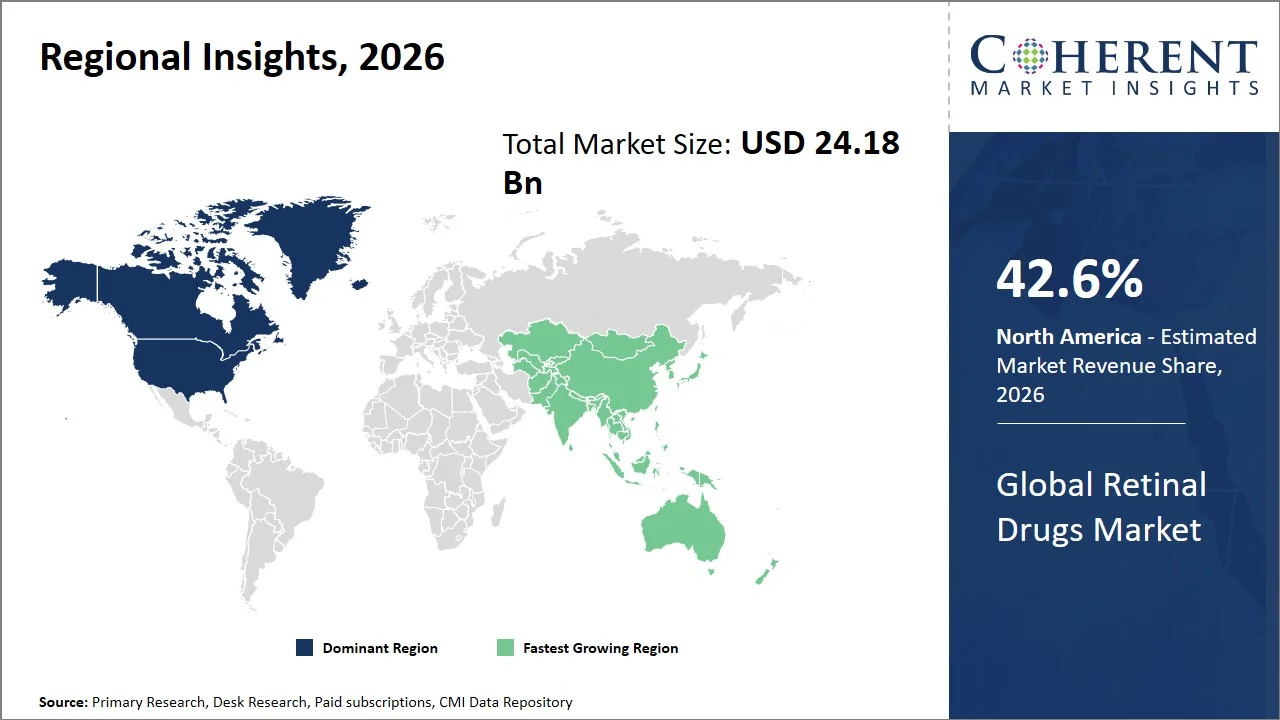
Why is North America a Strong Market for Retinal Drugs?
North America leads the global retinal drugs market, accounting for an estimated 42.6% share in 2026, owing to better retinal care system infrastructure, higher adoption rates of latest medical equipment and technology and robust R&D investments in ophthalmic therapy. The higher penetration into North America is driven by greater access to modern therapies in a structured manner and proper reimbursement framework in place for the novel retinal drugs. Proactive government initiatives, such as speedy approval from the Food and Drug Administration (FDA) and allocation of funds for ocular disease research further boosts market penetration. For instance, the U.S. National Eye Institute’s fiscal year 2027 budget proposal dedicates USD 330.1 million of the budget proposal solely to the treatment of retinal diseases, covering the research of drug, genetic, molecular and regenerative therapies for retinal disorders.
Why Does Asia Pacific Retinal Drugs Market Exhibit High Growth?
Asia Pacific is expected to exhibit the fastest growth in the global retinal drugs market, registering an estimated CAGR of 9.5% during 2026–2033. The region is projected to account for approximately 23.1% of the global market in 2026, attributed to growing prevalence of diabetes, an aging population base, along with increasing healthcare spending. Supportive government initiatives aiming to ensure wider access to advanced medical procedures, lenient regulatory reforms and the collaborations across the private and public sector contribute to a larger share of the Asian markets.
For instance, India's National Programme for Control of Blindness and Visual Impairment (NPCBVI) extended beyond the care of cataracts to include diabetic retinopathy and vitreoretinal diseases and utilised mobile ophthalmic care units and tele-ophthalmology networks to take eye care services to under-served remote regions. (Source: Directorate General of Health Services) Additionally, investment in healthcare delivery structures and capabilities in pharmaceuticals further bolster the reach of available retinal drugs.
Global Retinal Drugs Market Outlook for Key Countries
Why is the U.S. Leading Innovation and Adoption in the Retinal Drugs Market?
The U.S is at the forefront of innovation and adoption due to its broad clinical-development ecosystem for AMD and diabetic retinal diseases combined with a dynamic pipeline of long-acting anti-VEGF and retinal gene therapies. U.S. intravitreal gene therapies in development aim to deliver stable intraocular expression of anti-VEGF proteins by limiting the need for recurring injections. While the FDA’s 2026 regulatory pathways for cell and gene therapies will further facilitate the continued development of new retinal approaches.
Is UK a Favorable Market for Retinal Drugs Market?
U.K. is highly positive for retinal medicines due to integration within NHS treatment & commissioning frameworks. Specifically, the NHS England framework of 2026 covers conditions including wet AMD, DME, RVO and establishes national treatment algorithms, best value procurement guidance with regards to anti-VEGF agents and intravitreal steroids. The opportunity for retinal drugs is further underlined by the diseases, which affect an enormous portion of the UK population with over 700,000 suffering from AMD, whilst approximately 4.6 million UK individuals had a diabetes diagnosis in England in 2023/24 with further complications.
Is China Emerging as a Key Growth Hub for the Retinal Drugs Market?
In China, the market growth trend for retinal drugs is rising prominently due to the increase in overall capacity, higher detection rates for retinal diseases and the improvement of access to specific treatments. Early diagnoses and treatment of conditions including retinopathy caused by diabetes, macular degeneration, and vascular retinal problems are highlighted as goals for the country by the National Health Commission. The government is also advocating for eye-fundus screening at the primary level with links for patients to referral services at top hospitals. The potential for these treatments and drugs is enhanced further in China as a result of pharmaceutical regulatory reforms designed to speed up review of needed innovative medications, as well as provide easier access for medical facilities to new therapies.
Why Does Germany Top the European Retinal Drugs Market?
Germany leads the European retinal drugs market driven by country’s well-established reimbursement and health technology assessment mechanisms for retinal drugs, specifically for AMD and similar chronic retinal conditions. The country has established procedures for assessing innovative retinal treatment methods in its statutory health insurance system. For instance, in January 2026, Germany’s Federal Joint Committee (G-BA) reached a determination about an intravitreal drug-delivery system used for the treatment of neovascular AMD under § 137h SGB V, indicating that longer-acting retinal drug delivery systems are being analyzed by the German health care system.
Is Retinal Drugs Market Developing in Japan?
Japan is poised to emerge as an exciting retinal drug market driven by robust regulatory review processes for medicines targeting prior “hard-to-treat” indications and the growing treatment-pipeline of new clinical development assets. The Japanese MHLW/PMDA utilized its new conditional approval pathway for a targeted intravitreal therapy for geographic atrophy, a complication of the dry form of AMD in 2025 given no approved treatments and high unmet medical need in the region. Such pathways accelerate the approval of novel retinal therapeutics and provide additional real-world data.
Retinal Drug Treatment Patterns by Indication
Indication | Dominant / commonly used therapy | Key treatment insight |
Age-Related Macular Degeneration (AMD) | Anti-VEGF | Largest retinal-drug treatment pool and major driver of intravitreal therapy |
Diabetic Macular Edema (DME) | Anti-VEGF | Increasing reliance on anti-VEGF therapy for vision-threatening disease |
Retinal Vein Occlusion (RVO) | Anti-VEGF | Intravitreal pharmacotherapy is widely used to manage macular edema |
Inherited Retinal Diseases | Gene therapy / emerging therapies | Shift toward potentially durable, disease-modifying treatment |
Other Retinal Disorders | Corticosteroids / other therapies | Treatment varies according to underlying retinal pathology |
How is the development of long-acting retinal therapies creating new growth opportunities in the retinal drugs market?
The advances in long-acting retinal therapy represent a significant new Avenue in reducing the overall burden of care incurred by the need for regular intravitreal injections of therapy agents used in the long term for chronic retinal conditions. Sustained-release implants as well as cell-based delivery devices allow extended local administration of a drug or therapeutic protein over a long period time which can lead to decreasing frequency or the number of administrations, and thus lead to better compliance for treatment. For instance, in August 2025, the National Eye Institute published a trial of implant therapy that steadily delivers a therapeutic protein, with trial data showing retinal cell preservation of as long as 24 months in people with MacTel. Such results bolster the idea of utilizing long-lasting delivery systems to evolve beyond currently accepted repetitive injection techniques.
Market Players, Key Development, and Competitive Landscape
Key Developments
- On August 17, 2026, EyePoint, Inc. announced topline data from the pivotal Phase 3 LUGANO trial evaluating DURAVYU (vorolanib intravitreal insert) 2.7 mg in patients with wet age-related macular degeneration (AMD). The trial is part of a two-study Phase 3 program designed to evaluate six-month dosing and reduce treatment burden compared with aflibercept. The development could support the expansion of long-acting treatment options in the retinal drugs market.
- In July 2026, Outlook Therapeutics, Inc. announced U.S. FDA approval of LYTENAVA (bevacizumab-vikg) for the treatment of neovascular age-related macular degeneration (wet AMD). The approval makes LYTENAVA the first and only U.S. FDA-approved ophthalmic formulation of bevacizumab for wet AMD in the U.S., providing a purpose-built intravitreal option. The approval strengthens competition in the anti-VEGF segment and expands the range of U.S. FDA-approved retinal therapies.
- In July 2026, Harrow, Inc. announced the U.S. commercial launch of BYOOVIZ (ranibizumab-nuna), an FDA-approved interchangeable biosimilar to Lucentis, for wet AMD, retinal vein occlusion, and myopic choroidal neovascularization. The launch expands access to anti-VEGF therapy and strengthens competition within the U.S. retinal therapeutics market.
Competitive Landscape
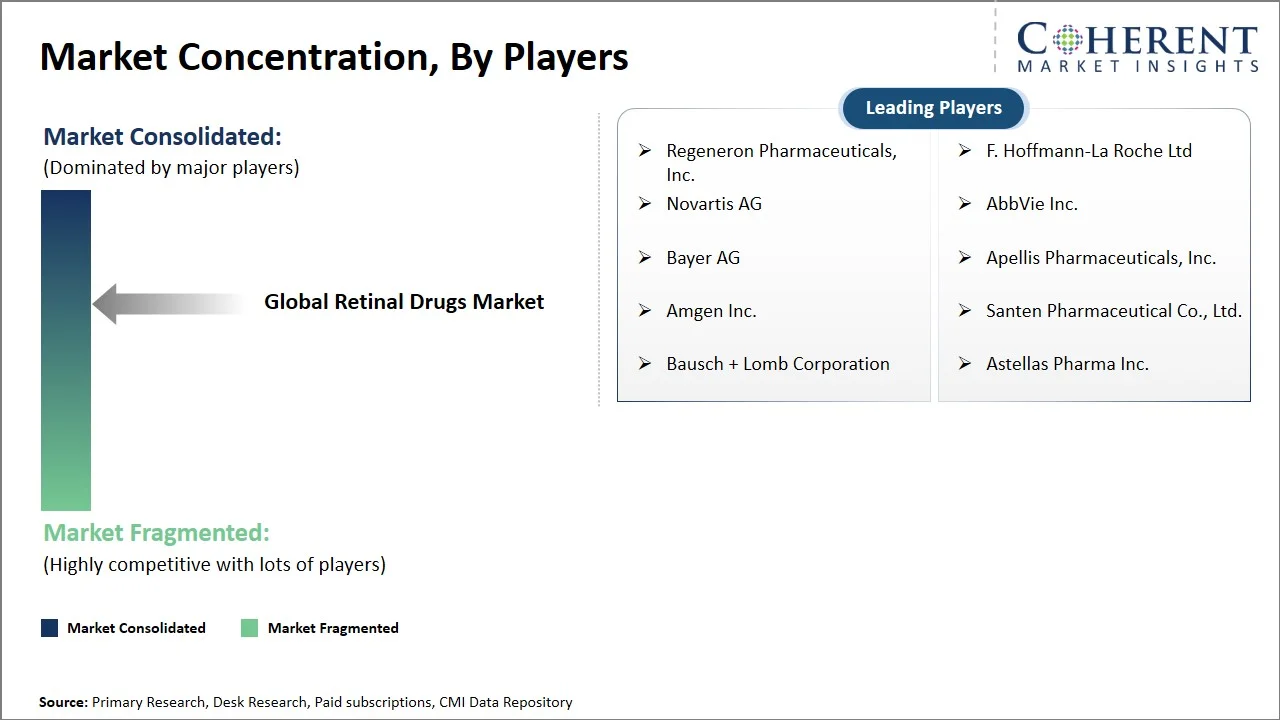
The global retinal drugs market is moderately competitive, with competition increasingly centered on treatment durability, clinical efficacy, mechanism-of-action differentiation, affordability, and expansion beyond conventional anti-VEGF therapies. Market participants are differentiating through longer dosing intervals, bispecific mechanisms, complement inhibition, biosimilars, and gene-based approaches. The competitive environment is also being shaped by clinical evidence, regulatory milestones, manufacturing capabilities, and the ability to reduce the treatment burden associated with repeated intravitreal injections. Key focus areas include:
- Development of long-acting and extended-dose retinal therapies
- Expansion of anti-VEGF biosimilars
- Development of multi-target and novel-mechanism therapies, including VEGF/Ang-2 inhibition and complement-pathway modulation
- Advancement of retinal gene therapies targeting durable treatment of AMD, diabetic retinopathy, and inherited retinal diseases
- Expansion of differentiated delivery platforms, including sustained-release implants and subretinal or intravitreal gene-delivery approaches
- Strengthening of clinical evidence and regulatory positioning
Market Report Scope
Retinal Drugs Market Report Coverage
| Report Coverage | Details | ||
|---|---|---|---|
| Base Year: | 2025 | Market Size in 2026: | USD 24.18 Bn |
| Historical Data for: | 2020 To 2024 | Forecast Period: | 2026 To 2033 |
| Forecast Period 2026 to 2033 CAGR: | 7.9% | 2033 Value Projection: | USD 41.17 Bn |
| Geographies covered: |
| ||
| Segments covered: |
| ||
| Companies covered: | Regeneron Pharmaceuticals, Inc., F. Hoffmann-La Roche Ltd, Novartis AG, AbbVie Inc., Bayer AG, Apellis Pharmaceuticals, Inc., Amgen Inc., Santen Pharmaceutical Co., Ltd., Bausch + Lomb Corporation, Astellas Pharma Inc. | ||
| Growth Drivers: |
| ||
| Restraints & Challenges: |
| ||
Analyst Opinion (Expert Opinion)
- In the coming years, the global retinal drugs market is expected to move toward a lower-frequency, more durable treatment model. Conventional anti-VEGF therapies will remain commercially important, but the next phase of competition will increasingly center on sustained-release technologies, longer dosing intervals, bispecific mechanisms, complement inhibition, and gene-based therapies. The ability to maintain efficacy while reducing repeated injections is expected to become a key measure of therapeutic value.
- The maximum opportunities are foreseen within long-acting therapies for wet age-related macular degeneration (AMD) in the U.S. The combination offers a large established treatment population and a clear opportunity to reduce the burden of repeated intravitreal injections. Within this space, therapies capable of extending treatment intervals without compromising visual outcomes are likely to command stronger physician and patient preference and capture premium positioning.
- In order to gain a competitive advantage market players should compete on treatment burden, not simply on the availability of another retinal therapy. The strongest differentiation will come from combining longer durability with convenient administration, consistent efficacy, safety, and competitive treatment economics. Players should also build indication-specific strategies and strengthen patient-access programs to convert clinical advantages into sustained adoption and market share.
Speak to the analyst
Want personalized insights?
Take the findings above to one of our principal consultants, or have the report rebuilt around the segments, geographies and competitors you actually track.
Market Segmentation
- Drug Class Insights (Revenue, USD Bn, 2021 - 2033)
- Anti-VEGF Agents
- Corticosteroids
- Complement Inhibitors
- Others
- Indication Insights (Revenue, USD Bn, 2021 - 2033)
- Age-Related Macular Degeneration (AMD)
- Diabetic Retinopathy / Diabetic Macular Edema (DME)
- Retinal Vein Occlusion (RVO)
- Inherited Retinal Diseases
- Others
- Route of Administration Insights (Revenue, USD Bn, 2021 - 2033)
- Intravitreal
- Subretinal
- Others
- Regional Insights (Revenue, USD Bn, 2021 - 2033)
- North America
- U.S.
- Canada
- Latin America
- Brazil
- Argentina
- Mexico
- Rest of Latin America
- Europe
- Germany
- U.K.
- Spain
- France
- Italy
- Russia
- Rest of Europe
- Asia Pacific
- China
- India
- Japan
- Australia
- South Korea
- ASEAN
- Rest of Asia Pacific
- Middle East
- GCC Countries
- Israel
- Rest of Middle East
- Africa
- South Africa
- North Africa
- Central Africa
- North America
- Key Players Insights
- Regeneron Pharmaceuticals, Inc.
- Hoffmann-La Roche Ltd
- Novartis AG
- AbbVie Inc.
- Bayer AG
- Apellis Pharmaceuticals, Inc.
- Amgen Inc.
- Santen Pharmaceutical Co., Ltd.
- Bausch + Lomb Corporation
- Astellas Pharma Inc.
Sources
Primary Research Interviews
- Retina specialists and ophthalmologists – assessment of retinal disease treatment patterns, anti-VEGF utilization, injection frequency, treatment response, and adoption of emerging retinal therapies.
- Ophthalmology and retinal-care department heads – insights into AMD, diabetic retinopathy, DME, RVO, and inherited retinal disease treatment pathways.
- Hospital pharmacists and formulary managers – evaluation of retinal-drug procurement, biosimilar adoption, pricing, reimbursement, and formulary inclusion.
- Clinical researchers and retinal therapeutics specialists – assessment of long-acting therapies, gene therapies, complement inhibitors, and emerging mechanisms.
- Pharmaceutical regulatory and market-access professionals – evaluation of regulatory requirements, reimbursement pathways, clinical-trial development, and market-entry strategies for retinal drugs.
Stakeholders
- Retinal drug manufacturers and biotechnology companies – development and commercialization of anti-VEGF agents, corticosteroids, complement inhibitors, gene therapies, and other retinal therapeutics.
- Specialty pharmaceutical distributors and ophthalmic-drug suppliers – distribution, procurement, pricing, and availability of retinal medicines.
- Hospital pharmacies and specialty pharmacies – dispensing and procurement patterns for retinal therapies.
- Retina clinics, ophthalmology centers, and hospital eye departments – administration and monitoring of pharmacological retinal treatments.
- Contract research organizations (CROs) and clinical-trial organizations – clinical development and regulatory support for retinal drug candidates.
- End-use Sectors
- Hospitals and academic medical centers – management of complex retinal diseases and administration of intravitreal therapies.
- Specialty retina and ophthalmology clinics – diagnosis, injection-based treatment, and long-term monitoring of retinal disorders.
- Ambulatory ophthalmic surgery centers – outpatient administration of intravitreal and other retinal therapies.
- Specialty pharmacies – dispensing and patient-access support for retinal medicines.
- Research and clinical settings – evaluation of emerging retinal therapies and novel drug-delivery approaches.
- Regulatory & Health Bodies
- U.S. Food and Drug Administration (FDA) – regulatory oversight of retinal drugs, biologics, biosimilars, and retinal gene therapies. The FDA has specific guidance addressing development of gene therapies for retinal disorders.
- European Medicines Agency (EMA) – centralized regulatory review and safety monitoring of retinal medicines and advanced therapies.
- National Institute for Health and Care Excellence (NICE), U.K. – technology appraisals and treatment recommendations for retinal conditions including AMD and diabetic macular edema.
- Pharmaceuticals and Medical Devices Agency (PMDA), Japan – regulatory review and safety oversight of ophthalmic medicines and advanced retinal therapies.
- National Medical Products Administration (NMPA), China – regulatory review and approval of pharmaceutical therapies for retinal and ophthalmic diseases.
Databases
- FDA Drugs@FDA – regulatory information, approval records, labeling, and review documents for retinal medicines.
- FDA Biosimilar Product Information Database – regulatory information on biosimilars relevant to retinal biologics.
- ClinicalTrials.gov – clinical trials evaluating retinal drugs, gene therapies, sustained-release therapies, and novel retinal treatment approaches.
- EMA European Public Assessment Reports (EPARs) – regulatory assessment and product information for retinal medicines authorized in the European Union.
Associations
- American Academy of Ophthalmology (AAO) – clinical guidance, disease-management information, and ophthalmology practice resources.
- American Society of Retina Specialists (ASRS) – retinal disease research, clinical resources, and specialist perspectives on retinal treatment.
- European Society of Retina Specialists (EURETINA) – research, education, and clinical guidance related to retinal diseases and therapeutics.
- Asia-Pacific Vitreo-retina Society (APVRS) – retinal disease research, education, and treatment practices across Asia Pacific.
- International Council of Ophthalmology (ICO) – global ophthalmology education, professional resources, and eye-care initiatives.
Public Domain Sources
- U.S. Food and Drug Administration (FDA) – retinal-drug approvals, biologics regulation, biosimilar information, and guidance for retinal gene-therapy development.
- National Eye Institute (NEI/NIH) – publicly available information and research resources on AMD, diabetic retinopathy, inherited retinal diseases, and retinal therapeutics.
- European Medicines Agency (EMA) – EPARs, safety information, and regulatory assessments for retinal medicines and advanced therapies.
- NICE, U.K. – publicly available technology appraisals and recommendations for retinal disease treatments, including anti-VEGF therapies.
- World Health Organization (WHO) – global vision-impairment, diabetic eye disease, and eye-care resources relevant to retinal disease burden.
- ClinicalTrials.gov – publicly accessible database of ongoing and completed clinical studies of retinal drugs and emerging therapies.
Proprietary Elements
- CMI Data Analytics Tool, Proprietary CMI Existing Repository of information for last 10 years.
Get access to 250+ pages report
Every segment, forecast, competitor profile and data table behind the analysis above — available for instant download.
- ESOMAR Member
- ISO 9001:2015 Certified
- D-U-N-S Registered
- GDPR & CCPA Compliant
Missing comfort of reading report in your local language? Find your preferred language:
Transform your Strategy with Exclusive Trending Reports
Frequently Asked Questions
The global retinal drugs market is estimated to be valued at USD 24.18 Bn in 2026 and is expected to reach USD 41.17 Bn by 2033.
Anti-VEGF agents dominate due to their established efficacy in treating major retinal disorders such as AMD, diabetic macular edema, and retinal vein occlusion.
Retinal drugs are therapeutic medicines used to prevent, manage, or treat diseases affecting the retina and posterior segment of the eye.
Anti-VEGF drugs block vascular endothelial growth factor (VEGF) to reduce abnormal blood-vessel growth and vascular leakage in the retina.
Corticosteroids reduce retinal inflammation and vascular leakage and are used particularly in diabetic macular edema, retinal vein occlusion, and uveitis.
Intravitreal injection is the primary route, while subretinal delivery and other emerging administration approaches are used for selected retinal therapies.
Intravitreal administration delivers the drug directly into the vitreous cavity, enabling high localized exposure at the retina while limiting systemic exposure.