

Global Serial ESR1 Mutation Monitoring Market Size and Forecast – 2026 To 2033
The global serial ESR1 mutation monitoring market is expected to grow from USD 286.4 Mn in 2026 to USD 645.8 Mn by 2033, registering a compound annual growth rate (CAGR) of 12.3% from 2026 to 2033. During the forecast years, the use of mutation-guided treatment selection for hormone receptor-positive, HER2-negative metastatic breast cancer is expected to drive the widespread global demand for testing of the ESR1 mutation as a marker of endocrine resistance.
The September 2026, European Society for Medical Oncology (ESMO) clinical practice guideline recommends ESR1 mutation testing by circulating tumor DNA (ctDNA) or tumor tissue following progression on aromatase inhibitor (AI) therapy. The guideline recommends further testing which promote the wider adoption of molecular testing to guide treatment decisions.
Key Takeaways of the Global Serial ESR1 Mutation Monitoring Market
- Next-Generation Sequencing (NGS) is projected to hold 37.6% of the global Serial ESR1 Mutation Monitoring market share in 2026, making it dominant testing technology segment, across North America due to the existing molecular diagnostic testing market and the potential of NGS to discover various therapeutically relevant mutations. For instance, plasma-based companion diagnostic testing for ESR1 mutation has been FDA approved in the U.S. and is used to select treatment in advanced breast cancer.
- Plasma is projected to account for 82.4% of the global Serial ESR1 Mutation Monitoring market share in 2026, thus becoming the dominating sample type segment, especially in Europe primarily due to already existing pathways within genomic medicine which assist with testing molecular information in cancer care. For instance, the National Health Service (NHS) Genomic Medicine Service in the United Kingdom provides pathways for ctDNA testing for use with blood-based samples for decisions about molecularly guided treatment.
- Serial ctDNA Monitoring During Treatment is expected to hold the largest share of 46.5% of the global Serial ESR1 Mutation Monitoring market by 2026, becoming the leading monitoring approach segment, with Asia Pacific leading the growth in the coming years owing to the improving ability of the region to provide access to repeated molecular testing. For instance, Pan-Asian ESMO guidance recommends biomarker testing to guide treatment decisions and highlights access and reimbursement gaps.
- North America market maintains dominance with an expected share of 41.6% in 2026, bolstered by high prevalence of structured molecular diagnostics and high adoption rate of ESR1 mutations in clinical use are likely to drive the market. For instance, in the United States, a real-world study based on data from 2018 to 2024 (including thousands of women with HR-positive, HER2-negative metastatic breast cancer from both the early and late lines of therapy) showed a significant rise in ESR1 testing in the first-line setting (from 11% for 2018-2019 to 22% for 2022-2024).
- Asia Pacific is projected to register the fastest growth in the global Serial ESR1 Mutation Monitoring market with an estimated CAGR of 14.2% during 2026-2033, fueled by increasing efforts towards bolstering the reliable and robust availability of molecular testing within the growing potential for precision oncology. For instance, in China, an external quality assessment of plasma-based ESR1 mutation testing across 37 laboratories has illustrated ongoing efforts to address issues of testing accuracy and reporting.
Segmental Insights
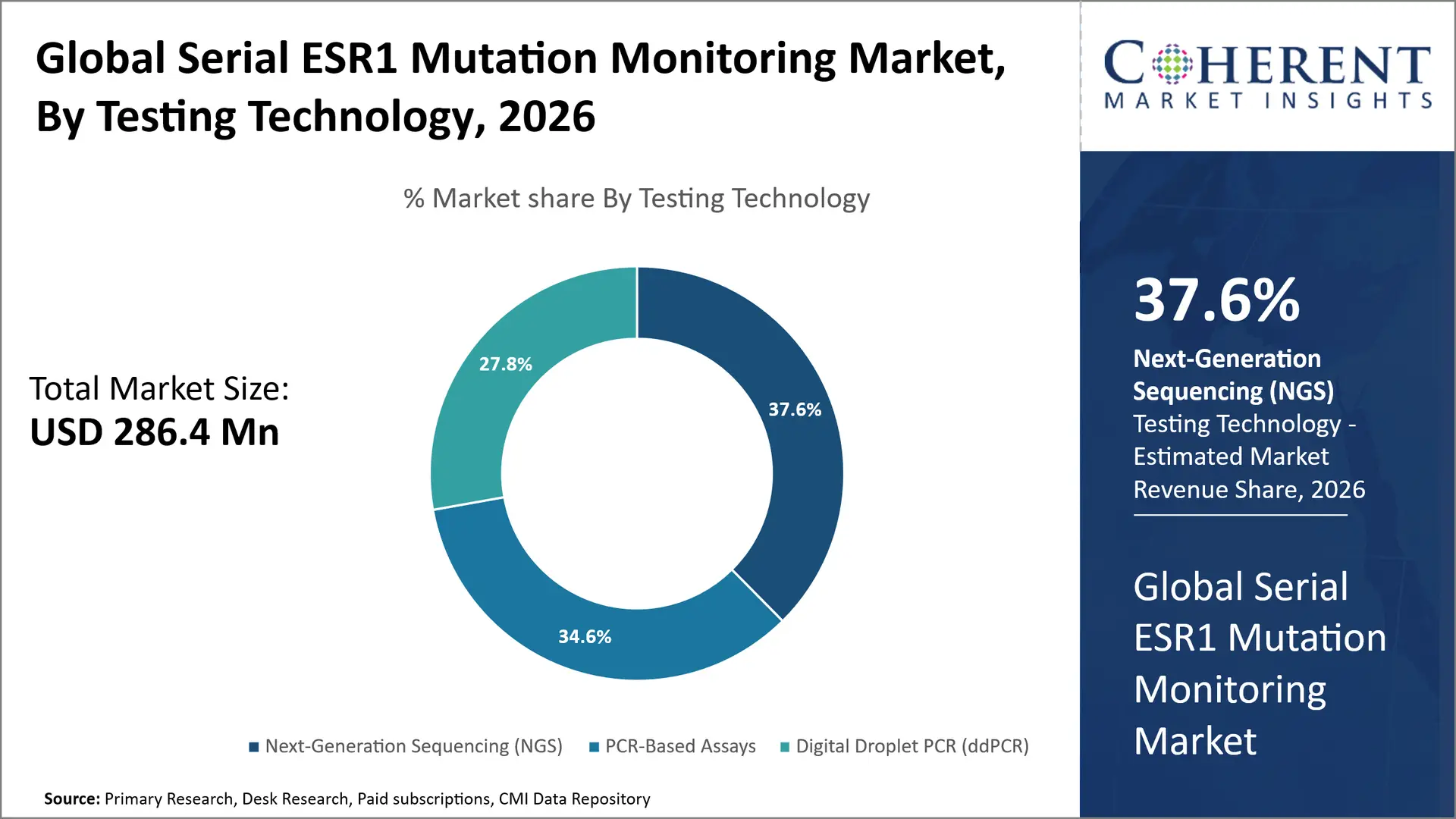
Why Do Next-Generation Sequencing (NGS) Dominate the Global Serial ESR1 Mutation Monitoring Market?
Next-Generation Sequencing (NGS) is projected to hold the market share of 37.6% in 2026, due to its ability to simultaneously detect several ESR1 mutations, as well as new emerging mutations in ctDNA for the purpose of precision treatment. Its ability for multiplexing and broad coverage of mutations enables it to be used for surveillance of endocrine resistance in advanced breast cancer. For instance, the U.S. National Cancer Institute's Genomic Data Commons provides genomic datasets to support research into cancer mutations and molecular profiling. This highlights the importance of complete sequencing approaches in the field of cancer research.
- Current Industry Events of 2026
- Market Size Estimation
- Regional Breakdown
- Competitive Landscape
- Customer Intelligence
- Segmental Analysis
- Pricing Analysis
- Key Market Drivers, Challenges & Future Trends
- Customized Insights Section
Why Does Plasma Represent the Largest Sample Type Segment in the Serial ESR1 Mutation Monitoring Market?
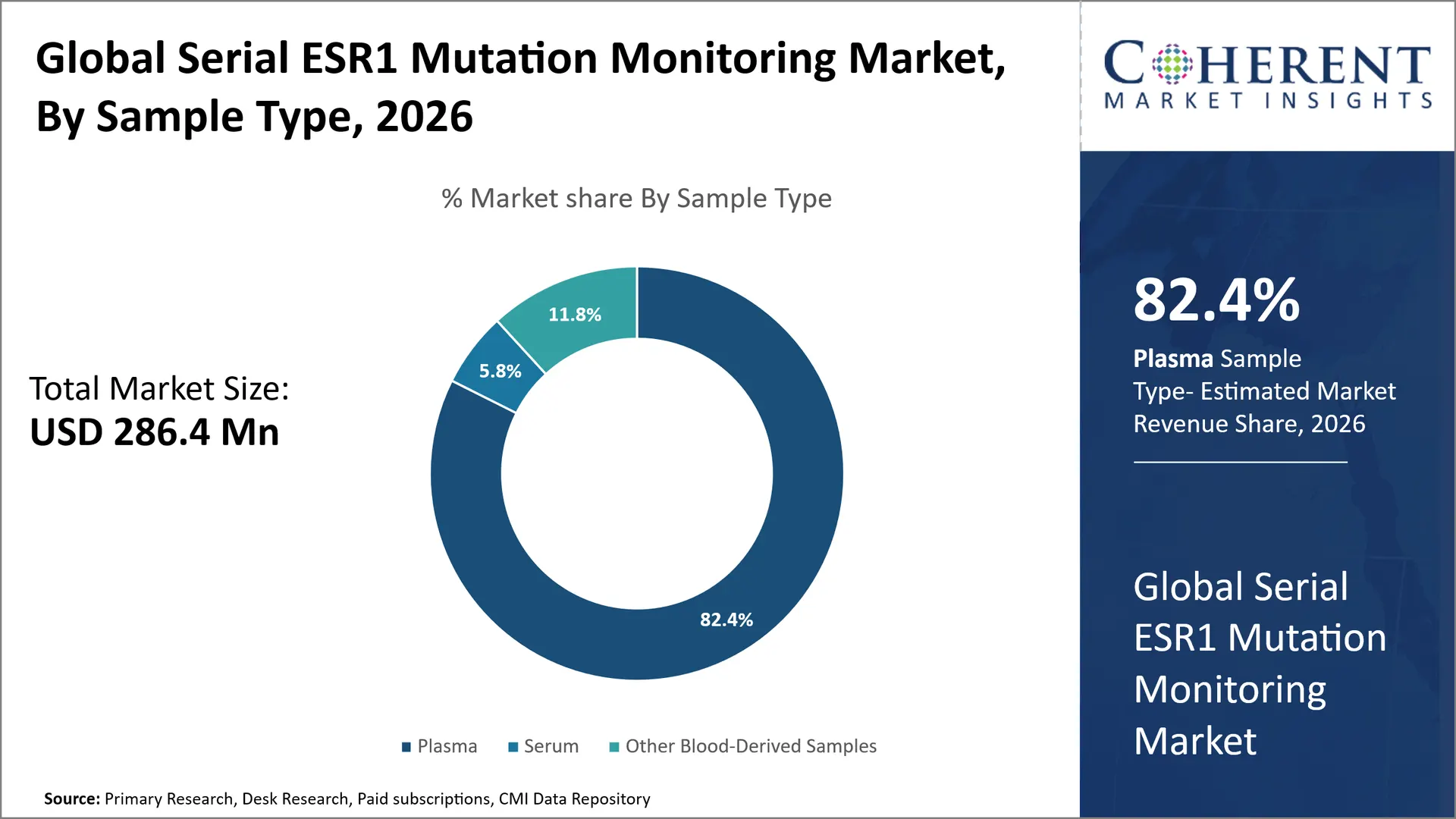
Plasma is projected to hold a market share of 82.4% in 2026, as it offers non-invasive and serial detection of ESR1 mutations through circulating tumor DNA (ctDNA) thereby avoiding repeated biopsies in tissue. In addition, the use of plasma sample type combined with sensitivity of molecular assays allows tracking of subsequent mutations and resistance to endocrine therapy during disease progression in advanced breast cancer. For instance, the assessment by the European Medicines Agency highlighted the need to test for the presence of ESR1 mutations to determine whether patients are eligible for treatment, emphasizing the importance of mutation detection when choosing a treatment for a patient.
Serial ctDNA Monitoring During Treatment Segment Dominates the Global Serial ESR1 Mutation Monitoring Market
The serial ctDNA monitoring during treatment segment is projected to hold a market share of 46.5% in 2026, as it enables sequential determination of the appearance of ESR1 mutations and the potential tracking of molecular resistance before clinical progression can be observed. This enables physicians to adjust therapy in a timely manner and for individualized treatment of HR+/HER2− advanced breast cancer. For instance, the National Cancer Institute's SERENA-6 clinical trial record provides details on the evaluation of treatment modification in response to circulating tumor DNA (ctDNA) for patients with new-onset ESR1 mutations during first-line treatment. (Source: National Library of Medicine)
Current Events and their Impact
Current Events | Description and its Impact |
Important Labeling Changes for U.S. FDA Companion Diagnostic Device Listings (May 2026) |
|
U.S. FDA Reviews Earlier Treatment Program on ESR1 Mutation Detection (April 2026) |
|
Serial ESR1 Mutation Monitoring Market Dynamics
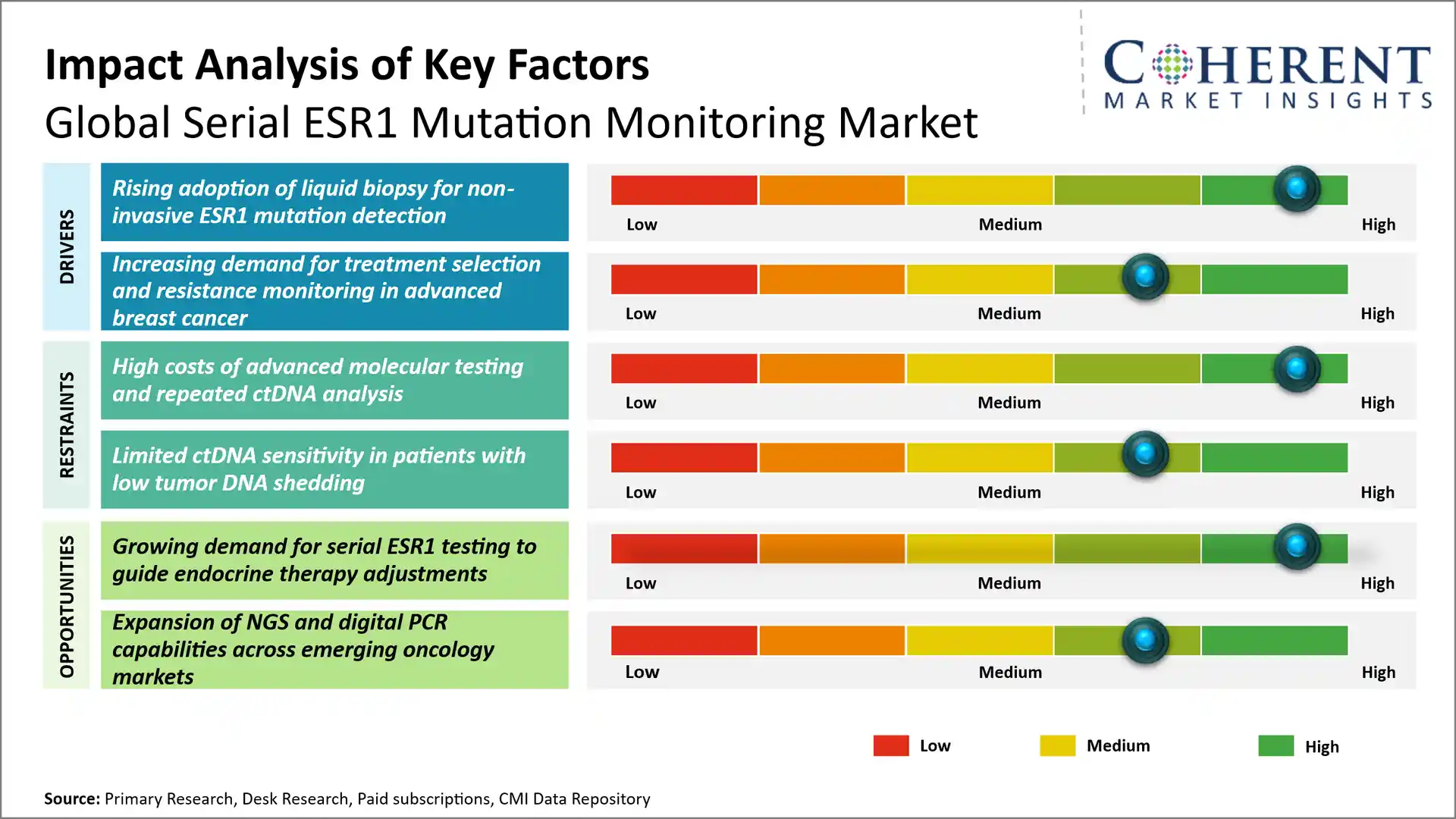
Market Drivers
- Rising adoption of liquid biopsy for non-invasive ESR1 mutation detection: The increasing adoption of liquid biopsy tests is helping in the adoption of serial ESR1 mutation monitoring market. The ability to detect acquired ESR1 mutation in blood-based ctDNA in a non-invasive way enables early detection of acquired ESR1 mutations and decreases the need for repeated tissue biopsies. For instance, ASCO recommends blood-based ctDNA testing at progression in selected patients with HR-positive, HER2-negative mBC, as it is more sensitive in detecting ESR1 mutations.
- Increasing demand for treatment selection and resistance monitoring in advanced breast cancer: Serial ESR1 testing has gained additional traction due to the increasing need for treatment selection and resistance monitoring in patients with advanced breast cancer. As new mutations are found, clinicians can keep track of when endocrine therapy may begin to no longer be effective, and consider other treatment options. For instance, a phase III trial, PADA-1, showed the benefit of changing treatment when ESR1 mutation levels in cell free DNA are climbing ahead of clinical disease progression.
- Growing investment in precision oncology and personalized breast cancer treatment: The increased investment in precision oncology is helping to drive the uptake of serial ESR1 mutation monitoring by increasing the demand for molecular tests that can both guide personalized treatment decisions as well as monitor emerging tumor resistance. For instance, the U.S. National Cancer Institute has launched an approach to match treatments with molecular changes, called Molecular Analysis for Therapy Choice (NCI-MATCH), further emphasizing the value of biomarker-based treatments.
Emerging Trends
- Shift towards serial ctDNA monitoring: The industry is moving from single ESR1 mutation testing toward serial ctDNA to detect the emergence of endocrine resistance before radiographical disease progression. This transition is driving the need for a reliable blood-based assay to allow for earlier treatment modifications.
- Enhanced sensitivity of molecular testing: New digital droplet PCR (ddPCR) and next generation sequencing (NGS) techniques are being developed for sensitive detection of ESR1 mutations from circulating tumor DNA (ctDNA). Further improvements to the assays are expected to further improve the analytical performance and clinical utility.
- Integration of molecular testing into decision-making: Monitoring for ESR1 mutations has been more strongly correlated with the management and change of targeted therapies for HR+ HER2- advanced breast cancer. Improvements in harmonizing testing, clinical practices and personalized treatments should drive market adoption.
Regional Insights
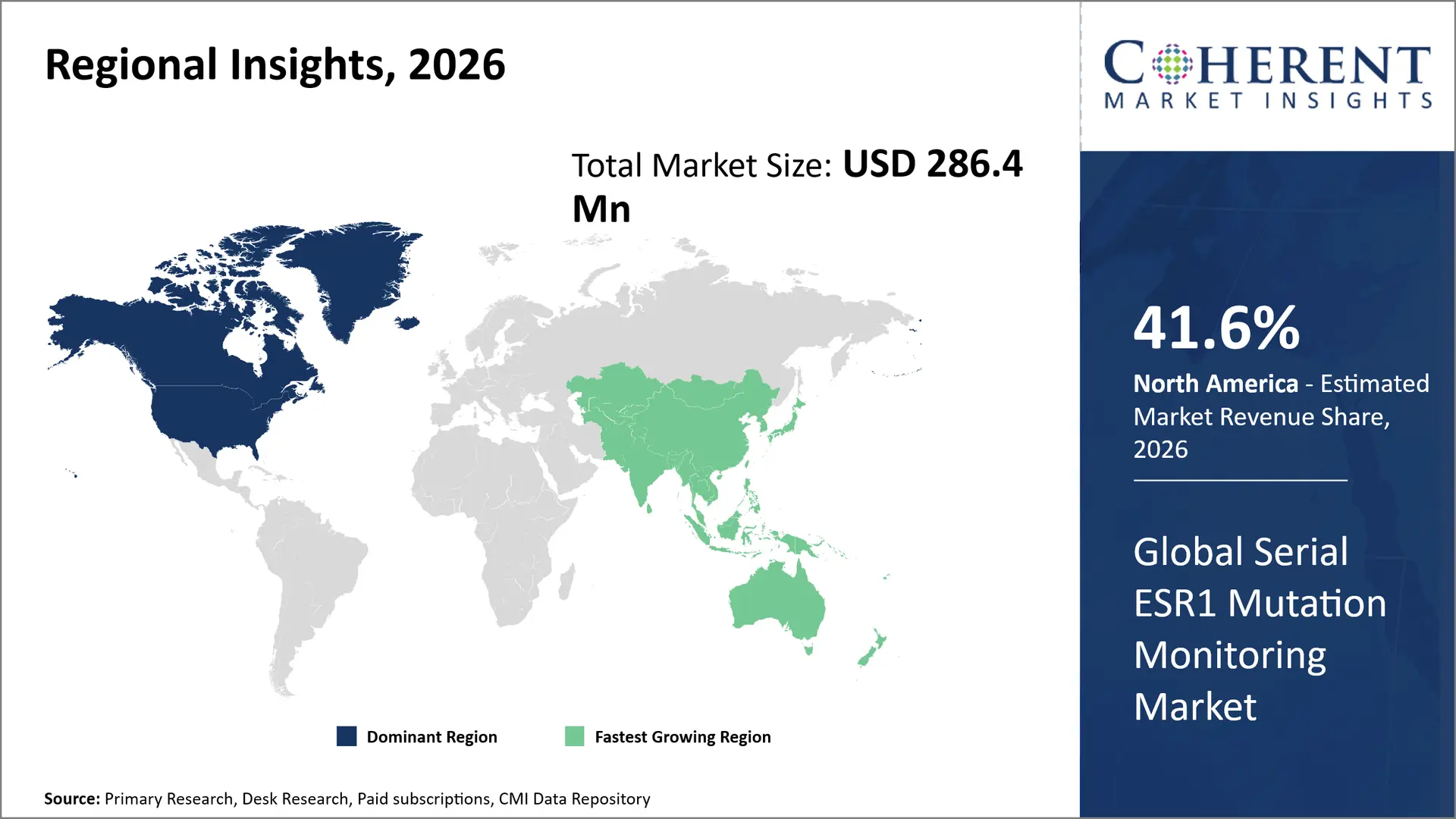
Why is North America a Strong Market for Serial ESR1 Mutation Monitoring?
North America leads the global serial ESR1 mutation monitoring market, accounting for an estimated 41.6% share in 2026, driven by the high presence of appropriate healthcare infrastructure coupled with robust molecular diagnostic systems and high investments in precision oncology. Additionally, supportive government policies that boost innovation through research grants along with accelerated approval of drugs by FDA encourage the adoption of serial ESR1 mutation monitoring methods. For instance, Project Optimus by the U.S. Food and Drug Administration (FDA) promotes dose optimization in the development of oncology medicines. At the same time, its expedited approval mechanism may facilitate earlier access to promising oncology treatments, encouraging wider adoption of biomarker-based precision treatment.
Why Does Asia Pacific Serial ESR1 Mutation Monitoring Market Exhibit High Growth?
Asia Pacific is expected to exhibit the fastest growth in the global serial ESR1 mutation monitoring market, registering an estimated CAGR of 14.2% during 2026–2033. The region is projected to account for 21.0% of the global market in 2026, owing to rising incidences of breast cancer, demand for sophisticated breast cancer diagnosis, broadening access to healthcare and augmented acceptance of precision medicine. Furthermore, regulatory guidelines to upgrade the precision of cancer diagnosis and to streamline molecular testing background are projected to augment the growth of this market. For instance, in August 2024, the National Health Commission of China released a guideline on cancer genetic testing to regulate the testing. The guideline is to establish laboratory quality control and enhance the consistency of molecular diagnosis to promote the genomic testing services.
Global Serial ESR1 Mutation Monitoring Market Outlook for Key Countries
Why is the U.S. Leading Innovation and Adoption in the Serial ESR1 Mutation Monitoring Market?
The U.S. is expected to hold a leading position in the serial ESR1 mutation monitoring market driven by the highly adapted combination of molecular diagnostics and precision management of breast cancer treatment. The market is expected to expand with the utilization of liquid biopsy for the detection of new ESR1 mutations and treatment switching ahead of the clinical manifestation of the disease. Moreover, several players developing diagnostic tests are leading to clinical adoption.
Is China a Favorable Market for Serial ESR1 Mutation Monitoring Market?
China is an attractive market for the Serial ESR1 Mutation Monitoring due to the rising adoption of molecular diagnostic tests, and increasing clinical acceptance of mutation-guided therapy for advanced breast cancer. Opportunities for adoption of NGS- and ctDNA-based testing are especially high, as hospitals and laboratory testing capacity is being expanded. However, the currently limited reimbursement coverage for somatic mutation testing and lack of standardization may delay early adoption.
Is Japan Emerging as a Key Growth Hub for the Serial ESR1 Mutation Monitoring Market?
Japan is emerging as a key growth market for the serial ESR1 mutation monitoring market largely driven by the progress in regulatory approval of liquid biopsy diagnostics and application of mutation testing in the treatment decision making of breast cancer indications. The emerging adoption potential of this application in Japan will be driven by the adoption of serial ESR1 testing in the clinics, reimbursement support and inclusion of ctDNA monitoring in breast cancer treatment.
Why Does Germany Top the European Serial ESR1 Mutation Monitoring Market?
Germany is a key European market for serial ESR1 mutation monitoring due to its existing molecular pathology laboratories, access to liquid biopsy testing and reimbursement of ESR1 mutation testing within statutory health insurance. The clinical infrastructure allows the use of NGS and ddPCR-based tests to detect endocrine therapy resistance and guide treatment decisions. However, inconsistencies exist in the way testing is conducted in different healthcare settings, highlighting the potential for improving standardized serial monitoring.
Is Serial ESR1 Mutation Monitoring Market Developing in UK?
The UK serial ESR1 mutation monitoring market is booming with the implementation of plasma-based ESR1 testing within the National Health Service's genomic testing pathways in patients who are eligible with advanced breast cancer. The ESR1 ctDNA test has been listed as part of the National Genomic Test Directory in England providing a systematic approach to mutation testing that can guide elacestrant treatment decisions. However, its rollout will depend on laboratory capacity, sample-routing policies and access to testing within NHS services.
Comparison of ESR1 Mutation Testing Technologies
Parameter | PCR-based assays | Digital droplet PCR (ddPCR) | Next-generation sequencing (NGS) |
Primary strength | Targeted detection of known mutations | Sensitive detection of low-frequency mutations | Detection of multiple mutations in parallel |
Mutation coverage | Limited to assay-designed targets | Targeted ESR1 variants | Multiple ESR1 variants; broader panels depending on assay |
Suitability for serial monitoring | Suitable for repeat testing of known targets | Carried out adequately for quantitative surveillance of chosen variants | Useful for broader mutation profiling over time |
Key limitation | Limited variant coverage | Requires prior knowledge of target mutations in many workflows | Higher analytical complexity and potentially greater cost |
Market relevance | Targeted routine testing | Sensitive longitudinal monitoring | Broad genomic profiling and mutation discovery |
How is the growing demand for serial ESR1 testing to guide endocrine therapy adjustments creating new growth opportunities in the serial ESR1 mutation monitoring market?
The global serial ESR1 mutation monitoring market is being driven by a rising momentum in the new ESR1 mutations that allow resistance towards endocrine therapy for hormone receptor-positive, HER2-negative advanced breast cancer. Liquid biopsy, NGS, and ddPCR enable the repeated analysis of mutations, helping physicians to identify resistance and leading to modification of treatment strategies. Growing interest from clinicians in therapy that is guided by molecular results offers space for adding serial ESR1 testing to the current routine oncology landscape.
For instance, in June 2025, the phase III SERENA-6 study showed that serial ctDNA testing could pick up the development of ESR1 mutations allowing clinicians to switch quickly to the combination of camizestrant plus a CDK4/6 inhibitor before disease progression. The median progression-free survival was 16.0 months compared to 9.2 months with the baseline aromatase inhibitor alone, highlighting the importance of serial testing for ESR1 mutations in the clinic. (Source: The New England Journal of Medicine)
Market Players, Key Development, and Competitive Landscape
Key Developments
- In September 2026, Guardant Health announced that the U.S. Food and Drug Administration approved Guardant360 CDx as a companion diagnostic for use with camizestrant in advanced breast cancer. The decision enables repeat testing of circulating tumour DNA (ctDNA) every three months for detection of emerging ESR1 mutations to be made. This increases the relevance of serial ESR1 monitoring for detection of resistance and for guiding therapy changes.
- In October 2025, Biodesix expands its partnership with Bio-Rad Laboratories to include the development, clinical validation, and regulatory submissions for the ddPLEX ESR1 Mutation Detection Assay using droplet digital PCR for the detection and quantification of multiple ESR1 mutations in circulating tumor DNA (ctDNA). This assay will enable serial monitoring and treatment management for advanced breast cancer.
Competitive Landscape
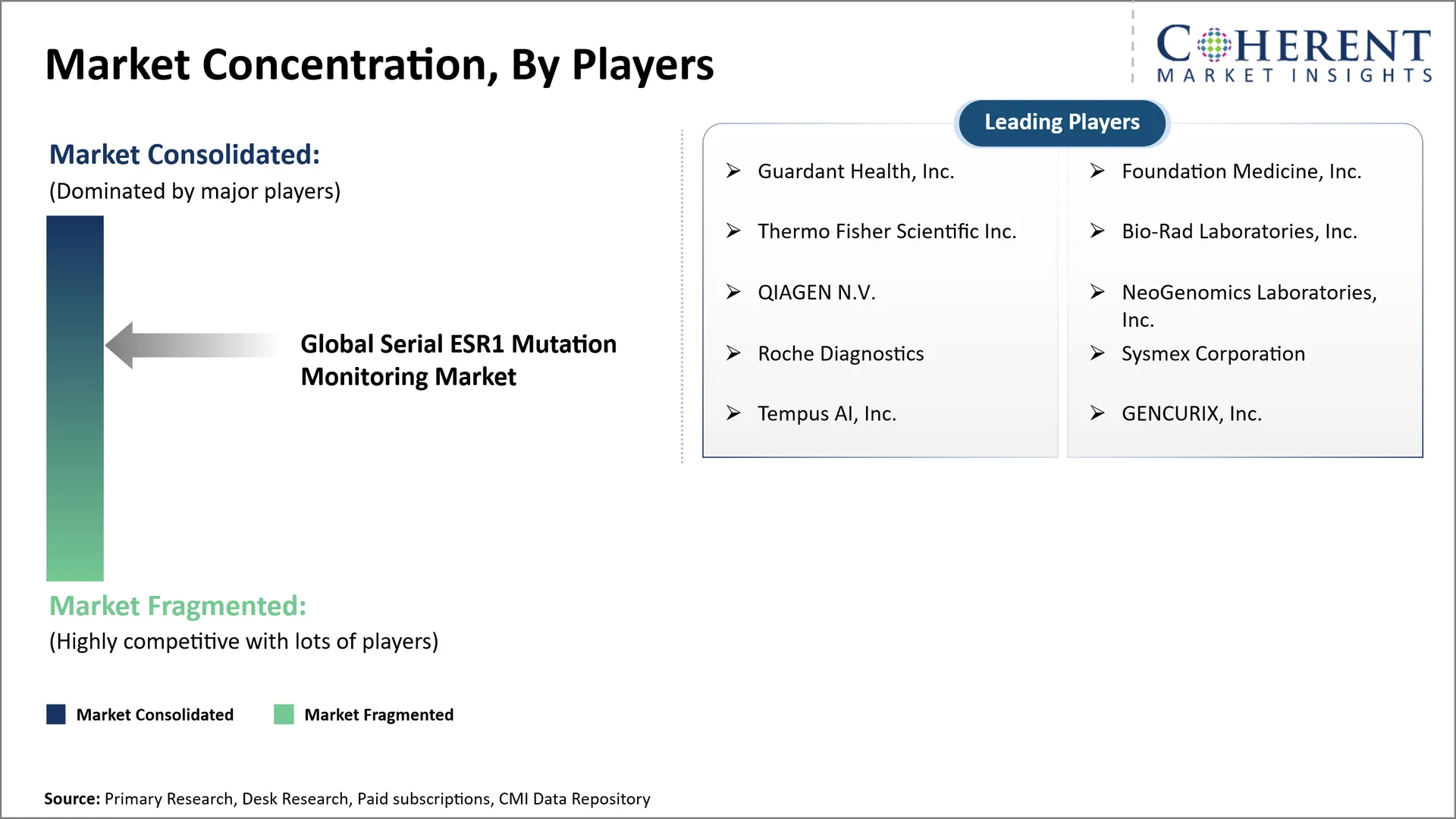
The global serial ESR1 mutation monitoring market is competitive with moderate degree of fragmentation at assay level on account of high number of diagnostic developers offering qPCR, ddPCR and NGS based testing in the market. The competitive rivalry is characterized by difference in sensitivity, mutation coverage, turnaround time, clinical validation, regulatory approval and cost of testing. Market is still evolving with several additional assays under pipeline. Key focus areas include:
- Analytical sensitivity and specificity for detecting low frequency ESR1 mutations in the ctDNA.
- Clinical validation and evidence generation for use in treatment decision making and alteration.
- Assay differentiation performed on PCR-based testing, ddPCR, and next-generation sequencing (NGS).
- Regulatory compliance, forward development of companion diagnostics, and the presence of a standardized validation of the assay.
Market Report Scope
Serial ESR1 Mutation Monitoring Market Report Coverage | |||
Report Coverage | Details | ||
Base Year | 2025 | Market Size in 2026: | USD 286.4 Mn |
Historical Data For: | 2020 To 2024 | Forecast Period: | 2026 To 2033 |
Forecast Period 2026 To 2033 CAGR: | 12.3% | 2033 Value Projection: | USD 645.8 Mn |
Geographies covered: |
| ||
Segments covered: |
| ||
Companies covered: | Guardant Health, Inc., Foundation Medicine, Inc., Thermo Fisher Scientific Inc., Bio-Rad Laboratories, Inc., QIAGEN N.V., NeoGenomics Laboratories, Inc., Roche Diagnostics, Sysmex Corporation, Tempus AI, Inc., GENCURIX, Inc. | ||
Growth Drivers: |
| ||
Restraints & Challenges: |
| ||
Analyst Opinion (Expert Opinion)
- In the coming years market growth will be driven by the transition of testing from one-time mutation testing to serial ctDNA monitoring for emerging resistance to endocrine therapy. Advances in NGS and ddPCR are expected to aid in early detection of ESR1 low-frequency mutations leading to timely intervention and treatment changes. Increase in adoption of molecular testing into routinely performed oncology tests and targeted therapy driven personalized treatment paradigm are expected to drive the market.
- The key opportunity is expected to be in ddPCR and next-generation sequencing (NGS) for sequential monitoring of ctDNA during endocrine therapy in China and India. These markets could provide opportunities to scale-up access to molecular diagnostics as hospitals evolve their oncology infrastructure and precision-medicine function. Test providers that can deliver sensitive, cost-efficient diagnostics via hospital systems and reference laboratories could be well suited to fill unmet diagnostic needs.
- The market players considerations should include assay sensitivity, robustness, extensive coverage of ESR1 mutations and high accuracy to detect low levels of circulating tumor DNA. Partnerships with oncology clinics, diagnostic laboratories and drug developers are key to generating the clinical evidence and integrating the assay during the course of treatment. Improving turnaround time, cost-effectiveness, access to laboratories and regulatory readiness will be essential for differentiation and scalable growth.
Speak to the analyst
Want personalized insights?
Take the findings above to one of our principal consultants, or have the report rebuilt around the segments, geographies and competitors you actually track.
Market Segmentation
- Testing Technology Insights (Revenue, USD Mn, 2021 - 2033)
- Next-Generation Sequencing (NGS)
- PCR-Based Assays
- Digital Droplet PCR (ddPCR)
- Sample Type Insights (Revenue, USD Mn, 2021 - 2033)
- Plasma
- Serum
- Other Blood-Derived Samples
- Monitoring Approach Insights (Revenue, USD Mn, 2021 - 2033)
- Baseline ESR1 Mutation Testing
- Serial ctDNA Monitoring During Treatment
- Testing at Disease Progression
- Application Insights (Revenue, USD Mn, 2021 - 2033)
- Detection of Endocrine Therapy Resistance
- Treatment Selection and Modification
- Monitoring of Emerging ESR1 Mutations
- End User Insights (Revenue, USD Mn, 2021 - 2033)
- Hospitals and Oncology Clinics
- Diagnostic and Reference Laboratories
- Cancer Research and Academic Institutes
- Others
- Regional Insights (Revenue, USD Mn, 2021 - 2033)
- North America
- U.S.
- Canada
- Latin America
- Brazil
- Argentina
- Mexico
- Rest of Latin America
- Europe
- Germany
- U.K.
- Spain
- France
- Italy
- Russia
- Rest of Europe
- Asia Pacific
- China
- India
- Japan
- Australia
- South Korea
- ASEAN
- Rest of Asia Pacific
- Middle East
- GCC Countries
- Israel
- Rest of Middle East
- Africa
- South Africa
- North Africa
- Central Africa
- North America
- Key Players Insights
- Guardant Health, Inc.
- Foundation Medicine, Inc.
- Thermo Fisher Scientific Inc.
- Bio-Rad Laboratories, Inc.
- QIAGEN N.V.
- NeoGenomics Laboratories, Inc.
- Roche Diagnostics
- Sysmex Corporation
- Tempus AI, Inc.
- GENCURIX, Inc.
Sources
Primary Research Interviews
- Molecular Diagnostics and Liquid Biopsy Specialists
- Clinical Laboratory Directors and Genomic Testing Specialists
- Breast Oncology and Clinical Research Experts
Stakeholders
- ESR1 Mutation Assay Developers and Liquid Biopsy Companies
- Hospitals and Specialized Oncology Centers
- Molecular Diagnostic and Reference Laboratories
- Pharmaceutical Companies Developing Endocrine Therapies
- Academic and Cancer Research Institutions
- End-use Sectors
- Hospitals and Oncology Clinics
- Diagnostic and Reference Laboratories
- Cancer Research and Academic Institutions
- Pharmaceutical and Biotechnology Companies
- Contract Research Organizations (CROs)
- Regulatory & Health Bodies
- U.S. Food and Drug Administration (FDA)
- European Medicines Agency (EMA)
- National Medical Products Administration (NMPA), China
Databases
- ClinicalTrials.gov
- National Cancer Institute (NCI) Clinical Trials Search
- WHO International Clinical Trials Registry Platform (ICTRP)
- Clinical Trials Registry–India (CTRI)
Associations
- American Society of Clinical Oncology (ASCO)
- European Society for Medical Oncology (ESMO)
- American Association for Cancer Research (AACR)
Public Domain Sources
- U.S. Food and Drug Administration (FDA)
- National Cancer Institute (NCI)
- National Library of Medicine (NLM)
Proprietary Elements
- CMI Data Analytics Tool, Proprietary CMI Existing Repository of information for last 10 years.
Get access to 250+ pages report
Every segment, forecast, competitor profile and data table behind the analysis above — available for instant download.
- ESOMAR Member
- ISO 9001:2015 Certified
- D-U-N-S Registered
- GDPR & CCPA Compliant
Frequently Asked Questions
The global serial ESR1 mutation monitoring market is estimated to be valued at USD 286.4 Mn in 2026 and is expected to reach USD 645.8 Mn by 2033.
Next-Generation Sequencing (NGS) dominate because of its ability to detect multiple ESR1 mutations in combination with other critical genomic changes from one test.
Serial ESR1 mutation testing is the repeated sampling of circulating tumor DNA (ctDNA) to detect new mutation events of ESR1 and measure resistance of breast cancer to endocrine therapy.
The CAGR of global serial ESR1 mutation monitoring market is projected to be 12.3% from 2026 to 2033.
Rising adoption of liquid biopsy for non-invasive ESR1 mutation detection, and increasing demand for treatment selection and resistance monitoring in advanced breast cancer are the major factors driving the growth of the global serial ESR1 mutation monitoring market.
High costs of advanced molecular testing and repeated ctDNA analysis, and limited ctDNA sensitivity in patients with low tumor DNA shedding are the major factors hampering the growth of the global serial ESR1 mutation monitoring market.
In terms of sample type, plasma is estimated to dominate the market revenue share in 2026.