

Global Soil Management Market Size and Forecast – 2026 to 2033
The Global Soil Management Market is estimated to be valued at USD 23.55 Bn in 2026 and is expected to reach USD 32.92 Bn by 2033, reflecting a compound annual growth rate (CAGR) of 4.9% from 2026 to 2033.
Key Takeaways of the Soil Management Market
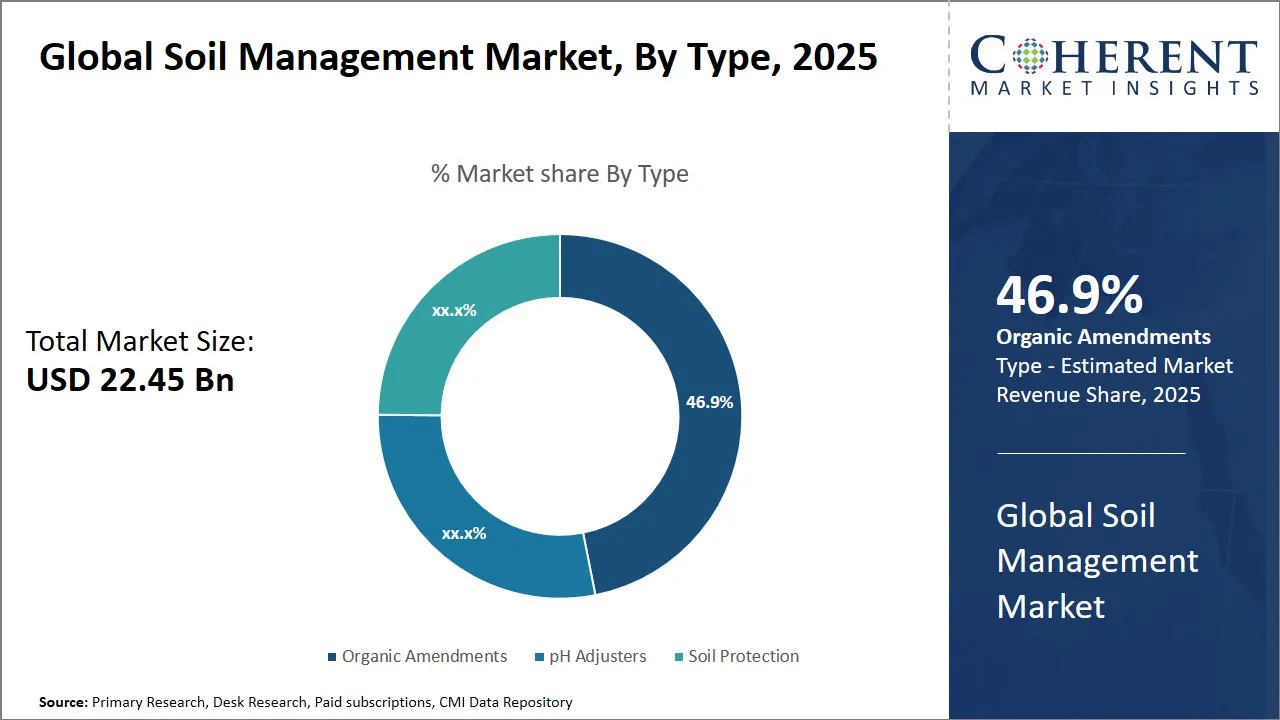
- Organic amendments segment is expected to account for 47.9% of the market share in 2026.
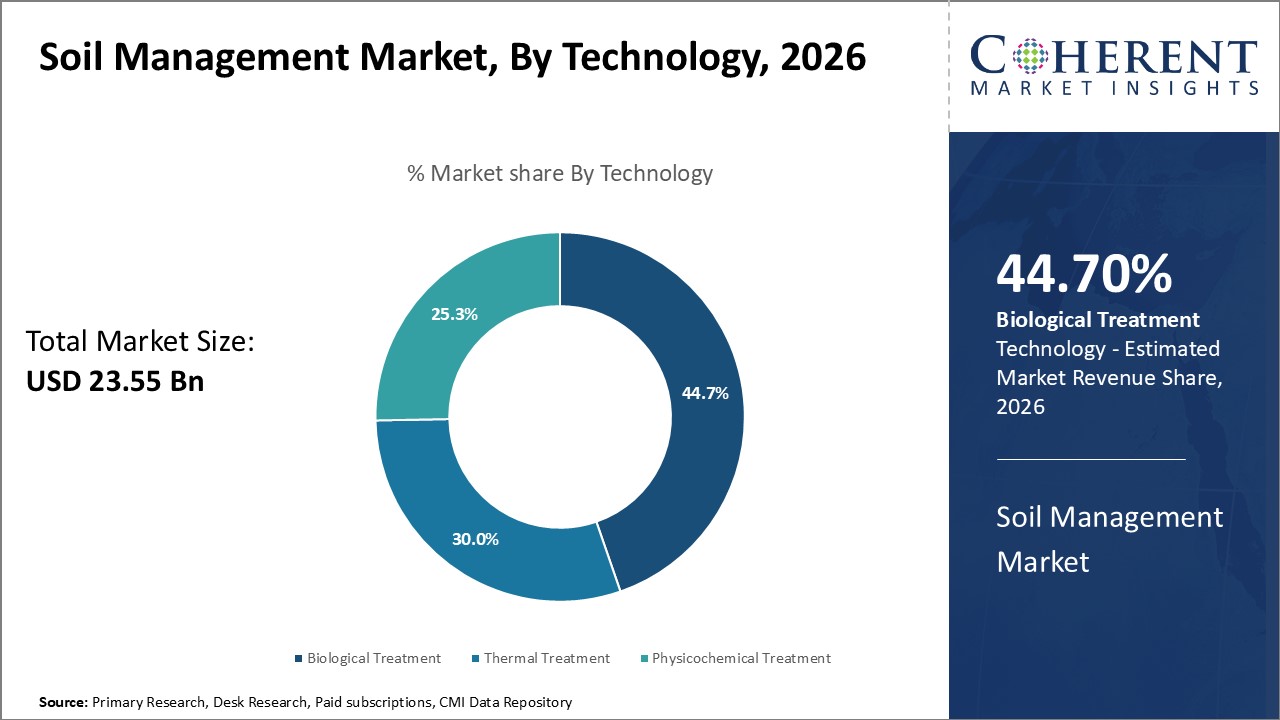
- Biological treatment segment is estimated to hold 44.7% of the global soil management market share in 2026.
- The agricultural segment is projected to account for 35.7% of the soil management market share in 2026.
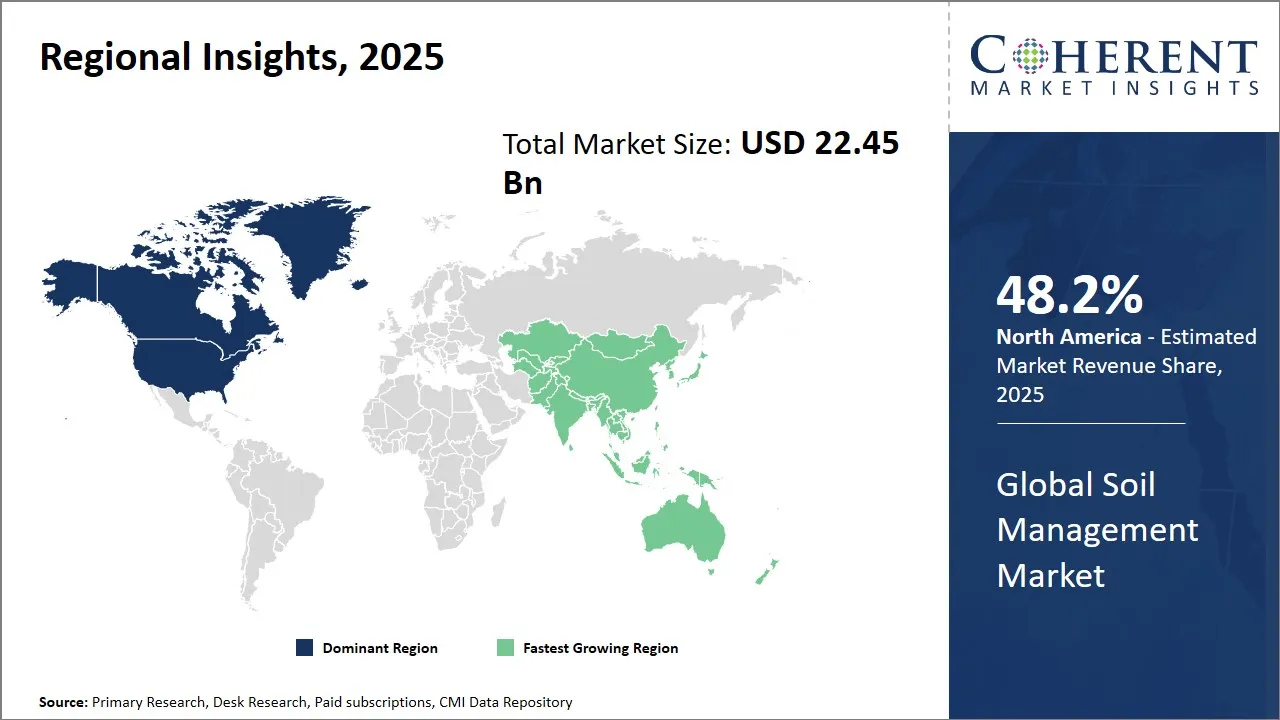
- North America will dominate the global soil management market in 2026 with an estimated 48.2% share.
- Asia Pacific will hold 21.3% share in 2026 and record the fastest growth.
Market Overview
- Current market trends emphasize the adoption of advanced technologies such as precision agriculture, sensor-based monitoring, and biofertilizers to optimize soil health.
- Additionally, regulatory support for environmentally friendly organic farming practices and increasing investments in research and development are propelling the demand for innovative soil management products and services.
- These trends are expected to shape the market landscape, fostering growth and sustainability in the coming years.
Currents Events and Its Impacts
Current Events | Description and its impact |
EU Soil Monitoring & Resilience law enters into force (December 16, 2025) |
|
Fertilizer price volatility and trade restrictions tighten nutrient affordability (2025 upswing) |
|
Segmental Insights
- Current Industry Events of 2026
- Market Size Estimation
- Regional Breakdown
- Competitive Landscape
- Customer Intelligence
- Segmental Analysis
- Pricing Analysis
- Key Market Drivers, Challenges & Future Trends
- Customized Insights Section
Why Do Organic Amendments Dominate the Soil Management Market in 2026?
Organic amendments segment is expected to hold 47.9% of the global soil management market share in 2026, and highlights the growing shift towards environmentally friendly and sustainable agricultural practices. Organic amendments, such as compost, manure, green manure, and biochar, play a crucial role in enriching soil fertility by replenishing essential nutrients and enhancing soil structure. As concerns around soil degradation and chemical fertilizer overuse intensify, organic amendments are increasingly viewed as a vital solution to restore soil vitality without causing harmful environmental impacts.
Biochar adoption is accelerating across large farms and regenerative agriculture projects because it delivers multi-year soil benefits from a single application. In the U.S. Midwest and Brazil’s commercial soybean belts, biochar is increasingly blended with compost to improve cation exchange capacity, lock carbon into soils for decades, and reduce nitrogen leaching.
Why is Biological Treatment the Leading Technology in the Global Soil Management Market?
Biological treatment is projected to hold 44.7% share of the global soil management market in 2026 owing to the growing focus on eco-friendly, efficient, and sustainable remediation methods. Biological treatment is the use of microorganisms, enzymes, bioagents, which are either naturally occurring or engineered to treat the contaminants, improve nutrient cycling, and restore the soil environment. The combination of its capacity to remove pollutants and at the same time enhance soil health is what is making it be more and more preferred over alternatives that require more energy input or those that are more dependent on chemicals.
The quick evolution of biotechnology and microbial preparations used in amendment of soils enhanced effusiveness and applicability of biological therapies. The so-called microbial consortia of nitrogen fixation, phosphur solubilization and degradation of organic matter improves soil fertility and decrease the use of synthetic inputs. Also, the application of bioaugmentation and biostimulation methods to hasten the natural degradation process can be used to treat industrial and agricultural contaminated soils at low environmental impact.
Agricultural Segment Dominates the Global Soil Management Market
The agricultural segment is expected to hold 35.7% share of the global soil management market in 2026, because agriculture represents the largest and most critical user of soil management solutions. As the world population continues to grow, and food security issues become increasingly important, enhancing soil productivity and soil resilience has become one of the priorities of farmers, agribusinesses, and policy makers.
The agricultural industries are in need of soil management products due to the pressing requirements in fighting with the decreasing soil fertility as a result of intensive farming, soil erosion, and unsustainable activities. The degradation of soil influences the production and quality of crops and farmers use different additions to the soil, the pH regulators, and shielding devices to restore the ideal soil conditions. The practices of soil management give an opportunity to restore the balance of nutrients, maintain the soil pH, prevent soil erosion, and improve the capacity of soil to retain water all of which are critical to hiking agricultural yield in different climatic areas.
Regional Insights
North America Soil Management Market Analysis and Trends
The North America region is projected to lead the market with a 48.2% share in 2026, driven by a mature agricultural industry coupled with advanced technological adoption. The area enjoys a market ecosystem that has been well-established and focuses on giving priority on sustainable farming and precision agriculture. This dominance has been further reinforced by strong government initiatives that target the protection of the environment, soil conservation, and restoration of land.
Besides, the existence of major agribusiness companies, e.g., Corteva Agriscience, Nutrien Ltd., and The Mosaic Company allows ongoing innovation in soil treatment systems, fertilizers, and soil conditioners. The trade dynamics in North America are also strong, and there is a strong export-import that determines the market offerings and competitive advantages. The research and development spending of the private sectors as well as collaboration between universities and agri-tech startups strengthens the creation of the innovative soil management technologies and products.
Asia Pacific Soil Management Market Analysis and Trends
The Asia Pacific region is expected to exhibit the fastest growth in the market contributing 21.3% share in 2026, due to its vast agricultural base, increasing mechanization, and rising governmental support for sustainable agriculture. The region is experiencing an increase in the demand of soil fertility and erosion control due to the necessity to increase food production to feed the increasing populations.
This market ecosystem is developing and there is a growing trend of multinational companies into this market such as Yara International, BASF SE and local companies such as TATA Chemicals in India that specialize in customized soil management products. The growth in the market is further driven by government policies that promote organic farming and monitoring of soil health, particularly in those countries such as India, China and Australia. The trade liberalization and cross-border partnerships are the reasons of improved technology transfer and accessibility of improved soil amendments, and testing equipment, which boosted growth at a rapid pace in the area.
Global Soil Management Market Outlook for Key Countries
Why Does the U.S. Lead in Advanced and Precision-Driven Soil Management Practices?
The U.S. soil management market is characterized by high adoption of precision agriculture technologies and stringent regulatory frameworks promoting sustainable soil management practices. Such large competitors as Corteva Agriscience and Nutrien Ltd. are actively involved in product innovation and soil health advisory services, which do not simply sell their products. The public- private partnerships revolve around the programs of soil conservation, biofertilizer application and the remedial practices of the degraded lands that also promote the advancement of market. The combination of IoT and data analytics with soil management tools can help to improve the efficacy of decision-making within large-scale farms in the country.
China Soil Management Market Trends
The China soil management market is swiftly developing in the environment of the firm state focus on the fight against soil pollution and the ecological agriculture development. The Sino Agro food and local subsidiaries of international companies are the main leading companies, and focus on soil remediation and solutions of nutrient management to suit different farming practices in various regions. The government promotes soil health by subsidizing and certification programs on soil quality. Also, engaging more in intelligent farming infrastructure complements the soil management market, which would guarantee efficiency gains in both workforce and sustainability of the environment.
Why is India Emerging as a High-Growth Market for Soil Management Solutions?
The market of soil management in India flourishes on the initiatives of the government to add to the soil fertility by providing schemes such as the Soil Health Card Scheme that helps farmers to use scientific procedures to test their soils and to use balanced fertilizers. Such local industry players as TATA Chemicals and Coromandel International are crucial in the provision of bio-amendments and tailor-made fertilizers.
The wide-scale application of organic and natural soil conditioners is slowly gathering ground due to the growing awareness and demand on sustainable agricultural methods by consumers. The agrarian economy and the presence of the large number of farmers gives big markets opportunities to penetrate and expand. Market Trends in Brazil Soil Management.
Brazil Soil Management Market Trends
Brazil is still in the forefront in utilizing new soil management practices due to its large agricultural export economy. Corporations like Vale Fertilizantes and Haifa Group are well established with their focus being nutrient management and amendment products of tropical soils. The government facilitates sustainable agricultural by implementing programmes that prevent soil erosion, rehabilitate damaged agricultural land, and support integrated soil fertility management practices. The fact that Brazil is a large agricultural exporter also shapes the trade dynamics, as it is easier to access modern soil management technologies and products of the world players.
Australia Soil Management Market Trends
Australia’s soil management market is distinguished by its emphasis on combating soil salinity and erosion, driven by its unique climatic and geographic conditions. Firms like Incitec Pivot and CSBP Limited contribute significantly by developing fertilizers and soil conditioners adapted to diverse Australian soils. Regulatory frameworks incentivize soil conservation initiatives aimed at protecting arid and semi-arid lands. Technological advancements in soil testing and monitoring are rapidly incorporated, with extensive use in both large-scale commercial farms and smaller agricultural operations. Australia’s strategic location enhances export capabilities, positively affecting the soil management market through trade.
Policy-Driven Soil Management Economics
Policy Lever | Description | Direct Farm-Level Economic Impact | Impact on Soil Management Market |
Input Subsidies (Organic Amendments, Biofertilizers) | Government financial support for eco-friendly soil inputs | Reduces upfront input costs; improves short-term cash flow | Boosts volume demand for biological and organic soil products |
Carbon Credit Programs | Monetization of soil carbon sequestration and regenerative practices | Creates secondary income stream; improves farm profitability | Drives demand for carbon-positive soil inputs and services |
Soil Health Payments/Ecosystem Services | Payments linked to soil organic matter, biodiversity, erosion control | Rewards long-term soil investment over yield-only models | Expands service-based soil management offerings |
Input Substitution Impact
- Input substitution is a measure of the effectiveness of soil amendments substituting or reducing the synthetic fertilizers and chemical pesticides with a yield that is not lowered. It is not theoretical farm level sustainability it is hard cost displacement.
- Organic matter conditioners, biofertilizers, microbial inoculants, and soil stabilizers are examples of soil amendments which enhance the availability of nutrients, microbial activity and the soil structure. This directs a boost in the use of nutrients and resilience of plants, which enables farmers to reduce the use of nitrogen, phosphorus, potassium, and chemical crop protection.
- The economic result is evident as follows: reduced variable input costs, exposure to fertilizer price volatility is reduced, and more stable margins. Healthier soils also reduce the use of synthetic pesticides by producing crops with reduced pests and diseases in agricultural processes.
Market Players, Key Development, and Competitive Intelligence
Key Developments
- In March 2024, Union Minister for Agriculture & Farmers' Welfare Shri Arjun Munda and Union Minister for Rural Development Shri Giriraj Singh inaugurated four major key initiatives of Agriculture Sector i.e. Revamped Soil health card portal & mobile application, School Soil Health Programme, Krishi Sakhi convergence Programme and Central Fertilizer Quality Control and Training Institutes' (CFQCTI's) portal for fertilizer sample testing in Krishi Bhawan, New Delhi.
- In August 2023, METER Group expanded its Zentra series by launching the ZL6 Basic and ZL6 Pro data loggers, providing customers with more options for connecting to soil data and monitoring soil parameters. The ZL6 Basic ensures simple setup and Bluetooth connectivity, while the ZL6 Pro delivers near-real-time data through ZENTRA Cloud. Both loggers are designed to simplify data collection and sharing while enabling easy access to soil data analysis tools and remote visualization.
Top Strategies Followed by Global Soil Management Market Players
Player Type | Strategic Focus | Example |
Established Market Leaders | Heavy investment in R&D and innovation | BASF creates biological soil solutions and accuracy farming tools as part of its agriculture solutions. |
Mid-Level Players | Cost-effective solutions with balanced quality | ICL Group specializes in specialty fertilizers and is able to use regional manufacturing and distribution networks to manage costs. |
Small-Scale Players | Niche specialization & innovative variants | Local bio-input startups with microbial soil amendments in organic and regenerative food production systems. |
Market Report Scope
Soil Management Market Report Coverage
| Report Coverage | Details | ||
|---|---|---|---|
| Base Year: | 2025 | Market Size in 2026: | USD 23.55 Bn |
| Historical Data for: | 2020 To 2024 | Forecast Period: | 2026 To 2033 |
| Forecast Period 2026 to 2033 CAGR: | 4.9% | 2033 Value Projection: | USD 32.92 Bn |
| Geographies covered: |
| ||
| Segments covered: |
| ||
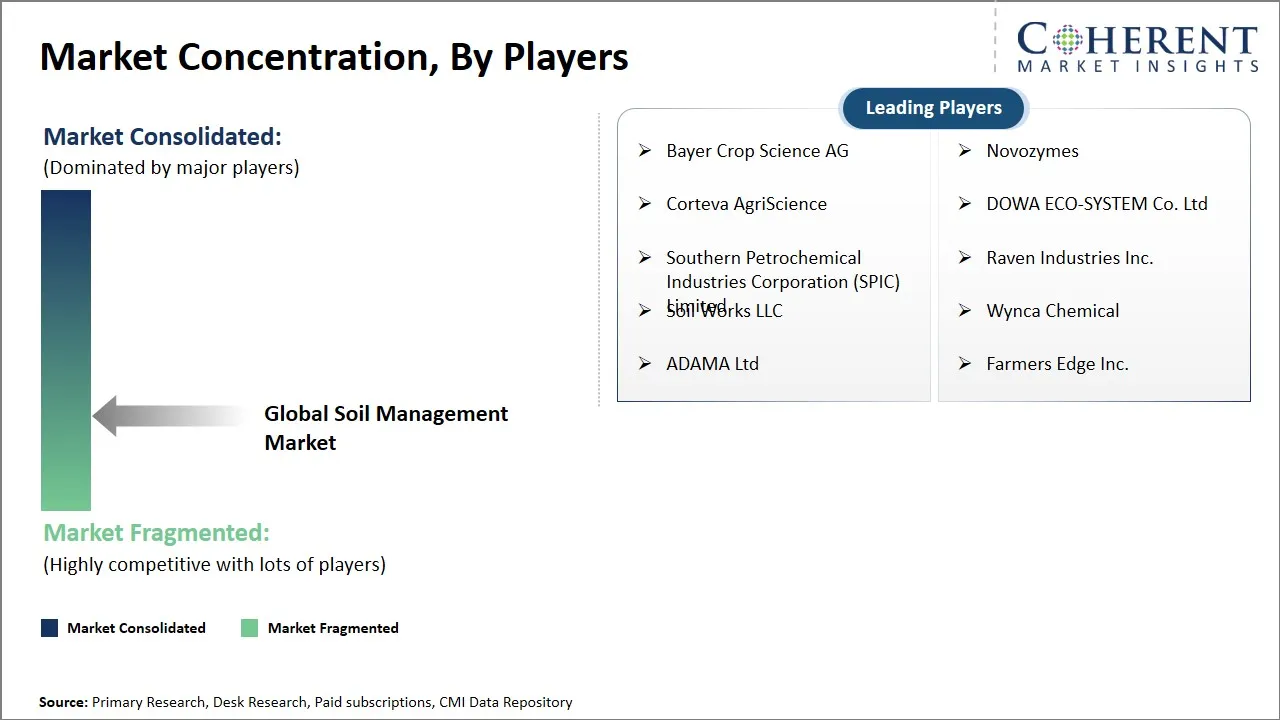
| Companies covered: | Bayer Crop Science AG, Novozymes, Corteva AgriScience, DOWA ECO-SYSTEM Co. Ltd, Southern Petrochemical Industries Corporation (SPIC) Limited, Raven Industries Inc., Soil Works LLC, Wynca Chemical, ADAMA Ltd, and Farmers Edge Inc. | ||
| Growth Drivers: |
| ||
| Restraints & Challenges: |
| ||
Soil Management Market Dynamics
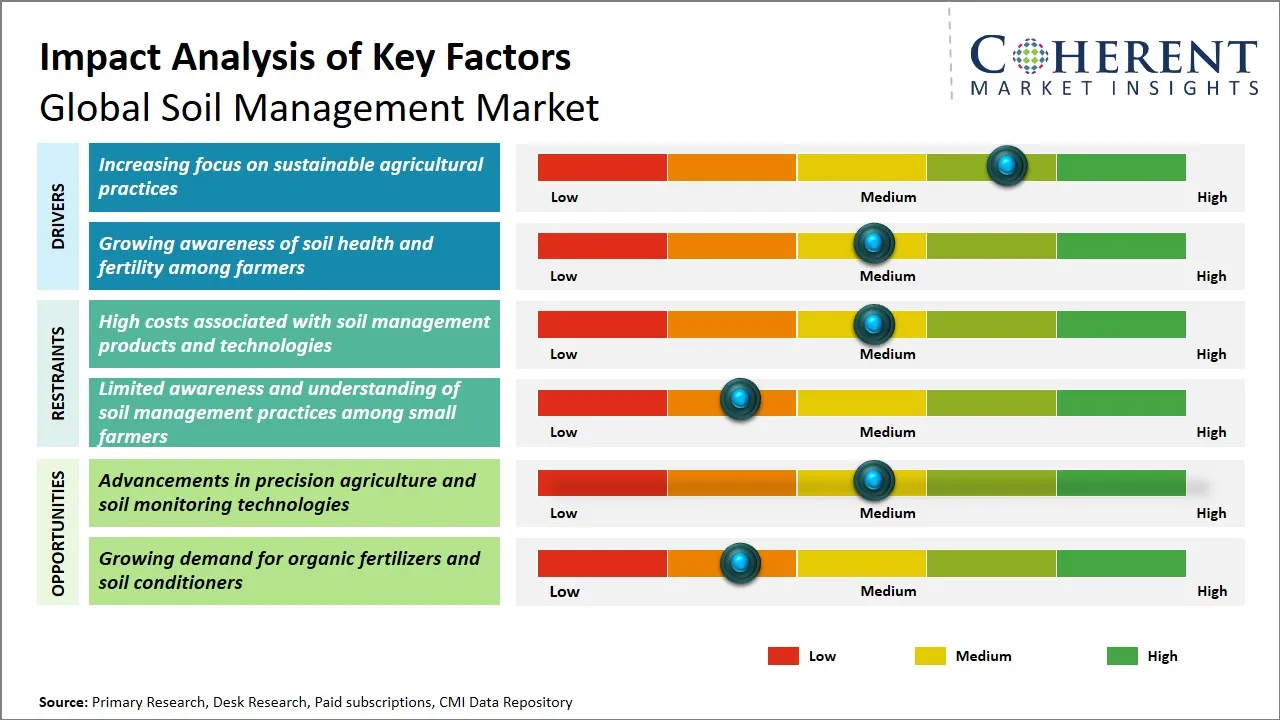
Soil Management Market Driver - Increasing Focus on Sustainable Agricultural Practices
The increasing trends of sustainable agricultural practices are also playing a key role in driving the global soil management market with farmers and agribusiness paying more attention to the long-term health of the soil so as to secure productivity and environmental stewardship. As the level of awareness of the negative impacts of modern farming practices like degradation, erosion, and loss of fertility increases, stakeholders are today embracing new soil management practices that facilitate the conservation and regeneration. Crop rotation, cover cropping, light tillage and organic amendments are being incorporated to increase the supply of organic matter in the soil, nutrient cycling and microbial diversity.
Farmers are also choosing to use cover crops such as rye and clover between production of main crops to avert soil erosion, maintain moisture and enhance the carbon content of the soil. This has directly augmented the demand of soil conditioners, biofertilizers, organic amendments and microbial soil enhancers since such inputs are complimentary to conservation practices. Correspondingly, agri-environment schemes of the Common Agricultural Policy in EU compensate farmers to retain soil organic matter, which is encouraging commercial adoption of sustainable soil management methods.
Soil Management Market Opportunity - Advancements in Precision Agriculture and Soil Monitoring Technologies
The global soil management market is poised to benefit significantly from the rapid advancements in precision agriculture and soil monitoring technologies, presenting a compelling growth opportunity for stakeholders. Precision agriculture is an advanced form of farming that makes use of GPS, IoT sensors, drones, and data analytics to enhance farming operational efficiency through the precise management of soil health, nutrient content, moisture, and contamination. These technologies allow farmers to use fertilizers, water, and pesticides more effectively and with less waste and fewer environmental consequences and concentrate on the maximum crop yield and quality.
In the U.S. and Australia, every big row-crop farm is utilizing soil moisture and nutrient sensors with GPS-enabled variable rate applications systems. The analysis of soil data is done digitally so that fertilizers and soil amendments are applied where necessary. This has spurred the adoption of precision grade soil enhancers, slow-release fertilizers and digitally mapped soil treatment programs creating high point, technology-based growth opportunity in the soil management market.
Analyst Opinion (Expert Opinion)
- The market of soil management is growing significantly, due to the increasing global concern with sustainable agriculture and the necessity to find the way of efficient land use. The Global Soil Health Conference (2023) and the International Fertilizer Association Annual Conference (2022) revealed some interesting innovations, and such companies as Yara International and Syngenta take the lead in developing soil health management solutions.
- The recent introduction of soil health monitoring program by Yaras which combines the most recent technology to analyze real-time data in the industry is a case in point of how the industry is changing all the traditions to a solution based on data. At these conferences, there has been a discussion on the increasing use of regenerative practices, including cover cropping and reduced tillage, to enhance soil structure and biodiversity; these practices are important in carbon sequestration. Nevertheless, the requirement of major investment in technology and education was often mentioned as an obstacle to the adoption.
- Those companies that would be interested in cooperating with farmers and offer custom-made solutions will most probably succeed. Finally, the development of the soil management market will be determined by its constant innovativeness and alignment to the global food security agenda and the encouragement of sustainable practices that will increase agricultural productivity and environmental health.
Speak to the analyst
Want personalized insights?
Take the findings above to one of our principal consultants, or have the report rebuilt around the segments, geographies and competitors you actually track.
Market Segmentation
- Type Insights (Revenue, USD Bn, 2021 - 2033)
- Organic Amendments
- pH Adjusters
- Soil Protection
- Technology Insights (Revenue, USD Bn, 2021 - 2033)
- Biological Treatment
- Thermal Treatment
- Physicochemical Treatment
- End User Insights (Revenue, USD Bn, 2021 - 2033)
- Agricultural
- Construction
- Others
- Regional Insights (Revenue, USD Bn, 2021 - 2033)
- North America
- U.S.
- Canada
- Latin America
- Brazil
- Argentina
- Mexico
- Rest of Latin America
- Europe
- Germany
- U.K.
- Spain
- France
- Italy
- Russia
- Rest of Europe
- Asia Pacific
- China
- India
- Japan
- Australia
- South Korea
- ASEAN
- Rest of Asia Pacific
- Middle East
- GCC Countries
- Israel
- Rest of Middle East
- Africa
- South Africa
- North Africa
- Central Africa
- North America
- Key Players Insights
- Bayer Crop Science AG
- Novozymes
- Corteva AgriScience
- DOWA ECO-SYSTEM Co. Ltd
- Southern Petrochemical Industries Corporation (SPIC) Limited
- Raven Industries Inc.
- Soil Works LLC
- Wynca Chemical
- ADAMA Ltd
- Farmers Edge Inc.
Sources
Primary Research Interviews
- CEO – Leading Soil Management Company (e.g., Bayer Crop Science AG or Corteva Agriscience equivalent)
- Supply Chain Director – Major Soil Testing and Amendment Distributor
- Production Lead – Soil Health Products Manufacturer (e.g., Novozymes)
- Sustainability Officer – Soil Health Certification Authority (e.g., Soil Health Institute)
Stakeholders
- Manufacturers
- End-use Sectors
- Agriculture (Crop Production, Regenerative Farming)
- Construction and Infrastructure (Soil Stabilization)
- Forestry and Land Restoration
- Regulatory & Certification Bodies (e.g., EPA for soil management, EU Soil Monitoring Law)
- E-commerce Platforms and Retailers (Alibaba Agriculture, Sigma-Aldrich soil products, CropScience suppliers)
- Technology Integration Players: Precision agriculture firms using AI/IoT soil sensors (e.g., digital soil mapping)
Databases
- UN Comtrade Database (agricultural inputs and soil amendments trade)
- India Import Export (EXIM) Database (soil testing equipment and amendments)
- USGS Mineral Commodity Summaries (related soil minerals)
- Eurostat Trade Statistics for Agricultural Chemicals
- FAO Soil Database and World Soil Information
- Precedence Research Soil Management Reports
Magazines
- Agricultural & Farming Journals – Trends in soil health practices
- Soil Health Magazine – Innovations in sustainable soil management
- Farming Innovation – Precision soil technologies
- Precision Agriculture Magazine – Soil monitoring advancements
- Progressive Farmer – Soil fertility and regenerative ag
Journals
- Soil Use and Management – Sustainable soil resource policies
- Soil Biology and Biochemistry – Soil health dynamics
- Geoderma – Soil management research
- Journal of Soil and Water Conservation – Conservation practices
- Soil Science Society of America Journal – Soil fertility studies
Newspapers
- The Wall Street Journal – Global ag demand for soil solutions
- The Guardian – Soil degradation and sustainability
- Business Standard (India) – Soil health in Asian agriculture
- Farm Journal – Soil management market updates
- Reuters – Precision ag and soil tech investments
Associations
- Soil Health Institute
- Soil Health Partnership
- International Union of Soil Sciences (IUSS)
- Coalition for Soil Health (CA4SH)
- European Chemical Industry Council (Cefic) – Soil-related ag chemicals
- Sustainable Agriculture Research and Education (SARE)
Public Domain Sources
- EPA – Agriculture and Soils guidelines
- European Commission – Soil Monitoring and Remediation regulations
- World Health Organization – Soil contaminant safety standards
- USGS – Soil and land use statistics
- FAO – Global soil health reports and partnerships
- OECD – Sustainable agriculture and soil reports
Proprietary Elements
- CMI Data Analytics Tool
- Proprietary CMI Existing Repository of information for last 8 years.
Get access to 250+ pages report
Every segment, forecast, competitor profile and data table behind the analysis above — available for instant download.
- ESOMAR Member
- ISO 9001:2015 Certified
- D-U-N-S Registered
- GDPR & CCPA Compliant
Missing comfort of reading report in your local language? Find your preferred language:
Transform your Strategy with Exclusive Trending Reports
Frequently Asked Questions
The global soil management market is estimated to be valued at USD 23.55 Bn in 2026 and is expected to reach USD 32.92 Bn by 2033.
The CAGR of global soil management market is projected to be 4.9% from 2026 to 2033.
Increasing focus on sustainable agricultural practices and growing awareness of soil health and fertility among farmers are the major factors driving the growth of the global soil management market.
High costs associated with soil management products and technologies and limited awareness and understanding of soil management practices among small farmers are the major factors hampering the growth of the global soil management market.
In terms of type, organic amendments are estimated to dominate the market revenue share in 2026.
Bayer Crop Science AG, Novozymes, Corteva AgriScience, DOWA ECO-SYSTEM Co. Ltd, Southern Petrochemical Industries Corporation (SPIC) Limited, Raven Industries Inc., Soil Works LLC, Wynca Chemical, ADAMA Ltd, and Farmers Edge Inc. are the major players.
North America is expected to lead the global soil management market in 2026.