

Spatial Biology Market Size and Share Analysis- 2026 To 2033
The Spatial Biology Market size is anticipated to grow at a CAGR of 19.3%, with a market valuation of USD 1.48 Bn in 2026, and is expected to reach USD 5.09 Bn by 2033. Increasing adoption of spatial transcriptomics and spatial proteomics, growing demand for precision medicine, broadening applications in oncology and biomarker discovery, and growing investments in advanced molecular imaging and single-cell analysis technologies are some of the major growth drivers. According to the company’s financial results released in November 2026, 10x Genomics’ spatial consumables revenue was USD 124.4 million in the first nine months of 2026, growing approximately 20.8% year-over-year.
Key Takeaways of the Global Spatial Biology Market
- The Spatial Transcriptomics/Genomics segment is projected to have a 43.0% share of the global spatial biology market in 2026. The growth of the segment is attributed to the increasing adoption of high-resolution gene expression mapping and the increasing demand for spatially resolved molecular analysis. Illumina launched StrataMap Spatial Solution June 8, 2026, claims ability to detect up to 2x more unique genes per sample than probe-based technologies, aiding advanced tissue profiling and precision medicine research.
- The Consumables segment is estimated to account for 45.0% of the global spatial biology market share in 2026. Growth of the segment is being driven by increasing uptake of spatial transcriptomics assays, tissue preparation kits, reagents and consumables for molecular profiling. In Q3 2026, 10x Genomics’ spatial consumables revenue was USD 41.2 million, compared to USD 35.4 million in Q3 2025, a year-on-year growth of 16.4%.
- The FFPE (Formalin-Fixed, Paraffin-Embedded) segment is expected to hold 55.0% of the global spatial biology market share by 2026. Fueled by growing usage of archived clinical tissue samples and increased compatibility of sophisticated spatial profiling technologies with preserved samples. On April 17, 2026, Bruker introduced its CellScape XR spatial proteomics datasets, offering 208-plex protein profiling. The protocol was validated on 12 different human FFPE neoplastic and non-neoplastic tissue samples, indicating potential applications in translational oncology research.
- The cancer research segment is anticipated to account for a 53.0% share of the global spatial biology market by 2026. Increasing emphasis on tumor microenvironment characterization, cancer biomarker discovery and precision oncology practice is driving demand for spatial analysis technologies. A study published in May 2026 analyzed 373 spatial transcriptomics samples of 12 cancer types to identify 56 local cellular programs and 13 recurring cellular niches, showing the utility of spatial profiling for understanding tumor heterogeneity and treatment response.
- The Academic & Research Institutions segment is estimated to hold the largest share of the global spatial biology market in 2026. Growth in the segment is being underpinned by the expansion of government-funded genomics research, tissue atlas programs and interdisciplinary molecular biology initiatives. According to BGI’s publication update on June 29, 2026, its Stereo-seq spatial transcriptomics technology had been applied in 631 research publications, including 280 original research articles, which generated new datasets, indicating growing scientific use of spatial profiling technologies.
- North America is estimated to be the leading market for global spatial biology in 2026, with a market share of 38.0%. The region is experiencing growth driven by a strong biomedical research infrastructure, growing investment in precision oncology, and widespread use of advanced spatial proteomics technologies. In 2026, a U.S.-led research team developed an AI-enabled spatial profiling framework based on data from over 18 million cells from 457 patients with non-small cell lung cancer and validated its clinical applications on over 5,000 patients in nine cancer types, demonstrating the region’s advanced capabilities in spatial biology and AI-integrated cancer research.
- The Asia Pacific is expected to be the fastest growing regional market and is projected to account for an estimated 29.0% shares of the global spatial biology market by 2026. Increasing government funding for genomics research, expanding precision medicine initiatives and growing adoption of advanced tissue profiling technologies in China, Japan and Singapore are fueling regional expansion. The SingHealth Duke-NUS Academic Medical Center launched its Spatial Profiling and Disease Exploration (SPADE) research platform on September 25, 2026, with SGD 6 million in funding and a research partnership with 10x Genomics to advance spatial biology capabilities in Singapore.
Segmental Insights
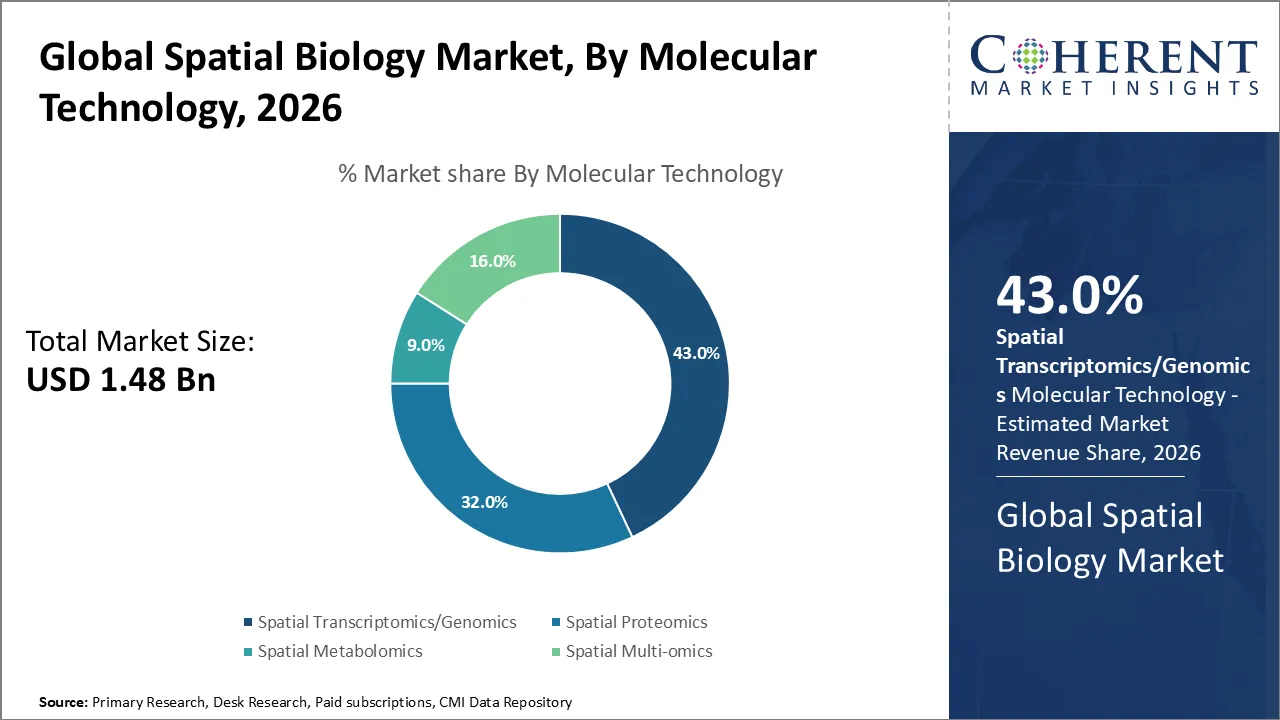
Why Does Spatial Transcriptomics/Genomics Dominate the Global Spatial Biology Market?
The spatial transcriptomics/genomics segment is projected to account for 43.0% of the global spatial biology market by 2026. The segment is witnessing growth on account of rising demand for high resolution gene expression mapping, cellular heterogeneity analysis and advanced tissue characterization. Spatial transcriptomics allows investigators to study gene expression of tissue samples without perturbing the natural spatial arrangement of cells. This ability provides important information about tumor microenvironments, cell-cell communication, and disease progression. The proliferation of spatial genomics platforms in precision oncology, neuroscience and developmental biology is prompting pharmaceutical companies and research institutions to embrace them. Next generation sequencing, imaging resolution and automated bioinformatics workflows are improving research efficiency and scalability.
On June 8, 2026, Illumina launched StrataMap Spatial Solution, a comprehensive spatial whole transcriptome research platform. The technology, the company says, can detect up to twice as many unique genes per sample as some probe-based technologies and can evaluate more than 2,000 samples annually, broadening the potential for large-scale spatial transcriptomics studies.
- Current Industry Events of 2026
- Market Size Estimation
- Regional Breakdown
- Competitive Landscape
- Customer Intelligence
- Segmental Analysis
- Pricing Analysis
- Key Market Drivers, Challenges & Future Trends
- Customized Insights Section
Why Does the Consumables Segment Dominate the Global Spatial Biology Market?
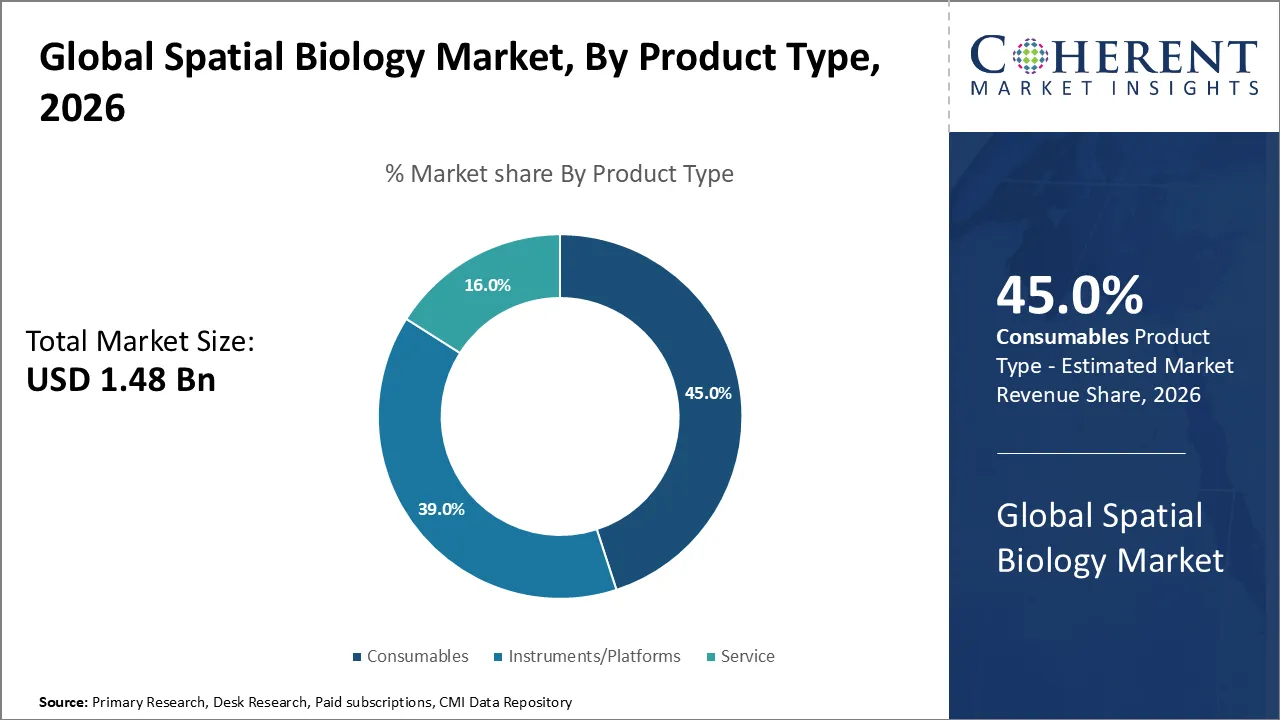
The consumables segment is expected to account for 45.0% of the global spatial biology market share in 2026. Growing adoption of spatial profiling assays, molecular reagents, tissue preparation kits and specialized slides is driving segment growth. Consumables differ from instruments which often need a single capital expenditure. Instead they offer a revenue stream with repeated experimental workflows. The increasing research activity in oncology, immunology and biomarker discovery has generated a rising demand for advanced assay kits and high-quality reagents. Additionally, the development of higher-plex spatial transcriptomics and proteomics assays is pushing labs to conduct more detailed molecular analyzes. Higher installed instrument bases and rising experimental throughput are also supporting ongoing demand for consumables.
According to 10x Genomics financial results announced on November 5, 2026, spatial consumables revenue of 10x Genomics was USD 124.4 million for the first nine months of 2026, compared to USD 103.0 million for the same period of 2025, or approximately 20.8% year-over-year growth. This is indicative of a growing commercial need for consumables in spatial profiling applications.
Why Does FFPE Dominate the Global Spatial Biology Market by Sample Type?
The FFPE (Formalin Fixed Paraffin Embedded) segment is estimated to account for 55.0% of the global spatial biology market by the year 2026. The availability of archived tissue samples in hospitals, pathology laboratories and biobanks fuels the growth of the segment. The FFPE preservation permits long-term storage of clinical specimens with preservation of tissue architecture, making these samples valuable for retrospective studies and for biomarker validation. The growing compatibility of spatial transcriptomics and proteomics platforms with FFPE tissues enables investigators to study cellular interactions and molecular expression patterns in clinically collected specimens from the past. Another driver for the adoption of FFPE compatible spatial analysis technologies is the increasing demand for translational oncology research and the development of precision diagnostics.
On February 17, 2026, Singular Genomics announced the U.S. commercial launch of its G4X spatial multi-omics platform. The platform enables simultaneous analysis of 500 RNA and 18 protein targets from FFPE tissue samples with the capacity to process up to 128 samples and 40 cm² of tissue per run.
Why Does Cancer Research Dominate the Global Spatial Biology Market?
The cancer research segment is expected to hold 53.0% of the global spatial biology market share by 2026. The growth of the segment is attributed to rising demand for knowledge of tumor heterogeneity, immune cell interactions, and mechanisms of resistance to therapy. Spatial biology technologies enable the investigator to study the molecular organization of tumors while maintaining spatial relationships between malignant cells, immune cells and surrounding tissue structures. This provides the understanding of tumor progression, metastatic development, and immunotherapy response. The increasing investment in precision oncology and cancer biomarker discovery is encouraging pharmaceutical companies and academic institutions to incorporate spatial analysis in their drug development programs. Spatial multi-omics approaches are increasingly being applied to identify clinically relevant biomarkers and possible therapeutic targets.
On May 19, 2026, a study published in Cell Reports Medicine analyzed 373 spatial transcriptomics samples across 12 cancer types and identified 56 local cellular programs and 13 recurring cellular niches, according to the researchers. The results showed relationships between spatially organized tumor microenvironments and patients’ prognosis and immunotherapy response, highlighting the significance of spatial profiling in oncology research.
Academic & Research Institutions Dominates the Global Spatial Biology Market
The academic and research institutions segment is projected to hold 42.0% of the global spatial biology market share in 2026. Growth in the segment is being supported by increasing investments in genomics research, tissue atlas development and advanced molecular imaging technologies. Universities and research institutes are the largest users of spatial transcriptomics and proteomics platforms to study cellular organization, developmental biology, neuroscience and disease mechanisms. Government-funded research initiatives and partnerships with biotechnology companies are improving access to cutting-edge spatial analysis technologies.
On July 1, 2026, the New York Genome Center announced that it has been awarded a $2.68 million research grant from the U.S. National Institutes of Health (NIH) to develop a cost-accessible spatial multi-omics platform. The aim of the research is to achieve a 1-micron spatial resolution to enable integrated molecular profiling and reduce the cost of technology to improve accessibility to academic research labs.
Current Events and Their Impact on the Spatial Biology Market
Current Event | Description and its Impact |
U.S. NIH Prioritizes Multimodal Spatial Mapping in Research Funding (October 2026) |
|
NIH Introduces Standardized Scientific Data Management Requirements (2026) |
|
Spatial Biology Market Dynamics
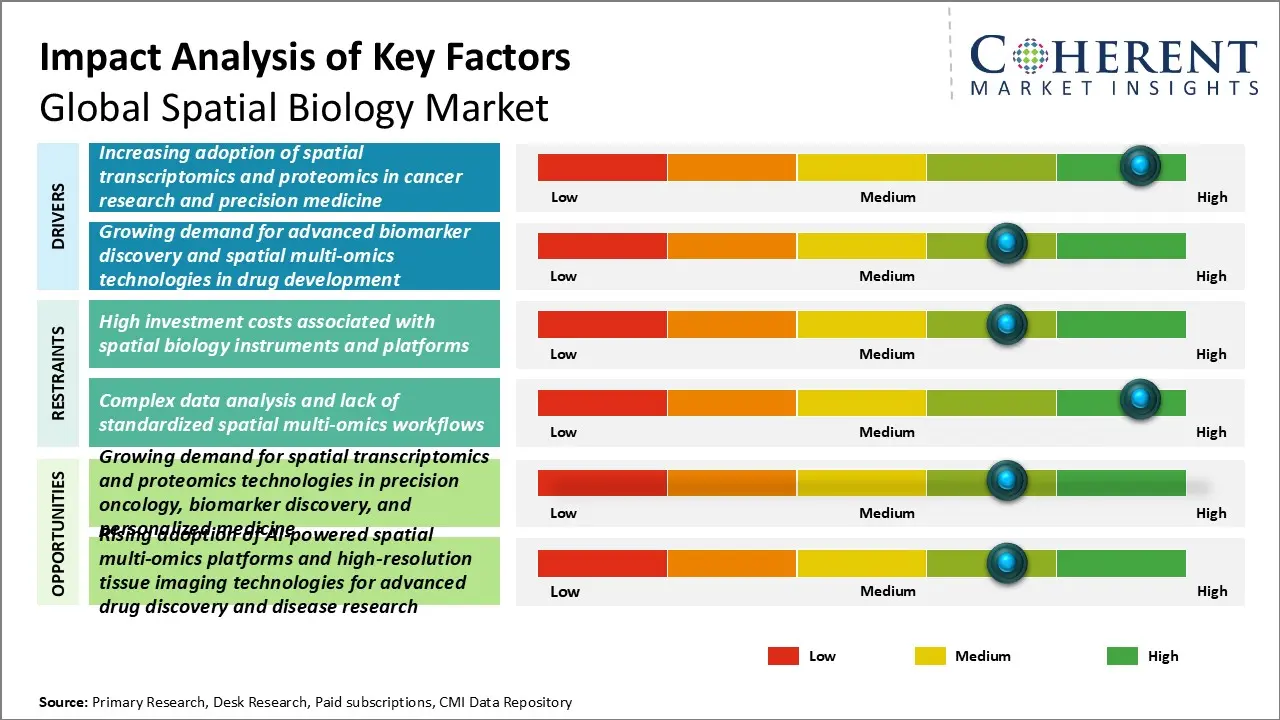
Market Drivers
- Rising occurrence of cancer and surging demand for precision oncology: One of the key factors driving the growth of the spatial biology market is the increasing global cancer burden. Researchers and pharmaceutical companies are increasingly using spatial transcriptomics, spatial proteomics and multi-omics technologies to study tumor heterogeneity, immune cell interactions and mechanisms of treatment resistance. Conventional molecular analysis often compromises important information on spatial organization of cells within tissues. Spatial biology enables investigators to map cellular neighborhoods, characterize tumor microenvironments and identify biomarkers related to disease progression and therapeutic response. Growing investments in personalized cancer therapies and development of immunotherapy are further driving the demand for specialized reagents, advanced molecular analysis solutions, and high-resolution tissue profiling platforms.
- The WHO and the International Agency for Research on Cancer (IARC) said on July 8, 2026 that the latest GLOBOCAN estimates show an estimated 20.6 million new cases of cancer and 9.8 million deaths from cancer worldwide in 2024. In 2050 there will be almost 35 million new cases of cancer per year, which underlines the significance of innovative research in oncology, discovery of biomarkers and application of precision medicine.
- Increased adoption of spatial transcriptomics and multi-omics technologies in biomedical research: The growing demand for complete cellular mapping, and a more comprehensive understanding of complex biological processes, is driving the adoption of spatial biology technologies. Universities, biotech firms and drug-discovery researchers are marrying spatial transcriptomics, proteomics and advanced imaging platforms to probe molecular activity while preserving tissue architecture. These technologies are particularly useful in the fields of neuroscience, immunology, developmental biology, and the study of diseases of the nervous system, where the spatial location and interaction of cells influence biological function. Technological advances in single-cell resolution, multiplexed imaging and computational analysis are boosting the scalability and accuracy of spatial profiling.
- On October 30, 2026, a Nature Methods publication described a method named ATLAS for atlas-scale spatial transcriptomics. Researchers profiled 40 million cells from over 400 brain tissue sections and identified more than 40 major changes in cell-type distributions and 16 alterations in regional composition.
Spatial Biology Market Trends
- Advancing the integration of artificial intelligence and machine learning in spatial biology has become increasingly important. The use of AI-driven computational platforms is enhancing various aspects, including tissue image analysis, cell classification, spatial biomarker discovery, and the prediction of therapy responses. In August 2026, a study published in Nature introduced the VirTues spatial proteomics foundation model, which was developed using datasets from over 5,100 patients and 239 protein markers across four different imaging technologies. This model demonstrated its effectiveness in tissue characterization and in predicting responses to immunotherapy.
- Increasing focus on clinical translation of spatial biology technologies There is increasing interest in applying spatial biomarkers to diagnose disease, stratify patients and assess therapeutic response, which is driving the development of standardized and clinically-validated spatial profiling workflows. Nature Reviews Bioengineering in June 2026 mentioned the shift of spatial omics from building research atlases to clinical applications, highlighting the need for scalable assays, reproducible workflows, stringent validation and integration that is regulatory-ready.
- Growing applications of spatial metabolomics and mass spectrometry imaging Increasingly popular, mass spectrometry-based spatial analysis enables investigators to map metabolites, lipids and proteins within tissues, helping to study metabolic heterogeneity, drug distribution and disease progression. Integrated tissue-level research could capitalize on progress in mass spectrometry imaging, proximity labeling, and spatial molecular analysis.
Regional Insights
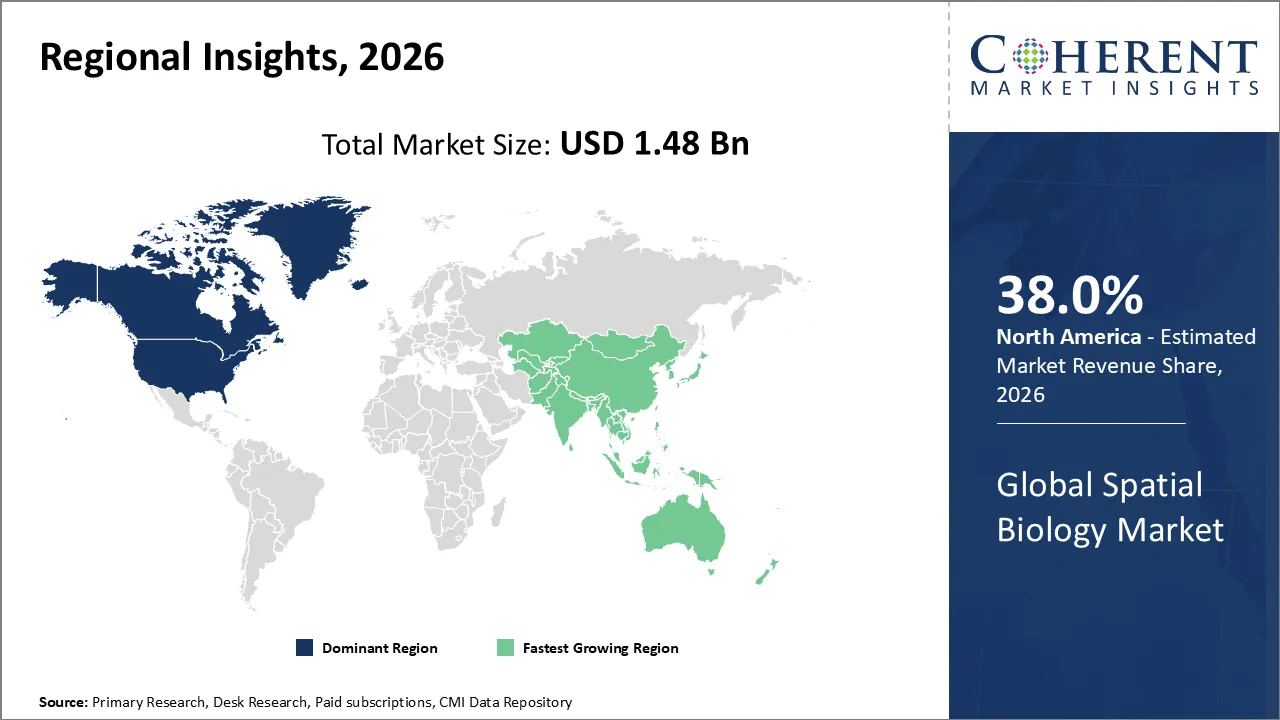
Why Does North America Dominate the Global Spatial Biology Market?
North America is projected to lead the global spatial biology market with an estimated 38.0% market share by 2026. The region’s leadership is supported by advanced biomedical research infrastructure, strong government funding for genomics research and a presence of major spatial biology technology developers. The U.S. is a key contributor to regional demand, owing to the soaring adoption of spatial transcriptomics, spatial proteomics and high-resolution molecular imaging technologies in academic institutions, pharmaceutical companies and cancer research centers. Massive research initiatives, including the National Cancer Institute’s Human Tumor Atlas Network, are driving the rapid development of spatially resolved cancer atlases and novel biomarker discovery approaches. Canada is also building up its spatial biology capabilities, through investments in precision medicine, genomics infrastructure and translational research. Further, the regional market expansion is aided by rising integration of artificial intelligence with spatial multi-omics datasets.
According to the U.S. National Cancer Institute’s (NCI) Human Tumor Atlas Network data release on August 3, 2026 included 2,383 cancer cases and 10,608 biospecimens from 20 tumor sites profiled by 34 different assay types.
Why Does the Asia Pacific Spatial Biology Market Exhibit the Fastest Growth?
Asia Pacific is expected to register the fastest growth during 2026–2033, accounting for an estimated 29.0% of the global spatial biology market in 2026. Regional market growth is being driven by the expansion of precision medicine initiatives, increasing investments in genomics research, and the growing adoption of advanced molecular profiling technologies. Government-funded research programs and partnerships between biotech companies and academic institutions are making China a key hub for innovation in spatial transcriptomics. Japan has sophisticated sequencing facilities and government-supported biomedical research and is developing its spatial genomics capabilities. Australia and Singapore are also developing spatial proteomics and multi-omics applications in cancer research, immunology and translational medicine. Opportunities will arise for regional technology developers and suppliers from the demand for locally available spatial profiling platforms, research services and high-throughput analysis technologies.
On November 5, 2025, STOmics and MGI Tech announced the launch of the Spatial Omics Grant Program in Japan, South Korea and Southeast Asia to provide researchers access to the latest Stereo-seq technology. STOmics says the platform supports whole-transcriptome spatial profiling with a field of view of more than 160 cm2, allowing for large-scale tissue analysis and cellular mapping.
Global Spatial Biology Market Outlook for Key Countries
Why is the U.S. Emerging as a Major Hub in the Spatial Biology Market?
The U.S. spatial biology market is fueled by the growing investments in biomedical research, increasing adoption of precision oncology, and presence of advanced genomics technology developers. Government-supported research programs are promoting the development of spatial transcriptomics, spatial proteomics and integrated multi-omics platforms to study complex biological mechanisms. There is an increasing adoption of spatial profiling technologies by academic institutions and pharmaceutical companies to study cellular interactions, tumor microenvironments and disease progression. The growing convergence of artificial intelligence and high-resolution molecular imaging is also improving tissue analysis. Increasing numbers of research collaborations and the need for cost-effective spatial profiling solutions are creating opportunities for instrument manufacturers, reagent suppliers and bioinformatics developers.
According to the U.S. Department of Health and Human Services, the National Human Genome Research Institute (NHGRI) listed a research award titled NextGen Spatial Multi-omics Technologies, with a project period extending from June 22, 2026, to May 31, 2030. The initiative focuses on developing cost-effective spatial multi-omics technologies capable of mapping multiple molecular characteristics within intact tissues.
Is China the Next Growth Engine for the Spatial Biology Market?
China’s spatial biology market is on the rise, fueled by higher investments in genomics research, greater application of artificial intelligence in molecular analysis, and robust government backing for biotechnology innovation. Research institutions are developing advanced spatial transcriptomics platforms and computational methods for analysis of cellular organization, gene expression and disease-related molecular interactions. The country’s growing biotechnology ecosystem and increased focus on precision oncology are driving collaborations between academic researchers, technology developers and pharmaceutical companies. Growing domestic capabilities in sequencing, tissue imaging, and spatial data analysis are also driving the availability of advanced spatial biology solutions. Further development of AI-driven molecular profiling platforms is expected to enable applications in cancer research, immunology and drug discovery.
On 10 October 2026, the Chinese Academy of Sciences announced that scientists from its Institute of Process Engineering, Shanghai University and Shanghai Jiao Tong University had created stFormer, an AI foundation model that was trained on about 4.1 million spatial transcriptomics samples from public human Visium datasets. The model showed applications in cellular classification, prediction of gene function and analysis of spatial molecular interactions.
Germany Spatial Biology Market Analysis and Trends
Germany’s spatial biology market is driven by advanced biomedical research infrastructure, robust academic-industry collaborations, and rising investments in molecular pathology and precision medicine. Research institutes and university hospitals are adopting spatial transcriptomics and proteomics platforms to study tissue architecture, immune cell interactions and disease mechanisms. The advent of single-cell sequencing and high-resolution imaging and multiplex protein analysis is enabling investigators to generate holistic molecular profiles of clinical specimens. The established pharmaceutical and biotechnology industries in Germany also support demand for advanced biomarker discovery and translational research applications. Shared research infrastructure and dedicated technology funding are becoming more readily available to academic institutions, improving access to spatial biology platforms.
On January 29, 2026, the University of Münster announced its IZKF Technology Grants program for 2026–2027, offering up to EUR 10,000 per project for spatial biology research using the new Biology in Context (BIC) core facility. The facility offers access to Visium and Xenium spatial transcriptomics platforms, MACSima spatial proteomics and advanced tissue imaging technologies.
U.K. Spatial Biology Market Analysis and Trends
The U.K. spatial biology market is being driven by increased genomics research funded by government, advanced biomedical infrastructure and growing demand for high-resolution cellular analysis technologies. Spatial transcriptomics, molecular imaging and computational biology are being used more and more by research institutions to study disease mechanisms and find possible therapeutic targets. Government-supported initiatives are encouraging the development of user-friendly spatial profiling platforms and advanced bioinformatics tools. The country’s vibrant pharmaceutical research ecosystem, backed by universities and biotech firms, is pushing the adoption of spatial analysis in oncology, neuroscience and immunology. At the same time, growing focus on experimental workflows that are both scalable and cost-effective is creating opportunities for developers of spatial assays, providers of sequencing technology and specialized research service organizations.
According to UKRI said the Biotechnology and Biological Sciences Research Council (BBSRC) awarded the Earlham Institute GBP 660,720 for a project called An Advanced Spatial Transcriptomics Platform for the UK Bioscience Community, from July 2025 to July 2026. The investment will support the development of spatial transcriptomics capabilities and broader access to sophisticated molecular profiling infrastructure.
Japan Spatial Biology Market Analysis and Trends
Japan's spatial biology market is driven by its strong molecular research capabilities, the expanding use of spatial biology in precision medicine, and the growing convergence of computational biology and tissue-level molecular profiling. Research organizations are applying spatial transcriptomics and proteomics to understand complex disease mechanisms, especially in oncology, neuroscience and age-related diseases. The country’s existing biotechnology research ecosystem and government-supported scientific institutions are driving the development of advanced molecular diagnostics and biomarker discovery technologies. Machine learning has been being utilized more and more by researchers on spatial gene expression data to identify cell patterns associated with disease progression and treatment response. Increasing interest in translational research and personalized treatment approaches are likely to drive the demand for spatial profiling platforms and specialized molecular analysis services.
On February 18, 2026 Development of machine learning biomarker to assess liver cancer risk using spatial transcriptomics announced by RIKEN of Japan. The researchers identified a molecular signature of 167 differentially expressed genes in the tumor-associated microenvironment and constructed a predictive model that can recognize the associated molecular pattern with 93% accuracy. The results underscore the power of spatial biology in cancer risk assessment and precision oncology research.
How is the Integration of AI-Powered Spatial Multi-omics Creating New Growth Opportunities in the Spatial Biology Market?
The global spatial biology market is growing as artificial intelligence, machine learning and advanced multi-omics technologies are increasingly being integrated. AI-driven spatial analysis allows investigators to more efficiently process complex transcriptomic, proteomic and imaging datasets to identify cell interactions and discover disease-associated biomarkers. The pharmaceutical and biotechnology industries are actively exploring AI-powered spatial profiling to better understand tumor microenvironments, predict therapeutic responses, and improve drug target discovery. New emerging multimodal foundation models are creating more opportunities for automated tissue analysis, patient stratification and precision medicine research.
For example, on March 25, 2026, Bioptimus announced the launch of its Spatial Tissue Embedding Learning Atlas (STELA) in collaboration with 10x Genomics and Broad Clinical Labs. The initiative aims to profile up to 100,000 patient specimens, about 20 times larger than existing spatial biology atlases. The project will combine spatial transcriptomics, pathology imaging, multi-omics and longitudinal clinical data to enable the development of AI-based biological foundation models.
Market Players, Key Development, and Competitive Intelligence
Key Developments
- In February 2026, Bruker unveiled a suite of spatial biology innovations at AGBT 2026, including the PaintScape platform for 3D genome visualization, CosMx mouse whole-transcriptome panel, enhanced GeoMx multi-omics offerings and AI-ready AtoMx analysis.
- In March 2026, Bio-Techne expanded its COMET spatial biology portfolio with the introduction of SPYRE Focus Panels for stromal and vascular tissue analysis and SPYRE Amplification Kits. The additions target improved low-abundance biomarker detection and more flexible automated spatial profiling workflows.
Competitive Landscape
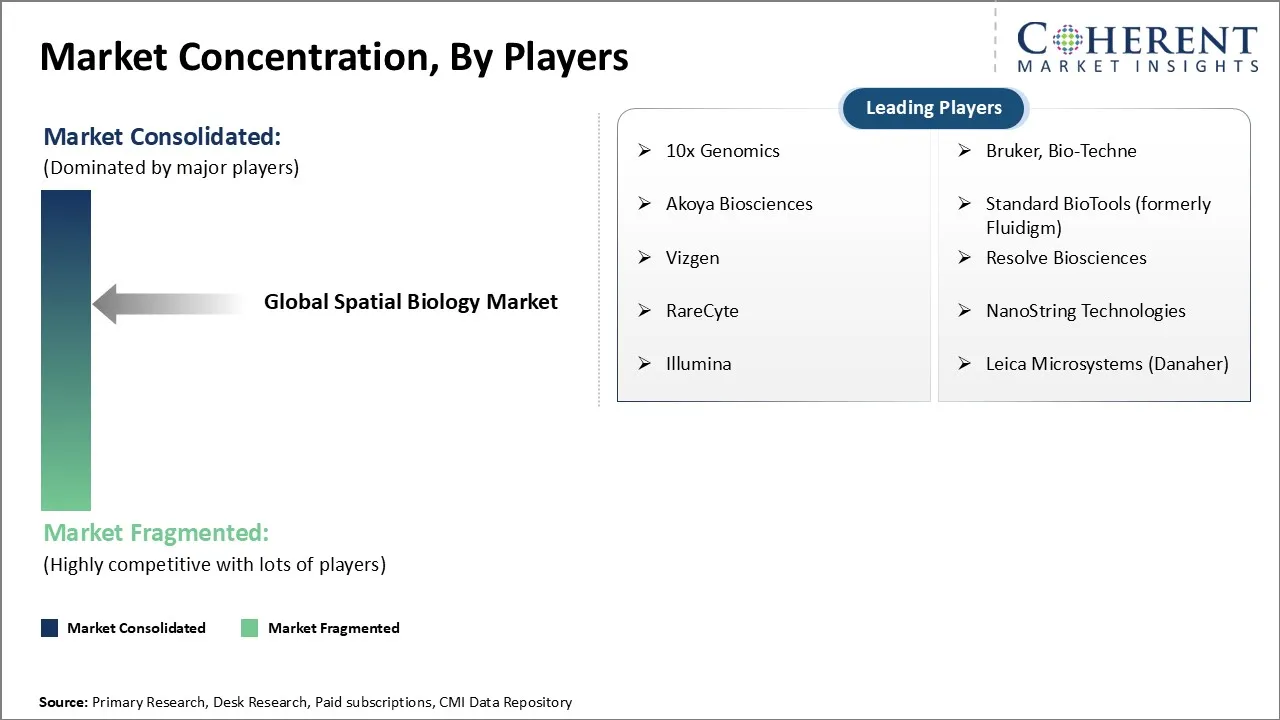
The global spatial biology market is highly competitive, with leading life science technology companies focusing on high-resolution spatial profiling, multi-omics integration, and AI-enabled tissue analysis. 10x Genomics is strengthening its position through Xenium and Visium platforms, while Bruker offers CosMx, GeoMx, and CellScape technologies for spatial transcriptomics and proteomics. Bio-Techne is expanding its spatial analysis portfolio through COMET and RNAscope solutions, while Quanterix, following its acquisition of Akoya Biosciences, offers PhenoCycler and PhenoImager platforms for multiplex tissue imaging. Vizgen and Resolve Biosciences specialize in high-resolution spatial RNA profiling, whereas RareCyte focuses on multiplex spatial proteomics through its Orion platforms. Illumina is advancing sequencing-based spatial transcriptomics, while Leica Microsystems (Danaher) provides automated tissue imaging and spatial phenotyping solutions. Competitive differentiation increasingly depends on multiplexing capabilities, analytical accuracy, FFPE compatibility, workflow automation, and AI-driven data analysis
Top Manufacturers and Notable Products/Solutions in the Spatial Biology Market
Company/Manufacturer | Notable Product/Brand | Key Features |
10x Genomics | Xenium In Situ Analyzer; Visium HD | High-resolution spatial transcriptomics, subcellular RNA detection, whole-transcriptome gene expression mapping, FFPE tissue analysis, spatial visualization |
Bruker | CosMx Spatial Molecular Imager; GeoMx Digital Spatial Profiler | High-plex RNA and protein detection, single-cell and subcellular imaging, spatial multi-omics analysis, FFPE compatibility, tissue biomarker discovery |
Bio-Techne | COMET Platform; RNAscope | Automated multiplex tissue imaging, spatial proteomics, RNA in situ hybridization, integrated staining and imaging, biomarker detection |
Quanterix (formerly Akoya Biosciences) | PhenoCycler-Fusion; PhenoImager HT | Multiplex immunofluorescence imaging, high-plex spatial proteomics, automated tissue analysis, cellular phenotyping, tumor microenvironment characterization |
Vizgen | MERSCOPE Ultra | MERFISH-based spatial transcriptomics, up to 1,000 RNA targets, single-molecule detection, high-resolution tissue imaging, automated cell segmentation |
Resolve Biosciences | Molecular Cartography; MC2 Platform | Single-molecule RNA detection, spatial gene expression mapping, combined RNA and protein analysis, tissue morphology integration, FFPE compatibility |
RareCyte | Orion HT; Orion LE | High-plex spatial proteomics, multiplex immunofluorescence, whole-slide imaging, automated sample processing, quantitative biomarker analysis |
Illumina | StrataMap Spatial Transcriptome | Unbiased whole-transcriptome profiling, cellular-resolution spatial mapping, next-generation sequencing integration, scalable tissue analysis, spatial bioinformatics |
Leica Microsystems (Danaher) | Autiva Spatial Phenotyper | Automated cyclic staining, high-plex fluorescence imaging, AI-powered tissue analysis, spatial cellular phenotyping, high-throughput imaging |
Market Report Scope
Spatial Biology Market Report Coverage
Report Coverage | Details | ||
Base Year: | 2025 | Market Size in 2026: | USD 1.48 Bn |
Historical Data for: | 2020 to 2024 | Forecast Period: | 2026 to 2033 |
CAGR: | 19.3% | 2033 Value Projection: | USD 5.09 Bn |
Geographies covered: |
| ||
Segments covered: |
| ||
Companies covered: | 10x Genomics, Bruker, Bio-Techne, Akoya Biosciences, Standard BioTools (formerly Fluidigm), Vizgen, Resolve Biosciences, RareCyte, NanoString Technologies, Illumina, Leica Microsystems (Danaher) | ||
Growth Drivers: |
| ||
Restraints & Challenges: |
| ||
Analyst Opinion (Expert Opinion)
- The future of the global spatial biology market will increasingly focus on integrated spatial multi-omics, three-dimensional tissue profiling, and artificial intelligence-powered molecular analysis. Researchers are moving beyond conventional two-dimensional gene expression mapping toward technologies that simultaneously examine RNA, proteins, and cellular interactions within intact tissues. These advancements are expected to strengthen applications in precision oncology, drug discovery, and personalized medicine.
- The biggest growth opportunities are expected to be in pharmaceutical research, translational oncology, academic research infrastructure and spatial biomarker discovery. The North American regional market is expected to dominate the market due to its developed biotechnology ecosystem and higher research investments. Whereas, the Asia Pacific regional market is expected to have a higher growth due to emerging genomics capabilities and precision medicine initiatives. Growing use of multiplex tissue profiling will drive demand for spatial biology instruments, reagents and research services. Bio-Techne’s Diagnostics and Spatial Biology business segment accounted for approximately USD 336.4 million in revenue, representing approximately 28% of the company’s total revenue, according to its FY2026 annual filing.
- Market players need to focus on affordable spatial profiling solutions, higher sample throughput, FFPE compatibility, standardized workflows, and integrated bioinformatics capabilities to drive commercial adoption. The high costs of instruments, complicated interpretation of data and lack of technical expertise remain major challenges, particularly in smaller academic labs and nascent research institutions. Manufacturers with flexible pricing, contract research services, automated analysis and application specific assay panels may have a competitive advantage. For example, on 27 January 2026, Signios Bio launched its Xenium 5K Spatial Transcriptomics Grant Program in collaboration with 10x Genomics to support six research projects in three award categories.
Speak to the analyst
Want personalized insights?
Take the findings above to one of our principal consultants, or have the report rebuilt around the segments, geographies and competitors you actually track.
Market Segmentation
- By Molecular Technology (Revenue, USD Bn, 2021-2033)
- Spatial Transcriptomics/Genomics
- Spatial Proteomics
- Spatial Metabolomics
- Spatial Multi-omics
- By Product Type (Revenue, USD Bn, 2021-2033)
- Consumables
- Instruments/Platforms
- Service
- By Sample Type (Revenue, USD Bn, 2021-2033)
- FFPE (Formalin-Fixed, Paraffin-Embedded)
- Fresh Frozen Tissue
- Fixed Frozen
- By Application (Revenue, USD Bn, 2021-2033)
- Cancer Research
- Immunology & Infectious Diseases
- Neuroscience
- By End User (Revenue, USD Bn, 2021-2033)
- Pharmaceutical & Biotechnology Companies
- Academic & Research Institutions
- Contract Research Organizations (CROs)
- Hospitals
- By Region (Revenue, USD Bn, 2021-2033)
- North America
- U.S.
- Canada
- Latin America
- Brazil
- Mexico
- Argentina
- Rest of Latin America
- Europe
- Germany
- U.K.
- France
- Italy
- Spain
- Russia
- Rest of Europe
- Asia Pacific
- China
- India
- Japan
- Australia
- South Korea
- ASEAN
- Rest of Asia Pacific
- Middle East
- GCC
- Israel
- Rest of Middle East
- Africa
- South Africa
- Central Africa
- North Africa
- North America
- Key Players
- 10x Genomics
- Bruker
- Bio-Techne
- Akoya Biosciences
- Standard BioTools (formerly Fluidigm)
- Vizgen
- Resolve Biosciences
- RareCyte
- NanoString Technologies
- Illumina
- Leica Microsystems (Danaher)
Sources
Primary Research Interviews
- Spatial biology and spatial omics researchers
- Spatial transcriptomics and spatial proteomics technology developers
- Molecular biologists, genomics researchers, and bioinformatics experts
- R&D heads from pharmaceutical and biotechnology companies
- Oncology researchers, molecular pathologists, and precision medicine specialists
- Academic research institution and CRO laboratory directors
- Key opinion leaders (KOLs) in spatial biology, single-cell analysis, and multi-omics technologies
Databases
- National Institutes of Health (NIH)
- National Center for Biotechnology Information (NCBI) – PubMed
- National Cancer Institute (NCI)
- National Human Genome Research Institute (NHGRI)
- National Science Foundation (NSF)
- European Commission – CORDIS Research and Innovation Database
Magazines
- GEN – Genetic Engineering & Biotechnology News
- The Scientist
- BioTechniques
- Technology Networks
- Drug Discovery World
- European Pharmaceutical Review
Journals
- Nature Biotechnology
- Nature Methods
- Nature Genetics
- Nature Communications
- Cell Systems
- Genome Biology
- Genome Research
- Molecular & Cellular Proteomics
- Journal of Proteome Research
Newspapers
- The New York Times
- The Guardian
- The Wall Street Journal
- Financial Times
- The Economic Times
Associations
- American Association for Cancer Research (AACR)
- American Society of Human Genetics (ASHG)
- Human Cell Atlas (HCA) Consortium
- Human Proteome Organization (HUPO)
- International Society for Computational Biology (ISCB)
- European Molecular Biology Organization (EMBO)
- American Society for Biochemistry and Molecular Biology (ASBMB)
Public Domain Sources
- Company Annual Reports and Investor Presentations
- Government Genomics and Precision Medicine Research Publications
- University Research Publications and Spatial Biology Research Reports
- ClinicalTrials.gov and Publicly Available Clinical Research Data
- Patent Databases such as WIPO, USPTO, and Google Patents
- Publicly Available Spatial Transcriptomics and Proteomics Research Datasets
- Regulatory and Standards Publications from FDA, EMA, and NIH
- Official Product Launches, Technology Announcements, and Research Collaborations
Proprietary Elements
- CMI Data Analytics Tool
- Proprietary CMI Existing Repository of Information for the Last 10 Years
Get access to 250+ pages report
Every segment, forecast, competitor profile and data table behind the analysis above — available for instant download.
- ESOMAR Member
- ISO 9001:2015 Certified
- D-U-N-S Registered
- GDPR & CCPA Compliant
Frequently Asked Questions
The Spatial Biology Market is expected to reach USD 5.09 Bn in 2033, compared to USD 1.48 Bn in 2026.
Major players operating in the global Spatial Biology Market include 10x Genomics, Bruker, Bio-Techne, Akoya Biosciences, Standard BioTools (formerly Fluidigm), Vizgen, Resolve Biosciences, RareCyte, NanoString Technologies, Illumina, and Leica Microsystems (Danaher).
High investment costs associated with spatial biology instruments, complex data analysis requirements, limited technical expertise, and lack of standardized spatial multi-omics workflows are the key factors hampering market growth.
Increasing adoption of spatial transcriptomics and proteomics in cancer research, growing demand for precision medicine, advancements in molecular imaging technologies, and expanding applications of spatial multi-omics in biomarker discovery and drug development are driving market growth.
The Spatial Biology Market is anticipated to grow at a CAGR of 19.3% between 2026 and 2033.
North America is expected to dominate the global Spatial Biology Market, accounting for approximately 38.0% of the market share in 2026, while Asia Pacific is anticipated to be the fastest-growing regional market.
Spatial biology is an advanced molecular analysis approach that enables researchers to study the distribution, expression, and interactions of genes, proteins, and metabolites within intact tissue samples while preserving their original spatial organization.