

Bioinformatics Market Size and Share Analysis - Growth Trends and Forecasts (2026-2033)
Bioinformatics Market is estimated to be valued at USD 39.22 Bn in 2026 and is expected to reach USD 150.67 Bn in 2033, exhibiting a compound annual growth rate (CAGR) of 21.2% from 2026 to 2033.
Key Takeaways
- Based on Product Type, the Bioinformatics Platforms segment is expected to dominate the market with 66.6% share in 2026, owing to enabling efficient analysis and visualization of complex biological data.
- Based on Application, the Genomics segment is expected to lead the market with the largest share in 2026, due to its critical role in personalized medicine and large-scale sequencing projects.
- Based on Region, North America is set to lead the bioinformatics market in 2026 with 35.9% share in 2026. While, Asia Pacific is anticipated to be the fastest growing region.
Market Overview
The Bioinformatics Market is witnessing robust demand driven by advancements in genomics, proteomics, and AI-powered data analytics. Increasing volumes of biological data from next-generation sequencing and personalized medicine are fueling the need for sophisticated bioinformatics platforms. Pharmaceutical and biotech companies are leveraging these tools for drug discovery, disease modeling, and precision healthcare. Additionally, academic research and agricultural genomics are expanding the market’s scope. The rising bioinformatics market demand reflects a shift toward data-centric approaches in life sciences, supported by cloud computing and integrated software solutions that enhance data interpretation and collaboration across disciplines.
Current Events and their Impacts on the Bioinformatics Market
Current Event | Description and its Impact |
European Digital Health Strategy and GDPR Evolution |
|
Cloud Infrastructure Consolidation and Edge Computing Rise |
|
Role of Artificial Intelligence (AI) in Bioinformatics Market
Artificial intelligence (AI) is revolutionizing the bioinformatics market by enhancing the speed, accuracy, and scalability of biological data analysis. AI algorithms are increasingly used to interpret complex genomic, proteomic, and metabolomic datasets, enabling faster drug discovery, disease prediction, and personalized medicine. Machine learning models help identify patterns and biomarkers that traditional methods might miss, while deep learning accelerates image and sequence analysis. As AI tools become more sophisticated, they are integrated into cloud-based platforms, making bioinformatics more accessible and collaborative. This synergy between AI and bioinformatics is driving innovation and expanding market opportunities across healthcare, agriculture, and environmental sciences.
For instance, in September 2025, Experts at the Swiss Institute of Bioinformatics (SIB) recently shared cutting-edge innovations in AI and bioinformatics to advance data-driven biology. The event highlighted breakthroughs in genomics, proteomics, and computational tools that enhance biological data analysis. These insights underscore the growing role of AI-powered bioinformatics in transforming research, healthcare, and life sciences globally.
- Current Industry Events of 2026
- Market Size Estimation
- Regional Breakdown
- Competitive Landscape
- Customer Intelligence
- Segmental Analysis
- Pricing Analysis
- Key Market Drivers, Challenges & Future Trends
- Customized Insights Section
Segmental Insights
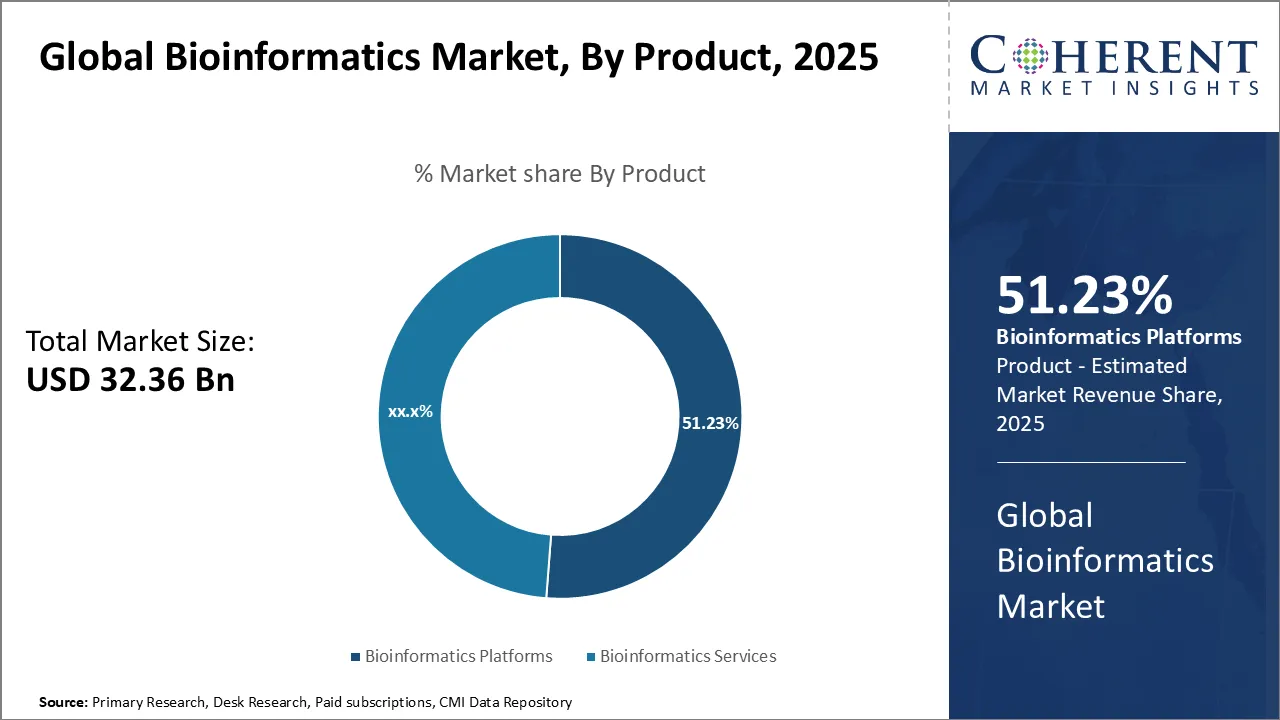
Bioinformatics Market Insights, By Product: Bioinformatics Platforms Leads by Enabling Efficient Analysis and Visualization of Complex Biological Data
In terms of product, the bioinformatics platforms segment is expected to lead the market with 66.6% share in 2026, driven by the surge in biological data from next-generation sequencing, proteomics, and transcriptomics. These platforms provide integrated environments for data storage, analysis, and visualization, enabling researchers and clinicians to interpret complex datasets efficiently. Their scalability, compatibility with cloud computing, and ability to support multi-omics integration make them indispensable in both academic and commercial settings. As precision medicine and AI-driven drug discovery gain momentum, the demand for robust bioinformatics platforms continues to rise, positioning them as the backbone of modern life sciences research.
For instance, in October 2025, Sequoia Applied Technologies unveiled GenXflo, a new bioinformatics platform, at BioConnect 3.0. Designed to streamline genomic data analysis, GenXflo integrates AI-powered tools and cloud infrastructure to support precision medicine and clinical research. The launch marks a major step in advancing accessible, scalable bioinformatics solutions for life sciences.
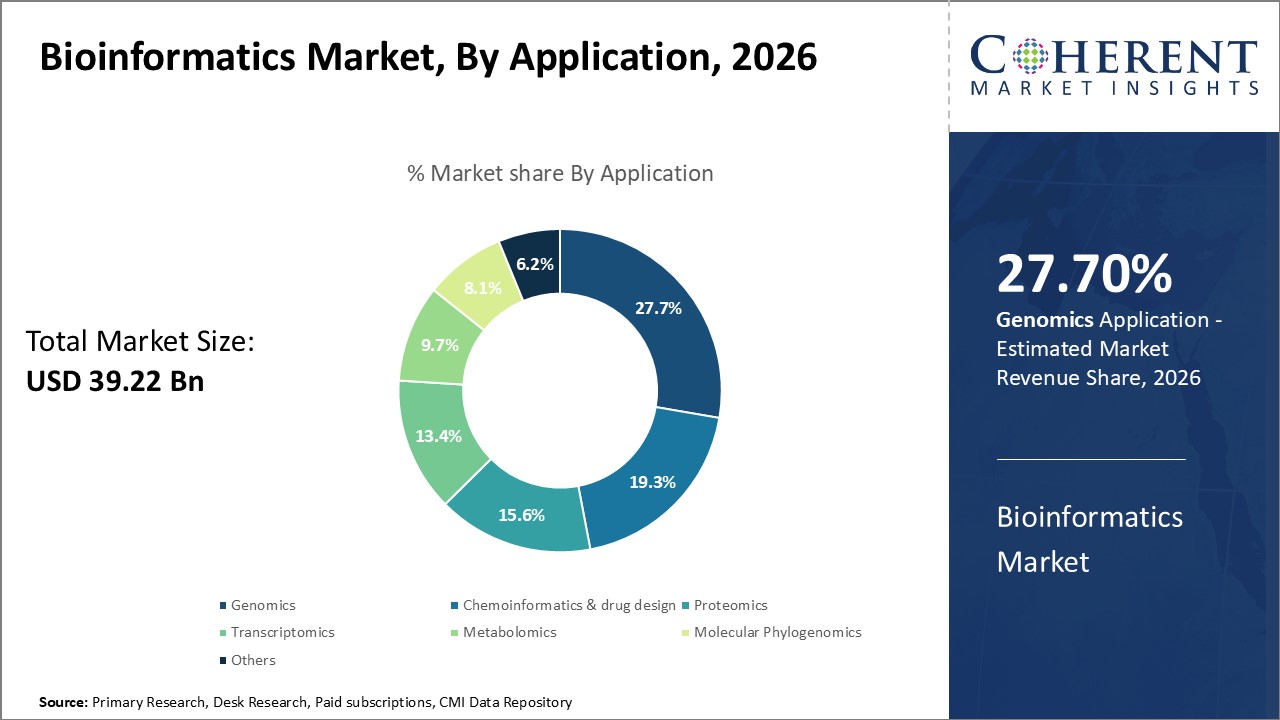
Bioinformatics Market Insights, By Application: Genomics Dominates Due To Its Critical Role in Personalized Medicine and Large-Scale Sequencing Projects
In terms of application, the genomics segment is projected to account for the largest share of the market in 2026, fueled by advancements in genome sequencing technologies and personalized medicine. The ability to decode entire genomes has revolutionized disease diagnosis, risk prediction, and therapeutic development. Bioinformatics tools are essential for managing and analyzing vast genomic datasets, identifying genetic variants, and understanding gene expression patterns. Genomics applications span across healthcare, agriculture, and evolutionary biology, making it the most impactful and widely adopted segment. The growing emphasis on population genomics and CRISPR-based gene editing further amplifies the demand for bioinformatics solutions tailored to genomic research.
For instance, in September 2025, Alnylam Pharmaceuticals joined the Alliance for Genomic Discovery, led by Illumina and Nashville Biosciences, to expand a major clinical genomic dataset. The initiative adds 31,250 new whole-genome sequences to a cohort of 250,000, using Illumina’s bioinformatics tools to accelerate drug discovery and precision medicine, especially for autoimmune and neurodegenerative diseases.
Regional Insights
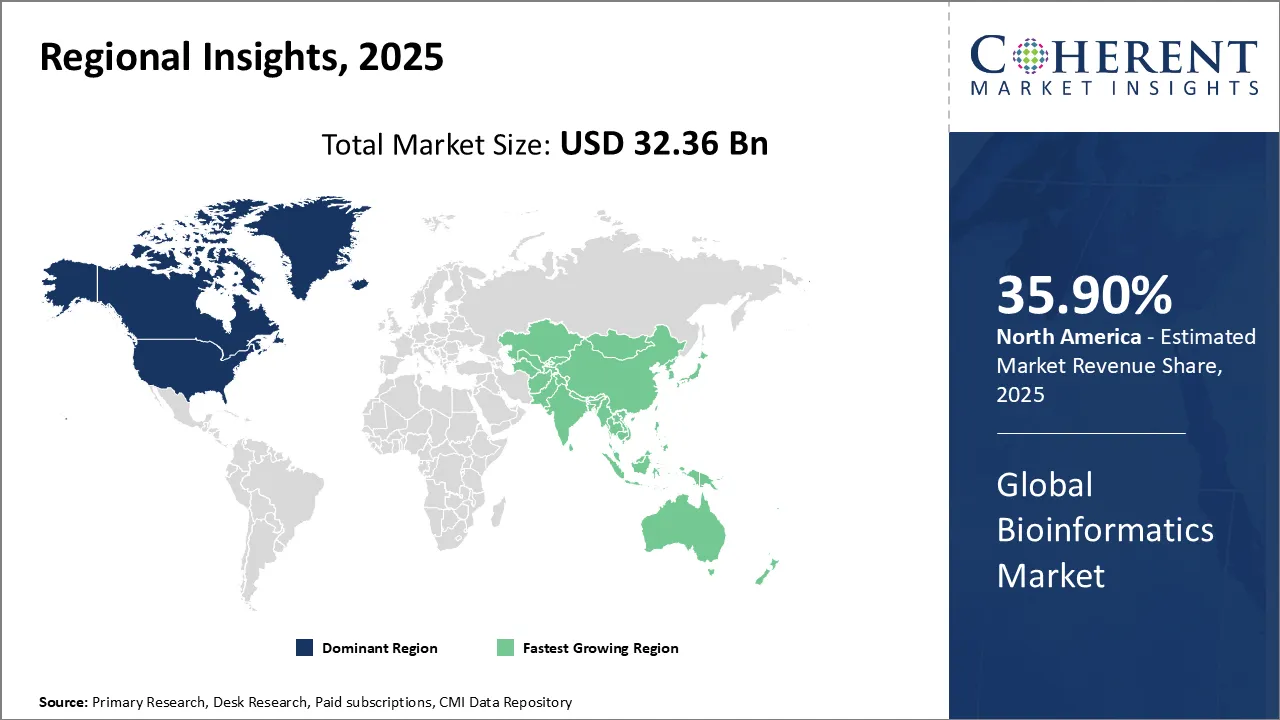
North America Bioinformatics Market Analysis & Trends
North America, holing 35.9% share in 2026, is expected to lead the bioinformatics market, due to advanced healthcare infrastructure, strong biotech and pharmaceutical presence, and significant investment in genomics and precision medicine. Widespread adoption of next-generation sequencing and AI-driven analytics, along with supportive regulatory frameworks, further accelerates the region’s leadership in bioinformatics innovation and application.
For instance, in June 2026, Columbia University launched the Center for Innovation in Imaging Biomarkers and Integrated Diagnostics (CIMBID) in New York City. The center aims to advance precision medicine by integrating radiology, pathology, and genomics using AI and bioinformatics tools. CIMBID will develop imaging biomarkers and data-driven diagnostics to improve disease detection and treatment.
Asia Pacific Bioinformatics Market Analysis & Trends
Asia Pacific is expected to exhibit the fastest growth of the market, due to rising investments in healthcare infrastructure, growing biotech industries, and increasing adoption of genomic technologies. Government initiatives, large patient populations, and cost-effective research capabilities drive demand. Countries like China, India, and Japan are leading innovation in personalized medicine, agricultural genomics, and bioinformatics education.
For instance, in July 2026, Singapore launched the Tishumap study to advance AI-driven drug target discovery. The initiative integrates single-cell sequencing and spatial transcriptomics to map tissue-specific gene expression. By combining multiomic data and computational biology, Tishumap aims to identify novel therapeutic targets and accelerate precision medicine development through cutting-edge bioinformatics and machine learning tools.
Bioinformatics Market Outlook Country-Wise
The U.S. Bioinformatics Market Trends
In 2026, the U.S. bioinformatics market is booming due to strong investments in genomics, precision medicine, and AI-driven healthcare. Major biotech firms, academic institutions, and government agencies like NIH drive innovation. High demand for personalized therapies and advanced data analytics tools fuels growth across clinical diagnostics, drug discovery, and agricultural genomics.
For instance, in April 2026, Signios Bio launched with an AI-driven bioinformatics and multiomics platform aimed at transforming precision medicine and drug discovery. The platform integrates genomics, proteomics, and metabolomics data using machine learning to accelerate therapeutic target identification and biomarker discovery. This marks a significant step in advancing data-powered healthcare innovation.
China Bioinformatics Market Trends
China’s bioinformatics market is booming in 2026 due to strong government support for precision medicine, rapid growth in genomics research, and expanding biotech investments. The country’s focus on AI integration, population-scale genome projects, and healthcare modernization fuels demand for bioinformatics tools to analyze complex biological data and accelerate drug discovery and diagnostics.
For instance, in May 2026, China’s Viva Biotech launched a new AI-driven drug discovery platform to accelerate therapeutic development. The platform integrates artificial intelligence with bioinformatics and structure-based design to identify novel drug targets more efficiently. This initiative strengthens China’s position in precision medicine and showcases the growing role of computational tools in pharmaceutical innovation.
Market Report Scope
Bioinformatics Market Report Coverage
| Report Coverage | Details | ||
|---|---|---|---|
| Base Year: | 2025 | Market Size in 2026: | USD 39.22 Bn |
| Historical Data for: | 2020 To 2024 | Forecast Period: | 2026 To 2033 |
| Forecast Period 2026 to 2033 CAGR: | 21.2% | 2033 Value Projection: | USD 150.67 Bn |
| Geographies covered: |
| ||
| Segments covered: |
| ||
| Companies covered: | Active Motif, Inc., Illumina, Inc., Life Technologies, Affymetrix, Inc., Agilent Technologies, Bio-Rad Laboratories, Inc., Qiagen, Knome, Inc., GE Healthcare, Geneva Bioinformatics SA, Quest Diagnostics, bitBiome, Inc., Intomics, Advanced BioInformatics GmbH, and Fios Genomics Ltd. | ||
| Growth Drivers: |
| ||
| Restraints & Challenges: |
| ||
Global Bioinformatics Market Drivers
Significant growth in the pharmaceutical sector
The significant growth in the pharmaceutical sector is fueling rapid bioinformatics market growth in 2025. As drug discovery becomes more data-driven, bioinformatics tools are essential for analyzing genomic, proteomic, and metabolomic datasets. Pharmaceutical companies increasingly rely on AI-powered bioinformatics platforms to identify therapeutic targets, predict drug responses, and streamline clinical trials. This surge in demand is driven by the need for personalized medicine, faster R&D cycles, and regulatory compliance. With expanding applications in diagnostics and precision therapies, bioinformatics is becoming a cornerstone of pharmaceutical innovation, making it one of the fastest-growing segments in the life sciences industry.
Various advantages of bioinformatics
Bioinformatics offers numerous advantages that are driving bioinformatics market research in 2025. It enables efficient analysis of complex biological data, accelerating drug discovery, disease diagnosis, and personalized medicine. By integrating genomics, proteomics, and AI, bioinformatics enhances predictive modeling and biomarker identification. It reduces research costs and time by streamlining data interpretation and hypothesis generation. In agriculture, it improves crop yield and disease resistance. In clinical settings, it supports precision diagnostics and treatment planning. These multifaceted benefits are fueling global demand, prompting increased investments and innovation. As a result, Bioinformatics Market research is expanding rapidly across healthcare, pharma, and life sciences sectors.
Global Bioinformatics Market Trends
Grants for R&D in bioinformatics
Grants for R&D in bioinformatics are significantly boosting innovation and driving bioinformatics market price upward in 2025. Governments and private institutions are investing heavily in genomic research, AI integration, and multiomics technologies. These funds support the development of advanced bioinformatics tools for drug discovery, personalized medicine, and disease modeling. Increased R&D activity leads to new product launches and enhanced data analytics capabilities, attracting more stakeholders to the market. As demand for precision healthcare grows, grant-backed research accelerates breakthroughs, raising the overall value and competitiveness of the bioinformatics sector. This surge in funding directly influences Bioinformatics Market price and global expansion.
Global Bioinformatics Market Opportunity
Cloud-Based Bioinformatics Solutions
Cloud-based bioinformatics solutions are transforming the landscape of biological data analysis, driving a key trend in the bioinformatics market forecast. These platforms offer scalable, secure, and collaborative environments for processing vast genomic and multiomic datasets. As academic institutions and pharmaceutical companies increasingly adopt cloud-native tools, they benefit from real-time data sharing, reduced infrastructure costs, and enhanced computational power. This shift enables faster drug discovery, personalized medicine, and global research collaboration. With rising demand for flexible and interoperable bioinformatics systems, cloud adoption is expected to significantly influence Bioinformatics Market forecast, contributing to robust growth across healthcare, life sciences, and agricultural sectors.
Analyst Opinion (Expert Opinion)
The bioinformatics market value is shifting from a data-generation focus to a value-driven analytics ecosystem, where insight extraction and validated computational models define competitive advantage. With sequencing costs dropping to a few hundred dollars per genome, according to Illumina (2024), analysis and interpretation, not sequencing, now dominate cost and complexity. The growing availability of millions of human genomes and the AlphaFold database, hosting over 200 million predicted protein structures (EMBL-EBI, 2023), exemplify how AI-driven biology is transforming target discovery and drug design efficiency.
Firms that merge scalable compute, curated data, and domain-specific AI are capturing significant value, as demonstrated by Benchling’s enterprise-scale adoption and recurring revenue growth. However, the rapid proliferation of omics data exposes severe challenges in standardization, metadata integrity, and regulatory compliance. Vendors capable of offering explainable AI, validated pipelines, and traceable data governance are gaining strategic importance in clinical and pharmaceutical applications.
The market is clearly bifurcating: open-source and commodity tools serve as enablers, while premium platforms deliver integrated, compliant, and high-fidelity insights. The winners will be those who can combine scientific accuracy with regulatory trust, turning massive biological datasets into actionable, reproducible, and monetizable intelligence.
Speak to the analyst
Want personalized insights?
Take the findings above to one of our principal consultants, or have the report rebuilt around the segments, geographies and competitors you actually track.
Key Developments
- In November 2025, QIAGEN announced its acquisition of Parse Biosciences to expand its sample technologies portfolio into scalable single-cell solutions. This move enhances QIAGEN’s capabilities in single-cell RNA sequencing and bioinformatics, supporting applications in drug discovery, disease research, and precision medicine. The acquisition strengthens QIAGEN’s position in the fast-growing single-cell analysis market.
- In September 2025, BGI Genomics leveraged its AI-powered bioinformatics to support Saudi Arabia’s Vision 2030 healthcare transformation. The initiative focuses on genomic data analysis, population health, and precision medicine. By partnering with Saudi institutions, BGI aims to build advanced genomic infrastructure and deliver personalized healthcare solutions through cutting-edge bioinformatics and artificial intelligence technologies.
- In June 2025, African scientists launched the African Bioinformatics Institute to advance genomics research and data science across the continent. Led by the University of Cape Town, the institute aims to build regional capacity in bioinformatics, support precision medicine, and foster collaboration in disease surveillance and healthcare innovation. This marks a major milestone in Africa’s scientific development.
- On April 2023, Agilent Technologies Inc., which delivers complete scientific solutions, helping customers achieve superior outcomes in their labs, clinics, and business, announced the launch of the Agilent SureSelect Cancer CGP Assay designed for somatic variant profiling for a broad range of solid tumor types. The pan-cancer assay design is based on an NGS panel comprising 679 genes globally curated from leading cancer databases and in partnership with key clinical cancer researchers. The assay workflow is efficient, automatable, and flexible, making tumor molecular profiling more accessible to the broad clinical research community.
Market Segmentation
- Global Bioinformatics Market, By Product Type (Revenue, USD Bn, 2021 - 2033)
- Bioinformatics Platforms
- Bioinformatics Services
- Global Bioinformatics Market, By Application (Revenue, USD Bn, 2021 - 2033)
- Genomics
- Chemoinformatics and drug design
- Proteomics,
- Transcriptomics
- Metabolomics
- Molecular Phylogenomics
- Others
Regional Insights (Revenue, USD Bn, 2021 - 2033)
- North America
- U.S.
- Canada
- Latin America
- Brazil
- Argentina
- Mexico
- Rest of Latin America
- Europe
- Germany
- U.K.
- Spain
- France
- Italy
- Russia
- Rest of Europe
- Asia Pacific
- China
- India
- Japan
- Australia
- South Korea
- ASEAN
- Rest of Asia Pacific
- Middle East
- GCC Countries
- Israel
- Rest of Middle East
- Africa
- South Africa
- North Africa
- Central Africa
- North America
- Global Bioinformatics Market - Key Players
- Active Motif, Inc.
- Illumina, Inc.
- Life Technologies
- Affymetrix, Inc.
- Agilent Technologies
- Bio-Rad Laboratories, Inc.
- Qiagen
- Knome, Inc.
- GE Healthcare
- Geneva Bioinformatics SA
- Quest Diagnostics
- bitBiome, Inc.
- Intomics
- Advanced BioInformatics GmbH
- Fios Genomics Ltd
Sources
Primary Research Interviews from the following stakeholders
Stakeholders
- Interviews with sequencing platform manufacturers, bioinformatics software vendors, cloud genomics providers, contract research organisations (CROs), clinical diagnostic labs, hospital genomics/clinical informatics teams, biobanks, research core facilities, pharma/biotech R&D informatics leads, academic principal investigators, and procurement/IT heads across leading global markets.
Specific stakeholders
- R&D/informatics leads at pharmaceutical and biotech companies (e.g., Pfizer, Roche, GSK).
- Heads of genomics and molecular diagnostics at large hospital networks and clinical labs (e.g., Mayo Clinic Laboratories, Apollo Hospitals, All India Institute of Medical Sciences).
- Directors of national and regional genome centers and sequencing service providers (e.g., Broad Institute, BGI, Genomics England).
- Product managers and technical leads at sequencing and instrumentation OEMs (e.g., Illumina, Thermo Fisher Scientific).
- CTOs/Head of Bioinformatics at software/platform vendors (analysis pipelines, LIMS, variant interpretation platforms).
- Cloud architects and product leads at cloud providers offering genomics solutions (e.g., AWS Genomics, Google Cloud Life Sciences, Microsoft Azure).
- Principal investigators and computational biologists at universities and research institutes (e.g., EMBL-EBI, Stanford, IIT genome research groups).
- Regulatory affairs and clinical validation leads at diagnostic companies.
- Data governance, privacy and legal leads responsible for genomic data compliance (HIPAA, GDPR, India data rules).
- Heads of biobanks and sample collection networks.
- Procurement heads at hospitals, CROs, and academic core facilities evaluating sequencing and bioinformatics solutions.
- Business development / commercialization leads at translational research accelerators and incubators.
Databases
- National Center for Biotechnology Information (NCBI) — GenBank, SRA, GEO, ClinVar.
- European Molecular Biology Laboratory — European Nucleotide Archive (ENA), ArrayExpress.
- UniProt Knowledgebase.
- The Cancer Genome Atlas (TCGA) / Genomic Data Commons.
- dbGaP (Database of Genotypes and Phenotypes).
- GISAID (for viral genomics).
- Ensembl genome browser.
- KEGG, Reactome (pathways).
- COSMIC (Catalogue Of Somatic Mutations In Cancer).
- OMIM (Online Mendelian Inheritance in Man).
- Human Cell Atlas datasets.
- National and regional customs / trade databases for genomics equipment imports (where relevant for supply-chain numbers).
Magazines / Industry outlets
- GenomeWeb
- Bio-IT World
- The Scientist (Genomics & Bioinformatics sections)
- Nature Biotechnology (magazine section)
- BioTechniques
- Clinical OMICs / Clinical OMICS Insight (where available)
- Fierce Biotech (data & tech stories related to genomics platforms)
- Genetic Engineering & Biotechnology News (GEN)
Peer-reviewed Journals
- Bioinformatics (Oxford)
- Nucleic Acids Research (database and web server issues)
- Nature Methods
- PLOS Computational Biology
- BMC Bioinformatics
- Genome Research / Genome Biology
- Briefings in Bioinformatics
- Journal of Computational Biology
- npj Digital Medicine (genomics-informatics applications)
- Scientific Reports (method papers and benchmarking)
Newspapers / Business press
- The Wall Street Journal — Health & Science / Tech sections
- Financial Times — Life Sciences & Technology coverage
- New York Times — Science (genomics stories)
- The Economic Times / Business Standard (India) — biotech & healthtech coverage
- Nikkei Asia — electronics, supply chain for sequencing instruments and reagents
- South China Morning Post — regional biotech & supply chain reporting
Associations, consortia and industry groups
- International Society for Computational Biology (ISCB)
- Global Alliance for Genomics & Health (GA4GH)
- Association of Pathology Informatics (API)
- American Medical Informatics Association (AMIA)
- European Bioinformatics Institute (EMBL-EBI) — community resources & working groups
- Clinical & Laboratory Standards Institute (CLSI) — diagnostics standards
- Indian Council of Medical Research (ICMR) working groups (bioinformatics/genomics)
- Biotechnology Industry Organization (BIO) and local biotech chambers
- Human Genome Organisation (HUGO)
- Association of Biomolecular Resource Facilities (ABRF)
Public Domain / Governmental sources
- National Institutes of Health (NIH) — policy, funding, data resources (U.S.)
- U.S. Food and Drug Administration (FDA) — guidance on NGS diagnostics and software as a medical device.
- European Medicines Agency (EMA) — regulatory documents relevant to genomics diagnostics.
- Department of Biotechnology (DBT), Government of India — genomics programs and policy.
- Indian Council of Medical Research (ICMR) publications.
- WHO — genomics and pathogen surveillance guidance.
- OECD — reports on health data, biotech industry trends.
- World Bank / national statistical offices — healthcare spend and R&D investment data.
- National standards bodies (e.g., NIST) — reference materials and benchmarking methods for sequencing.
- National/Regional procurement portals and tender databases (for public hospital purchases of sequencers and reagents).
Proprietary elements
- CMI Data Analytics Tool
- Proprietary CMI Existing Repository of information for last 8 years
Definition: Bioinformatics is defined as the combination of biology and information technology. Computer software tools are used in bioinformatics for the creation, management, and development of databases. It is also used in data warehousing, data mining, and communication networking. In addition, it is widely used in the management of biological information in the field of medical research and the development of drugs.
Get access to 250+ pages report
Every segment, forecast, competitor profile and data table behind the analysis above — available for instant download.
- ESOMAR Member
- ISO 9001:2015 Certified
- D-U-N-S Registered
- GDPR & CCPA Compliant
Missing comfort of reading report in your local language? Find your preferred language:
Transform your Strategy with Exclusive Trending Reports
Frequently Asked Questions
The Bioinformatics Market is estimated to be valued at USD 39.22 Bn in 2026, and is expected to reach USD 150.67 Bn by 2033.
The CAGR of the Bioinformatics Market is projected to be 21.2% from 2026 to 2033.
Significant growth in the pharmaceutical sector and various advantages of bioinformatics is expected to drive the market growth.
Bioinformatics platforms are the leading segment in the market.
Shortage of user-friendly tools is expected to hinder the market over the forecast period.
Major players operating in the market Active Motif, Inc., Illumina, Inc., Life Technologies, Affymetrix, Inc., Agilent Technologies, Bio-Rad Laboratories, Inc., Qiagen, Knome, Inc., GE Healthcare, Geneva Bioinformatics SA, Quest Diagnostics, bitBiome, Inc., Intomics, Advanced BioInformatics GmbH, and Fios Genomics Ltd.