

Global Surgical Procedures Volume Market Size and Forecast – 2026 To 2033
The global surgical procedures volume market is expected to grow from USD 3.18 Bn in 2026 to USD 4.76 Bn by 2033, registering a compound annual growth rate (CAGR) of 5.9% from 2026 to 2033. The market for global surgical procedures volume is poised for significant expansion, fueled by the surging demand for surgical care for chronic diseases, injuries, cataracts, cardiovascular conditions, cancer, and other conditions requiring operative intervention.
The World Health Organization (WHO) estimates that more than 313 million surgical procedures are performed globally each year, while an additional 143 million procedures are needed annually, highlighting substantial unmet demand for surgical care.
Key Takeaways of the Global Surgical Procedures Volume Market
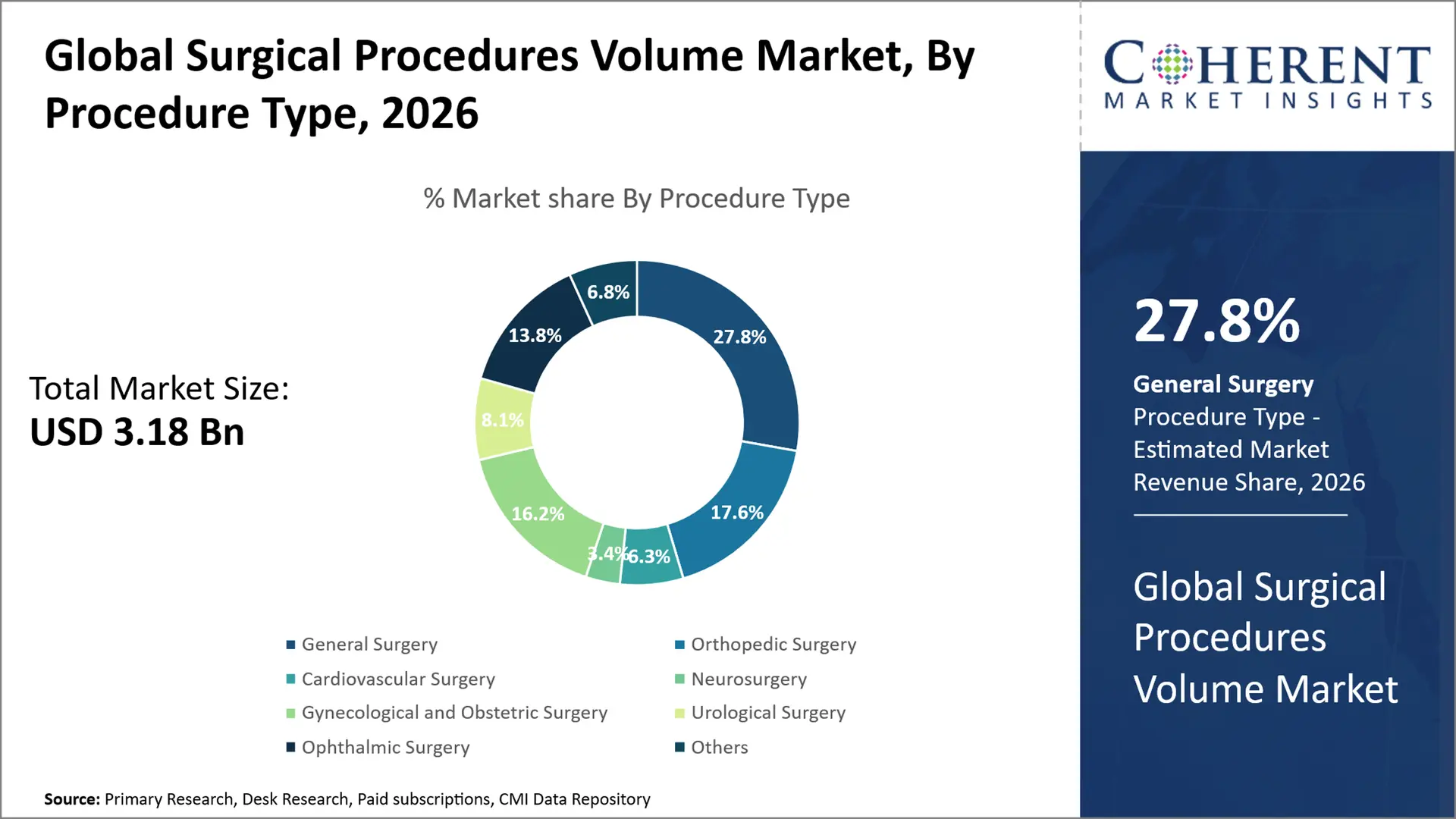
- General surgery is projected to hold 27.8% of the global surgical procedures volume market share in 2026, making it dominant procedure type segment across North America due to its established surgical infrastructure and high procedural capacity. For instance, the U.S. Centers for Medicare & Medicaid Services (CMS) added 289 procedures to the Ambulatory Surgical Center Covered Procedures List for 2026 and an additional 271 codes previously removed from the Inpatient Only List, expanding the range of surgical procedures that can be performed in outpatient settings.
- Open surgery is projected to hold 61.4% of the global surgical procedures volume market share in 2026, making it dominant surgical approach segment across Asia Pacific due to gaps in access to advanced minimally invasive technologies and surgical infrastructure. The World Health Organization (WHO) identifies laparotomy and treatment of open fractures as essential Bellwether procedures and reports that in the Western Pacific, only 6 of 13 countries and areas with available data provide at least 80% of their populations with access to facilities capable of performing these procedures within two hours.
- Elective procedures are projected to hold 68.5% of the global surgical procedures volume market share in 2026, making it dominant urgency segment across Europe due to its extensive public healthcare systems and structured elective-care programs. NHS England reported a record 18.4 million treatments and operations delivered in 2025, up from 18 million in 2024, as part of efforts to expand elective activity and reduce treatment backlogs. The sustained expansion of elective surgical capacity supports continued high procedure volumes across the European region.
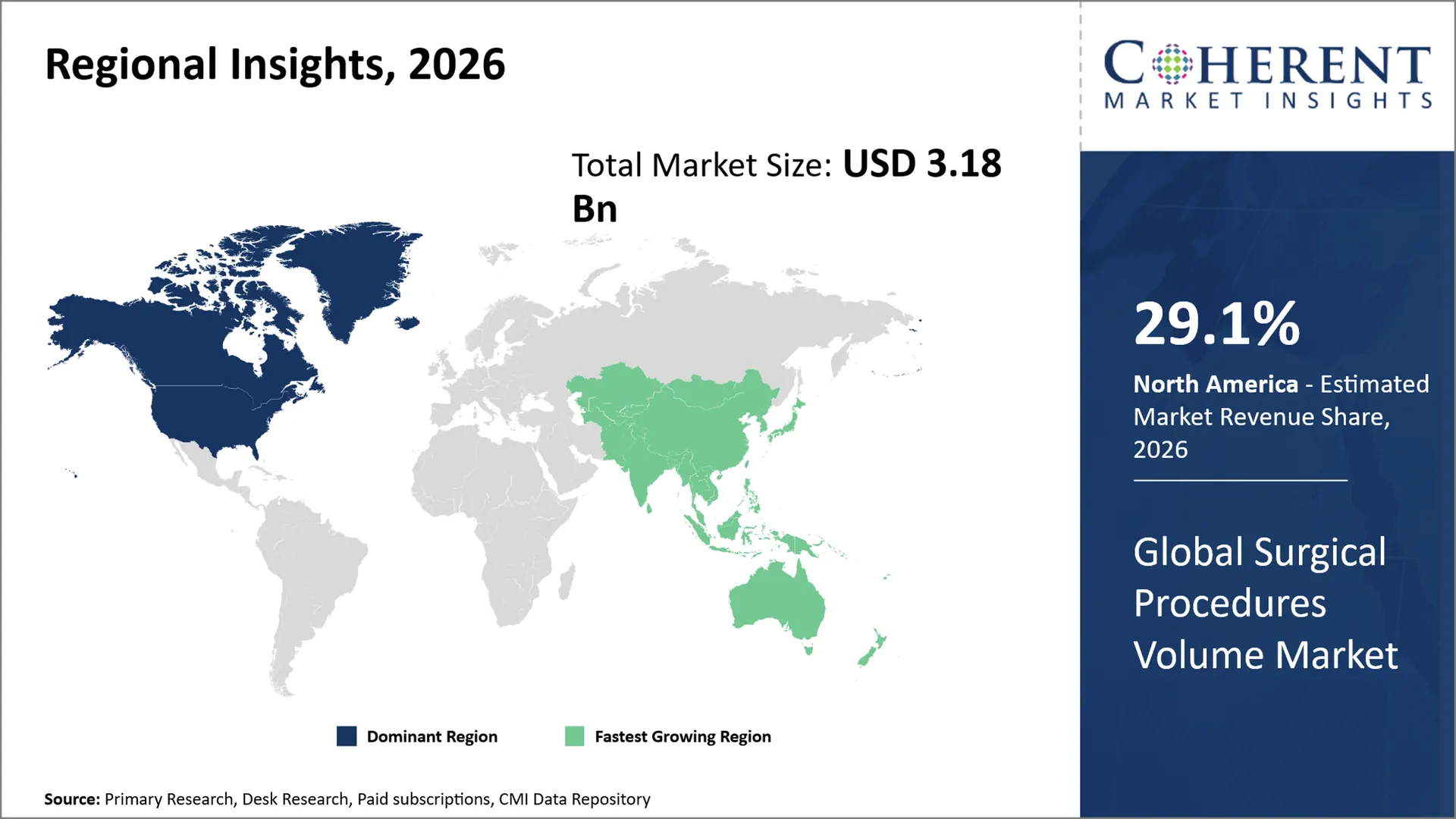
- North America market maintains dominance with an expected share of 29.1% in 2026, bolstered by its mature healthcare infrastructure, high procedural capacity, and comprehensive tracking of surgical activity. The U.S. Centers for Medicare & Medicaid Services (CMS) began publishing procedure-volume data for Medicare clinicians covering 26 procedures, including hip and knee replacement, spinal fusion, cataract surgery, hernia repair, CABG, and hysterectomy. This expanded public reporting of procedure volumes reflects the region’s high level of surgical activity and established healthcare data infrastructure.
- Asia Pacific is expected to exhibit the fastest growth in the global surgical procedures volume market, registering an estimated CAGR of 6.4% during 2026–2033, driven by expanding adoption of advanced surgical technologies and increasing healthcare capacity. For instance, Japan’s Ministry of Health, Labour and Welfare (MHLW) reported that 32 robotic-assisted surgical procedures were covered by national health insurance, with 15 additional robotic procedures proposed for inclusion under the 2026 medical fee revision. The expansion of insurance coverage for robotic surgery is supporting broader adoption of advanced surgical procedures across the Asia-Pacific region.
Segmental Insights
Why Do General Surgery Dominate the Global Surgical Procedures Volume Market?
General surgery is projected to hold the market share of 27.8% in 2026, with the largest proportion of patients due to its almost universal coverage in abdominal, gastrointestinal, hernia, soft-tissue and other common surgical practices. The presence of general surgery at both emergency and elective departments, as well as at secondary and tertiary hospitals supports consistently high procedure volumes. For instance, in March 2026, NHS England reported 376,204 incomplete pathways for the general surgery service, reflecting considerable demand for general surgical care.
- Current Industry Events of 2026
- Market Size Estimation
- Regional Breakdown
- Competitive Landscape
- Customer Intelligence
- Segmental Analysis
- Pricing Analysis
- Key Market Drivers, Challenges & Future Trends
- Customized Insights Section
Why Does Open Surgery Represent the Largest Surgical Approach Segment in the Surgical Procedures Volume Market?
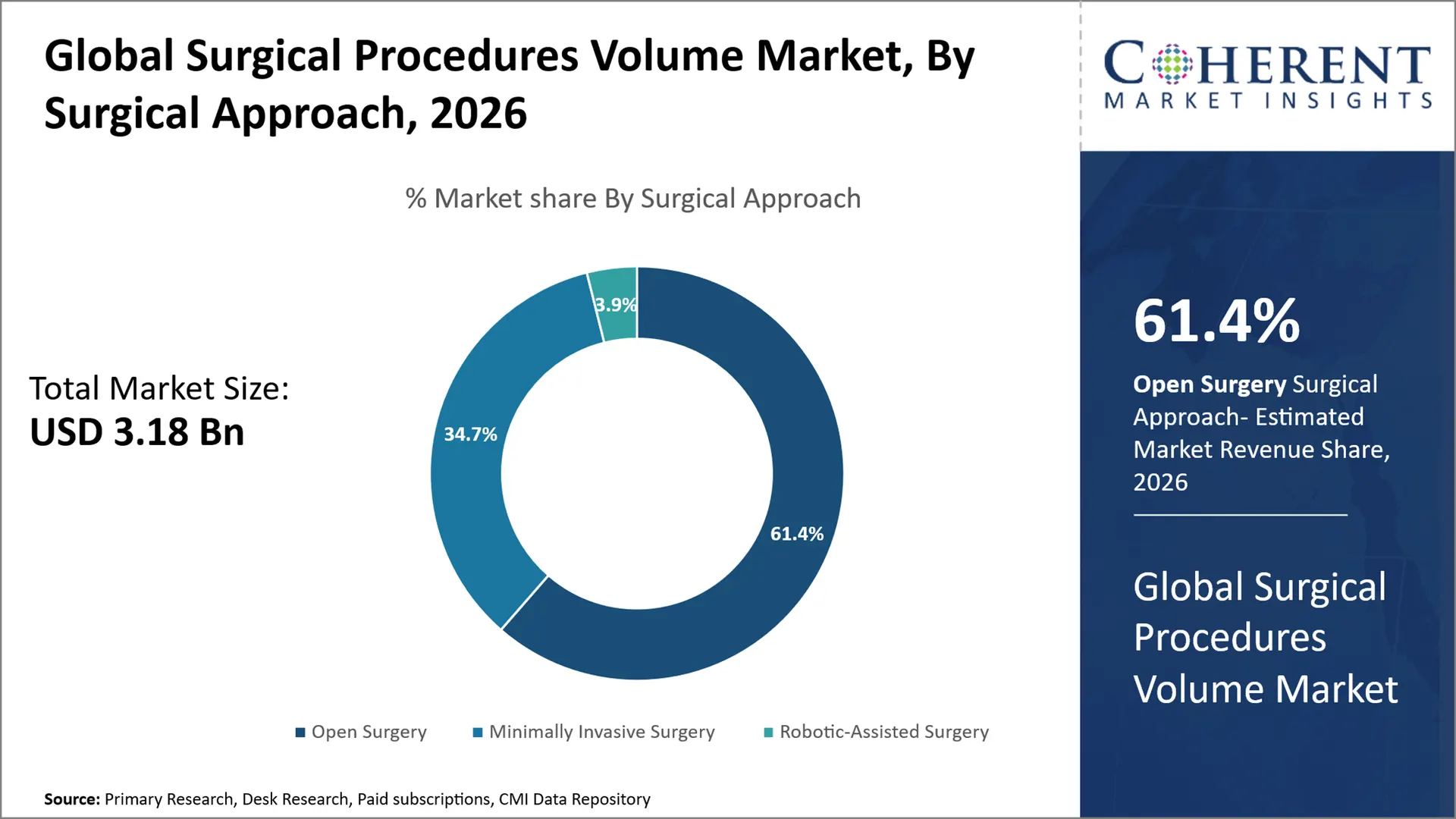
Open surgery is projected to hold a market share of 61.4% in 2026, due to its use in high complex procedures, emergency and trauma surgeries, as well as, resource-intensive operations for access to the anatomy. Its ongoing retention is reinforced by it being widely available in healthcare facilities that do not have access to advanced minimally invasive or robotic modalities. For instance, NHS England estimates that approximately 30,000 emergency laparotomies (a form of open abdominal surgery) are performed annually in England, demonstrating the substantial ongoing volume of open surgical procedures.
Elective Procedures Segment Dominates the Global Surgical Procedures Volume Market
The elective procedures segment is projected to hold a market share of 68.5% in 2026, driven by higher volumes of elective procedures like cataract surgery, joint replacement and other non-emergency procedures. Its scheduled nature allows hospitals to leverage operating-room capacity and to schedule pre and post procedures more effectively. For instance, according to the Australian Government, around 70% of all elective surgery are carried out in private hospitals in Australia, demonstrating considerable volume of planned surgical activity within the healthcare system.
Current Events and their Impact
Current Events | Description and its Impact |
WHO Global Strategy for Integrated Emergency, Critical and Operative Care Adopted (May 2026) |
|
WHO Calls for Accelerated Access to Cataract Surgery (February 2026) |
|
U.S. Centers for Medicare & Medicaid Services (CMS) Expanded Medicare Coverage for Outpatient Surgical Procedures (January 2026) |
|
Surgical Procedures Volume Market Dynamics
Market Drivers
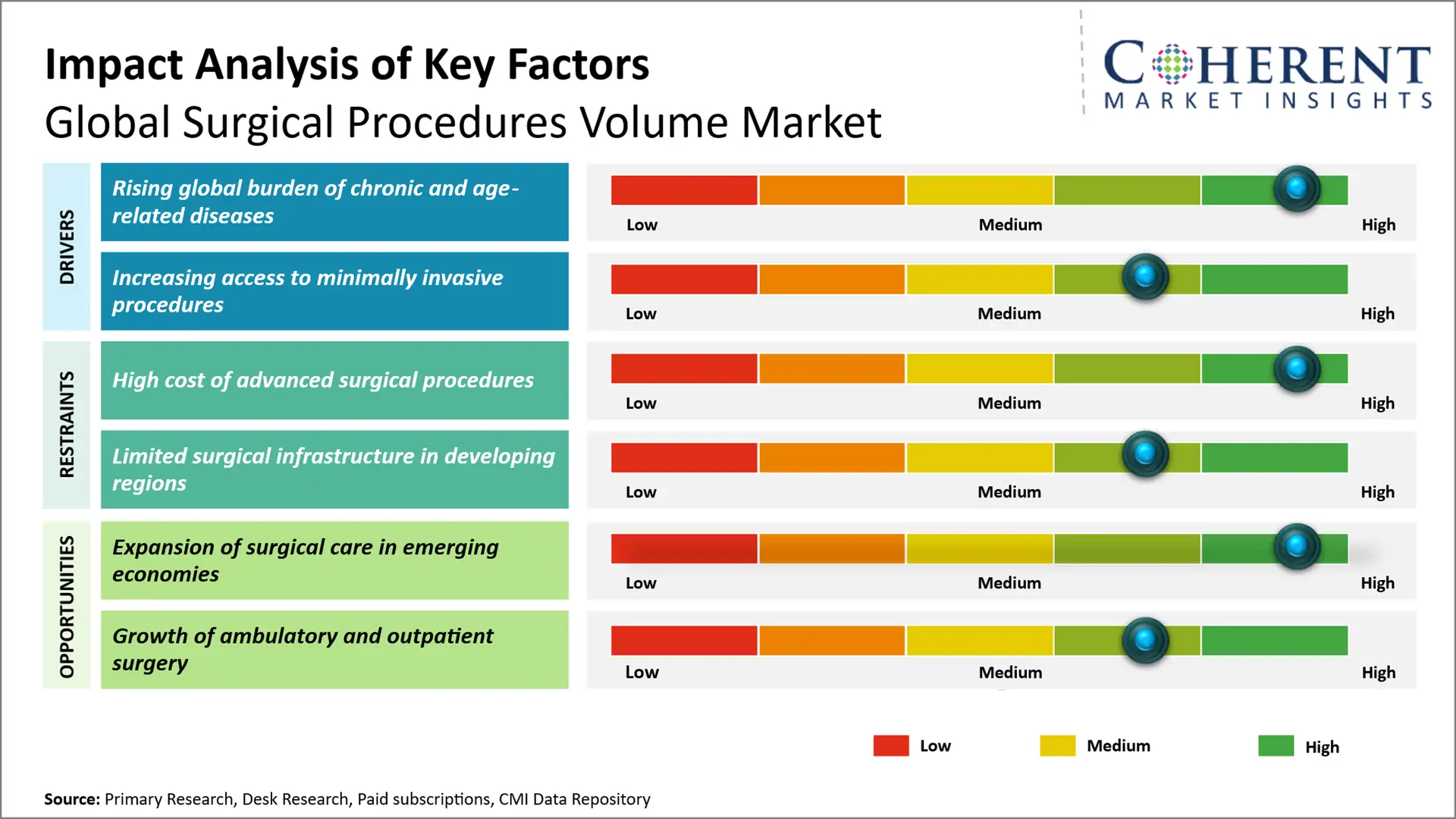
- Rising global burden of chronic and age-related diseases: The growing burden of chronic diseases and population ageing is expanding the global patient pool requiring surgical interventions, including cardiovascular, orthopedic, ophthalmic, and other procedures. For instance, WHO reported in 2025 that NCDs caused at least 43 million deaths globally in 2021, including 19 million from cardiovascular diseases and 10 million from cancer, while its 2026 update notes that 1.1 billion people were aged 60 years or older in 2023. The increasing prevalence of chronic conditions alongside rapid population ageing is expected to sustain demand for surgical care.
- Increasing access to minimally invasive procedures: Growing adoption of minimally invasive techniques is expanding access to procedures that can reduce hospital stays and support faster recovery. For instance, in November 2025, the U.S. Centers for Medicare & Medicaid Services (CMS) finalized the removal of 285 musculoskeletal procedures from its Inpatient Only List for 2026, allowing clinically appropriate procedures to be performed in hospital outpatient settings. The policy is expected to encourage migration toward less invasive, outpatient-oriented surgical care and expand access to these procedures.
- Expanding access to essential surgical care: Expanding healthcare coverage and surgical infrastructure is increasing the number of patients able to access operative care, particularly in underserved markets. For instance, WHO’s 2025 monitoring data show that 4.6 billion people still lacked full coverage for essential health services in 2023, highlighting substantial unmet demand for treatment, including surgical care. Continued efforts to expand universal health coverage and surgical capacity are expected to translate into higher procedure volumes globally.
Emerging Trends
- Growing adoption of robotic-assisted surgery: Increasing use of robotic platforms is transforming complex procedures by improving surgical precision, visualization, and control. Adoption is expanding across urology, gynecology, general surgery, and orthopedics.
- Shift toward ambulatory and same-day surgery: Healthcare systems are increasingly moving eligible procedures from inpatient hospitals to ambulatory surgical centers to reduce costs, hospital stays, and recovery times. This trend is increasing outpatient surgical volumes globally.
- Integration of AI and image-guided technologies: AI-powered surgical planning, intraoperative imaging, navigation, and decision-support tools are gaining adoption to improve procedural accuracy and outcomes. These technologies are expected to support more standardized and technology-enabled surgical workflows.
Regional Insights
Why is North America a Strong Market for Surgical Procedures Volume?
North America leads the global surgical procedures volume market, accounting for an estimated 29.1% share in 2026, due to the increasing number of surgeries performed, advanced healthcare facilities, and the high rate of adoption of minimally invasive procedures and robotic surgeries among surgeons. In addition, the increase in government spending on healthcare in the U.S and reimbursement policies boost the adoption of surgical procedures in the region. For instance, according to American Medical Association (AMA) U.S national healthcare spending reached approximately USD 5.3 trillion in 2024, up 7.2% from the previous year, representing 18% of gross domestic product, indicating a significant spending on healthcare services.
In addition, the region's consolidated surgical infrastructure, high penetration of specialty hospitals, and widespread clinical utilization of advanced surgical procedures fuel the large case volumes. With a large number of tertiary-care centers, and rising integration of minimally invasive and robotic-assisted procedures in North America, the market continues to dominate globally.
Why Does Asia Pacific Surgical Procedures Volume Market Exhibit High Growth?
Asia Pacific is expected to exhibit the fastest growth in the global surgical procedures volume market, registering an estimated CAGR of 6.4% during 2026–2033. The region is projected to account for approximately 28.4% of the global market in 2026, owing to large patient population, rising healthcare expenditure, growing infrastructure for health care, and rising access to advanced surgical care. Efforts by the government to improve healthcare infrastructure along with rising private sector participation contribute to adoption of new surgical innovations in a short span of time.
For instance, by January 2026, the Ayushman Bharat Digital Mission (ABDM) in India had generated over 900 million (90 crore) ABHA accounts and over 570 million (57 crore) health records, further enhanced the digital healthcare infrastructure, and assisted technology-enabled healthcare delivery. (Source: Press Information Bureau) In addition, increasing healthcare capacity and access to minimally invasive surgery and robotic surgery in key markets of Asia are projected to drive growth.
Global Surgical Procedures Volume Market Outlook for Key Countries
Why is the U.S. Leading Innovation and Adoption in the Surgical Procedures Volume Market?
The U.S. is one of the key markets in innovation and adoption owing to the presence of technological advanced surgical infrastructure, high adoption and integration of robotic assisted and minimally invasive surgical (MIS) procedures and high number of surgical specialty centers. Well established ecosystem for surgical technology R&D and its clinical adoption for immediate practice adoption ensures rapid procedure and technology adoption in the country.
Is China a Favorable Market for Surgical Procedures Volume Market?
China is a strong growth market, driven by a large patient population, growing hospital capacity and expanding use of sophisticated procedures, with further opportunities for procedure-volume growth as adoption of minimally invasive, robotic and digital procedures accelerates. Growing hospital capacity, combined with a large and increasingly well-heeled patient population with more specialist procedures, makes China an attractive growth market in the Asia Pacific region.
Is Japan Emerging as a Key Growth Hub for the Surgical Procedures Volume Market?
Japan presents an important growth market, with an aging population, significant surgery volumes for age-related indications, and modern hospital infrastructure. Greater penetration of minimally invasive, robotic and tech-enabled procedures also appears likely, especially in specialties that treat Japan's aging population. Growing modernization of surgical care and demand for specialist care is likely to support procedure-volume growth in Japan.
Why Does Germany Top the European Surgical Procedures Volume Market?
Germany is at the forefront of European market due to its large number of hospitals, surgical capacity, and high availability of targeted outpatient and inpatient surgical care. The efficient and well-established health systems in the country support large procedure volumes in orthopedic, cardiovascular, general, and other key surgical fields. This, together with its huge clinical infrastructure, raises Germany's profile in the European market.
Is Surgical Procedures Volume Market Developing in India?
India is a large market with high growth potential, driven by increased hospital capacity, improved surgical access for more complex procedures and adoption of minimally-invasive and technology-enabled procedures. The outlook for growth is supported by further expansion of public health coverage as well as private sector health care investment – improving access to surgical care in developed and developing markets. India's substantial unsatisfied surgical volume and growing care infrastructure offer strong capacity for further procedure-volume expansion.
How is the expansion of surgical care in emerging economies creating new growth opportunities in the surgical procedures volume market?
The growing availability of health infrastructure, public health initiatives and financial protection is increasing the access to surgical care and fulfilling needs for procedures that previously went unmet. Growing capacity in hospitals, along with increased government investment is increasing access to secondary and tertiary level surgical procedures. For instance, more than 38,000 hospitals across India's Ayushman Bharat-Pradhan Mantri Jan Arogya Yojana (AB-PMJAY) had been empanelled by June 2026, enlarging availability of covered hospital-based treatments. This expansion is expected to support higher surgical procedure volumes across emerging markets.
Market Players, Key Development, and Competitive Landscape

Key Developments
- On September 10, 2026, Axogen Corporation entered into a definitive agreement to acquire BioCircuit Technologies for USD 200 million, adding NerveTape, the first U.S. FDA-approved device for suture less peripheral nerve repair, to its portfolio. The acquisition is expected to expand access to peripheral nerve-repair procedures by reducing dependence on microsurgical suturing skills and supporting adoption across a broader range of surgeons and care settings.
- In August 2026, Stryker signed a definitive agreement to acquire ZuriMED, developer of the FiberLocker System, a commercialized soft-tissue augmentation technology designed to strengthen rotator cuff repairs. The acquisition will expand Stryker’s shoulder portfolio and strengthen its offerings for sports medicine and shoulder arthroplasty, supporting the company’s position in the growing rotator cuff repair segment.
- In September 2025, Alcon announced an amended merger agreement to acquire STAAR Surgical for approximately USD 1.6 billion, increasing its offer to USD 30.75 per share and strengthening its position in ophthalmic surgery through STAAR’s EVO Implantable Collamer Lens (EVO ICL) technology for vision correction.
Competitive Landscape
The global surgical procedures volume market is moderately competitive, with market dynamics shaped by the expansion of surgical capacity, adoption of minimally invasive and robotic-assisted techniques, development of ambulatory surgical centers, and increasing investments in advanced surgical technologies. Market participants are increasingly focusing on expanding procedure capabilities, improving surgical efficiency, and strengthening access to specialized care while supporting the shift toward outpatient and technology-enabled surgery. Key focus areas include:
- Expansion of robotic-assisted, laparoscopic, and other minimally invasive surgical technologies
- Development of advanced surgical systems, instruments, imaging, and navigation technologies
- Expansion of ambulatory surgical centers and outpatient procedure capabilities
- Increasing integration of AI, digital surgery, and image-guided technologies into surgical workflows
- Expansion of surgical capacity and specialized procedure offerings across emerging markets
Market Report Scope
Surgical Procedures Volume Market Report Coverage | |||
Report Coverage | Details | ||
Base Year | 2025 | Market Size in 2026: | USD 3.18 Bn |
Historical Data For: | 2020 To 2024 | Forecast Period: | 2026 To 2033 |
Forecast Period 2026 To 2033 CAGR: | 5.9% | 2033 Value Projection: | USD 4.76 Bn |
Geographies covered: |
| ||
Segments covered: |
| ||
Companies covered: | Medtronic plc, Johnson & Johnson, Stryker Corporation, B. Braun Melsungen AG, Intuitive Surgical, Inc., Boston Scientific Corporation, Olympus Corporation, Zimmer Biomet Holdings, Inc., Abbott Laboratories, Smith+Nephew plc | ||
Growth Drivers: |
| ||
Restraints & Challenges: |
| ||
Analyst Opinion (Expert Opinion)
- In the coming years, global surgical procedures volume market is expected to move toward a more technology-enabled, outpatient-oriented, and capacity-driven model. Minimally invasive and robotic-assisted procedures will continue gaining traction, while conventional surgery will remain important across high-volume and resource-constrained settings. Expansion of surgical infrastructure in emerging economies is expected to become an increasingly important source of procedure-volume growth.
- The maximum opportunities are foreseen within minimally invasive surgery for general surgery in India, where a large patient pool, increasing hospital capacity, growing private healthcare investment, and improving access to advanced surgical technologies create scope for substantial procedure-volume expansion. Secondary opportunities are likely to emerge in robotic-assisted procedures across urology and gynecology in China and Japan.
- In order to gain a competitive advantage market players should prioritize integrated surgical portfolios rather than individual devices or procedures, combining minimally invasive instruments, visualization, robotics, navigation, and digital capabilities. Building partnerships with hospitals and ambulatory surgical centers, expanding training programs for surgeons, and developing cost-efficient solutions suited to emerging markets can help companies accelerate adoption and strengthen competitive positioning.
Speak to the analyst
Want personalized insights?
Take the findings above to one of our principal consultants, or have the report rebuilt around the segments, geographies and competitors you actually track.
Market Segmentation
- Procedure Type Insights (Revenue, USD Bn, 2021 - 2033)
- General Surgery
- Orthopedic Surgery
- Cardiovascular Surgery
- Neurosurgery
- Gynecological and Obstetric Surgery
- Urological Surgery
- Ophthalmic Surgery
- Others
- Surgical Approach Insights (Revenue, USD Bn, 2021 - 2033)
- Open Surgery
- Minimally Invasive Surgery
- Robotic-Assisted Surgery
- Urgency Insights (Revenue, USD Bn, 2021 - 2033)
- Elective Procedures
- Emergency Procedures
- Setting Insights (Revenue, USD Bn, 2021 - 2033)
- Inpatient Surgery
- Outpatient/Ambulatory Surgery
- Regional Insights (Revenue, USD Bn, 2021 - 2033)
- North America
- U.S.
- Canada
- Latin America
- Brazil
- Argentina
- Mexico
- Rest of Latin America
- Europe
- Germany
- U.K.
- Spain
- France
- Italy
- Russia
- Rest of Europe
- Asia Pacific
- China
- India
- Japan
- Australia
- South Korea
- ASEAN
- Rest of Asia Pacific
- Middle East
- GCC Countries
- Israel
- Rest of Middle East
- Africa
- South Africa
- North Africa
- Central Africa
- North America
- Key Players Insights
- Medtronic plc
- Johnson & Johnson
- Stryker Corporation
- B. Braun Melsungen AG
- Intuitive Surgical, Inc.
- Boston Scientific Corporation
- Olympus Corporation
- Zimmer Biomet Holdings, Inc.
- Abbott Laboratories
- Smith+Nephew plc
Sources
Primary Research Interviews
- Surgical hospital administrators and operating-room directors responsible for procedure volumes and surgical capacity
- General, orthopedic, cardiovascular, ophthalmic, gynecological, urological, and neurosurgical specialists
- Ambulatory surgical center (ASC) operators and outpatient surgery managers
- Minimally invasive and robotic-surgery specialists involved in technology adoption and procedure planning
- Healthcare procurement and surgical supply-chain managers responsible for operating-room equipment and consumables
- Healthcare strategists and clinical operations specialists involved in surgical capacity expansion and patient-flow management
Stakeholders
- Hospitals and multispecialty healthcare systems
- Ambulatory surgical centers and outpatient surgery providers
- Surgical technology and medical-device manufacturers
- Robotic-assisted and minimally invasive surgery technology providers
- Healthcare insurers and public healthcare systems
- Surgical professional societies and clinical research organizations
- Healthcare infrastructure developers and specialized surgical centers
- End-use Sectors
- General and multispecialty hospitals
- Ambulatory Surgical Centers (ASCs)
- Specialty surgical hospitals
- Academic and teaching hospitals
- Public healthcare facilities
- Private healthcare facilities
- Emergency and trauma-care centers
- Regulatory & Health Bodies
- World Health Organization (WHO)
- Centers for Medicare & Medicaid Services (CMS), U.S.
- U.S. Food and Drug Administration (FDA)
- European Medicines Agency (EMA)
- NHS England
- Organisation for Economic Co-operation and Development (OECD)
Databases
- World Bank – World Development Indicators (WDI), including surgical procedures per 100,000 population
- WHO Global Health Observatory (GHO)
- OECD Health Statistics
- CMS Medicare Provider Utilization and Payment Data
- NHS England statistics and datasets
- Eurostat Health Database
- WHO Global Health Estimates
Journals
- The Lancet
- The Lancet Global Health
- JAMA Surgery
- British Journal of Surgery
- Annals of Surgery
- World Journal of Surgery
- International Journal of Surgery
- BMC Surgery
- Journal of Surgical Research
Associations
- American College of Surgeons (ACS)
- Association of periOperative Registered Nurses (AORN)
- Society of American Gastrointestinal and Endoscopic Surgeons (SAGES)
- European Association for Endoscopic Surgery (EAES)
- International Society of Surgery (ISS/SIC)
- World Federation of Societies of Anaesthesiologists (WFSA)
- American Society of Anesthesiologists (ASA)
Public Domain Sources
- WHO – global surgical-care frameworks, surgical access, procedure-volume estimates, patient safety, and essential surgery guidance
- World Bank – surgical procedure volume indicators and country-level health-system data
- CMS – Medicare surgical utilization, ASC coverage, outpatient procedure policies, and payment data
- NHS England – elective surgery, waiting lists, operating-theatre activity, and healthcare utilization statistics
- OECD – surgical activity, hospital resources, healthcare utilization, and health-system indicators
- Eurostat – European hospital activity, surgical procedures, healthcare resources, and population statistics
Proprietary Elements
- CMI Data Analytics Tool, Proprietary CMI Existing Repository of information for last 10 years.
Get access to 250+ pages report
Every segment, forecast, competitor profile and data table behind the analysis above — available for instant download.
- ESOMAR Member
- ISO 9001:2015 Certified
- D-U-N-S Registered
- GDPR & CCPA Compliant
Missing comfort of reading report in your local language? Find your preferred language:
Frequently Asked Questions
The global surgical procedures volume market is estimated to be valued at USD 3.18 Bn in 2026 and is expected to reach USD 4.76 Bn by 2033.
General surgery dominates due to the high volume of routine and essential procedures performed across gastrointestinal, hernia, breast, abdominal, and other common surgical conditions, supported by its broad applicability across healthcare settings.
Surgical procedures volume refers to the total number of surgical procedures performed within a defined period across healthcare settings and surgical specialties.
The CAGR of global surgical procedures volume market is projected to be 5.9% from 2026 to 2033.
Rising global burden of chronic and age-related diseases, and increasing access to minimally invasive procedures are the major factors driving the growth of the global surgical procedures volume market.
High cost of advanced surgical procedures, and limited surgical infrastructure in developing regions are the major factors hampering the growth of the global surgical procedures volume market.
In terms of urgency, elective procedures are estimated to dominate the market revenue share in 2026.