

Global Tea Bags Market Size and Forecast – 2026 To 2033
The Global Tea Bags Market is estimated to be valued at USD 8.24 Bn in 2026 and is expected to reach USD 13.58 Bn by 2033, growing at a compound annual growth rate (CAGR) of 7.4% from 2026 to 2033. Market growth is supported by rising preference for convenient tea preparation formats, increasing demand for herbal and functional tea products, wider retail and e-commerce penetration, and product innovation across premium and specialty tea categories. Manufacturers are increasingly focusing on wellness-oriented formulations, sustainable solutions, and differentiated blends to capture evolving consumer preferences.
A key market shift is the expansion of functional tea products requiring stronger focus on compliant health positioning. In January 2025, the U.S. FDA updated food labeling guidance related to nutrient content and health-related claims, influencing how beverage manufacturers communicate product benefits. This creates opportunities for tea bag producers developing herbal and wellness blends while requiring greater attention to regulatory compliance and transparent consumer communication.
Key Takeaways of the Global Tea Bags Market
- Black Tea Bags are expected to hold 38.7% of the global tea bags market in 2026 and are forecast to expand at a 7.1% CAGR through 2033. Their lead reflects strong consumer familiarity, broad retail availability, and suitability for traditional milk-based tea consumption. In March 2025, Associated British Foods highlighted continued development of its Twinings tea business through international brand and portfolio initiatives.
- Single Chamber Tea Bags are expected to account for 48.6% share in 2026 and are set to grow at a 6.8% CAGR during 2026–2033. Cost-efficient production, standardized brewing, and compatibility with high-speed packing lines make the format attractive for mass retail, offices, and hospitality. In May 2025, Teekanne expanded its portfolio with convenience-focused tea solutions supporting single-serve consumption.
- Paper Filter is estimated to represent 42.8% of the market in 2026, with a projected CAGR of 6.5% through 2033. Their position is reinforced by automated production compatibility, established material supply, and growing interest in fiber-based filtration. In October 2024, Ahlstrom introduced fiber-based filtration solutions for food and beverage applications, supporting further material innovation.
- Europe is projected to capture 32.6% of the global tea bags market in 2026 and is forecast to grow at a 6.9% CAGR. Mature tea-drinking habits, premium product demand, established retail networks, and stronger sustainability requirements sustain the region’s commercial importance. In July 2025, the UK Tea & Infusions Association highlighted continued industry focus on tea quality, sustainability, and responsible sourcing.
- Asia Pacific is anticipated to hold 31.8% share in 2026 and records the strongest regional outlook at an 8.2% CAGR through 2033. Urban consumption, packaged tea adoption, digital retail, and a strong tea-producing base are widening the addressable market. In February 2025, China’s Ministry of Agriculture and Rural Affairs highlighted modernization initiatives across tea cultivation, processing, and value-added production.
Segmental Insights
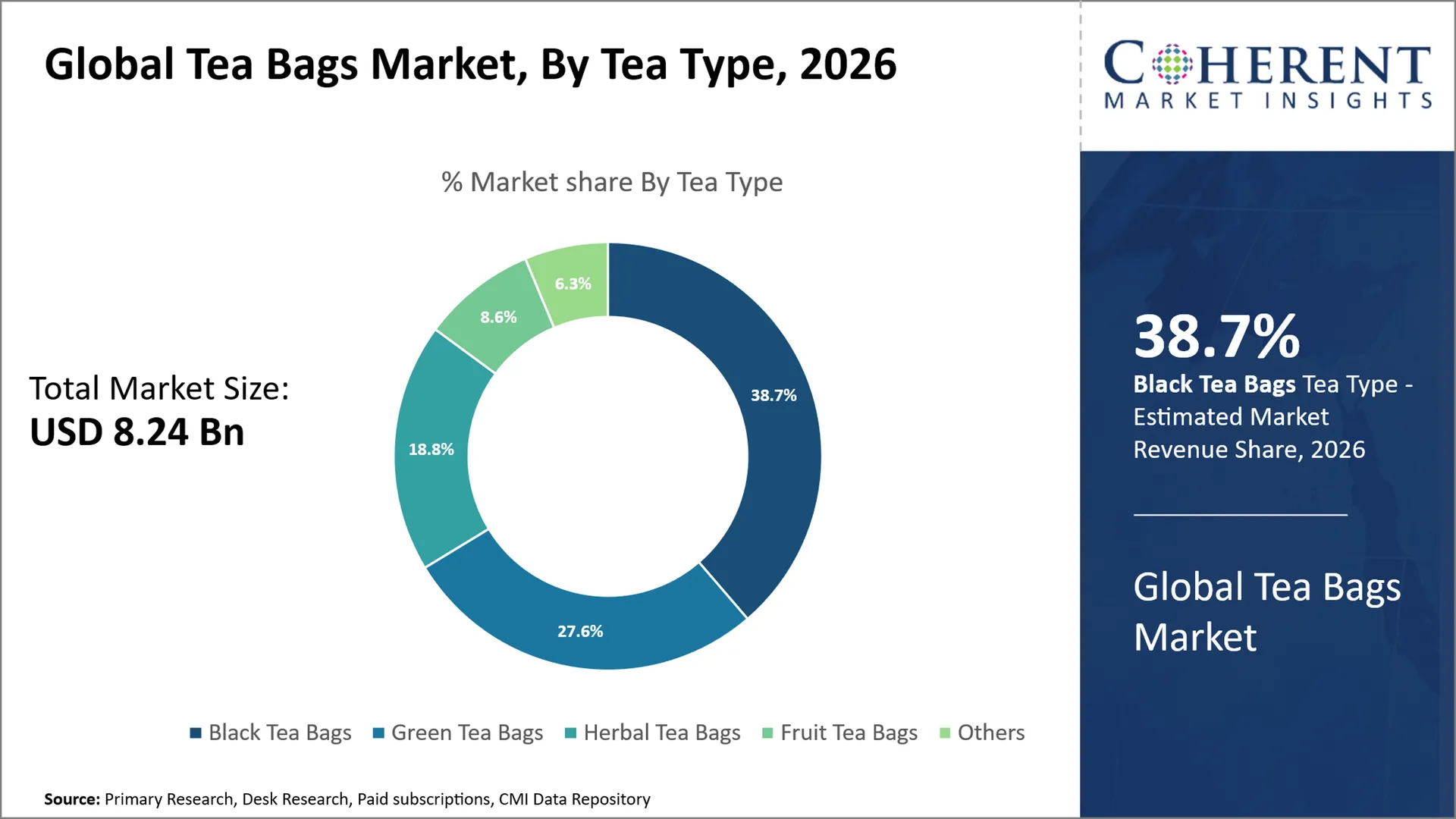
Why Does Black Tea Bags Dominate the Global Tea Bags Market?
Black Tea Bags are expected to account for 38.7% of the global tea bags market in 2026, supported by their strong consumer familiarity, established taste preferences, and extensive availability through retail and institutional channels. The segment benefits from a mature supply ecosystem involving tea growers, blending companies, packaging manufacturers, and branded tea producers. Demand remains strong across households and foodservice applications where consistent flavor, affordability, and compatibility with milk-based beverages support repeat consumption. Manufacturers benefit from established sourcing networks and efficient blending processes, enabling broad product availability across different price points. In March 2025, Twinings expanded its premium tea portfolio with new black tea offerings focused on specialty blends, strengthening the segment’s relevance in premium packaged tea categories.
- Current Industry Events of 2026
- Market Size Estimation
- Regional Breakdown
- Competitive Landscape
- Customer Intelligence
- Segmental Analysis
- Pricing Analysis
- Key Market Drivers, Challenges & Future Trends
- Customized Insights Section
Why Does Single Chamber Tea Bags Represent the Largest Packaging Category in the Global Tea Bags Market?
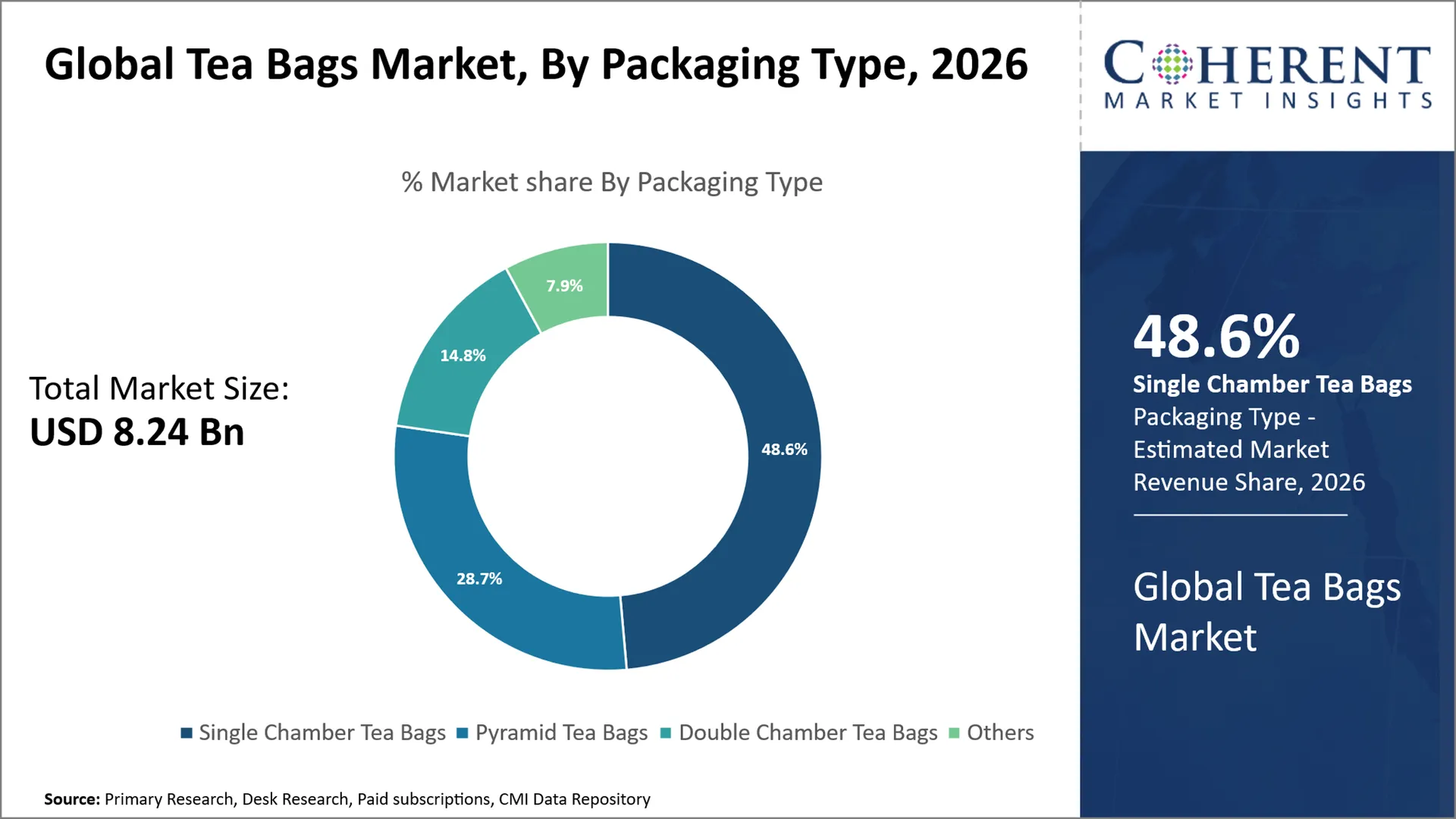
Single Chamber Tea Bags are expected to represent 48.6% of the global tea bags market in 2026, as this format remains the preferred choice for mass-market tea consumption due to its manufacturing simplicity, cost efficiency, and compatibility with high-volume production systems. The format enables tea companies to deliver standardized brewing performance while maintaining competitive pricing across supermarkets, convenience stores, workplaces, and hospitality channels. Packaging converters and tea manufacturers benefit from established machinery infrastructure, efficient filling processes, and broad consumer acceptance. The segment is particularly relevant for everyday household consumption were ease of preparation and storage convenience influence purchasing decisions. In August 2024, Lipton introduced improvements across selected tea packaging formats as part of its broader packaging sustainability transition, supporting continued evolution of conventional tea bag formats.
Why Does Paper Filter Dominate the Filter Material Category of the Global Tea Bags Market?
Paper Filter are expected to hold 42.8% of the global tea bags market in 2026, primarily due to their widespread manufacturing adoption, cost advantages, and compatibility with large-scale tea production requirements. Paper-based filtration remains attractive for manufacturers because it provides reliable infusion performance while supporting high-speed automated packing operations. The segment is widely used across traditional tea categories, private-label products, and retail-focused brands where production efficiency and supply reliability are critical. Growing attention toward recyclable and responsibly sourced packaging materials is also encouraging innovation within paper filter technologies. In July 2024, Esah Tea introduced cotton-based tea bags designed as an alternative to conventional filtration materials, highlighting industry movement toward sustainable filter solutions and material innovation.Top of Form
Current Events and their Impact
Current Event | Description and Its Impact |
February 2025 – European Union Packaging and Packaging Waste Regulation (PPWR) Adoption |
|
June 2024 – European Union Deforestation Regulation (EUDR) Implementation Timeline |
|
January 2025 – United Kingdom Food Standards Agency Guidance Updates on Food Information Compliance |
|
Global Tea Bags Market Dynamics
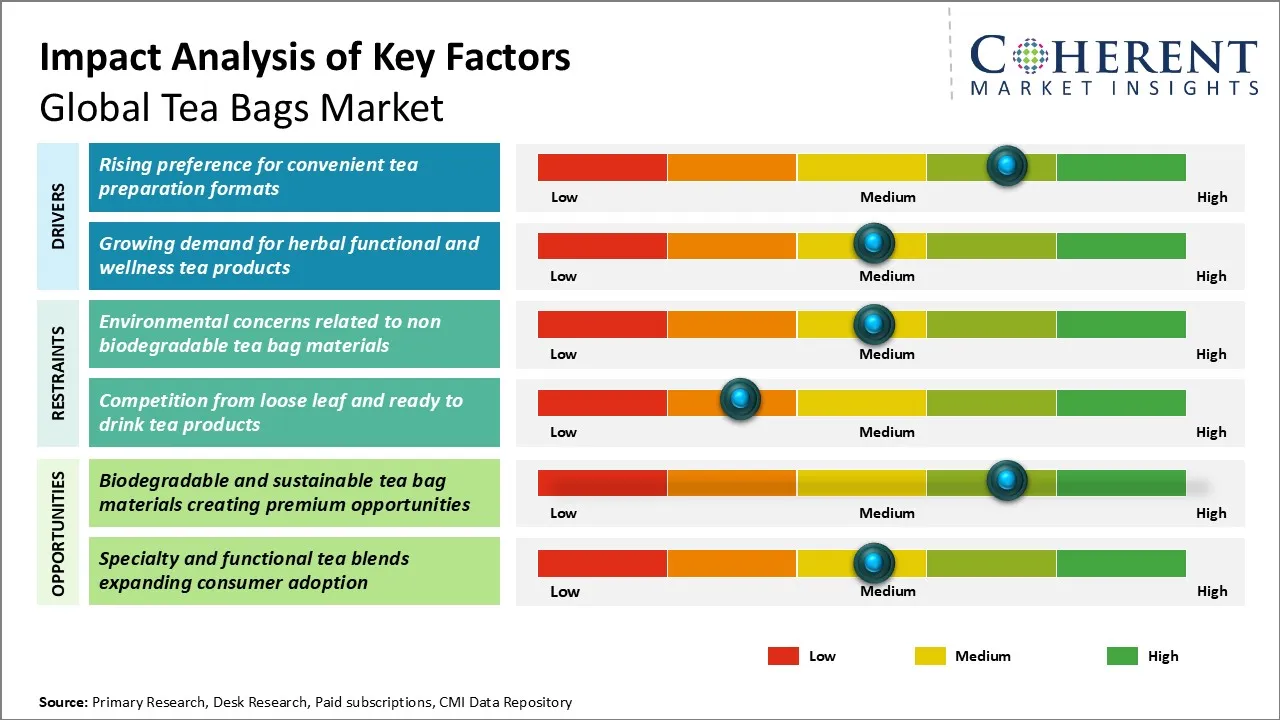
Key Market Drivers
- Rising preference for convenient tea preparation formats: The preference for convenient tea preparation formats continues to influence purchasing decisions as urban consumers seek consistent brewing, portion control, and reduced preparation time. Tea bag manufacturers, packaging suppliers, retailers, and foodservice operators benefit as single-serve formats simplify consumption across households, workplaces, and hospitality settings. The commercial significance lies in expanding access to premium and specialty teas without requiring traditional brewing equipment. In March 2025, Unilever highlighted continued portfolio development for convenient beverage formats through its tea business strategy focusing on accessible everyday consumption.
- Growing demand for herbal functional and wellness tea products: Demand for herbal functional and wellness tea products is reshaping product strategies as consumers increasingly evaluate beverages based on additional lifestyle benefits beyond taste. Tea brands, botanical ingredient suppliers, and specialty beverage manufacturers are benefiting by developing blends positioned around relaxation, digestion, immunity, and daily wellness routines. This shift enables premium pricing, category differentiation, and broader consumer targeting. In February 2025, the Tea Association of the USA emphasized continued industry focus on specialty and wellness-oriented tea categories as consumer preferences evolve.
Emerging Market Trends
- Premiumization Through Specialty Blends and Experiential Tea Formats: The tea bags market is gradually shifting from basic beverage consumption toward premium experiences where consumers seek differentiated flavors, origin stories, and specialty formulations. Manufacturers are increasing investments in blended teas, whole-leaf formats, and visually appealing packaging designs that create stronger shelf differentiation. Premium brands and specialty tea companies are positioned to capture higher-value consumers, while traditional mass-market suppliers may face pressure to improve product differentiation. Over the forecast period, competition is expected to move beyond price toward sensory experience, formulation expertise, and brand credibility.
- Sustainability Transition Across Tea Bag Materials and Packaging Systems: Sustainability considerations are influencing material selection, packaging design, and procurement decisions across the tea bags value chain. Manufacturers are exploring alternatives to conventional synthetic filtration materials through biodegradable fibers, compostable solutions, and improved packaging efficiency. Packaging suppliers and brands with sustainable material capabilities are likely to gain stronger retailer acceptance, while companies dependent on conventional formats may need additional investment to meet evolving expectations. The trend is expected to encourage closer collaboration between tea producers, packaging developers, and waste-management stakeholders.
Regional Insights
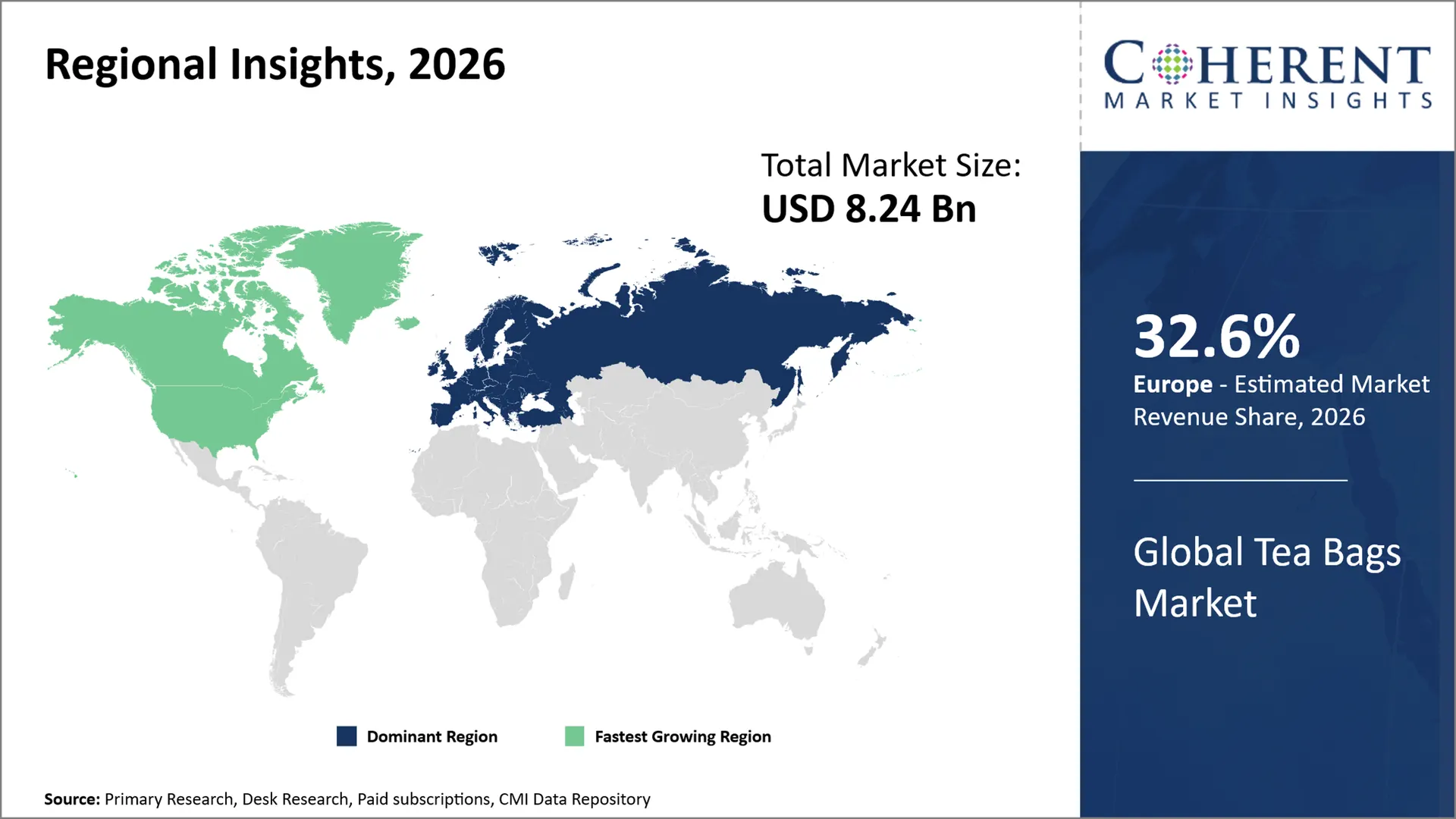
Why Does Europe Dominate the Global Tea Bags Market?
Europe is expected to account for 32.6% of the global tea bags market in 2026, supported by established tea consumption habits, strong branded tea penetration, advanced retail networks, and increasing preference for premium and specialty tea products. The region benefits from a mature packaged beverage ecosystem where supermarkets, specialty tea retailers, hospitality operators, and online channels provide broad access to tea bag products. European consumers are also showing greater interest in organic blends, sustainable packaging formats, and ethically sourced tea varieties, encouraging manufacturers to improve product differentiation. The presence of major tea companies, efficient import infrastructure, and strict quality standards further strengthens regional competitiveness. In June 2024, the European Commission adopted the new Packaging and Packaging Waste Regulation framework, increasing focus on recyclable and sustainable packaging solutions relevant for tea bag producers supplying European markets.
Why Is Asia Pacific Emerging as the Fastest-Growing Region in the Global Tea Bags Market?
Asia Pacific is expected to represent 31.8% of the global tea bags market in 2026, with growth supported by expanding urban consumption, increasing adoption of packaged tea formats, and the transition from loose-leaf preparation toward convenient ready-to-brew solutions. The region combines strong tea cultivation capabilities with rising demand from younger consumers seeking branded, hygienic, and premium beverage options. Countries across Asia Pacific are becoming important production and consumption centers due to domestic tea availability, improving modern retail infrastructure, and growing e-commerce penetration. Tea companies are increasingly developing products suited to regional taste preferences, including green tea, herbal blends, and functional formulations. In April 2025, Japan’s Ministry of Agriculture, Forestry and Fisheries highlighted continued promotion of Japanese tea exports and overseas market development, supporting broader global exposure of Asian tea products.
Global Tea Bags Market Outlook for Key Countries
Why Is the U.S. a Key Market for the Global Tea Bags Market?
The U.S. remains an important market for tea bags due to strong household consumption, expanding interest in specialty beverages, and increasing availability of functional and wellness-oriented tea products. The market benefits from a developed retail structure covering supermarkets, club stores, online platforms, and specialty beverage channels. American consumers are increasingly exploring herbal, organic, caffeine-free, and premium tea options, encouraging brands to diversify beyond traditional black tea products. The country also represents a significant opportunity for international tea companies because of its large packaged beverage market and established distribution networks. In February 2025, the Tea Association of the USA released industry insights highlighting continued consumer interest in specialty and wellness tea categories, reflecting changing purchasing preferences within the U.S. tea sector.
Why Is India Important in the Global Tea Bags Market?
India plays an important role in the global tea bags market due to its large tea-consuming population, extensive tea cultivation base, and strong domestic tea processing ecosystem. While loose tea remains widely consumed, urban households, corporate offices, hotels, and modern retail channels are increasingly adopting packaged tea bags for convenience and consistency. India’s established tea-growing regions provide manufacturers with access to diverse tea varieties, supporting domestic brands and export-oriented production. The country also benefits from expanding organized retail and digital commerce channels that improve accessibility of branded tea products. In January 2025, the Tea Board of India continued export promotion activities to strengthen the global positioning of Indian tea products, supporting greater market visibility for Indian tea producers.
Why Does China Support Growth in the Global Tea Bags Market?
China supports growth in the global tea bags market through its extensive tea production capacity, diverse tea varieties, and expanding domestic preference for convenient packaged tea formats. Although traditional tea consumption remains important, younger urban consumers are increasingly adopting modern tea products through supermarkets, online platforms, and specialty beverage channels. China’s strong agricultural base enables manufacturers to develop green tea, black tea, and specialty blends while maintaining supply-chain control from cultivation to processing. The country’s advanced packaging manufacturing capabilities also support large-scale tea bag production and export activities. In May 2025, China’s Ministry of Agriculture and Rural Affairs highlighted continued efforts to improve tea industry modernization and strengthen agricultural product branding, supporting the evolution of China’s tea value chain.
Why Is Germany a Strategic Country in the Global Tea Bags Market?
Germany holds strategic importance in the tea bags market due to its strong retail infrastructure, high quality standards, and established demand for herbal, organic, and specialty tea products. German consumers show strong preference for responsibly sourced ingredients, certified products, and sustainable packaging, encouraging tea companies to improve product transparency and environmental performance. The country also serves as an important European distribution hub because of its logistics capabilities and access to neighboring markets. Specialty tea retailers, supermarkets, and online platforms provide multiple routes for premium tea brands to reach consumers. In September 2024, the German Tea Association continued industry initiatives focused on tea quality, sustainability, and consumer information, supporting market development within Germany’s tea sector.
Why Is the U.K. an Important Growth Market for the Global Tea Bags Market?
The U.K. remains a strategically important market for the global tea bags market due to its deep-rooted tea consumption culture, established retail infrastructure, and strong demand for convenient packaged tea formats. Tea bags represent a widely adopted preparation method across households, workplaces, and hospitality establishments, supported by extensive supermarket distribution and strong brand presence. The country also acts as an important market for premium, specialty, organic, and ethically sourced tea products as consumers increasingly evaluate product origin, sustainability, and quality attributes. The presence of established tea importers, blending facilities, and retail networks further supports market development. In January 2025, the UK Tea & Infusions Association continued industry initiatives promoting tea quality, sustainability, and consumer education, supporting continued evolution of the U.K. tea market.
Product Innovation and Consumption Evolution Landscape
Innovation Area | Current Adoption | Commercial Impact | Key Beneficiaries |
Biodegradable and Compostable Tea Bag Materials | Increasing adoption of plant-based filtration materials | Supports sustainability positioning and retailer compliance requirements | Tea brands and packaging material suppliers |
Pyramid Tea Bag Formats | Growing adoption in premium tea categories | Enables improved infusion and premium product positioning | Specialty tea manufacturers |
Functional Botanical Infusions | Expanding across wellness-oriented products | Allows premium pricing and differentiated consumer targeting | Herbal tea brands and ingredient suppliers |
Smart Packaging and Traceability Solutions | Early-stage adoption | Improves supply-chain visibility and consumer transparency | Large tea companies and retailers |
Automated Tea Bag Manufacturing Systems | Mature adoption with continuous upgrades | Improves production efficiency, consistency, and scalability | Large-scale tea processors |
Digital Consumer Engagement Platforms | Increasing integration with online channels | Supports direct-to-consumer sales and personalized product discovery | Premium tea brands and e-commerce sellers |
How Are Sustainable Packaging Innovations and Functional Tea Formulations Creating New Growth Opportunities in the Global Tea Bags Market?
Sustainable packaging innovation combined with functional tea formulation development represents an underpenetrated opportunity within the global tea bags market. Consumers are increasingly evaluating tea products based on ingredient transparency, environmental impact, and additional wellness positioning, creating space for differentiated offerings beyond conventional tea blends. Manufacturers can capture this opportunity by integrating biodegradable filter materials, botanical extracts, personalized blends, and premium packaging formats into their portfolios. The opportunity is relevant for specialty tea producers, packaging technology providers, wellness beverage brands, and retailers seeking higher-value product categories. Success will require investments in material research, supply-chain traceability, formulation capabilities, and regulatory compliance for functional claims. Established tea companies with sourcing networks may benefit from scale advantages, while specialist wellness brands can compete through targeted consumer segments and innovative product positioning.
Market Players, Key Development, and Competitive Landscape
Key Developments
- In March 2025, Ito En Japan announced the nationwide expansion of its Lipton Rooibos Tea Bag series with improved usability features, including suitability for both hot and cold preparation. This is important for the global tea bags market because flexible preparation formats support broader consumer occasions and improve the relevance of tea bags among younger consumers seeking convenient beverage choices.
- In February 2025, Tata Consumer Products expanded its Tetley portfolio in India with the launch of new tea offerings under its premium and wellness-focused categories. This is important for the global tea bags market because it reflects how established tea companies are using product diversification and consumer-focused formulations to strengthen packaged tea adoption across emerging markets while moving beyond conventional tea consumption patterns.
Competitive Landscape
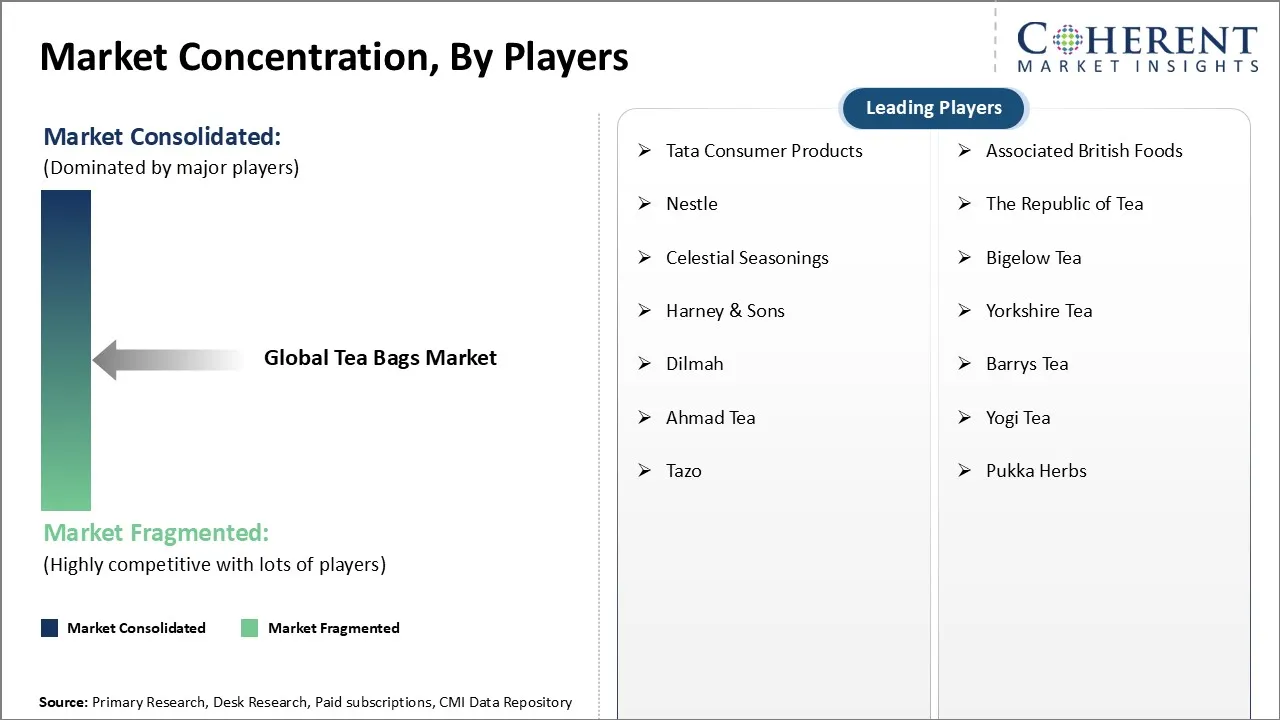
The global tea bags market is moderately consolidated, with multinational beverage companies, regional tea processors, specialty tea brands, and private-label manufacturers competing across mass-market and premium categories. Competition is influenced by tea sourcing quality, blend formulation expertise, packaging innovation, sustainability credentials, pricing strategy, and retail distribution strength. Regional companies maintain importance through local consumer preferences and origin-specific offerings, while global players compete through brand recognition, supply-chain capabilities, and product diversification.
Key Focus Areas Include
- Premium and specialty tea blend differentiation through unique flavors and botanical combinations
- Sustainable filter materials and environmentally responsible packaging solutions
- Consistent tea quality through sourcing control and processing capabilities
- Expansion across supermarkets, online retail, specialty stores, and foodservice channels
- Private-label manufacturing capabilities for retailers seeking customized tea portfolios
- Product customization through organic, functional, caffeine-free, and wellness-focused formulations
- Supply-chain transparency and responsible sourcing practices
- Brand positioning through heritage, origin certification, and consumer engagement strategies
Market Report Scope
Tea Bags Market Report Coverage | |||
Report Coverage | Details | ||
Base Year | 2025 | Market Size in 2026: | USD 8.24 Bn |
Historical Data For: | 2020 To 2024 | Forecast Period: | 2026 To 2033 |
Forecast Period 2026 To 2033 CAGR: | 7.4% | 2033 Value Projection: | USD 13.58 Bn |
Geographies covered: |
| ||
Segments covered: |
| ||
Companies covered: | Tata Consumer Products, Associated British Foods, Nestle, The Republic of Tea, Celestial Seasonings, Bigelow Tea, Harney & Sons, Yorkshire Tea, Dilmah, Barrys Tea, Ahmad Tea, Yogi Tea, Tazo, Pukka Herbs | ||
Growth Drivers: |
| ||
Restraints & Challenges: |
| ||
Analyst Opinion (Expert Opinion)
- The global tea bags market is likely to transition from a volume-driven packaged beverage category toward a value-oriented consumer experience market. Future competitive advantage will depend less on basic tea availability and more on the ability to combine sourcing expertise, formulation capabilities, sustainable packaging, and personalized consumer engagement. Companies that build stronger connections between product development and changing lifestyle preferences are likely to create more resilient business models.
- The most transformative shift will come from the convergence of wellness positioning and sustainable product design. Traditional tea suppliers may face pressure as consumers increasingly compare products based on environmental responsibility, ingredient functionality, and transparency. Companies capable of combining botanical science, responsible sourcing, and advanced packaging solutions may redefine category leadership by creating new premium segments rather than competing only within conventional tea formats.
- Market participants should prioritize investment in sustainable materials, supply-chain visibility, specialty formulations, and flexible manufacturing capabilities. Companies should avoid overdependence on standardized tea bag products where pricing pressure remains high. Building partnerships with botanical suppliers, packaging innovators, and digital retail channels can strengthen market positioning. However, businesses must carefully manage formulation compliance, raw material variability, and sustainability investments to protect margins.
Speak to the analyst
Want personalized insights?
Take the findings above to one of our principal consultants, or have the report rebuilt around the segments, geographies and competitors you actually track.
Market Segmentation
- Tea Type Insights (Revenue, USD Bn, 2021 - 2033)
- Black Tea Bags
- Green Tea Bags
- Herbal Tea Bags
- Fruit Tea Bags
- Others
- Packaging Type Insights (Revenue, USD Bn, 2021 - 2033)
- Single Chamber Tea Bags
- Pyramid Tea Bags
- Double Chamber Tea Bags
- Others
- Filter Material Insights (Revenue, USD Bn, 2021 - 2033)
- Paper Filter
- Nylon Filter
- Nonwoven Fabric
- Biodegradable Materials
- Application Insights (Revenue, USD Bn, 2021 - 2033)
- Household Consumption
- Foodservice and Hospitality
- Offices and Institutional Use
- Distribution Channel Insights (Revenue, USD Bn, 2021 - 2033)
- Supermarkets and Hypermarkets
- Online Retail
- Specialty Tea Stores
- Convenience Stores
- Others
- Regional Insights (Revenue, USD Bn, 2021 - 2033)
- North America
- U.S.
- Canada
- Latin America
- Brazil
- Argentina
- Mexico
- Rest of Latin America
- Europe
- Germany
- U.K.
- Spain
- France
- Italy
- Russia
- Rest of Europe
- Asia Pacific
- China
- India
- Japan
- Australia
- South Korea
- ASEAN
- Rest of Asia Pacific
- Middle East
- GCC Countries
- Israel
- Rest of Middle East
- Africa
- South Africa
- North Africa
- Central Africa
- North America
- Key Players Insights
- Tata Consumer Products
- Associated British Foods
- Nestle
- The Republic of Tea
- Celestial Seasonings
- Bigelow Tea
- Harney & Sons
- Yorkshire Tea
- Dilmah
- Barrys Tea
- Ahmad Tea
- Yogi Tea
- Tazo
- Pukka Herbs
Sources
Primary Research Interviews
- Tea manufacturers, tea bag producers, specialty tea brands, herbal tea companies, packaging suppliers, distributors, retailers, and e-commerce sellers
- Tea blenders, sourcing managers, packaging experts, food technologists, tea industry executives, and beverage consultants
Stakeholders
- Tea producers, branded tea companies, private-label manufacturers, specialty tea businesses, and contract tea processors
- Tea leaf suppliers, packaging material providers, machinery manufacturers, distributors, retail chains, online marketplaces, and foodservice operators
- Consumers, hospitality businesses, offices, and institutional beverage buyers
End-use Sectors
- Household tea consumption
- Foodservice and hospitality applications
- Workplace and institutional beverage consumption
- Premium tea, wellness tea, and specialty beverage applications
Regulatory and Industry Bodies
- Food safety authorities and beverage regulatory organizations
- Tea industry associations
- Packaging and sustainability regulatory bodies
- International trade and agricultural organizations
Databases
- Company annual reports, investor presentations, and corporate filings
- Tea industry databases and beverage market intelligence platforms
- Retail and e-commerce product databases
- Trade statistics, tea production databases, and import-export datasets
- Product portfolio and competitive intelligence databases
Magazines and Journals
- Tea industry publications
- Food and beverage industry journals
- Packaging technology and sustainability publications
- Consumer behavior and retail research journals
Associations
- Tea Association of the USA (Tea USA)
- UK Tea & Infusions Association
- European tea industry associations
- International beverage and food associations
- Packaging and sustainability organizations
Public Domain Sources
- Tea consumption trends and consumer preference developments
- Premium, herbal, and functional tea product innovations
- Sustainable tea packaging and filtration material developments
- Retail and e-commerce channel expansion
- Tea trade, cultivation, and supply-chain developments
Key Standards and Regulations
- Food safety and quality standards for tea products
- Food labeling and ingredient declaration requirements
- Packaging safety and material compliance standards
- Sustainable sourcing and environmental regulations
- International trade and import requirements for tea products
Proprietary Elements
- CMI Data Analytics Tool and proprietary CMI repository containing 10+ years of beverage, consumer goods, food & agriculture, retail, and packaging market intelligence.
Get access to 250+ pages report
Every segment, forecast, competitor profile and data table behind the analysis above — available for instant download.
- ESOMAR Member
- ISO 9001:2015 Certified
- D-U-N-S Registered
- GDPR & CCPA Compliant
Missing comfort of reading report in your local language? Find your preferred language:
Frequently Asked Questions
The CAGR of global tea bags market is projected to be 7.4% from 2026 to 2033.
The global tea bags market is estimated to be valued at USD 8.24 billion in 2026 and is expected to reach USD 13.58 billion by 2033.
The global tea bags market includes black tea bags, green tea bags, herbal tea bags, fruit tea bags, and other specialty tea bag products based on consumer preferences and formulation types.
The market includes single chamber tea bags, pyramid tea bags, double chamber tea bags, and other specialized formats designed for different brewing experiences and consumer requirements.
Major trends include increasing demand for functional and wellness teas, sustainable filtration materials, premium tea blends, and expansion of online retail channels for convenient tea purchasing.
A global tea bags market report provides analysis of market trends, competitive landscape, segment performance, regional opportunities, key companies, consumer preferences, and future growth strategies.
Rising preference for convenient tea preparation formats and increasing demand for herbal functional and wellness tea products are the key factors supporting the growth of the global tea bags market.