

U.S. and Europe Clinical Nutrition Market Size and Forecast – 2026 To 2033
The U.S. and Europe clinical nutrition market is expected to grow from USD 9,830.9 Mn in 2026 to USD 15,290.8 Mn by 2033, registering a compound annual growth rate (CAGR) of 6.5% from 2026 to 2033. The U.S. and Europe clinical nutrition market is poised for significant expansion, fueled by the rising prevalence of disease-related malnutrition, which is increasing the demand for specialized oral, enteral, and parenteral nutrition across healthcare settings.
According to the American Society for Parenteral and Enteral Nutrition (ASPEN), malnutrition affects more than 30% of hospitalized patients in the U.S., highlighting the growing need for timely nutritional assessment and specialized clinical nutrition interventions.
(Source: National Library of Medicine)
Key Takeaways of the U.S. and Europe Clinical Nutrition Market
- Oral is projected to hold 42.9 % of the U.S. and Europe clinical nutrition market share in 2026, making it the dominant route of administration segment, owing to its ease of administration, high patient compliance, and broad use in disease-related malnutrition management. The segment is further supported by evidence-based clinical nutrition guidelines promoting oral nutritional supplements as first-line nutritional therapy whenever feasible. For instance, the American Society for Parenteral and Enteral Nutrition (ASPEN) recommends oral nutrition interventions as the preferred initial approach before enteral or parenteral nutrition when patients can safely meet their nutritional requirements orally.
- Metabolic disorders are projected to hold 36.1 % of the U.S. and Europe clinical nutrition market share in 2026, making it the dominant application segment, driven by the increasing prevalence of inherited metabolic disorders and the need for lifelong disease-specific nutritional management. For instance, the European Society for Clinical Nutrition and Metabolism (ESPEN) recommends individualized nutritional therapy as a core component in the management of inherited metabolic diseases, reinforcing the role of specialized clinical nutrition in improving patient outcomes.
- Pediatric is projected to hold 37.5 % of the U.S. and Europe clinical nutrition market share in 2026, making it the dominant age group segment, owing to the growing demand for specialized nutritional support in infants and children with congenital disorders, malnutrition, and chronic illnesses. For instance, the American Society for Parenteral and Enteral Nutrition (ASPEN) has established pediatric nutrition support guidelines that emphasize early nutritional assessment and specialized enteral and parenteral nutrition to optimize growth and clinical outcomes in hospitalized children.
- Expansion of Medical Nutrition for GLP-1 Therapy Users: The growing adoption of GLP-1 receptor agonists for obesity and diabetes management is creating demand for specialized clinical nutrition products that address reduced food intake, muscle loss, and micronutrient deficiencies. Medical nutrition companies are increasingly developing protein-rich and condition-specific formulations to support patients receiving long-term GLP-1 therapy, opening a new avenue for market growth.
- Increasing Adoption of Personalized Clinical Nutrition: The increasing shift toward personalized clinical nutrition is creating significant growth opportunities in the U.S. and Europe. Advances in nutrigenomics, metabolomics, and microbiome research are enabling healthcare providers to tailor clinical nutrition therapies based on individual patient needs, disease conditions, and metabolic profiles. This trend is driving the demand for customized oral, enteral, and parenteral nutrition solutions that improve treatment outcomes and patient recovery.
Segmental Insights
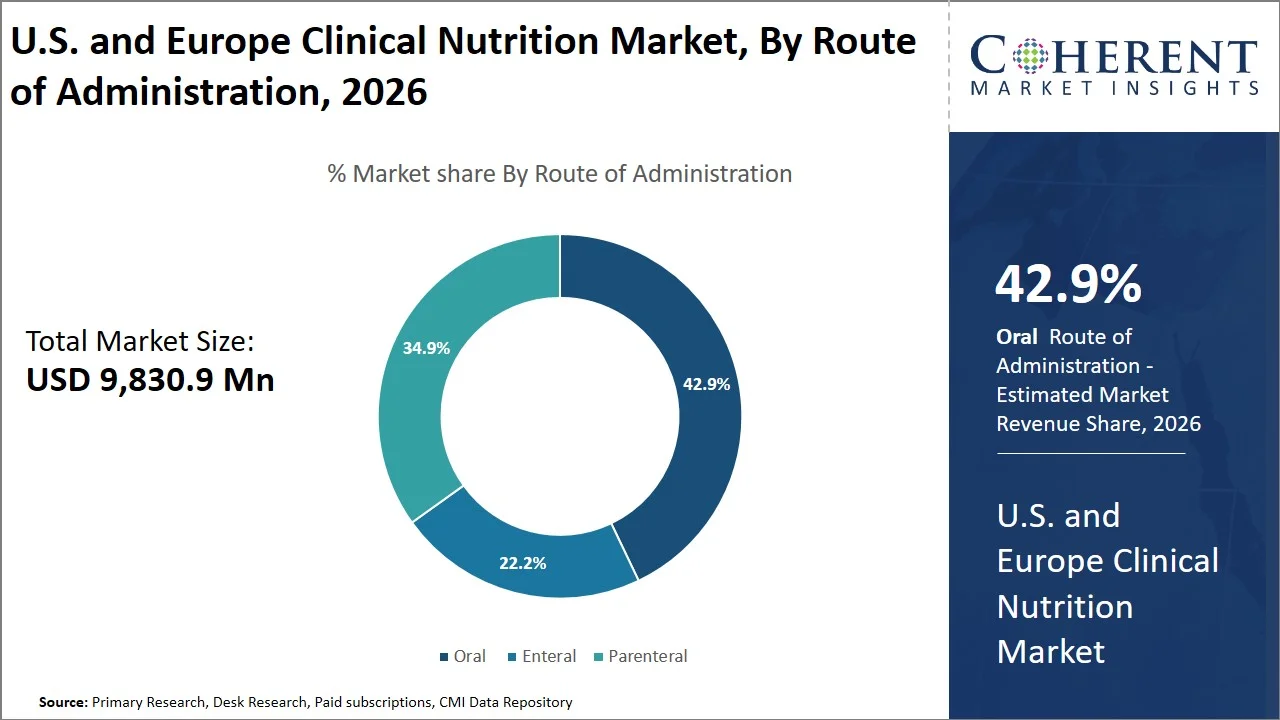
Why Does Oral Dominate the U.S. and Europe Clinical Nutrition Market?
Oral is projected to hold a market share of 42.9% in 2026, owing to its convenience and widespread acceptance by the patient. Oral clinical nutrition has emerged as the therapy of choice for orally feeding patients, due to its cost effectiveness and suitability for long-term disease management in both homecare and hospital settings. Continuous ongoing innovation in high-protein, disease-specific nutritional product formulation may enhance growth and usage in this broad field of patient care. For instance, in April 2025, Arla Foods Ingredients Group P/S extended the Lacprodan MicelPure Medical portfolio by launching new micellar casein isolate (MCI) solutions for the medical nutrition application, enabling the development of high-protein oral nutritional supplements for patients with disease-related malnutrition.
- Current Industry Events of 2026
- Market Size Estimation
- Regional Breakdown
- Competitive Landscape
- Customer Intelligence
- Segmental Analysis
- Pricing Analysis
- Key Market Drivers, Challenges & Future Trends
- Customized Insights Section
Why Do Metabolic Disorders Represent the Largest Application Segment in the U.S. and Europe Clinical Nutrition Market?
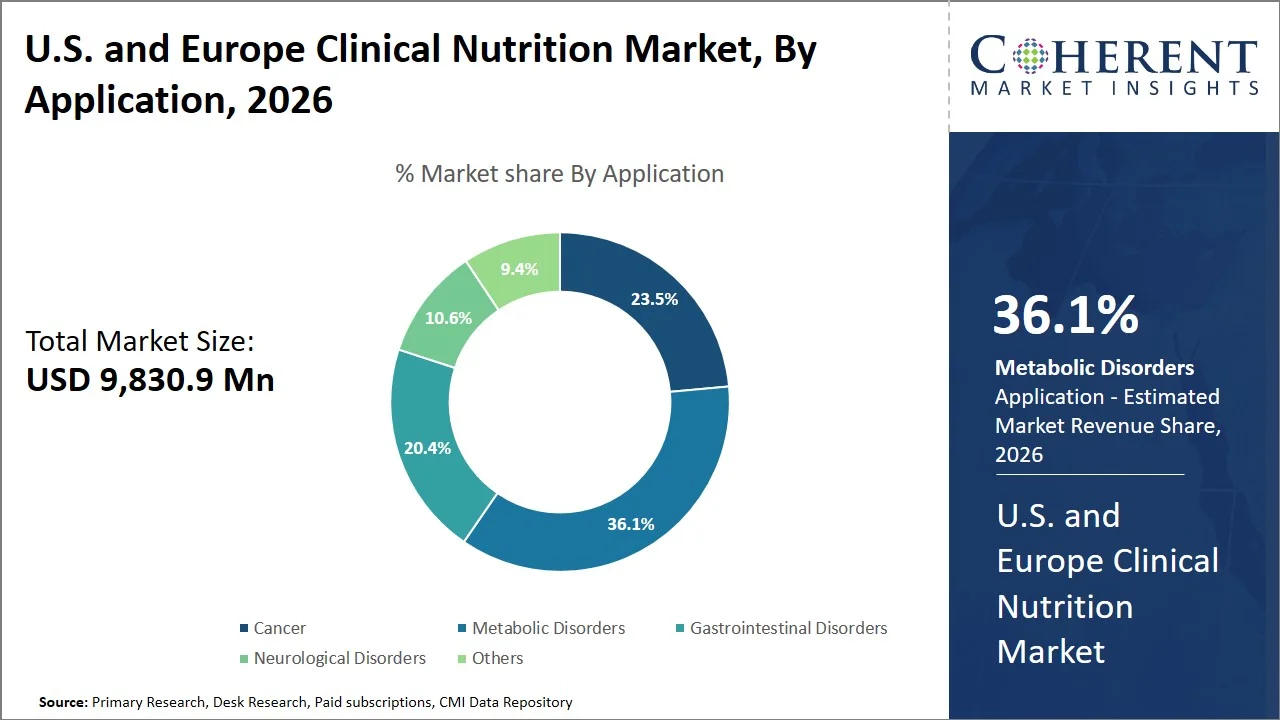
Metabolic disorders are projected to hold 36.1% of the market share in 2026, due to surging rise in prevalence of diabetes, obesity and hereditary metabolic disorders that need specialized nutritional management. Disease-specific clinical nutrition plays a critical role in maintaining metabolic balance, preventing complications, and supporting long-term dietary therapy for patients with chronic metabolic conditions. For instance, in July 2025, Danone finalized the acquisition of Kate Farms thereby adding plant-based medical nutrition for patients suffering from metabolic disorders and other diseases, to its U.S plant-based portfolio and strengthening its presence in the clinical nutrition market.
Pediatric Segment Dominates the U.S. and Europe Clinical Nutrition Market
Pediatric segment is expected to hold 37.5% of the U.S. and Europe clinical nutrition market share in 2026, owing to the increasing demand for specialized nutritional sustenance for premature and congenitally challenged infants and children suffering from gastrointestinal diseases and inherited metabolic disorders. Clinical nutrition has become a vital element to maximize growth, cognitive function, and disease prevention and management in infants, thereby, creating an ever-growing demand for specialized pediatric nutrition solutions in acute care settings. For instance, in April 2026, Mead Johnson Nutrition expanded its research collaboration with Mass General Brigham through a five-year commitment to advance pediatric and lifespan nutrition research, reinforcing innovations in research based pediatric clinical nutrition.
Current Events and their Impact
Current Events | Description and its Impact |
European Society for Clinical Nutrition and Metabolism (ESPEN) Updates Clinical Nutrition in Surgery Guideline (February 2025) |
|
U.S. FDA Issues Final Rule Updating the "Healthy" Nutrient Content Claim (April 2025) |
|
U.S. and Europe Clinical Nutrition Market Dynamics
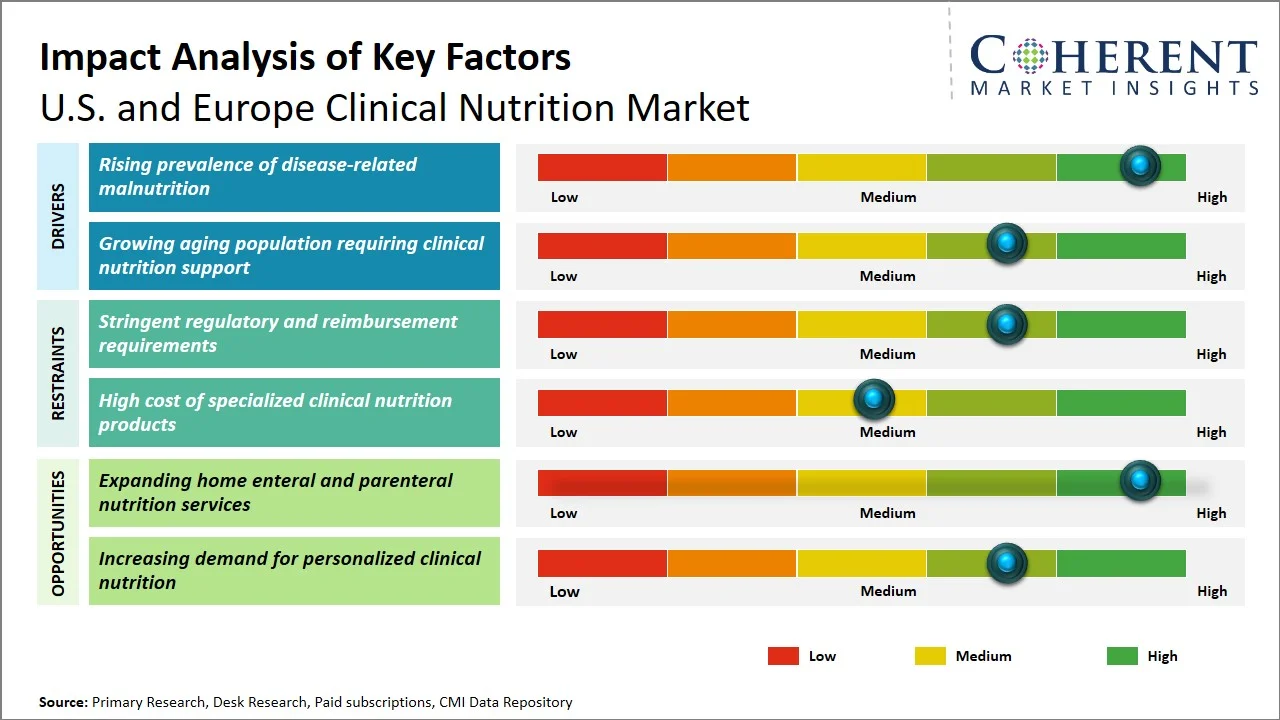
Market Drivers
- Rising prevalence of disease-related malnutrition: The increasing prevalence of disease-related malnutrition in the U.S. and Europe is driving the demand for clinical nutrition, especially for patients with cancer, gastrointestinal disease, neurological disease and other chronic conditions. There is increasing focus on early nutritional screening and appropriate intervention, which is driving the use of oral, enteral, and parenteral nutrition as a vital component of patient care. For instance, in November 2025, the European Society for Clinical Nutrition and Metabolism (ESPEN) updated its guideline on nutrition and hydration in geriatrics. This guideline emphasizes the importance of routine malnutrition screening and nutrition support individualized to the older adults, and further supports the use of clinical nutrition products across healthcare settings.
- Growing aging population requiring clinical nutrition support: The growing aging population across the U.S. and Europe is driving the demand for clinical nutrition, as older adults are at greater risk of malnutrition, sarcopenia, frailty, and chronic diseases requiring specialized nutritional support. Healthcare providers are increasingly incorporating routine nutritional assessment and individualized nutrition therapy into geriatric care to improve functional outcomes and reduce hospitalization. For instance, in February 2025, the German Association of the Scientific Medical Societies (AWMF) published the updated "Clinical Nutrition and Hydration in Older Adults" guideline, recommending evidence-based strategies to prevent and manage malnutrition, dehydration, and sarcopenia in elderly patients across hospital and community care settings.
Emerging Trends
- Increasing Use of Immunonutrition in Surgical and Critical Care: Hospitals across the U.S. and Europe are increasingly incorporating immunonutrition formulations enriched with arginine, omega-3 fatty acids, and nucleotides into perioperative and intensive care protocols. This trend is driven by growing clinical evidence supporting improved immune function, reduced postoperative infections, and shorter hospital stays.
- Expansion of Home-Based Clinical Nutrition Services: The shift toward home-based healthcare is accelerating the adoption of home enteral and parenteral nutrition supported by remote patient monitoring and multidisciplinary nutrition support teams. This trend is improving long-term disease management, reducing hospital readmissions, and enhancing patient convenience across chronic care settings.
Preferred Clinical Nutrition Models by Therapeutic Area in the U.S. and Europe Clinical Nutrition Market
Therapeutic Area | Preferred Clinical Nutrition Type | Typical Nutrition Route | Primary Clinical Goal |
Cancer | High-protein, immunonutrition | Oral / Enteral | Preserve lean body mass, reduce treatment-related malnutrition |
Gastrointestinal Disorders | Elemental/Semi-elemental nutrition | Enteral | Improve nutrient absorption and bowel recovery |
Metabolic Disorders | Disease-specific medical nutrition | Oral / Enteral | Maintain metabolic control and prevent complications |
Neurological Disorders | Dysphagia-focused nutrition | Enteral | Ensure adequate nutritional intake and reduce aspiration risk |
How are the expanding home enteral and parenteral nutrition services creating new growth opportunities in the U.S. and Europe clinical nutrition market?
The decentralization of healthcare delivery is increasing the availability of long-term nutritional therapy outside traditional hospital settings. The infrastructure for home healthcare, remote patient monitoring, and infusion technologies is improving, allowing the administration of enteral and parenteral nutrition in the home setting for patients with chronic diseases, resulting in better continuity of care and less reliance on hospitals. For instance, in April 2026, the U.S. Health Resources and Services Administration (HRSA) announced more than USD 135 million funding to expand nutrition services and strengthen the rural healthcare workforce, improving access to nutrition support for underserved communities and reinforcing the transition toward community- and home-based nutritional care.
Market Players, Key Development, and Competitive Landscape
Key Developments
- In June 2026, Fresenius Kabi announced the European launch of the Pedismof range, a portfolio of pediatric clinical nutrition products designed to meet the nutritional needs of infants and children with disease-related malnutrition and other medical conditions requiring specialized nutritional support. The launch expands the company's pediatric clinical nutrition portfolio and enhances access to specialized nutritional care across Europe.
- In June 2026, ZOIA Healthcare and Meta Healthcare announced an exclusive U.S. partnership to expand access to ready-to-use medical nutrition solutions for individuals with Maple Syrup Urine Disease (MSUD). Under the agreement, Meta Healthcare will exclusively distribute ZOIA Healthcare's specialized medical nutrition products across the U.S., strengthening the availability of disease-specific nutritional therapies for patients with rare inherited metabolic disorders.
- In March 2026, Nestlé Health Science introduced an innovative complete nutritional solution for children with special medical nutrition needs. The product is formulated to provide balanced nutrition for pediatric patients with disease-related nutritional requirements, expanding the company's specialized pediatric clinical nutrition portfolio and reinforcing its focus on medical nutrition innovation.
Competitive Landscape
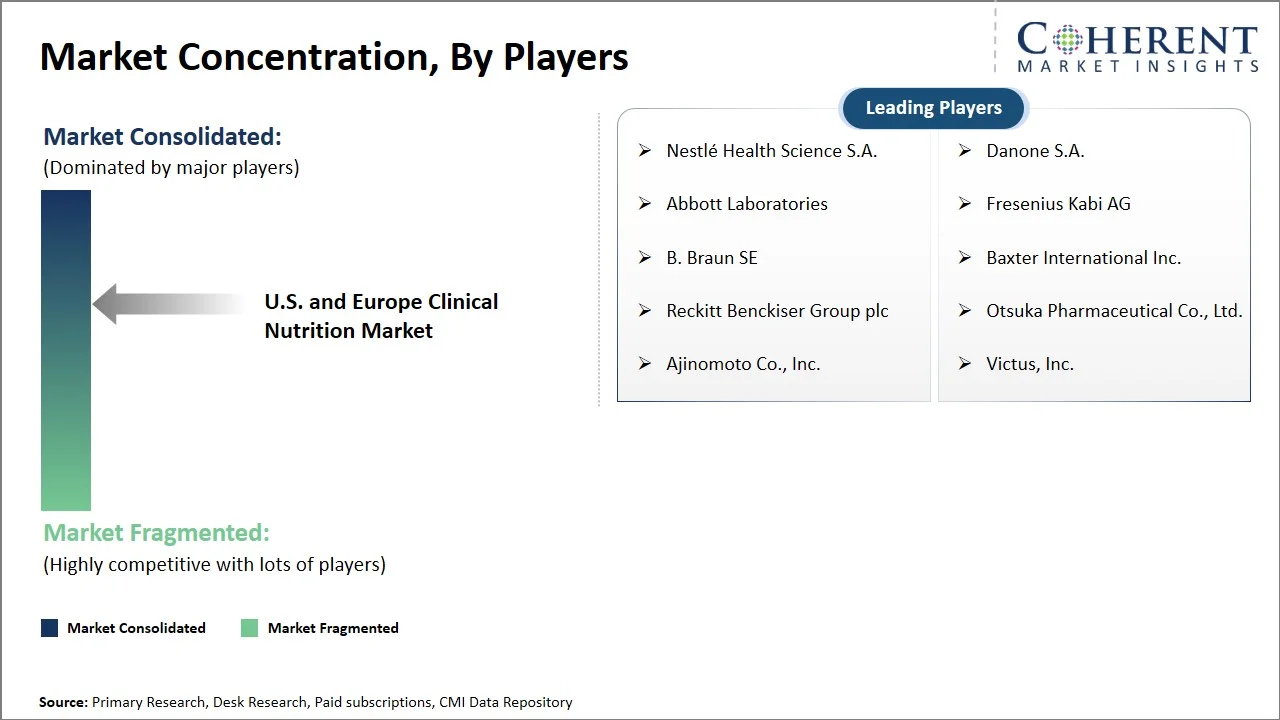
The U.S. and Europe clinical nutrition market is moderately consolidated, with leading players competing through clinically validated nutrition portfolios, disease-specific formulations, and continuous product innovation. Companies are strengthening their market presence by expanding manufacturing capabilities, investing in clinical research, and forming strategic partnerships with healthcare providers to enhance patient access across hospital and home care settings. Key focus areas include:
- Disease-Specific and Specialized Clinical Nutrition Formulations
- Clinical Evidence Generation and Product Innovation
- Expansion of Home Nutrition and Digital Patient Support Services
- Strategic Partnerships and Geographic Expansion
Market Report Scope
U.S. and Europe Clinical Nutrition Market Report Coverage
| Report Coverage | Details | ||
|---|---|---|---|
| Base Year: | 2025 | Market Size in 2026: | USD 9,830.9 Mn |
| Historical Data for: | 2020 To 2024 | Forecast Period: | 2026 To 2033 |
| Forecast Period 2026 to 2033 CAGR: | 6.5% | 2033 Value Projection: | USD 15,290.8 Mn |
| Segments covered: |
| ||
| Companies covered: | Nestlé Health Science S.A., Danone S.A., Abbott Laboratories, Fresenius Kabi AG, B. Braun SE, Baxter International Inc., Reckitt Benckiser Group plc, Otsuka Pharmaceutical Co., Ltd., Ajinomoto Co., Inc., and Victus, Inc. | ||
| Growth Drivers: |
| ||
| Restraints & Challenges: |
| ||
Analyst Opinion (Expert Opinion)
- In the coming years, U.S. and Europe clinical nutrition market is expected to evolve toward personalized, disease-specific, and home-based nutrition solutions, supported by the growing burden of chronic diseases, an aging population, and increasing emphasis on preventive and value-based healthcare. Future growth will be driven by clinically validated nutritional therapies integrated into standard treatment pathways.
- Most opportunities can be foreseen within oral clinical nutrition for metabolic disorders and geriatric care, particularly in the U.S. and Germany, where high chronic disease prevalence, well-established reimbursement systems, and expanding home healthcare services are accelerating the adoption of specialized medical nutrition.
- To strengthen their competitive position, market players should invest in clinical evidence generation, expand disease-specific product portfolios, and develop digital nutrition support platforms integrated with home healthcare services. Strategic collaborations with hospitals, long-term care providers, and payers will be essential to improve market access and differentiate offerings.
Speak to the analyst
Want personalized insights?
Take the findings above to one of our principal consultants, or have the report rebuilt around the segments, geographies and competitors you actually track.
Market Segmentation
- Route of Administration Insights (Revenue, USD Mn, 2021 - 2033)
- Oral
- Enteral
- Parenteral
- Application Insights (Revenue, USD Mn, 2021 - 2033)
- Cancer
- Metabolic Disorders
- Gastrointestinal Disorders
- Neurological Disorders
- Others
- Age Group Insights (Revenue, USD Mn, 2021 - 2033)
- Adult
- Pediatric
- Geriatric
- Distribution Channel Insights (Revenue, USD Mn, 2021 - 2033)
- Hospital Pharmacies
- Retail Pharmacies
- Online Pharmacies
- Key Players Insights
- Nestlé Health Science S.A.
- Danone S.A.
- Abbott Laboratories
- Fresenius Kabi AG
- Braun SE
- Baxter International Inc.
- Reckitt Benckiser Group plc
- Otsuka Pharmaceutical Co., Ltd.
- Ajinomoto Co., Inc.
- Victus, Inc.
Sources
Primary Research Interviews
- Clinical nutrition specialists and medical nutrition experts from leading nutrition companies
- Clinical dietitians and nutrition support teams from tertiary care hospitals
- Gastroenterologists, oncologists, intensivists, and metabolic disease specialists
- Home enteral nutrition (HEN) and home parenteral nutrition (HPN) service providers
- Hospital pharmacists and clinical nutrition procurement managers
- Regulatory affairs professionals specializing in medical foods and clinical nutrition
- Healthcare reimbursement and payer experts for nutrition support therapies
Stakeholders
- Clinical nutrition manufacturers
- Medical food and oral nutritional supplement (ONS) companies
- Home healthcare and infusion service providers
- Hospitals and integrated healthcare systems
- Long-term care and rehabilitation centers
- Clinical nutrition distributors and pharmacy chains
- Healthcare payers and insurance providers
- End-use Sectors
- Hospitals and Health Systems
- Long-Term Care Facilities and Nursing Homes
- Home Healthcare and Home Infusion Providers
- Rehabilitation Centers
- Specialty Clinics (Oncology, Gastroenterology & Metabolic Care)
- Retail and Hospital Pharmacy Networks
- Medical Nutrition Manufacturers
- Group Purchasing Organizations (GPOs) and Healthcare Distributors
- Health Insurance Providers and Payers
- Government and Public Healthcare Agencies
- Regulatory & Health Bodies
- U.S. Food and Drug Administration (FDA)
- European Commission – Directorate-General for Health and Food Safety (DG SANTE)
- European Food Safety Authority (EFSA)
- European Medicines Agency (EMA)
- U.S. Centers for Medicare & Medicaid Services (CMS)
- Health Resources and Services Administration (HRSA)
- National Institute for Health and Care Excellence (NICE), UK
Databases
- ClinicalTrials.gov – Clinical studies involving enteral nutrition, parenteral nutrition, and medical nutrition
- European Medicines Agency (EMA) Medicines Database – Regulatory information for nutrition-related medicinal products
- U.S. FDA Medical Foods & Nutrition Resources – Regulatory guidance for medical foods
- Eurostat – Demographic, healthcare expenditure, and aging population statistics
- OECD Health Statistics – Healthcare utilization and nutrition-related indicators
Magazines
- Clinical Nutrition ESPEN
- Nutrition Insight
- Nutraceutical Business Review
- Food Navigator Europe
- Nutrition Industry Executive
Journals
- Journal of Parenteral and Enteral Nutrition (JPEN)
- Nutrition in Clinical Practice (NCP)
- The American Journal of Clinical Nutrition (AJCN)
- European Journal of Clinical Nutrition
Associations
- American Society for Parenteral and Enteral Nutrition (ASPEN)
- European Society for Clinical Nutrition and Metabolism (ESPEN)
- Academy of Nutrition and Dietetics (AND)
- British Association for Parenteral and Enteral Nutrition (BAPEN)
- European Specialist Nutrition Association (ESNA)
Public Domain Sources
- U.S. Food and Drug Administration (FDA)
- European Food Safety Authority (EFSA)
- European Commission (DG SANTE)
- U.S. Centers for Disease Control and Prevention (CDC)
- National Institutes of Health (NIH)
- U.S. National Library of Medicine (NLM)
- Health Resources and Services Administration (HRSA)
- World Health Organization (WHO)
Proprietary Elements
- CMI Data Analytics Tool, Proprietary CMI Existing Repository of information for last 10 years.
Get access to 250+ pages report
Every segment, forecast, competitor profile and data table behind the analysis above — available for instant download.
- ESOMAR Member
- ISO 9001:2015 Certified
- D-U-N-S Registered
- GDPR & CCPA Compliant
Missing comfort of reading report in your local language? Find your preferred language:
Transform your Strategy with Exclusive Trending Reports
Frequently Asked Questions
The U.S. and Europe clinical nutrition market is estimated to be valued at USD 9,830.9 Mn in 2026 and is expected to reach USD 15,290.8 Mn by 2033.
Metabolic disorders dominate due to the increasing prevalence of diabetes, obesity, and inherited metabolic diseases, which require long-term disease-specific nutritional management and specialized medical nutrition products.
Clinical nutrition is the use of specialized nutritional therapies to prevent or manage disease-related malnutrition and support patient treatment and recovery.
The CAGR of the U.S. and Europe clinical nutrition market is projected to be 6.5% from 2026 to 2033.
The market is expected to witness strong growth, driven by increasing adoption of personalized clinical nutrition, home-based nutrition support, and disease-specific nutritional therapies.
Early nutritional screening helps identify patients at risk of malnutrition, enabling timely nutrition intervention to improve clinical outcomes, reduce complications, and shorten hospital stays.
Enteral nutrition delivers nutrients through the gastrointestinal tract, whereas parenteral nutrition provides nutrients intravenously when the digestive system cannot be used.