

U.S. Manufacturer Prescription Drug Coupons Market Size and Forecast – 2026 To 2033
The U.S. manufacturer prescription drug coupons market is expected to grow from USD 2,737.3 Mn in 2026 to USD 6,666.2 Mn by 2033, registering a compound annual growth rate (CAGR) of 13.6%. The U.S. manufacturer prescription drug coupons market is poised for significant expansion, fueled by the increasing cost of branded prescription drugs, which is surging the demand for manufacturer-sponsored copay cards and savings programs to improve patient affordability and medication adherence.
According to the American Society of Health-System Pharmacists (ASHP), U.S. prescription drug spending reached nearly USD 806 billion in 2024, representing a 10.2% increase from 2023, driven largely by the demand for GLP-1 therapies and other high-cost branded medicines. The continued rise in prescription drug expenditures is encouraging pharmaceutical manufacturers to expand copay cards and prescription drug coupon programs to improve patient affordability and support medication adherence.
(Source: National Insurance Services)
Key Takeaways of the U.S. Manufacturer Prescription Drug Coupons Market
- Manufacturer savings cards are projected to hold 39.9 % of the U.S. manufacturer prescription drug coupons market share in 2026, making it the dominant discount type segment owing to their role in reducing patients' out-of-pocket costs for branded prescription medicines. For instance, according to the U.S. Centers for Medicare & Medicaid Services (CMS), out-of-pocket healthcare spending in the U.S. reached approximately USD 498.3 billion in 2024, underscoring the growing need for manufacturer-sponsored savings cards that help eligible patients manage prescription drug expenses.
- Diabetes is projected to hold 28.4 % of the U.S. manufacturer prescription drug coupons market share in 2026, making it the dominant therapeutic area segment, driven by the increasing burden of diabetes requiring long-term medication. For instance, according to the U.S. Centers for Disease Control and Prevention (CDC), approximately 38.4 million people in the U.S. have diabetes, representing about 11.6% of the population, highlighting the substantial demand for affordability programs supporting diabetes therapies.
- Online is projected to hold 59.8 % of the U.S. manufacturer prescription drug coupons market share in 2026, making it the dominant distribution channel segment, supported by the growing adoption of digital healthcare services. For instance, the U.S. Centers for Medicare & Medicaid Services (CMS) continues to expand digital access initiatives through the Medicare Plan Finder and other online prescription drug tools, reinforcing the broader shift toward digital platforms for accessing medication pricing and savings information.
- Expansion of Direct-to-Patient Digital Pharmacy Platforms: The emergence of direct-to-patient digital pharmacy platforms is creating new opportunities for manufacturer-sponsored prescription drug coupons in the U.S. Pharmaceutical companies are increasingly integrating copay cards, digital savings offers, and prescription fulfillment into a single online ecosystem, enabling patients to seamlessly access affordability programs while improving medication adherence. This digital-first approach is expected to enhance coupon utilization and strengthen patient engagement.
- Integration with E-Pharmacy and Online Pharmacy Platforms: The rapid expansion of e-pharmacy and online pharmacy platforms in the U.S. presents a significant growth opportunity for manufacturer prescription drug coupons. By integrating digital copay cards and savings programs directly into online prescription fulfillment and checkout processes, pharmaceutical manufacturers can simplify coupon redemption, enhance patient convenience, and improve medication adherence. The increasing adoption of digital pharmacy services is expected to further accelerate the utilization of manufacturer-sponsored savings programs.
Segmental Insights
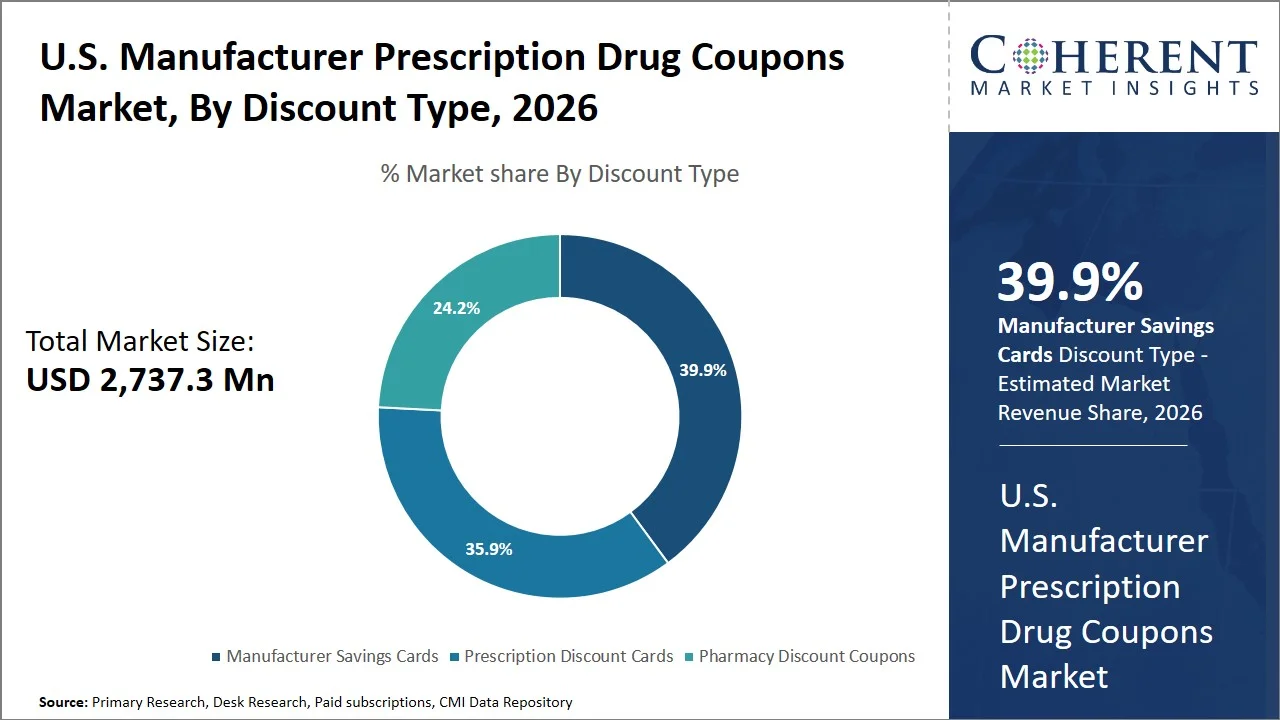
Why Do Manufacturer Savings Cards Dominate the U.S. Manufacturer Prescription Drug Coupons Market?
Manufacturer savings cards are projected to hold a market share of 39.9% in 2026, as these cards offer immediate cost saving on out-of-pocket spending for branded prescription drug usage, thus increasing affordability, and increasing medication adherence among commercially insured patients. The widespread acceptance of these cards is facilitated by immediate processing and manufacturer’s patient assistance program utilization, which has broad pharmacy network acceptance. For instance, in September 2025, Sanofi expanded its Insulins Valyou Savings Program to offer a 30-day supply of any Sanofi insulin for USD 35 to all U.S. patients with a prescription, regardless of insurance status broadening access significantly through a manufacturer-funded affordability program.
- Current Industry Events of 2026
- Market Size Estimation
- Regional Breakdown
- Competitive Landscape
- Customer Intelligence
- Segmental Analysis
- Pricing Analysis
- Key Market Drivers, Challenges & Future Trends
- Customized Insights Section
Why Does Diabetes Represent the Largest Therapeutic Area Segment in the U.S. Manufacturer Prescription Drug Coupons Market?
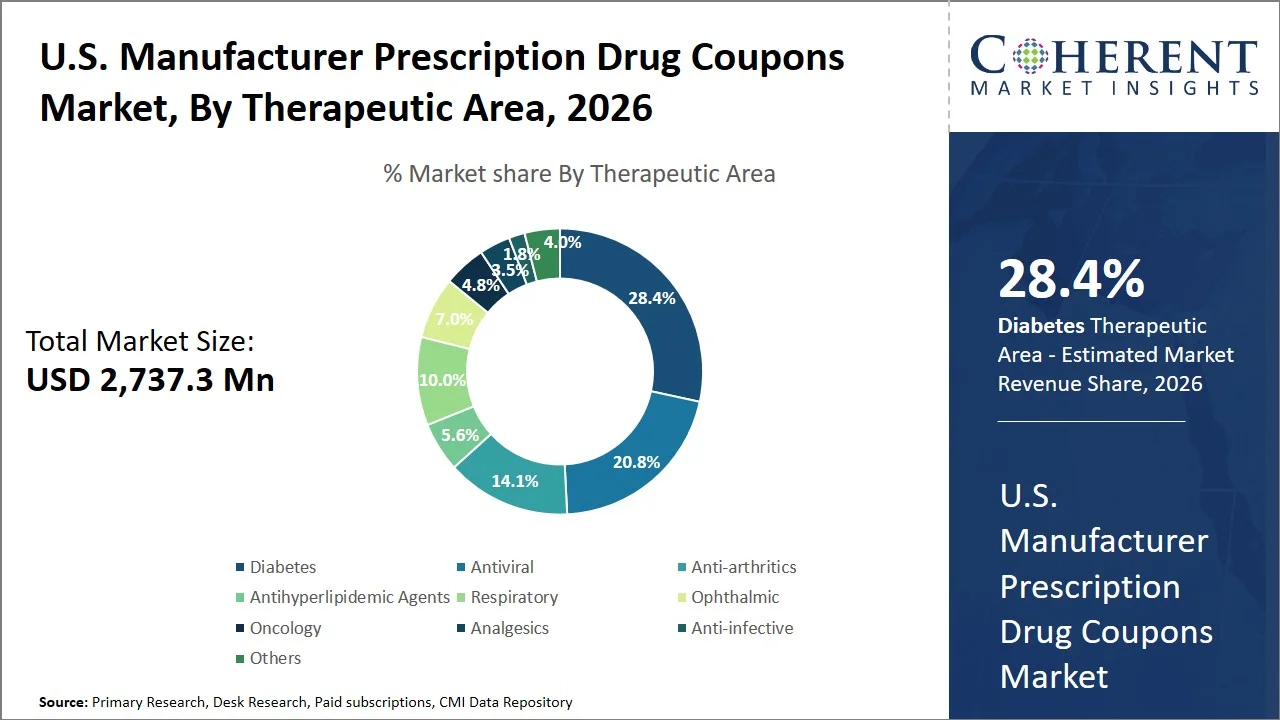
Diabetes is projected to hold 28.4% of the market share in 2026, due to the increased prevalence of disease, lifelong treatment requirements, and rising utilization of expensive branded therapies. Manufacturer provided coupons reduce out-of-pocket costs for consumers, increase adherence and improve patient access to newer innovative diabetes medications. For instance, AstraZeneca’s Farxiga Savings Program provides eligible patients with commercial insurance to obtain Farxiga for as little as USD 0 per month, highlighting the ongoing increasing adoption of manufacturer-funded affordability initiatives for diabetes management.
Online Segment Dominates the U.S. Manufacturer Prescription Drug Coupons Market
The online segment is expected to hold 59.8% of the U.S. manufacturer prescription drug coupons market share in 2026, since they allow immediate access to manufacturer’s saving programs via mobile application, websites, digital patient management systems. Their integration with e-prescribing, telehealth and pharmacies help in seamless activation of coupons and easy redemption, while improving patient engagement and medication adherence. For instance, in March 2026, GoodRx,Inc and Viatris collaborated to offer savings on 17 legacy branded medicines through GoodRx's digital prescription savings platform across more than 70,000 U.S. pharmacies, broadening access to manufacturer sponsored discount programs online.
Currents Events and their Impact
Current Events | Description and its Impact |
U.S. Centers for Medicare & Medicaid Services (CMS) Implements Medicare Part D Annual Out-of-Pocket Cap (January 2025) |
|
U.S. Centers for Medicare & Medicaid Services (CMS) Announces Second Cycle of Medicare Drug Price Negotiations (January 2025) |
|
U.S. Manufacturer Prescription Drug Coupons Market Dynamics
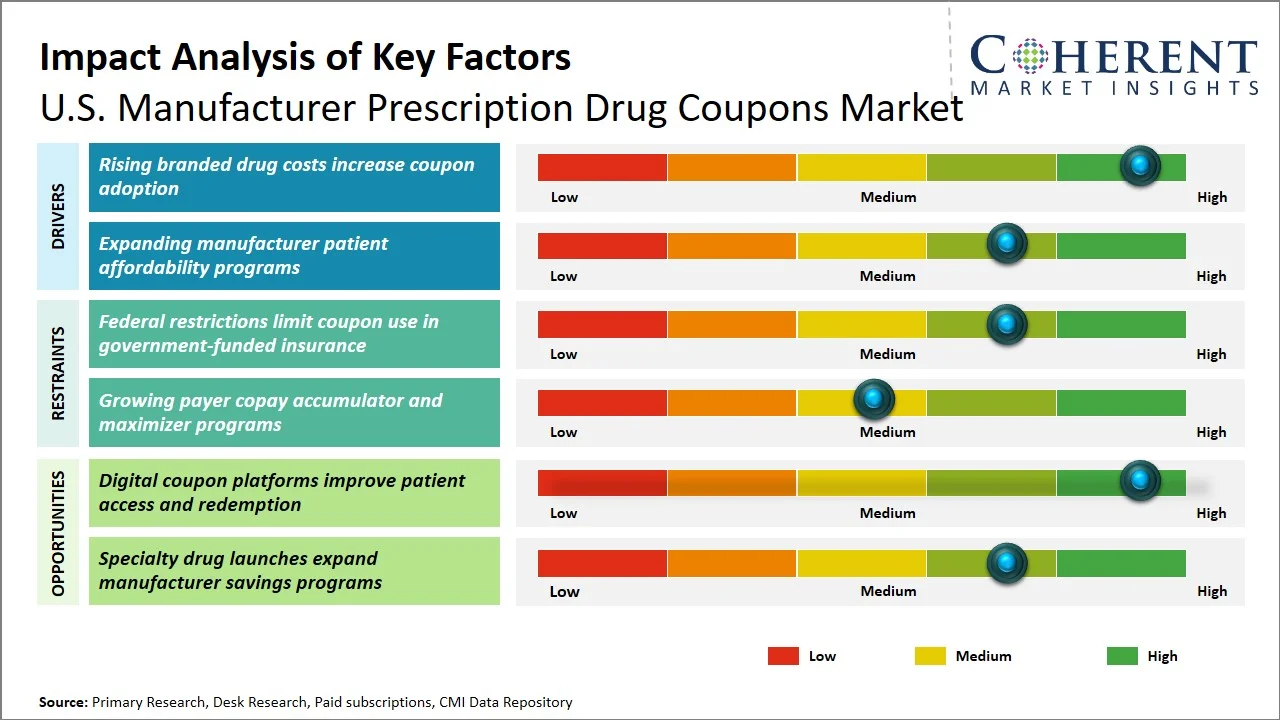
Market Drivers
- Rising branded drug costs increase coupon adoption: The escalating price of branded prescription medicines in the U.S, is fueling the widespread use of manufacturer-sponsored prescription drug coupon programs by patients who want to mitigate their out-of-pocket costs and ensure access to much-needed medications. Coupon programs make medications, particularly for specialty and chronic diseases, more affordable, and, in turn, assist manufacturers in ensuring better patient adherence and brand competitiveness. For instance, the U.S. Department of Health and Human Services (HHS), via the Office of the Assistant Secretary for Planning and Evaluation (ASPE), announced that over 4,200 prescription drug products had list price increases from January 2022 to January 2023, with nearly 46% of those increases exceeding the rate of inflation, underscoring persistent price inflation for branded drugs and the increased demand for patient access programs.
- Expanding manufacturer patient affordability programs: Increased patient access and the financial burden reduction being offered by pharmaceutical companies are helping expand patient accessibility for its branded products. The recent proliferation of copay cards, patient assistance program and self-pay savings plan will help sustain the medication adherence and drive the commercial launch for high-value brand product in near term. For instance, in 2025, Novo Nordisk broadened the availability of its U.S. Affordability programs via the NovoCare program to offer a new, lower self-pay price and expanded savings options for eligible patients who were prescribed Wegovy and Ozempic, emphasizing the importance of manufacturer-based patient support programs for industry stakeholders.
Emerging Trends
- AI-Enabled Personalized Patient Affordability Programs: Pharmaceutical manufacturers are increasingly leveraging artificial intelligence and data analytics to deliver personalized affordability solutions based on patients' insurance coverage, eligibility, and treatment pathways. This enables targeted coupon offerings and improves patient enrollment in manufacturer-sponsored savings programs, enhancing medication adherence and patient engagement.
- Growing Adoption of Real-Time Benefit Verification with Copay Integration: Healthcare providers and pharmacies are increasingly adopting real-time benefit verification (RTBV) technologies that display patients' insurance coverage, expected out-of-pocket costs, and available manufacturer copay assistance during prescribing. This integration streamlines coupon utilization, reduces prescription abandonment, and supports informed treatment decisions at the point of care.
Key Regulatory Programs and Claim Adjudication Frameworks Influencing the U.S. Manufacturer Prescription Drug Coupons Market
Governing Authority | Regulation / Framework | Key Requirement | Impact on Market |
U.S. Department of Health and Human Services (HHS) Office of Inspector General (OIG) | Federal Anti-Kickback Statute (AKS) | Prohibits manufacturers from offering copay coupons to beneficiaries of Medicare, Medicaid, and other federal healthcare programs. | Restricts coupon eligibility to commercially insured patients, shaping the target market for manufacturer-sponsored savings programs. |
Centers for Medicare & Medicaid Services (CMS) | Medicare Part D Prescription Drug Benefit Regulations | Prohibits the use of manufacturer copay assistance for Medicare Part D beneficiaries and establishes prescription drug coverage requirements. | Limits the addressable market for manufacturer coupons and encourages manufacturers to focus affordability initiatives on commercial health plans. |
National Council for Prescription Drug Programs (NCPDP) | Telecommunication Standard Version D.0 | Standardizes the electronic submission and real-time adjudication of prescription claims, including manufacturer coupon transactions. | Enables seamless, real-time coupon processing and reimbursement across pharmacies, PBMs, and manufacturers. |
State Departments of Insurance and State Legislatures | Copay Accumulator and Copay Maximizer Adjustment Policies | Regulate whether manufacturer coupon values are applied toward patients' deductibles and annual out-of-pocket maximums under commercial insurance plans. | Influences coupon effectiveness, patient affordability, and manufacturer coupon utilization across different states. |
U.S. Food and Drug Administration (FDA) | Prescription Drug Advertising and Promotional Labeling Regulations | Governs promotional communications and marketing materials related to prescription drugs, including manufacturer-sponsored savings offers. | Ensures compliant promotion of coupon programs while maintaining transparency and appropriate patient communication. |
How do digital coupon platforms improve patient access and redemption creating new growth opportunities in the U.S. manufacturer prescription drug coupons market?
Increased adoption of the manufacturer prescription drug coupons available via digital platforms will boost market growth in the U.S. by allowing easier access to savings program to the patients and by increasing the coupon redemption rates. Integration of mobile applications, patient portals, telehealth solutions and e-prescribing capabilities ensures real-time access to the manufacturer’s copay assistance while enhancing treatment adherence and patient engagement. For instance, in August 2024, Pfizer Inc. introduced PfizerForAll, a digitally integrated solution providing manufacturer affordability programs, as well as patient support, home delivery and telehealth access making it easier for commercially insured patients to access manufacturer affordability programs.
Market Players, Key Development, and Competitive Landscape
Key Developments
- In February 2026, Pfizer Inc. launched a cost savings program through TrumpRx to improve the affordability of its prescription medicines for eligible U.S. patients. The initiative aims to lower out-of-pocket expenses and expand access to branded therapies by leveraging a digital savings platform. This launch reinforces the growing role of manufacturer-sponsored savings programs in enhancing medication affordability and patient adherence.
- In January 2026, AbbVie Inc. entered into a drug discount agreement with the Trump administration to offer selected branded prescription medicines at lower prices through the TrumpRx platform. The initiative is designed to reduce eligible patients' out-of-pocket costs while improving access to AbbVie's therapies. This development underscores the growing adoption of manufacturer-sponsored prescription drug savings programs in the U.S. market.
- In October 2025, AstraZeneca announced a landmark agreement with the U.S. government to improve patient access to lower-cost prescription medicines. The initiative aims to reduce out-of-pocket expenses for eligible patients while expanding access to the company's branded therapies. The agreement highlights the increasing role of manufacturer-led affordability programs in strengthening the U.S. manufacturer prescription drug coupons market.
Competitive Landscape
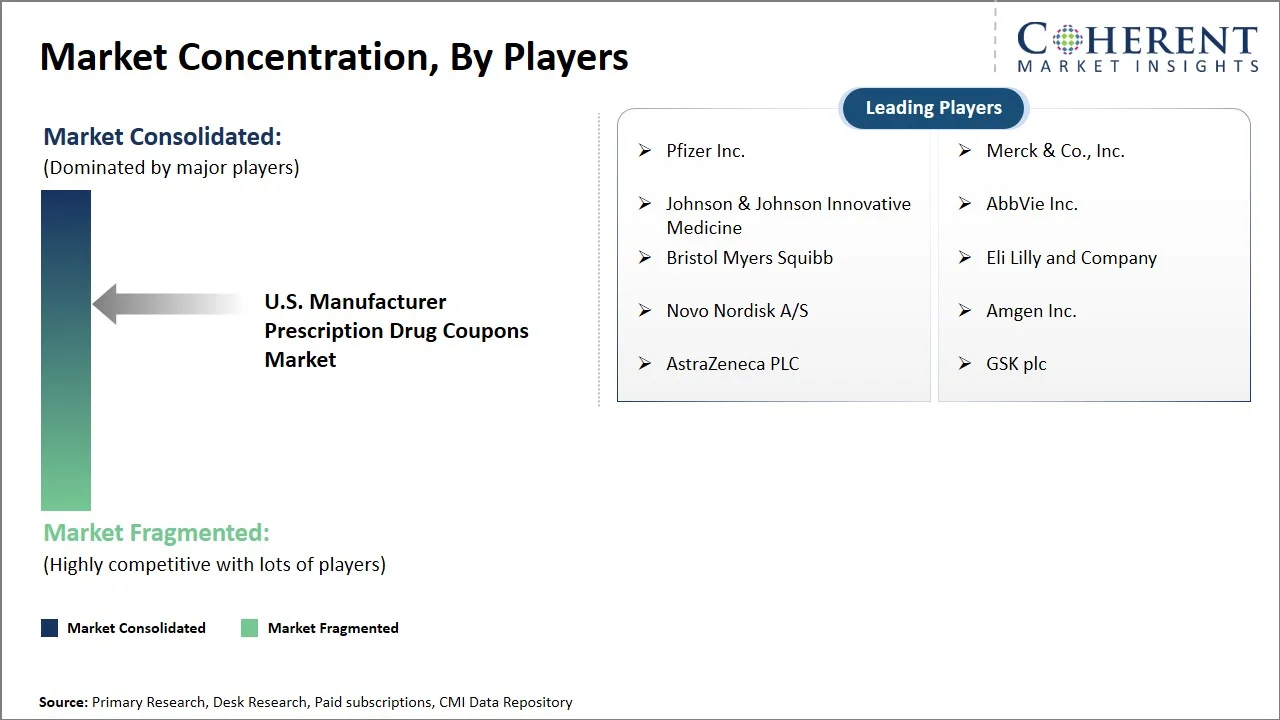
The U.S. manufacturer prescription drug coupons market is moderately consolidated, with pharmaceutical manufacturers, patient affordability solution providers, and healthcare technology companies competing to enhance patient access and maximize coupon utilization. Market participants are focusing on expanding digital savings platforms, integrating real-time benefit verification and e-prescribing systems, strengthening partnerships with pharmacies, pharmacy benefit managers (PBMs), and telehealth providers, and leveraging data analytics to deliver personalized affordability programs and improve patient engagement. Key focus areas include:
- Expansion of digital coupon and patient affordability platforms
- Integration with e-prescribing, real-time benefit verification (RTBV), and pharmacy workflows
- Strategic partnerships with pharmacies, pharmacy benefit managers (PBMs), telehealth providers, and patient support program administrators
- Leveraging data analytics and personalized patient engagement to improve coupon redemption and medication adherence
Market Report Scope
U.S. Manufacturer Prescription Drug Coupons Market Report Coverage
| Report Coverage | Details | ||
|---|---|---|---|
| Base Year: | 2025 | Market Size in 2026: | USD 2,737.3 Mn |
| Historical Data for: | 2020 To 2024 | Forecast Period: | 2026 To 2033 |
| Forecast Period 2026 to 2033 CAGR: | 13.6% | 2033 Value Projection: | USD 6,666.2 Mn |
| Segments covered: |
| ||
| Companies covered: | Pfizer Inc., Merck & Co., Inc., Johnson & Johnson Innovative Medicine, AbbVie Inc., Bristol Myers Squibb, Eli Lilly and Company, Novo Nordisk A/S, Amgen Inc., AstraZeneca PLC, and GSK plc | ||
| Growth Drivers: |
| ||
| Restraints & Challenges: |
| ||
Analyst Opinion (Expert Opinion)
- The future of the U.S. manufacturer prescription drug coupons market is expected to evolve from traditional paper-based savings programs toward integrated, digital-first affordability ecosystems that combine manufacturer coupons with real-time benefit verification (RTBV), e-prescribing, telehealth, and patient support services. As prescription drug affordability remains a key healthcare priority, manufacturers that offer seamless, technology-enabled savings experiences are likely to strengthen patient engagement and improve medication adherence.
- The maximum growth opportunity lies within digital manufacturer coupon platforms for specialty and chronic disease therapies, particularly in therapeutic areas such as diabetes, oncology, immunology, and rare diseases, where high out-of-pocket costs can significantly impact treatment initiation and persistence. These segments are expected to generate the highest demand for personalized, real-time affordability solutions in the U.S. commercial insurance market.
- In order to create an advantage for themselves, the competitors should invest in AI-enabled patient engagement, expand partnerships with pharmacies, pharmacy benefit managers (PBMs), telehealth providers, and electronic health record (EHR) vendors, and integrate coupons directly into digital prescribing and pharmacy workflows. Strengthening data analytics capabilities to deliver personalized savings offers while ensuring compliance with evolving federal and state regulations will further enhance coupon redemption, patient retention, and long-term brand loyalty.
Speak to the analyst
Want personalized insights?
Take the findings above to one of our principal consultants, or have the report rebuilt around the segments, geographies and competitors you actually track.
Market Segmentation
- Discount Type Insights (Revenue, USD Mn, 2021 - 2033)
- Manufacturer Savings Cards
- Prescription Discount Cards
- Pharmacy Discount Coupons
- Therapeutic Area Insights (Revenue, USD Mn, 2021 - 2033)
- Diabetes
- Antiviral
- Anti-arthritics
- Antihyperlipidemic Agents
- Respiratory
- Ophthalmic
- Oncology
- Analgesics
- Anti-infective
- Others
- Distribution Channel Insights (Revenue, USD Mn, 2021 - 2033)
- Online
- Offline
- Key Players Insights
- Pfizer Inc.
- Merck & Co., Inc.
- Johnson & Johnson Innovative Medicine
- AbbVie Inc.
- Bristol Myers Squibb
- Eli Lilly and Company
- Novo Nordisk A/S
- Amgen Inc.
- AstraZeneca PLC
- GSK plc
Sources
Primary Research Interviews
- Pharmaceutical Manufacturers (Market Access, Patient Support, and Commercial Strategy Teams) – manufacturer coupon program adoption, patient affordability strategies, and branded drug access initiatives.
- Pharmacy Benefit Managers (PBMs) and Claims Adjudication Experts – coupon eligibility validation, real-time benefit verification (RTBV), copay accumulator/maximizer programs, and claims processing workflows.
- Retail, Specialty, and Mail-Order Pharmacy Executives – coupon redemption trends, pharmacy workflow integration, and patient utilization patterns.
- Patient Support Program (PSP) and Hub Service Providers – enrollment trends, digital coupon distribution, patient engagement, and adherence outcomes.
- Commercial Health Insurance and Employer Benefit Consultants – impact of copay assistance programs, formulary strategies, and benefit design on coupon utilization.
- Healthcare Technology and E-Prescribing Solution Providers – integration of digital coupons with electronic prescribing (eRx), pharmacy management systems, and patient engagement platforms.
Stakeholders
- Pharmaceutical Manufacturers (e.g., Pfizer Inc., Merck & Co., Inc., Bristol Myers Squibb, AbbVie Inc., Eli Lilly and Company)
- Pharmacy Benefit Managers (PBMs)
- Retail, Specialty, and Mail-Order Pharmacies
- Patient Support Program (PSP) and Hub Service Providers
- Commercial Health Insurance Providers and Self-Insured Employers
- End-use Sectors
- Commercially Insured Patients
- Specialty Drug Programs
- Chronic Disease Management Programs
- Employer-Sponsored Health Plans
- Retail and Specialty Pharmacy Networks
- Telehealth and Digital Healthcare Platforms
- Regulatory & Health Bodies
- U.S. Department of Health and Human Services (HHS)
- Centers for Medicare & Medicaid Services (CMS)
- U.S. Food and Drug Administration (FDA)
- Office of Inspector General (OIG), U.S. Department of Health and Human Services
- National Council for Prescription Drug Programs (NCPDP)
- State Departments of Insurance
Databases
- Centers for Medicare & Medicaid Services (CMS) – Medicare Part D policies, prescription drug spending, and drug pricing data
- U.S. Food and Drug Administration (FDA) – prescription drug approvals, labeling, and promotional regulations
- National Council for Prescription Drug Programs (NCPDP) – pharmacy claims adjudication and electronic transaction standards
- Agency for Healthcare Research and Quality (AHRQ) – prescription utilization, healthcare expenditure, and medication adherence data
- Office of Inspector General (OIG), U.S. Department of Health and Human Services – fraud, compliance, and federal healthcare program guidance related to manufacturer copay assistance
Magazines
- Pharmaceutical Executive Magazine
- Drug Topics
- Managed Healthcare Executive
- Pharmacy Times
Journals
- Journal of Managed Care & Specialty Pharmacy
- American Journal of Health-System Pharmacy
- Journal of the American Pharmacists Association
Associations
- Pharmaceutical Research and Manufacturers of America (PhRMA)
- National Association of Chain Drug Stores (NACDS)
- Academy of Managed Care Pharmacy (AMCP)
- National Community Pharmacists Association (NCPA)
Public Domain Sources
- U.S. Food and Drug Administration (FDA) Drug Database
- Centers for Medicare & Medicaid Services (CMS)
- National Institutes of Health (NIH) Drug Information Portal
- U.S. Department of Health & Human Services (HHS) Reports
Proprietary Elements
- CMI Data Analytics Tool, Proprietary CMI Existing Repository of information for last 10 years.
Get access to 250+ pages report
Every segment, forecast, competitor profile and data table behind the analysis above — available for instant download.
- ESOMAR Member
- ISO 9001:2015 Certified
- D-U-N-S Registered
- GDPR & CCPA Compliant
Missing comfort of reading report in your local language? Find your preferred language:
Transform your Strategy with Exclusive Trending Reports
Frequently Asked Questions
The U.S. manufacturer prescription drug coupons market is estimated to be valued at USD 2,737.3 Mn in 2026 and is expected to reach USD 6,666.2 by 2033.
Manufacturer savings cards dominate due to their widespread use in reducing out-of-pocket costs for commercially insured patients, improving medication adherence, and supporting branded prescription drug utilization.
Manufacturer prescription drug coupons are savings programs sponsored by pharmaceutical companies that reduce eligible patients' out-of-pocket costs for branded prescription medications.
The CAGR of the U.S. manufacturer prescription drug coupons market is projected to be 13.6% from 2026 to 2033.
Federal regulations, including the Anti-Kickback Statute, prohibit manufacturers from offering copay coupons to beneficiaries of federal healthcare programs to prevent improper financial inducements.
Coupons are electronically validated and adjudicated in real time through pharmacy benefit manager (PBM) claim processing systems using National Council for Prescription Drug Programs (NCPDP) standards.
Rising branded drug costs increase coupon adoption, and expanding manufacturer patient affordability programs are the major factors driving the growth of the U.S. manufacturer prescription drug coupons market.