

Candidiasis Market Size and Share Analysis - Growth Trends and Forecasts (2026 - 2033)
Candidiasis market is estimated to be valued at USD 1,307.2 Mn in 2026 and is expected to reach USD 1,790.7 Mn in 2033, exhibiting a compound annual growth rate (CAGR) of 4.6% from 2026 to 2033.
Key Takeaways
- Based on Drug Class, the Azoles segment is expected to hold 42.7% share of the market in 2026.
- Based on Type, the Vaginal Candidiasis segment is expected to lead the market with 36% share in 2026.
- Based on Route of Administration, the Oral segment is projected to account for 50% share of the market in 2026.
- Based on Distribution Channel, the Hospital Pharmacies segment is projected to capture 45% share of the market in 2026.
- Based on Region, North America is set to lead the candidiasis market with 41% share in 2026. While, Asia Pacific is anticipated to be the fastest growing region.
Market Overview
The candidiasis market encompasses antifungal therapies used to treat superficial and invasive infections caused by Candida species, including vulvovaginal, oral, cutaneous, and systemic candidiasis. The market is experiencing steady growth, driven by the rising prevalence of fungal infections worldwide, increasing numbers of immunocompromised patients (such as those with HIV/AIDS, cancer, or organ transplants), and longer hospital stays. Additional drivers include growing awareness and diagnosis rates, expansion of healthcare access in emerging economies, and continuous development of advanced antifungal drugs, including echinocandins and novel azoles, to address drug resistance and unmet clinical needs.
Current Events and Its Impacts on the Candidiasis Market
Current Event | Description and its Impact |
Rising Antifungal Drug Resistance Crisis |
|
Regulatory Landscape Evolution and Drug Development |
|
Reimbursement Policy
Country | Reimbursement Coverage | Key Notes |
India | Partial to full (hospital-based) | Covered under Ayushman Bharat, CGHS, and private insurance for invasive candidiasis or ICU care. OTC treatments (e.g., clotrimazole) usually not reimbursed. |
United Kingdom (NHS) | Full | All antifungal treatments, including for candidiasis, are free at point of care under NHS. |
United States | Partial | Covered under Medicare, Medicaid, and private insurers. Coverage depends on drug tier, setting (inpatient vs. outpatient), and formulary status. |
Germany | Full | Antifungal drugs like echinocandins and azoles are reimbursed under statutory health insurance. |
Brazil | Partial | Public system (SUS) covers essential antifungals; newer agents may require judicial authorization. |
- Current Industry Events of 2026
- Market Size Estimation
- Regional Breakdown
- Competitive Landscape
- Customer Intelligence
- Segmental Analysis
- Pricing Analysis
- Key Market Drivers, Challenges & Future Trends
- Customized Insights Section
Segmental Insights
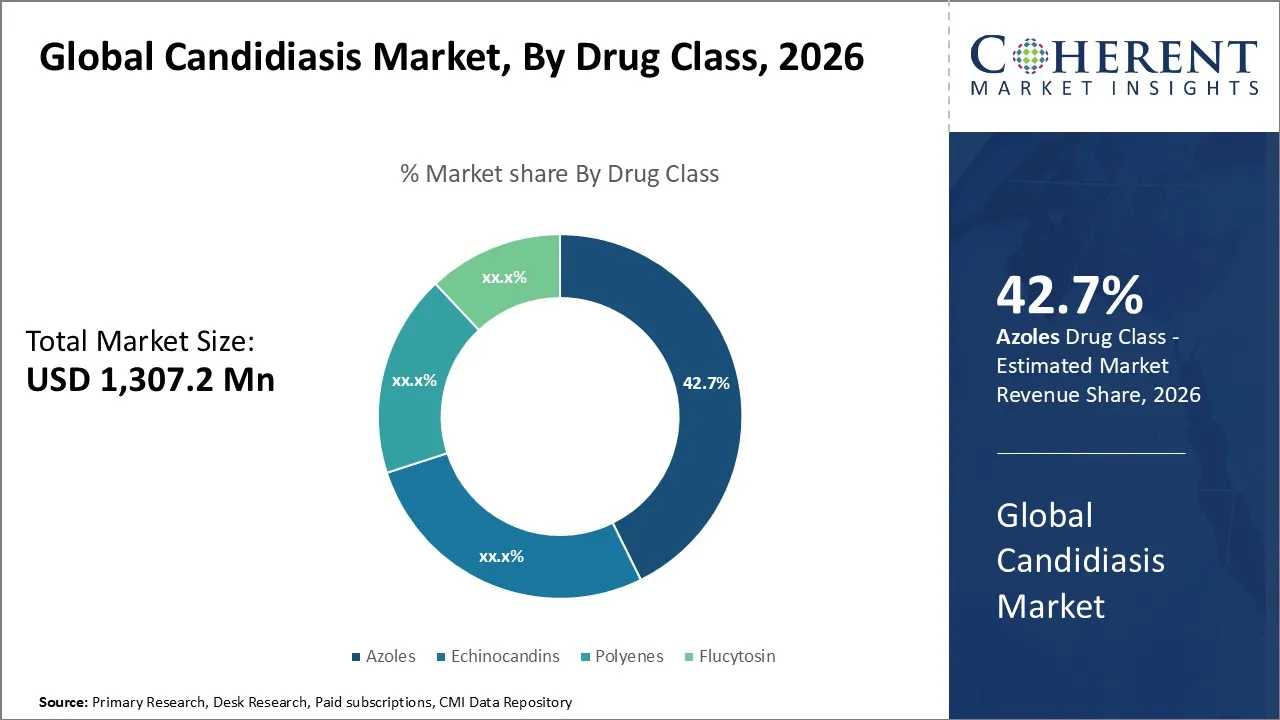
Candidiasis Market Insights, By Drug Class - Azoles lead with broad-spectrum efficacy and convenient oral formulations
In terms of drug class, the azoles segment is expected to hold 42.7% share of the market in 2026, due to their broad-spectrum antifungal activity, affordability, and oral availability. Widely prescribed for both superficial and systemic infections, they remain the first-line therapy. Their extensive use in outpatient settings and strong clinical efficacy ensure they hold the largest market share among drug classes.
For instance, in June 2025, Voriconazole 200mg tablets (Vinocanazol‑200) from Steris Pharma highlight the role of azoles in candidiasis treatment. As a triazole antifungal, voriconazole inhibits ergosterol synthesis, disrupting fungal cell membranes. It is effective against resistant Candida species, especially systemic infections, reinforcing azoles’ dominance in antifungal therapy and hospital-based management worldwide.
Candidiasis Market Insights, By Type - Vaginal candidiasis dominates due to high prevalence and strong demand for accessible antifungal therapies
In terms of type, the vaginal candidiasis segment is expected to lead the market with 36% share in 2026, driven by its high global prevalence among women and frequent recurrence. Over-the-counter azole therapies and topical formulations make treatment accessible, boosting demand. Rising awareness, self-medication trends, and strong retail pharmacy presence reinforce its dominance, ensuring this segment contributes the largest revenue share.
For instance, in December 2025, Roche’s December 2025 update announced CE Mark approval for its cobas® BV/CV PCR assay, enabling accurate detection of bacterial vaginosis and candida vaginitis. By improving diagnostic precision with a single vaginal swab, the test supports faster treatment decisions, directly addressing vaginal candidiasis and strengthening Roche’s sexual health diagnostics portfolio.
Candidiasis Market Insights, By Route of Administration - Oral administration prevails as the most convenient and widely accepted treatment option
In terms of route of administration, the oral segment is projected to account for 50% share of the market in 2026, because of patient convenience, cost-effectiveness, and widespread availability of azole antifungals in tablet or capsule form. Oral formulations are preferred for both prophylaxis and treatment, especially in outpatient care. Their ease of administration and broad clinical acceptance secure the largest market share.
For instance, in September 2025, SCYNEXIS announced positive Phase 1 results for ibrexafungerp, a novel oral antifungal tablet. As the first non‑azole oral therapy for vulvovaginal candidiasis, it targets glucan synthase to disrupt fungal cell walls. This milestone highlights its potential as an effective oral option for recurrent or resistant candidiasis treatment worldwide.
Candidiasis Market Insights, By Distribution Channel - Hospital pharmacies dominance is driven by systemic infection management and inpatient care needs
In terms of distribution channel, the hospital pharmacies segment is projected to capture 45% share of the market in 2026, due to their critical role in managing invasive and systemic candidiasis cases. They dispense high-cost parenteral therapies like echinocandins and amphotericin B, ensuring controlled administration. The reliance on hospital-based treatment for severe infections makes this channel the leading contributor to overall market revenue in 2026.
For instance, in October 2025, English hospitals report rising cases of Candida auris, a multidrug‑resistant yeast causing severe bloodstream infections. Difficult to eradicate from hospital environments, it spreads via contact with patients or contaminated surfaces. Infection control measures, including strict hygiene and protective equipment, are critical as outbreaks increase antifungal demand in hospital settings.
Regional Insights
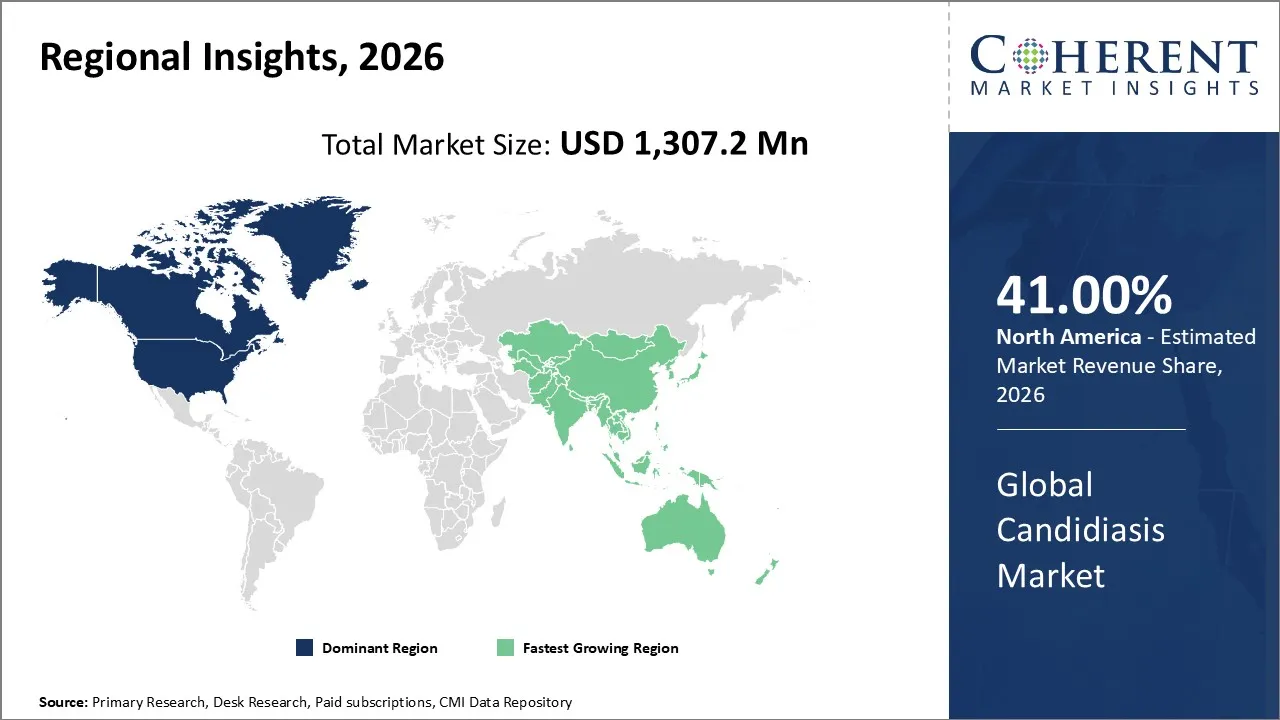
North America Candidiasis Market Analysis & Trends
North America is expected to dominate the candidiasis market with 41% share in 2026, due to high infection prevalence among immunocompromised patients, advanced healthcare infrastructure, and strong adoption of antifungal therapies. Robust hospital networks, favorable reimbursement policies, and ongoing R&D in novel antifungals further drive demand, making the region the market leader globally.
For instance, in August 2025, Glenmark Pharma’s US arm unveiled micafungin injection in the United States. Micafungin, an echinocandin antifungal, treats candidemia and invasive candidiasis, especially in immunocompromised patients. This hospital‑based therapy strengthens antifungal options, addressing resistant Candida infections and reinforcing the importance of echinocandins in managing serious systemic fungal diseases.
Asia Pacific Candidiasis Market Analysis & Trends
Asia Pacific is expected to exhibit the fastest growth, due to rising infection prevalence, expanding healthcare infrastructure, and increasing access to affordable antifungal drugs. Growing awareness campaigns, availability of generics, and higher diagnosis rates in countries like China and India drive rapid adoption, making the region the fastest‑growing globally.
For instance, in October 2025, Mundipharma announced completion of patient enrolment in the Phase III ReSPECT trial for REZZAYO® (rezafungin). This echinocandin antifungal is being studied globally, with emphasis on Europe and Asia, to prevent invasive fungal infections including candidiasis in transplant patients. Results expected mid‑2026 could reshape hospital antifungal treatment with weekly dosing.
Candidiasis Market Outlook Country-Wise
U.K. Candidiasis Market Trends
The candidiasis market is growing in the UK due to rising antifungal resistance, an aging population, and increasing numbers of immunocompromised patients. Hospital-acquired infections like Candida auris outbreaks and the need for advanced antifungal therapies are driving demand for both treatment and prevention options.
For instance, in July 2025, the University of Aberdeen launched Brigid Bio, a UK-based biotech company developing antibody-based therapies for invasive fungal infections, including drug-resistant candidiasis. Supported by Scottish Enterprise and Innovate UK, Brigid Bio aims to deliver safer, longer-acting treatments that enhance immune response and address the urgent global need for antifungal innovation.
India Candidiasis Market Trends
India’s candidiasis market is expanding rapidly due to rising fungal infections, increasing antifungal resistance, and a growing population of immunocompromised patients. Hospital-acquired infections, poor hygiene in rural areas, and government-backed surveillance programs are further driving demand for advanced diagnostics and antifungal therapies.
For instance, in March 2025, India’s Ministry of Health announced expanded efforts to combat fungal infections, including candidiasis. Initiatives like MycoNet and AMDRCs enhance surveillance, diagnostics, and resistance tracking. With rising antifungal resistance and hospital-acquired infections, these programs aim to strengthen national preparedness and research capacity for managing invasive fungal diseases across healthcare settings.
Market Report Scope
Candidiasis Market Report Report Coverage
| Report Coverage | Details | ||
|---|---|---|---|
| Base Year: | 2025 | Market Size in 2026: | USD 1,307.2 Mn |
| Historical Data for: | 2020 To 2024 | Forecast Period: | 2026 To 2033 |
| Forecast Period 2026 to 2033 CAGR: | 4.6% | 2033 Value Projection: | USD 1,790.7 Mn |
| Geographies covered: |
| ||
| Segments covered: |
| ||
| Companies covered: | Basilea Pharmaceutica Ltd., Astellas Pharma Inc., Grupo Ferrer Internacional, S.A., Pacgen Life Science Corporation, NovaDigm Therapeutics, Inc., Cidara Therapeutics, Inc., Amplyx Pharmaceuticals Inc., and Pfizer, Inc. | ||
| Growth Drivers: |
| ||
| Restraints & Challenges: |
| ||
Candidiasis Market Driver
Rising Prevalence of Candidiasis
The global burden of candidiasis continues to rise, with oral, vulvovaginal, and invasive forms becoming increasingly common. This surge is largely attributed to weakened immunity in patients suffering from chronic illnesses, diabetes, or those undergoing prolonged antibiotic use. As infections spread across diverse demographics, pharmaceutical companies are focusing on expanding treatment options. The growing incidence directly influences candidiasis market share, as antifungal drugs and therapies capture larger segments of the healthcare industry worldwide.
Immunocompromised Populations
Patients with compromised immune systems, such as those living with HIV/AIDS, undergoing cancer chemotherapy, or receiving organ transplants are highly susceptible to candidiasis infections. The rising number of such patients globally has intensified the need for effective antifungal treatments. This trend fuels candidiasis market demand, as healthcare providers and pharmaceutical firms prioritize innovative therapies to address systemic and recurrent infections. The expanding patient base ensures steady growth opportunities for antifungal drug manufacturers over the next decade.
Candidiasis Market Opportunity
Novel Antifungal Drug Development
The growing resistance of Candida species to existing antifungal classes such as azoles and echinocandins has created an urgent need for innovative therapies. Pharmaceutical companies are investing heavily in next-generation antifungals with broader activity, fewer side effects, and improved patient outcomes. These advancements not only address unmet medical needs but also expand treatment options across hospitals and clinics. As innovation accelerates, the candidiasis market forecast anticipates steady growth, driven by demand for safer and more effective antifungal solutions.
Analyst Opinion (Expert Opinion)
- The candidiasis market remains a focal segment within the broader antifungal therapeutics landscape, driven by high prevalence across both superficial and systemic fungal infections and expanded clinical awareness. Candida species are among the most common fungal pathogens affecting humans, with invasive forms presenting significant burdens in hospital settings and among immunocompromised populations. Clinical surveillance underscores rising incidence of invasive candidiasis, which contributes substantial demand for systemic antifungal treatments including echinocandins, triazoles, and polyene formulations. Echinocandins are gaining prominence due to favorable resistance profiles, particularly against drug-resistant species such as Candida auris, while azole compounds continue to lead in use for a broad range of clinical manifestations.
- Segment analyses indicate that invasive candidiasis constitutes the largest therapeutic application, reflecting the intensive medical management required and corresponding hospital-driven consumption patterns. Vulvovaginal candidiasis also represents a significant clinical category, with recurrent cases affecting a notable proportion of women and stimulating demand for both prescription and over-the-counter antifungal options.
- Regional data show North America as a major contributor to candidiasis drug utilization, supported by advanced healthcare infrastructure and diagnostic access, while Asia-Pacific exhibits robust growth momentum tied to expanding treatment uptake and healthcare investment. Distribution channels remain anchored in hospitals and clinics due to the need for systemic therapeutic regimens, although outpatient and homecare use of oral antifungals is rising.
- Overall, the candidiasis market reflects a combination of persistent clinical demand, evolving therapy profiles, and geographic diversification, with continued emphasis on effective management of both common and complex Candida infections.
Speak to the analyst
Want personalized insights?
Take the findings above to one of our principal consultants, or have the report rebuilt around the segments, geographies and competitors you actually track.
Recent Developments
- In October 2025, Bayer relaunched Canesten® in India, offering clotrimazole-based treatments for skin and vaginal candidiasis. The range includes creams, powders, and prescription vaginal tablets. Targeting women’s health, the initiative promotes early treatment of fungal infections. Canesten’s global reputation supports its mission to improve antifungal care access and awareness across Indian communities.
- In July 2025, Basilea launched a Phase 3 trial for fosmanogepix, a novel antifungal targeting invasive mold infections and candidiasis, including drug-resistant Candida auris. With both oral and IV formulations, it offers a new treatment option for critically ill patients. The study is globally supported, including U.S. BARDA funding and Swiss leadership.
Market Segmentation
- By Drug Class,
- Azoles
- Echinocandins
- Polyenes
- Flucytosine
- By Type,
- Candida infections of the mouth, throat, and esophagus
- Vaginal candidiasis
- Invasive/Systemic candidiasis
- By Route of Administration,
- Oral
- Parenteral
- Topical
- By Distribution Channel,
- Hospital Pharmacies
- Retail Pharmacies
- Online Pharmacies
- By Region
- North America
- U.S.
- Canada
- Latin America
- Brazil
- Argentina
- Mexico
- Rest of Latin America
- Europe
- Germany
- U.K.
- Spain
- France
- Italy
- Russia
- Rest of Europe
- Asia Pacific
- China
- India
- Japan
- Australia
- South Korea
- ASEAN
- Rest of Asia Pacific
- Middle East & Africa
- GCC Countries
- Israel
- Rest of Middle East & Africa
- North America
- Key Players
- Basilea Pharmaceutica Ltd.
- Astellas Pharma Inc.
- Grupo Ferrer Internacional, S.A.
- Pacgen Life Science Corporation
- NovaDigm Therapeutics, Inc.
- Cidara Therapeutics, Inc.
- Amplyx Pharmaceuticals Inc.
- Pfizer, Inc
Sources
Primary Research Interviews
- Infectious Disease Specialists
- Clinical Microbiologists & Mycologists
- Hospital Pharmacists
- Antifungal Drug Manufacturers
- Diagnostic Laboratory Professionals
- Healthcare Providers & Hospital Administrators
- Others
Databases
- Bloomberg Terminal
- Thomson Reuters Eikon
- IQVIA (MIDAS & Pharmascope)
- GlobalData Healthcare
- S&P Global Market Intelligence
- Others
Magazines
- Pharmaceutical Technology Magazine
- Medical Device & Diagnostic Industry (MD+DI)
- Drug Discovery Today
- Nature Reviews Drug Discovery
- Others
Journals
- Journal of Fungi
- Clinical Infectious Diseases
- Mycoses Journal
- Journal of Antimicrobial Chemotherapy
- The Lancet Infectious Diseases
- Others
Newspapers
- Financial Times
- The Wall Street Journal
- Reuters
- Bloomberg News
- Others
Associations
- Infectious Diseases Society of America (IDSA)
- European Confederation of Medical Mycology (ECMM)
- International Society for Human and Animal Mycology (ISHAM)
- American Society for Microbiology (ASM)
- World Association for Medical Mycology (WAMM)
- Others
Public Domain Sources
- World Health Organization (WHO)
- U.S. Centers for Disease Control and Prevention (CDC)
- European Medicines Agency (EMA)
- U.S. Food and Drug Administration (FDA)
- National Institutes of Health (NIH)
- Others
Proprietary Elements
- CMI Data Analytics Tool
- Proprietary CMI Existing Repository of Information for the Last 8 Years
Get access to 250+ pages report
Every segment, forecast, competitor profile and data table behind the analysis above — available for instant download.
- ESOMAR Member
- ISO 9001:2015 Certified
- D-U-N-S Registered
- GDPR & CCPA Compliant
Missing comfort of reading report in your local language? Find your preferred language:
Transform your Strategy with Exclusive Trending Reports
Frequently Asked Questions
The global candidiasis market is estimated to surpass USD 1,307.2 Mn by 2026.
Major players operating in the global candidiasis market include Basilea Pharmaceutica Ltd., Astellas Pharma Inc., Grupo Ferrer Internacional, S.A., Pacgen Life Science Corporation, NovaDigm Therapeutics, Inc., Cidara Therapeutics, Inc., Amplyx Pharmaceuticals Inc., and Pfizer, Inc.
Adverse Side Effects and Regulatory & Approval Barriers are expected to hamper growth of the market over the forecast period.
Rising Prevalence of Candidiasis and Immunocompromised Populations are expected to propel growth of the market over the forecast period.
The global candidiasis market is estimated to exhibit a CAGR of 4.6% over the forecast period (2026-2033).
Among drug class, azoles segment held a major market.