

Global Veterinary Sutures Market Size and Forecast – 2026 To 2033
The global veterinary sutures market is expected to grow from USD 311.4 Mn in 2026 to USD 504.0 Mn by 2033, registering a compound annual growth rate (CAGR) of 7.1% from 2026 to 2033. The market for global veterinary sutures is poised for significant expansion, fueled by the soaring burden of animal diseases and the increasing need for veterinary healthcare and surgical interventions.
According to the World Organisation for Animal Health (WOAH), more than 20% of global animal production is lost to preventable diseases each year, resulting in estimated annual economic losses of USD 300 billion, underscoring the growing need for effective veterinary healthcare and treatment.
Key Takeaways of the Global Veterinary Sutures Market
- Absorbable are projected to hold 55.4% of the global veterinary sutures market share in 2026, making it dominant product type segment, across North America due to region's established veterinary surgical practices and regulatory framework for absorbable suture materials. For instance, the U.S. Food and Drug Administration (FDA) recognizes absorbable materials such as polydioxanone and glycolide/lactide polymers within its surgical-suture framework and requires assessment of characteristics including biocompatibility, tensile strength, sterility, and absorption.
- Synthetic is projected to hold 78.0% of the global veterinary sutures market share in 2026, making it dominant material segment, across particularly in Europe, where stringent medical-device requirements support the use of standardized, performance-tested synthetic materials. For instance, the European Commission states that Regulation (EU) 2017/745 establishes a regulatory framework for medical devices in the EU, with requirements covering device safety, performance, conformity assessment, and post-market surveillance. The Commission has also specifically reported that synthetic alternatives to animal-derived catgut can provide equal or better clinical performance.
- Hospitals are projected to hold 57.8% of the global veterinary sutures market share in 2026, making it dominant end user segment, across across Asia-Pacific, supported by the expansion and formalization of veterinary hospital infrastructure. For instance, China’s Ministry of Agriculture and Rural Affairs introduced a new standardized animal-diagnosis license in 2025 to strengthen oversight and standardize veterinary diagnostic institutions, demonstrating the expanding organized veterinary-care infrastructure in China.
- North America market maintains dominance with an expected share of 32.4% in 2026, bolstered by its mature veterinary practice network and high utilization of veterinary services. For instance, the American Veterinary Medical Association (AVMA) reported that U.S. full-time veterinarians in companion-animal and mixed-animal practices typically have 13–14 appointment slots per weekday, reflecting substantial ongoing veterinary-care activity.
- Asia Pacific is expected to exhibit the fastest growth with an estimated contribution of 23.3% share in 2026, driven by the expansion and formalization of veterinary diagnostic and treatment services. For instance, China’s State Administration for Market Regulation implemented GB/T 45295-2025, a national guideline for diagnosis and treatment services at pet medical institutions, effective August 2025.
Segmental Insights
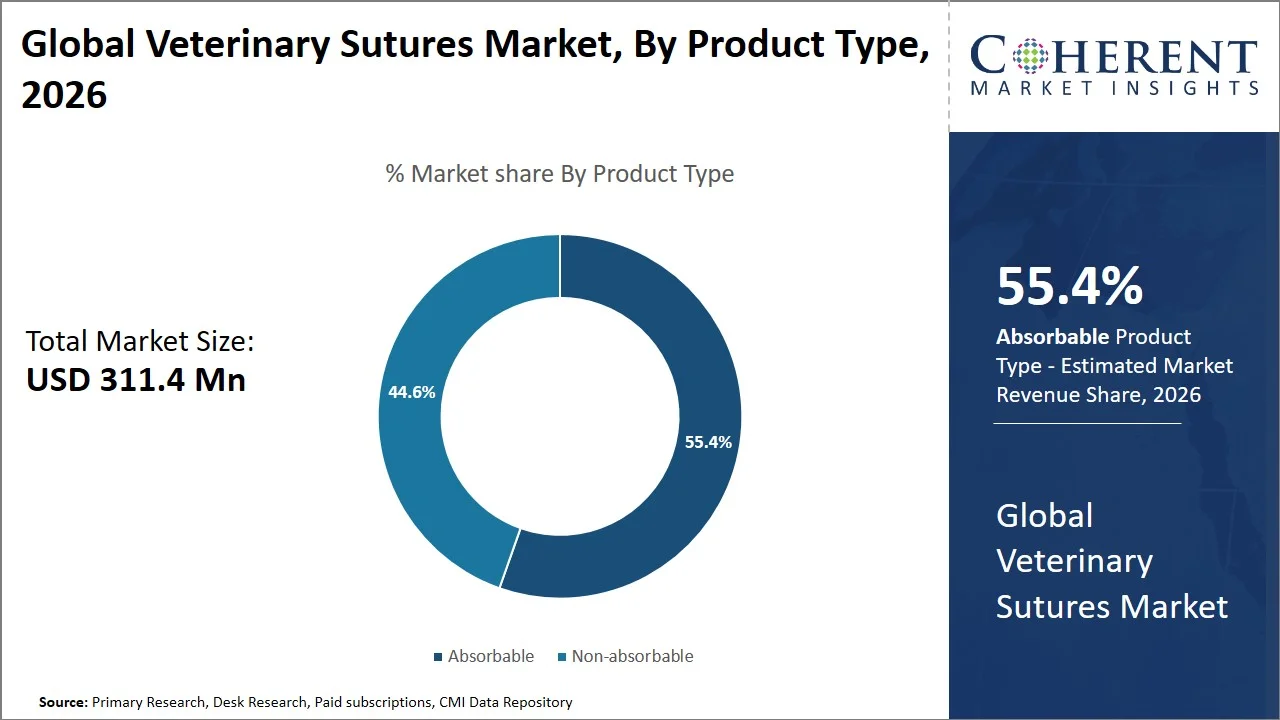
Why Do Absorbable Dominate the Global Veterinary Sutures Market?
Absorbable are projected to hold the market share of 55.4% in 2026, owing to their foreseen resorption which eliminate the need for sutures removal postoperatively. They are appropriate for the soft-tissue and internal applications common to veterinary surgery, and the development of synthetic polymers ensures continued ability of the sutures to control their absorption and support of tissues. Moreover, the greater availability of veterinary specific absorbable products contributes to the expansion. For instance, in January 2026, Assut Europe S.p.A. unveiled the company's line of GexFix veterinary medical devices suturing devices in the U.S. The portfolio includes absorbent suturing devices made with a variety of polyglycolic acid (PGA), polydioxanone (PDO), and polyglactin 910 materials. Made in Italy, and distributed stateside via Medical Device Vet, the product offering enhances veterinary accessibility of synthetic, absorbable sutures.
- Current Industry Events of 2026
- Market Size Estimation
- Regional Breakdown
- Competitive Landscape
- Customer Intelligence
- Segmental Analysis
- Pricing Analysis
- Key Market Drivers, Challenges & Future Trends
- Customized Insights Section
Why Does Synthetic Represent the Largest Material Segment in the Veterinary Sutures Market?
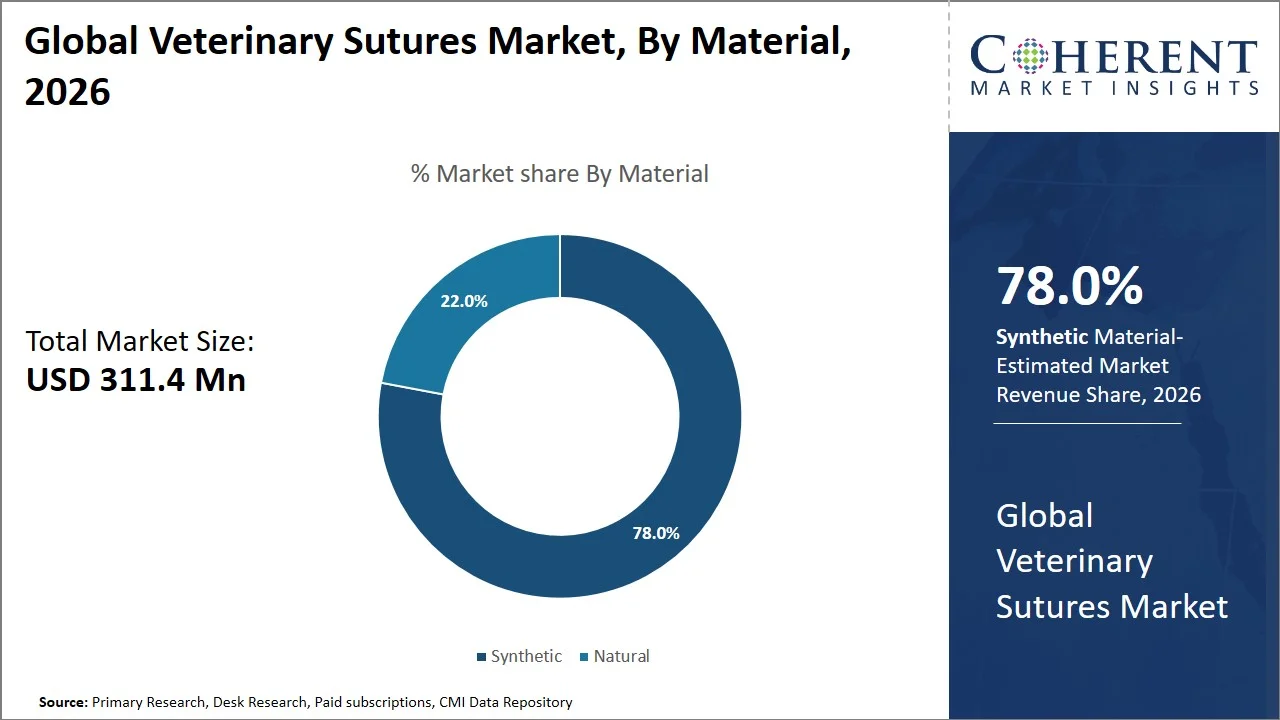
Synthetic is projected to hold a market share of 78.0% in 2026, due to their invariable material properties, predictable tensile strength & degradation rate and lower tissue reactivity compared to many natural sutures. The array of polymer types allows for adjustment of absorption time and flexibility to match surgical procedure; and development of both monofilament and braided synthetics is expanding their use in soft tissue, orthopaedic and other surgical applications. For instance, B. Braun SE Vet Care's Monosyn is a sterile synthetic absorbable monofilament suture manufactured from glyconate and specifically developed to facilitate veterinary soft tissue procedures. The predictability of its tensile strength retention and absorption rate permits continuous support in a number of surgical applications including gastrointestinal, gynecological, urological, and skin closure procedures.
Hospitals Segment Dominates the Global Veterinary Sutures Market
The hospitals segment is projected to hold a market share of 57.8% in 2026, based on their proficiency to cater with intricate surgical treatments, emergency patients as well as selective specialty surgeries that requires comprehensive use of suture variety. Specialized operating suite, specialized personnel as well as comprehensive postoperative surveillance encourage high usage of first-in-class as well as process-based sutures. The high utilization of specialized surgical care in inpatient hospital based veterinary care will lend themselves to sustained utilization of wound closing product usage. For instance, in November 2025, India’s Department of Animal Husbandry and Dairying (DAHD) defined minimum requirements and standards for veterinary infrastructure in the country, including designated surgical facilities and operating theatres for all veterinary hospitals and polyclinics. The framework promotes the growth of centralized veterinary hospital-based capacity and fuels demand for surgical consumable products such as sutures for use in animals.
Currents Events and their Impact
Current Events | Description and its Impact |
UAE Introduces Federal Veterinary Medical Products Law (October 2025) |
|
India Establishes Minimum Veterinary Infrastructure Standards (November 2025) |
|
Veterinary Sutures Market Dynamics
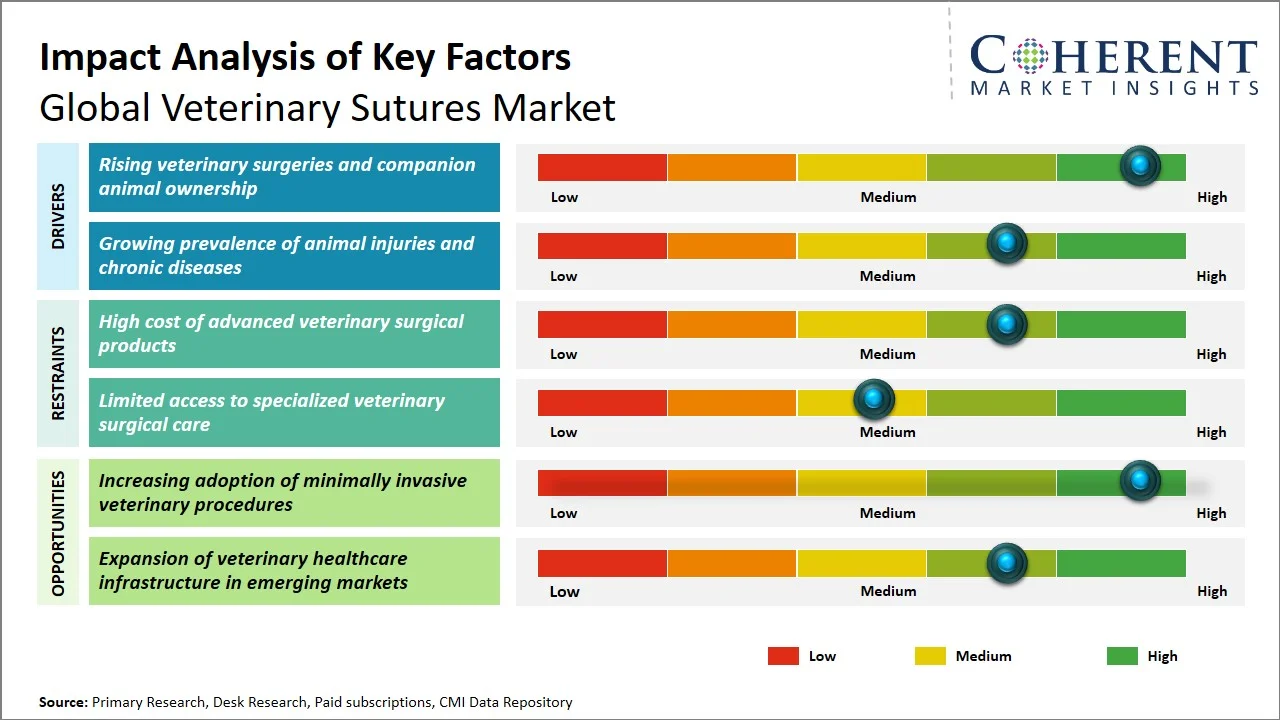
Market Drivers
Rising veterinary surgeries and companion animal ownership
The increasing number of veterinary surgical procedures is driving demand for reliable, biocompatible, and procedure-specific sutures for wound closure. Growing availability of veterinary practices offering surgical care, alongside rising demand for companion-animal healthcare, is expanding suture consumption across routine and complex procedures. The continued integration of surgical services into veterinary practices further strengthens this demand. For instance, according to the American Veterinary Medical Association (AVMA), 82.6% of U.S. veterinary practices primarily provided general medicine and surgery services in 2024, highlighting the widespread availability of surgical care within veterinary practices.
Growing prevalence of animal injuries and chronic diseases
The increasing burden of animal diseases and injuries is creating a sustained need for veterinary treatment and surgical interventions, supporting demand for wound-closure Infectious diseases affecting multiple animal species can lead to tissue damage and complications requiring clinical management, while recurring outbreaks increase pressure on veterinary services. The growing geographic spread of animal diseases further reinforces the need for accessible veterinary care and surgical solutions. For instance, in its 2025 State of the World’s Animal Health report, the World Organisation for Animal Health (WOAH) found that 47% of animal diseases reported as spreading into new areas have zoonotic potential, highlighting the expanding animal-health burden across regions.
Rising Pet Humanization and Veterinary Healthcare Spending
The growing perception of companion animals as family members is encouraging owners to pursue advanced diagnostics, preventive care, and surgical treatment, increasing demand for veterinary consumables such as sutures. Higher willingness to spend on animal healthcare is also supporting the adoption of specialized procedures and premium surgical products. This trend is particularly prominent in developed pet-care markets with established veterinary service networks. For instance, the American Pet Products Association (APPA) reported that U.S. pet industry expenditures reached USD 152 billion in 2024, with veterinary care and product sales accounting for USD 41.0 billion, highlighting substantial consumer spending on pet healthcare.
Emerging Trends
Increasing Adoption of Antimicrobial-Coated Sutures
Veterinary suture manufacturers are increasingly integrating antimicrobial coatings to reduce bacterial colonization around wound sites. This trend is strengthening demand for sutures that provide infection-control benefits alongside mechanical wound closure.
Growing Use of Knotless and Self-Locking Sutures
Knotless and self-locking suture designs are gaining traction by simplifying tissue closure and improving handling efficiency. These products can provide consistent tension distribution while reducing the complexity and time associated with conventional knot tying.
Expansion of Specialty Suture Formats
Manufacturers are introducing specialized formats such as fluorescent and cassette sutures to address specific surgical workflow requirements. These innovations aim to improve suture visibility, handling convenience, and procedural efficiency in veterinary surgery.
Regional Insights
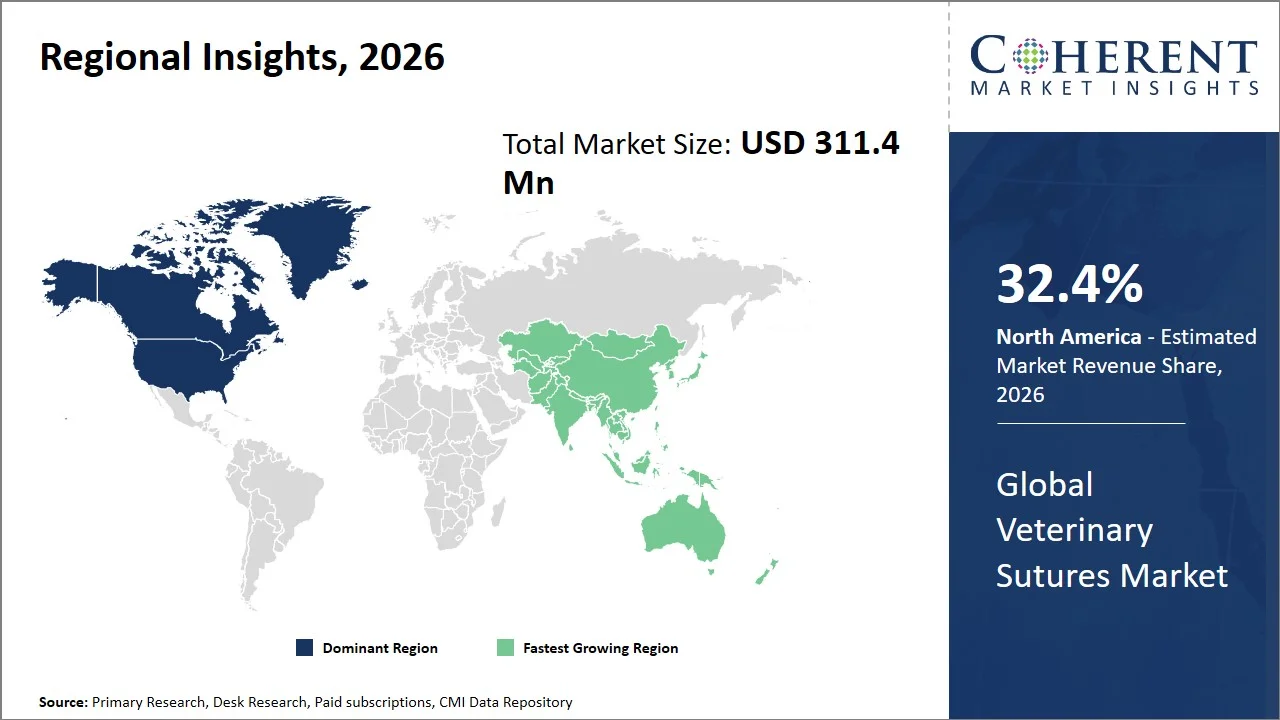
Why is North America a Strong Market for Veterinary Sutures?
North America leads the global veterinary sutures market, accounting for an estimated 32.4% share in 2026, due to its strong veterinary healthcare network, rising adoption of surgical and other medical interventions and a well-established regulatory system. Extensive investment in veterinary healthcare infrastructure & services, coupled with high focus on R&D activities and innovative product development within its veterinary sutures space supports demand for specialized sutures. Furthermore, initiatives undertaken by governments to improve animal care and well-being contribute to the usage of suture products in large-scale and specialized settings for pets as well as farm animals.
For instance, in April 2025, the U.S. Department of Agriculture (USDA) invested more than USD 15.3 million in 68 projects to strengthen the prevention, detection and response to livestock diseases, supporting veterinary preparedness and animal-health services across the country. Moreover, well-penetrated distribution networks along with prominent manufacturing bases contribute to region’s dominance in the veterinary sutures market.
Why Does Asia Pacific Veterinary Sutures Market Exhibit High Growth?
The Asia Pacific veterinary sutures market is expected to exhibit the fastest growth with an estimated contribution of 22.3% share to the global market in 2026, due to growing pet care awareness, development of veterinary infrastructure, and increasing livestock population. Increased use of complex veterinary surgeries and increased establishment of veterinary hospitals and clinics lead to better availability of products. Furthermore, government initiatives promoting health and welfare of animals, enhancing the disease surveillance and veterinary network, are also contributing to market growth.
For instance, Project 66: Australian Animal Disease Genomics Initiative aims to develop molecular tools and genomic resources to enhance the identification, surveillance, monitoring and management of animal diseases in Australia and assist in improving national animal-health capacity and veterinary disease management effectiveness. (Source: Department of Agriculture, Fisheries and Forestry) Additionally, the development of manufacturing capacity within Asia-Pacific and increased cross border supply of specialty suture types would create a positive development for regional market growth.
Global Veterinary Sutures Market Outlook for Key Countries
Why is the U.S. Leading Innovation and Adoption in the Veterinary Sutures Market?
The U.S. dominates the veterinary sutures market driven by well-established veterinary surgical specialty practices and long-standing practice of sophisticated wound closure technologies. Synthetic absorbable, antimicrobial, barbed and specialty sutures have increasing adoption across companion-animal soft-tissue surgery as well as within orthopedic surgery. The country also supports mature commercial and regulatory infrastructure providing an opportunity for increased velocity to market of differentiated suture offerings.
Is Japan a Favorable Market for Veterinary Sutures Market?
Japan is one of the most promising markets for the veterinary sutures market, due to country’s increased emphasis on cutting-edge companion-animal care and specialized veterinary treatments. The veterinary sutures market in Japan is driven by surging demand for high-quality synthetic and absorbable sutures in soft tissue and orthopedic applications, and offers market entry to manufacturers for high-precision, low tissue-reactivity and procedure-specific suture technologies.
Is China Emerging as a Key Growth Hub for the Veterinary Sutures Market?
China is positioned as a key growth hub in the global veterinary sutures market due to the rapid development of the pet economy and the increasing market demand for professional animal medical services. For manufacturers aiming at a large user segment in this market, there is strong demand for low-cost synthetics and specialized products. Along with the standardized pet medical services, an established sales channel and market structure are taking shape for adoption of quality consumables, making China a favorable environment for joint venture opportunities, distribution partnerships, and localized market entry strategies.
Why Does Germany Top the European Veterinary Sutures Market?
Germany leads the European veterinary sutures market due to the substantial pet animal health sector, a solid network of veterinary infrastructure, and a robust supply chain that includes well-represented veterinary medical device manufacturers. The country’s mature animal health industry would serve as an appealing venue for higher-value products including synthetic, absorbable, and specialty sutures, where product consistency and technical performance are important. Furthermore, Germany is conducive as a sourcing base, helping manufacturers to access broader European market supply chains.
Is Veterinary Sutures Market Developing in India?
India is a high-potential market for veterinary sutures fueled by increasing veterinary hospital infrastructure and formalization of veterinary services. Affordable synthetic and absorbable sutures in companion animal and livestock procedures appear most opportunistic in this segment. Furthermore, the government initiatives to establish uniform veterinary infrastructure are simultaneously enhancing the capacity of hospitals and polyclinics in providing surgical treatment, expanding the potential market for veterinary sutures.
Product Innovation Landscape in the Global Veterinary Sutures Market
Innovation Type | Key Technology | Veterinary Surgical Benefit | Market Impact |
Antimicrobial sutures | Antimicrobial coatings | Helps reduce bacterial colonization and infection risk | Supports adoption in infection-sensitive procedures |
Barbed sutures | Knotless, unidirectional/bidirectional barbs | Enables faster tissue approximation and reduces knot requirements | Improves surgical efficiency |
Fluorescent sutures | UV-responsive suture material | Enhances suture visibility during procedures | Supports precision in complex and minimally invasive surgery |
Cassette sutures | Pre-loaded suture dispensing system | Simplifies handling and improves surgical workflow | Increases convenience for veterinary surgeons |
Advanced absorbable sutures | Synthetic biodegradable polymers | Provides predictable wound support without removal | Expands use in soft-tissue and internal procedures |
How is the increasing adoption of minimally invasive veterinary procedures creating new growth opportunities in the veterinary sutures market?
The adoption of laparoscopy, thoracoscopy and arthroscopy is growing, which demands new and more specific solutions for surgical closure, facilitating tissue repair in a small surgical field and with sutures of tensile strength and flexibility for precise handling with low tissue reaction. Specialization of veterinary specialists is growing strongly, and they are more accustomed to working with new procedures and tools, especially in soft tissue and orthopedic procedures in companion animals. For instance, B. Braun SE Vet Care Symmcora is a self-locking, knotless veterinary suture, intended to facilitate quicker suturing and evenly distribute tension. It is beneficial for a quicker closure and is ideal in instances where knot tying is difficult such as in less invasive veterinary surgery.
Market Players, Key Development, and Competitive Intelligence
Key Developments
- In February 2026, Covetrus and MWI Animal Health entered into a definitive agreement to merge, creating a comprehensive animal health platform. The transaction values MWI Animal Health at an enterprise value of USD 3.5 billion and combines MWI’s animal-health distribution capabilities with Covetrus’ technology-enabled veterinary solutions. The merger is expected to expand access to veterinary products and improve operational efficiencies across the animal healthcare ecosystem.
- In August 2024, Dolphin Sutures expanded its veterinary product portfolio with the launch of fluorescent and cassette sutures. The fluorescent sutures are designed to improve visibility under ultraviolet light during veterinary procedures, while cassette sutures are pre-loaded into a dispenser to streamline surgical workflow. The launch strengthens the company's veterinary suture offering through enhanced visualization, convenience, and sterile handling.
- In July 2024, CP Medical, a wholly owned subsidiary of Theragenics Corporation and a manufacturer of surgical sutures and wound-closure products, was acquired by Riverpoint Medical, a portfolio company of Arlington Capital Partners. CP Medical primarily serves the veterinary market, with its products also distributed to dental and dermatology segments. The transaction strengthens Riverpoint Medical’s portfolio of surgical solutions for animal healthcare.
Competitive Landscape
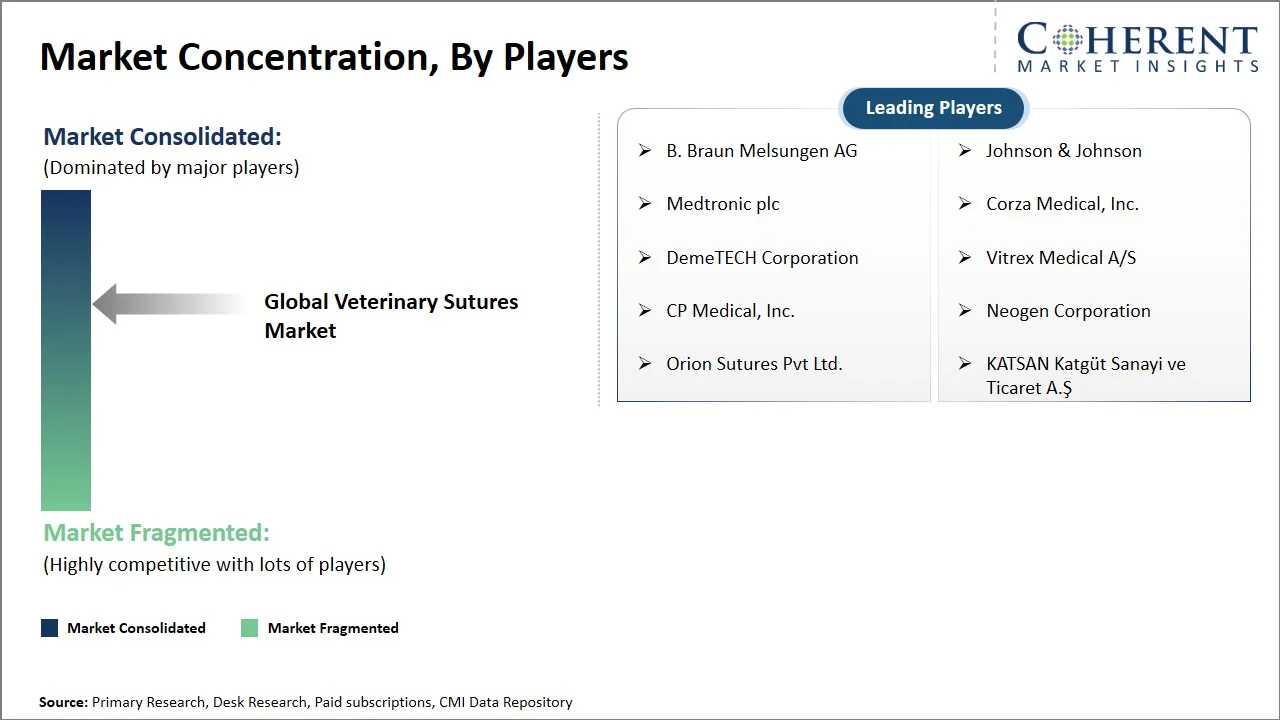
The global veterinary sutures market is moderately consolidated, with competition centered on product quality, material innovation, surgical performance, and regulatory compliance. Key players are expanding veterinary suture portfolios with absorbable, synthetic, antimicrobial, barbed, fluorescent, and specialty sutures to address diverse surgical requirements. Companies are also strengthening their market presence through new product launches, geographic expansion, and partnerships with veterinary distributors and healthcare providers. Key focus areas include:
- Development of advanced absorbable and non-absorbable sutures for specialized veterinary procedures
- Introduction of fluorescent, antimicrobial, and barbed sutures to improve surgical precision and outcomes
- Expansion of veterinary product portfolios and distribution networks across high-growth markets
- Strengthening regulatory compliance, manufacturing capabilities, and geographic presence to increase market penetration
Market Report Scope
Veterinary Sutures Market Report Coverage
| Report Coverage | Details | ||
|---|---|---|---|
| Base Year: | 2025 | Market Size in 2026: | USD 311.4 Mn |
| Historical Data for: | 2020 To 2024 | Forecast Period: | 2026 To 2033 |
| Forecast Period 2026 to 2033 CAGR: | 7.1% | 2033 Value Projection: | USD 504.0 Mn |
| Geographies covered: |
| ||
| Segments covered: |
| ||
| Companies covered: | B. Braun Melsungen AG, Johnson & Johnson, Medtronic plc, Corza Medical, Inc., DemeTECH Corporation, Vitrex Medical A/S, CP Medical, Inc., Neogen Corporation, Orion Sutures Pvt Ltd., KATSAN Katgüt Sanayi ve Ticaret A. S | ||
| Growth Drivers: |
| ||
| Restraints & Challenges: |
| ||
Analyst Opinion (Expert Opinion)
- In the coming years, the global veterinary sutures market is expected to be driven by the shift toward advanced, procedure-specific surgical closure solutions, supported by increasing veterinary surgical volumes, pet humanization, and improvements in veterinary healthcare infrastructure. Synthetic, absorbable, antimicrobial, barbed, and other specialty sutures are expected to gain greater adoption as practitioners prioritize effective wound closure, reduced complications, and improved surgical outcomes.
- The maximum opportunities will probably exist within synthetic absorbable sutures for companion-animal soft-tissue surgeries, particularly across China, where rising pet ownership, expanding veterinary hospitals, and increasing adoption of standardized veterinary care are supporting demand for advanced surgical products. Additional opportunities are anticipated across other Asia-Pacific markets as veterinary healthcare infrastructure and expenditure continue to expand.
- In order to obtain a competitive advantage, market participants should prioritize the development of high-performance, veterinary-specific suture solutions, including antimicrobial, barbed, and specialty designs. Strategic partnerships with veterinary hospitals and distributors, expansion into high-growth emerging markets, localized supply networks, and compliance with evolving veterinary medical-device requirements will be critical for strengthening market penetration and achieving sustainable growth.
Speak to the analyst
Want personalized insights?
Take the findings above to one of our principal consultants, or have the report rebuilt around the segments, geographies and competitors you actually track.
Market Segmentation
- Product Type Insights (Revenue, USD Mn, 2021 - 2033)
- Absorbable
- Non-absorbable
- Material Insights (Revenue, USD Mn, 2021 - 2033)
- Synthetic
- Natural
- End User Insights (Revenue, USD Mn, 2021 - 2033)
- Hospitals
- Veterinary Clinics
- Others
- Regional Insights (Revenue, USD Mn, 2021 - 2033)
- North America
- U.S.
- Canada
- Latin America
- Brazil
- Argentina
- Mexico
- Rest of Latin America
- Europe
- Germany
- U.K.
- Spain
- France
- Italy
- Russia
- Rest of Europe
- Asia Pacific
- China
- India
- Japan
- Australia
- South Korea
- ASEAN
- Rest of Asia Pacific
- Middle East
- GCC Countries
- Israel
- Rest of Middle East
- Africa
- South Africa
- North Africa
- Central Africa
- North America
Sources
Primary Research Interviews
- Veterinary surgeons and surgical specialists involved in companion-animal and livestock procedures
- Veterinary hospital directors and practice managers overseeing surgical services
- Veterinary procurement and purchasing managers responsible for surgical consumables
- Product managers and regulatory professionals from veterinary suture manufacturers
- Veterinary distributors and animal-health supply-chain executives
- Researchers and academics specializing in veterinary surgery, wound closure, and biomaterials
Stakeholders
- Veterinary suture manufacturers and animal-health product companies
- Veterinary surgical-device distributors and wholesalers
- Veterinary hospitals, specialty clinics, and animal healthcare centers
- Contract manufacturers and sterile medical-device suppliers
- Veterinary surgeons and professional veterinary practices
- Animal-health associations and veterinary research institutions
- End-use Sectors
- Veterinary Hospitals
- Veterinary Clinics
- Veterinary Specialty and Referral Centers
- Veterinary Research and Academic Institutions
- Veterinary Ambulatory/Surgical Centers
- Animal Shelters and Rescue Organizations
- Regulatory & Health Bodies
- U.S. Food and Drug Administration (FDA) – Center for Veterinary Medicine (CVM) – Animal medical devices and veterinary product safety
- U.S. Department of Agriculture (USDA) – Animal and Plant Health Inspection Service (APHIS), Veterinary Services – Animal health and veterinary infrastructure
- World Organisation for Animal Health (WOAH) – Global Veterinary Services and animal-health systems
- European Commission – Directorate-General for Health and Food Safety (DG SANTE) – EU animal health and veterinary regulations
- European Medicines Agency (EMA) – Veterinary medicines and animal-health regulation
- Ministry of Agriculture, Forestry and Fisheries (MAFF), Japan – Animal health and veterinary services
- Ministry of Agriculture and Rural Affairs (MARA), China – Animal disease control and veterinary services
- Department of Animal Husbandry & Dairying (DAHD), India – Animal health and veterinary infrastructure
Databases
- WOAH World Animal Health Information System (WAHIS) – Animal disease and outbreak data
- USDA APHIS Animal Disease Reporting System – U.S. animal disease surveillance data
- FDA Animal Medical Devices & Product Safety Database – Veterinary device regulatory and safety information
- FAOSTAT – Global livestock population and animal production statistics
- Eurostat – European livestock and animal-health statistics
- USDA National Agricultural Statistics Service (NASS) – U.S. livestock and animal-health statistics
Magazines
- dvm360
- Today's Veterinary Business
- Veterinary Practice News
- Clinician's Brief
- Veterinary Economics
- Veterinary Practice
Journals
- Journal of the American Veterinary Medical Association (JAVMA) – Veterinary clinical and surgical research
- Veterinary Surgery – Veterinary surgical research and techniques
- Frontiers in Veterinary Science
- BMC Veterinary Research
- Journal of Veterinary Medical Science
- Veterinary Record
Associations
- American Veterinary Medical Association (AVMA)
- American Animal Hospital Association (AAHA)
- World Small Animal Veterinary Association (WSAVA)
- American College of Veterinary Surgeons (ACVS)
- British Small Animal Veterinary Association (BSAVA)
- Federation of Veterinarians of Europe (FVE)
Public Domain Sources
- World Organisation for Animal Health (WOAH) – State of the World's Animal Health and Veterinary Services data
- U.S. Department of Agriculture (USDA) APHIS – Veterinary Services and animal-health surveillance
- U.S. Food and Drug Administration (FDA) – Center for Veterinary Medicine – Animal medical-device information
- European Commission – DG SANTE – Animal health and veterinary regulatory information
- Food and Agriculture Organization of the United Nations (FAO) – Livestock and animal-health statistics
- World Bank – Agriculture, livestock, and animal-health development indicators
Proprietary Elements
- CMI Data Analytics Tool
- Proprietary CMI Existing Repository of information for last 10 years.
Get access to 250+ pages report
Every segment, forecast, competitor profile and data table behind the analysis above — available for instant download.
- ESOMAR Member
- ISO 9001:2015 Certified
- D-U-N-S Registered
- GDPR & CCPA Compliant
Missing comfort of reading report in your local language? Find your preferred language:
Transform your Strategy with Exclusive Trending Reports
Frequently Asked Questions
The global veterinary sutures market is estimated to be valued at USD 311.4 Mn in 2026 and is expected to reach USD 504.0 Mn by 2033.
Absorbable dominate due to their ability to naturally degrade within the body, eliminating the need for suture removal and reducing follow-up procedures.
Veterinary sutures are sterile surgical threads or filaments used to approximate and close wounds, incisions, and injured tissues in animals.
The CAGR of global veterinary sutures market is projected to be 7.1% from 2026 to 2033.
Rising veterinary surgeries and companion animal ownership, and growing prevalence of animal injuries and chronic diseases are the major factors driving the growth of the global veterinary sutures market.
High cost of advanced veterinary surgical products, and limited access to specialized veterinary surgical care are the major factors hampering the growth of the global veterinary sutures market.
In terms of end user, hospitals are estimated to dominate the market revenue share in 2026.