

Global Wound Retractor Market Size and Forecast – 2026-2033
The global wound retractor market is estimated to be valued at USD 198.4 Mn in 2026 and is expected to reach USD 320.4 Mn by 2033, exhibiting a compound annual growth rate (CAGR) of 7.1% from 2026 to 2033. This is attributed to the rise in the number of surgical procedures conducted globally and the progress made in minimally invasive surgical procedures, as well as the need for effective wound management solutions.
Key Takeaways of the Global Wound Retractor Market
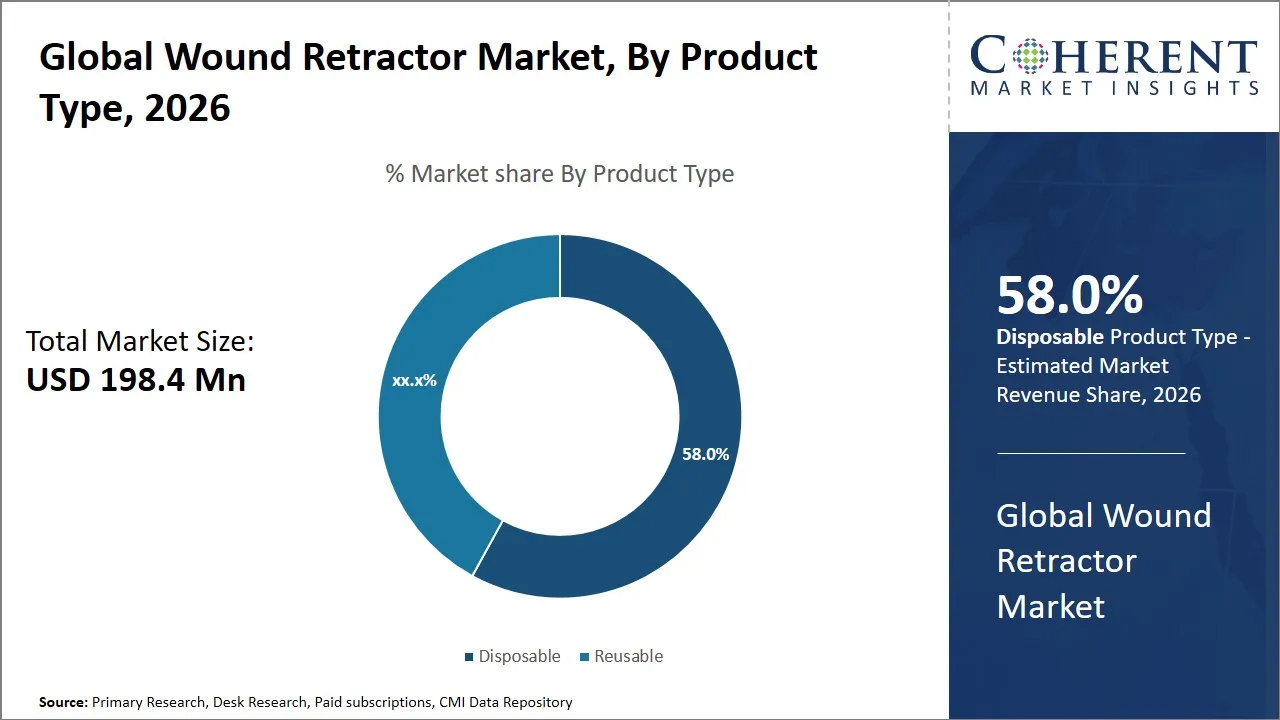
- The disposable segment is expected to dominate with 58.0% of the market share in 2026.
- The plastic segment is expected to dominate the global wound retractor market, accounting for 48.0% share in 2026.
- The abdominal surgeries segment is projected to capture 34.0% of the global wound retractor market share in 2026.
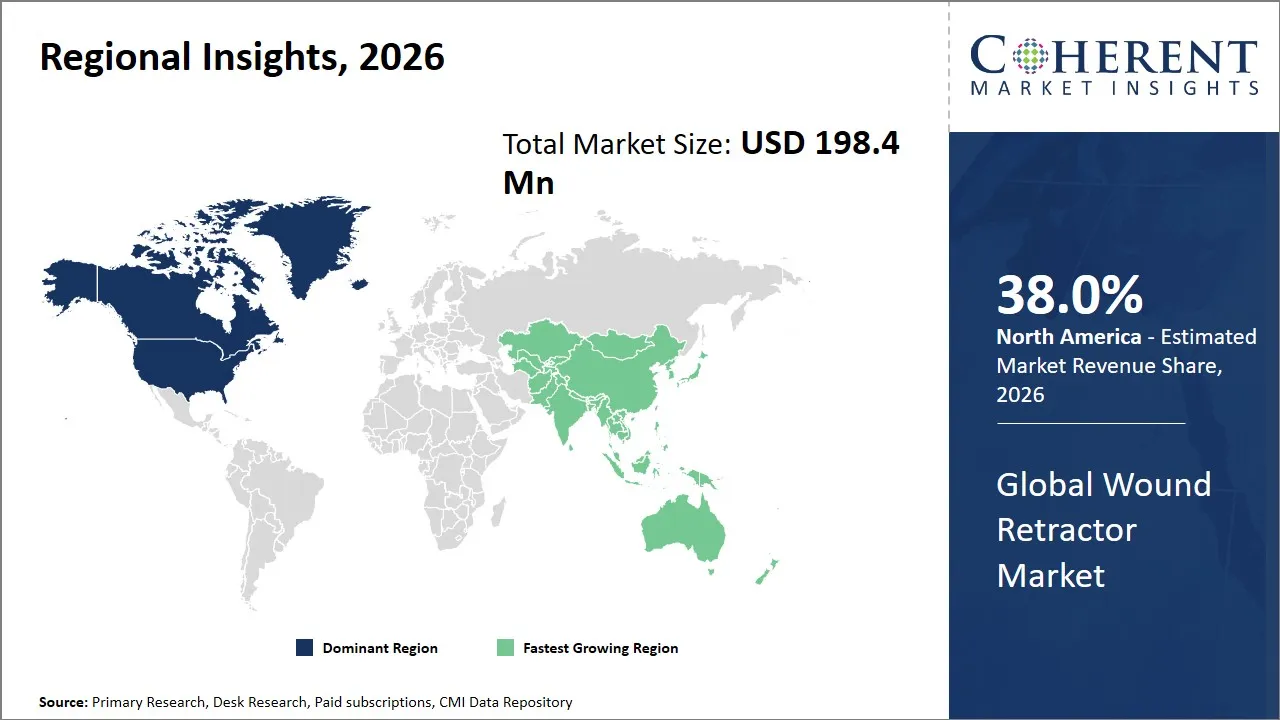
- North America is expected to dominate the global wound retractor market in 2026, accounting for 38.0% share.
- Asia Pacific is anticipated to witness the fastest growth, holding a market share of 28.0% in 2026.
Market Overview
- Wound retractors are a set of surgical tools that are used to retract incision sites during surgeries. This provides a clear line of sight to the internal organs or tissues of a patient. This set of retractors plays a vital role in a wide range of surgeries.
- The wound retractor market is growing significantly due to the increase in the number of surgeries performed globally. This includes abdominal surgeries, colorectal surgeries, gynecology surgeries, and orthopedic surgeries. In addition to this, the increase in the number of people suffering from chronic health conditions is leading to a greater need for surgeries. This in turn is fueling the growth of the wound retractor market in hospitals and surgical centers globally.
- The market for wound retractors has shown a significant trend towards advanced retractors such as self-retaining retractors and flexible ring retractors. In addition to this, a greater need to use disposable retractors to avoid Surgical Site Infections (SSIs) has led to a significant increase in the use of disposable retractors in hospitals globally.
Currents Events and their Impact
Current Events | Description and its Impact |
Increasing Volume of Surgical Procedures |
|
Expansion of Single-Use and Disposable Retractor Adoption |
|
Segmental Insights
- Current Industry Events of 2026
- Market Size Estimation
- Regional Breakdown
- Competitive Landscape
- Customer Intelligence
- Segmental Analysis
- Pricing Analysis
- Key Market Drivers, Challenges & Future Trends
- Customized Insights Section
Why Does the Disposable Segment Dominate the Global Wound Retractor Market in 2026?
The disposable segment is anticipated to hold a market share of 58.0% in 2026, due to the significant advantages these devices offer in infection control and efficiency. Disposable wound retractors are designed for one-time use, thereby eliminating the possibility of infection control problems associated with reusable devices. Reusable devices, especially in the context of infection control, pose a serious threat in the context of modern medicine and surgery. Infection control is one of the primary concerns in modern medicine and surgery. In this context, hospitals and surgical centers worldwide, especially in developed and advancing medical fields, prefer to use disposable wound retractors for the purpose of infection control and efficiency.
Apart from infection control, disposable wound retractors offer significant advantages in the context of efficiency. Disposable wound retractors are pre-sterilized and do not require any further maintenance. They are pre-cleaned and pre-sterilized for use. They do not require any further maintenance or sterilization, thereby providing significant advantages in the context of efficiency. Disposable wound retractors are especially beneficial in the context of cost control. Disposable wound retractors, although expensive, provide a cost advantage in the context of sterilization and wear and tear.
Why Does the Plastic Segment Dominate the Global Wound Retractor Market in 2026?
The plastic segment is projected to account for the highest market share of 48.0% in 2026. Plastic has been identified as the leading choice in wound retractors in various medical facilities globally due to its versatility and functional advantages. Plastic retractors are light in weight and can be molded into various shapes to ensure maximum ergonomic design to ensure comfort for surgeons during prolonged surgeries. Plastic retractors also have functional advantages in that they can be designed to have advanced features that enable radiolucency, which enables X-rays to be taken without removing the retractor. This versatility ensures maximum efficiency in surgeries.
The cost-effectiveness of plastic retractors in various facilities has also contributed to the dominance of plastic retractors in the global wound retractor market. Plastic retractors can be mass-produced at a lower cost than retractors made of metals or silicone, which enables facilities to use disposable retractors that are effective in preventing infection. Plastic retractors have also been identified as chemically resistant and are not likely to corrode during surgeries, which enables them to be used in prolonged surgeries. Plastic retractors have also been identified as biocompatible, which has made them the leading choice in the global wound retractor market due to their minimal irritation to body tissues while ensuring maximum rigidity.
The Abdominal Surgeries Segment Dominate the Global Wound Retractor Market
Abdominal surgeries segment is expected to capture 34.0% of the market share in 2026, attributed to the high number of cases involving abdominal surgeries and the complexity associated with the anatomical region involved. This region involves many vital structures and vascular anatomy, which requires a stable access for which wound retractors play an important role. The increasing number of procedures involving appendectomies, hernia repair surgeries, gastrointestinal surgeries, and exploratory laparotomies requires the use of wound retractors for abdominal surgery. In addition, the increasing number of minimally invasive and laparoscopic surgeries requires the use of wound retractors for soft tissues.
The increasing incidence of chronic health conditions such as obesity, cancer, and abdominal inflammations has led to a rise in surgical procedures. Healthcare organizations have started to use advanced wound retractors such as wound retractors with adjustable parts and ergonomic designs for various tissue types. The advancements in technology, in addition to the complexity and volume of surgical procedures for abdominal conditions, have further cemented the position of this segment in the global wound retractor market.
For instance in July 2024, a study published by Institute for Health Metrics and Evaluation confirmed that appendicitis is one of the most common surgical emergencies within the abdomen, and there are millions of cases occurring worldwide every year. As nearly every case of appendicitis is a surgical case, this represents a significant volume of surgical cases occurring globally, and as such, there is a consistent need for wound retractors.
Clinical Evidence Supporting Reduction in Surgical Site Infection (SSI) Rates with Wound Retractors
Wound retractors, especially wound protectors, have been in focus in recent times in relation to the reduction of surgical site infection (SSI) in various surgeries. This has been attributed to the fact that they act as a barrier in preventing bacteria from reaching the incision site during a procedure. Recent clinical studies have shown that wound retractors are effective in preventing SSIs in clean-contaminated surgeries. Thus, it can be stated that the use of wound retractors finds support not only in clinical studies but also in evolving surgical guidelines.
Summary of Key Studies on SSI Reduction Using Wound Retractors
Source/Study | Procedure Type | Key Outcome | Surgical Site Infection (SSI) Reduction |
Meta-analysis (RCTs) | Colorectal & abdominal surgeries | Wound protectors reduce incision contamination | ~40–60% reduction |
Cochrane Review | Abdominal surgeries | Supports use of wound edge protectors | Moderate reduction |
ROSSINI Trial | Laparotomy | No overall significant impact | Mixed results |
Clinical practice insights | General surgeries | Recommended in high-risk cases | Noticeable reduction |
Regional Insights
North America Wound Retractor Market Analysis and Trends
The North America region is projected to lead the market with a 38.0% share in 2026, attributed to the existing healthcare infrastructure, high acceptance for modern technology in medicine, and high investment in innovative technologies for surgery. North America has many established companies for medical device manufacturers, favorable reimbursements, and regulations, which help the market penetration of the product in the region.
Additionally, the region has favorable regulations and funding for the development of healthcare technologies by the government, which creates opportunities for the development of wound retraction devices. Companies such as Medtronic, Johnson & Johnson (Ethicon), and Stryker are established companies with a strong footprint in the region and are constantly introducing innovative and ergonomic wound retractors for surgeons and patients, which provide benefits for both patients and surgeons. Furthermore, the region has a high number of surgeries and high healthcare spending, which creates a favorable environment for the wound retractor market.
For instance, in February 2025, the U.S. FDA granted clearance to Intuitive Surgical, Inc. for its da Vinci SP Advanced Access Port Kit which includes a large wound retractor component for minimally invasive surgical procedures. This demonstrates the inclusion of wound retraction technology within sophisticated surgical instruments.
(Source: U.S. Food & Drug Administration)
Asia Pacific Wound Retractor Market Analysis and Trends
Asia Pacific is anticipated to witness the fastest growth, holding a market share of 28.0% in 2026, driven by a rapidly expanding healthcare infrastructure, surgical awareness, and a rise in discretionary income. The region has recorded improvements in hospitals, medical tourism, and a rise in surgical procedures, all of which contribute positively towards growth in the wound retractor market. The government initiatives in emerging economies, aimed at providing access to quality healthcare, along with improved government regulations supporting medical device approvals, also contribute positively towards growth in the Asia Pacific.
The Asia Pacific wound retractor market is benefitted from multinational companies establishing manufacturing and R&D units, and indigenous medical technology companies such as B. Braun Melsungen and Mindray expanding their portfolios and providing affordable and scalable wound retractors designed specifically for the Asia Pacific wound retractor market. Trade liberalization and improvements in supply chain infrastructure also contribute positively towards growth in the market.
Wound Retractor Market Outlook for Key Countries
How is the U.S. Helping in the Growth of the Wound Retractor Market?
The U.S. represents the major portion of the global wound retractor market owing to well-established system of delivering healthcare services. In addition, a large number of surgeries are performed in the U.S. The major companies that operate in the wound retractor system are Medtronic and Ethicon. This ensures that there are improvements in wound retractor technology, especially in minimally invasive surgical retractors. The restrictions set by the FDA on wound retractors are strict. This ensures that the effectiveness of wound retractors is high, which in turn increases the use of advanced technology in wound retractor systems. The focus of healthcare providers on minimizing intraoperative complications is likely to increase the wound retractor system.
For instance: In July 2024, the Ambulatory Surgery Center Association, relying on Sg2 healthcare analytics data, reported that outpatient surgical procedures in the U.S. are expected to rise by 17% in the coming decade, indicating a continued trend of ambulatory care and minimally invasive surgical procedures. The rise in surgical procedures will definitely boost the market for surgical instruments such as wound retractors.
(Source: Ambulatory Surgery Center Association)
How is Japan Helping in the Growth of the Wound Retractor Market?
Japan is at the forefront owing to its advancements in surgery and the use of modern technologies in the field of medicine. This country has an aging population and a high number of patients suffering from various diseases, hence increasing the demand for reliable wound retractors. Japan has both domestic and global companies, including Olympus and Terumo, which place a lot of emphasis on R&D activities. Japan has a stringent policy regarding the regulation of products, which means that only high-quality wound retractors are available for use. This encourages companies to produce precise and reliable wound retractors. In addition, the use of robots and imaging technologies during surgery enhances the utilization of sophisticated retractors.
Key Drivers for the Growth of the China Wound Retractor Market
The healthcare and surgical sector of China is expanding owing to the country’s focus on healthcare reform and modern healthcare infrastructure is opening up more and more market opportunities. Companies such as Mindray have played a significant role in ensuring that wound retractors become more accessible within the country by providing cost-effective solutions. Companies such as Stryker have helped expand their market share by establishing partnerships and strengthening their distribution network. Also, there is more awareness regarding minimally invasive surgery and infection control.
Germany Wound Retractor Market Trends
The country’s well-developed health infrastructure, coupled with its stringent health regulations and well-developed medical device industry, ensures that Germany remains at the forefront of the global wound retractor market. The country’s well-developed manufacturing base, led by Aesculap, a B. Braun company, ensures that Germany remains at the forefront of developing technologically advanced surgical instruments, including wound retractors. The country’s healthcare system is designed to incorporate quality surgical instruments, ensuring that technologically advanced wound retractors are used within its healthcare facilities. The country’s medical technology exports have a positive impact on regional growth.
Adoption Trends: Disposable vs. Reusable Wound Retractors
The use of disposable and reusable wound retractors varies based on different factors such as infection control, cost factors, and efficiency of procedures. In the recent past, healthcare organizations are adopting the use of disposable wound retractors due to their potential in reducing the risks of cross-contamination and promoting stringent hygienic procedures. Reusable wound retractors are also adopted by healthcare organizations where cost factors are of prime importance and the efficiency of sterilization procedures is high.
Comparison of Disposable and Reusable Wound Retractor Adoption
Parameter | Disposable Retractors | Reusable Retractors |
Infection Control | High (single-use, no cross-contamination) | Moderate (dependent on sterilization) |
Cost Structure | Higher per unit, lower lifecycle cost | Lower upfront, added sterilization costs |
Workflow Efficiency | High (ready-to-use) | Moderate (requires processing time) |
Adoption Trend | Increasing, especially in developed markets | Stable in cost-sensitive regions |
Market Players, Key Developments, and Competitive Intelligence
Key Developments
- In January 2026, MellingMedical formed a partnership with Applied Medical to increase access to its minimally invasive surgical solutions in U.S. federal healthcare systems. This partnership further enhanced the use and availability of surgical devices such as wound retractors.
- In March 2025, JUNE Medical unveiled the HandMe Galaxy II, a versatile 3-in-1 surgical retractor specifically designed for hand surgery. This innovation improved access, visibility, and control throughout the surgical process. These enhancements stemmed directly from the evolution of retractor design.
- In December 2024, Nua Surgical obtained US$ 7.1 million (€6.5 million) in Series A investment to further develop its SteriCISION C-section wound retractor. This investment is for the development of innovative wound retractor devices for surgical procedures.
Top Strategies Followed by Global Wound Retractor Market Players
Player Type | Strategic Focus | Examples |
Established Market Leaders | Established market leaders emphasize product innovation in terms of the durability of the product, ergonomics, and the use of minimally invasive surgical techniques. These companies form strategic partnerships and global distribution networks, especially in the emerging markets. | In August 2024, Stryker Corporation entered into a definitive agreement to acquire Vertos Medical, which enhanced Stryker’s minimally invasive surgical solutions. This is a clear example of Stryker Corporation’s focus on providing its customers with surgical solutions. |
Mid-Level Players | Mid-level players emphasize cost-effective products that are a combination of quality and affordability. These companies often form partnerships with large manufacturers/technology providers in order to access high-tech facilities. | In March 2024, CooperSurgical emphasized the continued development of its surgical solutions portfolio, especially in providing accessible and efficient surgical instruments for gynecological and general surgery applications. |
Small-Scale Players | Small-scale players emphasize niche market segments and product features through product innovation in terms of modularity and material technology. These companies often form partnerships with regional distributors/manufacturers in order to penetrate the market and meet specific surgeon requirements. | In January 2025, regional medtech startups and small-scale manufacturers, such as Applied Medical, increasingly introduced procedure-specific disposable wound retraction solutions for ambulatory surgical centers, emphasizing customization, infection control, and affordability to capture niche market segments. |
Market Report Scope
Wound Retractor Market Report Coverage
| Report Coverage | Details | ||
|---|---|---|---|
| Base Year: | 2025 | Market Size in 2026: | USD 198.4 Mn |
| Historical Data for: | 2020 To 2024 | Forecast Period: | 2026 To 2033 |
| Forecast Period 2026 to 2033 CAGR: | 7.1% | 2033 Value Projection: | USD 320.4 Mn |
| Geographies covered: |
| ||
| Segments covered: |
| ||
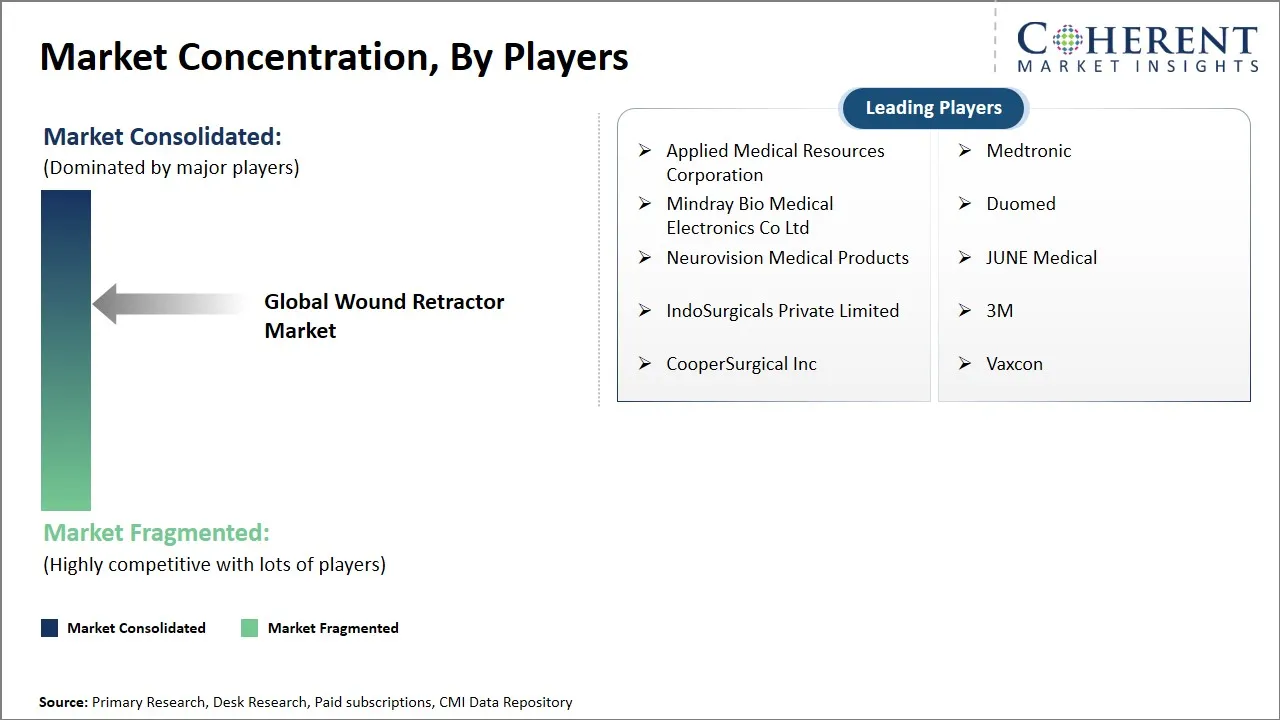
| Companies covered: | Applied Medical Resources Corporation, Medtronic, Mindray Bio Medical Electronics Co Ltd, Duomed, Neurovision Medical Products, JUNE Medical, IndoSurgicals Private Limited, 3M, CooperSurgical Inc, and Vaxcon | ||
| Growth Drivers: |
| ||
| Restraints & Challenges: |
| ||
Global Wound Retractor Market Dynamics
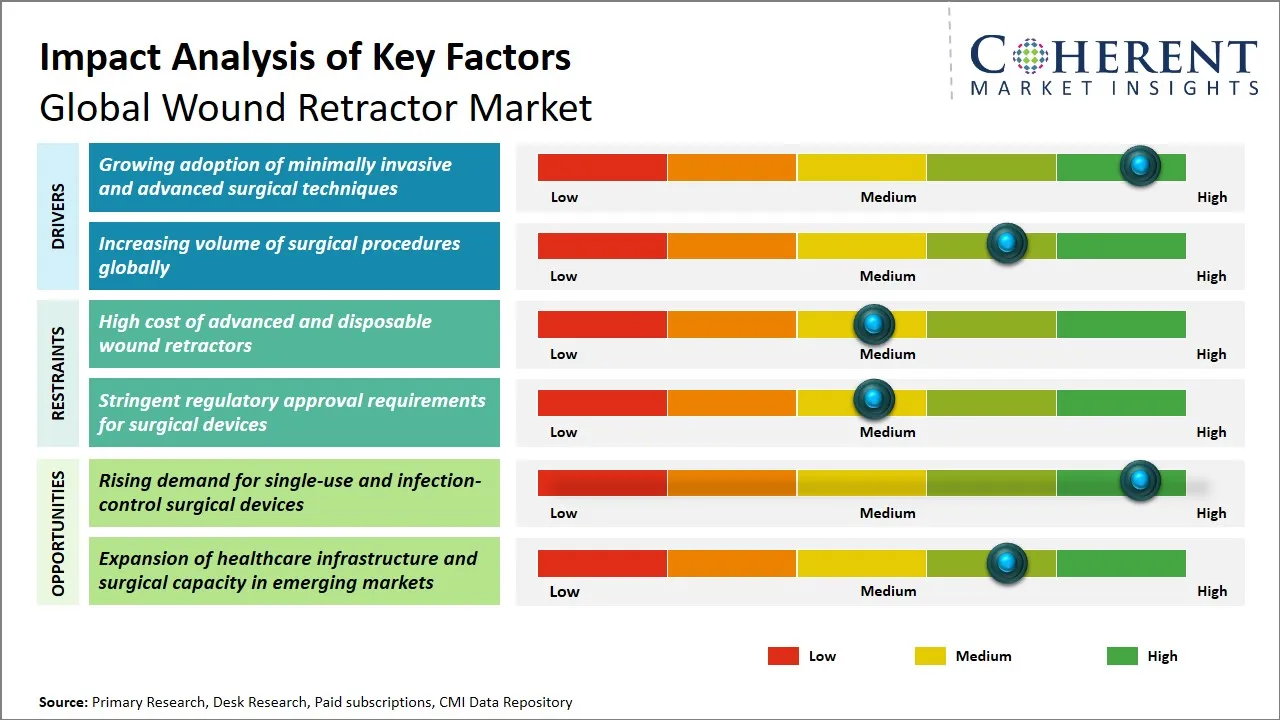
Global Wound Retractor Market Driver – Growing Adoption of Minimally Invasive and Advanced Surgical Techniques
The increasing trend of adopting minimally invasive surgical procedures in all medical fields is another factor that is contributing significantly towards the increasing demand for wound retractors across the world. These surgical procedures have proven to be beneficial in all aspects, such as less post-surgery pain, quick recovery, and less scarring. All these aspects have contributed significantly towards making minimally invasive surgical procedures extremely popular among all medical practitioners and patients.
Wound retractors are being increasingly used in all surgical procedures for facilitating effective surgical procedures. All these aspects have contributed significantly towards making wound retractors extremely compatible with the goals of adopting minimally invasive surgical procedures. In addition to all these aspects, the increasing use of modern technology in wound retractors has facilitated the use of wound retractors in all surgical procedures. These aspects have contributed significantly towards making wound retractors extremely popular in all medical fields, such as general surgery, gynecology, and urology.
For instance, in February 2025, a study published in Springer Nature found that the use of a wound protector retractor in abdominal surgeries greatly reduced surgical site infections (SSIs) because it provides a protective barrier that prevents infection around the incision site. This study further emphasized that the use of a retractor in surgeries improves visibility during surgeries and minimizes tissue handling, thus resulting in better surgical outcomes.
(Source: Springer Nature)
Global Wound Retractor Market Opportunity - Rising Demand for Single-Use and Infection-Control Surgical Devices
The market for the wound retractor is being driven by the increasing requirement for the use of single-use infection control devices during surgical procedures. This is because hospitals and medical institutions across the globe are focusing on the infection control and reduction of hospital-acquired infections. Infection control and the reduction of hospital-acquired infections are key areas of focus for the medical industry.
Medical institutions are focusing on the use of sterile and single-use devices for the retraction of wounds to ensure the reduction of the probability of infections. This has gained momentum in the post-COVID-19 pandemic period because of the emphasis being placed on the importance of infection control and sterilization of equipment during surgical procedures.
In addition, the advancements being made in the field of material science have added to the cost-effectiveness of the single-use wound retraction devices. These devices are now available across both the developed and developing countries. Addition to the above-mentioned factor, the increase in the number of surgical procedures, especially minimally invasive surgical procedures, is expected to increase the use of advanced wound retraction devices.
For instance, in August 2025, clinical research published in MDPI highlighted the increasing trend of utilizing sophisticated ring-based wound retractors such as the Alexis device with a flexible polymer cover and two rings for 360-degree circumferential retraction while minimizing tissue pressures at the same time. These modern retractors are designed to fit the anatomy of the patient for better exposure while minimizing trauma to the tissues, unlike traditional retractors made of metal.
(Source: MDPI)
Analyst Opinion (Expert Opinion)
- The rise in surgeries performed globally, including abdominal surgeries, colorectal surgeries, gynecological surgeries, and bariatric surgeries, is likely to continue to be a major factor that fuels growth in the global wound retractor market. This is because of the increase in complexity in surgeries, which in turn has led to a significant increase in demand for wound retractors that can ensure consistent exposure during surgeries and minimize tissue trauma.
- There has been a significant increase in focus on infection prevention in surgeries. This factor has led to a significant increase in demand for disposable wound retractors and wound protector retractors. This has led to a significant increase in demand for advanced wound retractors in surgeries. This factor is likely to fuel growth in the global wound retractor market in the coming years.
- In addition to this, technological advancements in wound retractors are likely to fuel growth in the global wound retractor market in the coming years.
Speak to the analyst
Want personalized insights?
Take the findings above to one of our principal consultants, or have the report rebuilt around the segments, geographies and competitors you actually track.
Market Segmentation
- Product Type Insights (Revenue, USD Mn, 2021 - 2033)
- Disposable
- Reusable
- Material Insights (Revenue, USD Mn, 2021 - 2033)
- Plastic
- Metal
- Silicone/ Polymer
- Application Insights (Revenue, USD Mn, 2021 - 2033)
- Abdominal Surgeries
- Gynaecological Surgeries
- Orthopaedic Surgeries
- Cardiothoracic Surgeries
- Other Surgical Procedures
- End User Insights (Revenue, USD Mn, 2021 - 2033)
- Hospitals
- Ambulatory Surgical Centers
- Specialty Clinics
- Others
- Regional Insights (Revenue, USD Mn, 2021 - 2033)
- North America
- U.S.
- Canada
- Latin America
- Brazil
- Argentina
- Mexico
- Rest of Latin America
- Europe
- Germany
- U.K.
- Spain
- France
- Italy
- Russia
- Rest of Europe
- Asia Pacific
- China
- India
- Japan
- Australia
- South Korea
- ASEAN
- Rest of Asia Pacific
- Middle East
- GCC Countries
- Israel
- Rest of Middle East
- Africa
- South Africa
- North Africa
- Central Africa
- North America
- Key Players Insights
- Applied Medical Resources Corporation
- Medtronic
- Mindray Bio Medical Electronics Co Ltd
- Duomed
- Neurovision Medical Products
- JUNE Medical
- IndoSurgicals Private Limited
- 3M
- CooperSurgical Inc
- Vaxcon
Sources
Primary Research Interviews
Industry Stakeholders
- Surgical Device Manufacturers
- Medical Device Companies
- Contract Manufacturing Organizations (CMOs)
- Raw Material Suppliers
- Regulatory and Compliance Experts
- Distributors and Hospital Procurement Specialists
End Users
- Hospitals and Surgical Centers
- Ambulatory Surgical Centers (ASCs)
- General Surgeons, Gynecologists, and Colorectal Surgeons
- Operating Room (OR) Professionals
Government and International Databases
- World Health Organization (WHO) – Surgical procedures and healthcare infrastructure data
- U.S. Food and Drug Administration (FDA) – Medical device approvals and safety data
- European Medicines Agency (EMA) / European Commission – Medical device regulations (MDR)
- National Institutes of Health (NIH) – Surgical research and clinical studies
- gov – Ongoing and completed surgical device studies
Trade Publications
- Medical Device Network
- MedTech Dive
- Fierce Biotech / Fierce MedTech
- Becker’s Hospital Review
- OR Today
Academic Journals
- Journal of Surgical Research
- Annals of Surgery
- International Journal of Surgery
- Surgical Endoscopy
- Journal of Minimally Invasive Gynecology
Reputable Newspapers
- The Wall Street Journal – Healthcare and medtech insights
- Financial Times – Medical device market trends
Industry Associations
- American College of Surgeons (ACS)
- Association of periOperative Registered Nurses (AORN)
- Medical Device Manufacturers Association (MDMA)
- Advanced Medical Technology Association (AdvaMed)
- European Association for Endoscopic Surgery (EAES)
Public Domain Resources
- ClinicalTrials.gov
- WHO Reports
- NIH Databases
Proprietary Elements
- CMI Data Analytics Tool: Proprietary analytics tool to analyze real-time market trends, consumer behavior, and technology adoption in market
- Proprietary CMI Existing Repository of Information for Last 8 Years
Get access to 250+ pages report
Every segment, forecast, competitor profile and data table behind the analysis above — available for instant download.
- ESOMAR Member
- ISO 9001:2015 Certified
- D-U-N-S Registered
- GDPR & CCPA Compliant
Missing comfort of reading report in your local language? Find your preferred language:
Transform your Strategy with Exclusive Trending Reports
Frequently Asked Questions
The global wound retractor market is estimated to be valued at USD 198.4 million in 2026 and is expected to reach USD 320.4 million by 2033.
The CAGR of the global wound retractor market is projected to be 7.1% from 2026 to 2033.
Growing adoption of minimally invasive and advanced surgical techniques and increasing volume of surgical procedures globally are the major factors driving the growth of the global wound retractor market.
Wound retractors operate on a mechanical retraction principle. This principle entails distributing circumferential tension. This can be seen in retractors that have a ring design, where a flexible sheath connects two rings. The rings are used in a manner where one ring is inside the incision during use, and the outer ring rolls to create a 360-degree tension. This provides a balanced retraction of tissue layers.
Advanced wound retractors, especially the wound protector’s retractor, have a protective sheath that provides a barrier between the edges of the incision site and the internal organs and external sources of contamination. Moreover, the use of a single-use sterile retractor minimizes the risks of cross-contamination. In addition, the consistent retraction minimizes tissue movement, thereby minimizing the risks of infections.
High cost of advanced and disposable wound retractors and stringent regulatory approval requirements for surgical devices are the major factors hampering the growth of the global wound retractor market.
In terms of product type, the disposable segment is estimated to dominate the market revenue share in 2026.