Microcrystalline Cellulose Market Analysis & Forecast: 2026-2033

Microcrystalline Cellulose Market is estimated to be valued at USD 1.59 Bn in 2026 and is expected to reach USD 2.66 Bn in 2033, exhibiting a compound annual growth rate (CAGR) of 7.6% from 2026 to 2033.
To learn more about this report, Download Free Sample
The microcrystalline cellulose market size is expanding rapidly, mostly due to increased demand from the food and beverage, cosmetic, and pharmaceutical sectors. The microcrystalline cellulose market is expected to witness significant growth over the forecast period. This is attributed to factors such as rising demand from the pharmaceutical industry and increasing applications in food and beverage products. Additionally, the widespread use of microcrystalline cellulose as an excipient in tablets as well as its property to enhance processability is also driving its demand across various industries.
For instance, in June 2025, Sigachi Industries Ltd., India's largest producer of Microcrystalline Cellulose (MCC), continues to set new benchmarks in global pharmaceutical excipients while strategically expanding into Active Pharmaceutical Ingredients (APIs) and specialty chemicals.
|
Event |
Description and Impact |
|
Surge in Pharmaceutical Innovation & Personalized Medicine |
|
Uncover macros and micros vetted on 75+ parameters: Get instant access to report
The pricing of microcrystalline cellulose (MCC) in Europe has experienced notable fluctuations over the past year, influenced by both macroeconomic and sector-specific factors. In 2024, the European MCC market saw a consistent downward price trend, largely driven by sluggish demand, high inventory levels, and economic challenges in the Eurozone. The euro's depreciation against the dollar increased import costs, while competition from Asian suppliers further pressured prices.
Operational disruptions, such as weather events and logistical challenges at major ports, also contributed to Microcrystalline Cellulose Market Price volatility. Cost structure analysis reveals that raw materials, particularly wood pulp, account for approximately 50–60% of the total production cost, while energy, labor, and compliance costs (including recent increases due to stricter EU regulations) make up the remaining 40–50%. Regulatory changes related to environmental compliance have added an estimated 15% to overall costs for European manufacturers since 2023.
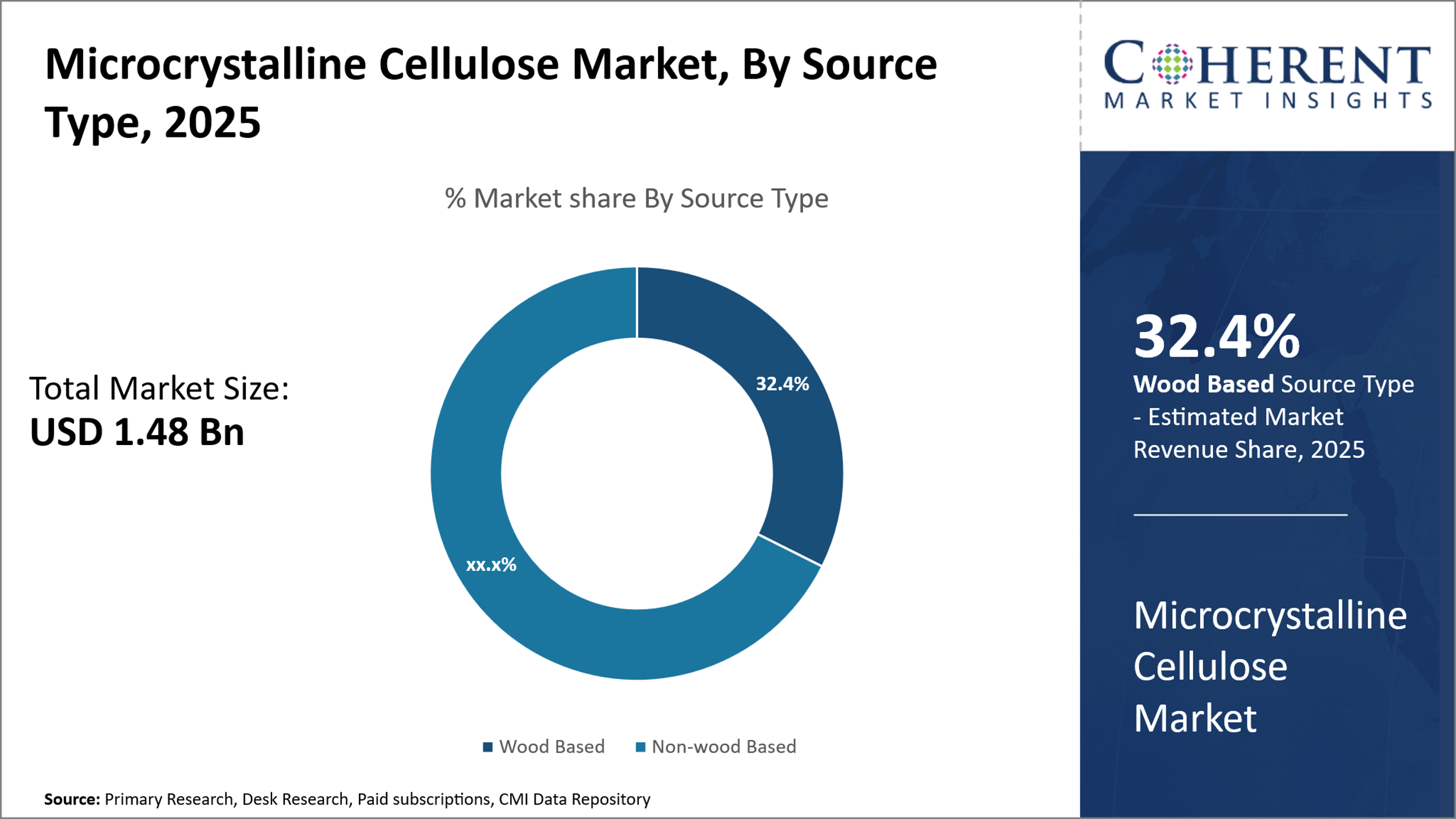
The non-wood-based segment dominates the global microcrystalline cellulose market due to key advantages over wood-based sources and is expected to hold 68.6% of the market share in 2026. Non-wood materials like sugarcane bagasse and wheat straw are agricultural byproducts that do not require dedicated cultivation. Utilizing these waste resources enhances sustainability by preventing environmental pollution from agricultural residues. It also provides an efficient microcrystalline cellulose market value-addition pathway for farmers.
Compared to wood pulps, non-wood sources tend to be more abundant and locally available in most regions. This ensures a stable supply chain and makes production less dependent on import/export dynamics. It also gives manufacturers an option to locally procure raw materials rather than relying on international wood markets. This independence makes costs more predictable and insulating the business from supply disruptions. The sheer volume of residues generated by agriculture far outweighs wood wastes in most parts of the world.
For example, sugar mills produce huge amounts of bagasse as a byproduct every year. Similar quantities of rice and wheat straw are also left behind after harvests. This abundant availability of low-cost feedstock near production hubs favors investments in non-wood extraction capacities. Environmental regulations in many jurisdictions also incentivize the use of agricultural wastes over depleting forest resources.
Non-wood MCC production faces relatively lighter regulatory hurdles regarding sourcing. This regulatory advantage coupled with financial benefits from waste utilization fuels further capacity expansions of the non-wood segment.
To learn more about this report, Download Free Sample
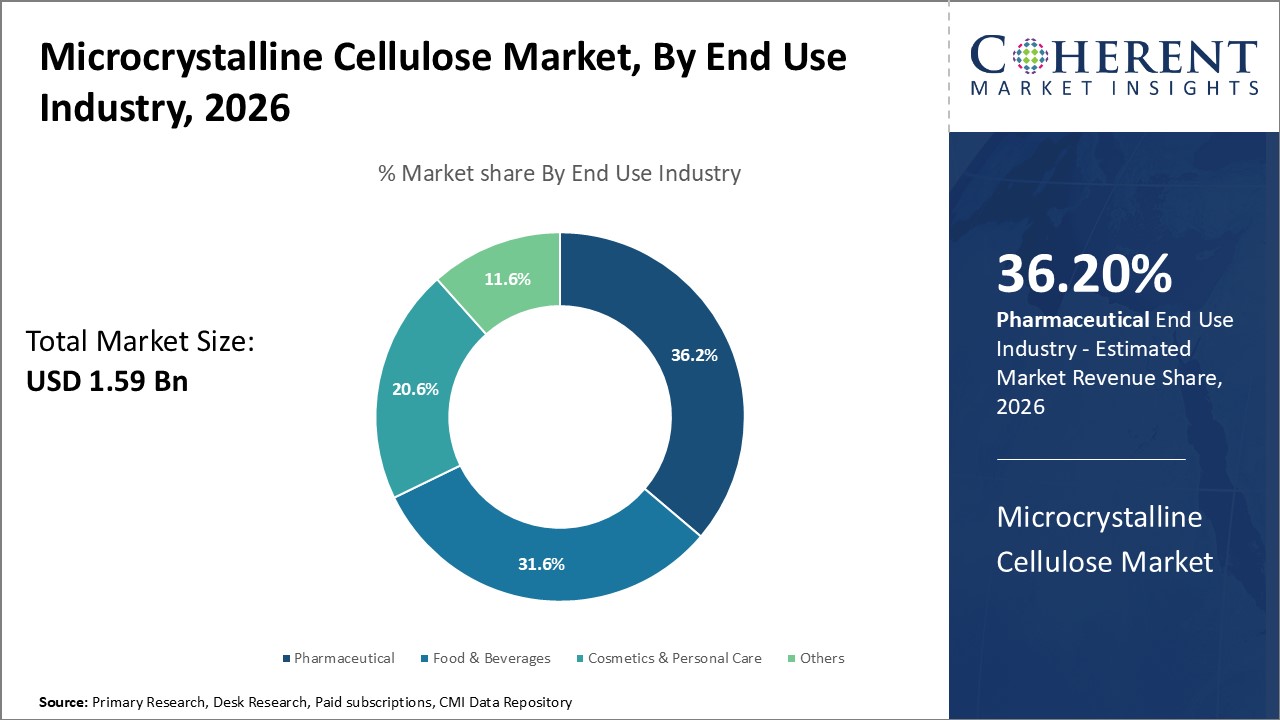
The pharmaceutical industry accounts for the highest consumption of microcrystalline cellulose globally and is expected to account for 36.2% of the market share in 2026. MCC finds wide applications in drug formulations due to its exceptional functional properties. Its chemically inert and physically stable nature allows direct compression into tablets without the need for binders or fillers.
MCC has excellent compressibility which gives tablets robust mechanical strength for packaging and shipping. It also acts as a diluent to adjust drug densities and prevents caking. The porous texture and water-absorbing capacity of MCC aids disintegration and rapid dissolution of tablets upon administration. These properties promote drug delivery optimization. Being hypoallergenic and bland in taste, MCC is suitable for use across various drug classes from antibiotics to analgesics. It does not interfere with drug efficacy while imparting desired texture and flow behavior to powders and granules.
MCC thus facilitates efficient tablet production across all dosage forms from immediate to controlled release. The stringent quality standards of the pharmaceutical industry rely on microcrystalline cellulose as an excipient with consistent performance. Long-term stability, purity and batch-to-batch uniformity of commercially available MCC grades suit its role in ensuring drug quality and therapeutic outcome. This drives the leading demand from drug manufacturers globally.
To learn more about this report, Download Free Sample
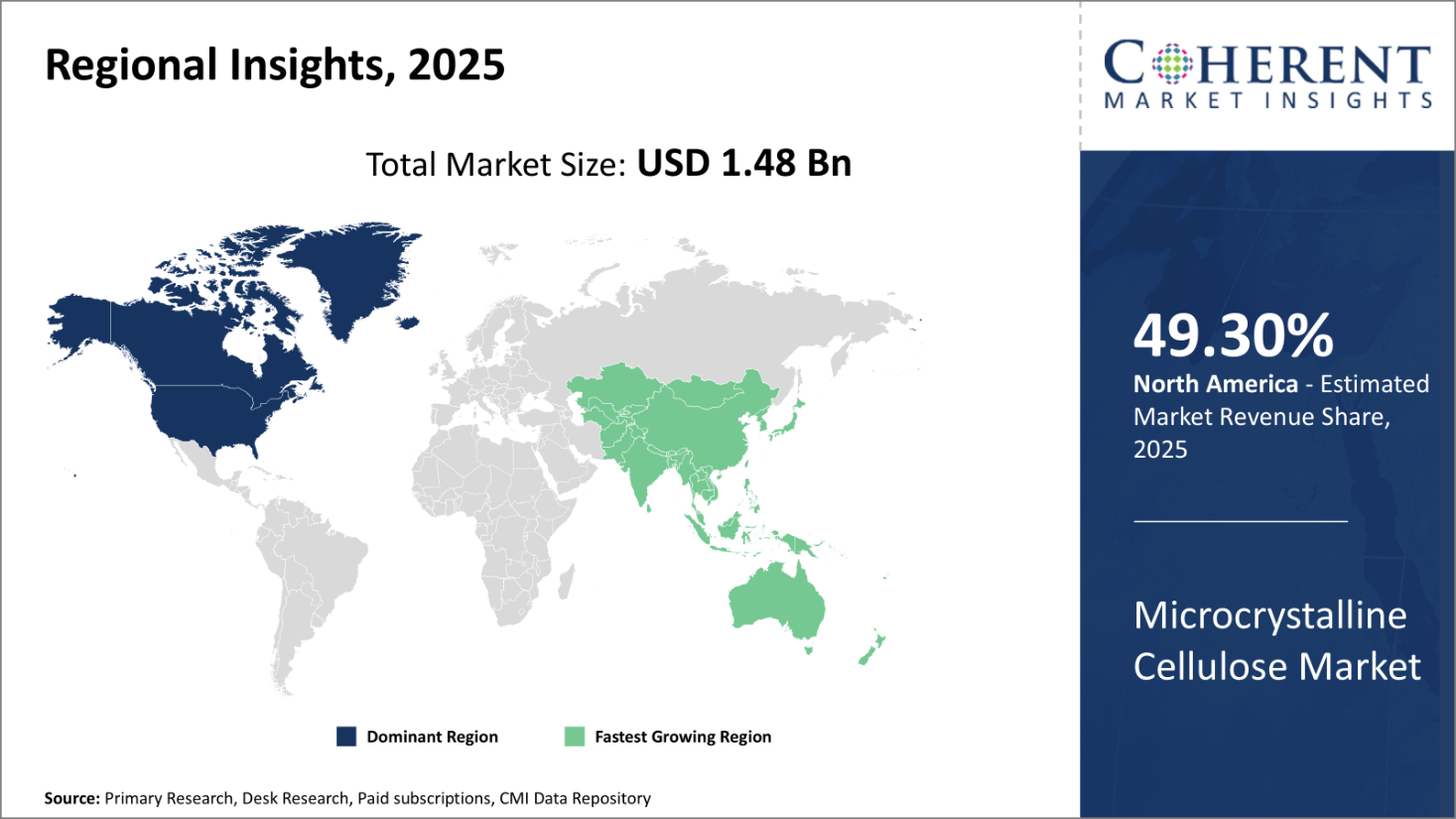
North America has established itself as the dominant region in the global microcrystalline cellulose market with 49.30% of the microcrystalline cellulose market share in 2026. This can be attributed to multiple factors like strong presence of pharmaceutical industry in the region, especially the U.S. Major pharmaceutical companies have their headquarters as well as manufacturing facilities located in North America.
Microcrystalline cellulose finds widespread application as an excipient in the manufacturing of various drug formulations including tablets and capsules. As a result, North America accounts for the largest Microcrystalline Cellulose Market Demand. Another important factor is the well-established food industry in the region. Microcrystalline cellulose is commonly used as a functional food additive for its properties like bulking, anti-caking, and moisture retention.
Leading packaged food manufacturers are headquartered in North America and have major production plants within the region. This ensures stable demand from the food industry. Moreover, North America has stringent quality and safety standards for food additives, hence domestic manufacturers import high-quality microcrystalline cellulose.
The fastest growing regional market is Asia Pacific. Rapid industrialization and growing per capita income have boosted the pharmaceutical, food, and other consumer goods sectors across Asia Pacific. Countries like China, India, and Japan have emerged as global manufacturing hubs for pharmaceuticals as well as top food producers.
With increasing domestic consumption and export activities, requirement for functional additives like microcrystalline cellulose is surging in the region. Another significant factor is the cost advantage that Asia Pacific offers. Raw material and labor costs are comparatively lower, allowing regional players to produce microcrystalline cellulose at competitive prices. This is attracting many end-use industries to either establish facilities or outsource production to Asia Pacific. Also, trade agreements have boosted exports from the region.
On the other hand, local manufacturers are expanding their production capacities and capabilities to better serve the rising internal demand as well as global customers. This makes Asia Pacific the fastest emerging market for microcrystalline cellulose.
Further driving market expansion are regional variables including France's internationally renowned cosmetics industry and the United Kingdom's robust R&D efforts. Using microcrystalline cellulose to fill capsules is a key application in the pharmaceutical sector, highlighting its versatility and functional value.
Enzyme-assisted hydrolysis and other cutting-edge production techniques are among the technological developments improving MCC quality and broadening its uses. The market also gains from consumers' growing inclination for plant-based and sustainable ingredients, which is consistent with larger environmental and regulatory trends in Europe.
Major pharmaceutical companies are headquartered and operate large manufacturing facilities in the U.S., ensuring consistent demand for high-quality MCC. Additionally, the well-established food industry in the U.S. utilizes MCC for its bulking, anti-caking, and moisture retention properties in a wide range of packaged foods. Stringent quality and safety standards for food additives further drive the import and production of premium MCC, consolidating the U.S. position as a global market leader.
Due to its burgeoning pharmaceutical manufacturing sector and fast modernization, India is becoming a major player in the MCC market. The demand for MCC as a binder and filler in solid dosage forms is greatly increased by the nation's reputation as a global center for the development of generic drugs. MCC's texturizing and fat-replacing qualities are being used by India's growing food processing industry to increase consumption.
China plays a pivotal role in the global MCC market as both a major producer and consumer. The country's extensive pharmaceutical industry, coupled with a rapidly growing food and beverage sector, drives substantial demand for MCC. Chinese manufacturers benefit from cost-effective production due to abundant raw material availability and large-scale operations.
| Report Coverage | Details | ||
|---|---|---|---|
| Base Year: | 2025 | Market Size in 2026: | USD 1.59 Bn |
| Historical Data for: | 2020 To 2024 | Forecast Period: | 2026 To 2033 |
| Forecast Period 2026 to 2033 CAGR: | 7.6% | 2033 Value Projection: | USD 2.66 Bn |
| Geographies covered: |
|
||
| Segments covered: |
|
||
| Companies covered: |
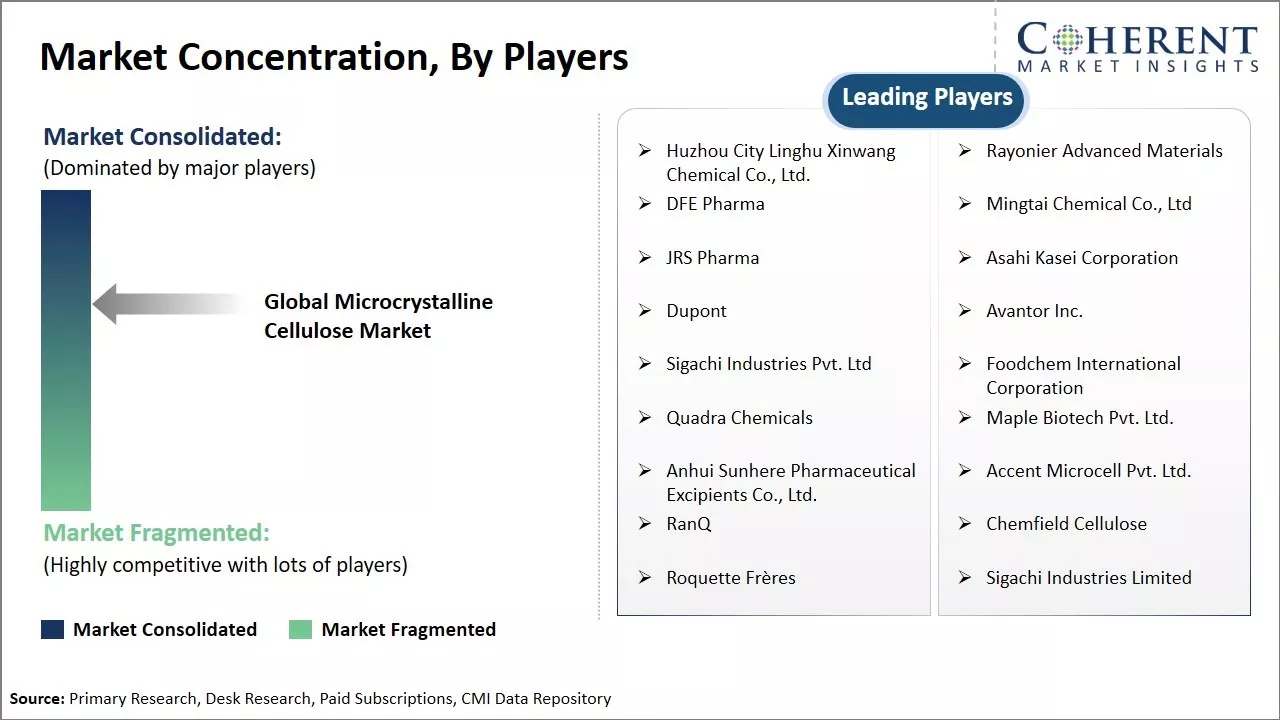
Huzhou City Linghu Xinwang Chemical Co., Ltd., Rayonier Advanced Materials, DFE Pharma, Mingtai Chemical Co., Ltd, JRS Pharma, Asahi Kasei Corporation, Dupont, Avantor Inc., Sigachi Industries Pvt. Ltd, Foodchem International Corporation, Quadra Chemicals, Maple Biotech Pvt. Ltd., Anhui Sunhere Pharmaceutical Excipients Co., Ltd., Accent Microcell Pvt. Ltd., RanQ, Chemfield Cellulose, Roquette Frères, and Sigachi Industries Limited |
||
| Growth Drivers: |
|
||
| Restraints & Challenges: |
|
||
Uncover macros and micros vetted on 75+ parameters: Get instant access to report
To learn more about this report, Download Free Sample
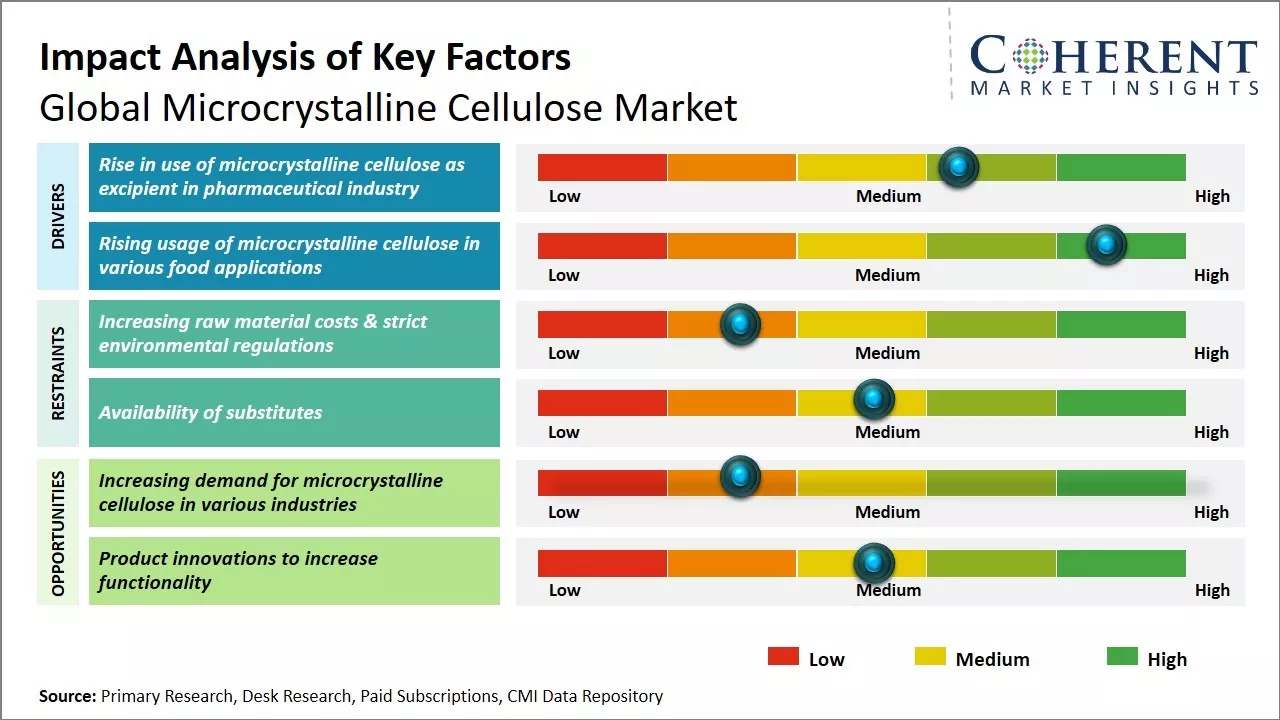
The growing pharmaceutical industry worldwide has led to a significant rise in the demand for microcrystalline cellulose. Microcrystalline cellulose is widely used as a key excipient or inactive ingredient in most solid oral dosage formulations such as tablets and capsules. It acts as a disintegrant, diluent, glidant, and binding agent in the manufacturing process of several drugs.
The excellent flow and compression properties of MCC ensure the uniform filling of capsules and uniform densities in tablet manufacturing. Its inertness and compatibility with most drugs also makes it a favored excipient. With lifestyle diseases and chronic conditions on the rise, pharmaceutical R&D activities have increased substantially in recent years. Several new drug molecules are in the clinical trial and approval process. This has augmented the demand for supporting excipients from drug manufacturers.
Moreover, the regulatory norms are also getting stricter regarding the quality and safety of excipients used in drugs. Microcrystalline cellulose complies with the stringent pharmacopeial standards and excipient quality guidelines prescribed by regulatory bodies like the U.S. FDA and EMA. This provides assurance to drug makers and boosts the preference for MCC over alternative excipients.
The leading global players in MCC production are continuously enhancing their production capacities and technical capabilities to cater to the growing needs of the pharmaceutical industry, therefore growing pharmaceuticals industry is expected to drive the market growth. For instance, according to date by Invest India in 2022, The Indian pharmaceutical industry has grown at an average rate of 9.47% from 2018 to 2022, reaching USD 42.34 billion.
Microcrystalline cellulose is used as a bulking agent, stabilizing agent, anti-caking agent and emulsifier in various food products. MCC helps improve texture, prevents crystallization of sugars, and maintains uniform appearance in canned foods, desserts, and dressings. It is also utilized as a fat substitute or flour extender in keto friendly and low calorie foods.
The booming food processing industry and changing consumer preferences have fueled innovations in ready-to-eat and convenient food categories. Low carb, sugar free, vegan, and gluten free foods are in high demand nowadays. Microcrystalline cellulose caters well to the formulation requirements of such niche product segments. Its multi-functionality as a versatile ingredient enables replacement of various artificial additives in foods.
Strict environmental regulations around deforestation for sourcing wood pulp will further drive-up production costs. Additionally, substitute products such as carboxymethyl cellulose pose competition.
Microcrystalline cellulose as a substance that prevents caking is widely used in various industries, but the low barriers to entry at the production level and the growing number of local manufacturers in Asia are intensifying competition.
Technological innovation, with developments like artificial intelligence (AI) being used into supply chain and production management. Automation powered by AI improves demand forecasting, quality assurance, and production efficiency, which raises output and lowers costs.
MCC is still most commonly used in the pharmaceutical industry, which takes use of its excellent binding and disintegration qualities in tablet formulations. In the meantime, MCC is being used more and more by the food and beverage sector as a fat substitute and bulking agent to meet the rising demand for low-calorie and plant-based goods.
The market sees opportunities from increasing demand for microcrystalline cellulose in various industries such as food and beverage, pharmaceutical and personal care. Its versatile functionality as an excipient, binder, diluent and disintegrant offers stable growth prospects. The rising health-conscious population is augmenting the demand for low-fat and low-calorie processed foods where microcrystalline cellulose finds extensive application as a fat replacement.
*Definition: The global microcrystalline cellulose market represents the market for microcrystalline cellulose, which is a purified, partially depolymerized cellulose made from wood pulp or cotton linters. It is commonly used as a diluent, binder, anti-caking agent, and filter aid. The microcrystalline cellulose market has applications in the pharmaceutical, food & beverages, and other industries.
Share
Share
Yash Doshi is a Senior Management Consultant. He has 12+ years of experience in conducting research and handling consulting projects across verticals in APAC, EMEA, and the Americas.
He brings strong acumen in helping chemical companies navigate complex challenges and identify growth opportunities. He has deep expertise across the chemicals value chain, including commodity, specialty and fine chemicals, plastics and polymers, and petrochemicals. Yash is a sought-after speaker at industry conferences and contributes to various publications on topics related commodity, specialty and fine chemicals, plastics and polymers, and petrochemicals.
Joining thousands of companies around the world committed to making the Excellent Business Solutions.
View All Our Clients