Hemophilia Treatment Market, By Product Type (Plasma Derived Coagulation Factor, Recombinant Coagulation Factor, Antifibrinolytic Agents, and Desmopressin), By Distribution Channel (Hospital Pharmacies, Retail Pharmacies, and Online Pharmacies), By Geography (North America, Europe, Asia Pacific, Latin America, Middle East, and Africa)
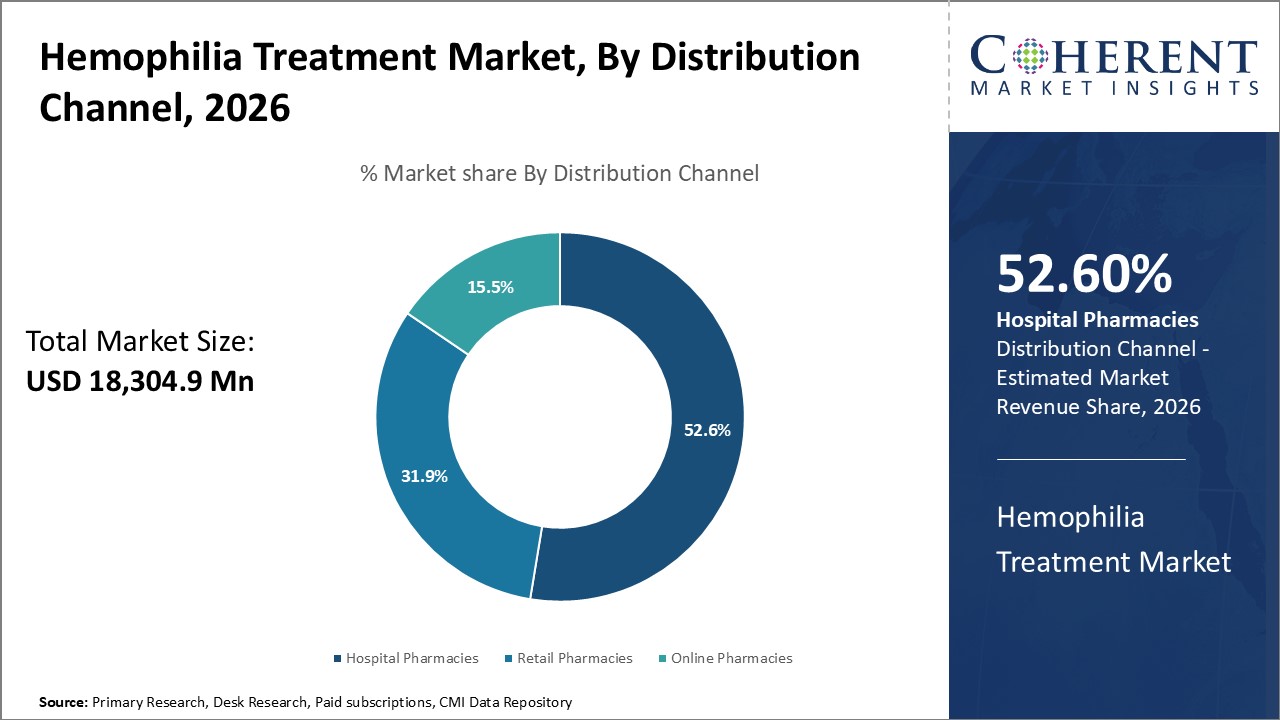
Hemophilia Treatment Market size is estimated to be valued at USD 18,304.9 Mn in 2026 and is expected to reach USD 28,501.8 Mn in 2033, exhibiting a compound annual growth rate (CAGR) of 6.5% from 2026 to 2033.
Key Takeaways
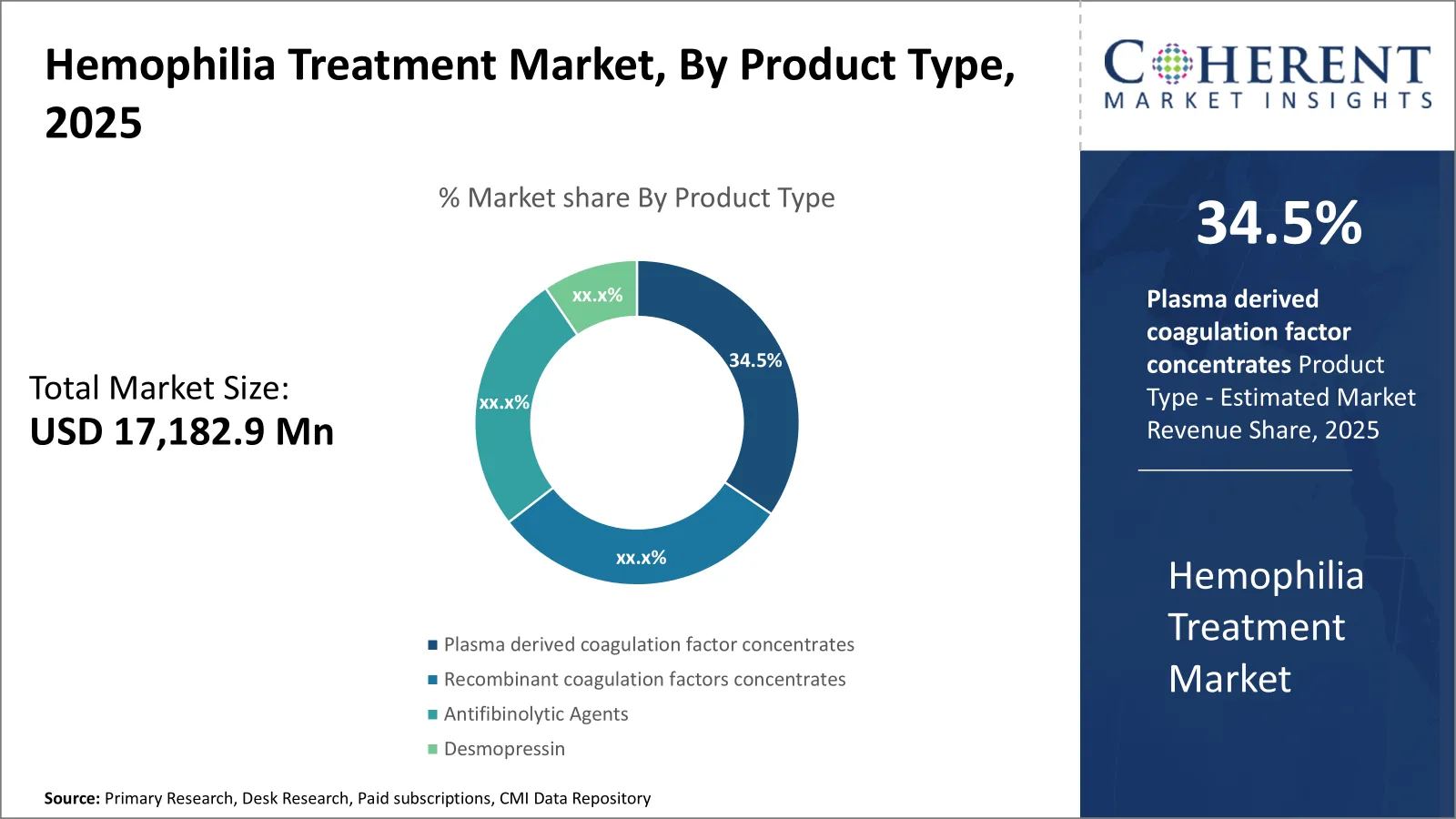
By Product Type, Plasma derived coagulation factor concentrates are expected to witness strong growth with 35.5% shares, owing to their safety profile and reduced risk of infections compared to plasma-derived products.
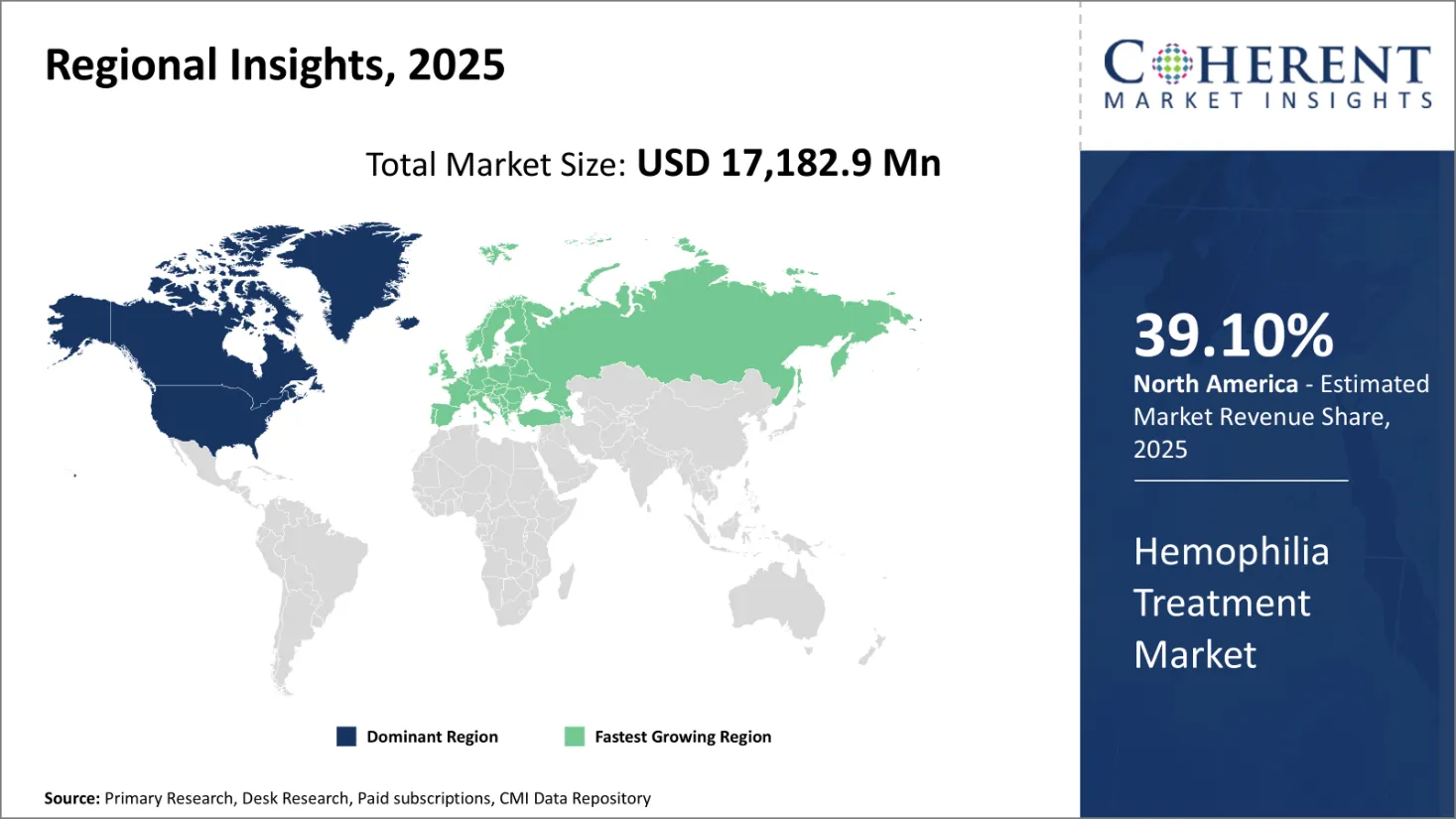
By Region, North America leads the Hemophilia Treatment Market with 39.1% share attributed to high healthcare expenditure, advanced healthcare infrastructure, and favorable reimbursement policies.
Market Overview
Adoption of inorganic strategies such as partnerships, collaborations, and others by key market players is expected to drive the global hemophilia treatment market price over the forecast period. For instance, in December 2019, Bayer, pharmaceutical and biotechnology company, announced it had entered into a three-year collaboration with the Children's Hospital of Philadelphia (CHOP). This partnership will combine CHOP's expertise in hemophilia and coagulation and Bayer's research capabilities, and will lead to discovery and development of first-in-class oral non-replacement therapy (NRT) for the treatment of hemophilia A and B.
Current Events and Its Impact on the Hemophilia Treatment Market
Event
Description and Impact
Gene Therapy Breakthrough and Regulatory Approvals
Description: FDA and EMA approvals for novel gene therapies (CSL Behring's Eteplirsen, BioMarin's Valoctocogene roxaparvovec). For instance, BioMarin secured FDA approval for its Hemophilia A gene therapy, Valoctocogene roxaparvovec, in early 2025, paving the way for one-time treatments.
Impact: Potential to revolutionize treatment paradigm from chronic factor replacement to one-time curative therapy.
Description: Clinical trial expansions for Hemophilia B gene therapies. For example, CSL Behring expanded clinical trials for its Hemophilia B gene therapy candidate in Q1 2025, aiming to broaden market reach.
Impact: Could capture significant market share from traditional factor concentrates and reduce long-term treatment costs.
Global Supply Chain Disruptions and Raw Material Shortages
Description: Chinese pharmaceutical manufacturing shutdowns affecting plasma-derived factor production. For instance, a major plasma fractionation plant in China temporarily halted operations in Q1 2025, causing shortages of plasma-derived clotting factors globally.
Impact: Threatens availability of traditional clotting factor concentrates globally.
Description: European energy crisis impacting cold-chain logistics for biologic therapies. For example, energy shortages in Europe disrupted cold-chain logistics in mid-2025, delaying shipments of temperature-sensitive hemophilia biologics.
Impact: Could disrupt distribution of temperature-sensitive hemophilia treatments.
Healthcare Policy Reforms and Pricing Pressures
Description: IRA drug pricing negotiations targeting high-cost rare disease treatments in US. For instance, the US Inflation Reduction Act negotiations in Q2 2025 pressured manufacturers like Takeda to adjust pricing on rare disease therapies including hemophilia treatments.
Impact: Could significantly reduce revenue for established hemophilia therapies.
Description: European HTA reforms requiring additional clinical evidence for market access. For example, new European HTA guidelines introduced in 2025 required additional clinical evidence, delaying the launch of emerging hemophilia drugs by several months.
Impact: May delay launches and increase development costs for new hemophilia treatments.
The rise in R&D studies regarding treatment therapies is expected to drive the growth of the hemophilia treatment market.
A rise in prophylactic treatment for hemophilia can fuel the hemophilia treatment market growth soon.
The government's initiatives to conduct awareness campaigns and support plans regarding the treatment of hemophilia can contribute to the hemophilia treatment market expansion further.
Increasing the utilization of injectable drug delivery will likely help in the hemophilia treatment market expansion.
Global Hemophilia Treatment Market Insights, By Product Type
The market is segmented into Plasma Derived Coagulation factor, Recombinant Coagulation Factor, Antifibrinolytic Agents, and Desmopressin. Out of which, plasma derived coagulation factor segment is expected to dominate the global hemophilia treatment market during the forecast period. As key players are focusing on increasing plasma collection for production to expand their product portfolio.
For Instance, in December 2026, Kedrion Biopharma, a company that collects and fractionates blood plasma and distributes worldwide, announced the acquisition of plasma derived products of Czech companies named UNICAplasma s.r.o and UNICAplasma Morava s.r.o that operate five plasma collection centers in the Czech Republic, Central Europe.
Global Hemophilia Treatment Market Insights, By Distribution Channel
The market is segmented into Hospital pharmacies, Retail pharmacies, and Online pharmcies. Out of which, hospital pharmacies segment is expected to exhibit significant growth, owing to the fact that majority of hemophilia patients are hospitalized for treatment and drugs are sold by hospital pharmacies.
North America Hemophilia Treatment Market- Regional Analysis
North America is expected to dominate the global hemophilia treatment market demand over the forecast period, due to North America 39.10%market share and increasing product approvals from regulatory authorities in the region. For instance, in December 2026, Genentech, an U.S. based biotechnology corporation, announced interim results from phase III HAVEN 7 study.
This study showed Hemlibra (emicizumab-kxwh), a prescription medicine used for routine prophylaxis had achieved meaningful bleed control with a favorable safety profile in infants (up to 12 months) with severe hemophilia A without factor VIII inhibitors.
Asia Pacific Hemophilia Treatment Market- Regional Analysis
The Asia Pacific region, with an approximate 20% market share, is the fastest-growing market due to expanding healthcare access, rising disease awareness, and increasing affordability. Countries such as China, India, Japan, and Australia are the dominant players, with governments investing in prophylaxis programs and gene therapy pilot studies.
Dominating Countries
According to the hemophilia treatment market forecast, the United States and Canada continue to dominate the North American and European markets, driven by robust healthcare infrastructure and early adoption of advanced therapies. In Europe, Germany, the United Kingdom, France, and Spain lead the market, supported by universal healthcare systems and proactive government policies that promote access to both traditional and novel hemophilia treatments.
Key dominating countries include China, India, Japan, and Australia in Asia Pacific, were rising healthcare access and awareness drive growth. Brazil, Argentina, and Mexico are the main markets in Latin America, supported by increasing diagnosis rates and government initiatives. Saudi Arabia, the United Arab Emirates, and South Africa dominate in the Middle East and Africa, with investments in specialty care and the adoption of advanced therapies fueling market expansion.
Market Report Scope
Hemophilia Treatment Market Report Coverage
Report Coverage
Details
Base Year:
2025
Market Size in 2026:
USD 18,304.9 Mn
Historical Data for:
2020 To 2024
Forecast Period:
2026 To 2033
Forecast Period 2026 to 2033 CAGR:
6.5%
2033 Value Projection:
USD 28,501.8 Mn
Geographies covered:
North America: U.S. and Canada
Latin America: Brazil, Argentina, Mexico, and Rest of Latin America
Europe: Germany, U.K., Spain, France, Italy, Russia, and Rest of Europe
Asia Pacific: China, India, Japan, Australia, South Korea, ASEAN, and Rest of Asia Pacific
Middle East: GCC Countries, Israel, and Rest of Middle East
Africa: South Africa, North Africa, and Central Africa
Segments covered:
By Product Type: Plasma Derived Coagulation Factor, Recombinant Coagulation Factor, Antifibrinolytic Agents, and Desmopressin
By Distribution Channel: Hospital Pharmacies, Retail Pharmacies, and Online Pharmacies
Companies covered:
Takeda Pharmaceutical Co., Ltd., Sanofi S.A., Octapharma AG, Swedish Orphan Biovitrum AB, Baxter International Inc., Biogen Inc., Bayer AG, CSL Behring, Ferring B.V., Pfizer, Inc., Kedrion, Novo Nordisk A/S, and F. Hoffmann-La Roche AG.
Growth Drivers:
Increasing number of product approval by regulatory authorities
Restraints & Challenges:
Increasing collaboration and partnership by key players in the market
Increasing government initiatives and awareness towards hemophilia
Government authorities are taking initatives to introduce new products for better management of hemophilia treatment. Thus, increasing number of product approvals is likely drive the growth of market. For instance, in November 2022, U.S. Food and Drug Administration approved Hemgenix (etranacogene dezaparvovec), an adeno-associated virus vector-based gene therapy for the treatment of adults with Hemophilia B (congenital Factor IX deficiency).
Factor IX protein increases blood levels of Factor IX and thus limits the bleeding. The National Hemophilia foundation (NHF) is actively working to upspring the awareness regarding tosymptoms, diagnosis, and treatment of hemophilia A.
Rising prevalence of hemophilia
Hemophilia A, the most common hereditary disorder of hemostasis, occurs in one out of 5000 males and accounts for 80% of hemophilia cases. Hemophilia A occurs in more than 400000 males worldwide, many of whom remain undiagnosed in the developing world. This disease incidence is expected to drive the global hemophilia treatment market growth over the forecast period.
Global Hemophilia Treatment Market Cross Sectional Analysis
In the product type, recombinant coagulation factor concentrates segment is fastest growing in Asia pacific region and is expected to drive the global hemophilia market growth over the forecast period, owing to increasing demand of hemophilia treatment products such as Adynovate.
For instance, in May 2022, Takeda Biopharmaceutical company, announced the expansion of its rare diseases portfolio in developing countries like India with the launch of Adynovate, an innovative extended half-life recombinant Factor VIII treatmentthat uses established technology for treating hemophilia A patients.
Global Hemophilia Treatment Market: Key Developments
In November 2025, Roche announced that it had showcased 46 abstracts, including 12 oral presentations, from its industry-leading haematology portfolio at the 67th American Society of Hematology (ASH) Annual Meeting and Exposition, held 6-9 December 2025 in Orlando, Florida, US.
In January 2023, World Federation of Hemophilia (WFH), U.S. Food and Drug Administration (FDA), proposed individual risk assessment for blood donations in revision of U.S.A. donor eligibility and deferral policies. WFH Gene Therapy Registry (GTR) aims to collect important data on all patients who have received gene therapy for hemophilia either through clinical trials or post-marketed product.
Analysts Opinion ( Expert Opinion)
The hemophilia treatment landscape is experiencing significant transformation driven by breakthrough gene therapies and extended half-life factor concentrates that offer patients enhanced quality of life through reduced infusion frequencies. The shift from prophylactic plasma-derived products to recombinant factors represents a paradigm change, with novel non-factor therapies like emicizumab providing subcutaneous administration options for hemophilia A patients.
Key market drivers include rising disease awareness, improved diagnostic capabilities in emerging markets, and robust pipeline developments from major pharmaceutical companies investing heavily in rare disease therapeutics.
However, treatment accessibility remains constrained by prohibitive costs, particularly in developing regions where healthcare infrastructure limitations persist. The complexity of cold-chain logistics for factor concentrates and limited specialist treatment centers create additional barriers to optimal patient care. Regulatory hurdles for gene therapies, despite their curative potential, continue to slow market penetration.
Significant opportunities emerge from expanding healthcare coverage in Asia-Pacific markets and increasing government initiatives supporting rare disease treatments. The development of oral therapies and longer-acting formulations presents substantial commercial potential, while personalized medicine approaches based on genetic profiling offer future growth avenues.
North America maintains market dominance due to advanced healthcare systems, high treatment adoption rates, and favorable reimbursement policies. However, Asia-Pacific represents the fastest-growing region, driven by improving healthcare infrastructure, rising disposable incomes, and increasing patient identification rates in countries like China and India, where historically underdiagnosed populations are gaining access to modern hemophilia care.
Market Segmentation
Global Hemophilia Treatment Market, By Product Type
Plasma Derived Coagulation Factor
Recombinant Coagulation Factor
Antifibrinolytic Agents
Desmopressin
Global Hemophilia Treatment Market, By Distribution Channel
Hospital Pharmacies
Retail Pharmacies
Online Pharmacies
Global Hemophilia Treatment Market, By Region
North America
U.S.
Canada
Latin America
Brazil
Argentina
Mexico
Rest of Latin America
Europe
Germany
U.K.
Spain
France
Italy
Russia
Rest of Europe
Asia Pacific
China
India
Japan
Australia
South Korea
ASEAN
Rest of Asia Pacific
Middle East
GCC Countries
Israel
Rest of Middle East
Africa
South Africa
North Africa
Central Africa
Company Profiles
Takeda Pharmaceutical Co., Ltd.
Sanofi S.A.
Octapharma AG
Swedish Orphan Biovitrum AB
Baxter International Inc.
Biogen Inc
Bayer AG
CSL Behring
Ferring B.V.
Pfizer, Inc.
Kedrion
Novo Nordisk A/S
F. Hoffmann-La Roche AG
Sources
Primary Research Interviews
Hematologists and Blood Disorder Specialists
Pharmaceutical Company Executives and R&D Directors
Hospital Pharmacy Directors and Procurement Managers
Patient Advocacy Group Representatives
Others
Databases
Global Health Observatory (WHO)
ClinicalTrials.gov Database
FDA Orange Book Database
European Medicines Agency (EMA) Database
Others
Magazines
BioPharm International
Pharmaceutical Executive
Hematology Times
BioPharma Dive
Others
Journals
Blood Journal (American Society of Hematology)
Haemophilia Journal
Journal of Thrombosis and Haemostasis
Others
Newspapers
Financial Times
The Wall Street Journal
Reuters Health News
Bloomberg Healthcare
Others
Associations
World Federation of Hemophilia (WFH)
National Hemophilia Foundation (NHF)
European Haemophilia Consortium (EHC)
International Society on Thrombosis and Haemostasis (ISTH)
Others
Public Domain Sources
U.S. Centers for Disease Control and Prevention (CDC)
World Health Organization (WHO) Reports
National Institutes of Health (NIH) Publications
European Centre for Disease Prevention and Control (ECDC)
Others
Proprietary Elements
CMI Data Analytics Tool
Proprietary CMI Existing Repository of information for last 8 years
Share
Share
About Author
Vipul Patil is a dynamic management consultant with 6 years of dedicated experience in the pharmaceutical industry. Known for his analytical acumen and strategic insight, Vipul has successfully partnered with pharmaceutical companies to enhance operational efficiency, cross broader expansion, and navigate the complexities of distribution in markets with high revenue potential.
Missing comfort of reading report in your local language? Find your preferred language :
The Hemophilia Treatment Market size is estimated to be valued at USD 18,304.9 Mn in 2026, and is expected to reach USD 28,501.8 Mn by 2033.
Current non-factor replacement therapies include emicizumab (Hemlibra), while others in development include fitusiran, concizumab, and serpinPC, targeting pathways like antithrombin and tissue factor pathway inhibitor.
Increasing number of product approval by regulatory authorities, such as the U.S. Food and Drug Administration, and rising prevelance of the market.
Plasma derived coagulation factor is the leading product segment in the market.
The key factor that hamper the market include increasing number of product recalls by regulatory authorities such as the U.S. Food and Drug Administration.
Major players operating in the market Takeda Pharmaceutical Co., Ltd., Sanofi S.A., Octapharma AG, Swedish Orphan Biovitrum AB, Baxter International Inc., Biogen Inc., Bayer AG, CSL Behring, Ferring B.V., Pfizer, Inc., Kedrion, Novo Nordisk A/S, and F. Hoffmann-La Roche AG.