

Abdominal Aortic Aneurysm Repair Devices Market Size and Share Analysis - 2026 To 2033
The Abdominal Aortic Aneurysm Repair Devices Market size is projected to experience a CAGR of 5.6% during the forecast period from 2026 to 2033, reaching from USD 3.12 Bn to approximately USD 4.58 Bn. Some of the factors responsible for driving the market growth are the high prevalence of abdominal aortic aneurysms in the aging population, increasing use of minimally invasive aneurysm repair procedures, advances in aortic stent-graft technology, better screening and diagnosis of aneurysms, and availability of stent-graft systems designed for patients with complex vascular anatomy. As per Cleveland Clinic, endovascular aneurysm repair is a minimally invasive technique involving the use of puncture and special tools to insert a stent graft into the aorta where the aneurysm is situated.
Key Takeaways
- The stents segment, which consists mainly of abdominal aortic stent grafts, will hold the majority stake of about 59.0% of the market in 2026. The key drivers that influence the growth of this category are the rising prevalence of endovascular aneurysm repair procedures, advancements in sealant technology, and the availability of fenestrated and branched systems. The U.S. FDA also continues to monitor commercial stent-graft performance through post-approval studies; one ALTO system study enrolled 100 patients across 26 sites.
- The hospitals segment is set to lead the market with an estimated 74.0% share in 2026. The segment’s dominance is attributed to the requirement for advanced angiographic imaging, hybrid operating rooms, vascular surgery expertise, intensive-care support, and emergency management capabilities for ruptured or anatomically complex aneurysms. The 2025 National Vascular Registry report stated that 59 NHS vascular units performed elective abdominal aortic aneurysm repairs in 2024.
- North America is expected to dominate the Abdominal Aortic Aneurysm Repair Devices Market with an estimated 39.8% share in 2026. The region’s leadership is supported by a large high-risk aging population, established AAA screening practices, extensive vascular-surgery infrastructure, early adoption of endovascular aneurysm repair devices, and continued FDA oversight of advanced abdominal stent-graft systems. The U.S. population aged 65 years and above reached 61.2 million in 2024, increasing by 3.1% from 2023, which expands the population susceptible to age-related aortic disease.
Market Drivers
Expansion of AAA Screening and Surveillance Programs is Increasing the Diagnosed Repair Pool
The Abdominal Aortic Aneurysm Repair Devices Market is gaining from the increased implementation of screening and surveillance programs. Early detection enables patients with smaller aneurysms to enter structured surveillance pathways and supports timely referral for repair when aneurysm size, growth, symptoms, or other clinical factors meet intervention criteria.
According to the UK Health Security Agency’s AAA Screening Standards Report released in February 2026, there were about 337,752 men screened for their first-time AAA examination in England from 2024 to 2025, among which 82.3% were tested conclusively. There were also 12,190 annual follow-ups, which accounted for 92.3% of those in the designated testing period.
Technological Advancements in Endovascular Stent-Graft Systems are Accelerating Market Growth
Innovations in endovascular aneurysm repair devices are making AAA surgery more appealing to clinicians. Modern devices utilize smaller delivery systems, better graft conformability, advanced sealing systems, better fixation, and wider size options, allowing doctors to treat a greater number of patients and different vascular morphologies.
A study conducted on 150 patients from 29 centers in the United States in 2026, and published in the Journal of Vascular Surgery, has assessed the efficacy of the TREO abdominal stent-graft system. In the five-year follow-up period, 90.2 percent of the eligible patients had data available, and none of those deaths that occurred could be attributed to aneurysms.
Current Events and Their Impact on the Abdominal Aortic Aneurysm Repair Devices Market
Current Event | Description and its Impact |
NHS England Maintains Large-Scale AAA Screening and Surgical-Referral Programme (2025–2026) |
|
FDA Continues Post-Approval Surveillance and Design-Control Oversight of AAA Stent Grafts (2026) |
|
- Current Industry Events of 2026
- Market Size Estimation
- Regional Breakdown
- Competitive Landscape
- Customer Intelligence
- Segmental Analysis
- Pricing Analysis
- Key Market Drivers, Challenges & Future Trends
- Customized Insights Section
Segmental Insights
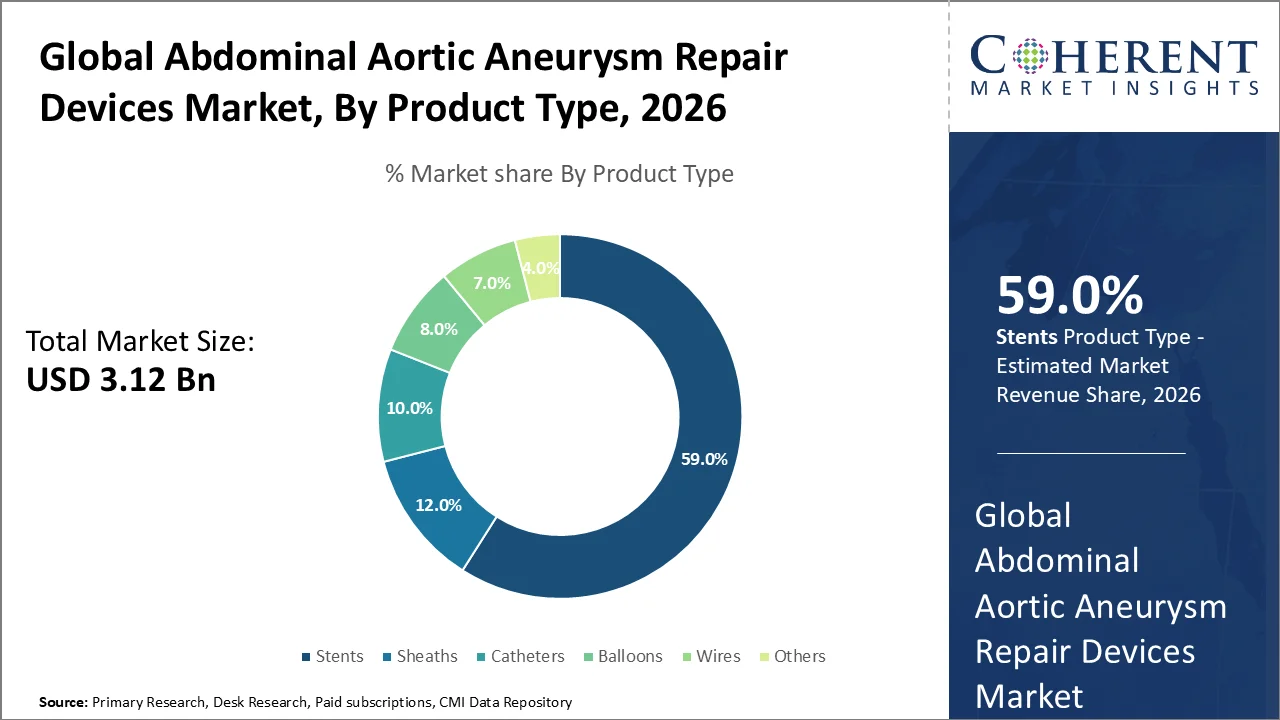
Why are Stents Acquiring the Largest Share?
On the basis of product type, the stents segment, primarily comprising abdominal aortic stent-graft systems, is projected to account for the largest Abdominal Aortic Aneurysm Repair Devices Market share of 59.0% in 2026. The segment’s growth is attributed to the increasing preference for endovascular aneurysm repair, broader treatment of complex aortic anatomies, lower-profile delivery systems, improved graft conformability, and the continued development of fenestrated and branched stent-graft technologies.
The 2025 UK National Vascular Registry report recorded 2,511 elective repairs of unruptured infrarenal AAA during 2024, of which 62.7% were performed using EVAR, compared with 38.0% through open repair.
In October 2025, Medtronic received U.S. FDA labeling approval for the Endurant Stent Graft System, removing the previous warning associated with the treatment of ruptured abdominal aortic aneurysms.
Hospitals Hold the Largest Market Share
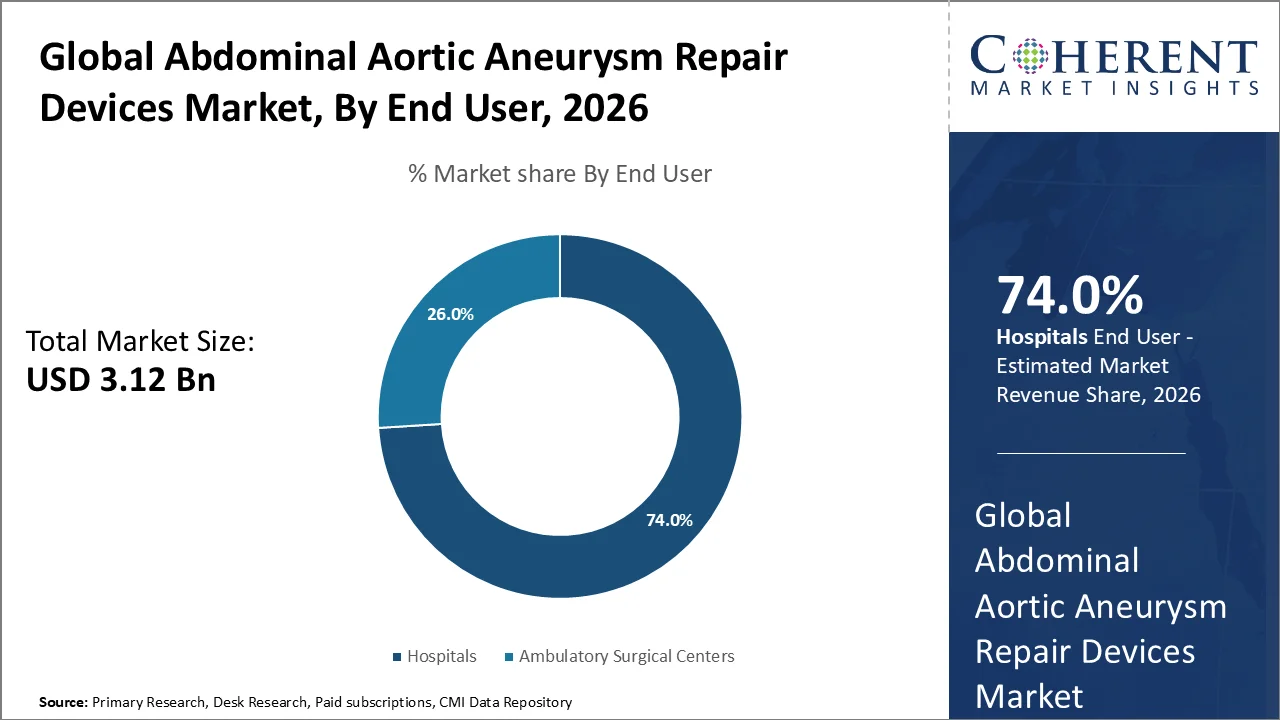
On the basis of end user, the hospitals segment is projected to lead the Abdominal Aortic Aneurysm Repair Devices Market with an estimated 74.0% share in 2026. The segment’s dominance is driven by the requirement for vascular surgeons, advanced fluoroscopic imaging, hybrid operating rooms, anaesthesia support, intensive postoperative monitoring, blood-bank access, and immediate conversion to open surgery when endovascular repair complications occur.
According to the NHS England AAA Screening Standards Report updated in February 2026, 932 men were identified with a large or rapidly expanding aneurysm during 2024–2025, and 92.7% were assessed by a vascular surgeon within two weeks.
In March 2026, Baylor College of Medicine received a USD 14.4 million research award from the Marcus Foundation to establish the Marcus VITAL Laboratory within its Center for Aortic Surgery.
Abdominal Aortic Aneurysm Repair Devices Market Trends
- The increasing use of fenestrated and branched endovascular aneurysm repair systems is expanding the treatable population to include patients with aneurysms located close to the renal and visceral arteries. UK vascular centres performed 1,328 complex endovascular procedures, including 1,075 fenestrated EVAR and 216 branched EVAR procedures, compared with 278 complex open repairs. In-hospital mortality was 1.3% following complex endovascular repair, compared with 10.1% following complex open repair.
- The development of lower-profile and more flexible stent-graft delivery systems is facilitating treatment in patients with narrow, calcified or tortuous access vessels. In September 2025, MicroPort disclosed that its Minos endovascular abdominal aortic stent graft utilizes 14F diameter sheath for minimizing the vascular access needs, and its modularity allows the management of short or angulated aneurysm necks. The product was commercially available in over 20 nations and also introduced in its fourth Latin American country in 2025.
- The growing integration of artificial intelligence and automated CTA analysis is improving device sizing, sealing-zone assessment and preoperative EVAR planning. A May 2025 study published in Scientific Reports introduced the BRAVE platform, which automatically segments the abdominal aorta, iliac arteries and secondary vessels while quantifying thrombus, calcification and proximal and distal sealing zones. Such tools can reduce manual planning requirements and support more precise selection and placement of stent-graft systems.
Regional Insights
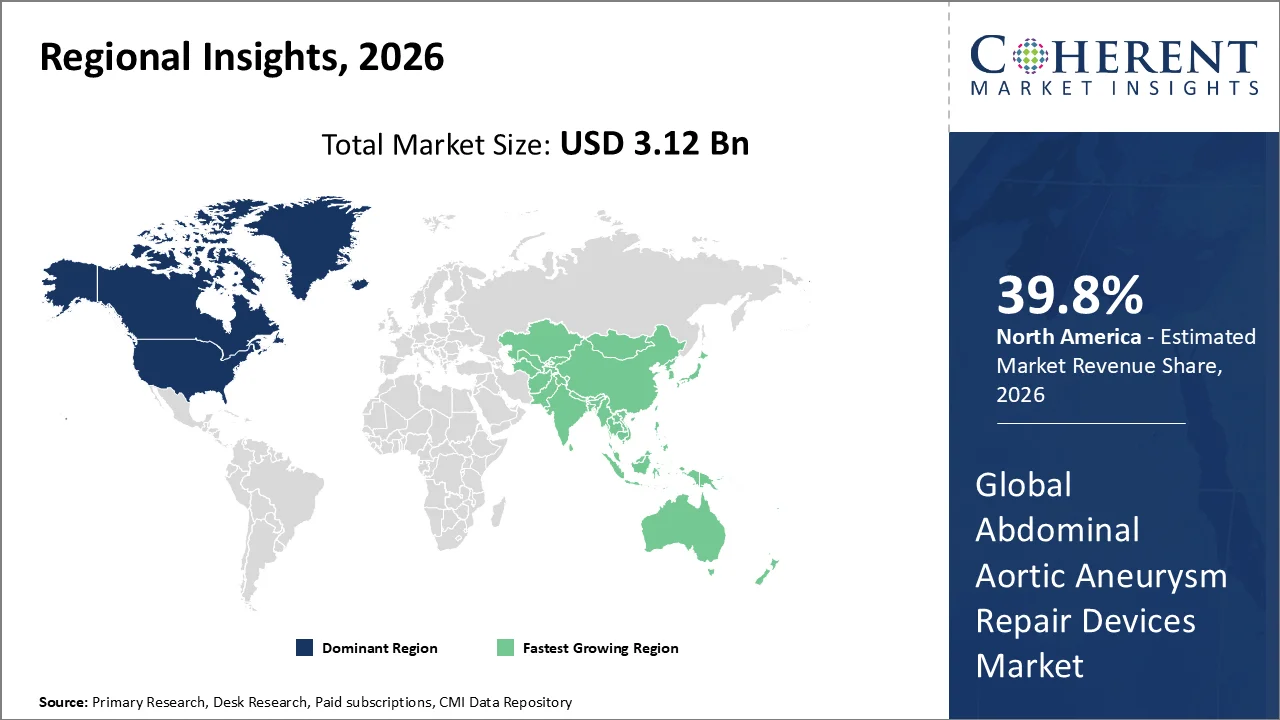
North America Dominates Owing to Advanced Vascular-Care Infrastructure and Strong Reimbursement Coverage
North America is expected to dominate the Abdominal Aortic Aneurysm Repair Devices Market with an estimated 39.8% share in 2026. The region’s leadership is supported by the high availability of vascular surgeons, hybrid operating rooms, established EVAR programs, advanced imaging infrastructure, favourable reimbursement coverage and early adoption of next-generation abdominal stent-graft systems.
Canada also has a growing addressable elderly population. Statistics Canada reported that the country had approximately 8.11 million people aged 65 years and above as of July 2025, representing 19.5% of the total population. The expanding elderly population across both the U.S. and Canada is expected to sustain demand for abdominal stent grafts, delivery sheaths, guidewires, balloons and catheters used in AAA repair.
In June 2025, MicroPort Endovastec completed the first post-market implantation of its Minos Abdominal Aortic Stent Graft and Delivery System in Malaysia.
Asia Pacific is Expected to be the Fastest-Growing Regional Market
Asia Pacific is projected to record the fastest growth in the Abdominal Aortic Aneurysm Repair Devices Market. Regional growth is being supported by rapid population aging, expansion of tertiary and specialty hospitals, improving access to vascular imaging, growing physician training in endovascular techniques and increasing availability of domestically manufactured stent-graft systems.
China’s National Bureau of Statistics reported that the country had approximately 323.38 million people aged 60 years and above in 2025, accounting for 23.0% of its population. The population aged 65 years and above reached 223.65 million, or 15.9% of the total population. China also had approximately 38,000 hospitals in 2025, providing an expanding institutional base for vascular diagnosis, surgical treatment and endovascular intervention.
In March 2026, MicroPort Scientific reported further expansion of its abdominal aortic intervention business in China.
Strong FDA Oversight and Broader EVAR Indications are Supporting the U.S. Market
The U.S. Abdominal Aortic Aneurysm Repair Devices Market is supported by an established endovascular-treatment infrastructure, strong physician familiarity with EVAR, comprehensive post-market surveillance and continued FDA review of stent-graft design, materials and clinical indications. These factors encourage hospitals to adopt newer abdominal stent-graft systems while supporting demand for associated sheaths, catheters, guidewires and balloons.
Medtronic’s current U.S. product information reports 99.3% delivery and deployment success for the Endurant system in its investigational device exemption study. Continued FDA-approved indication expansion and long-term evidence generation are expected to strengthen physician confidence and sustain the replacement and upgrade cycle for AAA stent-graft technologies in the U.S.
In October 2025, Medtronic received U.S. FDA labeling approval for the Endurant Stent Graft System, adding clinical evidence for ruptured abdominal aortic aneurysm treatment and removing the previous rAAA warning. Medtronic reported that ruptured AAA has a mortality rate exceeding 80%, highlighting the need for rapidly deployable endovascular systems in U.S. emergency vascular centres.
Domestic Stent-Graft Innovation and Expanding Hospital Penetration are Accelerating the China Market
China is expected to witness strong growth in the Abdominal Aortic Aneurysm Repair Devices Market, supported by domestic stent-graft development, expanding tertiary-hospital access, NMPA regulatory pathways and increasing use of minimally invasive aortic interventions. Local manufacturers are developing lower-profile, modular and anatomically adaptable systems, which are improving device availability and reducing dependence on imported technologies.
The National Health Commission’s statistical bulletin, published in December 2025, reported that China had 38,710 hospitals in 2024, including 4,111 tertiary hospitals and 1,876 Grade III Class A hospitals. These higher-level institutions provide the imaging, vascular-surgery, anaesthesia and intensive-care capabilities required for abdominal aortic aneurysm repair.
Who are the Major Companies in Abdominal Aortic Aneurysm Repair Devices Industry
Some of the major key players in Abdominal Aortic Aneurysm Repair Devices Market are Medtronic Plc., Cardinal Health Inc., Lombard Medical Inc., Endologix, Inc., Cook Group Incorporated, Boston Scientific Corporation, Terumo Corporation, and W. L. Gore & Associates, Inc.
Key News
- In July 2026, W. L. Gore & Associates received U.S. FDA approval for updated labeling of the GORE EXCLUDER AAA Endoprosthesis and GORE EXCLUDER Conformable AAA Endoprosthesis.
- In March 2026, Terumo Aortic received U.S. FDA Breakthrough Device Designation for the Fenestrated TREO Abdominal Stent-Graft System.
Market Report Scope
Abdominal Aortic Aneurysm Repair Devices Market Report Coverage
| Report Coverage | Details | ||
|---|---|---|---|
| Base Year: | 2025 | Market Size in 2026: | USD 3.12 Bn |
| Historical Data for: | 2020 To 2024 | Forecast Period: | 2026 To 2033 |
| Forecast Period 2026 to 2033 CAGR: | 5.6% | 2033 Value Projection: | USD 4.58 Bn |
| Geographies covered: |
| ||
| Segments covered: |
| ||
| Companies covered: | Medtronic Plc., Cardinal Health Inc., Lombard Medical Inc., Endologix, Inc., Cook Group Incorporated, Boston Scientific Corporation, Terumo Corporation, and W. L. Gore & Associates, Inc. | ||
| Growth Drivers: |
| ||
| Restraints & Challenges: |
| ||
Analyst Opinion
- The Abdominal Aortic Aneurysm Repair Devices Market is expected to become increasingly concentrated around high-volume vascular centres rather than expanding uniformly across all hospitals. A 2026 international study found that centres performing approximately 13–16 open AAA repairs annually recorded mortality of around 3.1%, compared with 4.6% at lower-volume centres. This supports continued centralization of AAA procedures and greater procurement of advanced stent grafts, imaging-compatible delivery systems and procedural accessories by specialized hospitals.
- Product competition is increasingly shifting from basic stent-graft availability toward delivery-system flexibility, material performance and suitability for difficult anatomies. In April 2026, the U.S. FDA approved a modification to the inner-liner material of the introducer sheath used with the TREO Abdominal Stent-Graft System. Such incremental improvements are important because sheath profile, trackability and deployment performance directly influence procedural success in patients with calcified, narrow or tortuous access vessels.
- Artificial intelligence and patient-specific imaging are likely to improve the identification of patients approaching the threshold for aneurysm repair. A June 2025 study trained a geometric deep-learning model using 113 longitudinal CT angiography scans and reported 93% accuracy in identifying whether a patient would become eligible for elective repair within two years. Although such tools remain at an early stage, their clinical adoption could improve intervention timing, procedural planning and selection of appropriately sized stent-graft systems.
Speak to the analyst
Want personalized insights?
Take the findings above to one of our principal consultants, or have the report rebuilt around the segments, geographies and competitors you actually track.
Market Segmentation
- By Product Type (Revenue, USD Bn, 2021-2033)
- Stents
- Sheaths
- Catheters
- Balloons
- Wires
- Others
- By End User (Revenue, USD Bn, 2021-2033)
- Hospitals
- Ambulatory Surgical Centers
- By Region (Revenue, USD Bn, 2021-2033)
- North America
- U.S.
- Canada
- Latin America
- Brazil
- Mexico
- Argentina
- Rest of Latin America
- Europe
- Germany
- U.K.
- France
- Italy
- Spain
- Russia
- Rest of Europe
- Asia Pacific
- China
- India
- Japan
- Australia
- South Korea
- ASEAN
- Rest of Asia Pacific
- Middle East
- GCC
- Israel
- Rest of Middle East
- Africa
- South Africa
- Central Africa
- North Africa
- North America
Sources
Primary Research Interviews
- Vascular surgeons and endovascular specialists
- Interventional radiologists and cardiovascular surgeons
- Hospital procurement managers and value-analysis committees
- AAA stent-graft product managers and medical-affairs professionals
- Medical-device distributors and regional sales executives
- Hybrid operating-room and catheterization-laboratory managers
- Regulatory, quality-assurance, and clinical-research professionals
- Key opinion leaders in abdominal aortic aneurysm screening and repair
Databases
- World Health Organization Global Health Observatory
- World Bank Open Data
- Organisation for Economic Co-operation and Development
- United Nations World Population Prospects
- U.S. Food and Drug Administration PMA and post-approval study databases
- FDA Manufacturer and User Facility Device Experience Database
- Centers for Medicare & Medicaid Services databases
- European Database on Medical Devices
- Eurostat
- PubMed and ClinicalTrials.gov
Magazines
- Endovascular Today
- Vascular News
- Cardiovascular News
- Vascular Specialist
- MedTech Dive
- Medical Device Network
- Cardiovascular Business
Journals
- Journal of Vascular Surgery
- European Journal of Vascular and Endovascular Surgery
- Journal of Endovascular Therapy
- Annals of Vascular Surgery
- JVS: Vascular Science
- Circulation
- JAMA Surgery
- The Lancet
Newspapers
- Reuters
- The Wall Street Journal
- Financial Times
- The New York Times
- The Guardian
- The Economic Times
Associations
- Society for Vascular Surgery
- European Society for Vascular Surgery
- Vascular Society of Great Britain and Ireland
- Society for Vascular Surgery Vascular Quality Initiative
- Society of Interventional Radiology
- Cardiovascular and Interventional Radiological Society of Europe
- International Society of Endovascular Specialists
- American College of Surgeons
Public Domain Sources
- Company annual reports, investor presentations, and product disclosures
- FDA approvals, PMA supplements, recalls, and post-approval studies
- European Commission MDR and EUDAMED publications
- NHS Abdominal Aortic Aneurysm Screening Programme reports
- National Vascular Registry reports and procedure statistics
- National health ministry and hospital infrastructure publications
- ClinicalTrials.gov and peer-reviewed clinical-study publications
- Patent databases such as WIPO, USPTO, EPO, and Google Patents
- Company product-launch, regulatory-approval, and clinical-evidence announcements
- Public reimbursement, procedure-coding, and hospital-utilization datasets
Proprietary Elements
- CMI Data Analytics Tool
- Proprietary CMI Existing Repository of Information for the Last 10 Years
Get access to 250+ pages report
Every segment, forecast, competitor profile and data table behind the analysis above — available for instant download.
- ESOMAR Member
- ISO 9001:2015 Certified
- D-U-N-S Registered
- GDPR & CCPA Compliant
Missing comfort of reading report in your local language? Find your preferred language:
Transform your Strategy with Exclusive Trending Reports
Frequently Asked Questions
The Abdominal Aortic Aneurysm Repair Devices Market is projected to increase from USD 3.12 Bn in 2026 to approximately USD 4.58 Bn by 2033.
Major players operating in the global market include Medtronic Plc., Cardinal Health Inc., Lombard Medical Inc., Endologix, Inc., Cook Group Incorporated, Boston Scientific Corporation, Terumo Corporation, and W. L. Gore & Associates, Inc.
The high cost of advanced stent-graft systems, risk of endoleaks, device migration, need for long-term post-EVAR surveillance, stringent regulatory requirements, and potential requirement for secondary interventions are the major factors hampering market growth.
The rising prevalence of abdominal aortic aneurysms among older adults, increasing adoption of minimally invasive endovascular aneurysm repair, expansion of AAA screening programs, and technological advancements in stent-graft systems are driving market growth.
The Abdominal Aortic Aneurysm Repair Devices Market is anticipated to grow at a CAGR of approximately 5.6% between 2026 and 2033.
North America is expected to dominate the global market with an estimated 39.8% share in 2026, supported by advanced vascular-care infrastructure, established EVAR programs, favourable reimbursement coverage, and early adoption of advanced stent-graft systems.
Asia Pacific is expected to record the fastest growth over the forecast period, driven by population aging, expansion of tertiary hospitals, improving access to vascular imaging, and increasing availability of domestically manufactured aortic stent-graft systems.