

Global Dental Implants Market Size and Share Analysis – Growth Trends and Forecasts (2026-2033)
The dental implants market is estimated to be valued at USD 5.96 Bn in 2026 and is expected to reach USD 9.88 Bn by 2033, exhibiting a compound annual growth rate (CAGR) of 7.5% from 2026 to 2033.
Key Takeaways
- Based on Material Type, Titanium Segment is estimated to hold 34.3% of the market share in 2026. This is because titanium forms a strong bond with bone tissues without triggering negative immune responses.
- Based on Type, Endosteal Segment is estimated to hold 43.3% of the market share in 2026. This is because endosteal implants are placed directly into the jawbone, making the procedure less complex than options like subperiosteal implants which are attached on top of the bone.
- Based on End User, Dental Clinics Segment contributes the highest share of the dental implants market and is estimated to hold 43.1% of the market share in 2026. This is because dental clinics are often the first port of call for patients seeking tooth replacement options like dental implants.
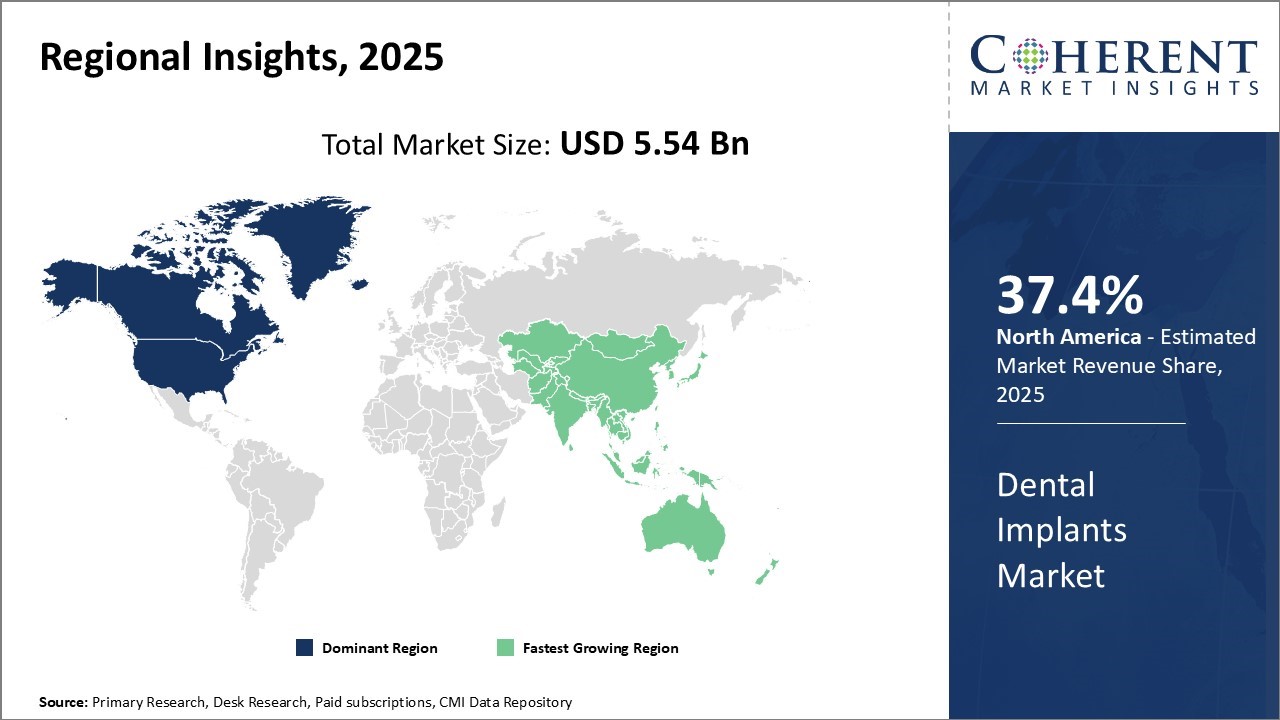
- The North American region has remained the dominant market for dental implants globally and is estimated to hold 37.4% of the market share in 2026. This is due to high disposable income and advanced healthcare infrastructure in the region.
Market Overview
The dental implants market is expected to witness positive growth over the forecast period. The increasing rate of tooth decay and rising number of dental problems globally is driving the demand for dental implants. Furthermore, the rising demand for cosmetic dentistry and improvements in dental technologies is also fueling the dental implants market growth. Better quality of life, higher life expectancy and focus on oral healthcare are some other key factors expected to support the demand for dental implants during the forecast period. However, the high cost of dental implants and lack of reimbursement policies in developing nations may hamper market growth to some extent over the coming years.
Current Events and Its Impact on Dental Implants Market
Current Events | Description and its impact |
KGMU Conference Highlights AI-Based Dental Implant Innovations |
|
Straumann Seeks to Expand in China with Low-Cost Implants |
|
Pipeline Analysis: Dental Implants Market
The dental implants market pipeline is also seeing high levels of innovation, where companies are concentrating on enhancing implant materials, surface technology, and digital integration. More and more companies are putting money into research and development in order to produce with enhanced osseointegration, shorter healing times, and improved patient comfort.
Titanium continues to be the material of choice in the pipeline because of its durability and biocompatibility, but interest is growing in zirconia-based implants for metal-free solutions for those patients looking for it, particularly in the cosmetic dentistry category. A number of ongoing clinical trials are investigating the long-term performance of zirconia implants compared with conventional systems.
Digitally guided implant surgery is also a prime area of interest, with manufacturers creating computer-aided design and manufacturing (CAD/CAM) systems and 3D-printed surgical guides to enhance precision and shorten treatment times. Advances in artificial intelligence and intraoral scanning are also furthering preoperative planning and implant customization.
Major players such as Straumann, Dentsply Sirona, Zimmer Biomet, and Nobel Biocare are developing proprietary implant systems to be used with digital dentistry platforms. Startups and local players are also adding to the pipeline by providing economical, non-premium implants for the emerging markets.
The creation of minimally invasive implant approaches and immediate-load implants is another trend intended to decrease post-operative complications and increase patient satisfaction.
Dental implant pipeline is full of technologies centered on materials, accuracy, and price. These technologies will propel wider use across the world, especially with growing aesthetic consciousness and demand for durable dental treatments.
- Current Industry Events of 2026
- Market Size Estimation
- Regional Breakdown
- Competitive Landscape
- Customer Intelligence
- Segmental Analysis
- Pricing Analysis
- Key Market Drivers, Challenges & Future Trends
- Customized Insights Section
Patent Landscape: Dental Implants Market
The dental implants industry has an active and competitive patent environment in line with ongoing advancements in materials science, implant design, and surgical procedures. Dominating the intellectual property (IP) landscape are industry leaders like Straumann, Nobel Biocare (Envista), Dentsply Sirona, and Zimmer Biomet, who occupy a large proportion of worldwide dental implant-related patents.
Key areas of patenting involve implant surface treatments designed to increase osseointegration and decrease healing time. Plasma spraying, laser ablation, and nanostructured coatings are extensively patented for their efficacy in optimizing bone-implant interaction. Thread design and implant geometry is another large area where companies are looking to maximize primary stability and load transmission.
Increasing numbers of recent filings target zirconia implants as a metal-free substitute for titanium, with an eye to heightened demand for aesthetic and biocompatible solutions, particularly in cosmetic dentistry. Patents regarding personalized abutments, CAD/CAM integration, and 3D printing of dental implants are also on the rise, highlighting the trend towards digital and individualized implant dentistry.
New players and educational institutions are patenting in regenerative methods, such as implants with bioactive coatings or stem cell scaffolds for better bone regeneration. There is growing patent activity in robotic and AI-guided implant placement systems as well.
Geographically, the United States, Europe, and Japan dominate patent filings, although China and South Korea filings are emerging fast. Such competitive IP scenario accentuates the need for innovation to drive market leadership and emphasizes the industry shift towards quicker, safer, and more patient-focused implant solutions.
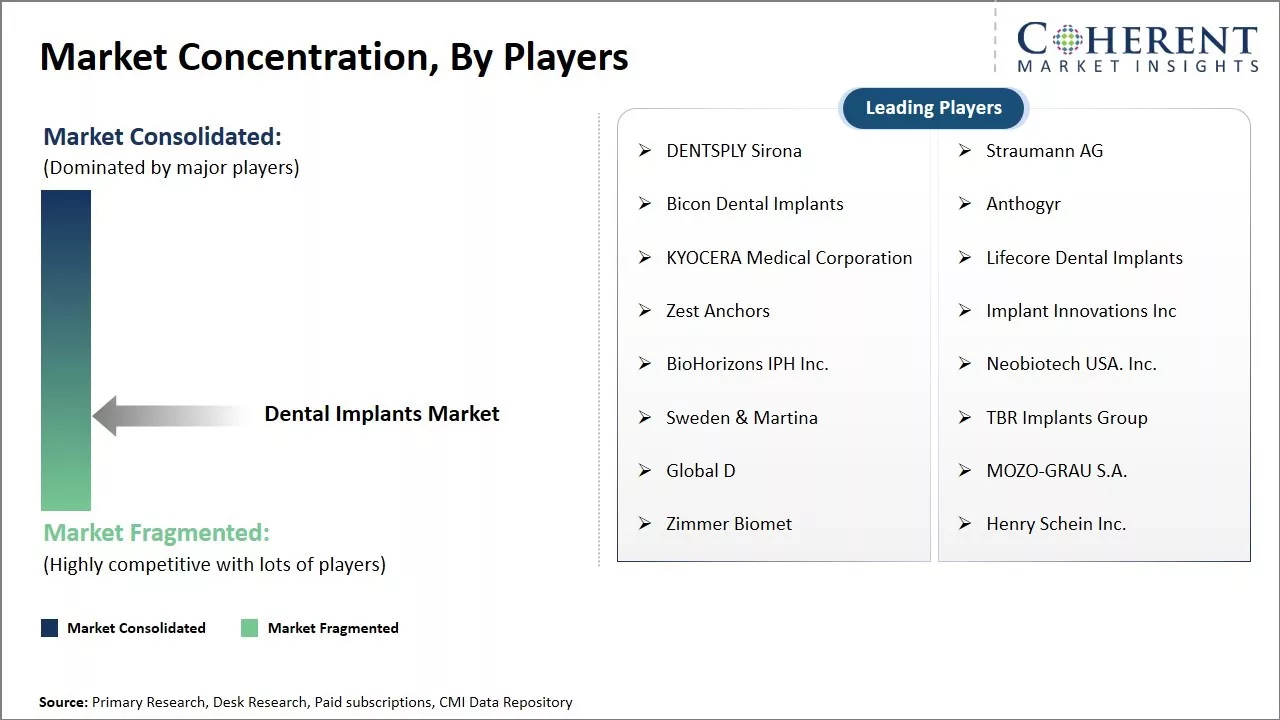
Market Concentration and Competitive Landscape
Market Driver
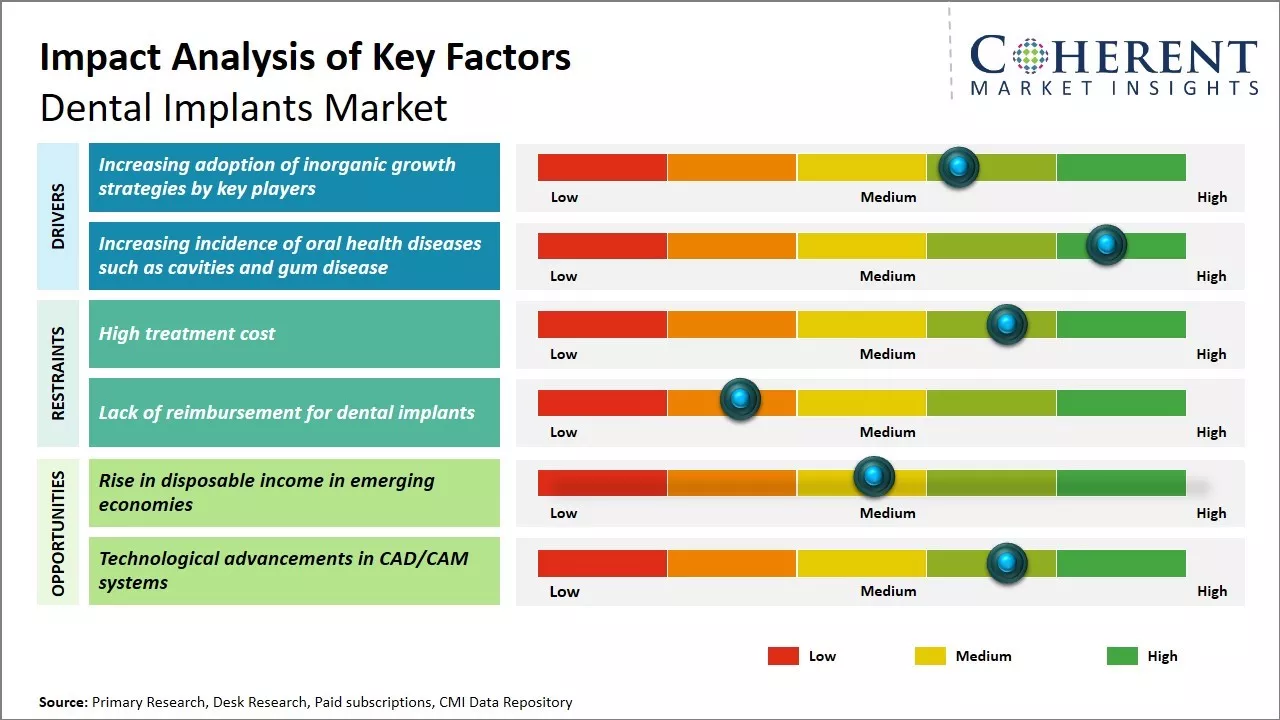
- Increasing adoption of inorganic growth strategies by key players
Increasing adoption of inorganic growth strategies like acquisition and partnership by key players is expected to drive the global dental implants market growth. For instance, in May 2024, South Korea’s Osstem Implant signed an agreement to acquire a 100% stake in Implacil de Bortoli, Brazil’s third-largest dental implant manufacturer, for approximately $89.8 million. This acquisition enables Osstem to significantly expand into Latin America, one of the fastest-growing regions for dental services.
- Increasing incidence of oral health diseases such as cavities and gum disease
Increasing incidence of oral health diseases such as cavities and gum disease is a major factor that is expected to drive growth of the global dental implants market. For instance, according to the data published in August 2021 by the National Institutes of Health (NIH), in 2020, overall, 42.2% of adults 30 years or older in the U.S. had total periodontitis, consisting of 7.8% with severe periodontitis and 34.4% with no severe periodontitis.
Market Challenges: High treatment cost
One of the major challenges faced by the dental implants market is the high costs associated with the treatment procedures. Dental implants involve initial surgical placement of implants followed by several sessions of prosthetic tooth attachment, making the overall treatment expensive. This prohibits a large section of the population from opting for such procedures.
Another challenge is the long duration of treatment. It can take several months for the implant to integrate with the jaw bone and for final teeth replacement. This comparatively longer treatment duration leads to lower patient compliance.
Market Opportunities: Rise in disposable income in emerging economies
The market sees strong opportunities in the emerging economies. With rapid economic growth and rising disposable incomes, the population in developing nations now have greater affordability for expensive treatments like dental implants. Additionally, increasing awareness about oral healthcare and availability of dental tourism are boosting the adoption of implants in low-income countries. Technological advancements are also playing an important role in driving growth.
Segmental Insights
Dental Implants Market Insights, By Material Type
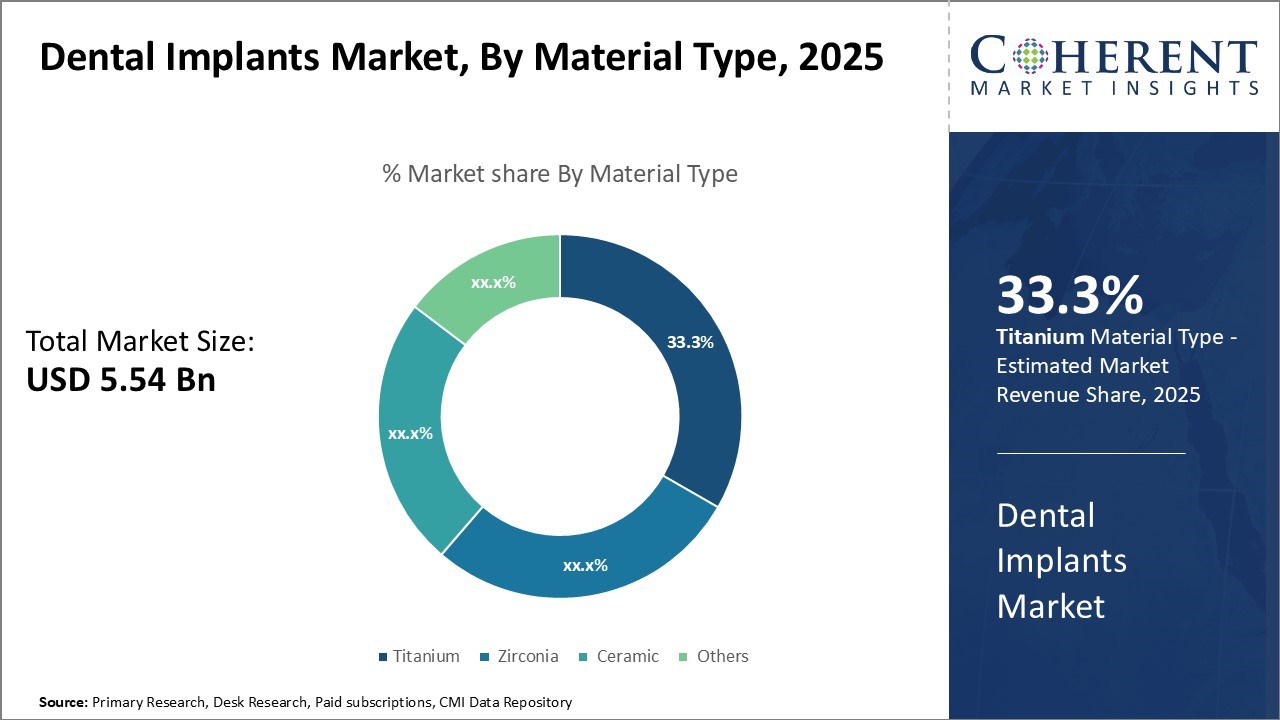
The material type segment includes titanium, zirconia, ceramic, and others. Titanium contributes the highest share of the market and is estimated to hold 34.3% of the market share in 2026. As an implant material, titanium forms a strong bond with bone tissues without triggering negative immune responses. It is highly resistant to corrosion even in a moist oral environment.
The corrosion resistance of titanium allows it to maintain mechanical integrity over the long lifespan of a dental implant. Implants made of titanium have demonstrated survival rates above 90% over 10-15 years according to clinical studies. Their biocompatible properties prevent toxic reactions and minimize the risk of implant failure.
For both dental professionals and patients, titanium offers a very safe material option. The strength and biostability of titanium implants allow them to reliably prosthetic replacement teeth for decades. This proven performance and biocompatibility have cemented titanium as the material of choice for the majority of dental implant procedures performed worldwide.
Dental Implants Market Insights, By Type
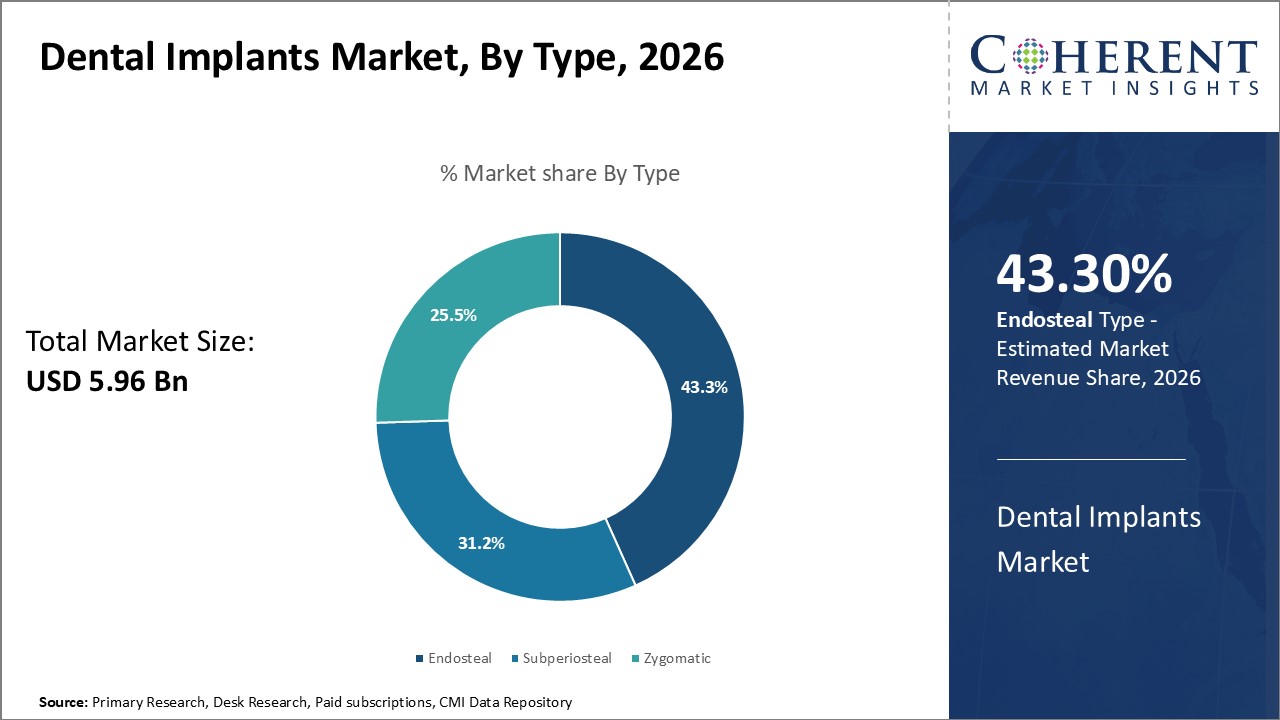
The type segment includes endosteal, subperiosteal, and zygomatic. Endosteal is estimated to hold 43.3% of the market share in 2026. Endosteal implants are placed directly into the jawbone, making the procedure less complex than options like subperiosteal implants which are attached on top of the bone.
The minimally invasive nature of endosteal implantation means less disruption to surrounding tissues and bone. This translates to shorter treatment times in the clinic and faster recovery for patients. Many dental clinicians also prefer endosteal implants as they provide secure anchorage directly in the jaw, making them particularly suitable for replacing single teeth.
The one stage surgical process avoids the need to wait for osteointegration before attaching a prosthetic tooth as required by some other techniques. Patients appreciate the immediate tooth replacement enabled by endosteal implants along with their high success rates achieved through close integration with underlying bone. Their convenience has contributed greatly to endosteal implants becoming a mainstream first choice treatment option.
Dental Implants Market Insights, By End User
The end user segment includes dental clinics, hospitals, and others. Dental clinics contributes the highest share of the dental implants market and is estimated to hold 43.1% of the market share in 2026. Dental clinics are often the first port of call for patients seeking tooth replacement options like dental implants.
As local healthcare providers, clinics can be easily visited without the need for referrals to hospitals. They also usually have more flexible scheduling and shorter wait times than hospital appointments. Treating implant cases provides opportunities for revenue growth at clinics. Many have invested in on-site radiology, 3D imaging and well-equipped surgery facilities to undertake common implant procedures themselves.
Given their local presence and lower cost of care comparatively, dental clinics are highly convenient sites for patients. It is common to receive implant treatment as a day patient without any overnight hospital admission. The accessibility and affordability of consultations and treatments at clinics have made them a major driver of implant procedures worldwide. Their widespread numbers continue amplifying the demand seen from this end user segment.
Regional Insights
North America Dental Implants Market Analysis and Trends
North American has remained the dominant market for dental implants globally and is estimated to hold 37.4% of the market share in 2026. With a high disposable income and advanced healthcare infrastructure across countries like the U.S. and Canada, dental healthcare has received significant prioritization.
The availability of skilled professionals and sophisticated medical technology have enabled large scale adoption of dental implantation procedures in the region over the past few decades. Major global players have established their manufacturing and R&D hubs in North America, catering to both domestic as well as international demand.
Stringent regulations regarding quality standards have also ensured safety and reliability of dental implants. This has improved patient confidence towards dental implantology as a viable treatment option.
With growing emphasis on dental aesthetic appeals, North America dominates the premium end of the market with patients opting for high-end features and materials like titanium implants. The large pool of elderly population requiring dental interventions and rising cases of tooth decay and periodontal diseases have further augmented market growth.
Asia Pacific Dental Implants Market Analysis and Trends
The Asia Pacific region has emerged as the fastest growing market for dental implants. Countries like China, India and Japan have become highly lucrative markets owing to their rapidly developing healthcare infrastructure and increasing medical tourism. Growing expendable incomes have prompted greater spend on advanced dental treatments. At the same time, lower production costs have made dental implants more affordable for the masses compared to developed markets. This has boosted adoption rates across middle and lower-income demographic segments.
Dental Implants Market Dominating Countries
United States Dental Implants Market Analysis and Trend
The U.S. dominates the world dental implants market because of its advanced dental infrastructure, patient awareness, and high demand for cosmetic dentistry. Companies such as Zimmer Biomet and Dentsply Sirona are based here, and innovation is backed by strong R&D expenditure and FDA-approved technology.
Germany Market Analysis and Trend
Germany leads the European dental implants market, fueled by high volume of an aging population, high dental insurance coverage, and the presence of multinational implant manufacturers such as Straumann. Strong preference for premium implants and high procedural volumes supports its leadership.
China Market Analysis and Trend
China is emerging rapidly as a key market due to its large patient base, growing middle class, and recent government reforms to reduce implant costs. Value-based procurement policies have made dental implants more affordable, spurring demand and attracting global manufacturers.
Japan Market Analysis and Trend
Japan has a major market share in the Asia-Pacific dental implants market, driven by high life expectancy and rising awareness of oral health among the elderly. Insurance coverage and technological adoption of particular dental procedures also fuel growth in the market.
Brazil Market Analysis and Trend
Brazil is the region's biggest market for dental implants, driven by a strong dental tourism industry and increasing demand for cosmetic dental care. The availability of local manufacturers and a strong network of private dental clinics facilitate accessibility and affordability.
Market Report Scope
Dental Implants Market Report Coverage
| Report Coverage | Details | ||
|---|---|---|---|
| Base Year: | 2025 | Market Size in 2026: | USD 5.96 Bn |
| Historical Data for: | 2020 To 2024 | Forecast Period: | 2026 To 2033 |
| Forecast Period 2026 to 2033 CAGR: | 7.5% | 2033 Value Projection: | USD 9.88 Bn |
| Geographies covered: |
| ||
| Segments covered: |
| ||
| Companies covered: | DENTSPLY Sirona, Straumann AG, Bicon Dental Implants, Anthogyr, KYOCERA Medical Corporation, Lifecore Dental Implants, Zest Anchors, Implant Innovations Inc, BioHorizons IPH Inc., Neobiotech USA. Inc., Sweden & Martina, TBR Implants Group, Global D, MOZO-GRAU S.A., Zimmer Biomet, Henry Schein Inc. | ||
| Growth Drivers: |
| ||
| Restraints & Challenges: |
| ||
Dental Implants Industry News
- In February 2025, Dentsply Sirona introduced MIS LYNX, a premium yet cost-effective all‑in‑one dental implant solution, to the U.S. market. This system is designed for plug-and-play efficiency—encompassing implant, abutment, and restorative components to simplify procedures and reduce chair time.
- On February, 2024, ZimVie Inc., a prominent figure in the global life sciences sector specializing in dentistry and spine solutions, announced the launch of TSX Implant in Japan. This move marks a significant advancement for the company, positioning it to directly challenge top-tier competitors in the dental implant arena within the Japanese market. The TSX Implants are designed to facilitate immediate extraction, adhere to standard loading procedures, ensure placement predictability, and offer primary stability in both soft and dense bone types.
Analyst View
- The dental implants market shows strong positive momentum, fueled by converging demographic and technology trends. Growth drivers focus on accelerating digital dentistry adoption—particularly 3D imaging and computer-guided surgery—improving procedural predictability and minimizing recovery times. At the same time, aging populations around the world are driving up the patient base for tooth replacement solutions, with longevity placing functional restoration over historic dentures.
- Increasing consumer recognition of implant advantages, including bone retention, full arch replacement by using dental implants, and natural aesthetics, continues to drive demand beyond clinical necessity toward lifestyle enhancement. Market constraints remain, however, with cost being a major limiting factor. Excessive out-of-pocket expenses, combined with inconsistent insurance support for elective treatments, restrict access among middle-income populations. Additionally, regulatory hurdles for approving new materials or techniques can delay the commercialization of innovation.
- Urgent opportunities exist in strategic growth in emerging markets, where increasing disposable incomes and medical tourism complement underpenetrated demand. Cost-optimized system product development—e.g., abutment connection simplification and single-stage procedures—has the potential to address price-sensitive segments. Minimally invasive procedures also offer adoption opportunity by lowering patient anxiety.
- At the regional level, Europe leads with advanced healthcare infrastructure, robust manufacturer ecosystems, and proper reimbursement mechanisms. North America is next with high procedural take-up, and Asia-Pacific is the growth leader, driven by urbanization and increasing dental access programs.
Market Segmentation
- Material Type Insights (Revenue, USD Bn, 2021 - 2033)
- Titanium
- Zirconia
- Ceramic
- Others
- Type Insights (Revenue, USD Bn, 2021 - 2033)
- Endosteal
- Subperiosteal
- Zygomatic
- Form Type Insights (Revenue, USD Bn, 2021 - 2033)
- Root Form
- Plate Form
- End User Insights (Revenue, USD Bn, 2021 - 2033)
- Dental Clinics
- Hospitals
- Others
- Regional Insights (Revenue, USD Bn, 2021 - 2033)
- North America
- U.S.
- Canada
- Latin America
- Brazil
- Argentina
- Mexico
- Rest of Latin America
- Europe
- Germany
- U.K.
- Spain
- France
- Italy
- Russia
- Rest of Europe
- Asia Pacific
- China
- India
- Japan
- Australia
- South Korea
- ASEAN
- Rest of Asia Pacific
- Middle East
- GCC Countries
- Israel
- Rest of Middle East
- Africa
- South Africa
- North Africa
- Central Africa
- Key Players Insights
- DENTSPLY Sirona
- Straumann AG
- Bicon Dental Implants
- Anthogyr
- KYOCERA Medical Corporation
- Lifecore Dental Implants
- Zest Anchors
- Implant Innovations Inc
- BioHorizons IPH Inc.
- Neobiotech USA. Inc.
- Sweden & Martina
- TBR Implants Group
- Global D
- MOZO-GRAU S.A.
- Zimmer Biomet
- Henry Schein Inc.
Sources
Primary Research Interviews
- Key Opinion Leaders in Dentistry and Prosthodontics
- Dental Implant Manufacturers’ Product Managers
- Dental Laboratory Owners specializing in implant supported prosthetics
- Hospital Procurement Managers for dental departments
- Others
Databases
- Evaluate Pharma Medtech and Device Intelligence
- IQVIA Market Prognosis
- DRG (Decision Resources Group) Medtech
- Statista Healthcare Market Data
- Others
Magazines
- Dental Tribune International
- Dental Economics
- Dentistry Today
- Implant Tribune
- Others
Journals’
- Journal of Oral Implantology
- Clinical Oral Implants Research
- The International Journal of Oral & Maxillofacial Implants
- Others
Newspapers
- The Wall Street Journal (Health & Business Sections)
- Financial Times (Pharma & Healthcare)
- Modern Healthcare
- Becker's Dental Review
- Others
Associations
- American Dental Association (ADA)
- Academy of Osseointegration (AO)
- European Association for Osseointegration (EAO)
- International Congress of Oral Implantologists (ICOI)
- Others
Public Domain sources
- U.S. Food and Drug Administration (FDA) Medical Device Databases
- World Health Organization (WHO) Oral Health Reports
- National Institutes of Health (NIH) Dental Research Publications
- European Patent Office (EPO) Implant Technology Registries
- Others
Proprietary Elements
- CMI Data Analytics Tool
- Proprietary CMI Existing Repository of information for last 8 years
Get access to 250+ pages report
Every segment, forecast, competitor profile and data table behind the analysis above — available for instant download.
- ESOMAR Member
- ISO 9001:2015 Certified
- D-U-N-S Registered
- GDPR & CCPA Compliant
Missing comfort of reading report in your local language? Find your preferred language:
Transform your Strategy with Exclusive Trending Reports
Frequently Asked Questions
The Dental Implants Market size is estimated to be valued at USD 5.96 Bn in 2026, and is expected to reach USD 9.88 Bn by 2033.
The CAGR of the global Market is projected to be 7.5% from 2026 to 2033.
Increasing adoption of inorganic growth strategies by key players and increasing incidence of oral health diseases such as cavities and gum disease are the major factors driving the growth of the dental implants industry.
High treatment cost and lack of reimbursement for dental implants are the major factors hampering the growth of the global market.
Dental implants typically last 10 to 30 years or more, depending on factors like oral hygiene, bone health, and lifestyle habits such as smoking.
Bone grafting is often required before implant placement when a patient lacks sufficient jawbone density to securely support the dental implant.
Emerging technologies like 3D printing, AI-assisted implant planning, surface modification techniques, and digital workflow integration are expected to significantly enhance precision, customization, and treatment efficiency in the dental implants market.