

Autonomous Rail Rapid Transit Market Size and Forecast — 2026 - 2033
The Global Autonomous Rail Rapid Transit Market size is estimated to be valued at USD 5.8 billion in 2026 and is expected to reach USD 14.3 billion by 2033, exhibiting a compound annual growth rate (CAGR) of 13.5% from 2026 to 2033.
Overview
The Autonomous Rail Rapid Transit (ART) market includes a range of innovative products designed to enhance urban mobility through driverless, trackless rail systems. Key products encompass autonomous vehicles equipped with advanced sensors, AI-driven navigation systems, and energy-efficient propulsion technologies such as electric and hybrid powertrains. Control and communication systems ensure real-time monitoring, route optimization, and passenger safety, while modular vehicle designs allow flexible capacity management for varying ridership demands. Additionally, integrated ticketing solutions and smart infrastructure components, including automated stations and charging hubs, support seamless operations. Continuous technological advancements and adoption of eco-friendly solutions are driving the evolution and market growth of ART products.
Key Takeaways
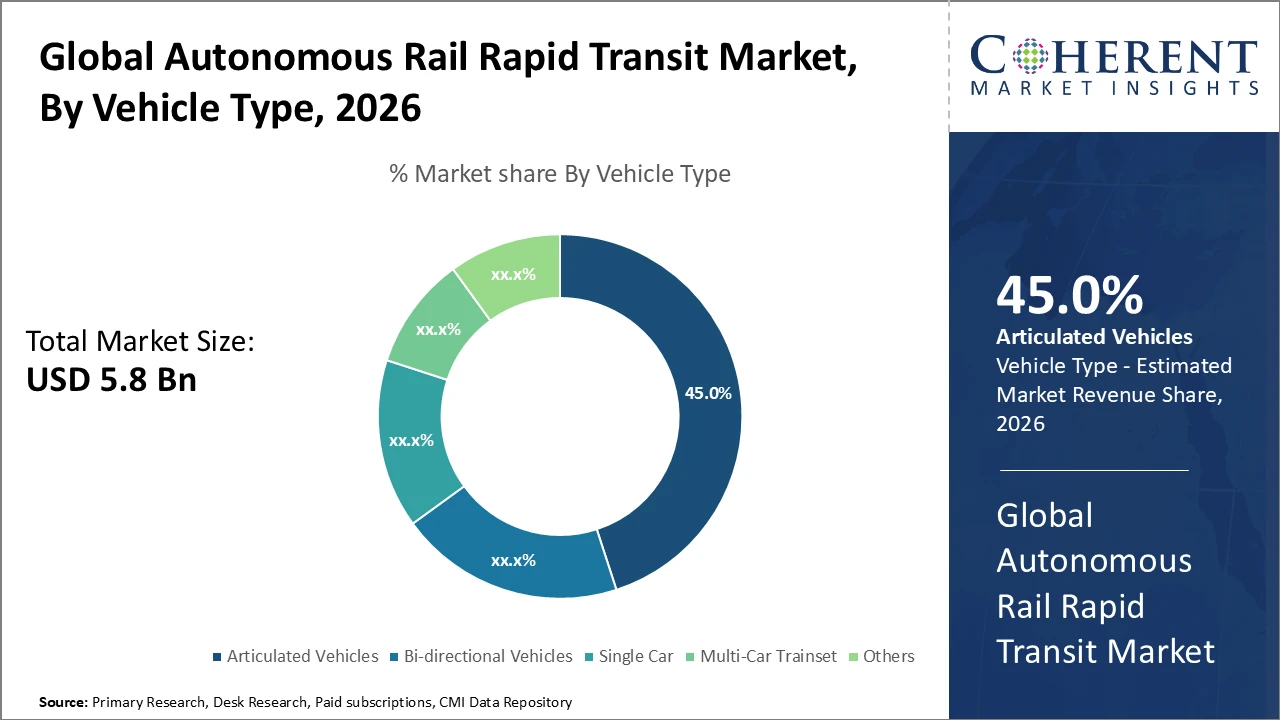
The articulated vehicles segment dominates the market with a 45% share, driven by their flexibility in high-density urban transit scenarios.
Electric propulsion leads with a 72% market share, supported by regulatory and environmental mandates promoting green transit adoption.
The urban transit application segment commands a majority share of 51%, fueled by government investments in smart public transit infrastructure.
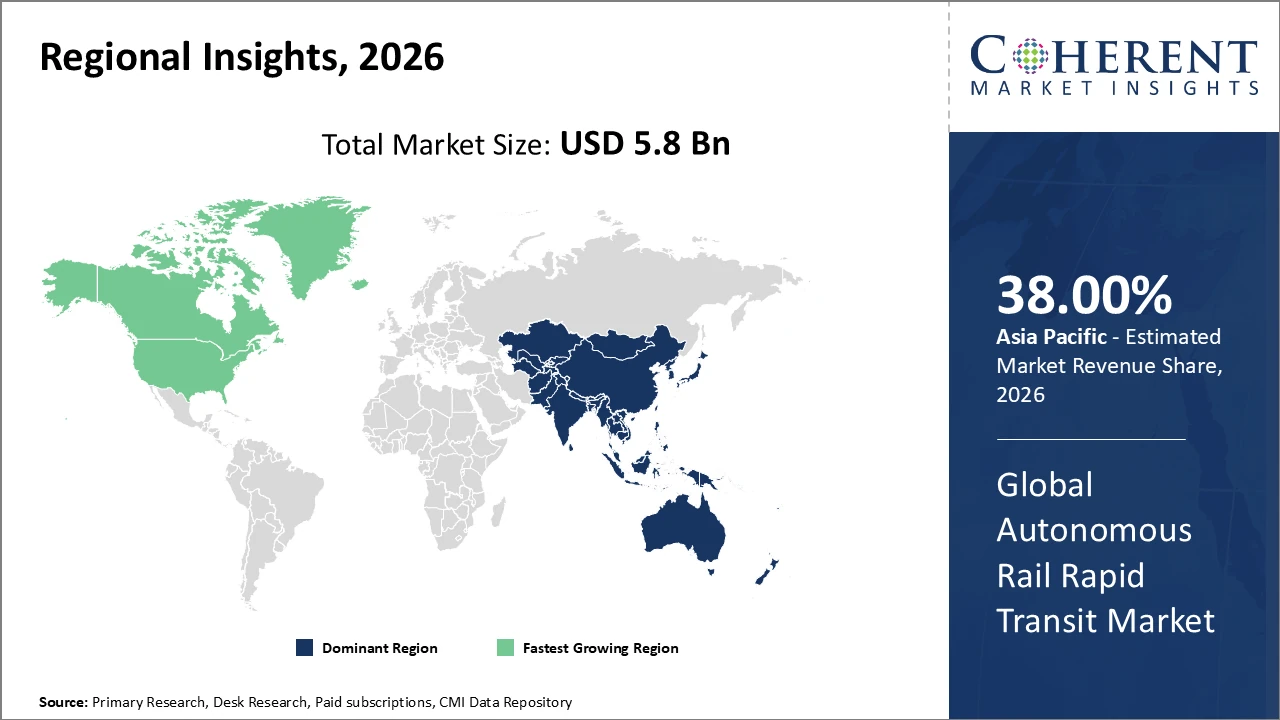
Asia Pacific retains market dominance, accounting for approximately 38% of revenue, due to rapid urbanization and government focus on sustainable transit solutions.
North America is the fastest-growing region with a CAGR of 15.2%, driven by investments in autonomous rail infrastructure and technological innovations.
Europe maintains steady growth, supported by regulatory frameworks favoring low-emission transit solutions.
Autonomous Rail Rapid Transit Market Segmentation Analysis
Autonomous Rail Rapid Transit Market Insights, By Vehicle Type
Articulated vehicles dominate the market with a share of 45% due to their adaptability in urban environments and efficient navigation of high-density corridors. Their modular and scalable designs allow increased passenger capacity on congested routes, enhancing operational efficiency. The fastest-growing subsegment is bi-directional vehicles, valued for flexible operations on routes requiring minimal turnaround time. Single-car units serve light transit needs in lower-density areas, providing cost-effective solutions, while multi-car trainsets address longer-distance, high-capacity requirements.
Autonomous Rail Rapid Transit Market Insights, By Application
Urban transit dominates the market with a 51% share, supported by growing metropolitan investments aimed at reducing congestion and improving air quality. This segment experiences high passenger frequency and strong demand for seamless connectivity and reliable services. Freight transport is the fastest-growing subsegment, driven by autonomous rail systems that optimize logistical corridors, enhance efficiency, and reduce operational costs. Suburban commuter services cater to medium-distance travel, helping to decongest urban centers. Industrial transport and other specialized applications serve manufacturing zones, ports, and sector-specific needs.
Autonomous Rail Rapid Transit Market Insights, By Propulsion Technologies
Electric propulsion dominates the market with a 72% share, driven by strict emission regulations and the global push for sustainable urban mobility. These systems offer lower operating costs, reduced environmental impact, and compatibility with renewable energy sources, making them highly attractive for city transit networks. Hydrogen fuel cell propulsion is the fastest-growing subsegment, providing a zero-emission alternative, with pilot projects in East Asia demonstrating operational feasibility and efficiency. Hybrid systems offer transitional solutions combining electrification with conventional fuels, while diesel-electric and other propulsion types continue to serve niche applications where infrastructure or operational constraints limit full electrification.
Autonomous Rail Rapid Transit Market Trends
Rapid integration of AI and IoT is enhancing route optimization and passenger safety in autonomous rail rapid transit.
In 2026, a pilot project in Germany demonstrated a 20% increase in energy efficiency using AI-based adaptive scheduling.
Diversification of propulsion technologies is emerging, with hydrogen fuel cells gaining traction to reduce carbon emissions, exemplified by South Korea’s hydrogen rail initiative launched in early 2026.
Cloud-based real-time diagnostics enable predictive maintenance, minimizing downtime and operational costs.
Australian transit agencies reported improved maintenance efficiency and reduced operational disruptions between 2024 and 2025 through these technologies.
Autonomous Rail Rapid Transit Market Insights, By Geography
North America Autonomous Rail Rapid Transit Market Analysis and Trends
North America is the fastest-growing region in the autonomous rail rapid transit market, registering a CAGR of 15.2%, driven by substantial federal and state funding for autonomous transit initiatives. The region emphasizes the adoption of green transportation solutions, including electric and hydrogen-powered systems, to meet sustainability goals. The United States leads technology development and pilot implementations, showcasing advanced autonomous rail capabilities. Companies such as Siemens Mobility and Bombardier Transportation are at the forefront, deploying digital twin technologies, AI-driven route optimization, and predictive maintenance solutions. These innovations enhance operational efficiency, safety, and passenger experience, solidifying North America’s leadership in the global ART market.
Asia Pacific Autonomous Rail Rapid Transit Market Analysis and Trends
In Asia Pacific, the autonomous rail rapid transit market is dominated by rapid urbanization, particularly in countries like China and India, coupled with strong government investments in sustainable transit infrastructure. The region holds approximately 38% of the market share, driven by ongoing expansion of urban transport networks to meet the needs of growing populations. Key market players, including CRRC and BYD, reinforce this dominance through localized manufacturing, strategic partnerships, and customized product offerings suited to regional requirements. Continuous infrastructure development, combined with supportive policies and technological adoption, positions Asia Pacific as a leading growth hub in the global ART market.
Autonomous Rail Rapid Transit Market Outlook for Key Countries
USA Autonomous Rail Rapid Transit Market Analysis and Trends
The U.S. autonomous rail rapid transit market benefits from robust federal support for initiatives integrating AI and IoT technologies, driving substantial revenue growth. In 2025, a USD 1 billion infrastructure investment facilitated the expansion of autonomous rail corridors across multiple metropolitan areas, enhancing connectivity and transit efficiency. Leading companies such as Siemens Mobility and Bombardier have developed advanced control systems, digital twins, and predictive maintenance solutions, improving operational performance and reliability. These innovations not only optimize route management and energy use but also strengthen safety and passenger experience. Collectively, government backing and technological advancements reinforce the U.S. market’s competitive position and growth trajectory.
Germany Autonomous Rail Rapid Transit Market Analysis and Trends
Germany’s autonomous rail rapid transit market is driven by advanced infrastructure, strong regulatory support, and government initiatives promoting sustainable urban mobility. The country emphasizes low-emission and energy-efficient transit solutions, encouraging the adoption of electric and hydrogen-powered autonomous rail systems. Investment in smart transport technologies, including AI-based scheduling, IoT-enabled monitoring, and predictive maintenance, enhances operational efficiency and safety. Key players, including Siemens Mobility and local manufacturers, are expanding pilot projects and commercial deployments, integrating digital twin and automated control systems. Germany’s focus on green mobility, combined with robust public transit networks and supportive policies, positions it as a leading market for autonomous rail rapid transit in Europe.
Analyst Opinion
Enhanced production capacity of modular autonomous rail vehicles increased by nearly 20% between 2024 and 2026, enabling rapid deployment in urban transit projects across Asia Pacific; for example, Shenzhen’s network capacity grew by 25% within six months in 2025.
Competitive pricing strategies lowered average system costs by 7% in 2025 compared to 2024, driven by economies of scale and advances in sensor technologies, improving affordability for mid-sized cities.
Import volumes of key components, including LiDAR and AI-based control units, rose by 18% in Europe in 2025, reflecting higher investments in upgrading transit systems.
Use cases expanded beyond urban commuting to freight corridors and intercity mid-range transit, with German pilot programs in 2026 showing a 30% improvement in freight operational efficiency using autonomous rail rapid transit.
- Current Industry Events of 2026
- Market Size Estimation
- Regional Breakdown
- Competitive Landscape
- Customer Intelligence
- Segmental Analysis
- Pricing Analysis
- Key Market Drivers, Challenges & Future Trends
- Customized Insights Section
Market Scope
| Report Coverage | Details | ||
|---|---|---|---|
| Base Year: | 2025 | Market Size in 2026: | USD 5.8 billion |
| Historical Data for: | 2020 To 2024 | Forecast Period: | 2026 To 2033 |
| Forecast Period 2026 to 2033 CAGR: | 13.5% | 2033 Value Projection: | USD 14.3 billion |
| Geographies covered: |
| ||
| Segments covered: |
| ||
| Companies covered: | Hyundai Rotem, Ansaldo STS, Toshiba Corporation, CAF Group, Hitachi Rail, Siemens Mobility, CRRC Corporation Limited, Alstom SA, BYD Company Limited, Stadler Rail AG | ||
| Growth Drivers: |
| ||
Autonomous Rail Rapid Transit Market Growth Factors
Sustained urbanization is fueling demand for efficient public transit, with cities like Tokyo and Shanghai increasing autonomous rail transit infrastructure investments by over 22% annually. Government initiatives supporting green energy transit have accelerated market growth, with electric propulsion systems leading adoption to meet strict emission targets. Advances in AI and IoT technologies enhance real-time safety monitoring, optimize operations, and reduce risks, as evidenced by pilot deployments across Europe. Additionally, growing adoption in freight corridors for cost reduction and improved throughput is expanding revenue opportunities beyond passenger services, highlighted by automated freight transit projects in North America in 2025.
Autonomous Rail Rapid Transit Market Development
In September 2024, CRRC launched a major pilot program in Guangzhou, China, deploying modular autonomous rail vehicles across key urban corridors. The project incorporated AI-driven route optimization and real-time monitoring systems, resulting in a 25% increase in network capacity and significant reductions in energy consumption.
Key Players
Leading Companies of the Market
CRRC Company Limited
Siemens Mobility
Alstom SA
BYD Company Limited
CAF Group
Ansaldo STS
Toshiba Corporation
Stadler Rail AG
Hitachi Rail
Hyundai Rotem
Several leading companies have pursued strategic partnerships to drive innovation in autonomous rail rapid transit. In 2025, CRRC collaborated with AI firms to develop an autonomous navigation system, enhancing operational safety by 15%. Siemens Mobility leveraged digital twin technology in 2026, improving predictive maintenance capabilities across European transit networks and optimizing system reliability. Additionally, Alstom expanded its market presence by acquiring a local autonomous rail technology startup in India, capturing emerging market opportunities and increasing revenue. These strategic initiatives underscore the importance of collaboration, technology adoption, and targeted acquisitions in strengthening competitive positioning and accelerating market growth.
Autonomous Rail Rapid Transit Market Future Outlook
The future outlook for the autonomous rail rapid transit market is highly promising, driven by rapid urbanization, sustainability initiatives, and advancements in AI and IoT technologies. Increasing investments in electric and hydrogen-powered propulsion systems will support greener, low-emission transit solutions. Expansion into freight corridors and intercity mid-range transit offers new revenue opportunities beyond traditional passenger services. Emerging markets, particularly in Asia Pacific and North America, are expected to witness accelerated adoption due to supportive government policies and infrastructure development. Continued R&D, strategic collaborations, and integration of predictive maintenance and digital twin technologies will further enhance operational efficiency and global market growth.
Autonomous Rail Rapid Transit Market Historical Analysis
The historical analysis of the autonomous rail rapid transit market highlights steady growth driven by urbanization, technological innovation, and government initiatives promoting sustainable transit. Between 2018 and 2025, key developments included the deployment of modular articulated vehicles, adoption of electric propulsion, and integration of AI and IoT for route optimization and predictive maintenance. Early pilot projects in Europe, Asia Pacific, and North America demonstrated improved operational efficiency, energy savings, and passenger safety. Investments by major players such as Siemens Mobility, CRRC, and Bombardier accelerated commercialization. This period laid a strong foundation for market expansion, technological advancement, and the broader adoption of autonomous rail systems globally.
Sources
Primary Research Interviews:
Urban transit planners, city mobility directors, and infrastructure engineers at major metropolitan transport authorities
Chief technology officers, R&D heads, and engineers at autonomous rail vehicle manufacturers
Procurement managers, operations consultants, and logistics specialists advising on transit adoption, system optimization, and passenger safety
Magazines:
Railway Technology – Innovations, Infrastructure Projects, and Autonomous Rail Deployments
Mass Transit Magazine – Urban Transit Trends and Smart Rail Solutions
Metro Report International – Autonomous Transit Updates and Regional Case Studies
Journals:
Transportation Research Part C – Advances in Autonomous and Connected Rail Systems
IEEE Transactions on Intelligent Transportation Systems – AI, IoT, and Automation in Rail Transit
Journal of Rail Transport Planning & Management – Operational Efficiency, Safety, and Planning
Newspapers:
The Wall Street Journal – Infrastructure Investments and Autonomous Transit Developments
Financial Times – Transportation Technology, Investments, and Market Growth
Railway Gazette – Industry Updates, Pilot Projects, and Competitive Movements in ART
Business Insider – Transit Technology, Startups, and Market Dynamics
Associations:
International Association of Public Transport (UITP) – Guidelines, Standards, and Adoption Trends
American Public Transportation Association (APTA) – Smart Transit Policies and Innovation Updates
Institution of Railway Signal Engineers (IRSE) – Automation, Safety, and Operational Standards
Get access to 250+ pages report
Every segment, forecast, competitor profile and data table behind the analysis above — available for instant download.
- ESOMAR Member
- ISO 9001:2015 Certified
- D-U-N-S Registered
- GDPR & CCPA Compliant
Missing comfort of reading report in your local language? Find your preferred language:
Transform your Strategy with Exclusive Trending Reports
Frequently Asked Questions
The leading companies include CRRC Corporation Limited, Siemens Mobility, and Alstom SA, demonstrating continuous innovation and significant market share. Strategic partnerships and digital transformation initiatives have further strengthened their industry position.
The market is projected to grow from USD 5.8 billion in 2026 to USD 14.3 billion by 2033, at a CAGR of approximately 13.5%, driven by increasing urbanization and adoption of advanced transit technologies.
Urban transit holds the largest growth potential with a 51% share, fueled by rising demand for mass public transit in megacities and integration into smart city infrastructure.
Key trends include hydrogen fuel propulsion, AI-powered control systems, and multi-modal network integration, enhancing automation, sustainability, and operational efficiency.
The market is highly dynamic, driven by innovation and strategic collaborations. Challenges include high initial capital costs and regulatory approval requirements, necessitating adaptive growth strategies.
Companies pursue partnerships with technology providers, pilot project deployments, and acquisitions of startups to expand product portfolios and strengthen geographic reach.