

Bioreactors Market Size and Share Analysis- Growth Trends and Forecasts (2026-2033)
The bioreactors market size is anticipated to grow at a CAGR of 19.2% with USD 18.5 Bn in 2026 and is expected to reach USD 34.2 Bn in 2033. The growth is driven by the rising biologics, vaccine, and cell/gene therapy manufacturing, with FDA reporting 46 novel drug approvals in 2025 and maintaining an approved list of licensed cellular and gene therapy products, supporting demand for scalable bioprocessing systems.
Key Takeaways
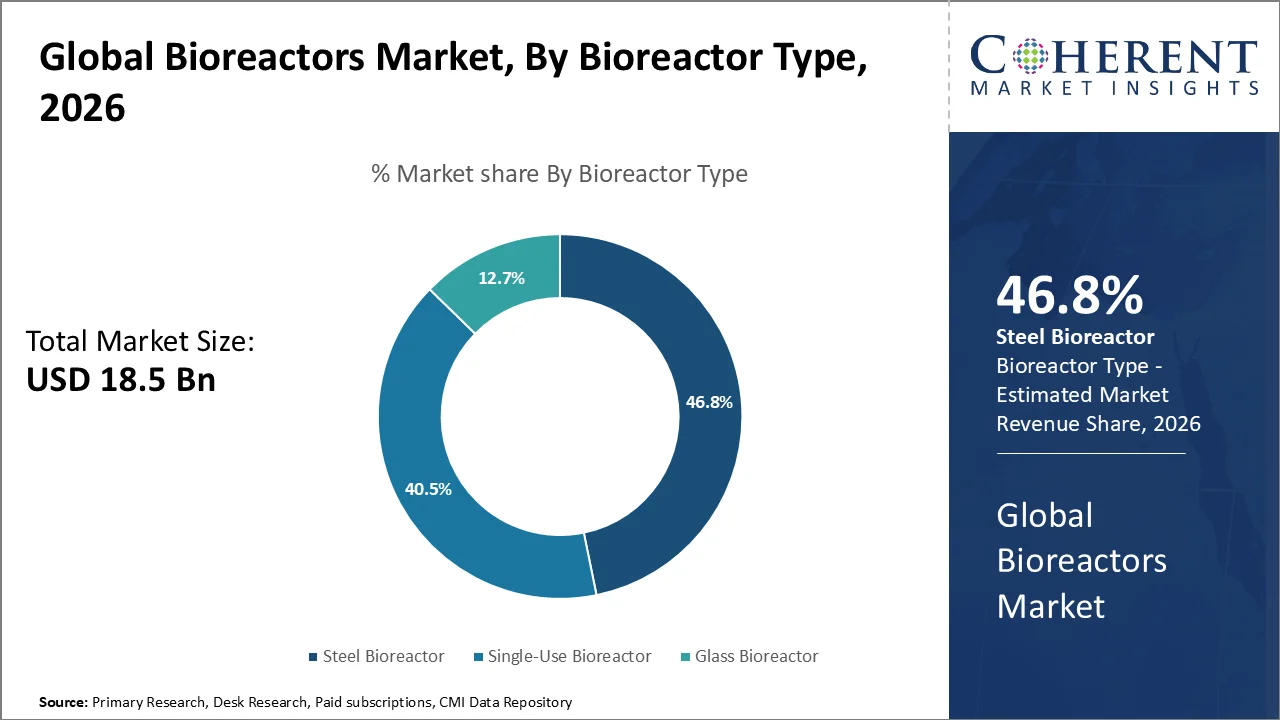
- Steel bioreactor is expected to account for the largest share of 46.80% in 2026. This is because stainless-steel bioreactors remain widely used in validated large-batch biologics production. The FDA’s Purple Book contains approved licensed biological products, thus reflecting the continued need for GMP-grade biologics manufacturing systems.
- Based on usage, full-scale production is expected to hold 59.8% market share by 2026. The growth is due to rising commercial biologics and vaccine FDA’s 2025 Biological License Application approvals include multiple biologic products such as vaccines, fibrinogen, and diagnostic/therapeutic biological products, supporting demand for production-scale bioreactors.
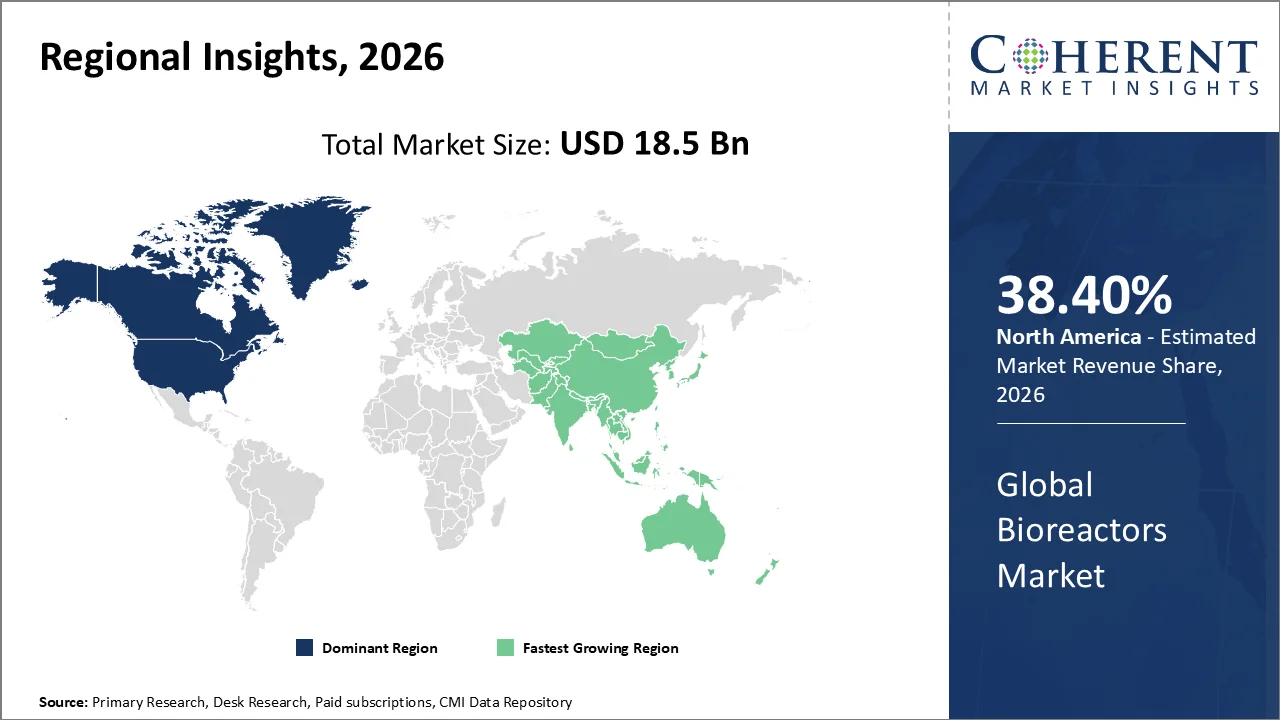
- North America is expected to acquire the dominant share of 38.40% in 2026. The growth is attributable to strong U.S. biologics and cell therapy manufacturing activity. FDA stated that CBER has approved close to 50 cell and gene therapies over the last decade, creating steady demand for bioreactor-based cell culture and viral-vector production.
Rapid Adoption of Single-Use Technologies (SUT) is Transforming the Bioreactors Industry in the United States
The surge in the incorporation of Single-Use Technologies (SUT), particularly Single-Use Bioreactors (SUBs), is substantially transforming the U.S. bioreactor industry. The manufacturers are shifting from traditional stainless-steel systems toward flexible, disposable plastic assemblies to support faster, more cost-effective production of biologics (accounts for nearly half of US prescription drug spending), biosimilars, as well as personalized medicines. This transition is mainly owing to the need for speed, flexibility, and operational efficiency.
The growing demand for biologics like monoclonal antibodies, vaccines, and advanced cell and gene therapies, is one of the key factors that contributes to the increased adoption of single-use bioreactors. These systems deliver quicker turnaround time and they also allow flexible changeovers between batches. As a result, they are particularly well-suited for multi-product facilities and Contract Manufacturing Organizations (CMOs).
The single-use bioreactors also help in reducing capital expenditure by lowering the need for large-scale facility construction, cleaning-in-place systems, and steam-in-place infrastructure. The disposable assemblies also minimize the risk of cross-contamination between production runs. This improves both manufacturing safety as well as process reliability.
Integration of AI-driven Monitoring and Automated Control Systems: A Key Advancement in Bioreactors
One of the major breakthrough in bioreactor technology is the integration of real-time, AI-driven monitoring systems along with automated control systems. It is shifting bioprocessing from fixed, reactive methods toward a more dynamic, adaptive, and autonomous operations. With the use of machine learning, IoT-enabled sensors, and digital twins, these systems help optimize microbial and mammalian cell culture conditions, thus leading to better yield, improved consistency, along with shorter production timelines.
The modern bioreactors are equipped with in-line sensors like NIR spectroscopy, dielectric spectroscopy, and advanced flow cytometry. These tools provide real-time data on key parameters like cell density, metabolite concentration, pH, and dissolved oxygen levels. AI models such as deep learning and reinforcement learning systems analyze this data continually to predict process deviations before they occur.
This closed-loop control allows automatic adjustments in feeding rates, stirring speed, and oxygen transfer. As a result, the manufacturers can improve process efficiency as well as support more reliable biomanufacturing outcomes.
For instance, in February 2026, Nucleus Biologics launched Krakatoa K500 in San Diego, CA. It is a pod-based, closed single-use media and buffer manufacturing system designed for bioreactor-scale operations. The system includes integrated analytics, QR-code-driven execution, and automated digital batch records, thereby helping support GMP-compliant manufacturing.
- Current Industry Events of 2026
- Market Size Estimation
- Regional Breakdown
- Competitive Landscape
- Customer Intelligence
- Segmental Analysis
- Pricing Analysis
- Key Market Drivers, Challenges & Future Trends
- Customized Insights Section
Current Events and Their Impact on the Bioreactors Market (regulatory shifts, government policies)
Current Event | Description and its Impact |
FDA PreCheck Pilot Program for Domestic Pharmaceutical Manufacturing |
|
FDA Advanced Manufacturing Technologies Designation Program |
|
EU Biotechnology and Biomanufacturing Policy Push |
|
Segmental Insights
Why is Steel Bioreactor Acquiring the Highest Share in the Market?
Steel bioreactor is projected to account for the largest bioreactors market share of 46.80% in 2026. The leadership is mainly attributed to the strong demand for large-scale, high-volume biopharmaceutical production, where durability, sterility, process control, and long operational life are critical. At present, the stainless steel bioreactors account for around 92% of installed capacity. While bioreactors with capacities of more than 10,000 liters constitute to nearly 55% of total installed capacity. This highlights the segment’s continued importance in commercial-scale manufacturing.
The stainless steel systems support stringent cleaning and sterilization protocols, including Clean-in-Place (CIP) and Steam-in-Place (SIP), thereby making them highly suitable for the production of monoclonal antibodies, vaccines, recombinant proteins, and other biologics. In addition, the leading pharmaceutical manufacturers are continually investing in large-scale biologics facilities in order to meet the rising global demand.
The steel bioreactors offer superior scalability, batch-to-batch consistency, and lower long-term cost per batch, thereby sustaining their dominance in established production environments despite the growing adoption of single-use bioreactor systems.
Full Scale Production holds the Largest Market Share
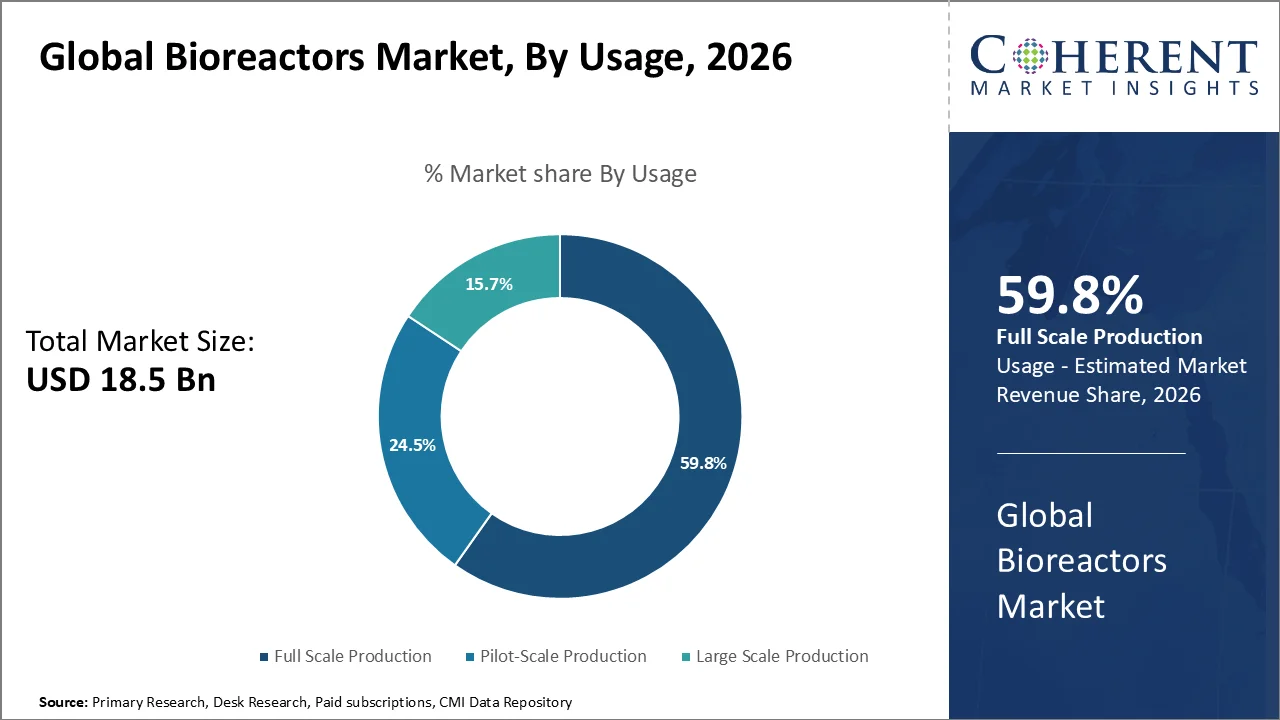
Based on usage, full scale production is poised to dominate the market and accounts for a considerable 59.8% share in 2026. This is because the manufacturers are shifting from pilot-scale batches to commercial-volume biologics production. The rising demand for blockbuster biologics, biosimilars, vaccines, and cell and gene therapies is prompting the business to invest in larger and more reliable production infrastructure.
One of the key factors contributing to this growth is massive capacity expansion. The leading biomanufacturers are adding large-scale cell culture facilities equipped with high-capacity stainless-steel bioreactors like 20,000-liter systems to support commercial manufacturing volumes. In parallel, contract drug manufacturing organizations (CDOs) are growing in importance in the world's drug production. This is because drug companies are outsourcing production to partners who can provide scale, cost-effectiveness, as well as consistent quality.
The segment is gaining advantages from recent advancements in single-use bioreactor technology. The larger single-use systems, now reaching around 5,000–6,000 liters, allow manufacturers to achieve full-scale production while reducing cleaning time, contamination risk, and changeover complexity. Moreover, as more advanced therapies move from clinical development to approved commercial use, manufacturers are replacing research-grade and pilot systems with validated, GMP-compliant full-scale bioreactors to ensure consistent supply.
Bioreactors Market Trends
- The rise of biologics, biosimilars, and cell-based therapies is speeding up the adoption of bioreactors and is helping manufacturers improve production scale, process consistency, and batch quality.
- The increasing government support for advanced biomanufacturing is facilitating the expansion of bioreactor opportunities.
- The growing need for flexible manufacturing is contributing to the use of single-use bioreactors, as firms are looking for faster batch changeovers, lower cleaning requirements, as well as reduced contamination risks in biologics and vaccine production.
- The rising demand for commercial-scale biologics is increasing the use of stainless-steel bioreactors, as large-volume systems support long production runs, higher durability, and better cost efficiency for monoclonal antibodies and recombinant proteins.
- Expansion of real-time monitoring, automation, and digital control systems is also strengthening bioreactor adoption. These technologies help companies track cell growth, oxygen levels, pH, and nutrient use, thereby improving yield and production reliability.
Regional Insights
North America Bioreactors Market Leadership Driven by Strong Biologics Manufacturing Capacity
North America is set to account for the leading position in the Bioreactors Market. The region occupies a substantial 38.40% share in 2026. The growth is mainly driven by strong biologics manufacturing capacity, rising demand for monoclonal antibodies, vaccines, biosimilars, and cell and gene therapies across the U.S. and Canada. The U.S. is still a major biopharmaceutical production hub. This is largely attributed to FDA approvals and large-scale investments in commercial biologics facilities. In 2025, the FDA CDER approved 46 novel drugs, which included new biologic products, thereby strengthening the need for cutting edge bioreactor systems.
The region’s growth is also backed by major capacity expansions and product innovation. For example, in September 2025, Fujifilm Biotechnologies opened its Holly Springs, North Carolina site with 8 × 20,000 L mammalian cell culture bioreactors. The second phase is planned to double this to about 16 bioreactors. In addition, in April 2025, Culture Biosciences, a leader in online biomanufacturing, launched Stratyx™ 250, the first mobile, cloud-connected bioreactor. This system offers biotech companies greater ease, automation, and remote process control, thereby allowing for more effective and large-scale biomanufacturing solutions. These developments are expected to continue driving bioreactors market growth in North America.
Asia Pacific Bioreactors Market Trends
The Asia Pacific region is poised to be as the fastest-growing region through 2026-2033. The region’s growth is owing to the rising biologics production, expanding biosimilar pipelines, vaccine manufacturing, and increasing CDMO investments across China, India, South Korea, Japan, and Singapore. Countries such as India and China are strengthening domestic biopharmaceutical manufacturing, while Singapore and South Korea are becoming preferred hubs for advanced biologics and contract pharmaceutical manufacturing. The CDSCO in India also released revised guidelines for similar biologics in 2025, thus propelling stronger biosimilar development and regulatory confidence.
Besides this, the region is witnessing major biomanufacturing spending. For instance, in May 2024, AstraZeneca had made an announcement of USD 1.5 billion ADC manufacturing plant in Singapore. This is the firm's first full-scale antibody-drug conjugate production site. In addition, India is also putting greater efforts on becoming a global biopharma center. This is supported by government plans to expand biologics and biomanufacturing abilities.
In addition, in April 2025, Thermo Fisher Scientific Inc., one of the global leader in serving science, announced the launch of the 5L DynaDrive Single-Use Bioreactor (S.U.B.). It is designed to address the evolving needs of modern bioprocessing. The 5L DynaDrive expands the company's extensive bioreactor portfolio, providing seamless scalability from 1 to 5,000 liters. It accelerates bench-scale process development while enabling a cost-effective transition from bench to commercialization with consistent reactor design and film across all scales.
These developments are expected to increase demand for single-use, stainless-steel, pilot-scale, and commercial-scale bioreactors across the region.
Growing Biologics Manufacturing Accelerates Bioreactors Adoption in United States
The United States Bioreactors Market is witnessing robust activity mainly driven by rising biologics production, CDMO expansion, and growing demand for scalable cell-culture manufacturing. The market is characterized by a shift toward large-volume stainless-steel systems and flexible single-use bioreactors for monoclonal antibodies, vaccines, biosimilars, and cell and gene therapies.
In March 2025, Cytiva upgraded its Xcellerex X-platform portfolio in order to meet the growing demands with the addition of 500L and 2,000L bioreactors. The X-platform is a versatile and dependable single-use system designed to boost operational efficiency as well as production capacity, all while reducing costs, minimizing risks, and speeding up the journey of life-changing therapeutics to the next clinical milestone.
Overall, the rising biologics approvals, CDMO investments, as well as domestic manufacturing resilience are speeding up bioreactor adoption in the U.S. biopharmaceutical industry.
China Bioreactors Market Trends
The China Bioreactors Market is poised for steady growth over the forthcoming years. The growth is owing to rapid expansion of biologics, biosimilars, vaccines, cell therapies, and domestic biopharmaceutical manufacturing capacity. China’s biomanufacturing industry reached around RMB 1.1 trillion (USD 157.3 billion) in 2025, reflecting strong government support, rising biotech innovation, and increasing demand for scalable production platforms.
In addition to this, large-scale single-use bioreactor adoption is increasing as Chinese CDMOs and biopharma companies focus on faster batch changeovers, lower contamination risk, and flexible scale-up from clinical to commercial production. In June 2024, WuXi Biologics installed three 5,000 L single-use bioreactors at its MFG20 facility in Hangzhou. This strengthened its drug substance manufacturing capacity for large-scale biologics production.
Overall, rising biologics pipelines, biosimilar commercialization, and local biomanufacturing investment are strengthening bioreactor demand in China.
Who are the Major Companies in Bioreactors Industry
Some of the major key players in Bioreactors Industry are Thermo Fisher Scientific, Inc., Merck KGaA, GE Healthcare, Pall Corporation, ZETA Holdings GmbH, Sartorius AG BBI, Solaris, Praj HiPurity Systems Limited, BiOENGiNEERiNG, INC., Infors AG, and Appplikon Biotechnology, Inc.
Key New
- In November 2025, Aber Instruments and Sartorius Stedim Biotech have unveiled the BioPAT Viamass single-use biomass sensor, now fully integrated into Ambr 250 High Throughput single-use bioreactor vessels. This advancement marks a substantial step forward in the integration of advanced Process Analytical Technology (PAT) across Sartorius' bioreactor portfolio and encompasses both the Biostat STR® Generation 3 as well as Biostat® RM systems.
- In May 2025, Univercells Technologies, one of the global leaders in bioprocessing solutions, unveiled the scale-X nitro controller. This is a new addition to its scale-X fixed-bed bioreactor portfolio. Designed to operate both the 200 and 600 m² scale-X nitro bioreactors, this innovative controller is part of the scale-X platform, providing a cost-effective, low-footprint, and user-friendly solution for large-scale viral and advanced therapy manufacturing.
Market Report Scope
Bioreactors Market Report Coverage
| Report Coverage | Details | ||
|---|---|---|---|
| Base Year: | 2025 | Market Size in 2026: | USD 18.5 Bn |
| Historical Data for: | 2020 To 2024 | Forecast Period: | 2026 To 2033 |
| Forecast Period 2026 to 2033 CAGR: | 19.2% | 2033 Value Projection: | USD 34.2 Bn |
| Geographies covered: |
| ||
| Segments covered: |
| ||
| Companies covered: | Thermo Fisher Scientific, Inc., Merck KGaA, GE Healthcare, Pall Corporation, ZETA Holdings GmbH, Sartorius AG BBI, Solaris, Praj HiPurity Systems Limited, BiOENGiNEERiNG, INC., Infors AG, and Appplikon Biotechnology, Inc. | ||
| Growth Drivers: |
| ||
| Restraints & Challenges: |
| ||
Analyst Opinion
- The Bioreactors Market is expanding as biopharmaceutical companies increasingly scale up production of monoclonal antibodies, vaccines, and recombinant proteins. FDA reported 58 combined novel drug and biologic approvals in 2025, highlighting the rising need for reliable upstream bioprocessing systems that support higher yield, sterility, and process consistency.
- The growing biosimilar pipeline is also strengthening demand for advanced bioreactors. FDA’s biosimilar database shows continued approvals, including Filkri in January 2026 and Ponlimsi in March 2026, reflecting the need for cost-efficient and scalable biologics manufacturing platforms.
- The rise of personalized medicines and advanced therapies has accelerated adoption of flexible bioreactor platforms, especially single-use systems. These systems support faster batch turnaround, lower contamination risk, and multi-product manufacturing flexibility.
- In the future, market growth is expected to be supported by rising investments in biomanufacturing capacity, increasing commercialization of advanced therapies, and wider adoption of automated, sensor-enabled, and single-use bioreactor systems.
Speak to the analyst
Want personalized insights?
Take the findings above to one of our principal consultants, or have the report rebuilt around the segments, geographies and competitors you actually track.
Market Segmentation
- By Bioreactor Type (Revenue, USD Bn, 2021-2033)
- Steel Bioreactor
- Glass Bioreactor
- Single-Use Bioreactor
- By Usage (Revenue, USD Bn, 2021-2033)
- Large Scale Production
- Pilot-Scale Production
- Full Scale Production
- By Capacity (Revenue, USD Bn, 2021-2033)
- 5L – 20L
- 20L - 200L
- 200L – 1500L
- Above 1500L
- By End User (Revenue, USD Bn, 2021-2033)
- Biopharmaceutical Companies
- Research Organizations
- Others
- By Region (Revenue, USD Bn, 2021-2033)
- North America
- U.S.
- Canada
- Latin America
- Brazil
- Mexico
- Argentina
- Rest of Latin America
- Europe
- Germany
- U.K.
- France
- Italy
- Spain
- Russia
- Rest of Europe
- Asia Pacific
- China
- India
- Japan
- Australia
- South Korea
- ASEAN
- Rest of Asia Pacific
- Middle East
- GCC
- Israel
- Rest of Middle East
- Africa
- South Africa
- Central Africa
- North Africa
Sources
Primary Research Interviews
- Bioreactor Manufacturers
- Bioprocess Equipment Suppliers
- Pharmaceutical and Biotechnology Companies
- Contract Manufacturing Organizations (CMOs)
- Environmental Consultants
- Industrial Bioprocess Engineers
- Research and Academic Institutions
- Others
Databases
- Bloomberg Terminal
- Thomson Reuters Eikon
- IHS Markit
- Euromonitor International
- S&P Global Market Intelligence
- BCC Research
- Others
Magazines
- Bioprocessing Journal
- Pharmaceutical Technology
- BioPharm International
- Biotechnology Progress
- BioTechniques
- Others
Journals
- Journal of Biotechnology
- Biochemical Engineering Journal
- Biotechnology Advances
- Journal of Applied Microbiology
- Trends in Biotechnology
- Others
Newspapers
- Financial Times
- The Wall Street Journal
- Reuters
- BioSpace News
- Genetic Engineering & Biotechnology News (GEN)
- Others
Associations
- International Society for Pharmaceutical Engineering (ISPE)
- American Institute of Chemical Engineers (AIChE)
- Bioprocessing International
- Biotechnology Innovation Organization (BIO)
- European Federation of Biotechnology (EFB)
- Others
Public Domain Sources
- U.S. Food and Drug Administration (FDA)
- U.S. Environmental Protection Agency (EPA)
- European Medicines Agency (EMA)
- U.S. Department of Energy (DOE) – Office of Energy Efficiency & Renewable Energy
- World Health Organization (WHO)
- National Institutes of Health (NIH)
- Others
Proprietary Elements
- CMI Data Analytics Tool
- Proprietary CMI Existing Repository of Information for the Last 10 Years
Get access to 250+ pages report
Every segment, forecast, competitor profile and data table behind the analysis above — available for instant download.
- ESOMAR Member
- ISO 9001:2015 Certified
- D-U-N-S Registered
- GDPR & CCPA Compliant
Missing comfort of reading report in your local language? Find your preferred language:
Transform your Strategy with Exclusive Trending Reports
Frequently Asked Questions
The Bioreactors Market is expected to reach USD 34.2 Bn in 2033.
Major players operating in the global Bioreactors Market include Thermo Fisher Scientific, Inc., Merck KGaA, GE Healthcare, Pall Corporation, ZETA Holdings GmbH, Sartorius AG BBI, Solaris, Praj HiPurity Systems Limited, BiOENGiNEERiNG, INC., Infors AG, and Appplikon Biotechnology, Inc.
The high operational costs, stringent regulatory hurdles, and technical limitations related to scaling and material integrity are the key factors hampering growth of the market.
The rising R&D investments, the need for faster production turnaround times, and the expansion of vaccine manufacturing capacity is boosting demand for Bioreactors.
The Bioreactors Market is anticipated to grow at a CAGR of 19.2% between 2026 and 2033.
Among regions, North America is expected to account for a largest market share in the global Bioreactors Market over the forecast period.
A bioreactor is a vessel or system designed to create an optimal, controlled environment for growing microorganisms, cells, or tissues to produce biological products.