

Bioresorbable Polymers Market Size and Forecast — 2026-2033
The Global Bioresorbable Polymers Market size is estimated to be valued at USD 1.22 billion in 2026 and is expected to reach USD 2.46 billion by 2033, exhibiting a compound annual growth rate (CAGR) of 10.6% from 2026 to 2033.
Overview
Bioresorbable polymers are medical-grade materials engineered to degrade safely within the body over time. Products include sutures, implants, stents, and scaffolds that provide temporary structural support before being absorbed, eliminating the need for removal procedures. These polymers are designed with controlled degradation rates, biocompatibility, and mechanical strength suitable for applications in orthopedics, cardiovascular interventions, and tissue engineering.
Key Takeaways
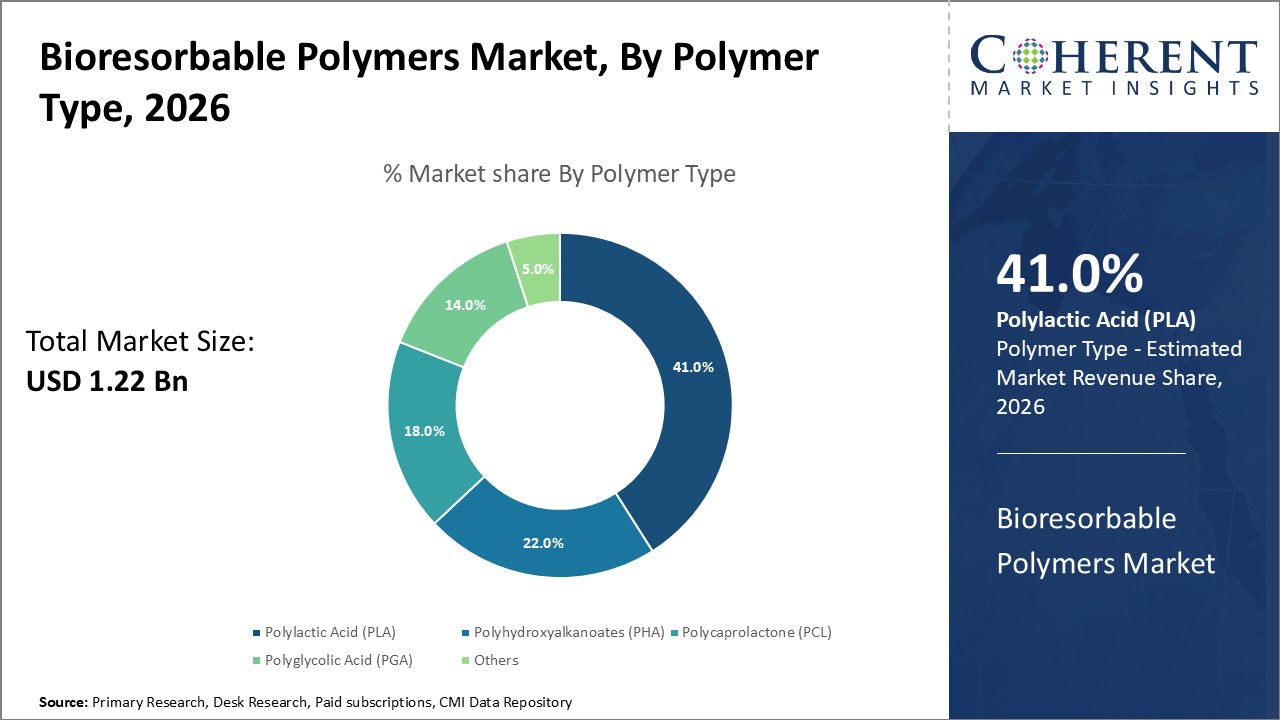
The Polylactic Acid (PLA) segment leads with 41% industry share, driven by its versatile applications in medical devices and packaging, spearheading market growth strategies. Meanwhile, Polyhydroxyalkanoates (PHA) showcase the fastest growth due to biodegradability and enhanced mechanical properties tailored for agriculture.
Medical Devices dominate the application segment, capitalizing on rising demand for resorbable implants, whereas Agricultural Films present burgeoning opportunities given sustainability trends.
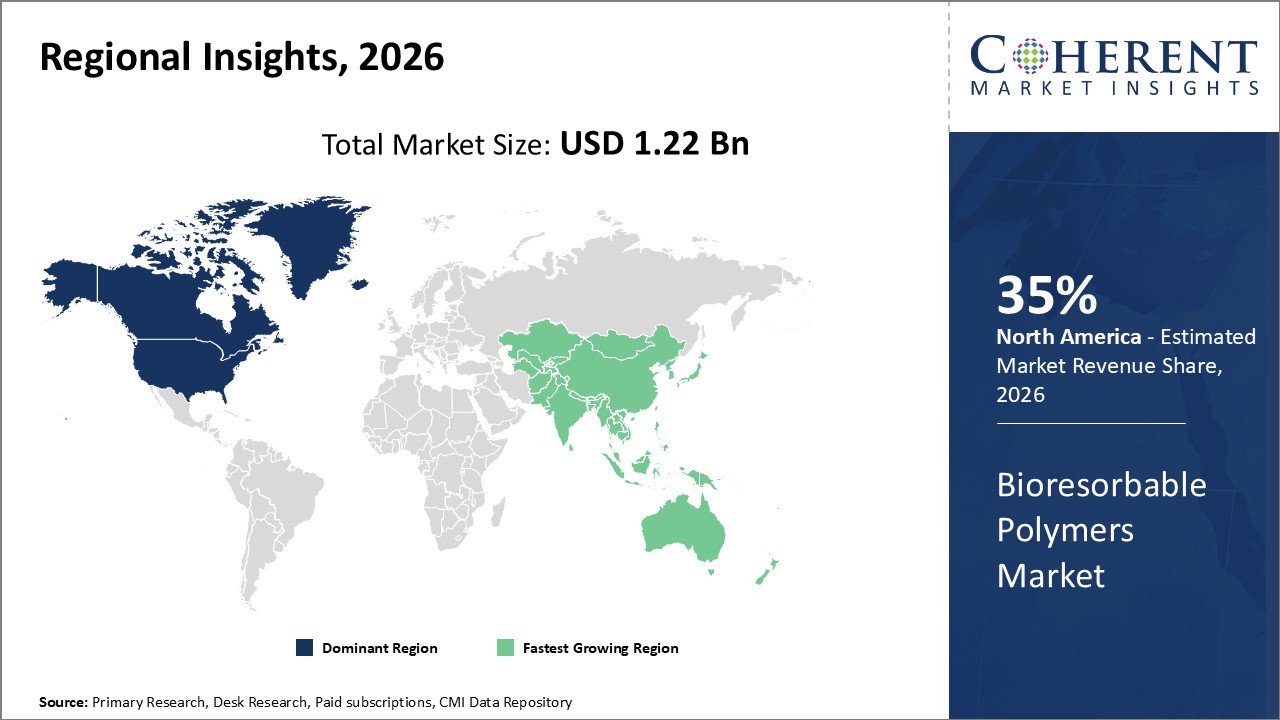
North America maintains market share leadership owing to robust healthcare infrastructure and stringent environmental policies favoring bioresorbables. Asia Pacific emerges as the fastest-growing region with accelerated industrial investment and supply chain expansions, boasting a projected CAGR exceeding 12% during the forecast period.
Europe’s regulatory environment supports business growth in bio-based polymers, notably driving adoption in packaging and agriculture subsegments.
Bioresorbable Polymers Market Segmentation Analysis
Bioresorbable Polymers Market Insights, By Polymer Type
Polylactic Acid (PLA) dominates the market share with 41%. PLA’s widespread industrial availability, coupled with balanced mechanical strength and controlled degradation, makes it the preferred choice for medical implants and packaging. Its biocompatibility encourages adoption in wound healing and drug delivery, continuously driving segment revenue. Polyhydroxyalkanoates (PHA) represent the fastest-growing subsegment, propelled by superior biodegradability and versatility, especially in agriculture applications like biodegradable mulch films. PHAs are gaining momentum due to their ability to break down under diverse environmental conditions, broadening their end-user scope.
Bioresorbable Polymers Market Insights, By Application
Medical Devices are holding dominance due to escalating use in biodegradable sutures, orthopedic fixation devices, and resorbable stents. The demand is underpinned by the increasing preference for materials that avoid second surgeries and reduce inflammatory responses. Drug Delivery Systems showcase rapid adoption growth, driven by innovations in polymer matrices capable of precise drug release profiles for chronic diseases. This subsegment benefits from ongoing clinical research and regulatory approvals aimed at novel therapeutic applications.
Bioresorbable Polymers Market Insights, By End User
Healthcare is dominating due to intensive use in resorbable medical devices and implantables, which drive the largest market revenue share. Agriculture is the fastest-growing industry segment propelled by sustainability needs and government subsidies supporting bio-based solutions, particularly in the Asia Pacific regions. Bioresorbable polymers used in controlled-release fertilizers and biodegradable films contribute to increased crop yields while minimizing environmental impact. Packaging is diversifying product offerings to meet consumer demand for eco-friendly materials, amplifying market share albeit at a more gradual pace. Automotive applications explore bioresorbable components aiming to reduce vehicle weight and comply with environmental regulations.
Bioresorbable Polymers Market Trends
The Bioresorbable Polymers market is characterized by increasing integration of bio-based polymers into healthcare devices with precision-tailored degradation times, as demonstrated by the launch of advanced biodegradable stents in Europe in 2025.
Furthermore, sustainability-driven regulations such as the EU’s Single-Use Plastics Directive have propelled adoption in packaging, with biodegradable films replacing conventional plastics across consumer goods sectors.
Additionally, digitalization intersects with material innovation via bioresorbable sensors, currently under development in pilot trials across North America, promising to revolutionize patient monitoring.
Bioresorbable Polymers Market Insights, By Geography
North America Bioresorbable Polymers Market Analysis and Trends
In North America, the dominance in the Bioresorbable Polymers market stems from a strong ecosystem comprising advanced healthcare infrastructure, active governmental R&D funding, and early regulatory acceptances. The U.S. leads with extensive medical device manufacturing facilities, housing major companies such as NatureWorks and Evonik, driving 35% market share regionally.
Asia Pacific Bioresorbable Polymers Market Analysis and Trends
Meanwhile, the Asia Pacific exhibits the fastest growth with a CAGR exceeding 12%, supported by increased production capacity expansions in China and India, burgeoning agricultural applications, and improving environmental regulations. China's strategic partnerships with global bioresorbable polymer manufacturers contribute significantly to this growth.
Bioresorbable Polymers Market Outlook for Key Countries
USA Bioresorbable Polymers Market Analysis and Trends
The USA’s market is a cornerstone of global bioresorbable polymer innovation and commercialization. With stringent FDA approvals facilitating rapid product development in medical devices, several leading players have established manufacturing and R&D units domestically. For instance, NatureWorks’ investment in PLA production lines and the expansion of Tepha, Inc.'s bioresorbable implant technologies underscore the country’s pivotal role in defining industry trends. Moreover, increasing healthcare expenditure on minimally invasive surgeries and biodegradable implants, growing at 17% annually, lends strong momentum to the market revenue stream.
China Bioresorbable Polymers Market Analysis and Trends
China's market has experienced remarkable growth, driven by supportive government policies such as the 14th Five-Year Plan promoting bio-based materials and circular economy practices. Local companies like Zhejiang Hisun Biomaterials and Shenzhen Polymtek have scaled production capabilities, catering to high demand in packaging and agriculture. Additionally, rising environmental regulations aimed at curbing plastic pollution have accelerated the market shift towards bioresorbables, resulting in a substantial revenue increase recorded in 2025, reinforcing China’s status as a fast-growing landscape for bioresorbable polymers.
Analyst Opinion
Production capacity expansions across the Asia Pacific, especially in China and India, have been crucial. In 2025 alone, manufacturing volumes increased by 15%, primarily supported by government incentives to boost biopolymer industries. This expansion positively influences market share by increasing supply availability to meet rising global demand.
Demand from the medical device sector, particularly in biodegradable stents and wound closure applications, has surged. Reports indicate a 23% rise in orthopedic implant replacements using bioresorbable polymers in 2025, underscoring the growing reliance on these materials for improved patient outcomes.
Pricing dynamics reflect a competitive landscape where raw material costs fluctuate, impacting final product pricing. Despite initial cost barriers, increased economies of scale and shifting consumer preference towards sustainability contributed to a 8% price stabilization in selected markets during early 2026.
The end-use diversification into agriculture for controlled-release fertilizers and packaging sectors enhances the overall market growth trajectory. For instance, pilot programs using bioresorbable mulch films reported 19% higher crop yields coupled with reduced environmental footprint in 2025, accentuating emerging use cases.
- Current Industry Events of 2026
- Market Size Estimation
- Regional Breakdown
- Competitive Landscape
- Customer Intelligence
- Segmental Analysis
- Pricing Analysis
- Key Market Drivers, Challenges & Future Trends
- Customized Insights Section
Market Scope
| Report Coverage | Details | ||
|---|---|---|---|
| Base Year: | 2025 | Market Size in 2026: | USD 1.22 billion |
| Historical Data for: | 2020 To 2024 | Forecast Period: | 2026 To 2033 |
| Forecast Period 2026 to 2033 CAGR: | 10.6% | 2033 Value Projection: | USD 2.46 billion |
| Geographies covered: |
| ||
| Segments covered: |
| ||
| Companies covered: | NatureWorks LLC, BASF SE, Corbion N.V., Evonik Industries AG, Mitsui Chemicals Inc., Zhejiang Hisun Biomaterials Co., Ltd., Shenzhen Esun Industrial Co., Ltd., Perstorp Holding AB, Mitsubishi Chemical Corporation, Biomerix Corporation, Danimer Scientific. | ||
| Growth Drivers: |
| ||
Bioresorbable Polymers Market Growth Factors
The rising prevalence of minimally invasive surgeries fuels demand for bioresorbable polymers in medical devices, with healthcare expenditure on such solutions increasing by over 20% annually in leading markets like the U.S. Sustainability mandates and heightened environmental awareness amplify the adoption of bioresorbable packaging materials, driving an estimated 18% uptake increase from 2023 to 2026. Technological advancements in polymer synthesis — notably improvements in molecular weight control — contribute to superior material performance, broadening market applicability beyond healthcare into agriculture and consumer goods. Furthermore, regulatory approvals expedited in regions including Europe and North America facilitate faster product launches, easing market restraints and enabling quicker business growth.
Bioresorbable Polymers Market Development
In November 2023, BASF launched its new BVERDE GP 790 L polymer in North America, a bioresorbable and biodegradable material engineered for medical and pharmaceutical applications. The polymer features a high bio-based content and is optimized for controlled degradation performance, making it suitable for use in resorbable implants, surgical sutures, and drug delivery systems.
In 2025, Ashland announced the expansion of its advanced manufacturing facility in Ireland to boost production capacity for bioresorbable polymers used in long-acting drug delivery systems and tissue engineering applications. The expansion reflects Ashland’s strategy to strengthen its European biopharma supply chain footprint and meet rising global demand for medical-grade bioresorbable materials. The facility upgrade includes state-of-the-art purification and molecular tailoring technology to enhance polymer consistency and biocompatibility across therapeutic applications.
Key Players
Leading companies of the market include:
NatureWorks LLC
BASF SE
Corbion N.V.
Evonik Industries AG
Mitsui Chemicals Inc.
Zhejiang Hisun Biomaterials Co., Ltd.
Shenzhen Esun Industrial Co., Ltd.
Perstorp Holding AB
Mitsubishi Chemical Corporation
Biomerix Corporation
Danimer Scientific
Competitive strategies include NatureWorks’ recent collaboration with key medical device manufacturers to tailor PLA grades for enhanced biocompatibility, resulting in a 12% increase in new contracts in 2025. BASF adopted vertical integration to enhance supply chain resilience, reducing lead times by 25% and achieving greater market penetration in North America. Corbion’s increased investment in R&D fostered a breakthrough in high molecular weight PLA, improving mechanical strength for packaging applications, reflected in a 9% revenue growth in early 2026.
Bioresorbable Polymers Market Future Outlook
Future market growth will be driven by expanded use of bioresorbable polymers in complex surgical and interventional procedures, such as cardiovascular stenting, tissue engineering, and drug delivery. Ongoing research in polymer composition, degradation kinetics, and biofunctionalization will create new applications. Increasing patient demand for minimally invasive solutions, regulatory support, and growing healthcare infrastructure in emerging markets will further support market expansion. Integration with advanced manufacturing techniques, including 3D printing and nanotechnology, is expected to enhance product performance and market potential.
Bioresorbable Polymers Market Historical Analysis
Bioresorbable polymers have gained prominence in medical and surgical applications due to their ability to provide temporary structural support and then safely degrade in the body. Initially used in sutures and orthopedic fixation devices, these polymers gradually expanded into stents, tissue scaffolds, and drug delivery systems. Innovations in polymer chemistry, biocompatibility, and degradation control enabled wider application across cardiovascular, orthopedic, and regenerative medicine procedures. Regulatory approvals, clinical studies, and increasing adoption of minimally invasive procedures further contributed to market growth.
Sources
Primary Research interviews:
Polymer Scientists
Biomedical Engineers
Product Development Managers
Material Scientists
Regulatory Affairs Experts
Databases:
PubMed
ScienceDirect
FDA Medical Device Database
GlobalData Materials Reports
Magazines:
Medical Plastics News
Materials Today
Polymer Engineering & Science
MedTech Dive
Journals:
Biomacromolecules
Journal of Biomedical Materials Research
Polymer Degradation and Stability
Advanced Healthcare Materials
Newspapers:
The New York Times (Science)
The Guardian (Science)
The Washington Post (Health)
The Economic Times (Healthcare)
Associations:
American Chemical Society (ACS)
Society for Biomaterials (SFB)
European Society for Biomaterials (ESB)
World Health Organization (WHO)
Get access to 250+ pages report
Every segment, forecast, competitor profile and data table behind the analysis above — available for instant download.
- ESOMAR Member
- ISO 9001:2015 Certified
- D-U-N-S Registered
- GDPR & CCPA Compliant
Missing comfort of reading report in your local language? Find your preferred language:
Transform your Strategy with Exclusive Trending Reports
Frequently Asked Questions
The market is primarily led by established companies such as NatureWorks LLC, BASF SE, Corbion N.V., and Evonik Industries AG, recognized for their extensive production capabilities and technological advancements.
The market size is projected to nearly double from USD 1.22 billion in 2026 to USD 2.46 billion by 2033, reflecting a CAGR of approximately 10.6%, supported by expanding medical and industrial applications.
Healthcare, especially the medical devices segment, remains the most lucrative, driven by increased bioresorbable implants and wound care products.
Trends will focus on material innovation, application diversification, sustainability integration, and regulatory facilitation, expanding the market footprint across multiple industries beyond healthcare.
The landscape is competitive, dominated by major polymer manufacturers adopting strategies such as collaborations, vertical integration, and R&D investments to mitigate challenges like raw material cost fluctuations and technological barriers.
Companies widely pursue partnerships with medical device makers, increase product customization, and invest in regional manufacturing hubs to improve market access and responsiveness.