

Bone Tumor Ablation Devices Market Size and Share Analysis - 2026 To 2033
The global bone tumor ablation devices market size is projected to grow from USD 111.0 Mn in 2026 to USD 219.3 Mn by 2033, registering a compound annual growth rate (CAGR) of 10.2% during the forecast period (2026–2033). The key factors that drive this expansion include the growing incidence of bone cancers, metastatic bone conditions, and the increased use of minimally invasive surgeries along with continuous innovations in technologies like radiofrequency ablation, microwave ablation, and cryoablation.
Key Takeaways from the Bone Tumor Ablation Devices Market Report
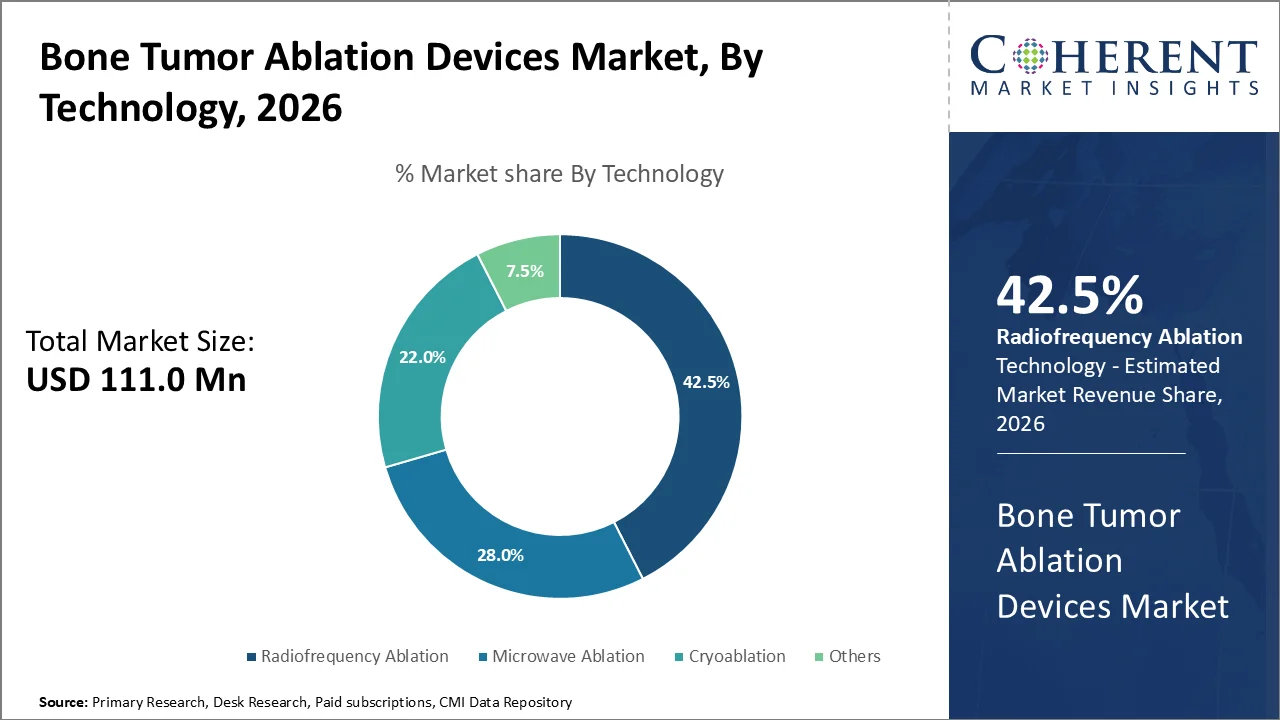
- The radiofrequency ablation segment is anticipated to dominate the market with a 42.5% market share in 2026, attributed to its extensive use, cost-effectiveness, and effectiveness in treating osteoid osteoma and metastatic tumors. The National Cancer Institute notes that bone metastasis is prevalent in advanced-stage cancers, specifically in breast cancer, prostate cancer, and lung cancer.
- The metastatic bone cancer segment is estimated to command the highest market share of 48.0% by 2026 because of the substantial incidence rate of secondary bone cancers worldwide and the rising adoption of ablation therapy for pain management. As per the WHO report, cancer is one of the most common causes of death in the world, claiming around 10 million lives each year, owing to metastasis.
- Hospitals are projected to take the lead with an estimated 64.0% market share by 2026 owing to the presence of advanced imaging technologies, greater procedure volumes, and expert oncologists. The American Hospital Association has stated that hospitals undertake most of the surgical and minimally invasive oncological procedures due to superior equipment and expertise available.
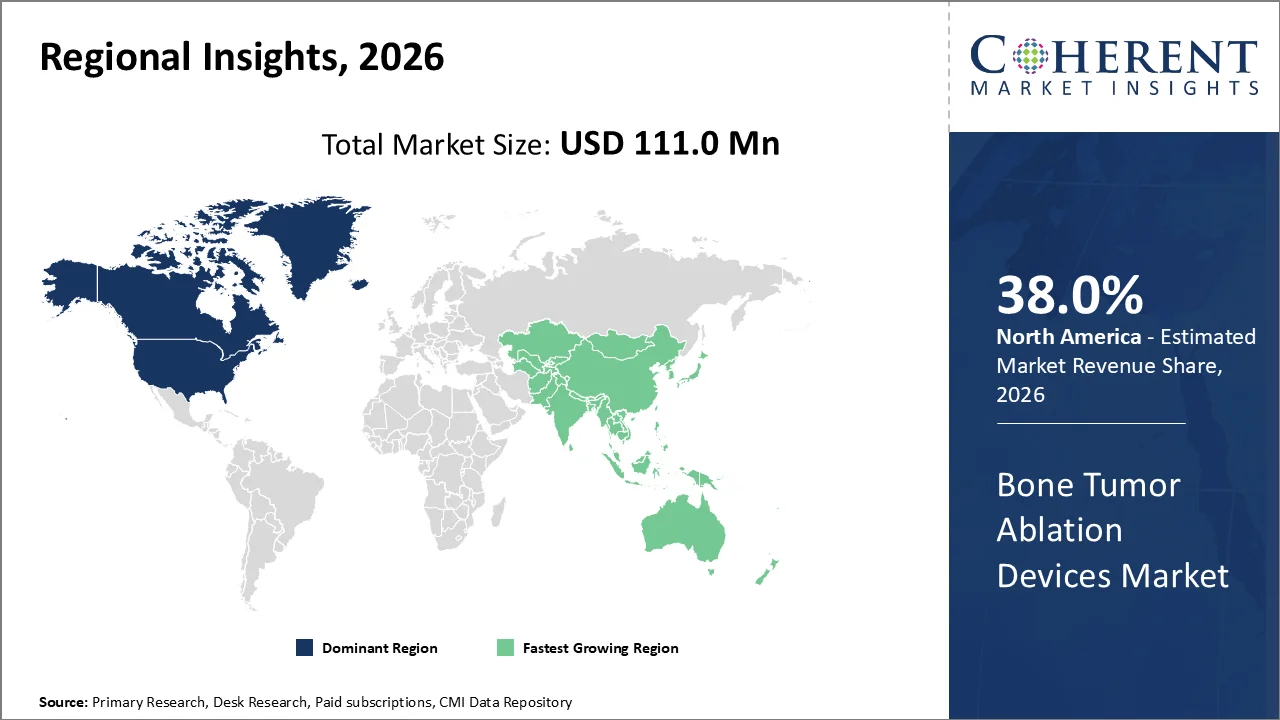
- North America is projected to dominate the global industry share with 38.0% market share in 2026 due to the well-developed health care system, high adoption of minimally invasive treatments, and the presence of major market vendors. As per the American Cancer Society, the incidence of cancer patients in the United States remains high annually, which plays a significant role in driving the bone tumor ablation market.
Segmental Insights
Why is Radiofrequency Ablation Acquiring the Largest Market Share?
The radiofrequency ablation segment of the market is expected to lead with about 42.5% market share in the forecast period of 2026. Radiofrequency ablation is popular owing to its ease of implementation, cost-effectiveness, and efficacy in treating diseases like osteoid osteoma and bone metastases. The popularity of radiofrequency ablation is attributed to its precise nature and effectiveness in relieving pain among patients affected by bone tumors.
Additionally, increasing adoption of minimally invasive procedures across hospitals and oncology centers is accelerating the use of radiofrequency ablation. Radiofrequency ablation offers a faster recovery period, reduced complications, and economical treatment options, compared to traditional surgery techniques.
In March 2024, Medtronic announced that it received U.S. FDA 510(k) clearance for its OsteoCool 2.0 Bone Tumor Ablation System, a next-generation radiofrequency ablation (RFA) platform designed specifically for treating painful bone metastases and benign bone tumors such as osteoid osteoma.
- Current Industry Events of 2026
- Market Size Estimation
- Regional Breakdown
- Competitive Landscape
- Customer Intelligence
- Segmental Analysis
- Pricing Analysis
- Key Market Drivers, Challenges & Future Trends
- Customized Insights Section
Why is Metastatic Bone Cancer the Largest Indication Segment?
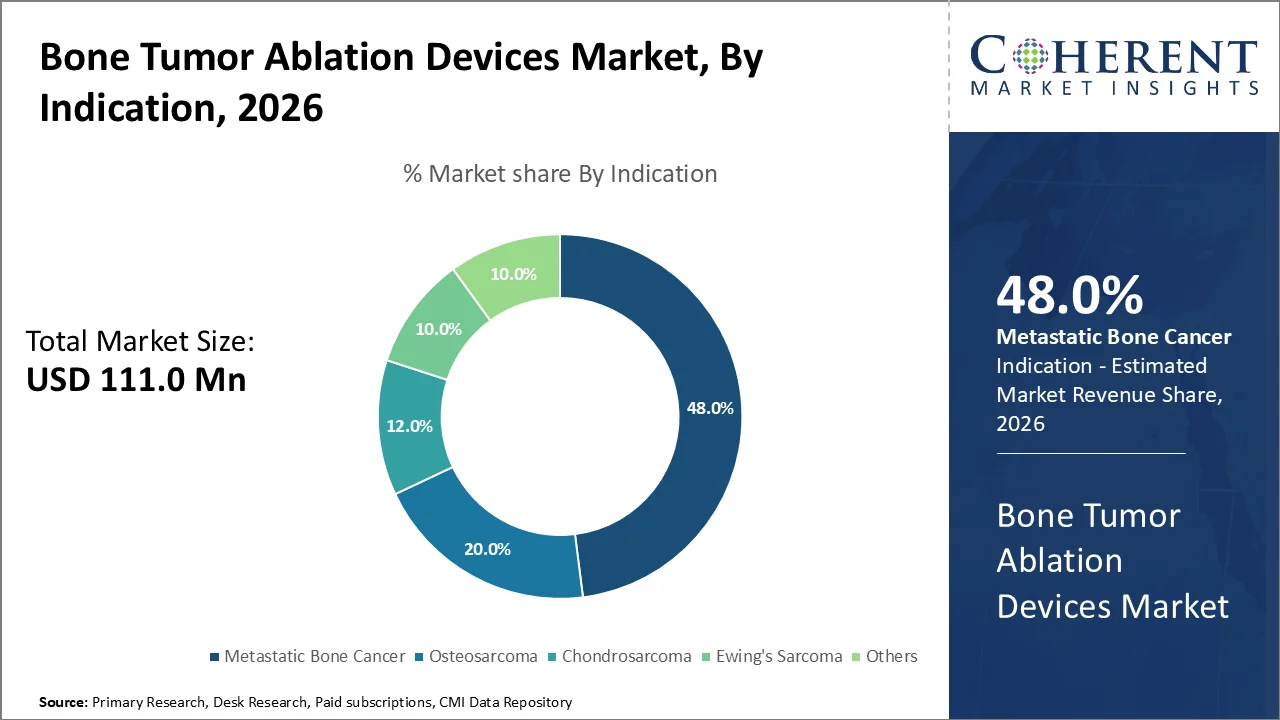
The metastatic bone cancer segment is anticipated to dominate the market with the highest market share in 2026, occupying about 48.0% of the entire market. The dominance can be attributed to the prevalence of secondary bone tumors that arise from the spread of cancer cells from the primary site, such as breast cancer, lung cancer, or prostate cancer, to the bone sites.
In May 2025, Stryker announced FDA clearance and expansion of its OptaBlate RF-based pain and tumor ablation portfolio, strengthening its interventional oncology offerings for bone metastases and vertebral tumor pain management.
Why are Hospitals Dominating the End User Segment?
Hospitals are anticipated to dominate the bone tumor ablation devices market in 2026, capturing approximately 64.0% of the total market share. This dominance is driven by the availability of advanced imaging technologies such as CT and MRI, well-established oncology departments, and the presence of highly skilled healthcare professionals required to perform complex ablation procedures.
As per the American Hospital Association, hospitals are responsible for carrying out most of the complicated and minimally invasive procedures, hence making them the ideal place for the ablation of bone tumors due to their full-fledged infrastructure.
In April 2024, Medtronic highlighted increased hospital adoption of its RF ablation platform for treating metastatic bone cancer pain, particularly in spine, ribs, and extremities. The system is widely used in hospital interventional radiology and oncology unit.
Market Driver
Growing Adoption of Minimally Invasive Procedures is Transforming Interventional Oncology
Advances towards minimally invasive procedures have been the key drivers contributing to the growth of the bone tumor ablation device market. With the help of image-guided tumor ablation, it has become easier to target tumors without damaging the surrounding tissue, hence helping in quicker recovery and less post-procedural pain for the patient.
A study in the National Library of Medicine indicates that minimal-invasive tumor ablation surgery reduces the hospitalization period by 30% to 50%, and the chance of developing complications during treatment.
Technological Advancements in Ablation Techniques are Enhancing Treatment Outcomes
The constant improvement of ablation techniques such as radio frequency ablation, microwave ablation, and cryoablation makes bone tumor treatment even more effective and safe for patients. This improvement includes more accurate temperature regulation and the ability to monitor the procedure more effectively. It also contributes to the reduction of damage to healthy tissues while treating complex tumors.
According to the Radiological Society of North America, newer ablation technologies have demonstrated local tumor control rates exceeding 80–90% in certain bone tumor cases, reinforcing their growing role in oncology care. Increased integration of image-guided systems and navigation tools further enhances procedural success rates and expands clinical applications.
Current Events and Their Impact on the Bone Tumor Ablation Devices Market
Current Event | Description and its Impact |
2026 Medicare Reimbursement and Coding Updates for Interventional Oncology Procedures in the U.S. |
|
Regulatory Approvals and Policy Support for Minimally Invasive Cancer Treatments |
|
Bone Tumor Ablation Devices Market Trends
- Rising global cancer burden is driving demand, since cancer claims 10 million lives each year globally and many patients with advanced forms of cancer develop bone metastasis, which requires ablation procedures.
- The development of CT and MRI guided ablation systems and multiple probe systems is enhancing accuracy and effectiveness in treating bone tumors.
- Increasing usage of interventions in hospitals to manage cancer patients has contributed significantly to the expansion of access because bone metastasis usually occurs in cancers of the breast, prostate, and lungs.
- Hospitals have become the main location for conducting bone tumor ablation procedures due to the presence of sophisticated technology and specialized knowledge in oncology.
Regional Insights
North America Dominates the Market
The North American market is forecasted to have the highest share of 38.0%, owing to well-developed healthcare systems, high adoption of minimally invasive oncology surgeries, and the presence of many major medical device manufacturers. The prevalence of cancers and the usage of image-guided interventional procedures contribute to market dominance in the region.
Another factor behind the rising demand for ablation treatments includes the increased cases of metastatic bone disease. According to the American Cancer Society, breast cancer, prostate cancer, and lung cancer are some of the most frequent types of cancer that result in bone metastasis.
In December 2024, AngioDynamics received FDA 510(k) clearance for its NanoKnife® irreversible electroporation system, expanding ablation options for cancer treatment in North America.
Asia Pacific Fastest Growing Region
The Asia Pacific region is anticipated to be the fastest-growing region for the forecast period from 2026 to 2033 owing to an increase in the incidence of cancer, improvements in health care facilities, and an increased preference for minimally invasive procedures.
As per the World Health Organization, there is an accelerating trend of cancer prevalence across the Asia Pacific region, especially in large populations like China and India, leading to rising demands for sophisticated cancer treatments that include bone tumors ablation.
Growing Cancer Burden is Accelerating the Bone Tumor Ablation Devices Market Demand in United States
The U.S. bone tumor ablation device market is experiencing rapid growth due to an increase in cancer incidences and bone metastasis as well as growing use of minimally invasive interventional oncology therapies. The U.S. market is considered as a major market for cancer around the globe, with breast, prostate, and lung cancers accounting for most of the bone metastasis that are typically treated via radiofrequency or microwave ablation.
Strengthens hospital-based interventional oncology capacity in the U.S., improves procedural efficiency, and increases adoption of radiofrequency ablation for metastatic bone cancer pain management.
Japan Bone Tumor Ablation Devices Market Trends
The Japan bone tumor ablation devices market will continue growing at a consistent pace because of the rapid increase in the number of elderly people suffering from various diseases like cancers. Japan has become one of the most super-aged countries in the world with a high percentage of elderly people who have a high risk of developing cancer.
According to WHO (World Health Organization) reports, one of the major contributing factors for increasing rates of cancer among the global population is an aging population, which includes developed countries such as Japan.
Who are the Major Companies in Bone Tumor Ablation Devices Industry
Some of the major key players in Bone Tumor Ablation Devices are Medtronic Plc., Merit Medical Systems Inc., MedWaves Inc., AngioDynamics Inc., Olympus Corporation, Varian Medical Systems, Inc., Mermaid Medical A/S, RF Medical Co., Ltd., and Misomix Inc.
Key News
- In July 2025, AngioDynamics announced its Fiscal Year 2025 fourth quarter and full-year results, reporting continued strong growth in its NanoKnife® irreversible electroporation platform, which is widely used for tumor ablation in oncology applications including difficult-to-treat solid tumors.
- In March 2024, Medtronic received U.S. FDA 510(k) clearance for its OsteoCool 2.0 Bone Tumor Ablation System, expanding its use for treating painful bone metastases and osteoid osteoma using radiofrequency ablation technology in hospital settings.
Market Report Scope
Bone Tumor Ablation Devices Market Report Coverage
| Report Coverage | Details | ||
|---|---|---|---|
| Base Year: | 2025 | Market Size in 2026: | USD 111.0 Mn |
| Historical Data for: | 2020 To 2024 | Forecast Period: | 2026 To 2033 |
| Forecast Period 2026 to 2033 CAGR: | 10.2% | 2033 Value Projection: | USD 219.3 Mn |
| Geographies covered: |
| ||
| Segments covered: |
| ||
| Companies covered: | Medtronic Plc., Merit Medical Systems Inc., MedWaves Inc., AngioDynamics Inc., Olympus Corporation, Varian Medical Systems, Inc., Mermaid Medical A/S, RF Medical Co., Ltd., and Misomix Inc. | ||
| Growth Drivers: |
| ||
| Restraints & Challenges: |
| ||
Analyst Opinion
- Market fundamentals involve increasing incidence of cancer, with an estimated annual global mortality of nearly 10 million due to cancer, according to WHO estimates, thereby making metastatic conditions important to treat and not elective procedure markets.
- Metastasis into bone is frequent among advanced-stage cancers; research shows that Up to 65–75% of patients with advanced (stage IV) breast and prostate cancer develop bone metastases, thus ensuring continuous demand for pain alleviation through ablation.
- Image-guided ablation procedures have excellent clinical results, with documented literature demonstrating 80% to 90% success rates in controlling tumors locally.
Speak to the analyst
Want personalized insights?
Take the findings above to one of our principal consultants, or have the report rebuilt around the segments, geographies and competitors you actually track.
Market Segmentation
- By Technology (Revenue, USD Mn, 2021-2033)
- Radiofrequency Ablation
- Microwave Ablation
- Cryoablation
- Others
- By Indication (Revenue, USD Mn, 2021-2033)
- Osteosarcoma
- Chondrosarcoma
- Ewing’s Sarcoma
- Metastatic Bone Cancer
- Others
- By End User (Revenue, USD Mn, 2021-2033)
- Hospitals
- Ambulatory Surgical Centers
- Specialty Clinics
- By Region
- North America
- U.S.
- Canada
- Latin America
- Brazil
- Mexico
- Argentina
- Rest of Latin America
- Europe
- Germany
- U.K.
- France
- Italy
- Spain
- Russia
- Rest of Europe
- Asia Pacific
- China
- India
- Japan
- Australia
- South Korea
- ASEAN
- Rest of Asia Pacific
- Middle East
- GCC
- Israel
- Rest of Middle East
- Africa
- South Africa
- Central Africa
- North Africa
- North America
Sources
Primary Research Interviews
- Interventional radiologists
- Interventional oncologists
- Orthopedic oncologists
- Hospital administrators
- Ambulatory surgical center (ASC) managers
- Medical device distributors
- Key opinion leaders (KOLs) in oncology and interventional radiology
Databases
- World Health Organization (WHO)
- Centers for Disease Control and Prevention (CDC)
- National Institutes of Health (NIH)
- International Agency for Research on Cancer (IARC)
- Organisation for Economic Co-operation and Development (OECD)
Magazines
- Diagnostic and Interventional Radiology News
- Oncology Times
- Interventional News
- MedTech Outlook
Journals
- Journal of Vascular and Interventional Radiology
- Radiology (RSNA Journal)
- European Journal of Radiology
- Clinical Radiology
- Journal of Interventional Oncology
Newspapers
- The New York Times
- The Wall Street Journal
- Financial Times
- The Guardian
Associations
- Society of Interventional Radiology (SIR)
- European Society of Radiology (ESR)
- Radiological Society of North America (RSNA)
- American Cancer Society (ACS)
- World Federation for Interventional Oncology
Public Domain Sources
- Company Annual Reports and Investor Presentations (Medtronic, AngioDynamics, Stryker, etc.)
- Government health ministry publications
- FDA (U.S. Food and Drug Administration) device approvals database
- Clinical trial registries such as ClinicalTrials.gov
- WHO cancer and non-communicable disease reports
Proprietary Elements
- CMI Data Analytics Tool
- Proprietary CMI historical database (last 10+ years of market intelligence data)
Get access to 250+ pages report
Every segment, forecast, competitor profile and data table behind the analysis above — available for instant download.
- ESOMAR Member
- ISO 9001:2015 Certified
- D-U-N-S Registered
- GDPR & CCPA Compliant
Missing comfort of reading report in your local language? Find your preferred language:
Transform your Strategy with Exclusive Trending Reports
Frequently Asked Questions
The Bone Tumor Ablation Devices Market is expected to reach USD 219.3 Mn by 2033, growing from USD 111.0 Mn in 2026.
Major players include Medtronic Plc., Merit Medical Systems Inc., MedWaves Inc., AngioDynamics Inc., Olympus Corporation, Varian Medical Systems Inc., Mermaid Medical A/S, RF Medical Co., Ltd., and Misomix Inc.
High procedure costs, limited reimbursement in some regions, and lack of skilled interventional oncology specialists restrict market adoption.
Rising cancer prevalence, increasing metastatic bone disease cases, and growing adoption of minimally invasive ablation techniques are major growth drivers.
The market is anticipated to grow at a CAGR of 10.2% during 2026–2033.
North America is expected to account for the largest market share in 2026 due to advanced healthcare infrastructure and high adoption of minimally invasive oncology procedures.